

Summary:
A measured home adaptation of Greek fava, with the Santorini ingredient distinction, gentle simmering, serving ideas and safe make-ahead guidance.Greek fava (φάβα) becomes creamy in the saucepan before a blender ever touches it. Let the yellow split peas soften until they collapse, then finish with olive oil and lemon. A few pieces of raw red onion give each spoonful a crisp contrast.
The ingredient behind the name
Fava is a familiar Greek meze, especially associated with the Aegean islands. The protected product Fava Santorinis PDO comes from Lathyrus clymenum, grown in the Santorini island group, according to the European Commission. Ordinary yellow split peas make an accessible home version, but they should not be described as the protected Santorini ingredient. Broad beans sold as “fava beans” in English are a different purchase.
This measured home adaptation uses supermarket yellow split peas. It keeps the emphasis on their soft texture, olive oil and a bright finish, with optional capers at the table.
Greek fava with lemon and red onion
Serves: 4–6 as a meze or side. Preparation: 10 minutes. Cooking: about 50–90 minutes, sometimes longer with older peas. Equipment: heavy-based saucepan, spoon and optional immersion blender.
Ingredients
- 1 cup (200 g / 7 oz) dried yellow split peas, picked over and rinsed
- 1 medium onion (about 150 g / 5 oz), finely chopped
- 3 cups (720 ml) water to start, plus hot water as needed
- ¼ cup (60 ml) extra-virgin olive oil, divided
- ½ teaspoon fine salt, then more to taste
- 1–2 tablespoons (15–30 ml) fresh lemon juice
- Freshly ground black pepper, to taste
- 2 tablespoons finely chopped red onion, for serving
- 1 tablespoon drained capers, optional
- Bread or pita, for serving
Method
- Soften the onion. Warm 2 tablespoons (30 ml) of the oil in the saucepan over medium-low heat. Add the chopped cooking onion and cook for 6–8 minutes, stirring, until soft and translucent. Keep it pale rather than deeply browned.
- Start the simmer. Add the rinsed peas and 3 cups (720 ml) water. Bring just to a boil, skim off surface foam if needed, then reduce to a gentle simmer with the lid partly open.
- Cook to softness. Simmer for about 45–80 minutes, checking the pot regularly. Add hot water in ¼-cup (60 ml) portions whenever the mixture becomes thick before the peas are tender. Stir more often as it thickens, scraping along the base. The peas should crush without a firm or chalky center; continue cooking if they resist.
- Choose the final texture. Once the peas have mostly broken down, stir firmly for a rustic purée. For a smoother finish, take the pan off the heat and use an immersion blender with its head submerged to prevent hot splashes. If there is excess free water, gently simmer it away before blending.
- Season after softening. Stir in the salt, 1 tablespoon lemon juice and 1 tablespoon (15 ml) of the remaining oil. Taste and add more lemon, salt or pepper as needed. Leave the purée slightly looser than you want on the plate: it thickens as it cools.
- Finish at the table. Spoon into a shallow dish, make a small well, and drizzle with the last tablespoon (15 ml) of oil. Add the raw red onion and optional capers. Serve warm with bread, or chill promptly for a later cold serving.
Three texture problems, three fixes
- Grainy after blending: the peas may need more cooking. Return to low heat with a little water and cook until fully soft. Blending alone cannot finish an undercooked pea.
- Too stiff after cooling: stir in warm water a tablespoon at a time before adjusting the lemon and salt. Avoid thinning with oil alone.
- Catching on the bottom: lower the heat and stir more often. If the base has scorched, transfer the unburned portion to a clean pan without scraping up the burnt layer.
Serving and substitutions
Keep the toppings simple so the pea purée remains central. Raw onion supplies crunch; briefly rinsing the chopped garnish under cold water softens its bite. Capers add briny contrast but are optional. Use lemon to taste rather than adding the entire quantity at once.
Green split peas can make a different-colored variation, with their own cooking time. Red lentils soften differently and are not a direct substitute for this method. For a Greek meal with another gentle texture, serve alongside spanakorizo and a crisp tomato-and-cucumber salad.
Make ahead and store safely
Refrigerate in shallow containers within 2 hours of cooking, or within 1 hour above 90°F (32°C). Keep at 40°F (4°C) or colder and use within 3–4 days. Store the raw-onion garnish separately. If reheating, add a splash of water, stir frequently and heat throughout to 165°F (74°C). For cold service, take out only the portion you need and return the rest to the refrigerator.
Sources and image credit
Regional ingredient context: European Commission, Fava Santorinis PDO. Cooking references: Eli K. Giannopoulos, My Greek Dish and Diane Kochilas, Yellow Split Pea Purée. Safe storage and reheating: USDA FSIS and USDA reheating guidance.
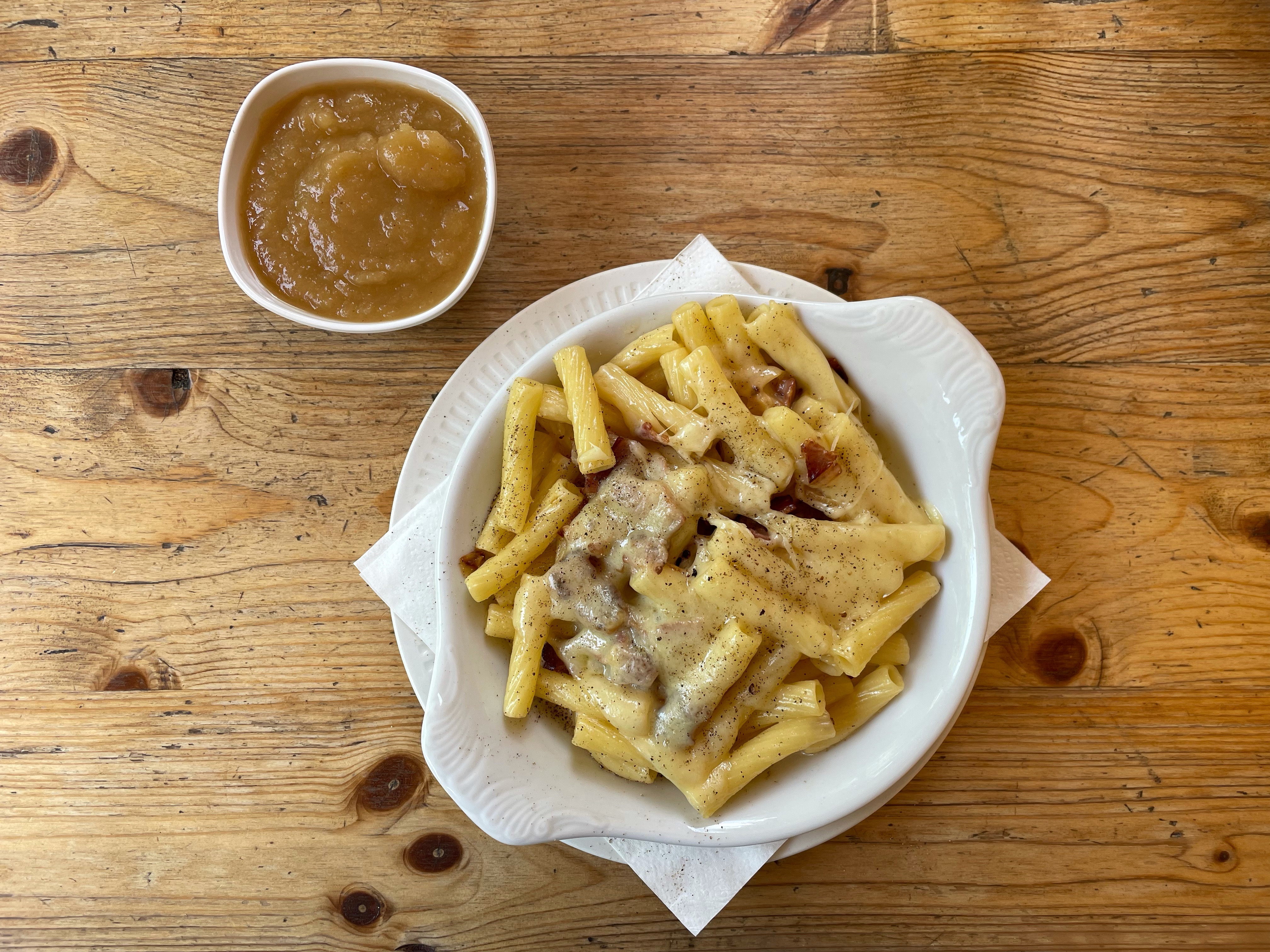
Featured photograph: Santorini fava at Perivolos, by Klearchos Kapoutsis, via Wikimedia Commons, CC BY 2.0, unchanged. It shows a restaurant serving of the dish.