
Spanakorizo: Let the Spinach Lead
Σπανακόρυζο
Greek spinach rice depends on the water in its leaves, the choice of grain and a lemony finish. Compare the decisions behind its soft, vegetable-forward texture.
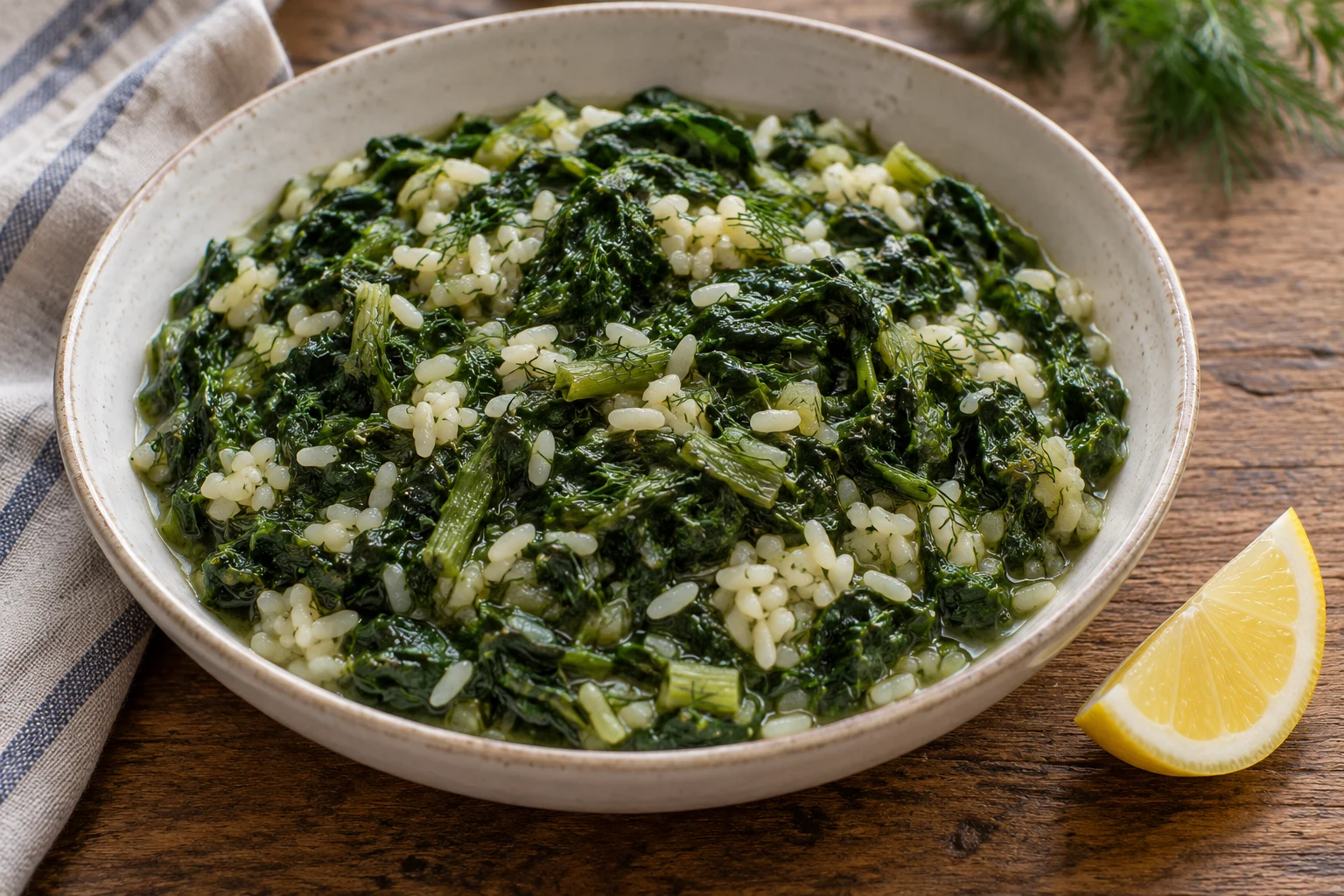
Why the leaves come first
Spanakorizo is Greek spinach and rice cooked into a soft, savory dish with olive oil, herbs and lemon. It can be a main meal, rather than a small portion of plain rice decorated with greens. The useful question is how a pot that begins with so many leaves becomes a coherent dish without losing the identity of its grains.
Dimitra Alexandrakis describes a spinach-forward version with more greens than rice. Elena Paravantes at Olive Tomato also emphasizes a creamy texture. Together they point toward the defining relationship: rice cooks with the vegetable, taking up its flavor, instead of being cooked separately and tossed into it.
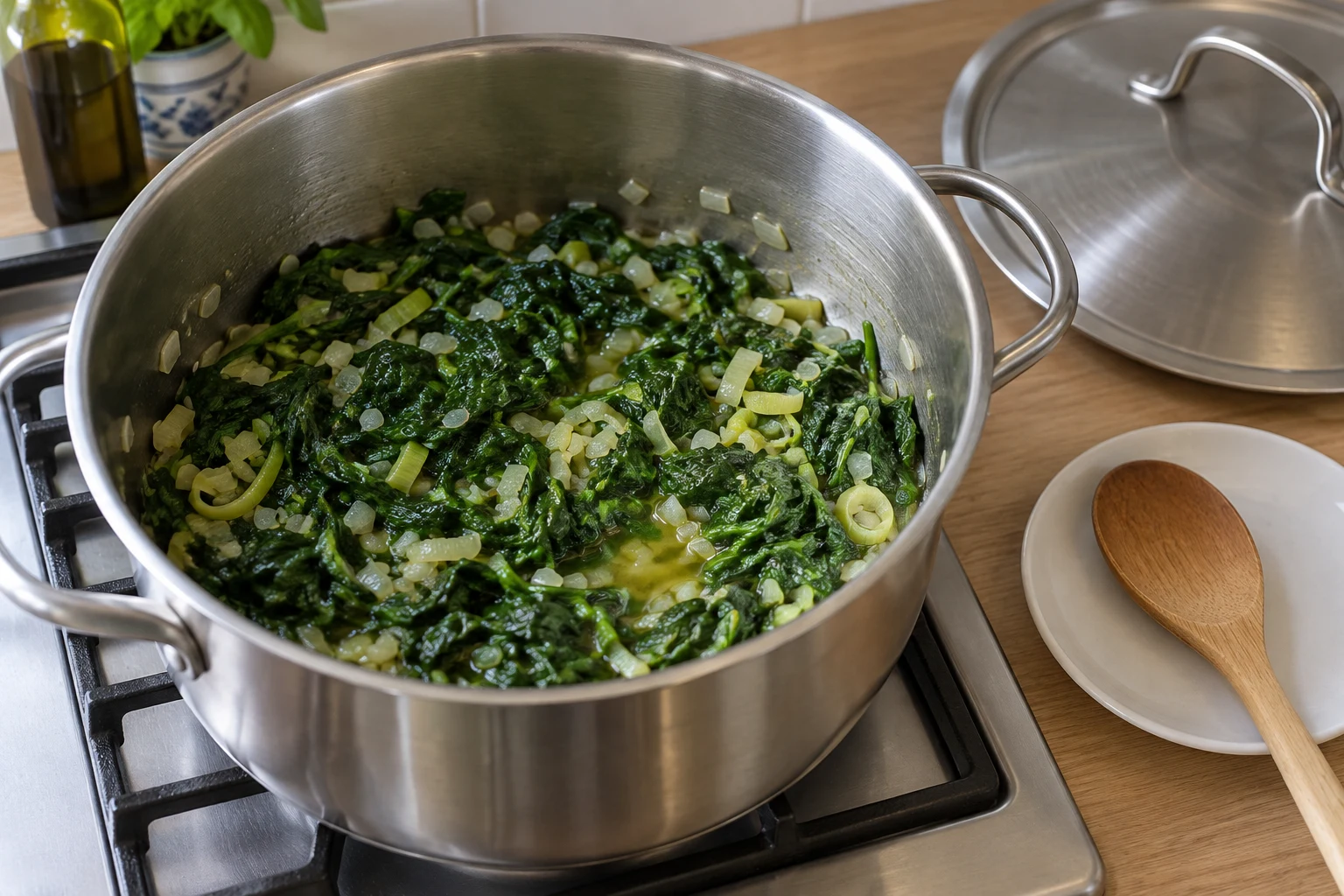
A pot of leaves is also a source of water
In Argiro Barbarigou’s Greek-language method, spinach joins softened onion, spring onion and leek before the rice. She adds a modest amount of water and explicitly notes that the vegetables will release more liquid. That explains why a water quantity that seems small beside a large bag of spinach is not necessarily a mistake.
Other methods handle that moisture differently. Olive Tomato wilts the spinach separately and drains it before combining it with the aromatic base and measured water. The Mediterranean Dish cooks the leaves with onion and seasonings, then adds drained, previously soaked rice. These are complete methods with different starting conditions. Their water quantities cannot be swapped without considering how the spinach and rice were prepared.
Choose the grain for the texture you want
A soft, connected dish
Olive Tomato recommends medium-grain rice and names Greek Carolina, with Arborio as an available alternative. Dimitra also uses Arborio or medium-grain rice. The intended result is tender and moist, with the grains integrated into the spinach.
Changing rice changes the method
Long-grain and brown rice behave differently from the rice specified in these preparations. Olive Tomato cautions that brown rice takes longer, creating a different cooking problem for the greens. A substitution should come with its own complete method, rather than an unchanged clock.
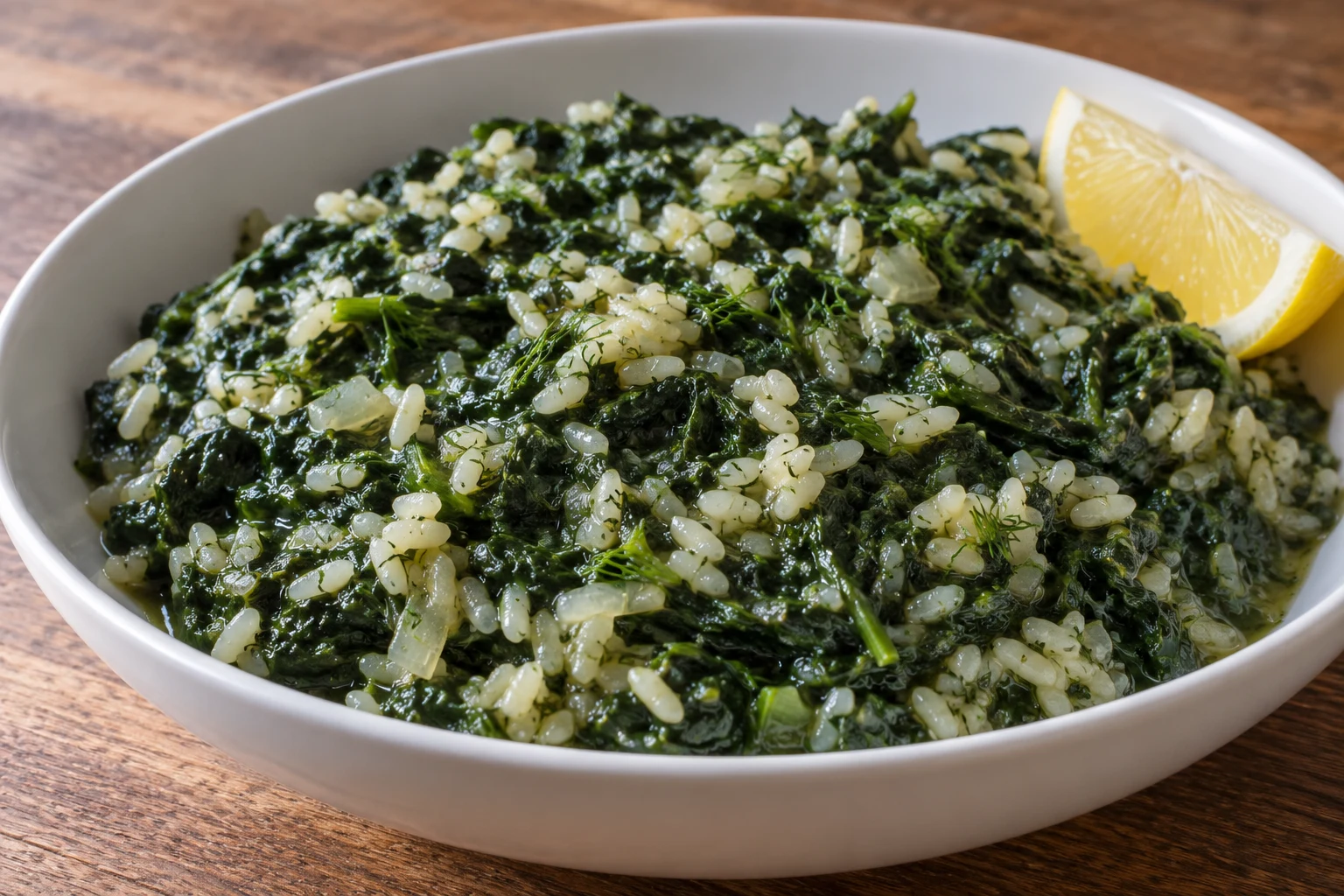
Three decisions after the leaves wilt
- 01
Keep the rice and liquid in the same story
Use one complete preparation. Some methods drain spinach, some preserve its moisture, and some soak the rice. Those choices affect the amount of added water and the cooking sequence.
- 02
Finish with herbs and lemon deliberately
Argiro finishes with dill, remaining olive oil and lemon. Dimitra adds dill, mint and lemon near the end. Their shared lesson is to give the soft greens a clear herbal and acidic finish; the precise herbs remain a choice within the documented method.
- 03
Leave room for a rest
Argiro includes a brief rest after cooking, and The Mediterranean Dish likewise lets the covered dish stand before serving. This is a separate stage from the simmer, allowing remaining moisture to settle into the finished rice.
The tomato and garlic questions
There is no need to pretend that the opened recipes agree on every ingredient. Argiro lists tomato or tomato paste as optional. The Mediterranean Dish includes tomato paste and garlic; Dimitra uses sliced garlic. Olive Tomato excludes garlic from the family-style version she presents. These differences are best read as documented preparations, rather than a contest in which one photograph proves the only legitimate dish.
A lemon-led version can remain visibly green, as shown here. A tomato addition changes both color and flavor. The important continuity is the cooked relationship between spinach, rice and olive oil, not a rule that every pot must have precisely the same tint.
Research notes
Four complete preparations
Read these original recipes for quantities and cooking instructions; this article compares their treatment of moisture, grains and finishing ingredients.
- Argiro Barbarigou: Σπανακόρυζο Greek chef’s spinach-first method, Carolina rice, vegetable moisture, optional tomato and lemon/dill finish.
- Dimitra Alexandrakis: Spanakorizo Original spinach-forward preparation with Arborio, sliced garlic, dill and mint; main-meal serving context.
- Elena Paravantes: Greek Spinach and Rice Greek dietitian and author’s original preparation explaining medium-grain rice and separately wilted spinach.
- Suzy Karadsheh: Spanakorizo Original preparation using soaked rice, tomato paste, garlic and a covered rest before optional feta.
Keep exploring
More stories for your table
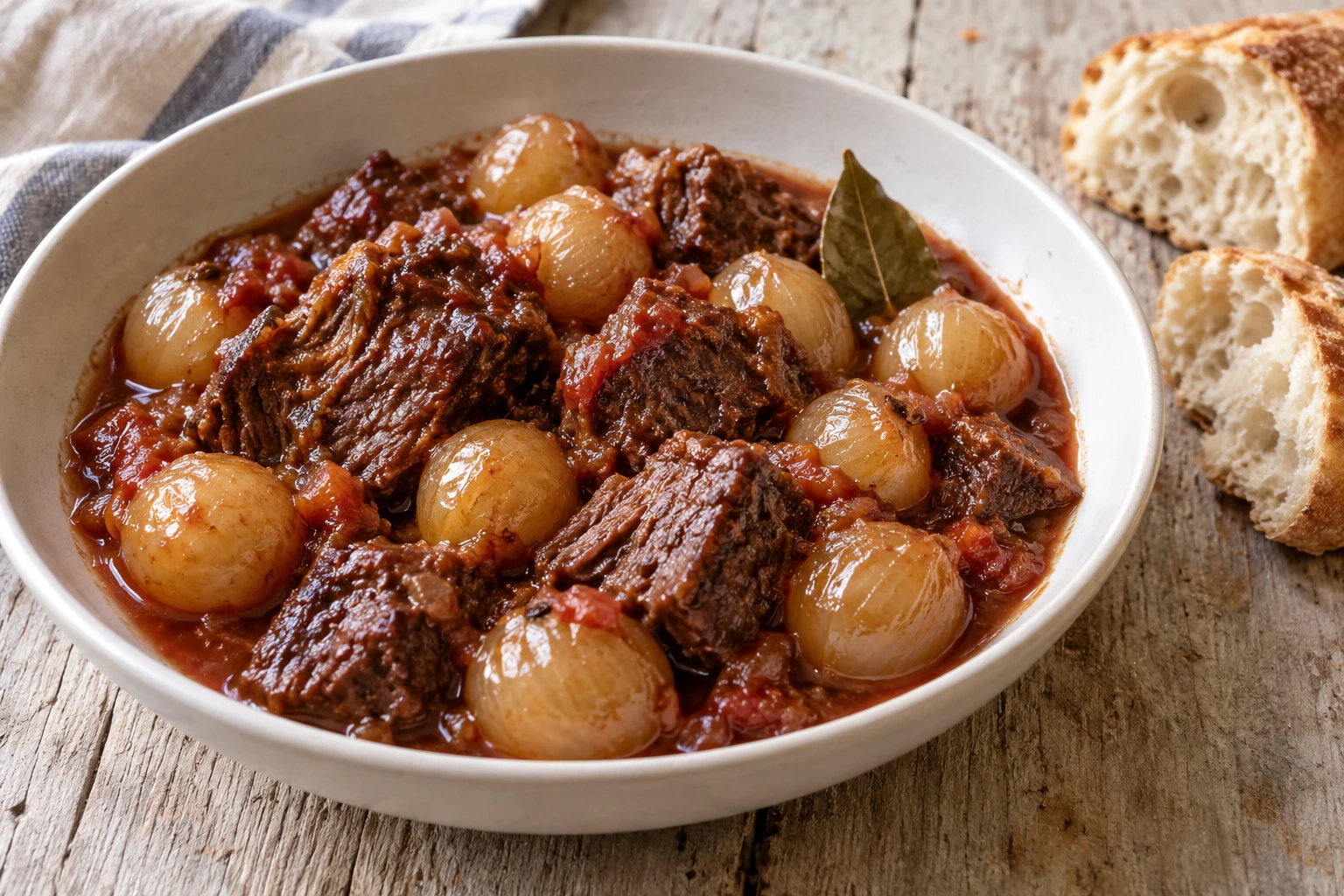
GreeceOnion stew
Stifado: The Small Onions That Shape a Greek Stew
Whole small onions give stifado its sweetness and texture. Explore beef, rabbit and mushroom versions, and see why the onion timing and sauce belong to the recipe you choose.
GreeceCheese appetizer
Cheese Saganaki: The Slice Must Hold
A thin golden crust and a warm cheese centre depend on the slice beneath them. Saganaki recipes show why cheese choice, coating and immediate service belong together.
PortugalRice dish
Arroz de Perdiz: A Golden Crust or a Brothy Finish
Follow Portuguese partridge rice from Fialho de Almeida’s oven finish to a broth-rich pot, and learn what the cooking sequence reveals.