

Summary:
A measured home version of Rotkohl with apple, cider vinegar and optional caraway, with practical texture fixes and safe make-ahead guidance.The first useful decision in Rotkohl happens on the chopping board. Thin, even ribbons of red cabbage soften together; a mixture of fine shreds and thick wedges leaves you choosing between tough pieces and overcooked ones. After that, the pot needs a gentle braise, not a fierce boil.
Rotkohl is a familiar German sweet-and-sour cabbage side dish, often served beside hearty roasts. Rotkraut and Blaukraut are other names you will encounter. Apples, vinegar, wine, preserves and spices vary between versions, so there is no need to treat one seasoning list as universal. This measured home adaptation uses apple, cider vinegar and a little caraway, without wine or jam.
What to have ready
Serves: 6 as a side. Preparation: about 20 minutes. Cooking: approximately 50–70 minutes. Equipment: a large heavy pot with a lid, a sharp knife and a sturdy chopping board.
- 1¾ lb (800 g) red cabbage, weighed after removing the core and damaged outer leaves
- 1 medium onion, about 5 oz (150 g), thinly sliced
- 1 large tart apple, about 7 oz (200 g) before peeling and coring, cut into small cubes
- 2 tablespoons (30 g) unsalted butter, or 2 tablespoons (30 ml) neutral oil
- 3 tablespoons (45 ml) cider vinegar, plus more to taste
- 2 teaspoons (8 g) brown sugar, plus more only if needed
- ¾ cup (180 ml) water, plus extra as needed
- ½ teaspoon caraway seeds, optional
- ½ teaspoon fine salt to start, plus more to taste
- ¼ teaspoon ground black pepper
Butter gives a rounded finish; oil makes this version dairy-free. The apple supplies sweetness as it softens. A very sweet apple may need less added sugar, while a particularly tart one may need a little more. Keep the final adjustment until the cabbage is cooked.
From firm leaves to a tender side dish
- Cut evenly. Rinse the cabbage, remove damaged outer leaves and quarter it. Cut out the firm central core. Put a flat cut surface against the board and slice crosswise into ribbons about ⅛ inch (3 mm) wide. Cut very long ribbons in half so they are easier to serve. If using a mandoline, use its hand guard.
- Soften the onion. Melt the butter in the pot over medium-low heat, or warm the oil. Add the onion and cook for 6–8 minutes, stirring, until soft but not deeply browned. Add the apple and optional caraway and stir for another minute.
- Wilt the cabbage. Add the cabbage in two or three batches, turning each through the onion mixture as it begins to collapse. Add the vinegar, sugar, water, salt and pepper. Stir well so the seasoning reaches the lower layers.
- Braise gently. Bring the liquid to a light simmer, cover and turn the heat low. Cook for approximately 40–60 minutes, stirring every 10–15 minutes. Check the bottom each time: there should be a little moisture, not a dry frying surface. Add water a few tablespoons at a time if needed. The cabbage is ready when the thicker ribbons are tender but still identifiable.
- Finish the liquid, then the flavor. If water pools around the cooked cabbage, uncover and simmer briefly, stirring, until the ribbons look glossy rather than soupy. Taste and add vinegar a teaspoon at a time if it needs brightness, or a small pinch of sugar if it is too sharp. Adjust salt last. Serve warm.
Read the pot, not just the timer
Still tough? Add a splash of water, replace the lid and keep cooking gently. Cabbage thickness and freshness change the timing. Turning up the heat mainly increases the chance that the bottom will dry out before the leaves soften.
Too wet? Reduce the liquid only after the cabbage is tender. An uncovered pot is useful at the finish, but using it throughout the braise can leave you adding water repeatedly.
Too sweet or too sour? Make tiny adjustments and taste again. The goal is a side dish with enough acidity to accompany richer food, not a dessert or a pickle. This cooked recipe is not a fermentation or shelf-stable preserving method.
What goes alongside
Serve a spoonful beside roast meat, potato dumplings or mashed potatoes. It also works with mushrooms and a simple potato dish. For another German plate built around a contrasting sauce, see Jägerschnitzel; keep the cabbage separate so its sweet-sour juices do not overwhelm the mushroom sauce.
Make ahead and store
Portion leftovers into shallow containers and refrigerate within 2 hours, or within 1 hour above 90°F (32°C). Keep at 40°F (4°C) or below and use within 3–4 days. The vinegar does not make the cooked cabbage safe to leave at room temperature.
Reheat in a covered saucepan with a splash of water, stirring until it reaches 165°F (74°C) throughout. Freeze portions for up to 2 months for best quality and thaw in the refrigerator. The cabbage will be softer after freezing.
Sources and image note
German Foods' Rotkohl recipe supplies a reference for the apple, onion and sweet-sour combination. The German Federal Centre for Nutrition discusses red cabbage's names and its familiar role as a cooked side. Chef Thomas Sixt's version illustrates a different wine-and-spice approach and a longer braise. This recipe keeps the seasoning simpler and uses tenderness to guide the finish.
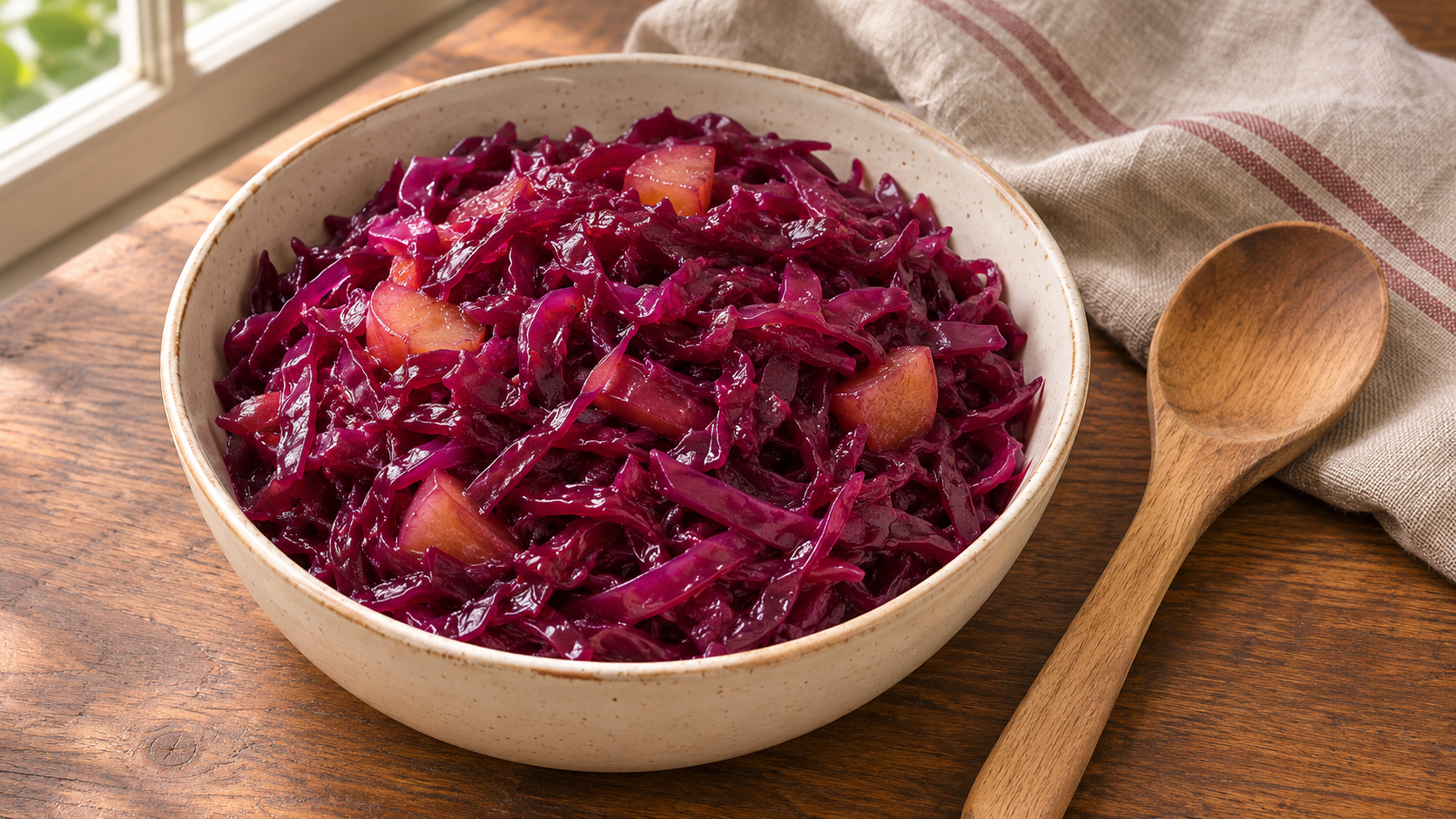
Food handling follows the FDA's chilling and reheating guidance and USDA leftover-storage guidance. The cover illustrates a serving suggestion.