
Jägerschnitzel: choose the cutlet, then plan the sauce
Jägerschnitzel
Breaded or unbreaded, mushroom-sauce Jägerschnitzel rewards a clear plan: brown the mushrooms, prepare the sauce, and decide how much crust should stay crisp.
A meal with two different clocks
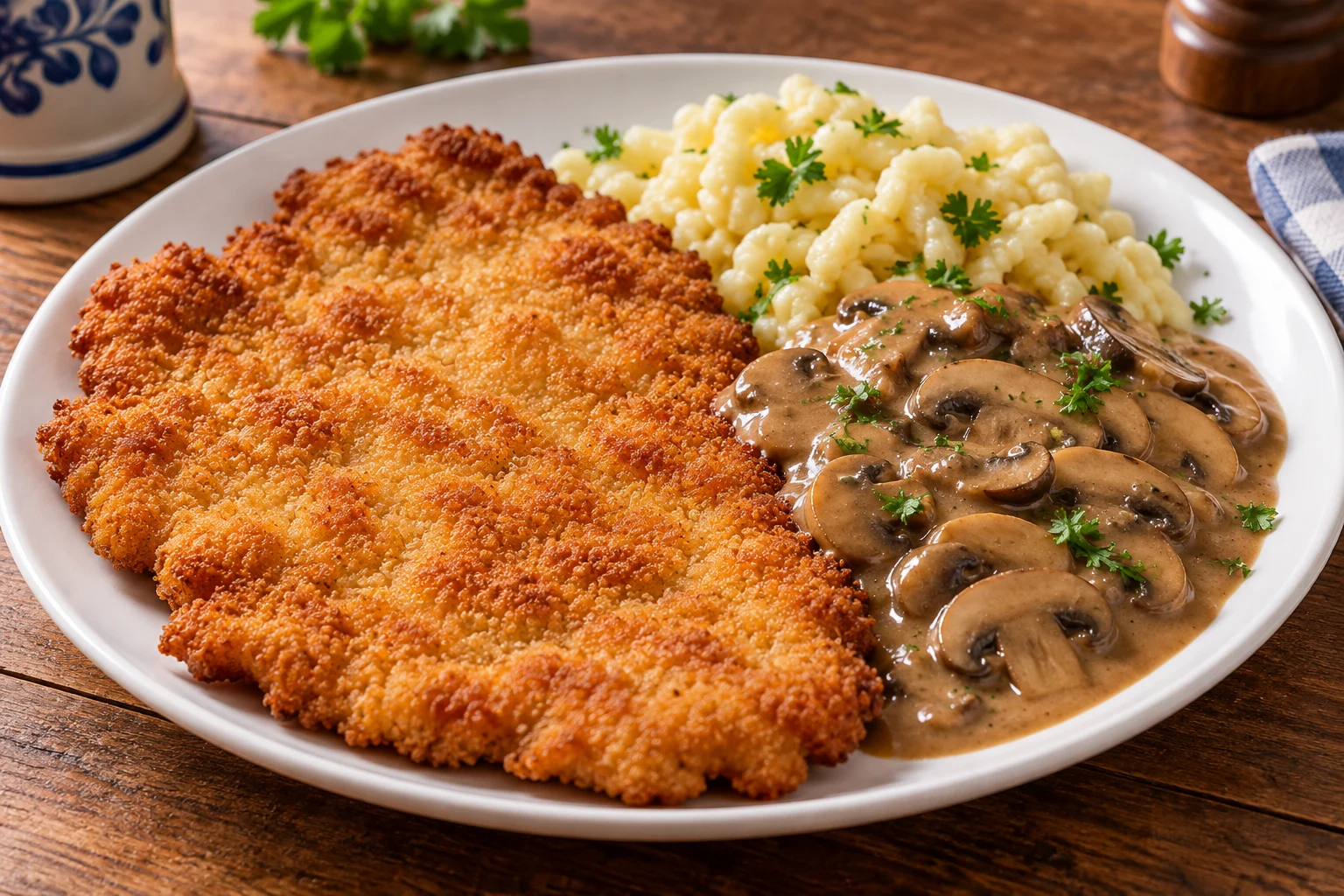
Jägerschnitzel translates as hunter's schnitzel. In the mushroom-sauce versions discussed here, a thin cutlet meets a sauce substantial enough to be a feature of the plate. One part benefits from careful browning and a little simmering; the other, when breaded, is most appealing soon after frying. That difference is the useful starting point for cooking the meal.
The coating is a choice, not a reliable definition by itself. German chef Thomas Sixt presents an unbreaded cutlet with mushroom and shallot sauce. Emmi, Jenny Böhme, and Munich-based cook Jay Wadams publish breaded versions. Comparing them lets you decide which eating experience you want before setting out flour, eggs, and crumbs.
Natur or paniert?
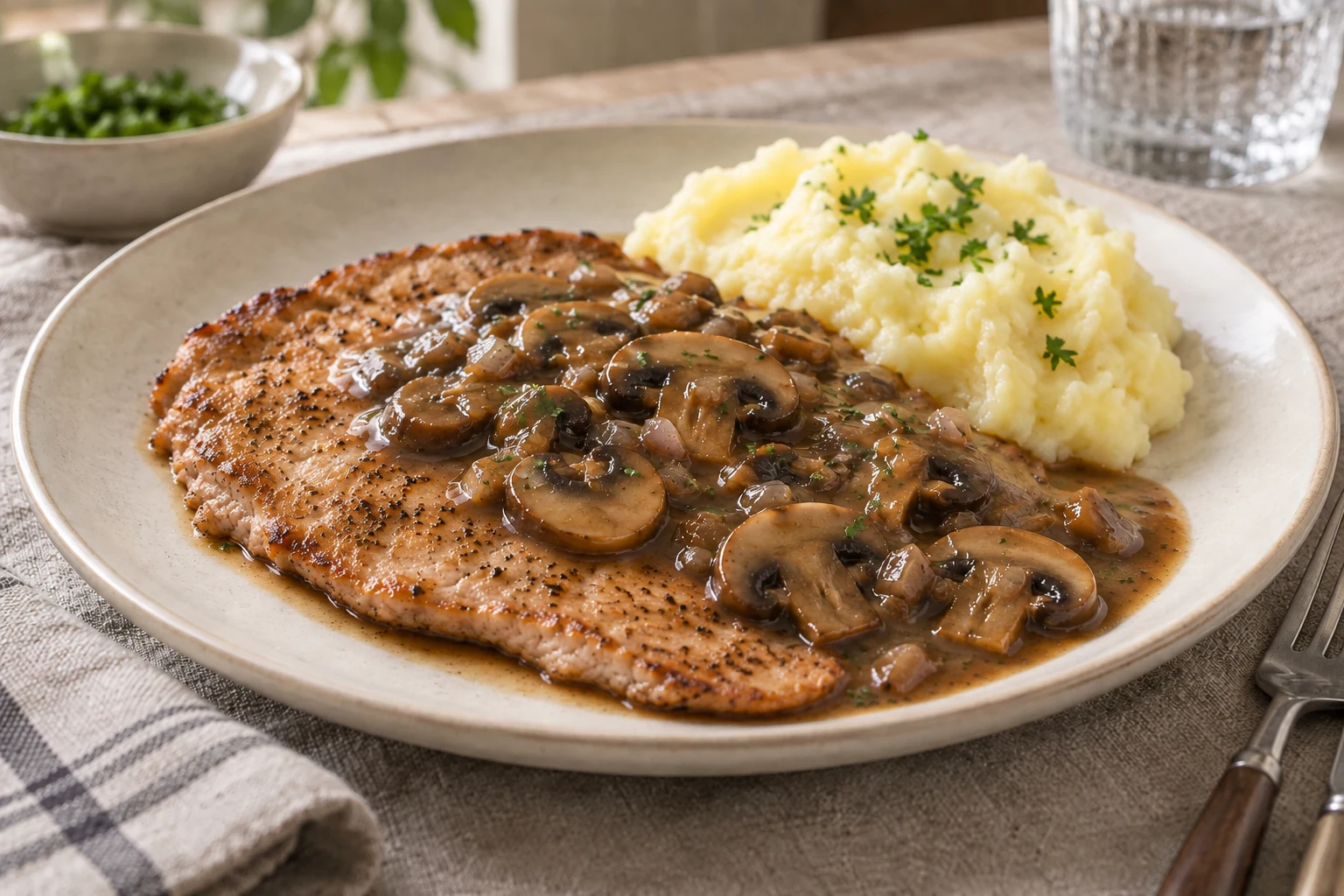
Natur: browned meat, integrated sauce
Sixt's cutlet has no crumb coating. He browns mushrooms first, removes them, sears the meat, then brings them together with the sauce base. The browned cutlet can share the pan with its sauce without sacrificing a breaded crust.
Paniert: a crust worth protecting
The breaded recipes use a flour, egg, and breadcrumb sequence. Böhme advises keeping the coating light rather than firmly compacting it. This route adds a distinct crisp texture, so the way you apply the sauce becomes part of the cooking decision.
Mushrooms first; richness second
The reviewed sauces have a family resemblance without an identical shopping list. Emmi uses cream and vegetable stock, with bacon, tomato paste, and a little soy sauce. Böhme's version includes diced ham and uses flour in the sauce. Wadams adds white wine and mustard. Sixt works from a meat sauce or reduced veal stock and finishes his stated ingredient list with butter, rather than making cream compulsory.
These differences are a reason to choose a complete formula. Adding cream to one cook's stock-based sauce or using another cook's thickener changes more than the color. Decide whether you want a creamy mushroom sauce or a darker stock-led one, and follow the proportions that support that choice. The cutlet's coating does not require every sauce to taste the same.
A workable order for the breaded version
Use your chosen recipe for amounts, temperatures, and doneness. These checkpoints help organize its components.
- 01
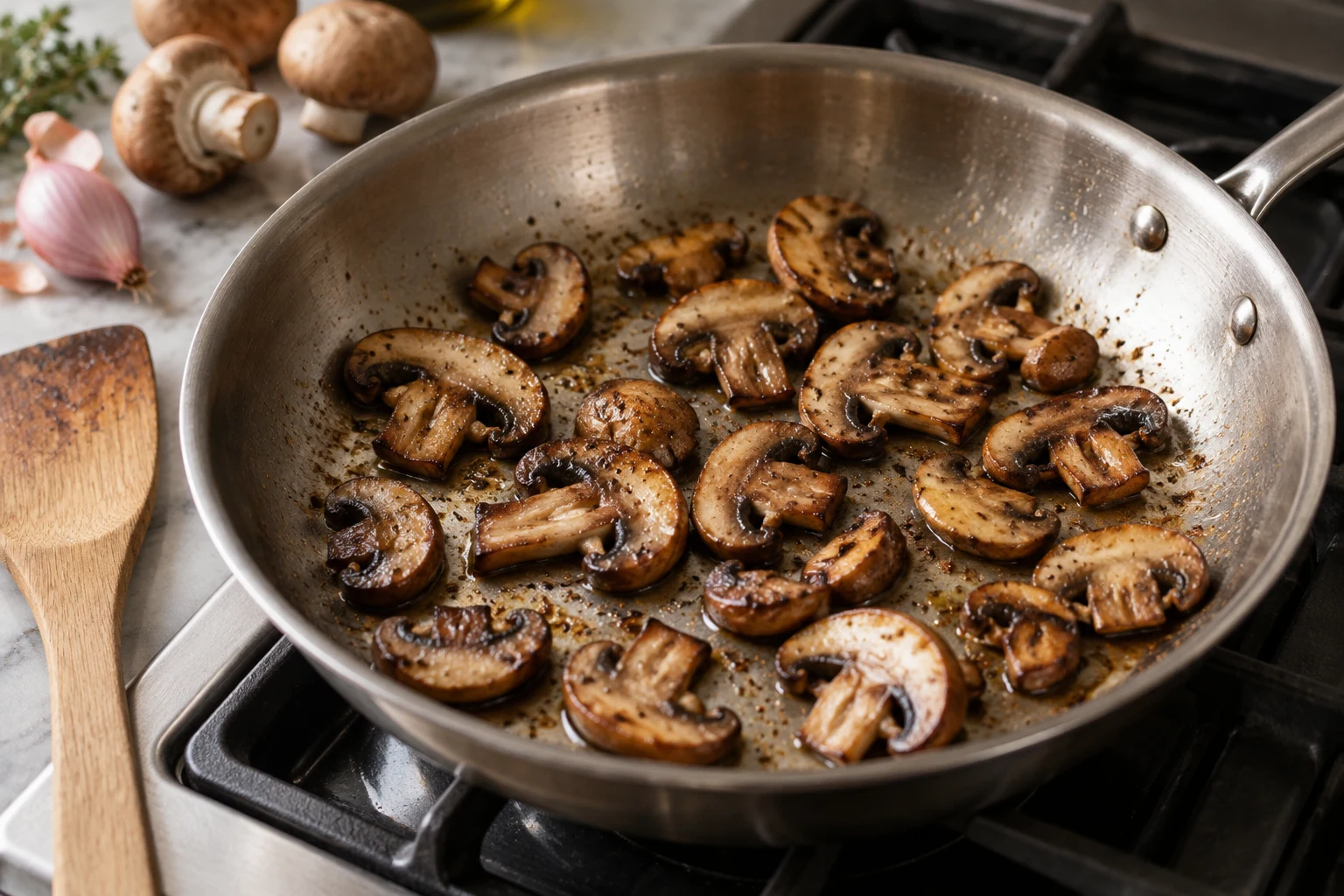
Give the mushrooms their own stage
Wadams stresses space in the pan and proper browning before the liquids go in. Emmi also cooks the mushrooms separately from her onion and bacon mixture. The objective is browned mushroom flavor, rather than slices simply simmered in cream.
- 02
Make the sauce before the final fry
Böhme's method starts with the sauce and then moves to the schnitzel. That sequence gives you fewer jobs competing for attention while the cutlets are in hot fat.
- 03
Keep the coating light
Emmi's method distributes breadcrumbs over the cutlet and presses only lightly. An even, loose coating is a different goal from compressing the crumbs into a dense layer.
- 04
Choose where the sauce lands
Emmi adds sauce only at serving; Wadams recommends serving it alongside to protect the crust. A sauce boat also lets each person decide how much of the cutlet to cover.
Let the side do a clear job
Emmi suggests Spätzle, potato sides, or a fresh salad. Those options give you a way to shape the meal without adding another elaborate sauce. Spätzle can carry some mushroom sauce; a potato side offers another texture; a salad gives the plate a cooler, fresh element. Choose the role you want the side to play.
For a breaded version, have plates and sides ready before the final frying batch. For an unbreaded version, accept that the sauce and meat can form a more integrated dish. Both plans make sense. The satisfying result comes from making the texture deliberate, browning the mushrooms with attention, and serving each component when it is ready.
Research notes
Sources and contrasting methods
Four original recipe authors provide the examples, including German-language explanations of unbreaded, breaded, and sausage versions.
- Thomas Sixt: Jägerschnitzel Chef's unbreaded method, mushroom browning, veal-stock preference, and sauce placement discussion.
- Emmi kocht einfach: Jägerschnitzel with mushroom cream sauce Breaded cutlet, bacon and cream sauce, light coating, and applying sauce at serving.
- Jenny Böhme, Familienkost: Jägerschnitzel Sauce-first sequence, flour-thickened sauce, and explicit distinction from Jagdwurst schnitzel.
- Jay Wadams, Days of Jay: hunter's schnitzel Breaded and unbreaded options, mushroom browning, wine and mustard sauce, and separate sauce placement.
Keep exploring
More stories for your table
Hungarian cuisine Stuffed cabbage
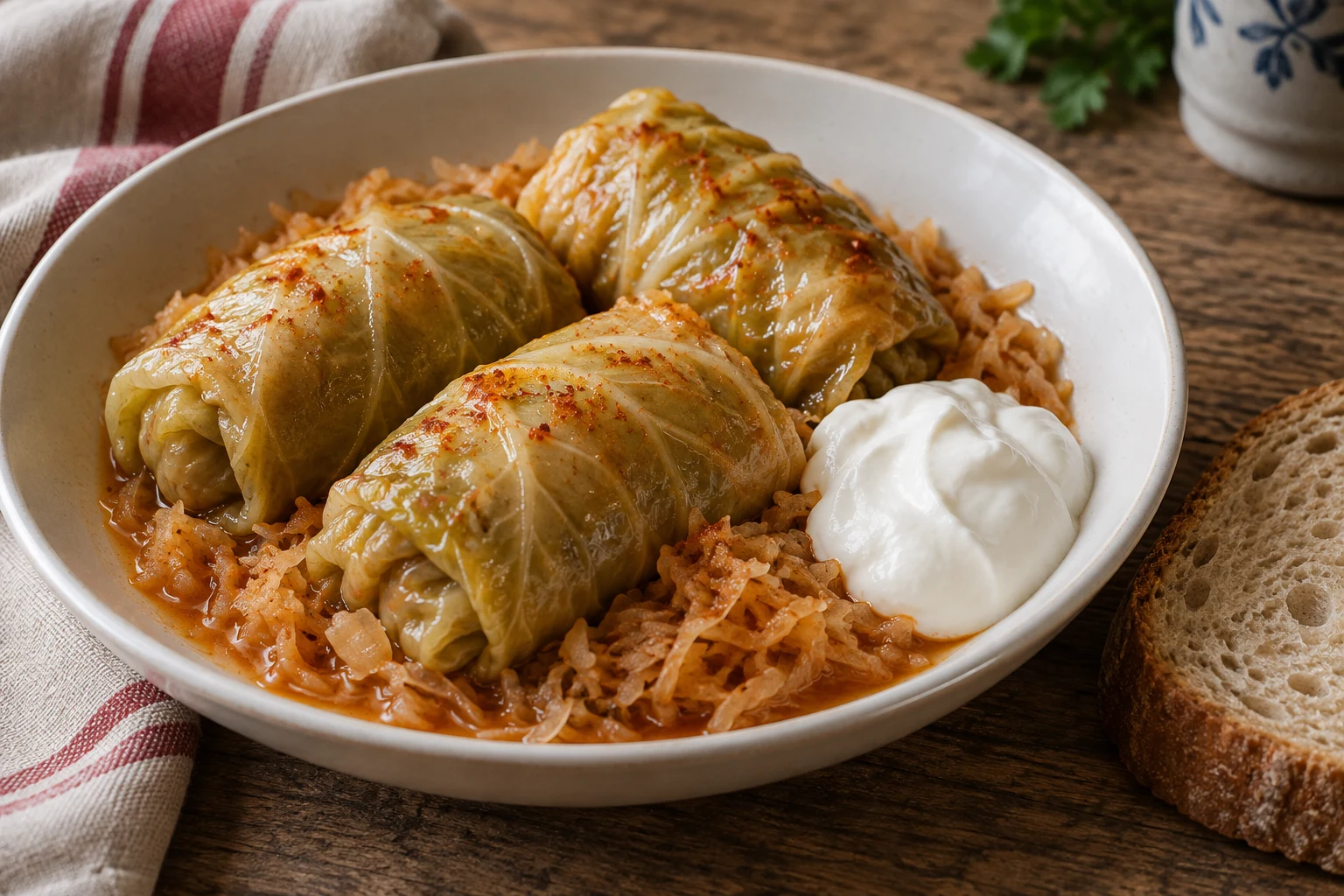
Töltött Káposzta: Cabbage in Two Roles
Hungarian stuffed cabbage combines a leaf-wrapped filling with cabbage in the cooking pot. Explore sour and fresh leaves, a Szabolcs tomato variation, and the dish’s place at festive tables.
German cuisine Swabian stuffed pasta
Maultaschen: One Swabian Pocket, Three Ways to Serve It
Thin pasta and a savory filling make Maultaschen recognizable, but broth, browned onions and pan service change the meal. Explore the Swabian dish’s family variations and the limits of its monastery legend.

Thai cuisine Pork braise
Moo Hong: Tender Pork Before a Rich Sauce
Phuket’s soy-braised pork rewards a patient simmer. Learn how to manage the liquid, understand its spice variations and cook a pepper-focused home adaptation.