
Sericaia: A Soft Center Beneath a Cinnamon Top
Sericaia
The first spoonful crosses a fragrant cinnamon surface before reaching a pale, tender interior. Sericaia brings custard and beaten egg whites together in one baked dessert.
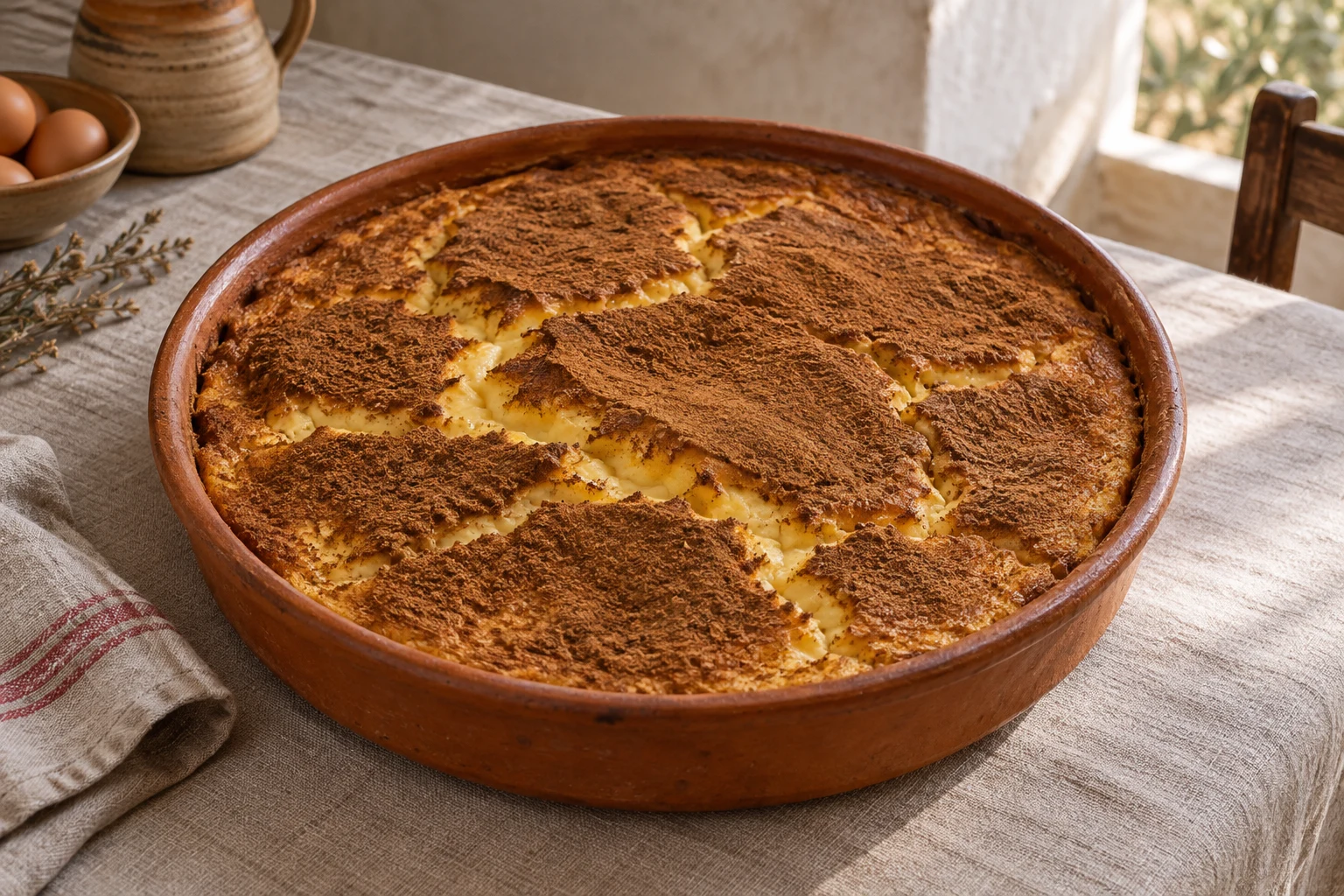
An Alentejo dessert with two textures
Sericaia belongs to the dessert repertoire of Portugal's Alentejo region. It is often described as a pudding, although its beaten egg whites give it a lighter body than a plain baked custard. Expect a pale egg-rich center, a cinnamon-covered surface, and a soft serving that yields easily to a spoon.
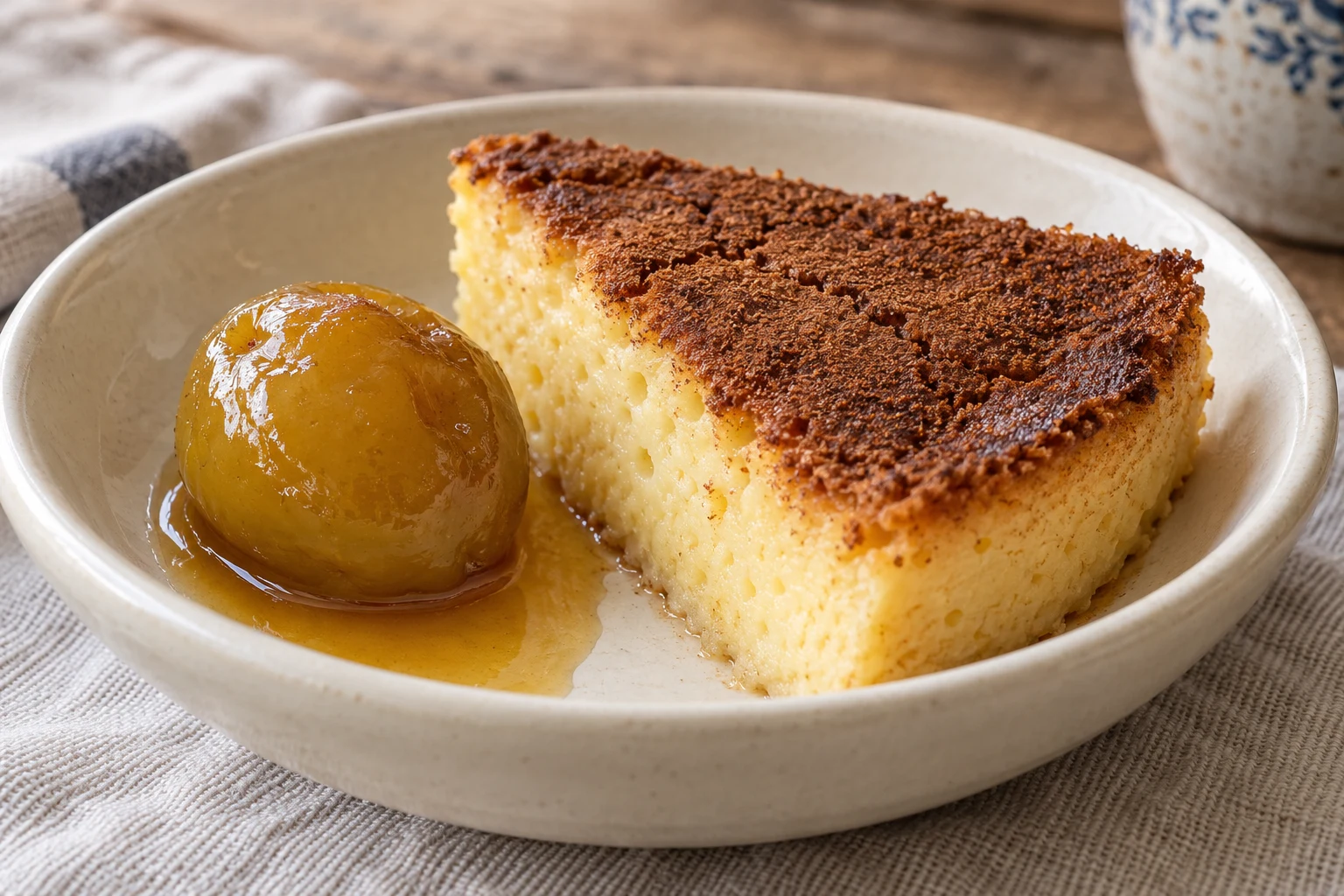
Turismo de Portugal highlights it in Elvas and Vila Viçosa, with syrupy Elvas plums as a companion. That pairing is a useful starting point for understanding the dessert: a modest portion of tender pudding, warm spice, and a small, sweet fruit accent. The plum is served alongside; it need not be baked into the mixture.
Read the dessert from the inside out
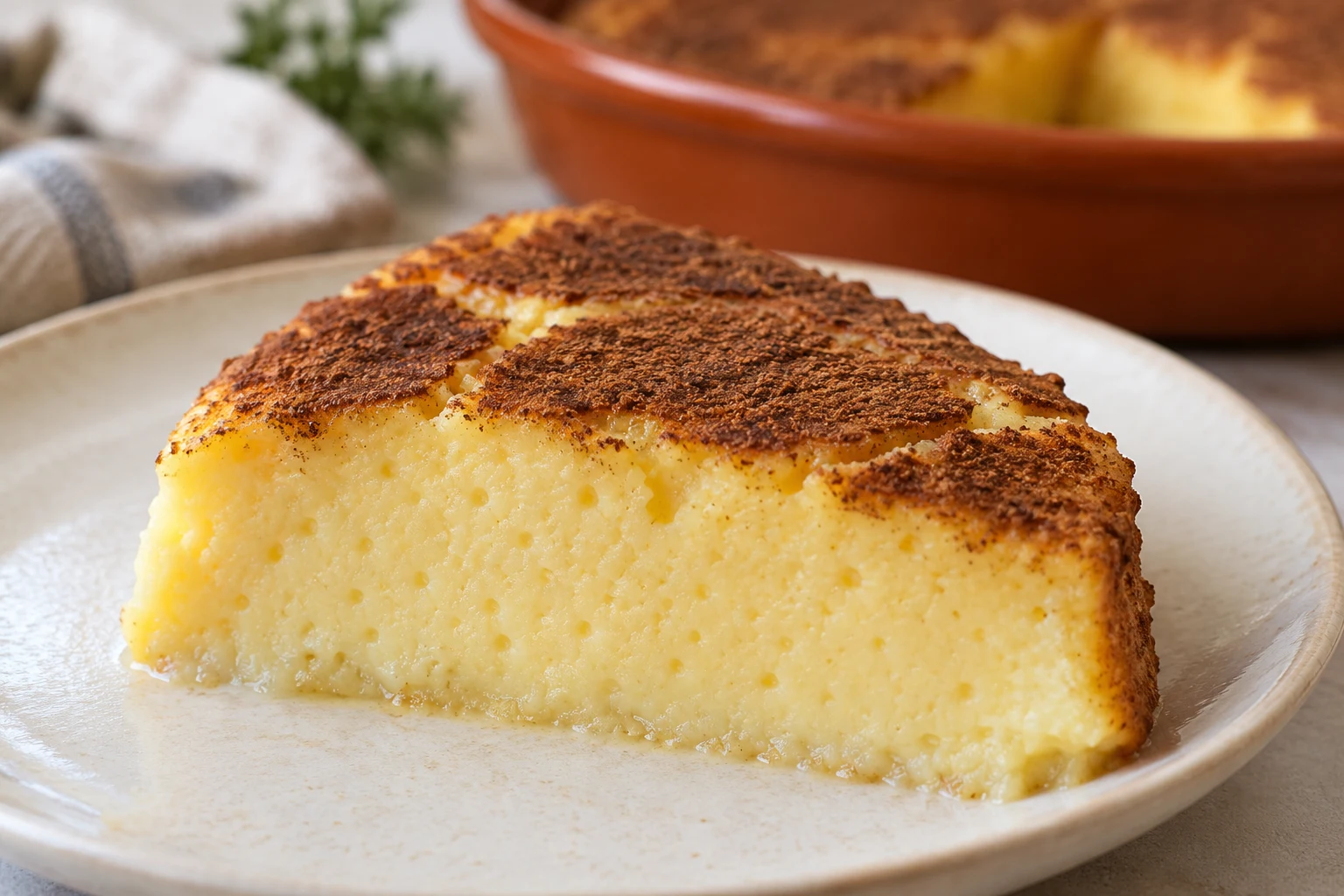
- Custard
- Tender body
- Egg whites
- Air and lift
- Cinnamon
- Fragrant surface
Milk, egg yolks, sugar, and flour form the base in the dairy versions.
Beaten whites lighten the mixture when folded in carefully.
A generous dusting marks the top before baking.
Choose one recipe approach
These published versions share an identity, but their formulas and baking instructions differ. Follow one complete recipe, including its ingredient amounts and vessel guidance.
A school kitchen's custard method
The Lisbon Hotel and Tourism School version on VisitPortugal thickens milk with yolks, flour, and sugar before cooling and folding in beaten whites. It gives yolks and whites by weight.
Pedro Barbosa's smaller dairy version
Food From Portugal first thickens a milk-and-flour mixture, lets it become warm, and then adds yolks and folded whites. Its proportions differ substantially from the school's version.
The Healthy Sins' variation
Sónia and Diogo use oat drink and lime in their Continente recipe, with a separate fresh-plum sauce. That is a named variation, and its sauce should not be confused with preserved Elvas plums.
Three checkpoints before serving
- 01
Let the cooked base lose its heat
Use your chosen recipe's cooling stage. A piping-hot mixture can damage the foam as the whites are incorporated. Work with a spatula and lift the heavier base through the whites, turning the bowl rather than beating the mixture vigorously.
- 02
Keep the foam in the dish
Scrape the folded mixture into the specified baking vessel and finish with cinnamon. Avoid repeated stirring or firm packing after folding. Use oven-safe pottery suitable for the recipe; protect your hands when handling it.
- 03
Check the center, then allow it to settle
A dark cinnamon surface is not a doneness test. Follow the recipe's baking cues and verify that the center reaches at least 71°C/160°F, the official minimum for egg dishes. Some settling after baking is expected. Cooling lets the interior become easier to portion.
A cracked top is a clue, not a timer
The contrast between brown cinnamon and pale openings is part of sericaia's appeal. Natural cracks may appear as the mixture rises. Their size cannot tell you whether the center is cooked, and a shallow dish and a deeper one will heat differently.
The recipes here use different oven settings and bake lengths. Do not borrow a temperature from one and a time from another, or assume that a larger batch will fit your usual cake tin. Keep the chosen formula, dish, and oven instructions together. Avoid touching a hot surface to create decorative cracks.
Serve a little fruit, keep the pudding tender
Serve once the pudding has cooled sufficiently to portion, or chilled if that suits the recipe. Put a preserved Elvas plum beside each serving and add syrup sparingly so the cinnamon remains noticeable. A fresh-plum compote is another pleasant accompaniment, with a different texture and flavor.
Typical dairy recipes contain eggs, milk, and wheat; check the full ingredient list, particularly in variations. Refrigerate this perishable dessert within two hours, or within one hour in heat above 32°C/90°F. Use shallow covered containers and a refrigerator at 4°C/40°F or colder. Do not leave it on the table for an extended cooling period.
Research notes
Sources and recipe approaches
Original Portuguese recipes, official regional context, and food-safety guidance informed this guide.
- VisitPortugal · Lisbon Hotel and Tourism School sericaia Custard and folded-white method, based on Maria de Lourdes Modesto. Hot-finger surface marking is not recommended here.
- Pedro Barbosa · Sericaia tradicional portuguesa Original dairy recipe, texture explanations, folding, and expected settling after baking.
- The Healthy Sins / Continente · Sericaia Sónia and Diogo's oat-drink and lime variation, including a fresh-plum sauce.
- Turismo de Portugal · Gastronomia do Alentejo Regional context and the Elvas plum accompaniment; shares a publisher with the school recipe.
- FoodSafety.gov · Safe cooking temperatures Egg dishes require a center temperature of 71°C/160°F.
- FoodSafety.gov · Cooling and refrigeration Perishable food time limits, shallow cooling containers, and cold storage.
Keep exploring
More stories for your table
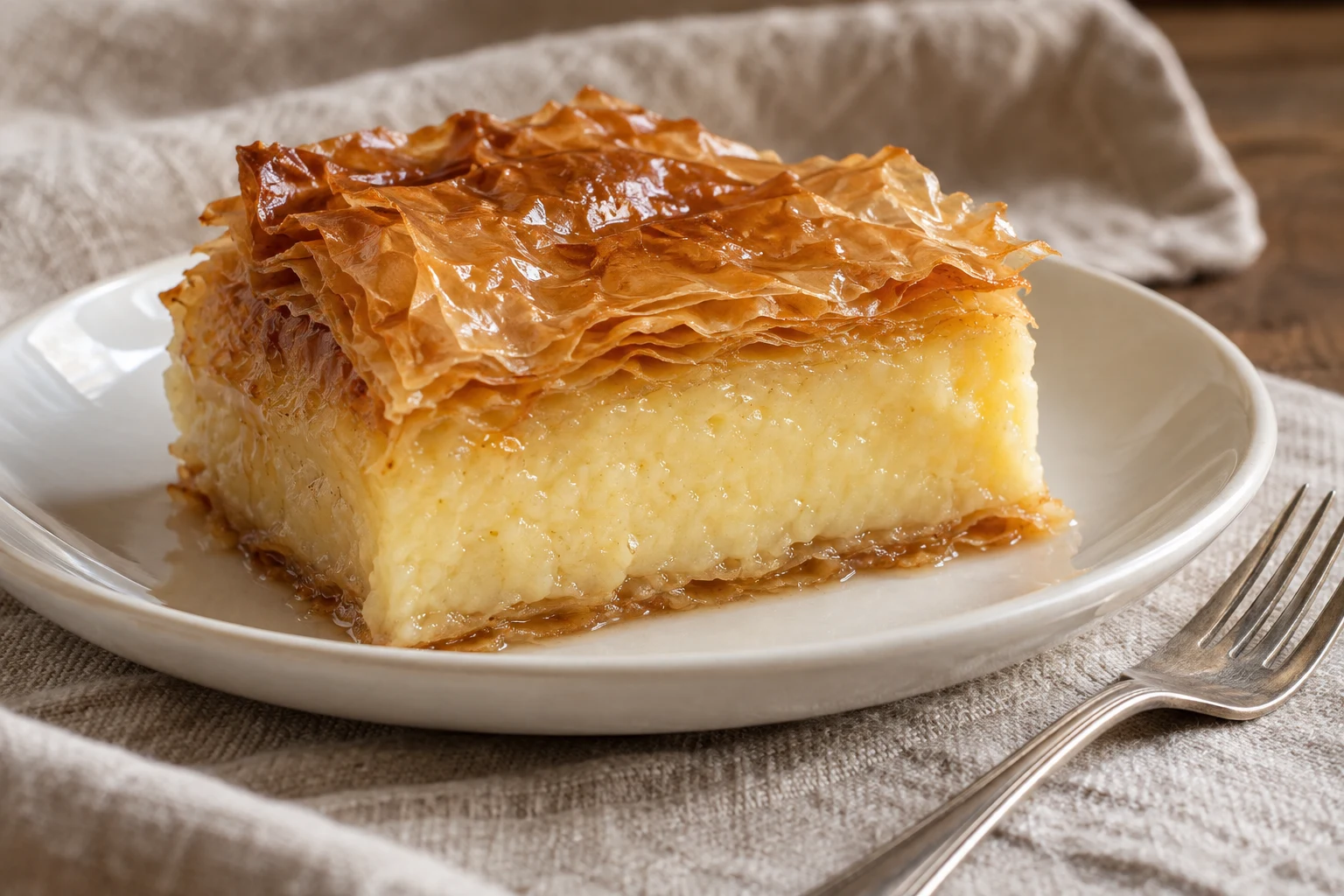
Greek cuisine Semolina custard pastry
Galaktoboureko: custard, phyllo and the syrup between them
Read galaktoboureko through its semolina custard, fragile phyllo and syrup, with a comparison of published Greek recipes and practical serving cues.
Greek cuisine Citrus cake
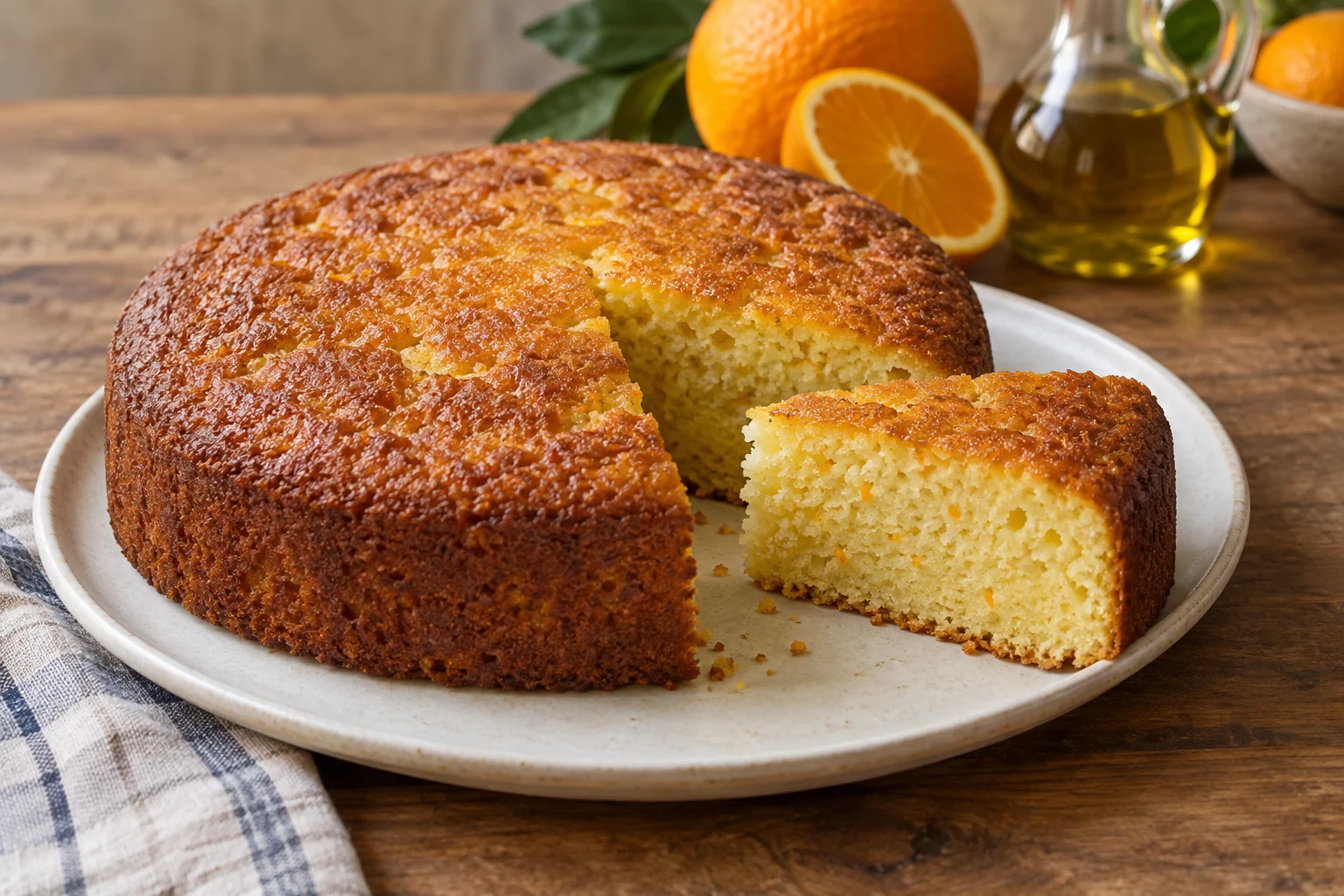
Greek Olive Oil Cake: Keep the Citrus Measured
An orange and yogurt olive oil cake with a gentle mixing method, a specified round pan and a center check. Measure the juice and let the zest carry the aroma.
Hungarian cuisine Vanilla dessert
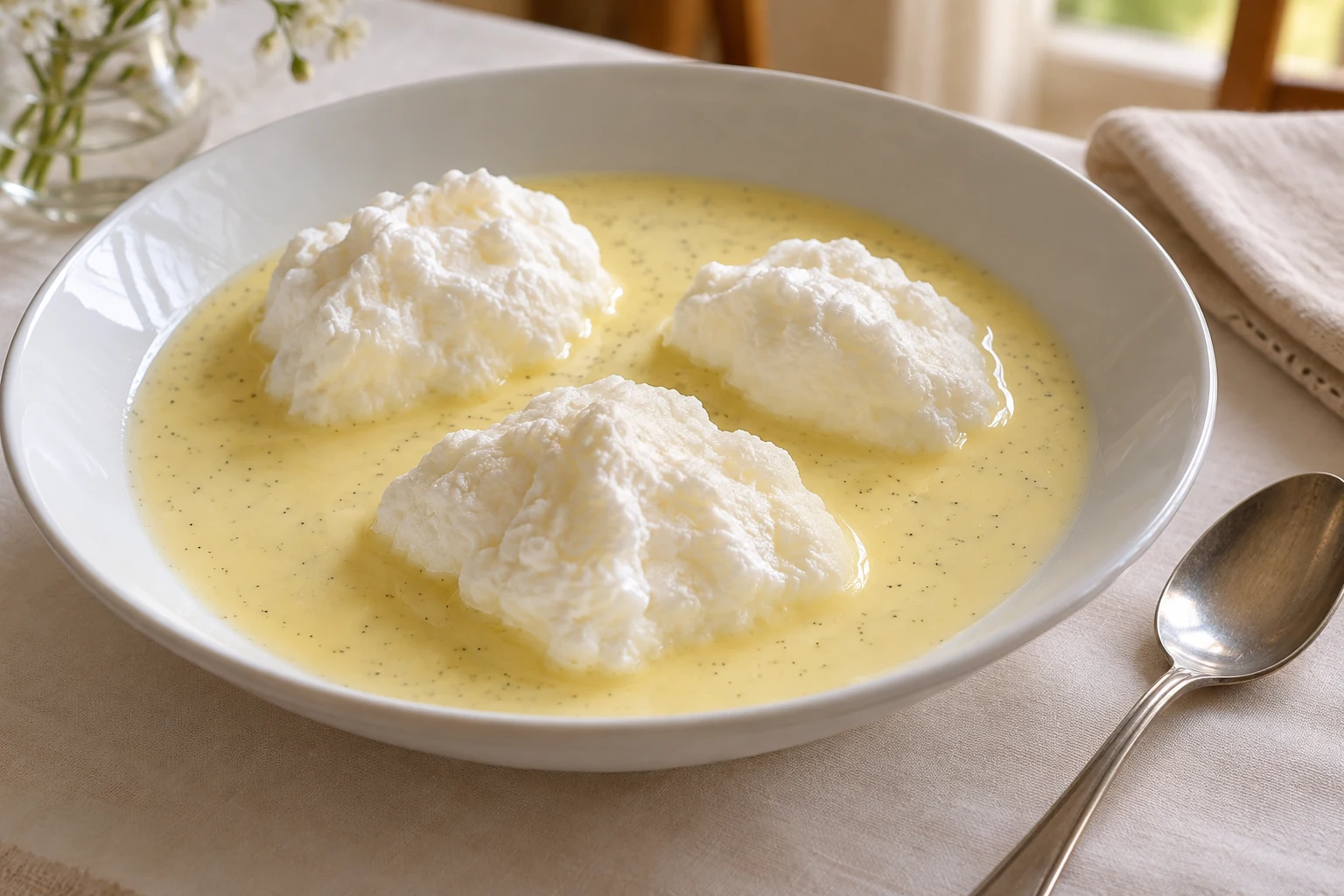
Madártej: A Soft Cloud Needs a Pourable Custard
Hungary's madártej pairs cooked egg-white dumplings with vanilla custard. Follow the two textures, the poaching liquid and the choice of thickener.