

Summary:
A Welsh cheese-on-toast recipe built around gentle melting and a quick browned finish.The browned top is the last step. Welsh rarebit needs a smooth, spreadable cheese mixture underneath it, so give the saucepan gentler heat than the grill. That contrast is the useful trick: melt slowly, then brown quickly.
Caws pobi and the Welsh table
Welsh rarebit, also called Welsh rabbit, is a savoury cheese preparation served on toast, not a rabbit dish. The Welsh name caws pobi refers to toasted cheese. Mustard and ale are familiar additions, but recipes differ in their liquid, thickener and cheese. This version uses a small roux and mature cheddar, with no egg in the mixture. It is a practical home adaptation, not a claim that every Welsh kitchen follows one formula.
Welsh rarebit with mustard and ale
Makes: 4 slices, serving 2 as lunch or 4 as a snack. Time: about 25 minutes, including a short cooling pause. Use the texture cues below rather than the clock alone.
- 4 sturdy slices bread, about ½–¾ inch (1.5–2 cm) thick
- 1 tablespoon (14 g) unsalted butter
- 1 tablespoon (8 g) all-purpose/plain flour
- ½ cup (120 ml) mild brown ale, or milk for a beer-free adaptation
- 8 ounces (225 g) mature cheddar, freshly grated
- 1 teaspoon dry English mustard powder
- 2 teaspoons Worcestershire sauce
- Black pepper, to taste
- Optional: a small pinch of cayenne; salad or chutney alongside
For a vegetarian plate, choose cheese made with vegetarian rennet and an anchovy-free Worcestershire sauce. Milk changes the flavour but avoids relying on brief cooking to remove alcohol. Bread, flour and beer can contain gluten; cheese and butter contain milk, and the sauce may contain fish. Check labels for your diners.
Make the paste before the toast
- Cook the flour. Melt the butter in a small saucepan over medium-low heat. Stir in the flour for about a minute, keeping it pale.
- Add the liquid gradually. Whisk in the ale in several additions. Stir until smooth and thickened, then mix in the mustard and Worcestershire sauce.
- Lower the heat for cheese. Add the grated cheese in small handfuls, stirring between additions. Keep the mixture below a boil. Stop heating as soon as it becomes a smooth paste; season with pepper and optional cayenne. Let it cool briefly until it stays where you spread it.
- Toast and cover. Heat the broiler (UK grill) to high. Toast the bread lightly on both sides on a metal baking sheet. Spread the mixture evenly over the upper surface, close to the edges.
- Watch the finish. Return the tray beneath the broiler with room between the topping and element. Stay beside it: start checking after a minute and remove when bubbling with brown patches. Appliance strength varies. Serve immediately.
Read the texture
A sauce that runs off the spoon needs cooling before it meets the bread. If it is too stiff to spread, loosen it with a teaspoon of milk at a time. Visible oil is a reason to take the pan off the heat, not turn it up. Very thin bread offers little support; choose a substantial slice rather than stacking the topping higher.
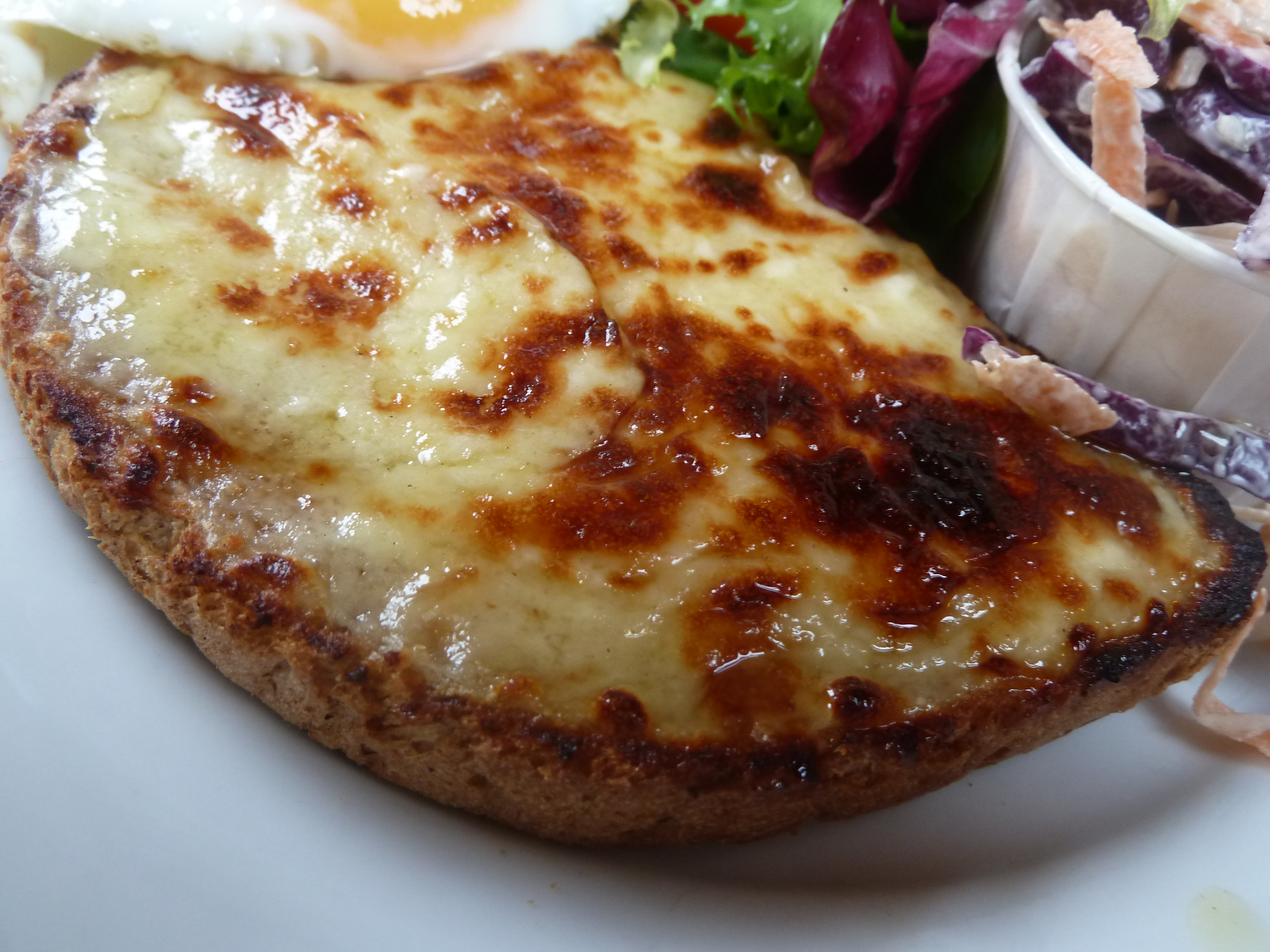
Keep salad dressing off the toast until serving. The photograph shows another preparation with accompaniments, not a tested result of these measurements.
Make ahead without soggy bread
Prepare only the cheese mixture ahead and keep the bread separate. Refrigerate promptly in a shallow covered container at 40°F (4°C) or below, within two hours, or one hour above 90°F (32°C). Use within 3–4 days. Reheat stored mixture thoroughly to 165°F (74°C) before assembling; browned surfaces alone do not confirm a hot centre. Freshly assembled rarebit has the best texture.
Sources and kitchen note
This independently written recipe has not been kitchen-tested by SmartRestro. Culinary references: Alex Vines for Wales.com on gradual melting, cheese and Welsh context; Good Food’s roux-based version; and Welsh Food and Drink on caws pobi and milk as an alternative. Storage and reheating: USDA leftovers guidance and safe reheating.
Featured photograph: “Welsh rarebit” by Worm That Turned, 2016, licensed CC BY-SA 4.0. Original photograph used without alteration; display sizing may vary.