

Summary:
Learn when each vegetable is ready, how to peel roasted peppers, and how to dress a simple oven-made escalivada.Escalivada rewards patience rather than elaborate seasoning. Roast the vegetables until their flesh gives way, then peel and dress them while they are still a little warm. The result should be supple strips, not firm cubes of roasted vegetables.
This Catalan dish is rooted in cooking vegetables over embers; a domestic oven offers a practical version without promising the same smoky flavour. Spain’s official tourism recipe centres on aubergines and red peppers, while Tourism of Barcelona includes onions and describes several variations. Here, those three vegetables make a simple platter for four.
Recipe note: this is an original, source-informed home-oven adaptation, not a kitchen-tested recipe. Cooking times are estimates; use the tenderness checks below.
Escalivada at a glance
- Serves: 4 as a side or starter
- Preparation: about 15 minutes, plus peeling
- Roasting: approximately 45–80 minutes, depending on vegetable size
- Resting: 10–15 minutes
- Equipment: large rimmed baking tray, baking paper, tongs, bowl and plate
Ingredients
- 2 medium aubergines (eggplants), about 700 g / 1½ lb total
- 2 large red bell peppers, about 450 g / 1 lb total
- 2 medium onions, about 300 g / 10½ oz total
- 3 tablespoons / 45 ml extra-virgin olive oil, plus a little for the tray
- 1 small garlic clove, finely minced, optional
- ½ teaspoon fine salt to start, then adjust to taste
- Freshly ground black pepper, optional
- Crusty bread, to serve
Roast until the centres soften
- Prepare the oven. Heat to 200°C / 400°F conventional, or 180°C fan. Line a rimmed tray with baking paper. Wash and dry the peppers and aubergines; prick the aubergines several times with a fork. Peel the onions and halve them through the root, keeping each half together.
- Give everything space. Put the whole peppers and aubergines on the tray with the onion halves, cut sides down. Brush the onions and tray lightly with oil. If the tray is crowded, use two trays and rotate their positions during cooking.
- Check each vegetable separately. Roast, turning the peppers and aubergines with tongs after about 25 minutes. Begin checking at 40 minutes. Peppers need wrinkled, blistered skins and soft flesh. Aubergines should sag and offer almost no resistance to a skewer through the thickest part. Onions should be tender through their centres. Remove each vegetable as it finishes; peppers may take 40–55 minutes, aubergines 50–70, and onions 50–80. Size and ovens vary, so allow longer if needed.
- Rest briefly, then peel. Move the peppers to a bowl and cover with a plate for 10–15 minutes. Let the aubergines cool until safe to handle. Remove pepper skins, seeds and stems; pull or cut the flesh into broad strips. Split the aubergines, lift out their flesh and discard skins and stems. Separate the onion layers, trimming any tough or blackened outer pieces.
- Dress gently. Arrange the vegetables on a platter. Spoon off excessive watery liquid rather than letting it flood the plate. Add the olive oil, optional garlic and salt, turning carefully so the strips remain intact. Taste before adding more salt or pepper. Serve warm or allow to cool briefly for serving.
The texture check matters more than the clock
A pepper can colour before it softens, and a large aubergine can look collapsed at one end while remaining firm in the middle. Test the thickest part, not the narrow tip. If the outside is becoming too dark while the centre remains firm, loosely cover that vegetable with foil and continue roasting.
Use a small knife or your fingers to remove stubborn bits of pepper skin once cool enough to handle. A few tiny flecks are less troublesome than shredding the flesh in pursuit of a perfectly clean surface. Keep separate piles as you peel so you can arrange the different vegetables rather than stirring everything into a mash.
Serve simply, adapt deliberately
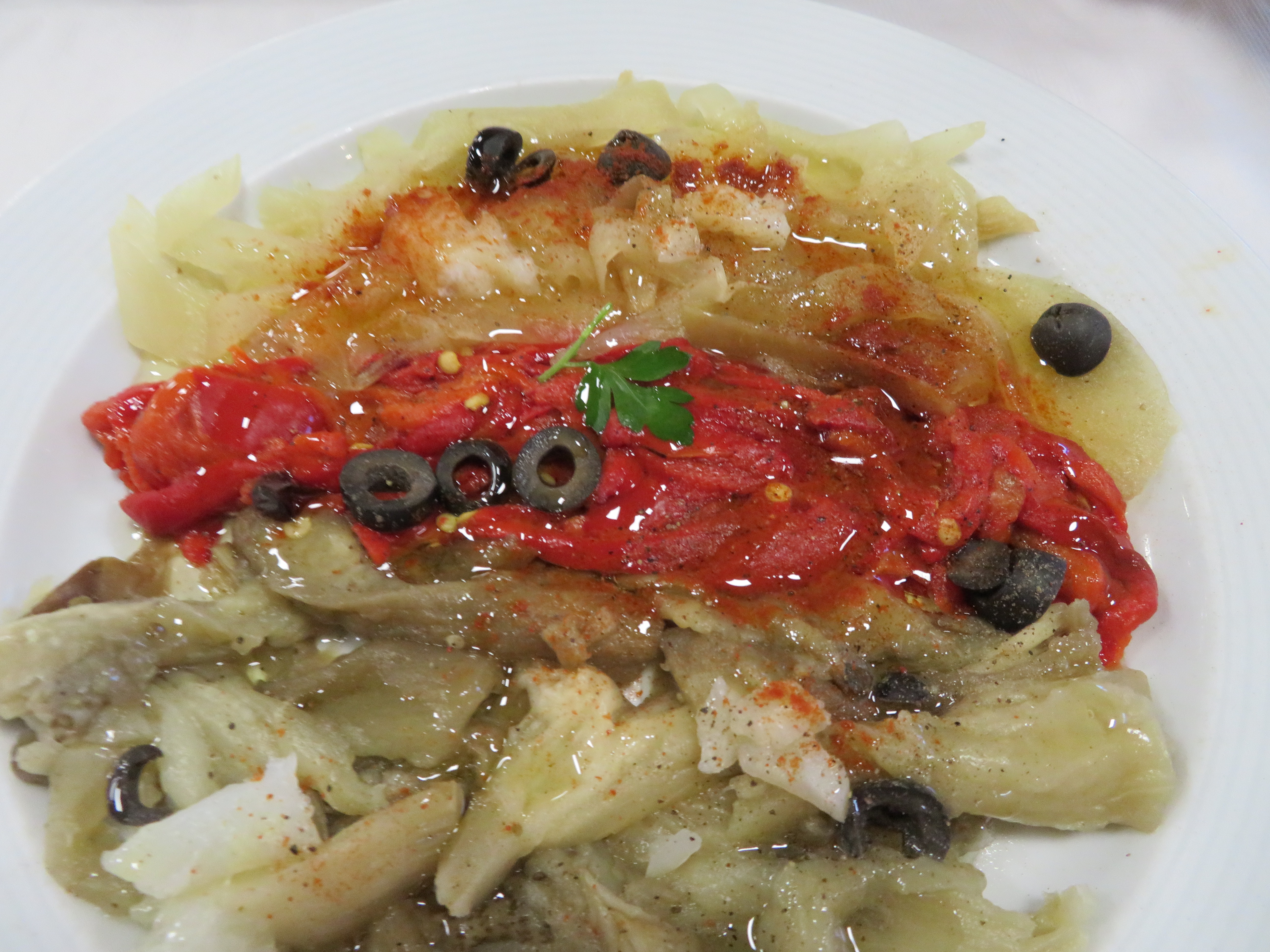
Bread makes this an easy starter. For a more substantial plant-based meal, serve white beans alongside rather than presenting them as a required traditional ingredient. Olives or chopped parsley are optional additions also noted by Tourism of Barcelona. The photographed serving includes additional garnishes; it illustrates the dish, not a test batch of this recipe.
Choose similarly sized aubergines and peppers so they cook more evenly. A few blemishes are fine if you trim damaged areas, but avoid vegetables with mould or extensive soft decay. Using the oven for another dish at the same temperature can make the longer roasting time more practical.
Make ahead and store safely
Refrigerate the prepared vegetables promptly in shallow containers, within two hours of cooking, or one hour if the surroundings exceed 32°C / 90°F. Keep at 4°C / 40°F or colder and use within three to four days. Take out only the portion you plan to serve; do not leave the full batch on the counter to warm for hours.
Sources and photograph
- Spain’s official tourism website: Escalivada for the Catalan dish, core ingredients and oven-roasting option.
- Tourism of Barcelona: Escalivada for vegetable variations, resting peppers before peeling and serving additions.
- FoodSafety.gov: safe chilling and University of Illinois Extension: leftovers for storage guidance.
Photograph: “Escalivada, verduras asadas” by Juan Emilio Prades Bel, CC BY 4.0. Authentic photograph, used without image alteration; not AI-generated and not a photograph of this adaptation.