
Bún Ốc: Two Ways to Meet the Broth
Bún ốc
A bowl of snail noodles suggests soup. In Hanoi, it can also mean small bundles of rice vermicelli beside a separate bowl of tangy broth. How the two meet is part of the dish.
Follow the noodles
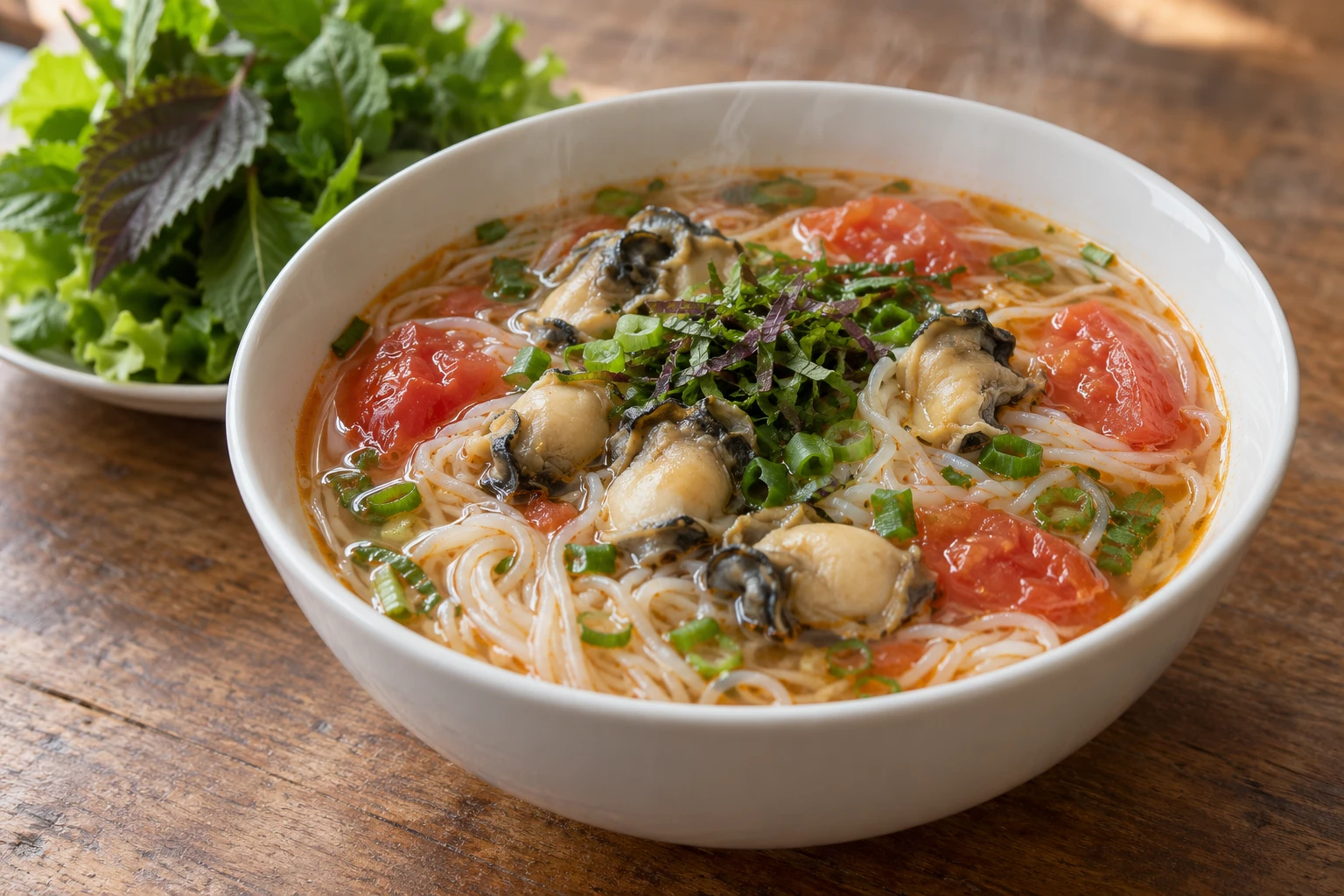
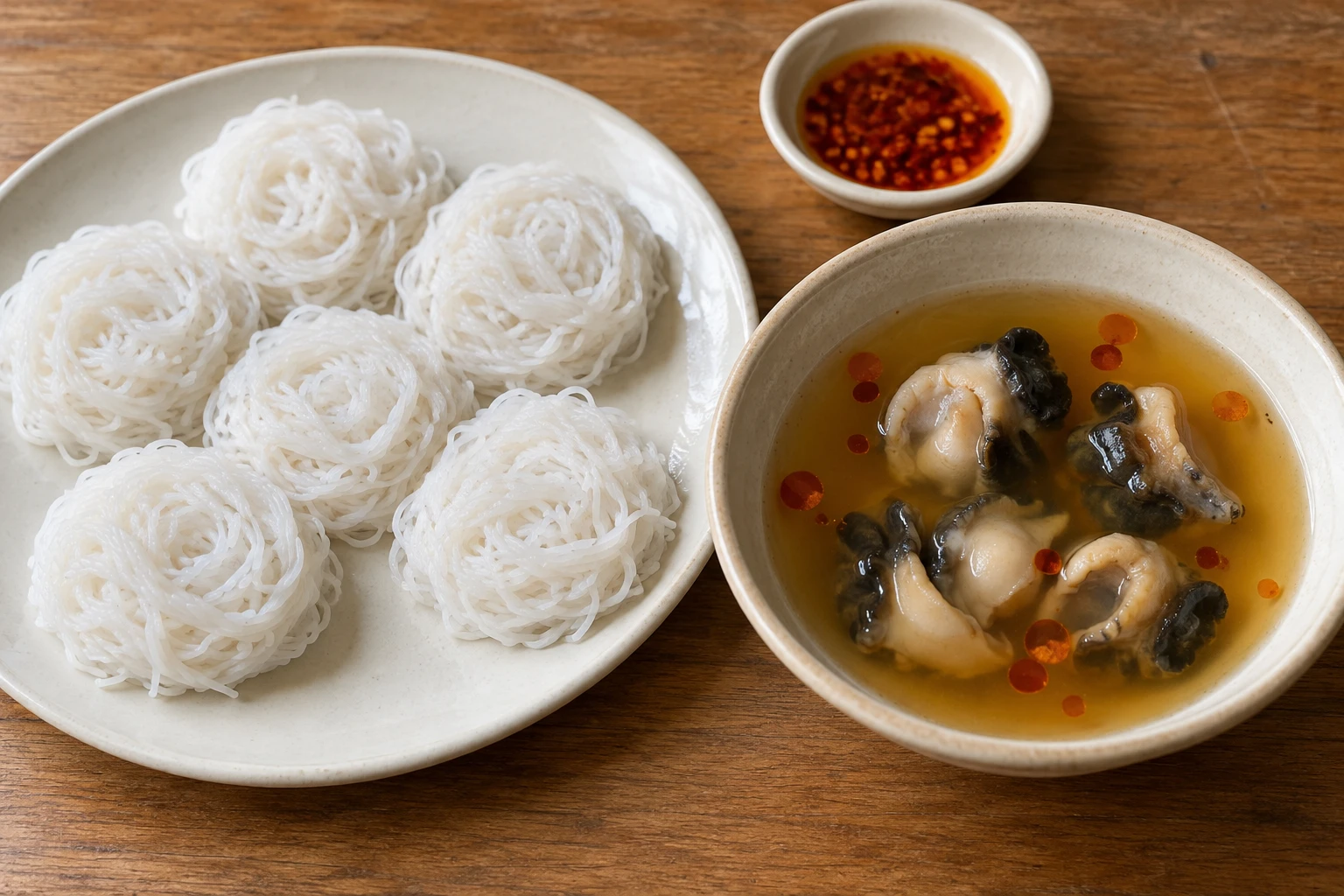
The white rice noodles are the first clue. In a hot bowl of bún ốc, fine strands sit beneath snails and tomato broth, ready to lift with chopsticks. With bún ốc nguội, the noodles may arrive in little bundles on their own plate. A smaller bowl holds the snails and broth. Instead of lifting noodles already immersed in soup, the diner brings them to the liquid a mouthful at a time.
Both belong in a conversation about Hanoi’s snail noodles. Vietnam’s national tourism guide places bún ốc among the capital’s familiar comfort foods, describing rice vermicelli, tomato, vinegar and accompanying herbs. Its mention of additional beef or crab also helps explain why a present-day bowl may look more crowded than the dish’s short name suggests.
Hot soup or cool dipping bowl?
Bún ốc nóng
The hot service gathers the meal in one bowl. Thin rice vermicelli, cooked snail meat and toppings receive broth, with tomato and herbs making an immediately visible part of the arrangement. A spoonful and a lift of noodles can carry several components together.
Bún ốc nguội / bún ốc chấm
The cool service separates noodles from the snail broth. Small bundles make convenient portions for dipping. The name bún ốc chấm makes that action explicit; a spoon can bring broth and snail meat alongside the noodles. The separate plate is a feature of the meal.
Tomato gives the hot bowl its shape
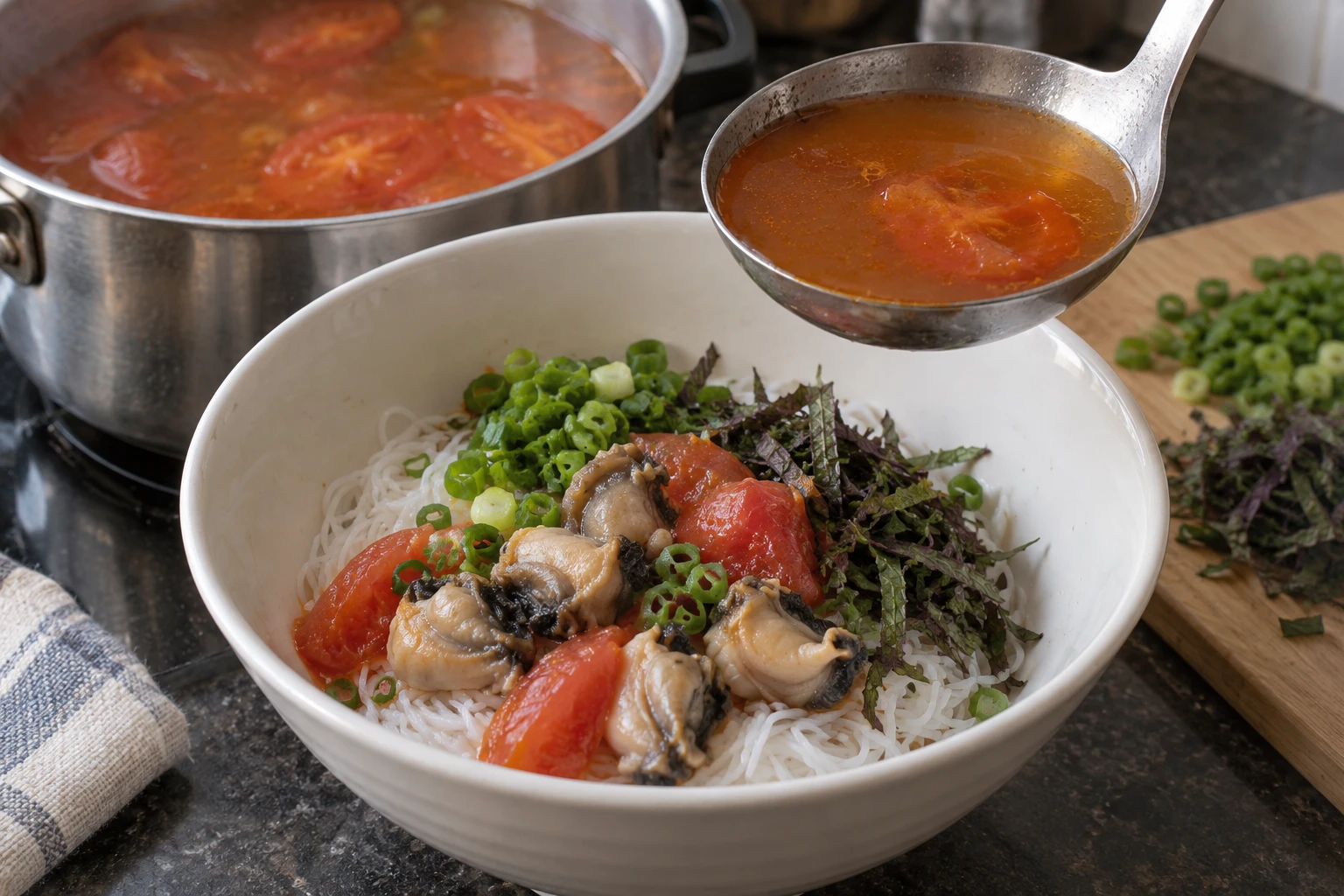
Xuyến Chi and Khánh Hồng’s hot version for Dân Trí gives tomato two jobs: some is cooked down for color, while more enters the broth as pieces. Their bowl also includes sliced scallion and perilla. This is useful to look for when reading the dish beyond its red surface. A tomato wedge has its own softness; a little chopped leaf changes the aroma of the noodles surrounding it.
Their preparation combines a bone broth with snail cooking liquid. That is one documented approach, rather than a definition of every bowl. What matters at the table is the relationship between the smooth noodles, firmer snail meat, tomato and seasoned liquid. Try a spoonful before adding more chili or acid so those relationships remain easy to notice.
A different rhythm beside the bowl
A 2016 Ngôi Sao account, republished by VnExpress, describes cool snail broth served from an earthenware jar with a wooden ladle. It identifies rice vermicelli from Phú Đô and giấm bỗng associated with Làng Vân in the versions it discusses. Those details locate the account in Hanoi’s food culture without establishing an inventor or a single date of origin.
Bùi Thủy’s published cool version includes giấm bỗng, a rice-based vinegar, alongside snail liquid and pork-bone broth. Chili cooked in fat supplies a separate accent. The result gives the diner several decisions: how much liquid a noodle bundle takes up, when to eat a piece of snail, and how much chili to add. Small portions let those decisions change between mouthfuls.
Recognize an adaptation on its own terms
Thuy’s first-person account on Blog of Salt follows a bowl she ate in Maryland. Her own hot adaptation uses frozen snail meat, dried shrimp, ginger and lemongrass, with added prawns. She also recalls a bowl made with conch. The story shows how access to ingredients and a remembered meal can shape a cook’s version.
It is helpful to retain those particulars. Lemongrass in that recipe need not become a compulsory ingredient in every Hanoi bowl, just as the tourist guide’s extra beef and crab need not appear everywhere. Ask what the cook has put in the broth and which additions are offered separately. Then look at where the noodles sit: in the soup, or waiting beside it. That simple observation makes the meal easier to understand before the first bite.
Research notes
Sources
Local recipes, a national tourism guide and a first-person adaptation document the serving styles and their differences.
- Viet Nam National Authority of Tourism — Ha Noi Food Guide Places bún ốc in Hanoi and describes tomato, vinegar, herbs and additional toppings.
- Dân Trí — Xuyến Chi and Khánh Hồng: Bún ốc A hot version with tomato in two stages, bone broth, snail liquid, scallion and perilla.
- VnExpress Cooking — Bùi Thủy: Bún ốc nguội Hà Nội Documents separate noodle bundles, rice-based vinegar, chili fat and optional herbs.
- Ngôi Sao, republished by VnExpress — Bún ốc nguội Reports Hanoi’s dipping service, earthenware broth vessel and named noodle and vinegar localities.
- Blog of Salt — Thuy: Bun Oc A firsthand Maryland-inspired hot adaptation using frozen snails and aromatic broth.
Keep exploring
More stories for your table
Vietnamese cuisine Noodles
Bún Đậu Mắm Tôm: Keep the Dip at the Center
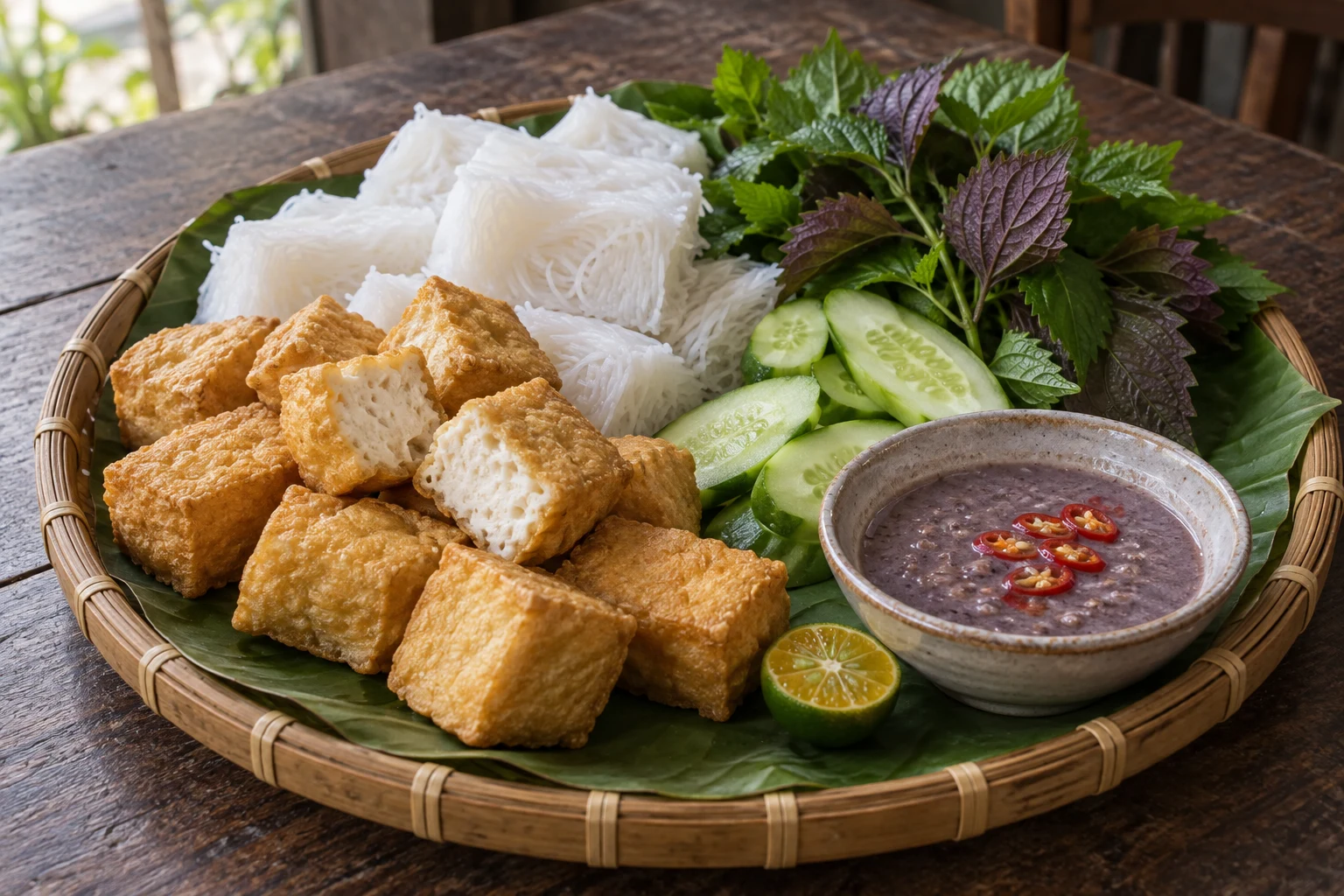
Hot fried tofu, plain rice noodles and fresh herbs make room for a powerful fermented-shrimp dip. Read the Hanoi plate before adding more to it.
Peruvian cuisine Soup
Caldo de Gallina: Let the Hen Set the Pace
A satisfying Peruvian hen soup depends on timing the meat, yellow potatoes and long noodles separately. The garnish belongs to the final minute.
Thai cuisine Noodles
Khanom Jeen Sao Nam: The Toppings Finish the Plate
Coconut milk, pineapple, ginger and finely prepared toppings meet on Thai rice noodles. Sao nam gives the final mixing and seasoning a role at the table.