
Vịt Quay Lạng Sơn: The Leaf, the Skin, the Sauce
Vịt quay Lạng Sơn
The brown skin catches the eye, but the defining aroma is tucked inside. Follow three parts of Lạng Sơn's roast duck—from mắc mật stuffing to the sauce and the bowl of phở—to see what makes this regional preparation distinct.
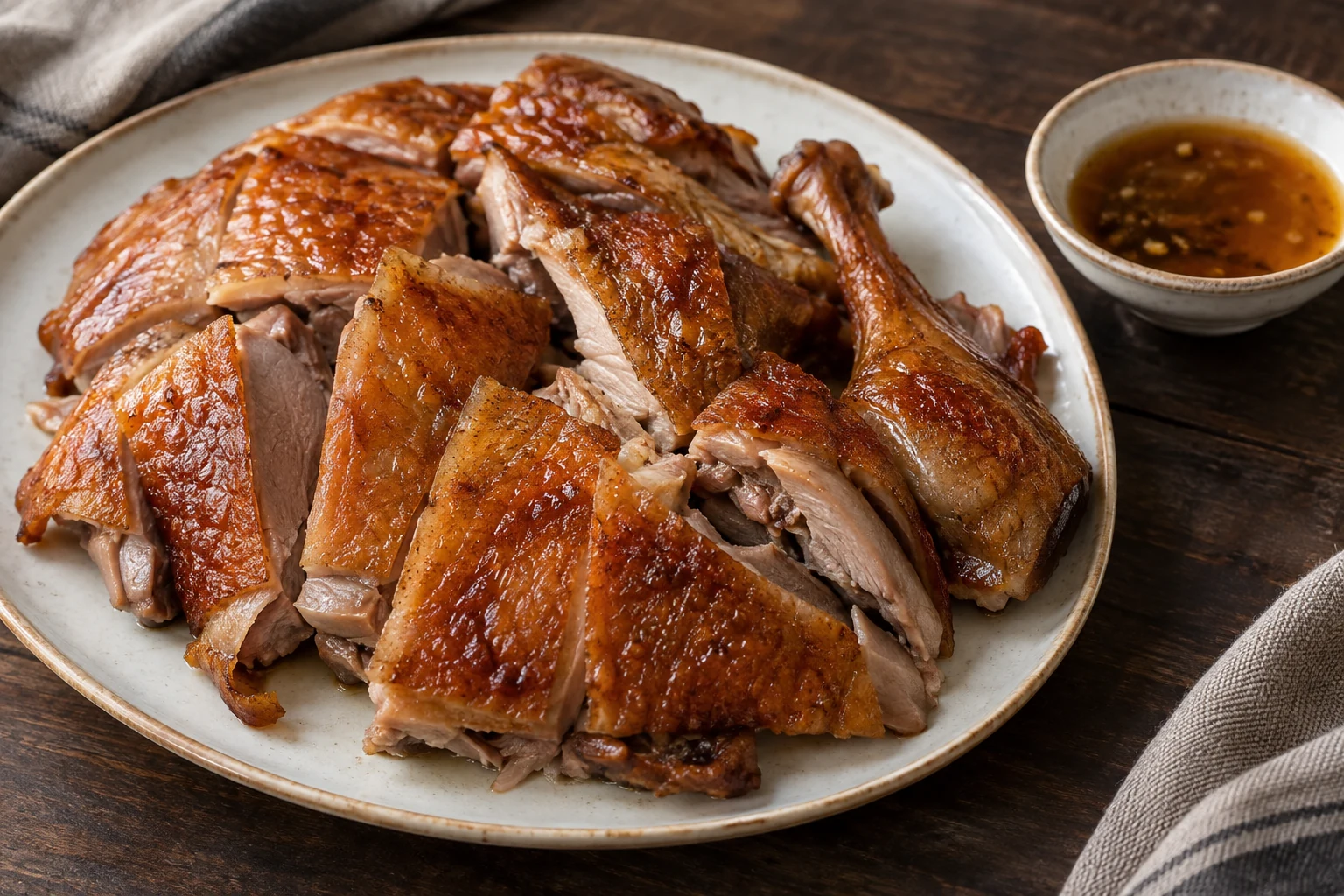
A northern roast
The part you smell is hidden
Roast duck is made in many parts of Vietnam. In Lạng Sơn, provincial tourism documentation singles out vịt quay lá mác mật: fresh leaves and dried fruit of mắc mật go into the seasoned bird before it is roasted. The name is often written mác mật or mắc mật in Vietnamese accounts. This is a regional preparation, not a claim that all Vietnamese roast duck uses the same leaf or method.
The provincial account describes a lightly crisp, dark golden-brown skin and tender meat with the aroma of the leaves. Vietnamese reporters describe the same inside-out seasoning while documenting more than one way to finish the bird. That difference is useful: the stuffing identifies the local flavor; the skin finish is a cook's choice.
Read the duck in three parts
Inside, outside, and at the table
- Inside
- Mắc mật and seasoning
- Outside
- Browned skin
- At the table
- A savory dip
Local accounts describe fresh leaves, sometimes dried fruit, and other seasonings tucked into the cavity before roasting. Recipes differ by cook.
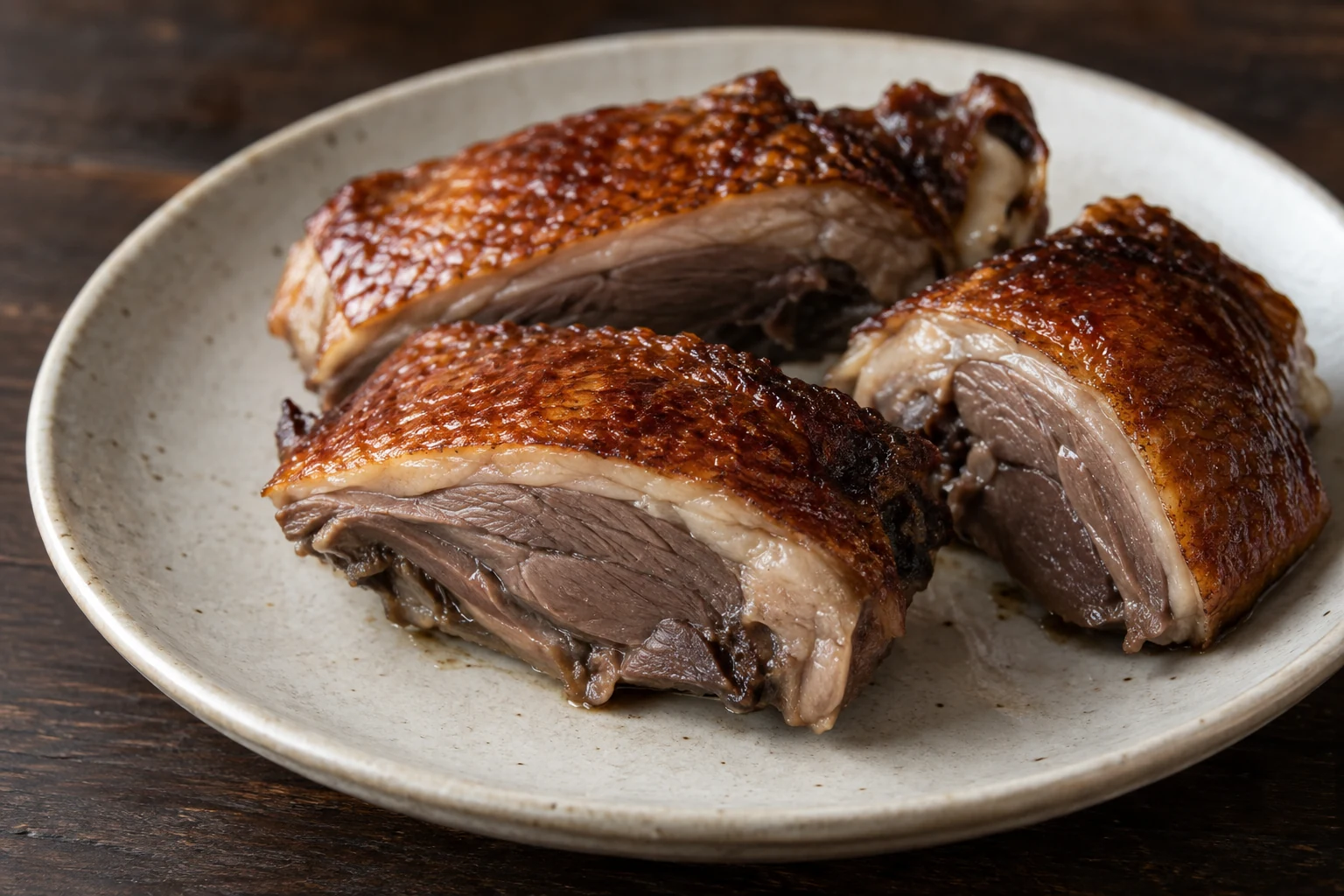
Some descriptions brush or dip the duck with honey before charcoal roasting. The intended result is browned skin over meat that stays tender.
One documented Lạng Sơn sauce draws on the seasoned juices collected from inside the cooked duck; it is not a universal recipe for every stall.
How the documented method works
Build aroma before color
These are features reported by local and Vietnamese sources, not a tested home recipe or a fixed set of cooking times.
- 01
Season the cavity
The Lạng Sơn tourism account names fresh mắc mật leaves and dried fruit among the seasonings placed inside the bird. A Vietnam News interview with a Tày resident of neighboring Cao Bằng also describes leaves being stuffed inside before roasting.
- 02
Brown the skin
The provincial account describes charcoal roasting until the skin is deep brown. Other reporting describes honey on the skin, and some shops finish the roasted bird in hot fat. These are documented choices, not steps every cook follows.
- 03
Chop and serve
The finished bird is cut into pieces so skin and meat arrive together. Some Lạng Sơn accounts describe a dipping sauce made with the flavorful liquid from the cooked bird's cavity; the agricultural press also documents serving the roast in phở.
Beyond the carving board
One roast, two ways to eat
Local reporting documents both the chopped bird and phở vịt quay. The soup is a particular northern serving tradition, not the default fate of every roast duck.
Chopped with sauce
The bird is cut into bite-sized portions and served with a rich dipping sauce. Lạng Sơn's tourism account specifically mentions a sauce made from liquid inside the roast; another report describes adding seasoning to those juices.
- Skin and meat are eaten together
- The dipping sauce adds a second layer of seasoning
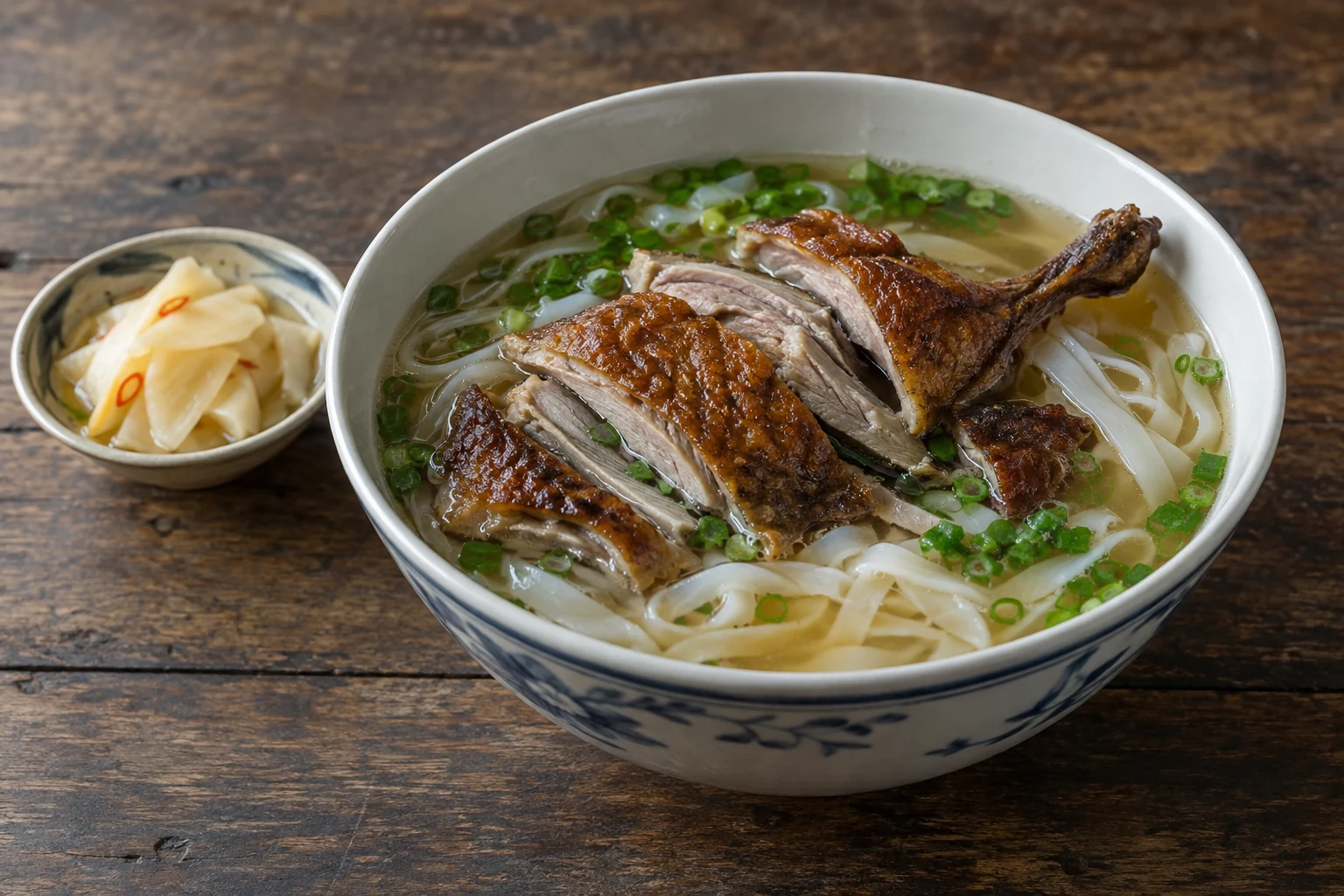
In phở vịt quay
A documented Lạng Sơn-style bowl sets roasted duck over rice noodles and broth. Local and national accounts describe pickled bamboo as an accompaniment; the roast lends its seasoning and fat to the soup.
- Roast duck becomes the noodle topping
- Broth and pickled bamboo change the balance
Research notes
Sources behind this story
Provincial documentation and independent Vietnamese reporting establish the regional identity, preparation choices, and serving forms. The sources describe different shop practices; none was treated as a universal formula.
- Lạng Sơn provincial tourism — Vịt quay Local account of mắc mật leaves and fruit inside the bird, charcoal roasting, finished texture, and dipping sauce.
- VnExpress — Khâu nhục và vịt quay Lạng Sơn Reporter account of seasoning, honey-water skin treatment, charcoal and hot-fat finishing, and local service.
- Vietnam News via VietNamNet — Mắc mật fruit and leaf Interview with a Tày resident of Cao Bằng explaining the use of mắc mật leaves inside duck before charcoal roasting.
- Vietnam Agriculture and Environment — Lạng Sơn roast duck Original reporting on shop-specific finishes, sauce from roast juices, chopped service, and roast-duck phở.
- Vietnam News via VietNamNet — Phở vịt quay Reported Lạng Sơn-style roast duck phở with rice noodles, broth, and pickled bamboo.
- State Committee for Overseas Vietnamese — Phở vịt quay xứ Lạng Republished local account of roast duck phở, honeyed skin, charcoal and oil finishing, and pickled bamboo.
Keep exploring
More stories for your table
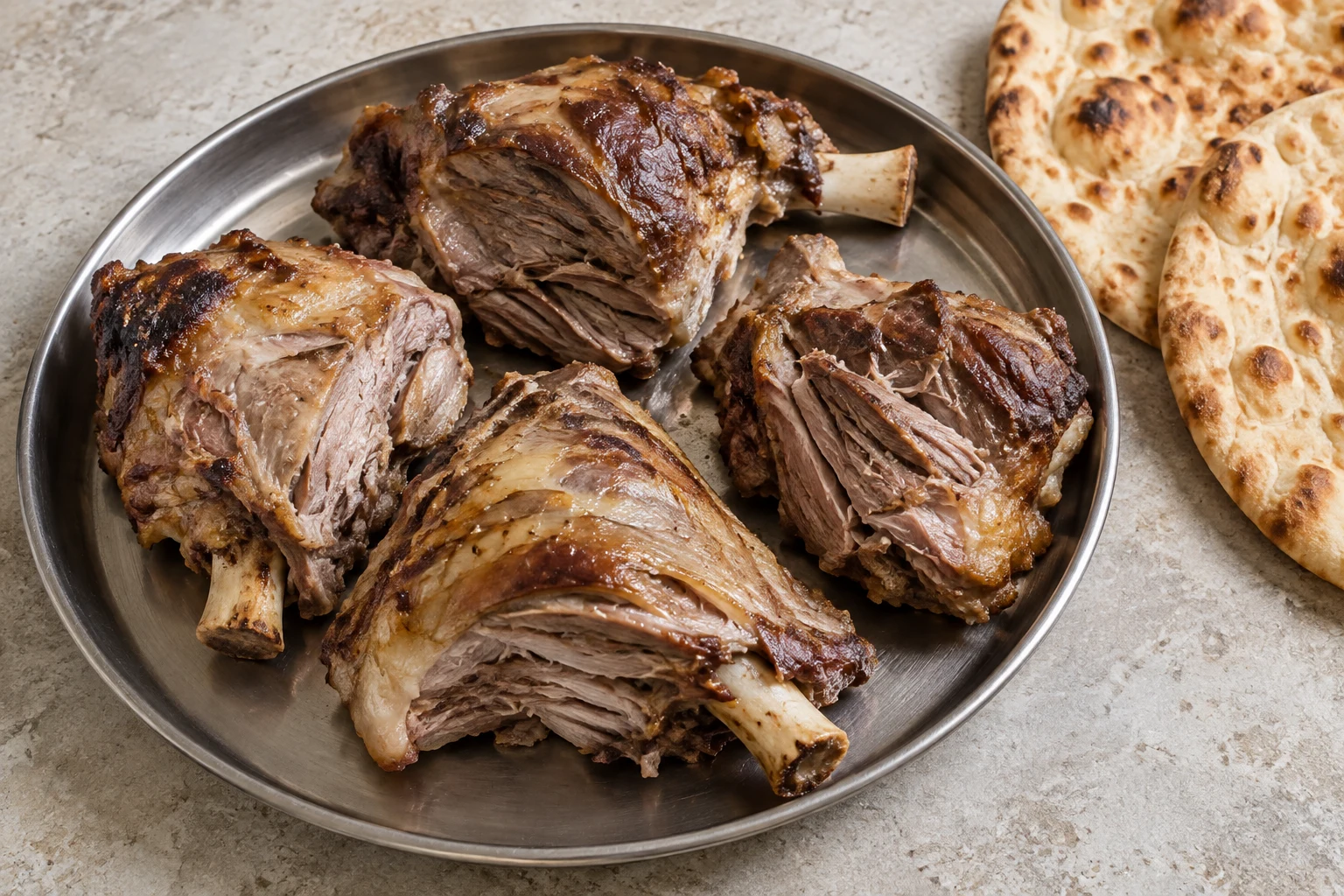
PakistanRoasted meat
Balochi Sajji: The Roast Before the Gathering
From lamb joints brought to Quetta’s Eid roasting shops to chicken portioned onto bread, sajji connects a patient roast with the meal that follows.

PortugalSeafood
Polvo à Lagareiro: The Olive Oil Is the Sauce
Tender octopus, lightly cracked potatoes and a garlic-and-olive-oil finish: understand the separate cooking jobs behind Portuguese polvo à lagareiro.

ThailandPork braise
Moo Hong: Tender Pork Before a Rich Sauce
Phuket’s soy-braised pork rewards a patient simmer. Learn how to manage the liquid, understand its spice variations and cook a pepper-focused home adaptation.