
Cá kho tộ: keep the fish intact as the sauce deepens
Cá kho tộ
A practical guide to Vietnamese braised fish: steak or fillet cuts, caramel colour, coconut-water choices, gentle cooking and serving the sauce with rice.
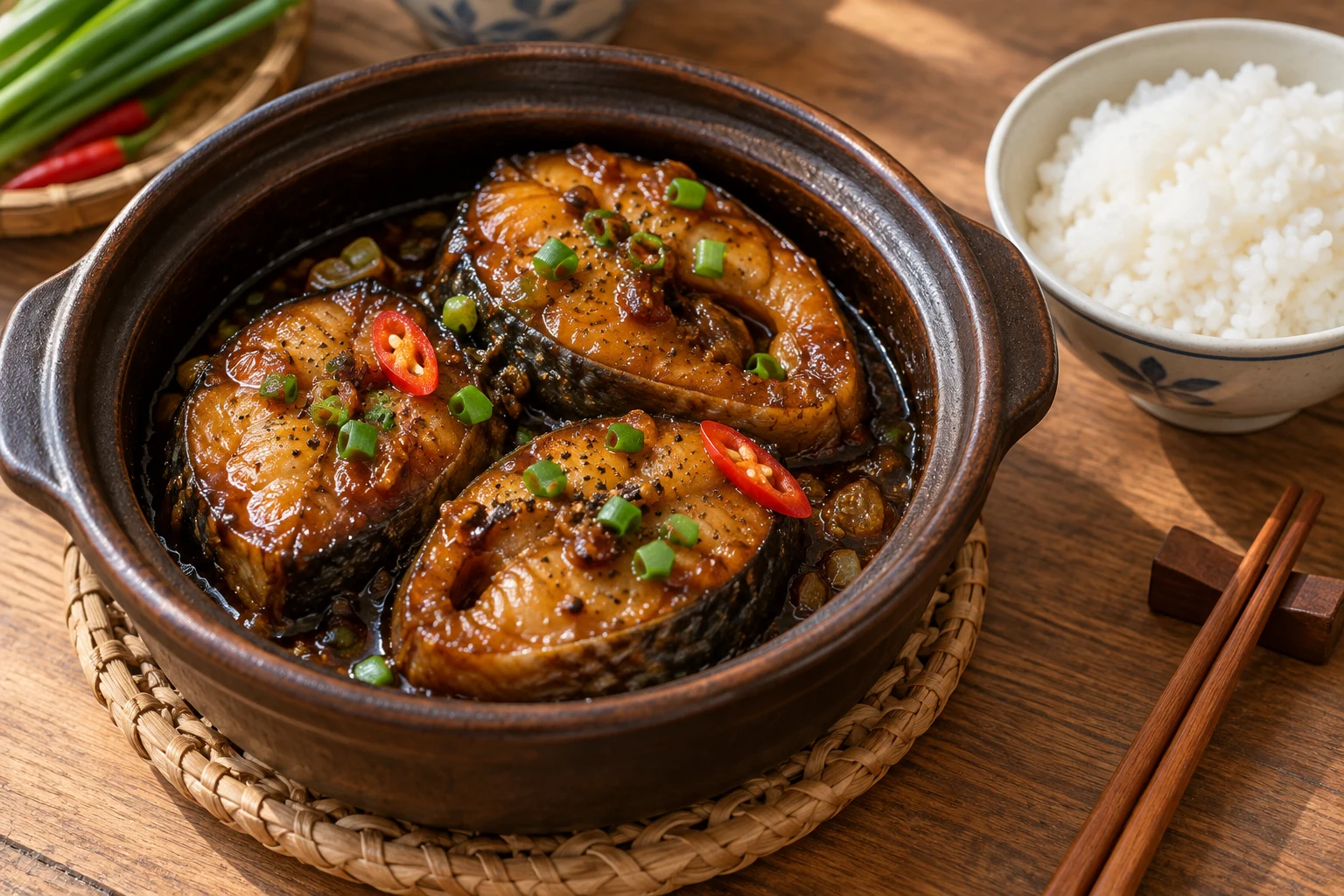
Cá kho tộ asks the cook to protect a piece of fish while developing a concentrated sauce around it. Fish sauce supplies a savoury, salty foundation; sugar and caramel colour give the finished dish its brown glaze. The appeal lies in the combination: a moist fish portion, enough sauce to spoon onto rice, and a meal that allows the rich seasoning to spread across several bites.
The clay pot belongs to the name and familiar presentation, but practical home versions also use a pan. Huy Vu cooks his version in a nonstick pan and describes his mother's restaurant transferring cooked fish into clay pots for service. Jeannette's family at Wok and Kin also uses a flat-bottomed saucepan. A clay serving vessel alone does not tell you how the fish was cooked.
Choose the cut before choosing the clock
Cross-cut steaks
Vicky Pham prefers catfish cut into substantial steaks, with skin and bone helping the pieces hold together. Ask the fishmonger to prepare similar-size portions. A thick piece has a different cooking path from a thin fillet; watch both the center and the sauce.
Fillets
Pham also allows fillets, while warning that they can break apart with extended braising. Handle them with a broad spatula and avoid unnecessary turns. Their readiness cannot be inferred from a recipe photograph showing thicker bone-in steaks.
Two ingredient decisions that affect the finish
- Braising liquid
- Coconut water or soda
- Brown colour
- Caramel or a shortcut
Jeannette uses coconut water; Pham uses coconut soda and also allows water or coconut water. Sweetness changes with the product. Read the complete recipe's sugar and liquid together, rather than swapping only the can.
Helen Le makes caramel in a separate small pan. Huy uses a thick colouring sauce for convenience and distinguishes it from ordinary dark soy sauce in his own replies. Similar-looking bottles are not necessarily the same ingredient.
Coat the fish without repeatedly turning it
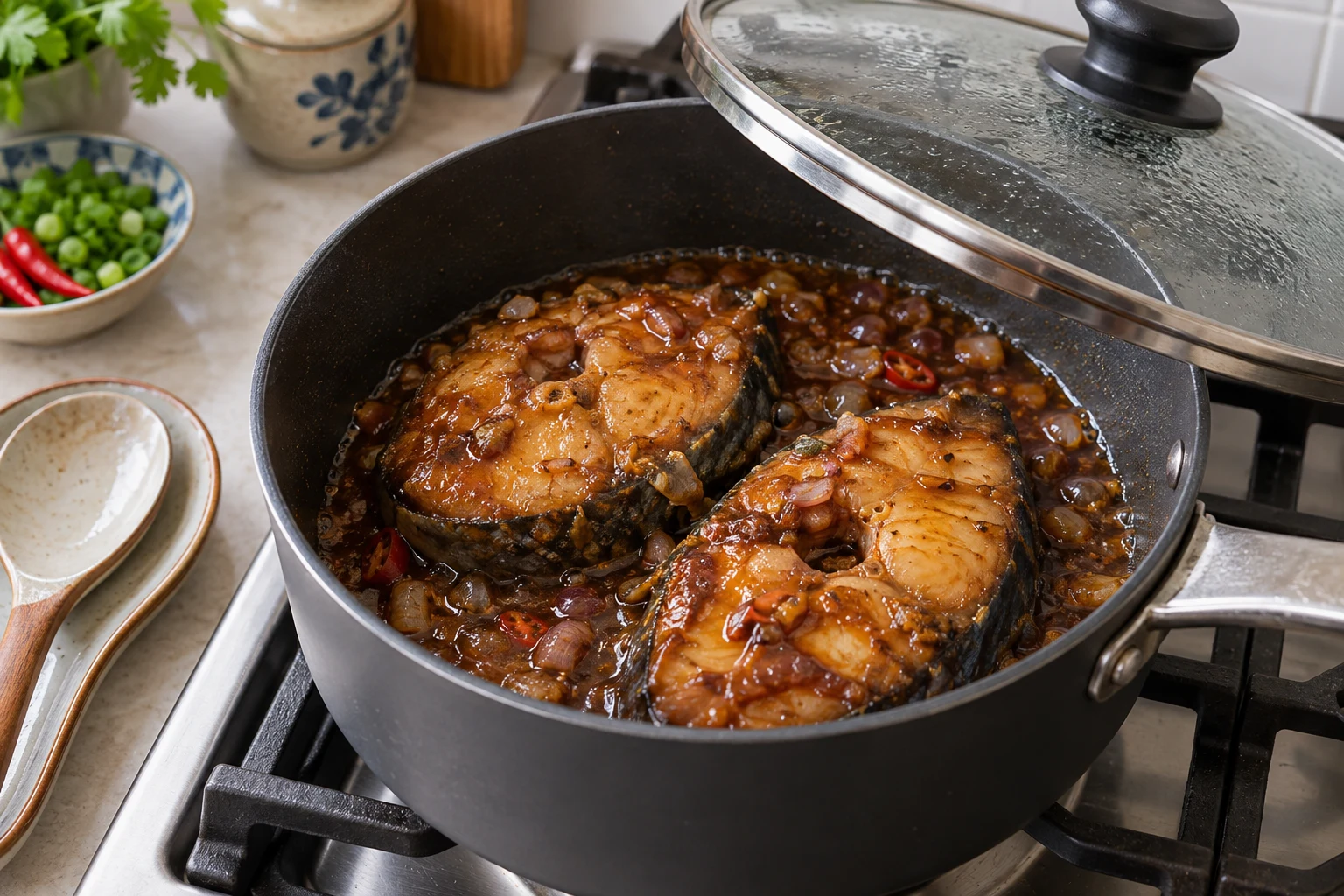
Once the fish is in the braising liquid, strong stirring works against an intact serving portion. Pham suggests spooning liquid over a piece that is too delicate to flip. Helen Le swirls the saucepan to distribute the coating. Both give the sauce another route to the upper surface without chasing every piece around the pot.
Jeannette's family preparation uses a partially covered, gentle braise. The end is a slightly thick, sticky sauce, with regular attention to the fish and liquid. That is different from leaving the pan unattended until almost dry. If the base starts catching while plenty of liquid still looks visible elsewhere, lower the heat and assess the pan before carrying on.
Caramel also needs attention before the fish goes in. Jeannette warns that sugar can darken too quickly and burn. Prepare the other ingredients first, use the chosen recipe's method, and keep control of the heat. A burnt, black base is not a shortcut to the attractive brown finish.
Make the last check with rice in mind
Huy specifically watches the final reduction so it does not burn. That last stage concentrates the seasoning as well as changing the amount of liquid. Taste a little fully cooked sauce with a spoonful of rice, rather than judging the sauce alone as if it were a soup. The rice is part of how the dish is eaten.
Pepper, chopped spring onion and chili appear in the preparations, but chili strength is adjustable. Jeannette allows it to be omitted or added later. Use that flexibility deliberately: warm pepper aroma and a fresh chili bite are different sensations, and the finished fish need not carry the same heat for every table.
Let the rich portion share the table
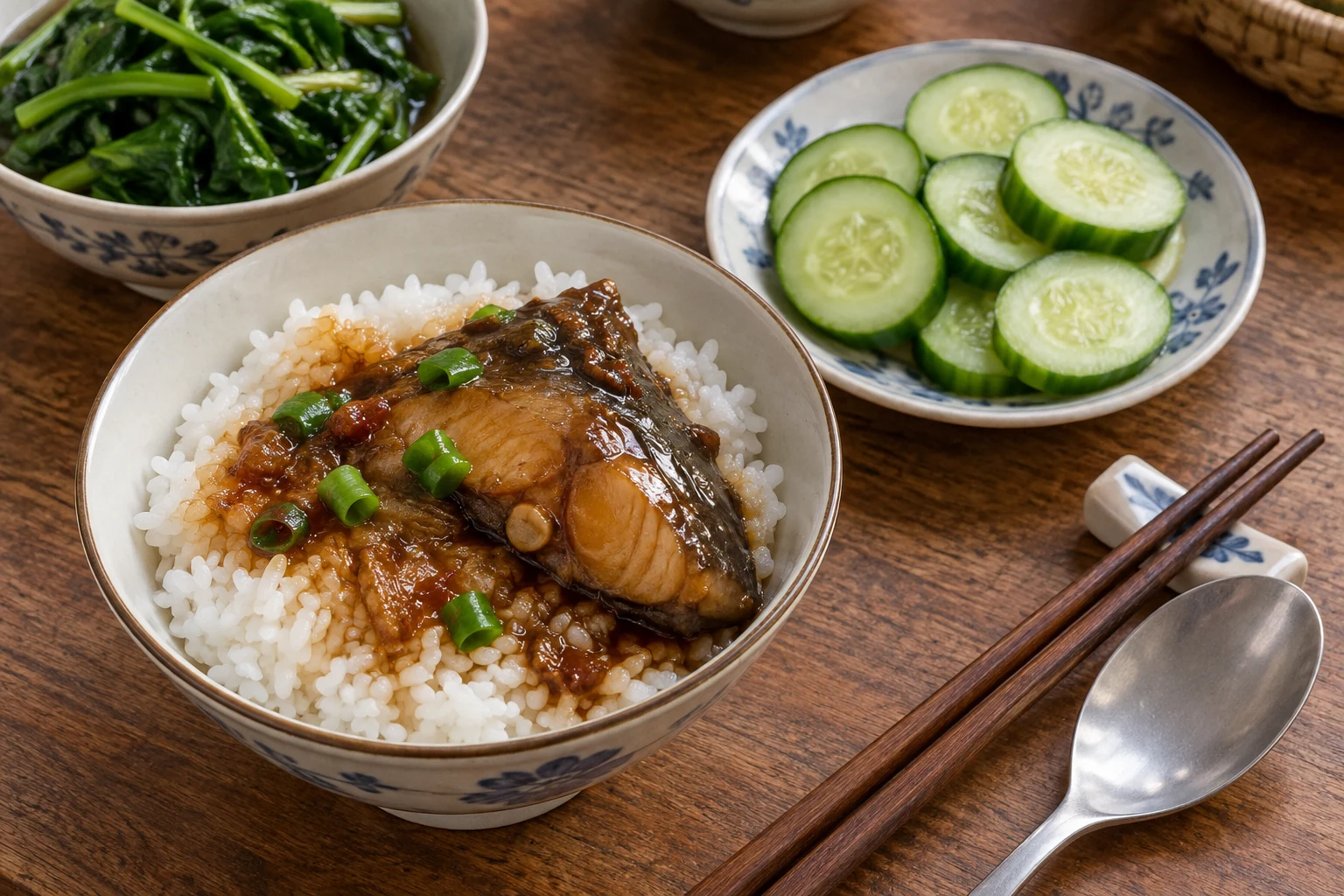
Helen Le serves the fish with hot rice and points to canh chua, a sweet-sour fish soup, as a companion. Huy suggests cucumber and cooked vegetables. Those choices leave room for cool crunch or a lighter, wetter dish beside the concentrated braise.
Lift a portion gently, take account of any bones, and spoon sauce separately onto the rice. Fish sauce and the fish itself make this a fish-containing preparation; colouring sauces and seasonings can introduce other allergens. Check the products in the chosen recipe rather than assuming the brown glaze has one fixed formula.
Research notes
Sources behind this article
- Vicky Pham Original catfish preparation explaining steak and fillet cuts, coconut soda substitutions and basting fragile fish.
- Jeannette · Wok and Kin Original family preparation with coconut water, gentle partially covered braising, adjustable chili and a flat-base saucepan alternative.
- Huy Vu · Hungry Huy Original pan-cooked preparation, thick-colouring shortcut, careful final reduction and vegetable companions.
- Helen Le · Helen's Recipes Original preparation with separate caramel cooking, saucepan swirling, ginger and rice-and-soup serving.
- FoodSafety.gov · Safe internal temperatures Official fish endpoint measured with a food thermometer.
Keep exploring
More stories for your table
Vietnamese cuisine Seafood
Vietnamese Coconut Water Shrimp: Inside the Steamer
How coconut water, a shallow dish and lemongrass come together in Vietnamese steamed shrimp, with a small recipe and a clear doneness check.
Vietnamese cuisine Noodles
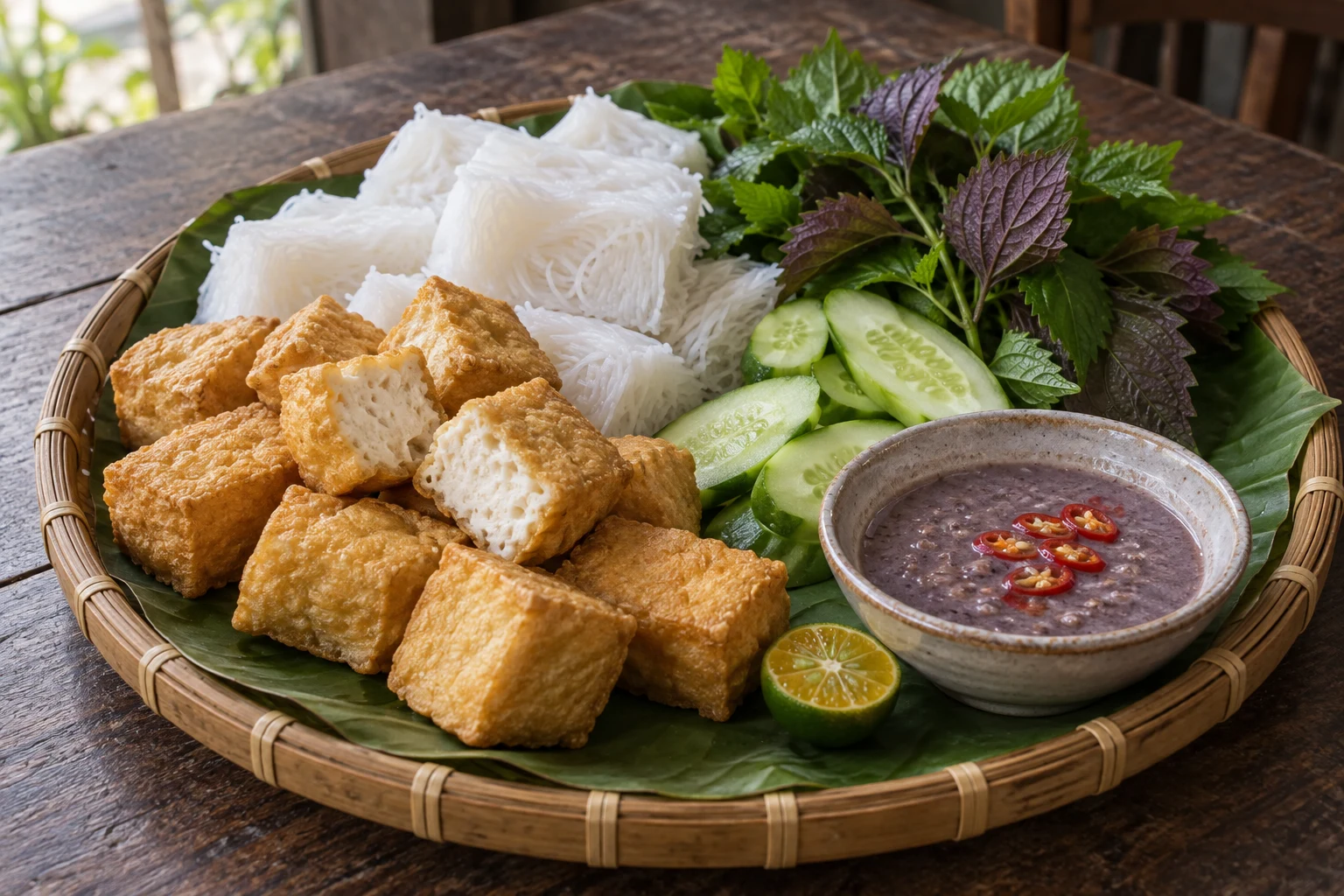
Bún Đậu Mắm Tôm: Keep the Dip at the Center
Hot fried tofu, plain rice noodles and fresh herbs make room for a powerful fermented-shrimp dip. Read the Hanoi plate before adding more to it.
Filipino cuisine Stews
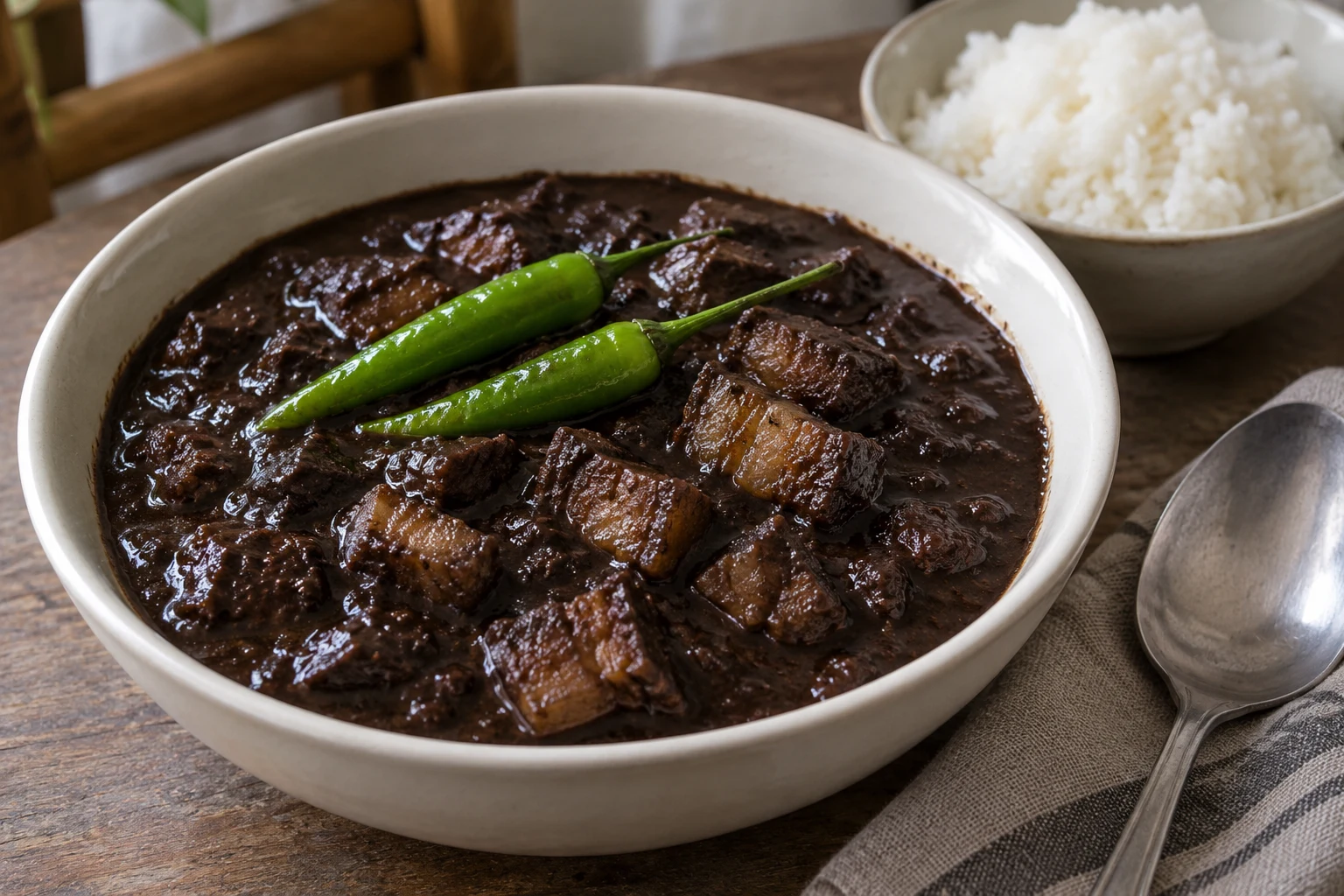
Dinuguan: Tender Pork in Dark, Tangy Gravy
Understand dinuguan’s dark pork-blood gravy, the differences between pork cuts and cooking sequences, and its pairing with rice or puto.