
Vietnamese Coconut Water Shrimp: Inside the Steamer
Tôm hấp nước dừa
A shallow dish brings shrimp into contact with coconut water while steam cooks them. Choose the vessel first, then let lime and pepper finish the plate.
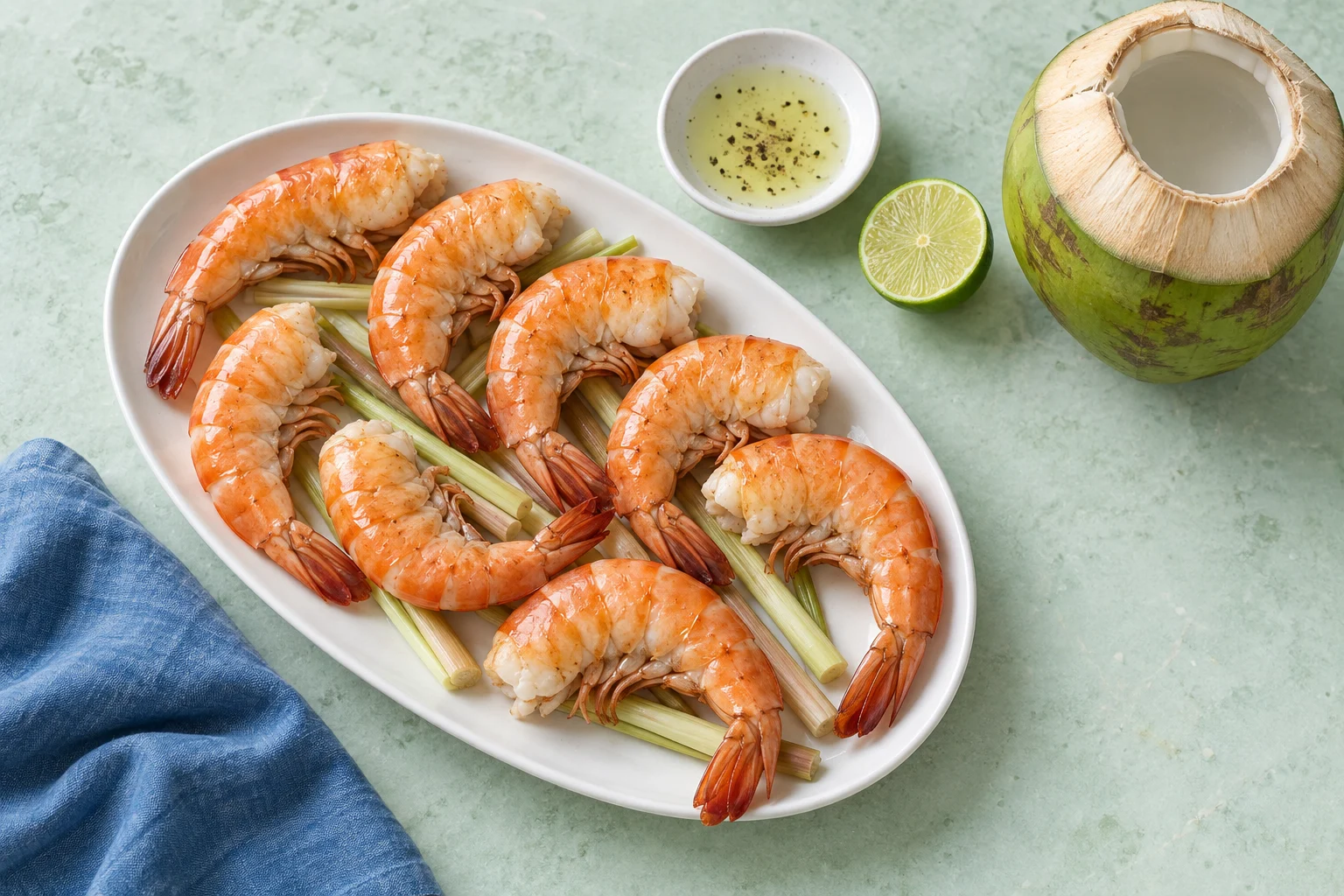
Tôm hấp nước dừa
Start with the vessel
Vietnamese coconut water shrimp is a dish worth looking at from the side. Where is the liquid? Is the shrimp sitting in a bowl inside a steamer, or in a covered pot with coconut water around it? Vietnamese cooks use both arrangements under closely related names. Knowing which one you are following gives the instruction “steam the shrimp” a practical meaning.
In Bùi Thủy’s VnExpress preparation, lemongrass lines a deep plate; shrimp and coconut water go into that plate, which is then placed inside a steaming pot. Hai Thụy Catering cooks shrimp directly in a small quantity of coconut water under a lid. Phuong Nguyen’s home recipe on Cookpad also uses a covered pot. These are useful alternatives to recognise when choosing cookware.
Set up the contact with coconut water
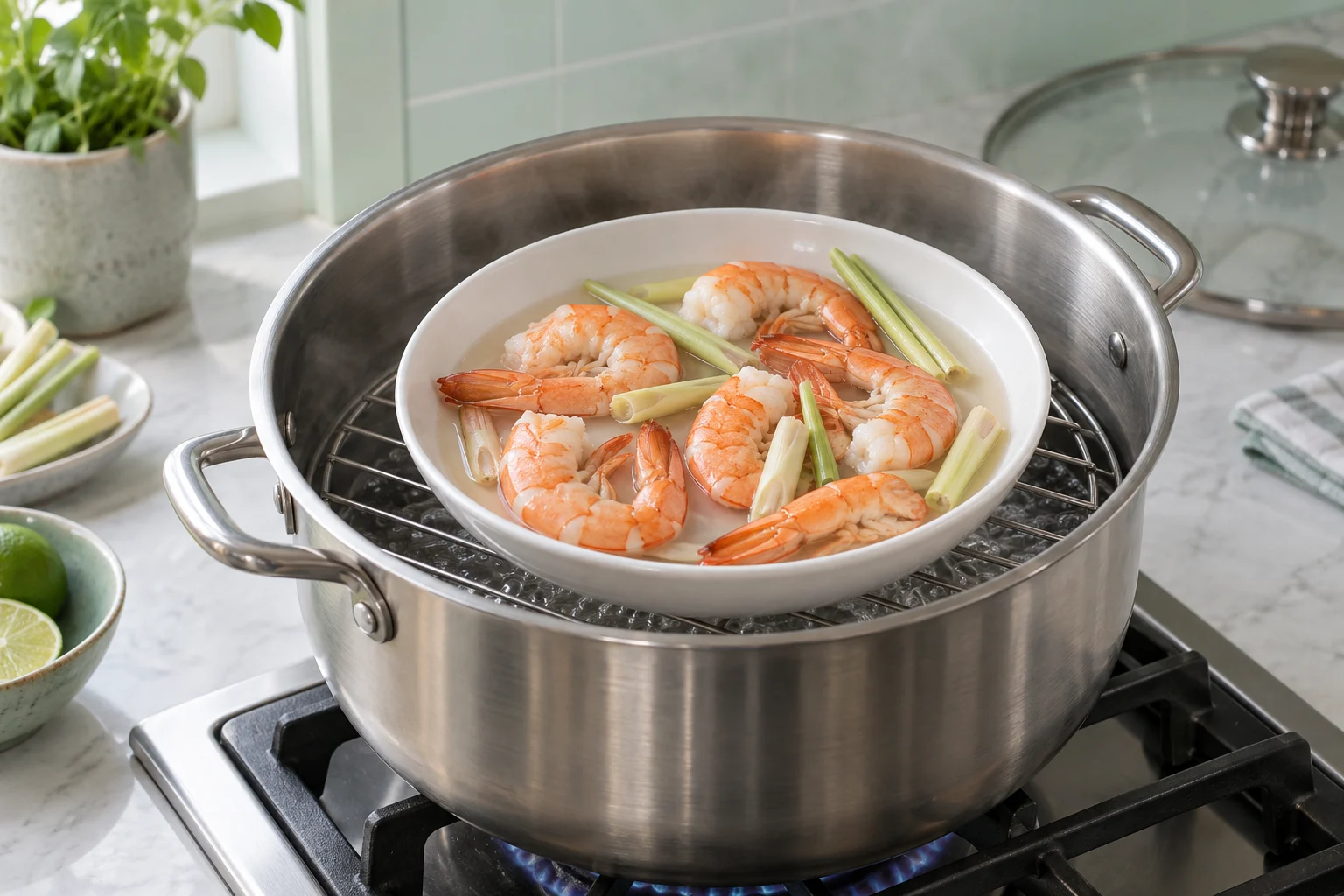
For the recipe here, use the raised-dish arrangement. The water in the steamer and the liquid in the dish have separate jobs.
- 01
Choose a dish with a lip
A shallow heat-safe bowl keeps coconut water around the shrimp without letting it run through the steamer rack. Check that the bowl fits comfortably inside the pot and that the lid closes.
- 02
Keep the base water below the dish
The rack supports the bowl above the boiling water. Leave space around its sides for steam to circulate. Use enough base water for the cooking time, following your steamer’s instructions.
- 03
Arrange a shallow layer
Spread shrimp over the lemongrass rather than piling them into a high mound. Their sizes should be similar so checking one large shrimp is useful for the rest of the dish.
Buy coconut water for this dish
Look for plain, unsweetened coconut water, the clear liquid inside a coconut. Fresh water from a young coconut or a packaged product gives you a measurable amount. Coconut milk is made from coconut flesh and brings a different, creamy texture. The recipe is built around the clear liquid; there is no milk sauce to thicken.
Measure the coconut water into the dish before adding it to the steamer. It should make a shallow pool around the shrimp, leaving room below the lip. The finished plate needs only a small dip: lime juice stirred with salt and black pepper. Keeping that dip separate lets each diner choose how much sharpness to add.
Our small-batch adaptation
Shrimp steamed in a dish of coconut water
Serves two with rice or another shared dish. Use large raw, headless, shell-on shrimp that are already deveined and fully thawed.
Ingredients
For steaming
- 400 g large raw headless shell-on shrimp, deveined and fully thawed
- 150 ml plain unsweetened coconut water
- 2 stalks lemongrass, tough outer layers removed and tender bases bruised and cut into short lengths
For dipping
- 1 lime, juiced
- ¼ tsp each fine salt and ground black pepper
Method
- 1
Build the dish
Line a shallow heat-safe bowl with lemongrass. Arrange shrimp in a single layer and pour in the coconut water.
- 2
Steam under a lid
Bring the steamer’s base water to a boil below its rack. Set the bowl on the rack, close the lid and maintain steady steam.
- 3
Check the flesh
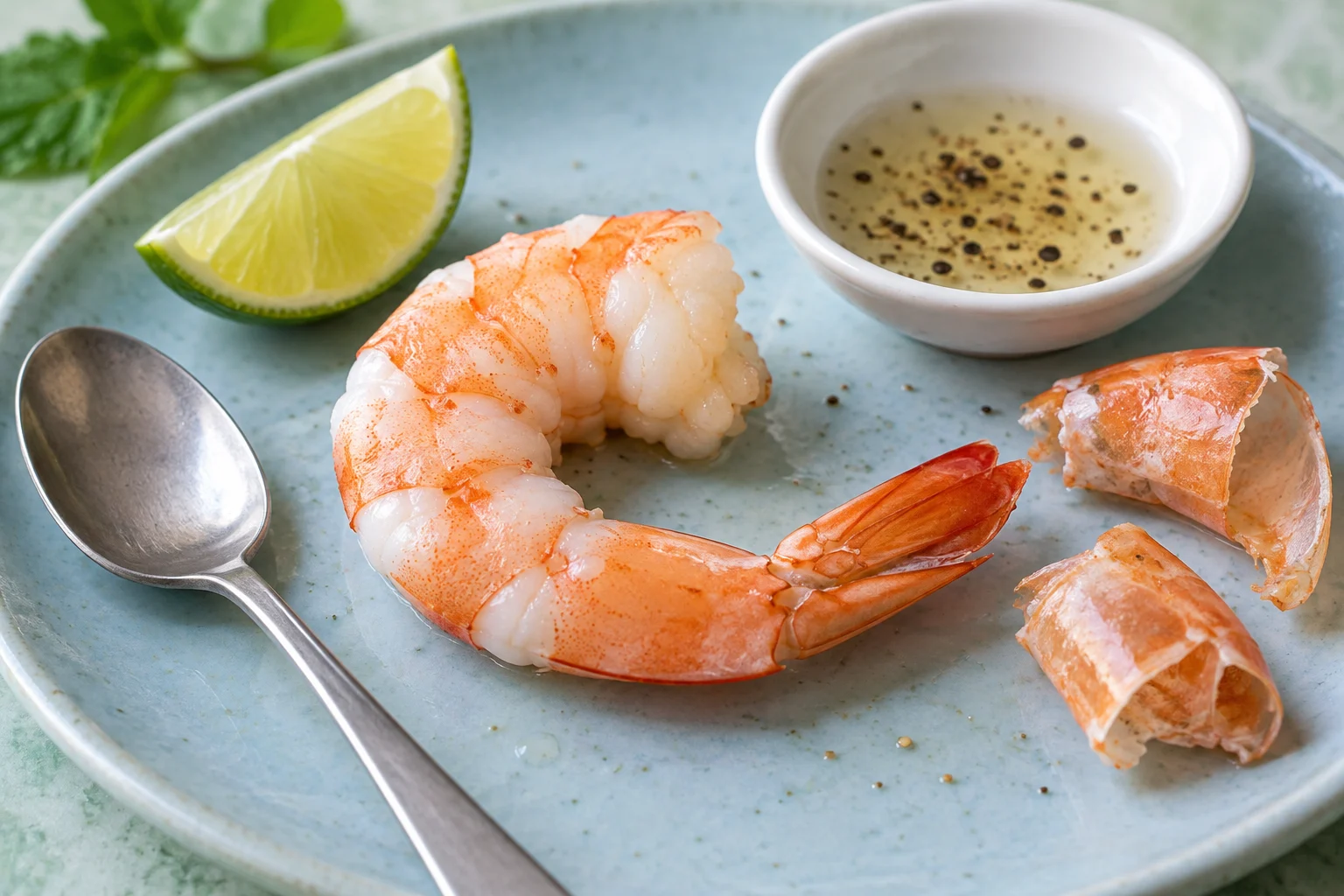
Begin checking at 7 minutes; large shrimp often need 7–10 minutes. Peel and cut one of the largest: its flesh must be pearly white and opaque throughout. Continue steaming if translucent.
- 4
Bring it to the table
Lift the hot bowl with suitable mitts, keeping its liquid level. Mix lime juice, salt and pepper in a small dish. Serve immediately; peel shrimp before dipping.
From the steamer to the plate
The raised bowl contains the cooking liquid; peeling reveals the doneness of the flesh.
A coconut shell is an optional serving vessel
Some Vietnamese presentations place cooked shrimp around or inside the opened coconut. VnExpress and Phuong Nguyen both describe that finish. A plain platter works equally well for a home table and makes the shrimp easy to pick up and peel. If you use an opened coconut, set it firmly on a plate before arranging the cooked shrimp.
Keep the preparation unhurried and the cooking brief: make the dip, prepare the table and fit the dish into the steamer before you start heating. Once the flesh is fully cooked, bring it straight out. The tender shrimp, fragrant lemongrass and small bowl of lime-pepper dip already give the plate its shape.
Research notes
Sources
Vietnamese preparations describing distinct vessels, plus the official shrimp doneness guidance.
- Bùi Thủy for VnExpress: Tôm hấp nước dừa kiểu Nam Bộ Shrimp and coconut water in a raised dish with lemongrass; optional coconut presentation.
- Hai Thụy Catering: Tôm sú hấp hương dừa A covered-pot preparation using a shallow quantity of coconut water.
- Phuong Nguyen 92: Tôm hấp nước dừa A named home cook’s covered-pot preparation and coconut-shell serving suggestion.
- FoodSafety.gov: Cook to a Safe Minimum Internal Temperature Shrimp-specific guidance to cook until flesh is pearly or white and opaque.
Keep exploring
More stories for your table
Vietnamese cuisine Noodles
Bún Đậu Mắm Tôm: Keep the Dip at the Center
Hot fried tofu, plain rice noodles and fresh herbs make room for a powerful fermented-shrimp dip. Read the Hanoi plate before adding more to it.
Vietnamese cuisine Braised fish
Cá kho tộ: keep the fish intact as the sauce deepens
A practical guide to Vietnamese braised fish: steak or fillet cuts, caramel colour, coconut-water choices, gentle cooking and serving the sauce with rice.
Moroccan cuisine Seafood tagine
Shrimp Tagine: Give the Tomatoes a Head Start
Build a Moroccan shrimp tagine by developing the tomato sauce first, then adding shellfish. Learn chermoula choices and a complete skillet adaptation.