
Bún Đậu Mắm Tôm: Keep the Dip at the Center
Bún đậu mắm tôm
The small bowl does much of the work. Everything around it offers a different way to taste the same salty, tangy dip.
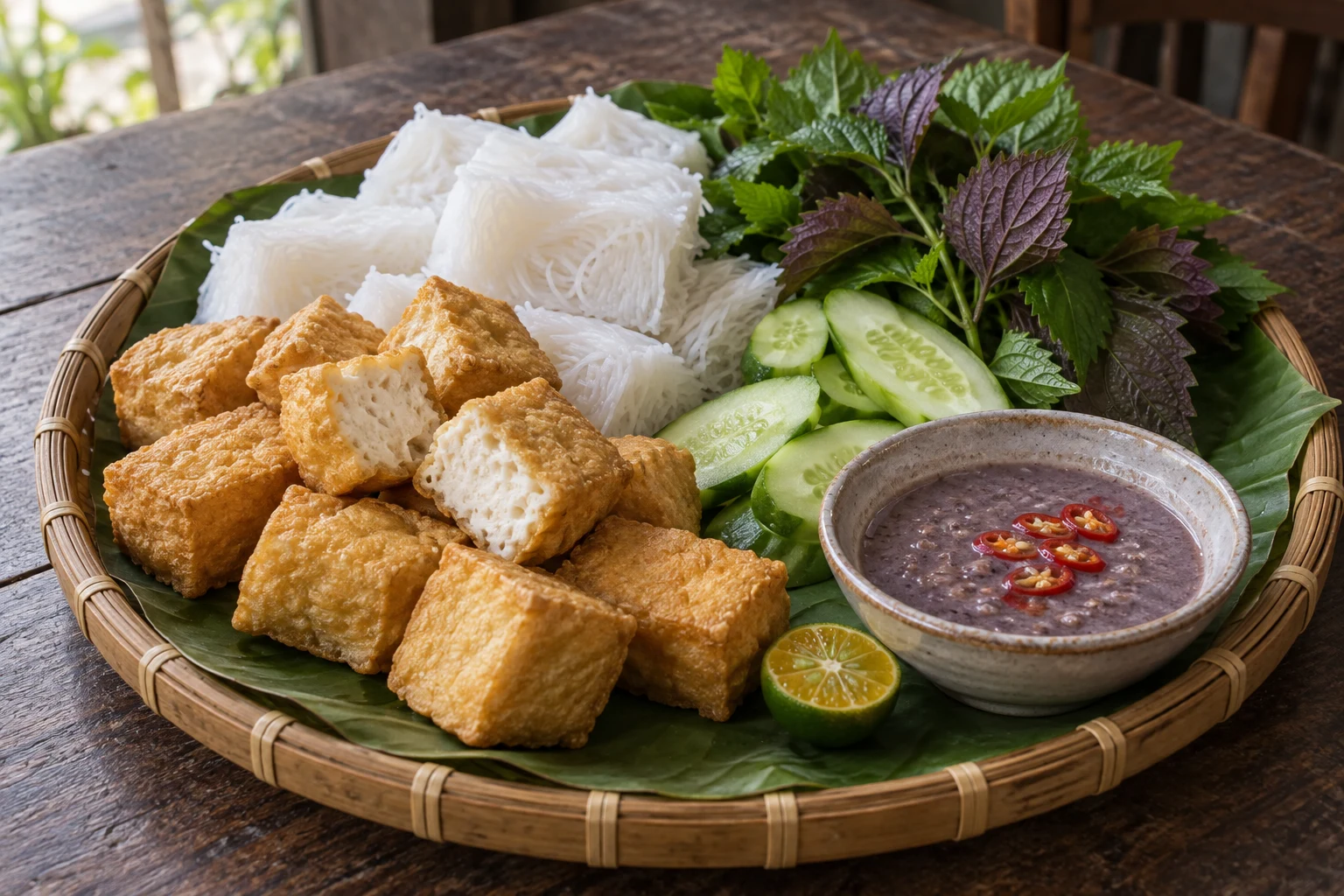
A meal built around dipping
Bún đậu mắm tôm gives you a plate of separate things and a reason to bring them together. The rice noodles are mild. Fried tofu has a golden surface and a soft middle. Herbs and cucumber bring a fresh, crisp bite. Mắm tôm, a fermented shrimp paste seasoned into a dip, supplies the concentrated flavor. Rather than coating the whole tray, a small bowl lets each mouthful carry a different amount.
Vietnam’s national tourism authority includes the dish among Hanoi’s street-food specialties. That is a useful setting for understanding it, without needing an invention story or a claim that every shop serves an identical tray. Start with the noodles, tofu and dip; read the extras as choices.
A compact plate or a fuller tray?
Helen Le’s version
Helen’s recipe pairs hot fried tofu with rice vermicelli, cucumber, herbs and sliced boiled pork. The tofu is dried before frying; the aim is a golden outside with a soft interior.
Bùi Thủy’s Hanoi account
VnExpress distinguishes a simpler combination of tofu, compact rice noodles and shrimp paste from fuller servings with chả cốm, spring rolls, pork and other additions. It also describes frying larger tofu pieces before cutting them.
VietNamNet’s fuller serving
Hạnh Nguyên builds a substantial tray with pork belly, pork leg and chả cốm as well as tofu. That recipe’s larger assortment is one serving style, rather than a shopping list every home version must reproduce.
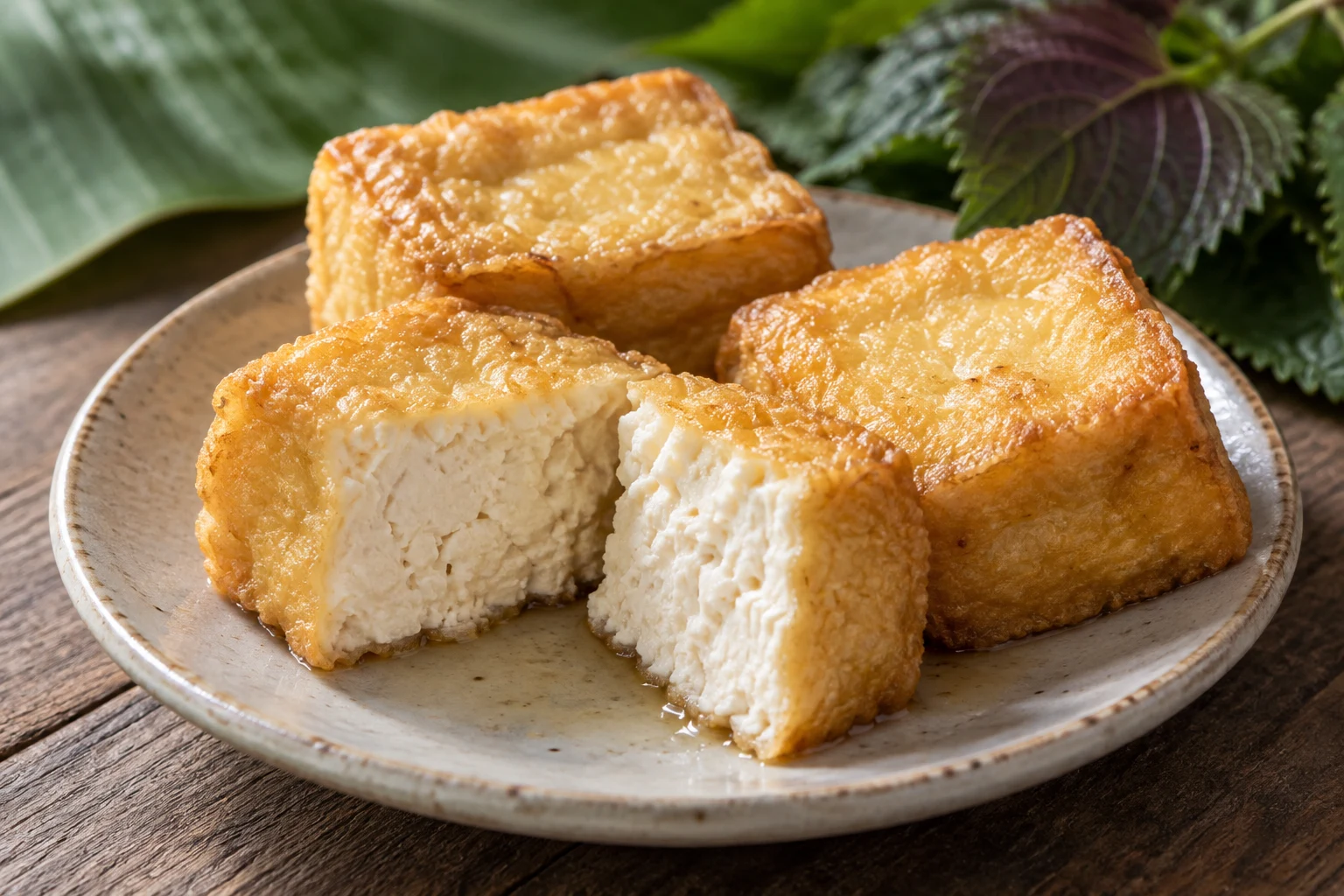
Give the tofu its own moment
Buy tofu with enough structure to cut and lift, then dry its surface thoroughly before it goes near hot oil. Helen Le’s emphasis on drying is practical: surface water and frying oil make an awkward combination. Leave room between pieces so you can turn them without breaking the curd.
Whether the tofu is cut before frying or afterward changes the proportion of crust to center. Smaller pieces put more fried surface into each bite; larger pieces preserve a generous soft middle. Neither choice requires the tofu to become dry throughout. Arrange the rest of the plate first and fry close to serving time, so the first piece arrives hot.
Keep the noodles easy to pick up
Bún lá and other compact forms of fresh rice vermicelli can be cut into manageable pieces; Bùi Thủy uses small compact bún đồng xu. The visible strands distinguish these noodles from a solid rice cake. A bite-sized bundle offers a convenient partner for the dip without covering the tofu.
If your shop stocks loose rice vermicelli instead, let the form you have guide the arrangement. Prepare packaged noodles according to their instructions and drain them well. Make small portions on the plate rather than pretending that every noodle product can be sliced into the same shape. Keep herbs and cucumber alongside them, ready to alternate with the richer fried pieces.
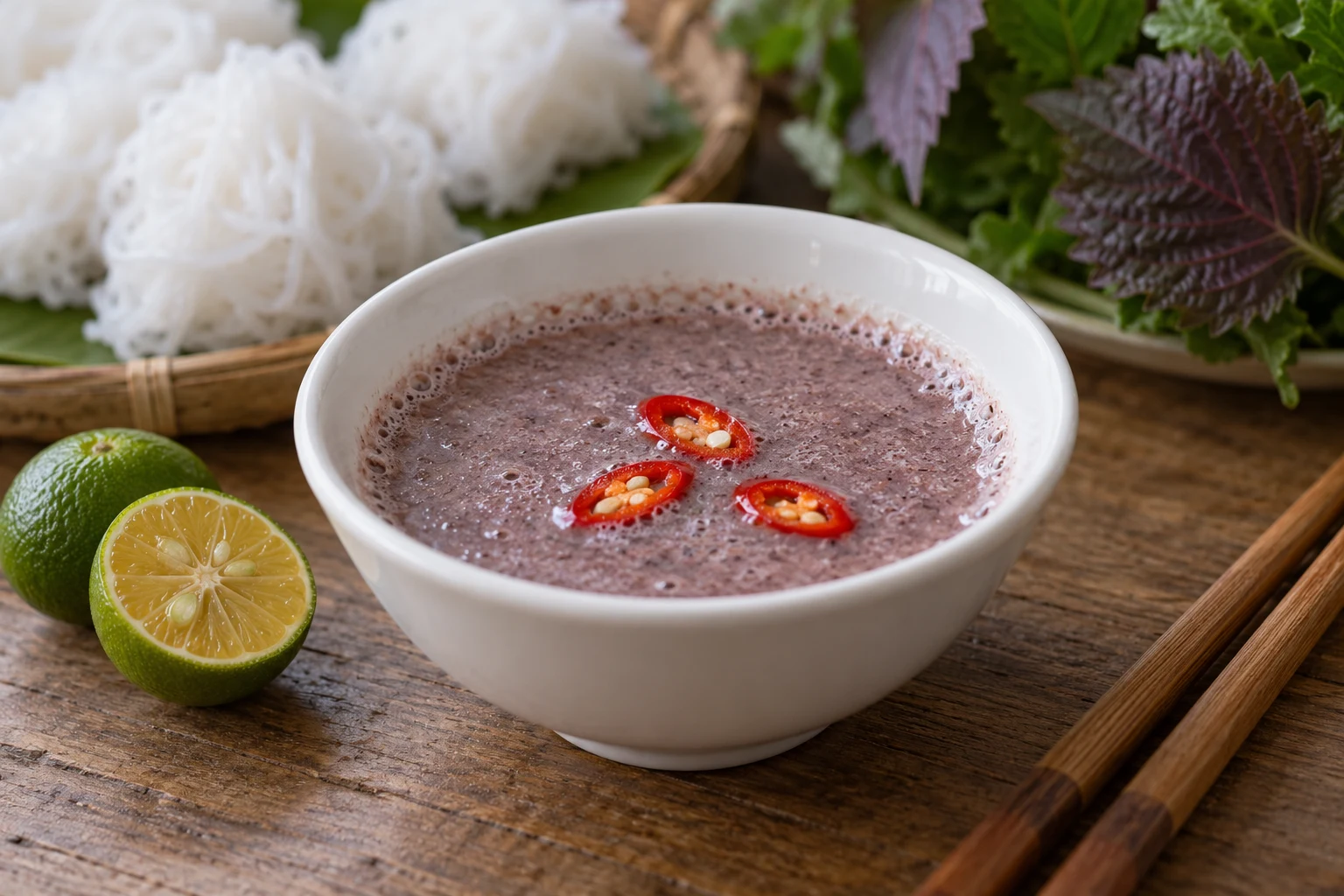
Season the dip, then leave it separate
Helen Le combines shrimp paste with sugar, chili and lime or kumquat, stirring as the citrus goes in. VietNamNet likewise treats the balance as a matter of taste. The point is to adjust a strongly flavored ingredient, not to hide it under enough sugar to become a sweet sauce. Check the seasoning in small amounts, and let diners control how much reaches their food.
Use a reputable commercial product and follow its preparation and storage instructions, including any requirement to cook it. Citrus, alcohol and a splash of hot oil are not reliable substitutes for a required cooking step. Wash fresh herbs and cucumber under running water, and keep prepared perishable components chilled until needed. FoodSafety.gov recommends refrigeration within two hours, or one hour when the temperature is above 90°F/32°C.
Research notes
Sources and further reading
Vietnamese recipe writers document different serving sizes and arrangements. The tourism source supplies Hanoi context; government guidance supports handling the perishable components.
- Helen Le: Bún đậu mắm tôm Hot fried tofu with a soft center, rice vermicelli, herbs and citrus-seasoned shrimp paste.
- Bùi Thủy, VnExpress Cooking: Hanoi bún đậu Compact noodles, larger fried tofu pieces and a distinction between the core plate and added meats.
- Hạnh Nguyên, VietNamNet: Bún đậu at home A fuller tray with pork and chả cốm, plus seasoning and serving order.
- Vietnam Tourism: Northern Vietnam The national tourism authority places bún đậu mắm tôm in its discussion of Hanoi street food.
- FoodSafety.gov: Four steps to food safety Produce washing, prompt refrigeration and the limits for keeping perishable food out.
Keep exploring
More stories for your table
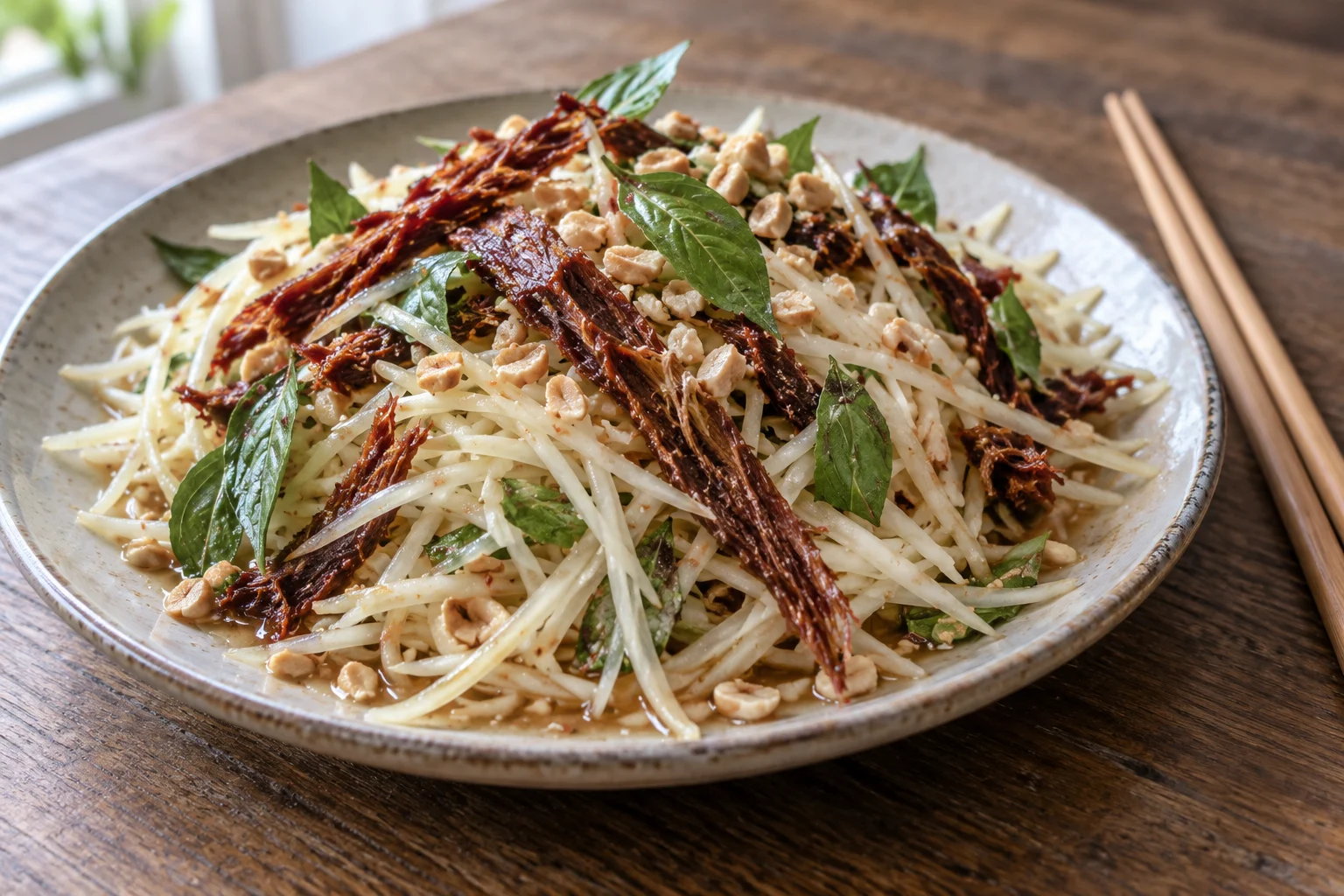
Vietnamese cuisine Papaya salad
Vietnamese Green Papaya Salad: Choose the Dressing with the Topping
Firm green papaya supplies the crunch. Compare documented Vietnamese jerky and prawn-and-pork versions, then balance the dressing against the topping.
Vietnamese cuisine Roast duck
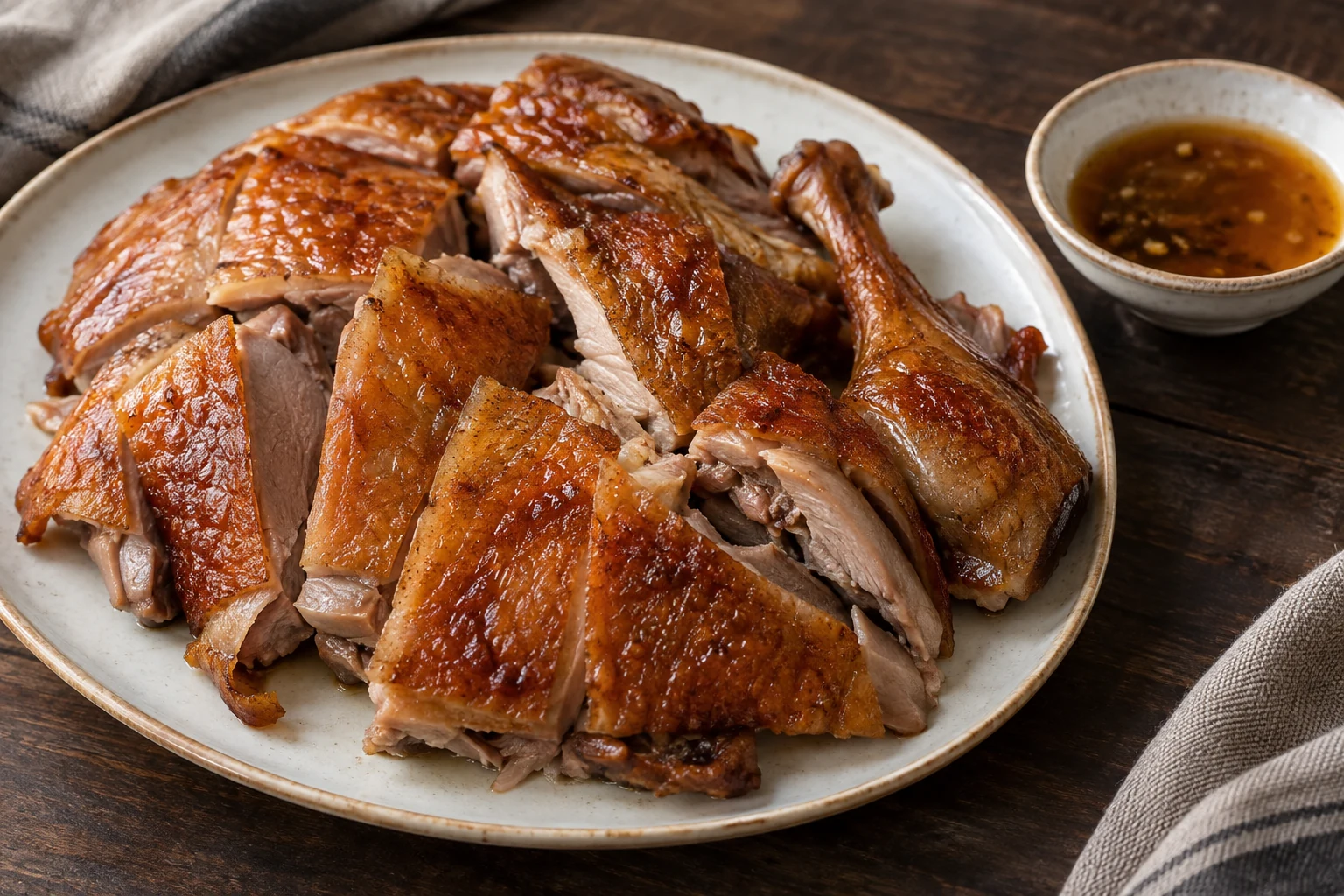
Vịt Quay Lạng Sơn: The Leaf, the Skin, the Sauce
How Lạng Sơn's mắc mật roast duck builds flavor inside the bird, browns its skin, and reaches the table as chopped duck or phở vịt quay.
Japanese cuisine Noodles
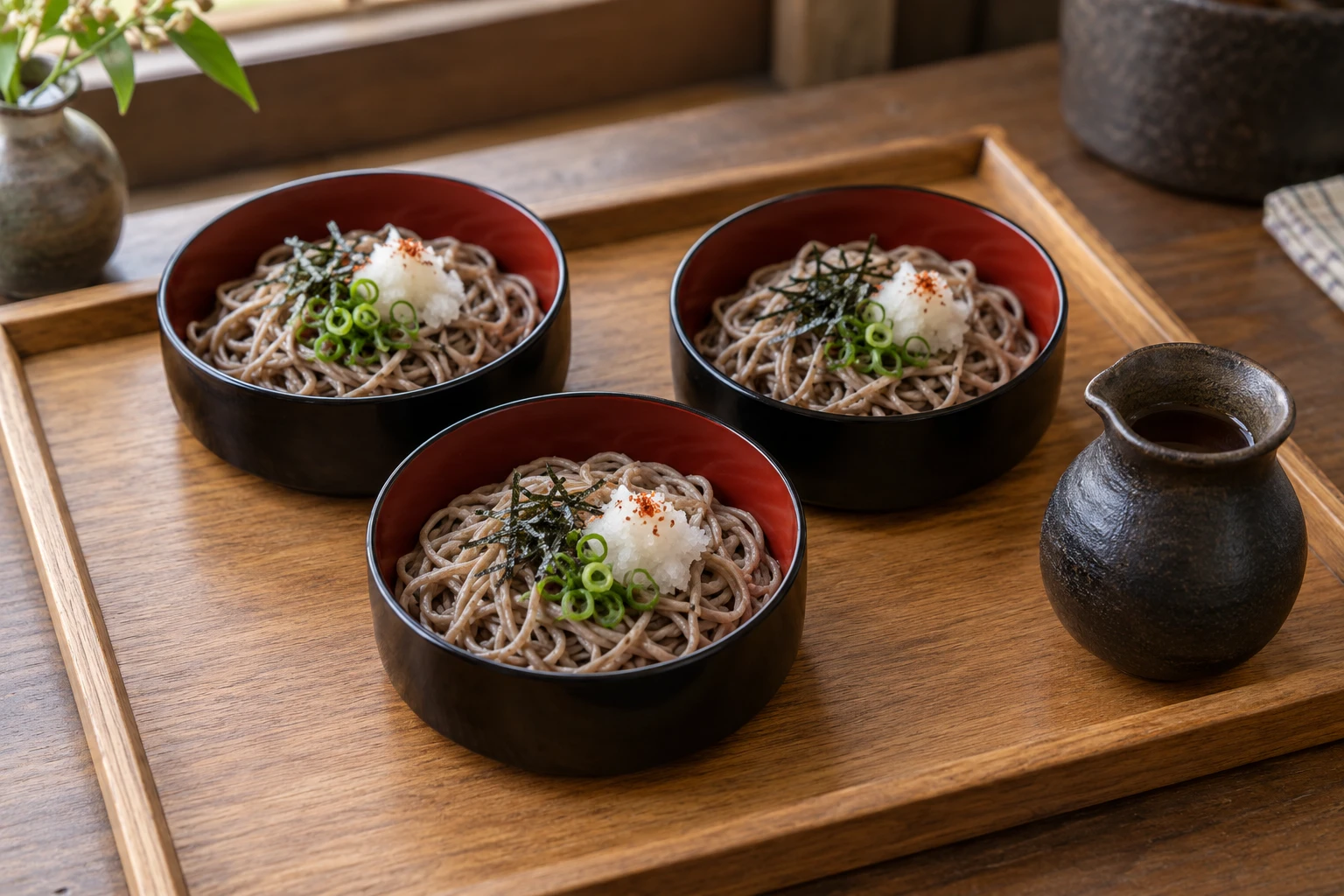
Soba: Read the Flour, Then the Serving
Soba describes a noodle family, not one flour ratio or one bowl. Ingredient labels, fresh noodle making and Izumo serving styles explain the differences.