
Vietnamese Green Papaya Salad: Choose the Dressing with the Topping
Gỏi đu đủ
A soy-and-vinegar dressing with beef jerky and a fish-sauce dressing with cooked prawns lead to different salads. Let that choice guide the bowl before you toss it.
Crunch first
The papaya gives the salad its structure
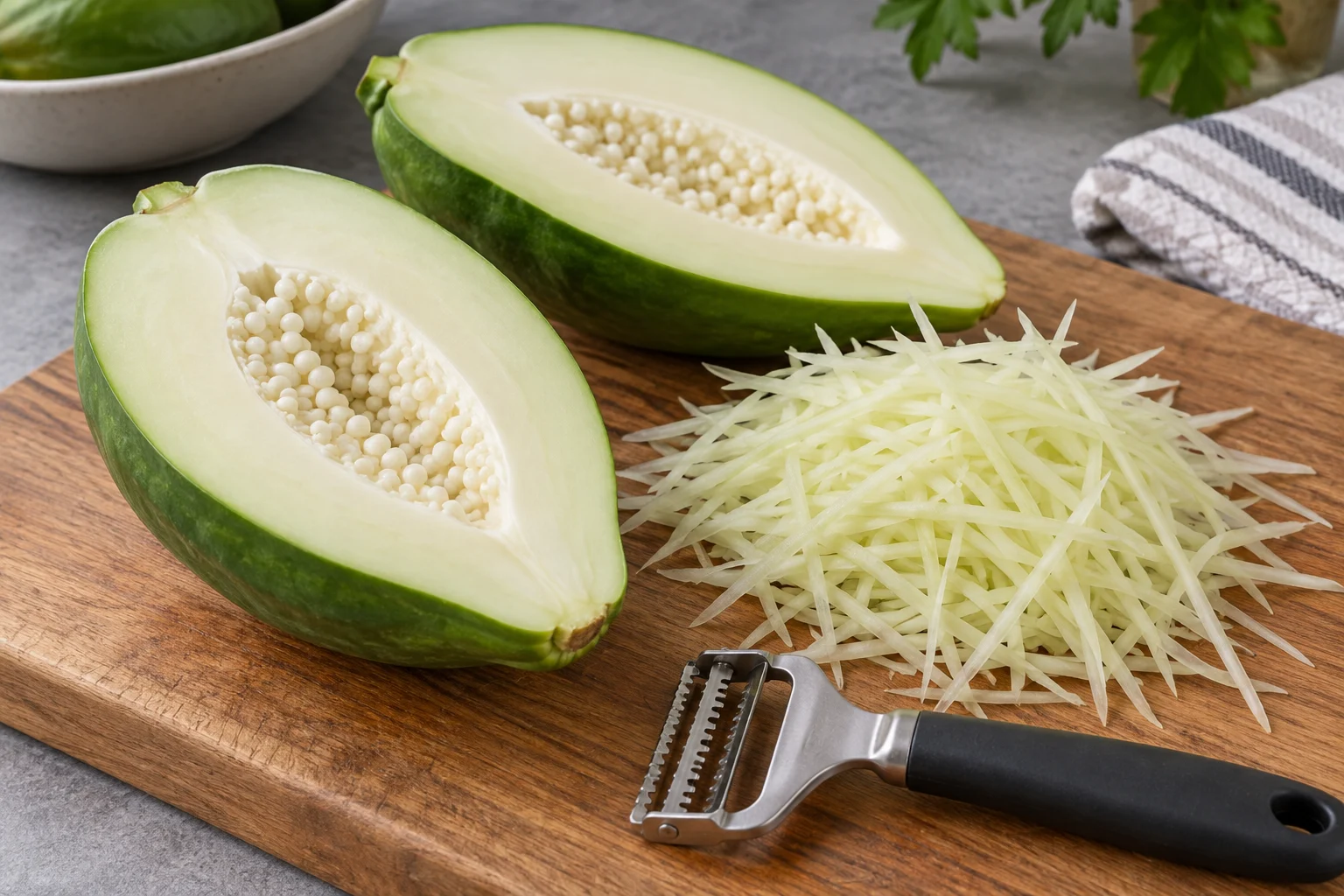
Gỏi đu đủ begins with firm, unripe papaya cut into fine strands. Its pale flesh supplies a crisp bite that carries herbs, dressing and toppings. The green fruit is being used for that texture: select one that feels firm, then peel it, halve it and remove the seeds before shredding.
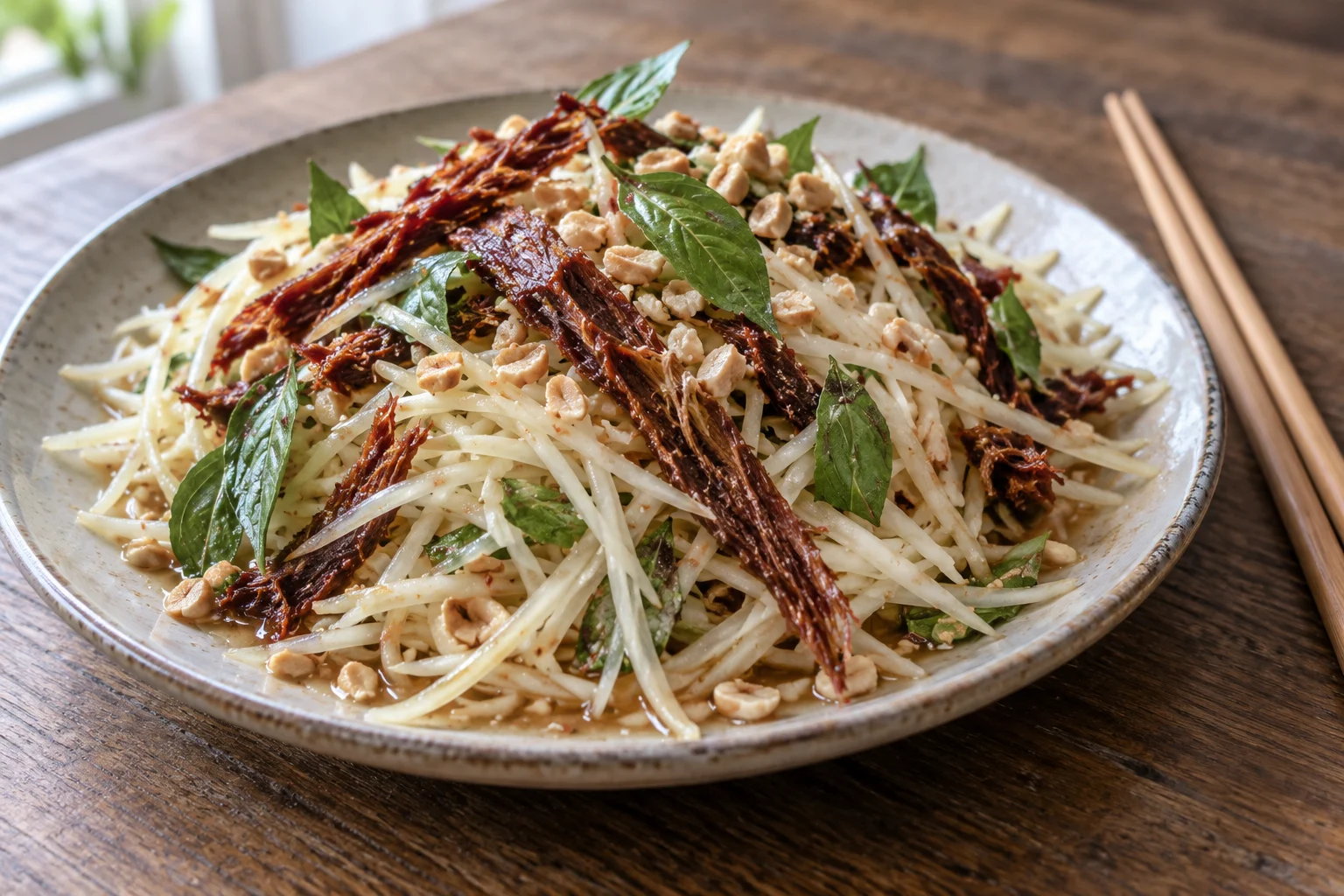
The beef-jerky version pictured here is called Gỏi Đu Đủ Khô Bò. Huy Vu and Vicky Pham both publish it with Thai basil and a sweet, vinegary soy dressing. Pham describes eating it as a street snack around Turtle Lake in Ho Chi Minh City. That is her personal account, and a useful glimpse of one setting in which the salad is enjoyed.
Two documented pairings to choose from
The topping affects the seasoning of a complete bite. Use one author’s full recipe as the starting point, including its companion dressing.
Beef jerky and soy dressing
Vu and Pham use shredded jerky with basil; Pham also adds roasted peanuts. Their dressings combine soy sauce, vinegar, sugar and water, in different proportions. Jerky already brings concentrated seasoning, so taste it with the dressed papaya before adding more sauce.
Cooked prawns and pork with fish sauce
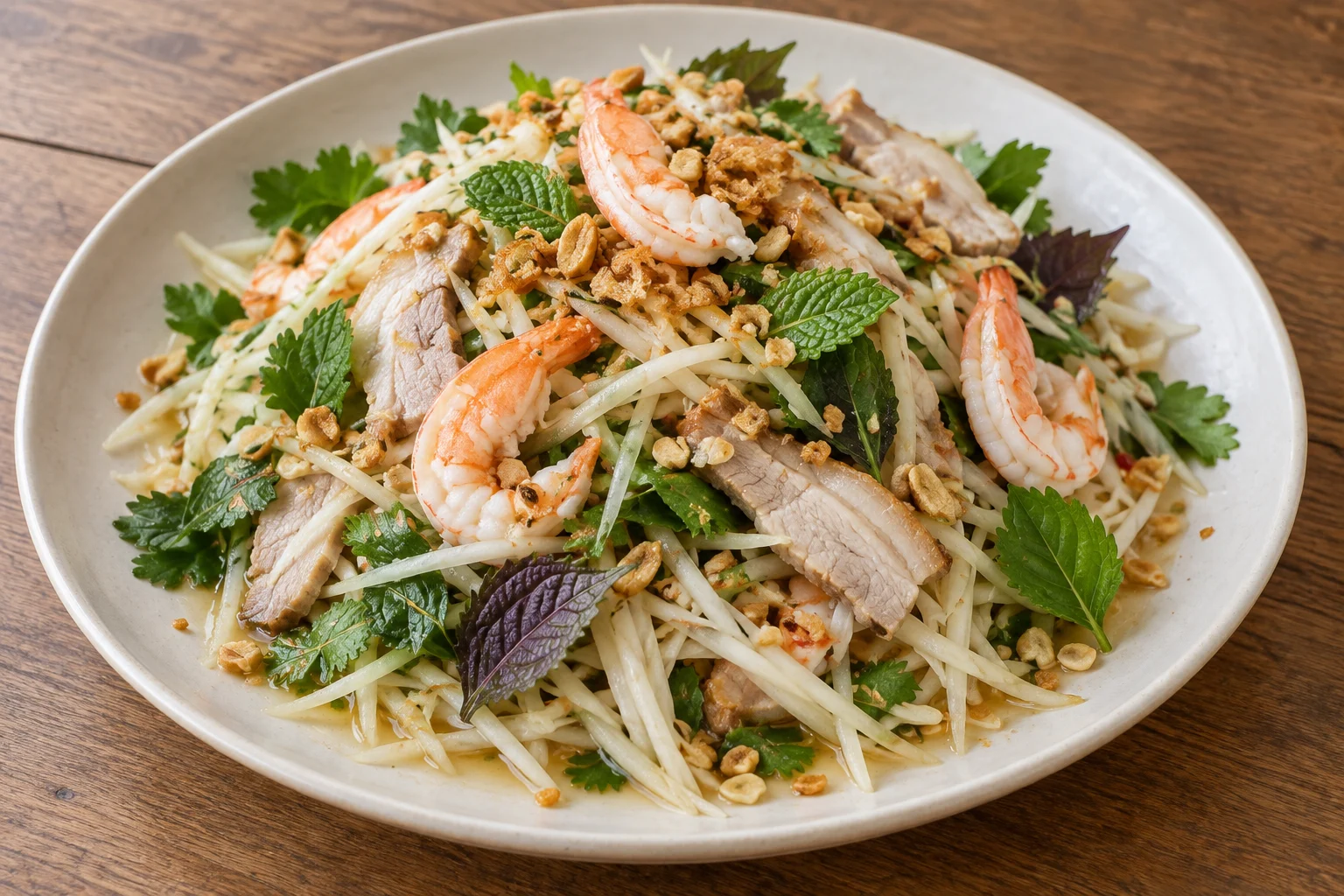
Luke Nguyen’s SBS version combines prepared cooked pork, prawns and several herbs with a fish-sauce dressing that also includes vinegar, sugar and lime. Fried shallots, peanuts and garlic chips contribute another texture. His short assembly time assumes the meat and seafood are already cooked.
Make fine strands, then remove excess water
A julienne peeler gives slender strips directly; a suitable grater or a knife can also do the job. Aim for pieces that bend easily enough to gather with herbs and topping. Very thick slices make the crunchy component dominate the mouthful, while long, tangled strips make the plate awkward to portion. Work steadily and use the guard if you choose a mandoline.
Some methods include a cold-water soak. Nguyen briefly soaks the julienned papaya, then drains it; Thomas Pagot’s plant-based adaptation uses a longer preparation. Follow the method of the recipe you have selected and drain thoroughly afterward. Water carried into the mixing bowl changes the dressing you have just tasted.
Judge the dressing on a complete bite
These finishing decisions are useful across the documented variations. Quantities come from the complete recipe you choose.
- 01
Mix the dressing separately
Dissolve the sugar before dressing the salad so sweetness is distributed evenly. If the method heats the dressing, as Nguyen’s does, let it cool before adding the fresh components. Keep the dressing beside the bowl until the papaya, herbs and topping are ready.
- 02
Start with a little, then taste
Add a modest amount and toss. Sample papaya together with its actual topping. A taste of dressing by itself cannot show how much seasoning the jerky contributes or how the herbs alter the bite. Add more only after that combined test; you need not empty the dressing bowl.
- 03
Keep the different textures visible
Cut thick jerky into thinner strips if necessary, as Vu suggests. Gently distribute the herbs and finish with the chosen crunchy garnish near serving. The papaya should remain easy to lift, with enough topping to accompany it, rather than being compressed into a dense wet pile.
A plant-based route deserves its own recipe
Pagot explicitly calls his salad Vietnamese-inspired. He combines papaya with carrot, cucumber, herbs, peanuts and fried shallots, using lime and vegan fish sauce for the dressing. That documented adaptation is useful when planning a plant-based bowl. Choose its complete method so the changed ingredients and seasoning are considered together.
For any version, prepare the serving plates before the last toss. Keep some fresh herbs and the crunchy garnish for the top, and distribute the dressed strands loosely. The first forkful should show why the papaya was shredded: crisp vegetable, aromatic leaf and a little of the topping in the same bite.
Research notes
Original preparations consulted
Three original Vietnamese author recipes establish the jerky and cooked prawn-and-pork versions. A fourth original recipe is clearly identified as a plant-based adaptation. This guide does not provide a complete recipe or claim kitchen testing.
- Huy Vu — Vietnamese green papaya and beef jerky salad Original recipe supports firm unripe papaya, basil, jerky, soy-and-vinegar dressing and cutting thicker jerky into thin strips.
- Vicky Pham — Gỏi Đu Đủ Khô Bò Original recipe and attributed personal street-snack account; dressing is mixed separately and added to taste, with basil and roasted peanuts.
- Luke Nguyen — Green papaya salad with prawn and pork, SBS Original recipe uses already cooked proteins, multiple herbs, a cooled fish-sauce dressing and briefly soaked, drained papaya.
- Thomas Pagot — Vietnamese-inspired green papaya salad Original plant-based adaptation with carrot, cucumber, herbs, vegan fish sauce, peanuts and fried shallots; treated as an adaptation.
Keep exploring
More stories for your table
Vietnamese cuisine Noodles
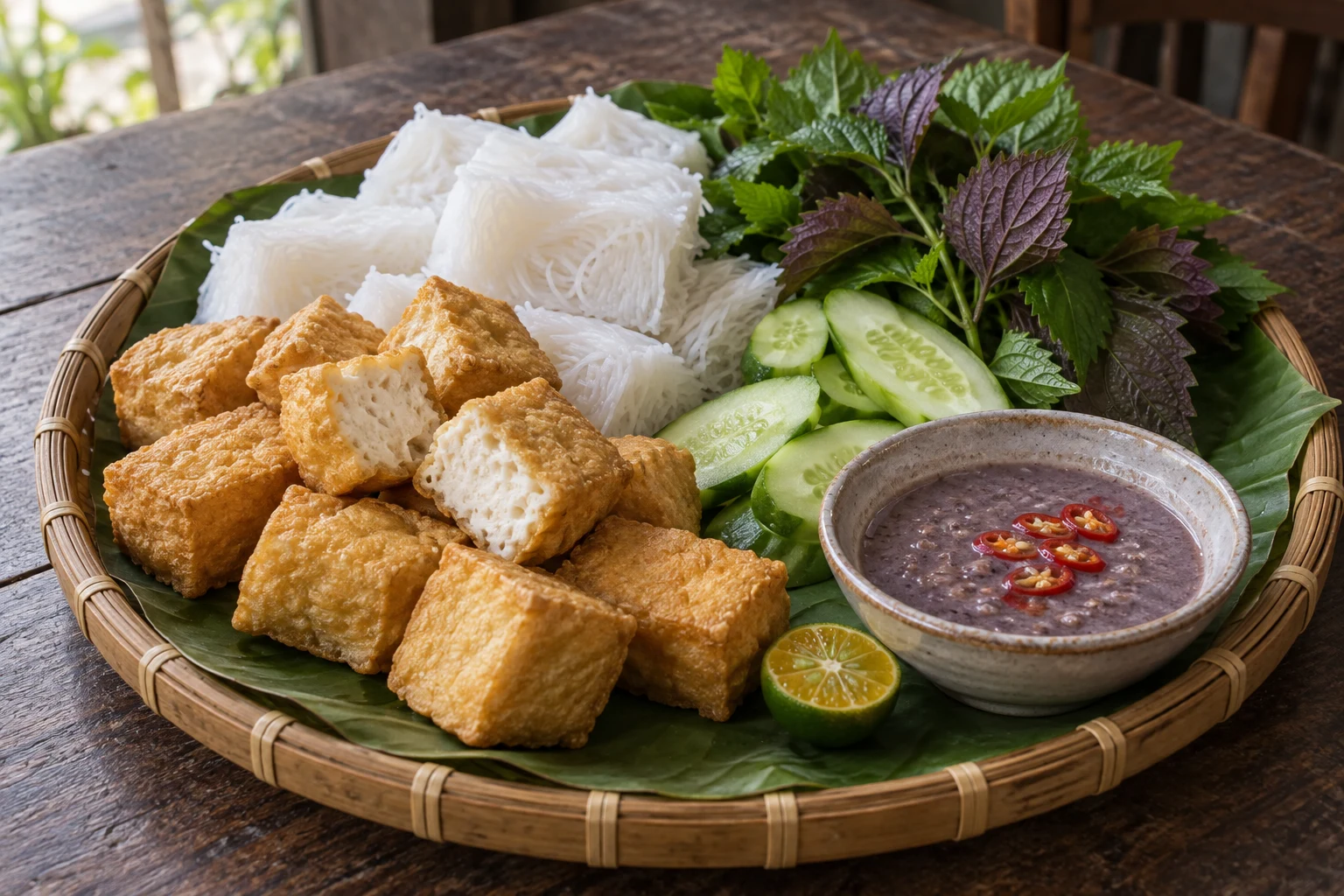
Bún Đậu Mắm Tôm: Keep the Dip at the Center
Hot fried tofu, plain rice noodles and fresh herbs make room for a powerful fermented-shrimp dip. Read the Hanoi plate before adding more to it.
Vietnamese cuisine Roast duck
Vịt Quay Lạng Sơn: The Leaf, the Skin, the Sauce
How Lạng Sơn's mắc mật roast duck builds flavor inside the bird, browns its skin, and reaches the table as chopped duck or phở vịt quay.
Indonesian cuisine Raw vegetable salad
Karedok: Build the Dressing Before the Salad
Make a peanut dressing that clings to crisp vegetables: a Sundanese karedok guide to grinding, gradual thinning and a clearly labelled home adaptation.