
Sütlaç: Soft Rice, Milk and a Browned Finish
Sütlaç
Sütlaç can be a plain chilled rice pudding or fırın sütlaç with a browned oven finish. Understand the tender grains, different thickening methods and the pudding-shop setting.
The rice pudding comes first
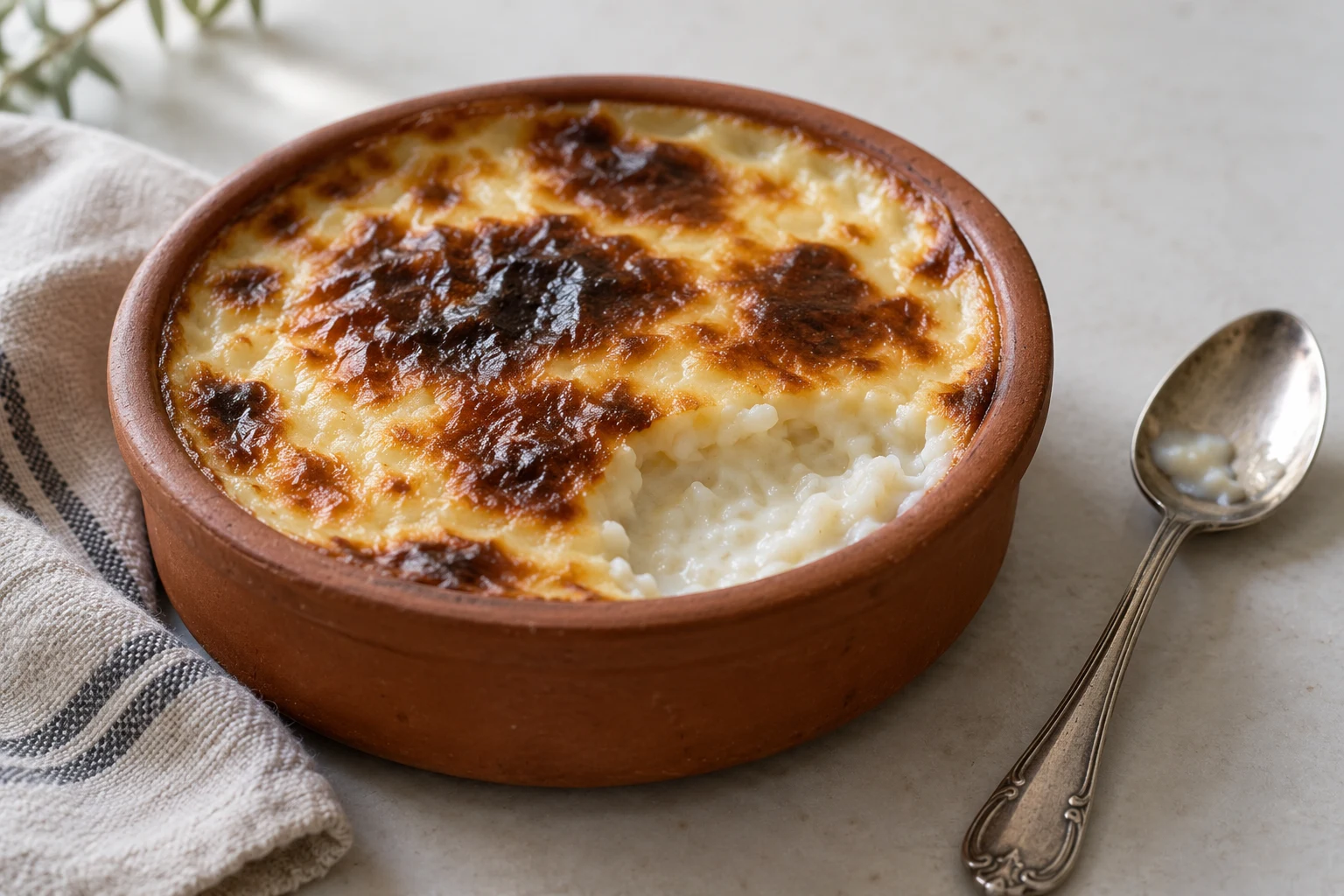
Sütlaç belongs to the milk-based desserts of Turkish cooking, with rice, milk and sugar at its centre. It does not always need a browned top. The Turkish culture ministry’s plain preparation ends in dessert bowls with cinnamon, while its notes offer baking as a further option. The distinction is worth noticing before choosing a recipe or ordering from a menu.
Fırın sütlaç is the baked version. Its appeal lies in a surface that darkens while the pudding underneath remains creamy. A spoon should still find rice, rather than a uniform custard or a slice of cake. Think of the oven as a finish to an already prepared pudding: browning does not replace the earlier job of softening the grains.
Tender rice gives the milk a texture
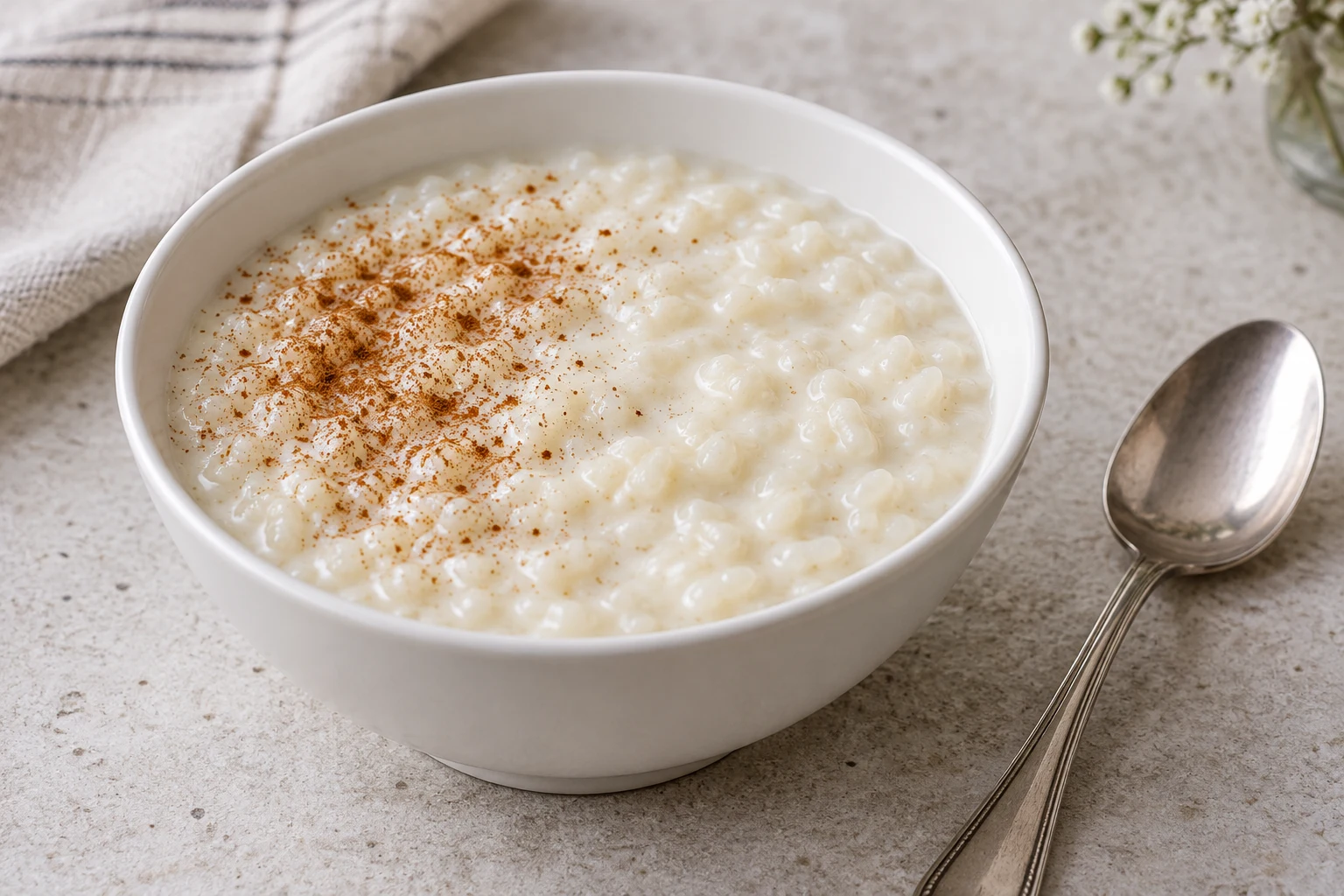
The rice grains should be soft enough to eat easily within the pudding. Lezzet’s kitchen-school account, featuring Okan University gastronomy instructor Arif Akdaş, stresses cooking the rice until thoroughly softened before adding it to his milk mixture. His method cooks the rice separately, then drains it. That sequence belongs to his recipe, rather than a compulsory route for every sütlaç.
The Turkish Meat and Milk Board records a simpler stovetop version using whole milk, broken rice and sugar. Its rice cooks directly in the milk, with continual stirring advised. This is a useful counterpoint to the separately cooked grains: the same dessert can begin with different rice preparations. Choose the method with the recipe, rather than assuming all the rice on the shelf will behave identically.
Two documented routes to a spoonable bowl
Milk and broken rice
The Meat and Milk Board’s plain method lists milk, broken rice and sugar without an added starch. The smaller rice pieces remain part of the pudding’s texture.
- A straightforward stovetop version
- Follow its rice preparation and cooking method
A separate thickener
The culture ministry uses dissolved starch. Akdaş’s Lezzet version uses sübye, a strained liquid made from soaked rice blended with water, alongside cooked grains and an egg yolk.
- Texture has another ingredient to account for
- An egg-containing method differs from an egg-free one
Sübye is a preparation, not another name for milk
Lezzet describes sübye by its method: soak rice, blend it with water and strain the mixture. Akdaş uses it to thicken the pudding while retaining separately cooked rice grains. In that preparation, the grains and the rice-derived liquid have different jobs. Recognising the term helps a reader follow a recipe without replacing it casually with a spoonful of dry rice.
This page compares the approaches rather than combining their ingredient lists. A recipe designed around broken rice, one using added starch and one using sübye can require different proportions and handling. Start with a complete set of instructions suited to the ingredients available, then assess whether the cooked rice is tender and the finished pudding has the texture that method intends.
The baked finish has a separate plan
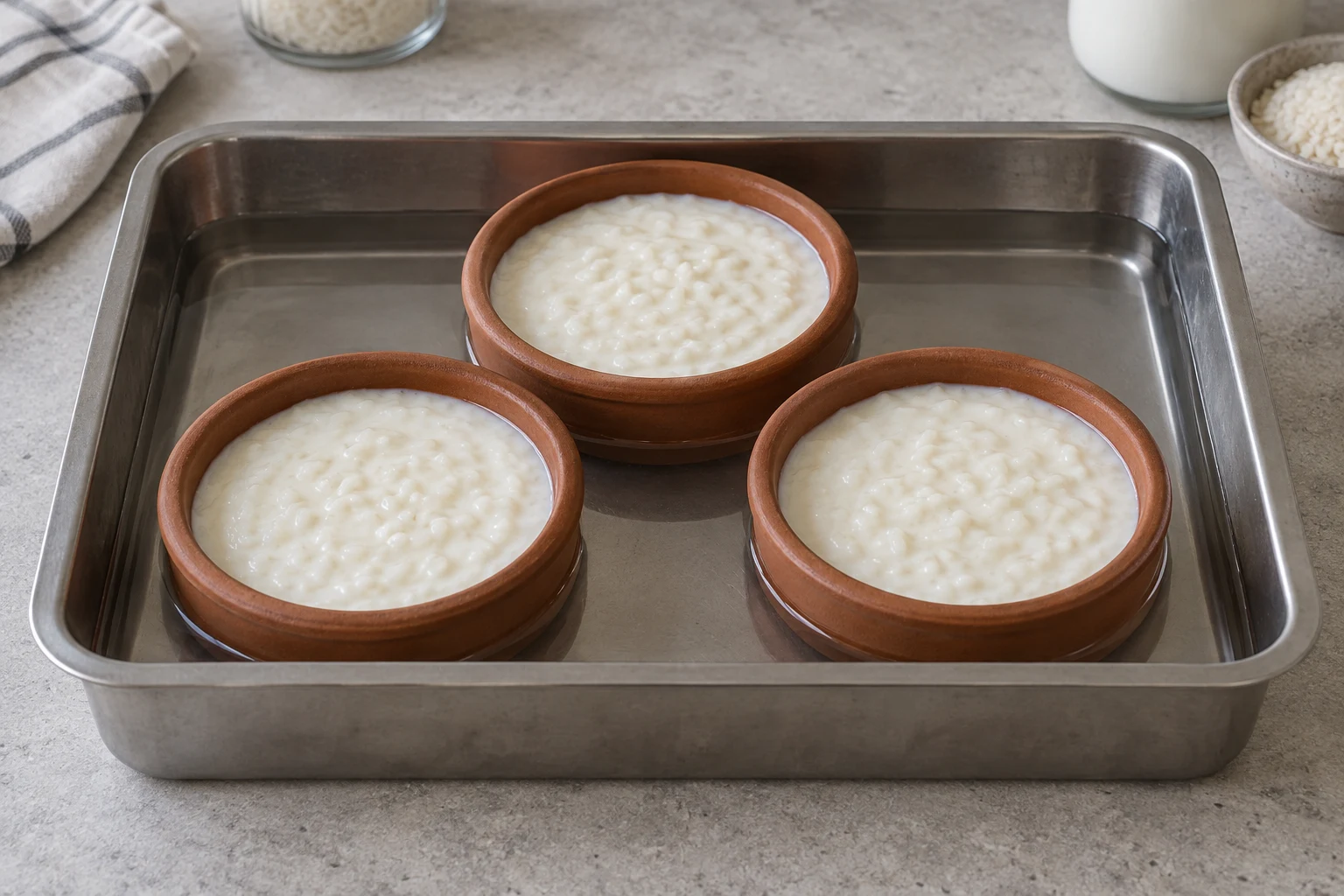
Özlem Warren’s family method illustrates the move from pot to oven. These decisions accompany a complete recipe.
- 01
Use dishes made for the oven
Warren uses ovenproof individual pots and leaves headroom for the mixture to rise.
- 02
Set the pots in a water-filled tray
Warren and Akdaş both put water in the outer tray, separate from the pudding.
- 03
Watch the surface
Warren checks during baking because ovens differ. A browned coating leaves the pudding creamy underneath.
A dessert-shop pause, as well as a meal’s ending
Warren recalls eating fırın sütlaç with tea at a local muhallebici, or pudding shop, with family and friends. She also records service in patisseries and as a daytime treat. Cold service is familiar in her account, while her household enjoys it warm as well.
The culture ministry records optional nuts, fresh fruit and preserves. When ordering, ask about the top and serving temperature. A plain bowl and a browned ramekin share a milky rice foundation, while offering different first spoonfuls. The modest portion can fit a pause over tea as easily as the end of a meal.
Research notes
Sources for the grain, finish and setting
Two Turkish public institutions document plain preparations and variation. Lezzet supplies a named instructor’s rice-derived thickener, while Özlem Warren provides a baked family method and a personal pudding-shop memory.
- Turkish Ministry of Culture and Tourism — Rice pudding Documents the plain cinnamon-served pudding, a separate baked option and serving variations.
- Et ve Süt Kurumu — Sütlaç Turkish Meat and Milk Board preparation using milk, broken rice and sugar, with rice cooked in milk.
- Lezzet — Arif Akdaş’s Turkish rice pudding Named gastronomy instructor explains separately cooked tender rice, sübye and a water-filled baking tray.
- Özlem’s Turkish Table — Baked rice pudding Cookbook author’s family preparation supplies ovenproof pots, headroom, water bath, browning checks and pudding-shop memories.
Keep exploring
More stories for your table
Spanish cuisine Caramel-topped custard
Crema catalana: the custard waits, the crust does not
Citrus-scented custard and brittle caramel run on different schedules. Learn the make-ahead and serving choices behind crema catalana.
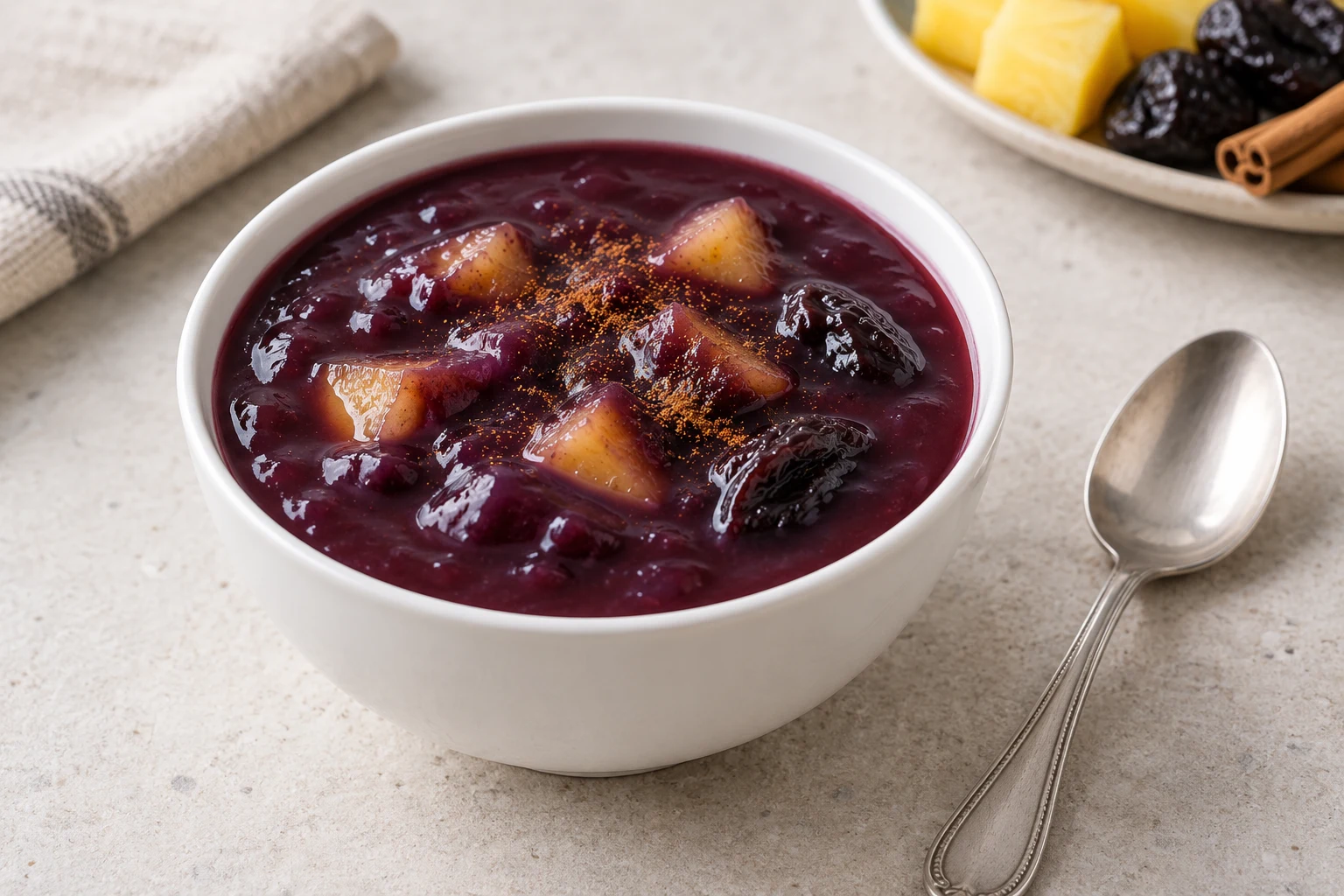
Peruvian cuisine Fruit and purple corn pudding
Mazamorra morada: from purple corn liquid to pudding
Purple-corn liquid, cooked fruit and starch form mazamorra morada. Explore the method and its separate arroz con leche pairing, el clásico.
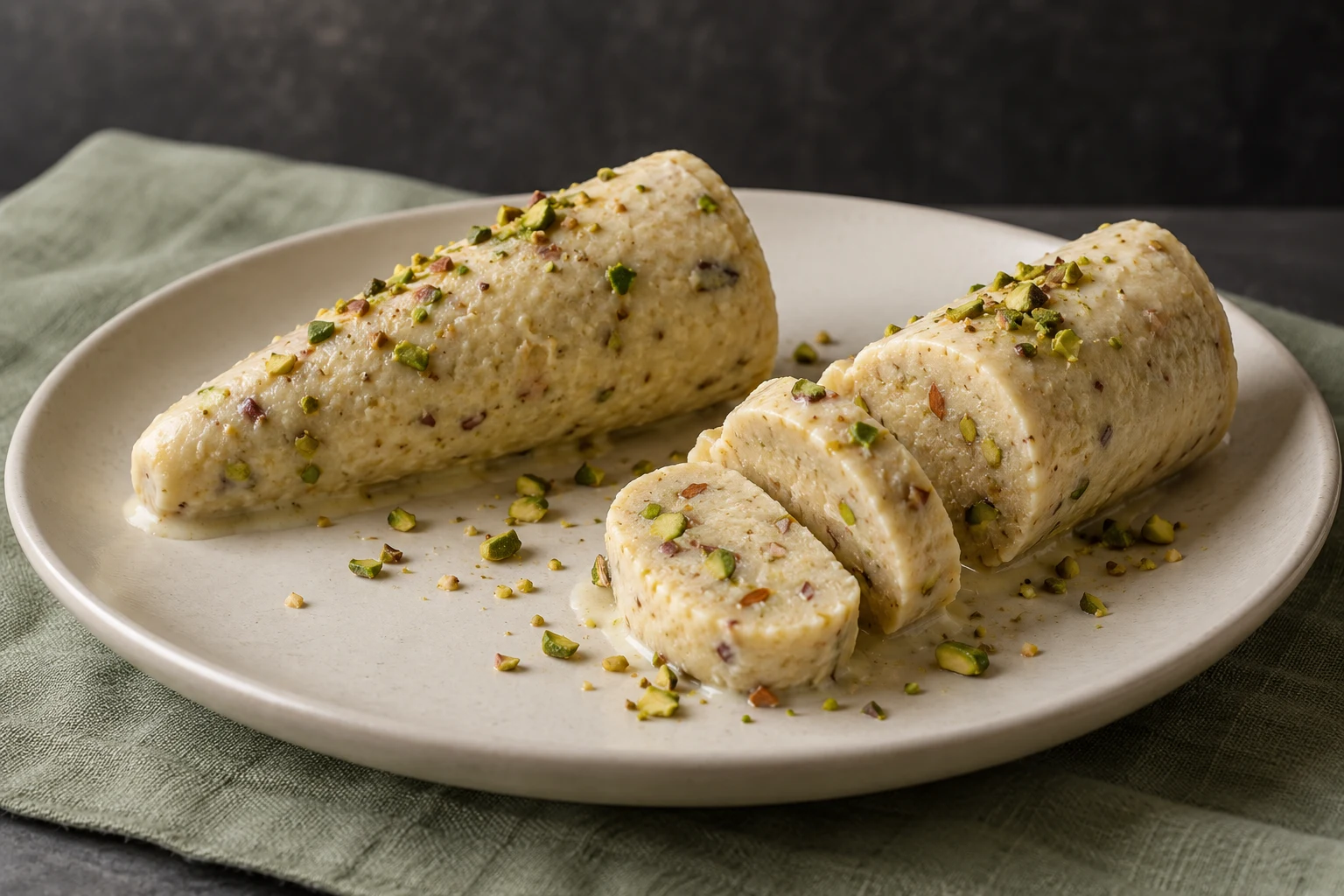
Pakistani cuisine Frozen milk dessert
Kulfi: choose the milk base, then the finish
Read reduced milk, khoya and condensed-milk kulfi methods, then discover how falooda noodles and syrup change the Pakistani serving.