
Tekirdağ Köftesi: More Than a Short Cylinder
Tekirdağ köftesi
The small grilled meatballs of Tekirdağ have a registered regional specification. Compare its ingredient and resting rules with clearly identified home adaptations.
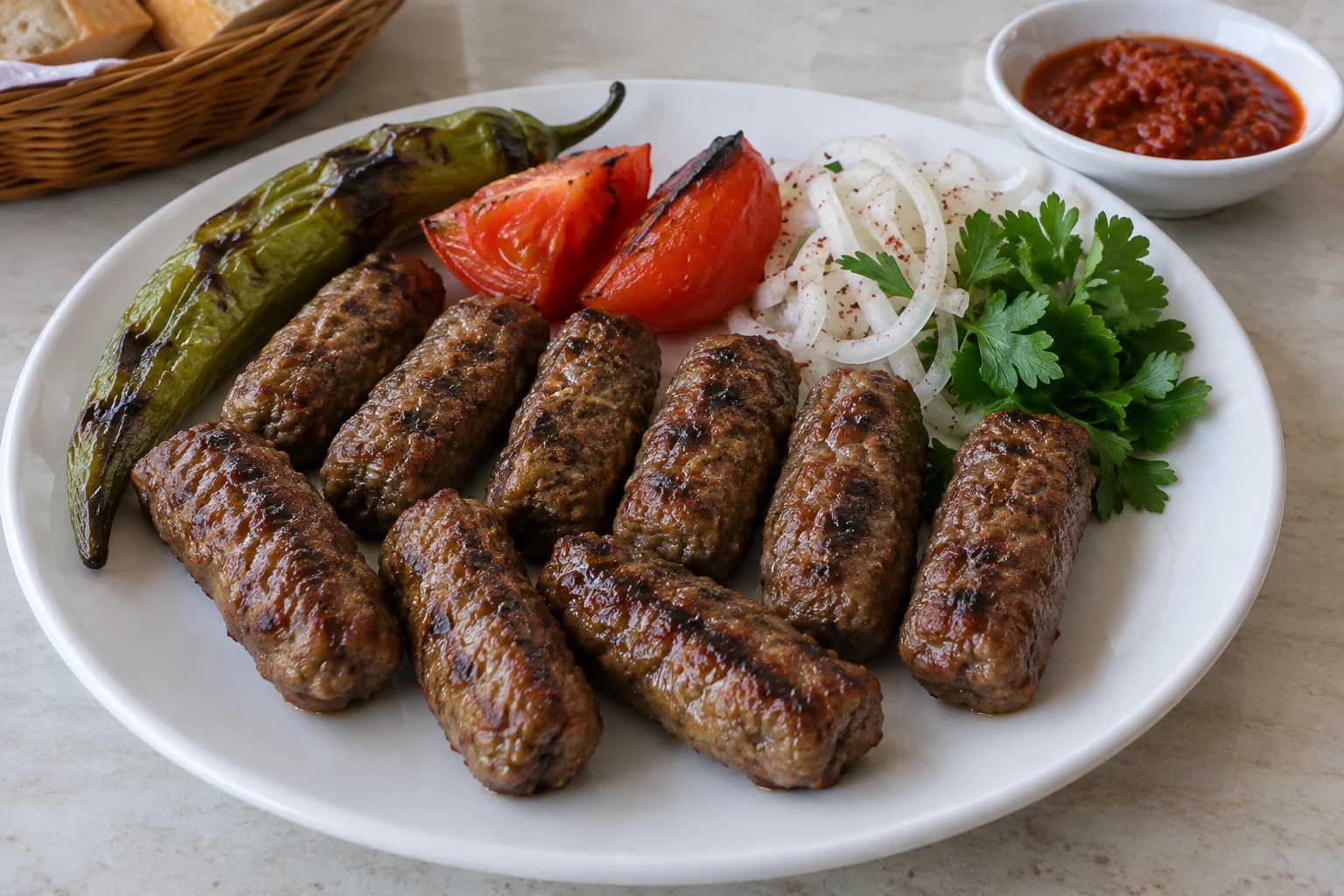
A shape you can recognize, a name worth reading
Tekirdağ köftesi is associated with Tekirdağ in Turkish Thrace. Its small cylindrical shape is an immediate clue, but a regional name can describe more than the outline of the finished meatball. Here it also points to a documented way of selecting ingredients and working the meat.
The Turkish Patent and Trademark Office records Tekirdağ Köftesi under registration number 517, dated 7 August 2020. That specification is a useful reference when recipes differ. A home cook can borrow the idea of the short grilled cylinder while recognizing that a recipe made with different ingredients is a home interpretation of the dish.
The registered description gives texture a process
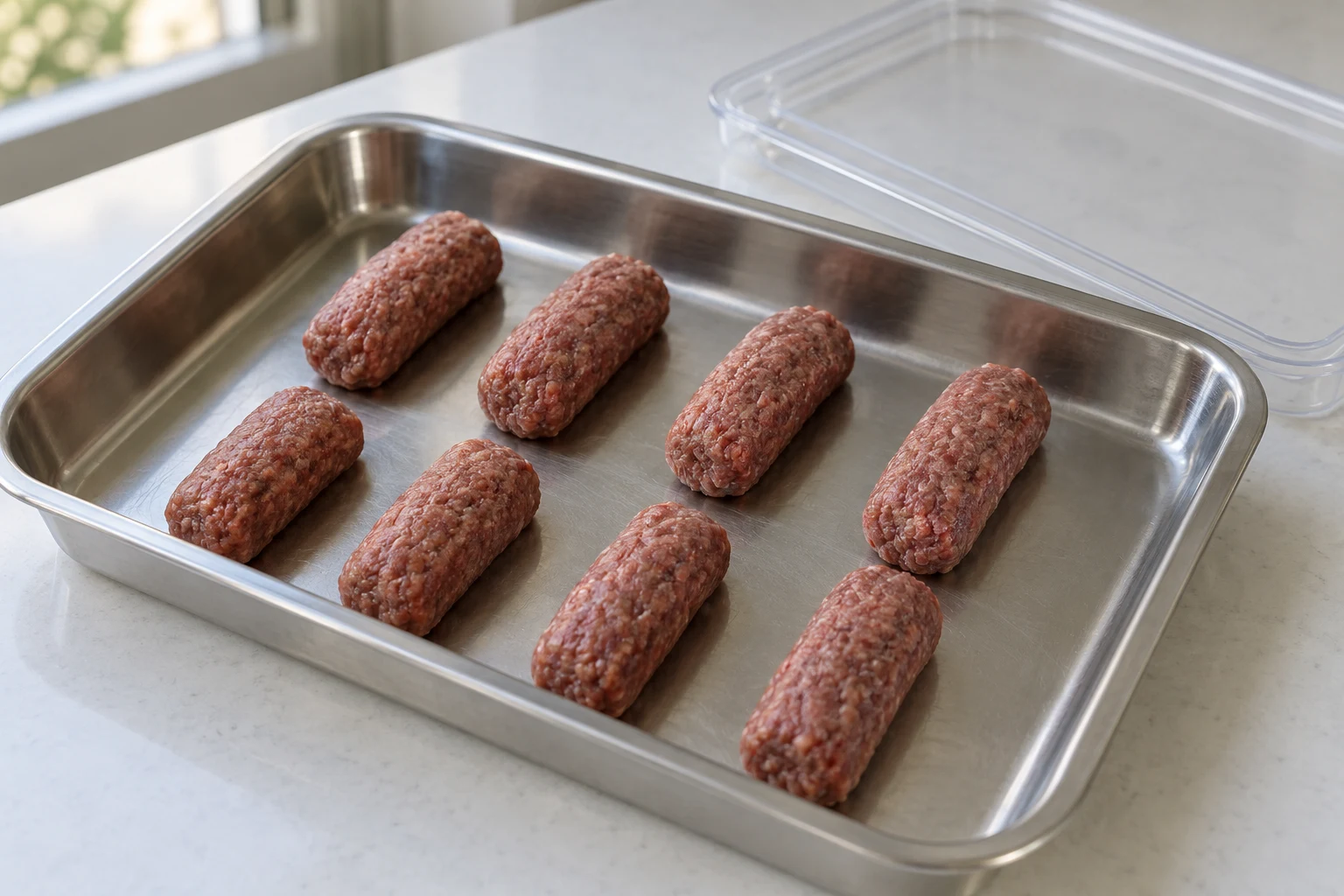
The specification describes meat from cattle raised in the region, stale wheat bread, red onion, garlic and beef fat, seasoned with cumin, black pepper and salt. It calls for grinding and kneading into a homogeneous mixture, then resting that mixture at 0–4°C for eighteen to twenty-four hours before shaping. Those are details of the documented product, not an instruction to leave raw meat on a counter overnight.
Its raw cylinders are specified as 15 grams, approximately 6.5 centimeters long and 1.5 centimeters in diameter. Read those numbers as a description of that product’s scale. They explain why these köfte look quite different from a large burger, without turning every homemade oblong meatball into the registered regional version.
Three sources, three kinds of account
The registration
TÜRKPATENT specifies a regional production method and ingredient proportions. Its listed seasonings are restrained, and it excludes added food additives and flavorings.
A cultural recipe record
Türkiye’s Culture Portal cites Mehmet Serez’s 1997 regional cookbook. Its recipe includes bread, onion and garlic, with red pepper and baking soda as well as cumin and black pepper.
A stated home adaptation
Turkey’s For Life explicitly says its recipe is not an exact reproduction. It uses semolina, a little yogurt and parsley, with larger oblong pieces and a shorter refrigerated rest.
A difference should stay visible
The older cultural recipe and the registered specification are not interchangeable ingredient lists. The Culture Portal is valuable as a regional recipe record, but its baking soda should not be silently imported into a formula described as following the registration. Equally, the home adaptation’s yogurt and semolina belong to that named recipe.
This distinction helps both shoppers and cooks. When ordering, a specific producer’s description tells you more than resemblance alone. At home, choose a complete preparation whose ingredients and equipment you can use. Combining the additions from several accounts produces another adaptation, rather than resolving the differences among the sources.
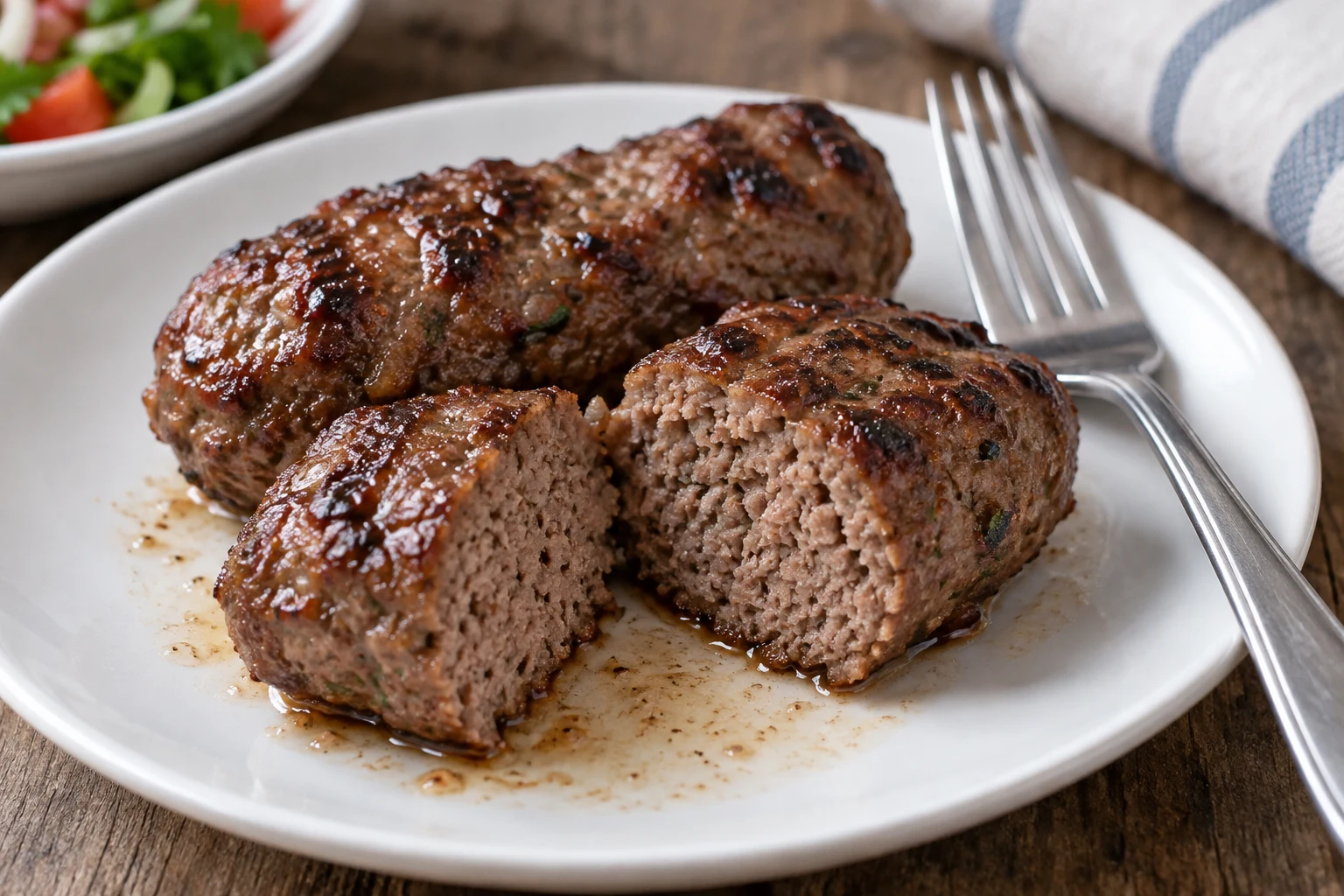
Look at the whole plate
Go Türkiye presents the meatballs with chili paste and ayran, the yogurt drink, and mentions Tekirdağ’s cheese dessert as a possible finish. The registration also describes roasted pepper and tomato, sliced onion and parsley alongside the meat. These accompaniments provide a fuller introduction than an isolated photograph of the cylinders.
Turkey’s For Life pairs its adaptation with piyaz, a bean salad, while clearly describing its own household preferences. That is another serving choice rather than proof that one salad must accompany every plate. Wheat in the documented bread-based mixture and dairy in some adaptations or drinks are practical details to ask about when allergens matter.
Research notes
Sources for the regional name and home interpretations
The registration, cultural record, tourism account and original home recipe have different purposes. The official food-safety chart supplies the ground-beef temperature.
- TÜRKPATENT: Tekirdağ Köftesi, Registration 517 Primary registration document with regional meat, ingredients, cold resting, cylindrical dimensions and accompaniments.
- Türkiye Culture Portal: Tekirdağ Köftesi Regional recipe record citing Mehmet Serez’s 1997 cookbook; its ingredient list differs from the registered specification.
- Turkey’s For Life: Tekirdağ Köftesi Recipe Original household recipe expressly described as an adaptation, with semolina, yogurt and larger pieces.
- Go Türkiye: Taste Tekirdağ Regional tourism account of the meatballs, chili paste, ayran and cheese dessert.
- FoodSafety.gov: Safe Minimum Internal Temperatures Federal thermometer-based 160°F / 71°C guidance for ground beef.
Keep exploring
More stories for your table
Persian cuisine Grilled kebabs
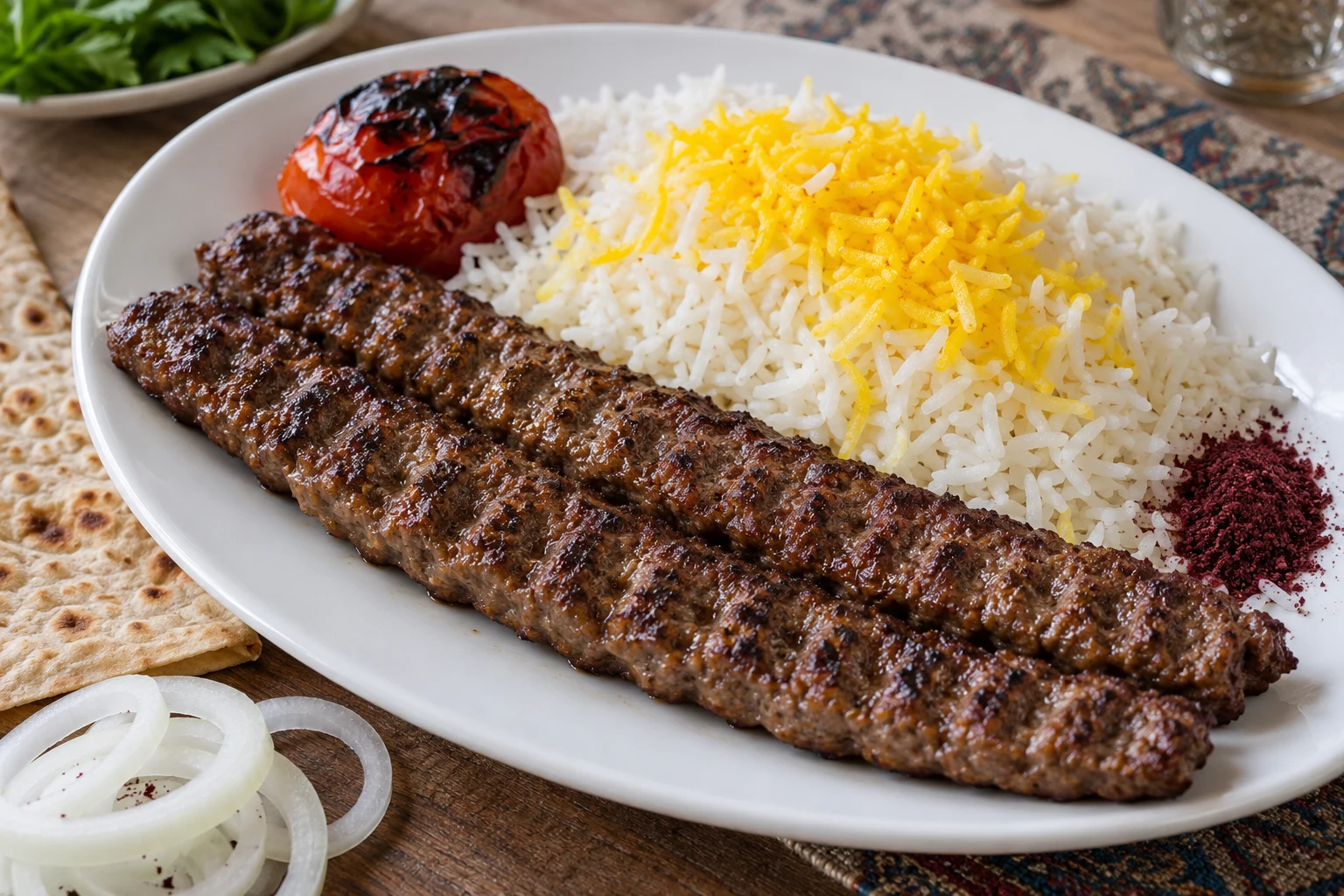
Koobideh: How the Meat Holds the Skewer
Iranian koobideh turns ground meat and onion into a long ridged kebab. Onion moisture, a cohesive mixture and broad skewers explain the preparation’s distinctive shape.
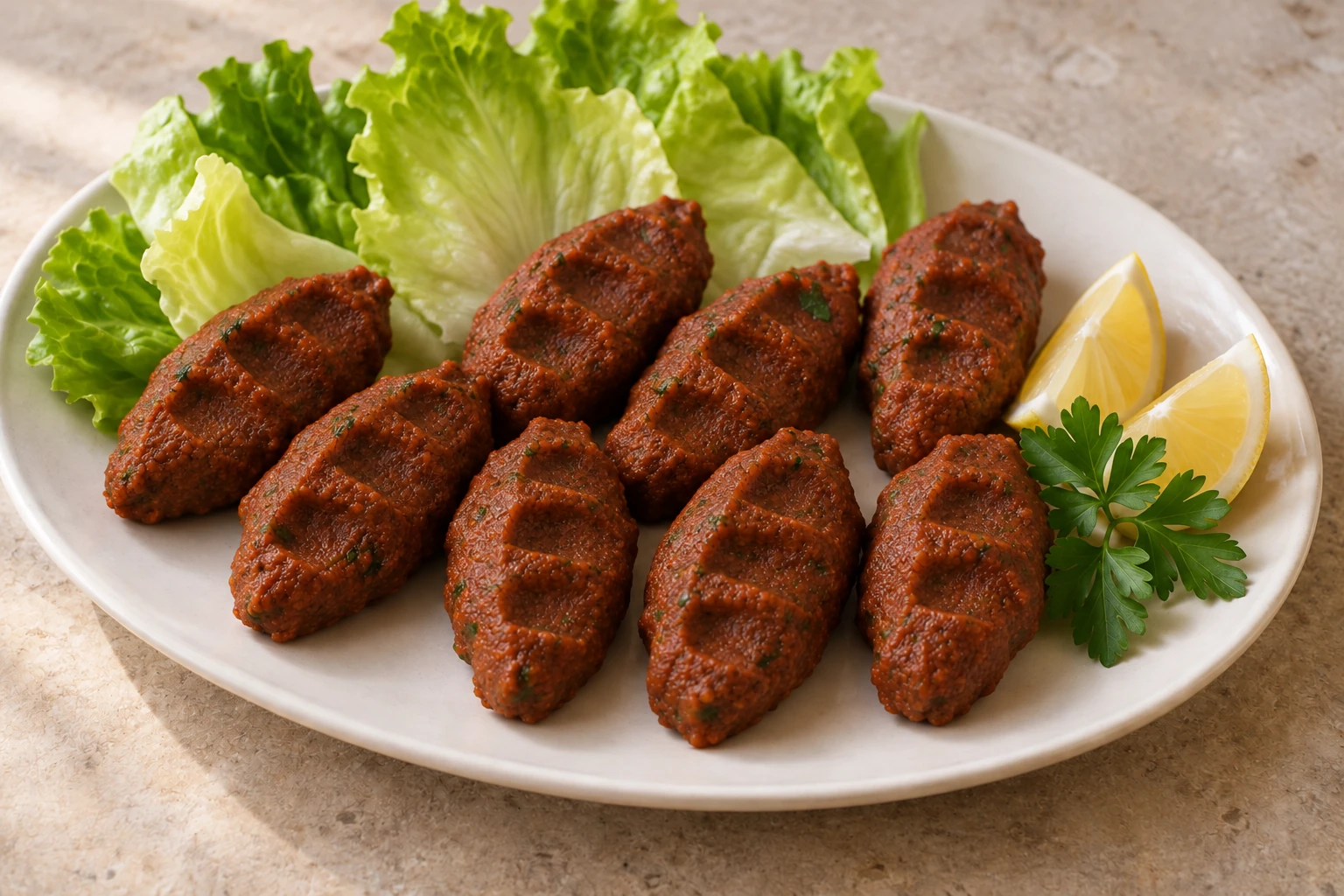
Turkish cuisine Bulgur & regional traditions
Çiğ Köfte: What Changes Between Şanlıurfa and Adıyaman
Compare Şanlıurfa’s meat çiğ köfte with Adıyaman’s registered meatless version: fine bulgur, walnuts, kneading, and a revealing difference over lemon.
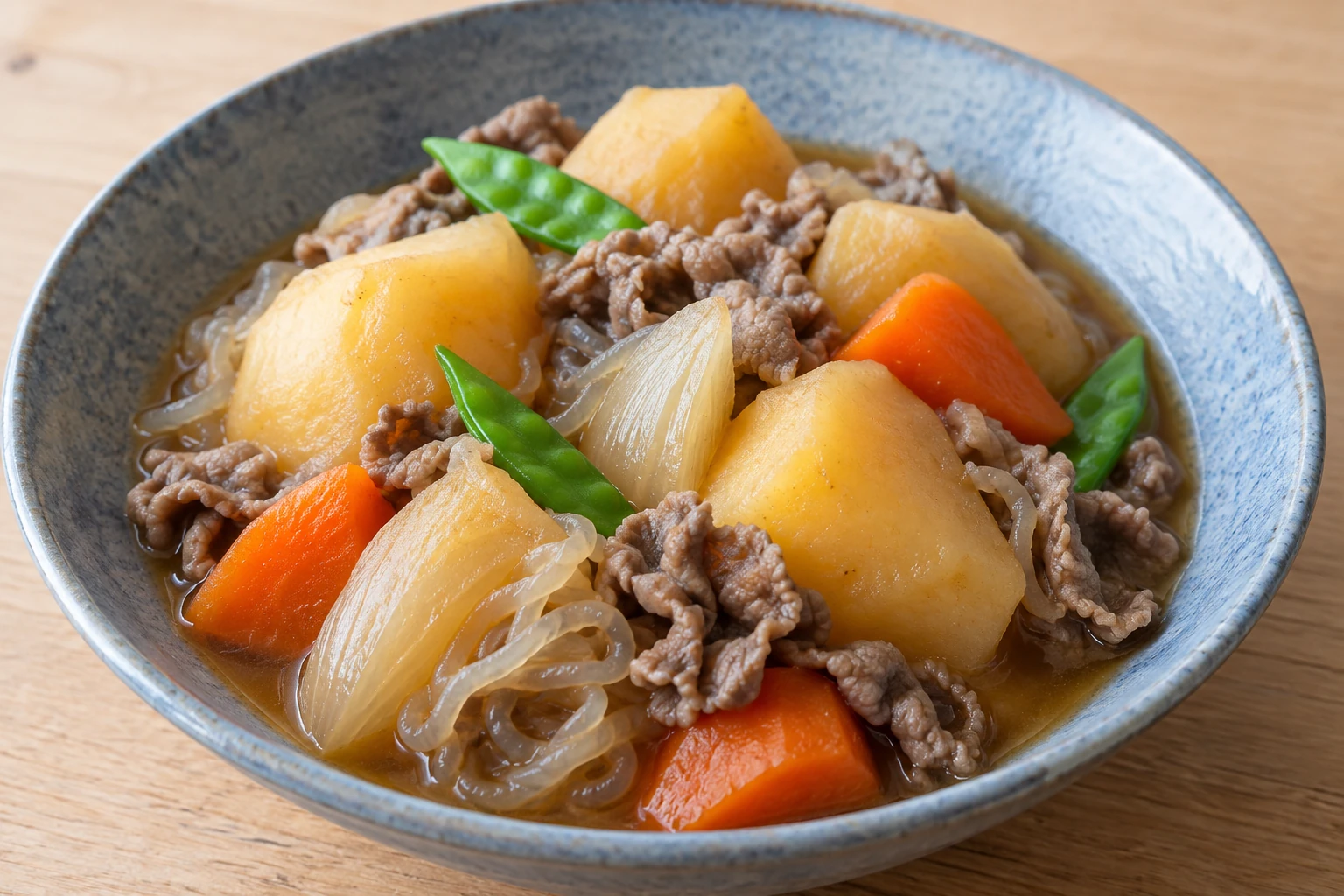
Japanese cuisine Meat & potato simmer
Nikujaga: Keep the Potatoes in One Piece
A gentle simmer, thin beef and a lid resting on the food help nikujaga’s potatoes stay intact. Learn the technique and make a complete four-serving home adaptation.