
Kelle Paça: The Finish Makes the Difference
Kelle paça çorbası
A long-cooked head-and-trotter broth starts the bowl. Regional documents show how the last additions—sourness, garlic and pepper—can give it a very different character.
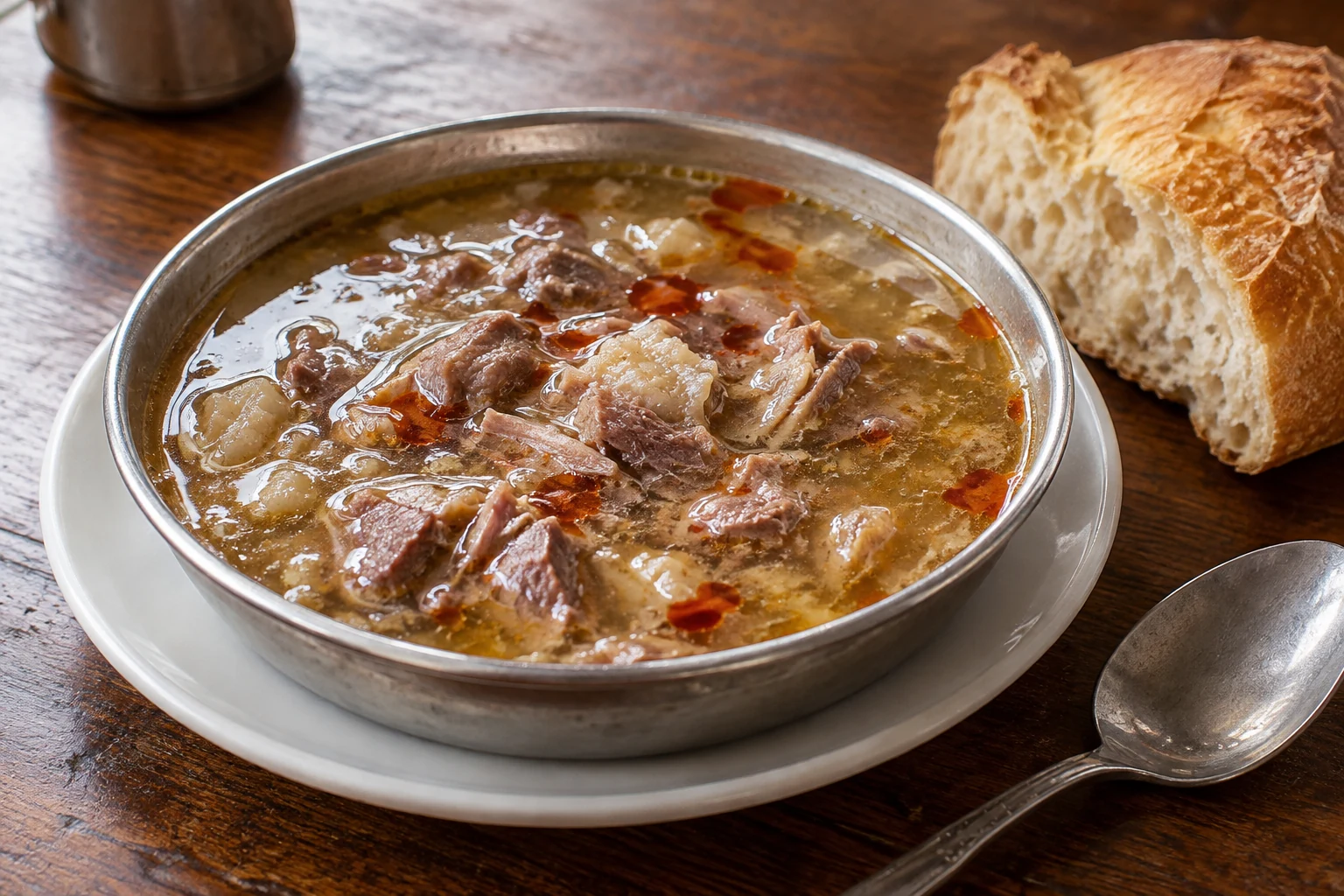
Begin with the broth
What the name promises—and what the cook builds
In Turkish, kelle names the head and paça the feet. Their long cooking yields both meat for the bowl and the rich liquid around it. The Elazığ provincial cookbook starts with one small-animal head and four feet, then picks the cooked meat and returns it to its broth. The registered Maraş preparation likewise works with head and foot parts but separates broth, fat and cooked parts before assembling each serving.
That shared foundation does not settle how the soup should taste. Two local records make the last stage especially clear: one builds a tart, peppered finish into service; the other leaves sharpness to the diner.
Two documented preparations
Maraş builds the finish; Elazığ leaves a choice
These are specific local descriptions, not a single formula for every bowl sold under the name kelle paça.
Maraş: sour and peppered at service
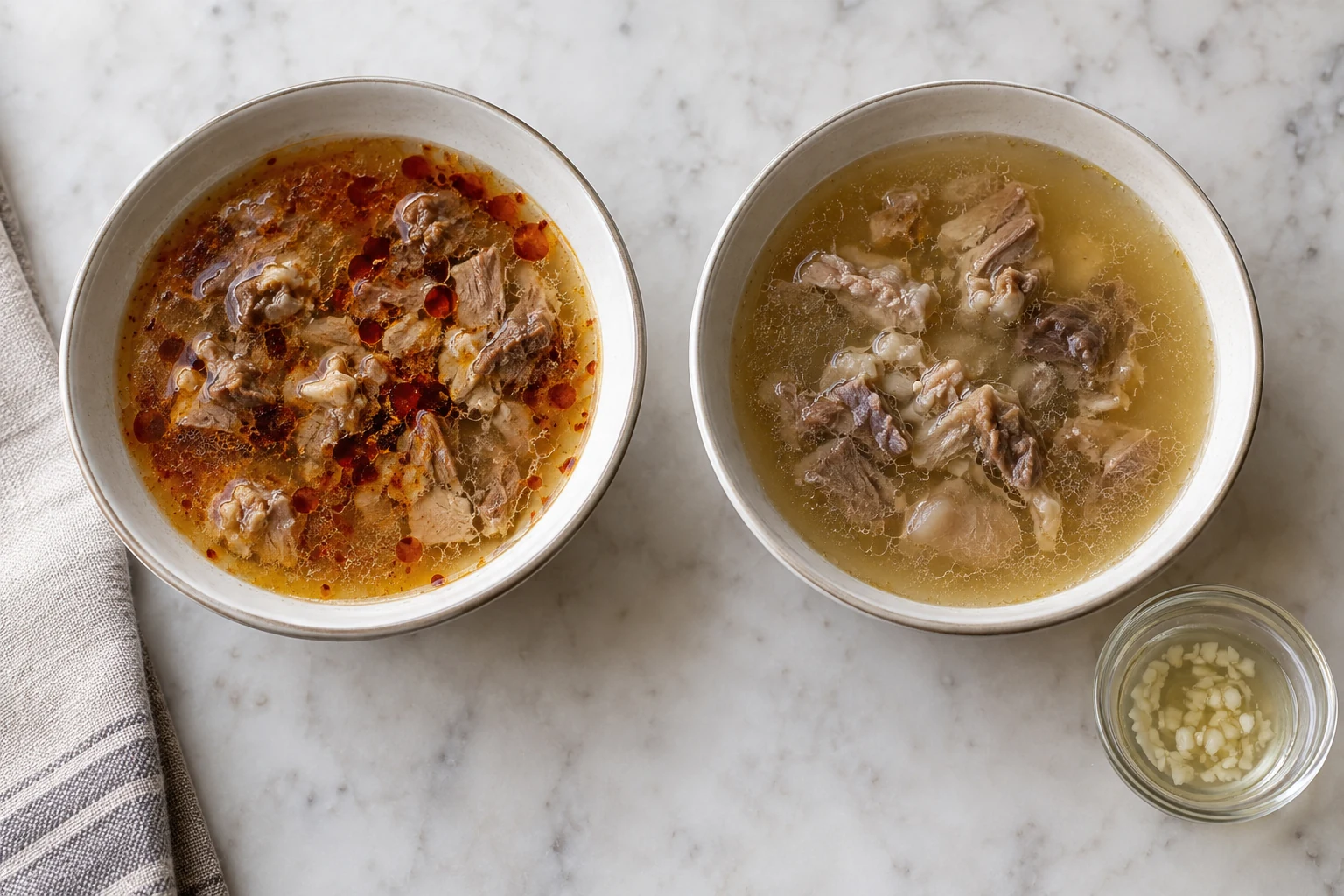
The registered Maraş version adds a mixture of Maraş sumac souring and garlic to each serving, then pours Maraş pepper warmed in the soup's own fat over the top. Its specification allows a plain serving with head meat or a mixed serving with additional head and foot parts.
Elazığ: garlic and vinegar if wanted
The provincial cookbook simmers head and feet, returns the chopped cooked meat to its broth, and says garlic and vinegar may be served with it. It does not specify the Maraş sumac-and-pepper finish.
How to read a bowl
From pot to portion
The records describe how a long cook becomes a bowl with selectable meat and its own broth.
- 01
Broth from the long cook
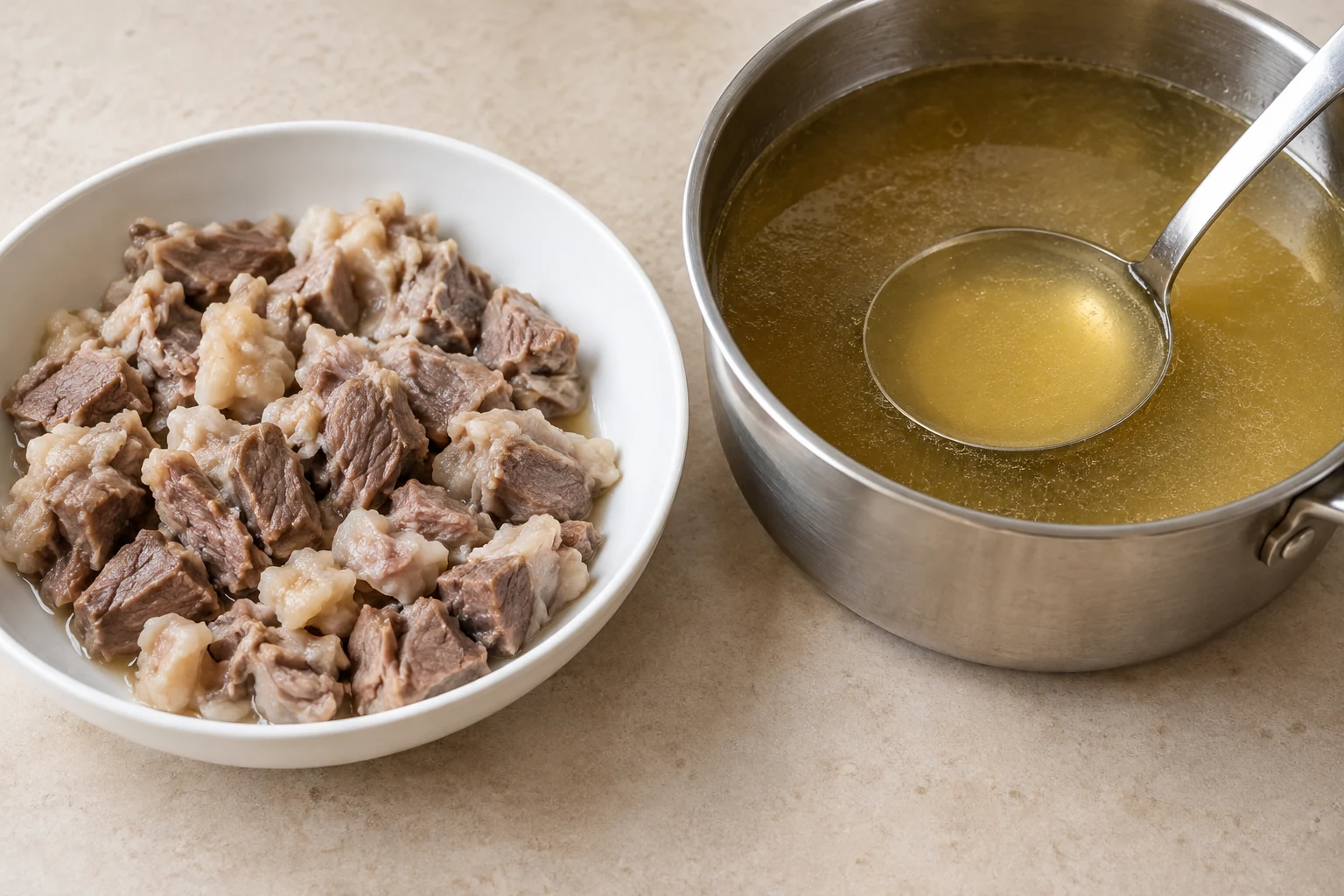
Both documents begin by cooking head and feet until the meat can be removed. The liquid becomes the serving broth rather than a separate stock added later.
- 02
Meat selected for service
The Elazığ account chops and returns the cooked meat. The Maraş registration distinguishes sade, or plain head meat, from karışık, a mixed bowl that can include tongue, cheek, eye, brain and foot portions. Those labels belong to that registered preparation.
Look closely
From separate components to two surfaces
Cooked meat and broth form the base. What is added at service can alter the surface without changing that base.
A useful distinction
A registered recipe and a shop counter answer different questions
The Maraş registration permits heads and feet from large or small livestock. In a 2024 study based on visits to ten local businesses, the operators interviewed said they used small livestock heads and identified the sumac souring and red pepper as defining touches. That is a report of those ten shops, not a rule for every cook in the city.
The distinction is useful when ordering. A written specification describes what a named regional preparation allows; the person serving your bowl can tell you which parts and finishes are in it today.
Research notes
Sources behind this story
The Maraş and Elazığ details come from local official records. A ten-business field study and Turkish practitioner and food reporting provide context; none is treated as a universal recipe or proof of a single origin.
- Turkish Patent and Trademark Office — Maraş Kelle Paçası registration no. 945 The 2021 regional specification identifies permitted parts, plain and mixed service, sumac souring with garlic, and red pepper warmed in the soup's fat.
- Elazığ Provincial Culture and Tourism Directorate — Elazığ Mutfağı Page 22 gives a head-and-four-feet preparation and lists garlic and vinegar as optional service additions.
- Gül, Kızıldemir and Egeli — Journal of Tourism and Gastronomy Studies (2024) The field study visited ten Maraş businesses; interviewees described small-livestock heads and the regional sumac-and-pepper finish.
- Han Çorba — Kelle Paça Nedir? A Turkish soup specialist describes head and foot meanings, long cooking, and variation in cuts and table seasonings.
- Habertürk — Kelle nasıl pişirilir? Turkish food reporting describes long-cooked head meat and regional serving variation; used only for broad context.
Keep exploring
More stories for your table
TürkiyeBulgur & regional traditions
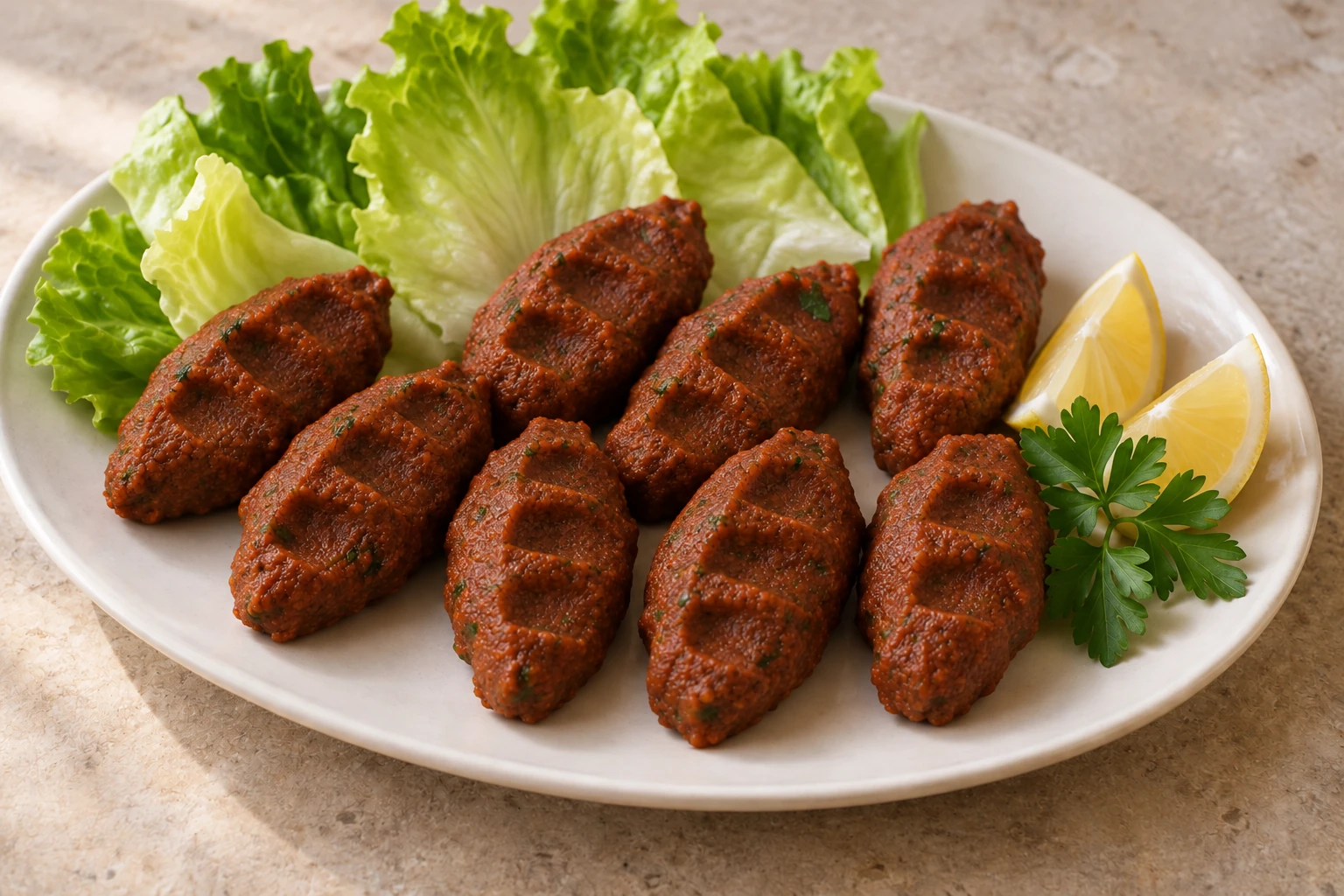
Çiğ Köfte: What Changes Between Şanlıurfa and Adıyaman
Compare Şanlıurfa’s meat çiğ köfte with Adıyaman’s registered meatless version: fine bulgur, walnuts, kneading, and a revealing difference over lemon.

MexicoCorn soup
Pozole: Follow the Corn, Then the Broth
Explore the corn at the heart of Mexican pozole, the different methods behind white, red and green broths, and the seasonings that finish each bowl.
IranWheat and meat porridge
Halim-e Gandom: The Long Stir Before Breakfast
How Iranian halim turns wheat and meat into a thick breakfast porridge through patient stirring, and why cooks often finish the savory bowl with cinnamon and sugar.