
Zeytinyağlı Taze Fasulye: Give the Beans Time to Soften
Zeytinyağlı taze fasulye
Soft beans, a light tomato sauce and olive oil make a dish that can wait while the rest of the meal comes together. Plan the rest along with the braise.
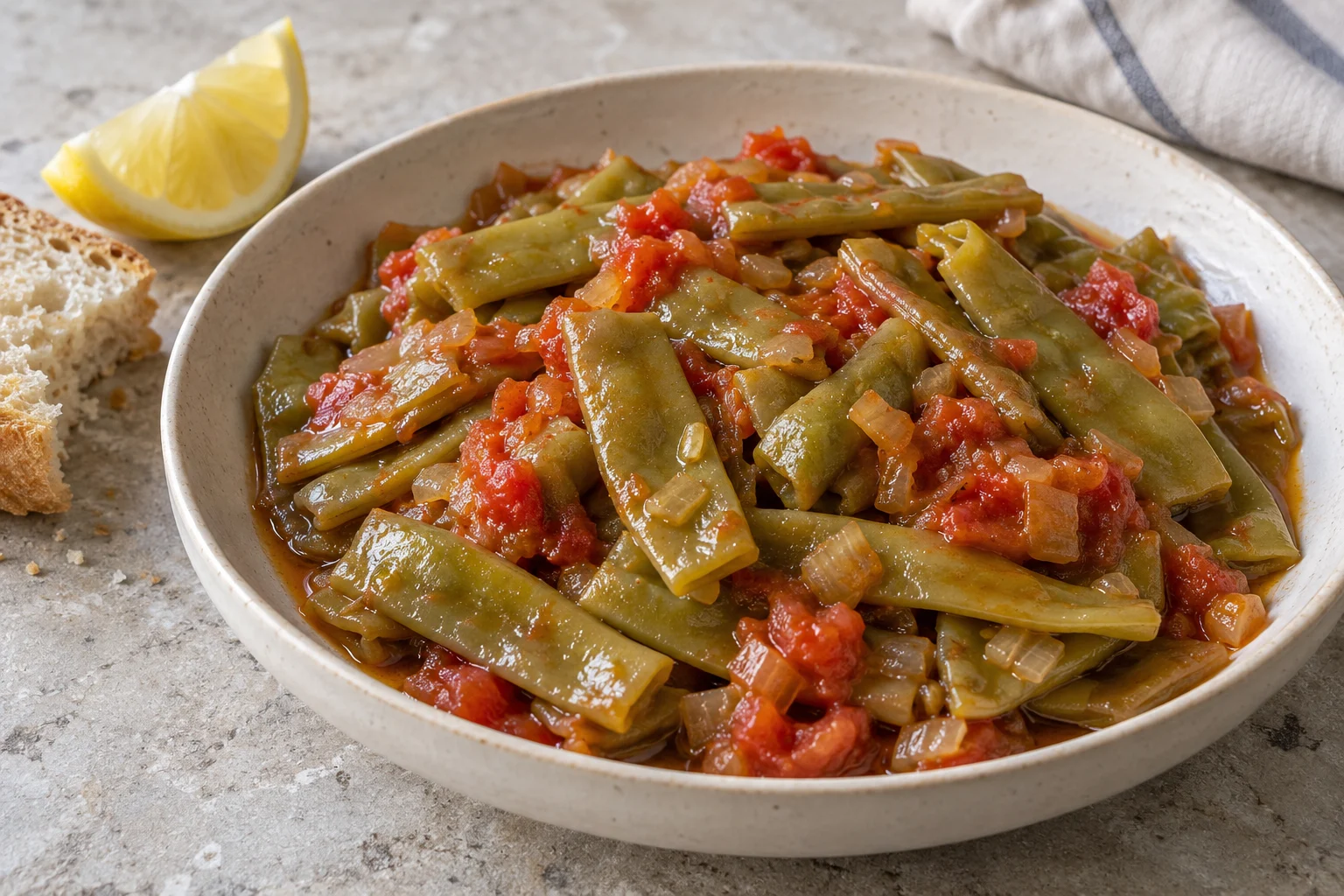
A soft target, deliberately
Zeytinyağlı taze fasulye belongs to the Turkish family of vegetables cooked in olive oil. Green beans, tomato and onion share a gentle braise; the finished beans should be soft all the way through. Ayla Clulee, writing at Cooking Gorgeous, makes that target explicit. A crunchy bean is not a sign that this particular dish has been cooked more carefully.
The Turkish Ministry of Culture and Tourism presents it as a vegetable side associated with the country’s western regions, served cold. Özlem Warren describes the broader olive-oil dishes as prepared ahead and served at room temperature. That range matters at the table: this is a dish whose service can follow a rest, rather than depend on a frantic journey from boiling pan to plate.
Home version
Olive-oil green beans with tomato
An editorial home version drawn from the shared braising approach in the sources, with modest added water. Makes four side portions. Allow about 15 minutes to prepare, 50–70 minutes to cook and 20 minutes to rest; this version has not been kitchen-tested.
Ingredients
For the pan
- 600 g fresh green beans, preferably young flat beans, weighed before trimming
- 500 g ripe tomatoes, finely chopped, with their juices
- 150 g onion, finely chopped
- 2 cloves garlic, finely chopped
- 3 tbsp / 45 ml olive oil
- 80 ml water, plus small splashes only if needed
- ½ tsp sugar
- ½ tsp fine salt, then adjust to taste
- ¼ tsp ground black pepper
At the table
- 1 lemon, cut into wedges
Method
- 1
Trim for tenderness
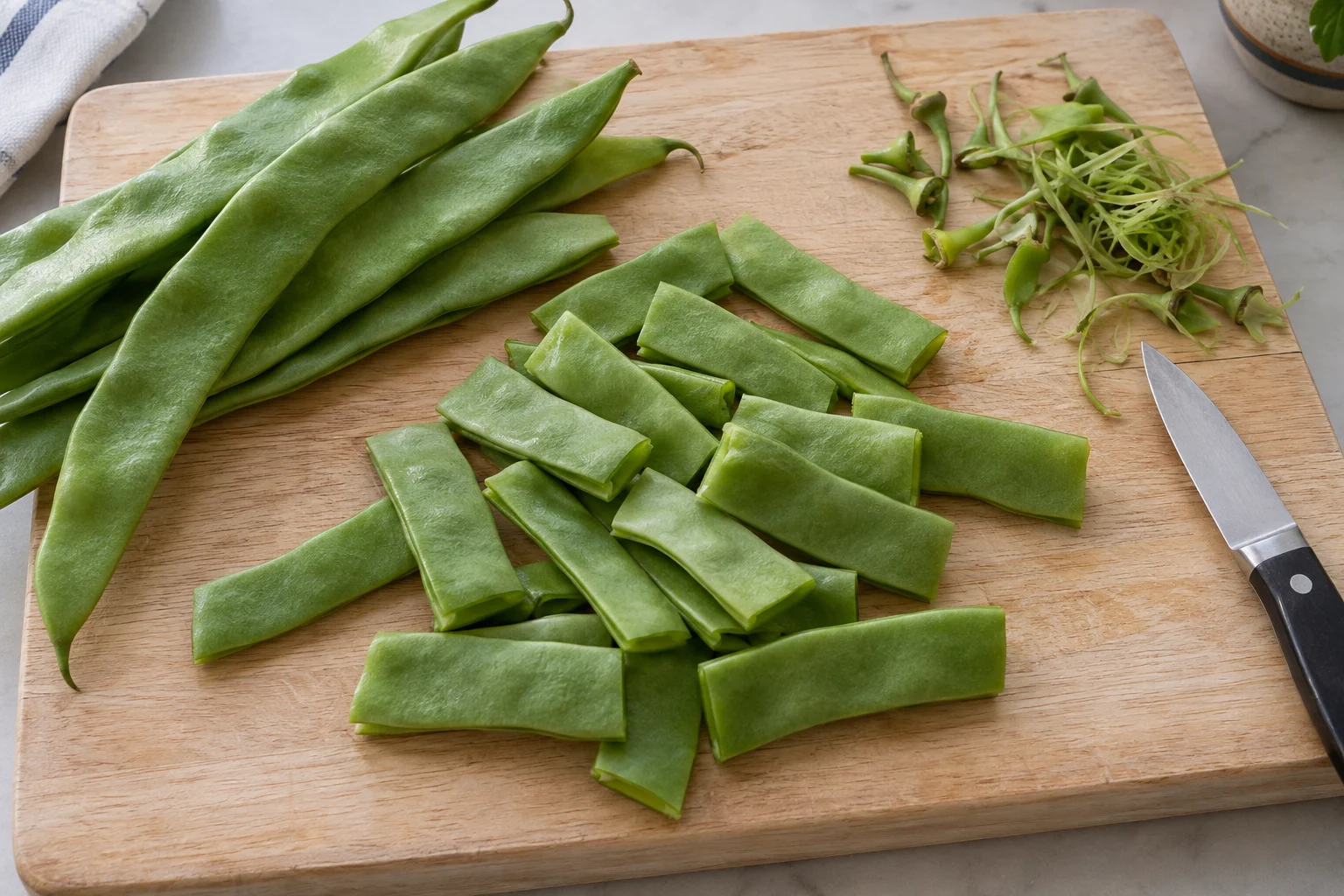
Rinse the beans. Remove stem tips and any tough strings running down the sides. Cut into manageable 4–6 cm lengths; split very wide pods lengthwise if needed. The aim is pieces that are easy to lift and eat, without leaving a fibrous edge.
- 2
Soften the aromatics
Heat the oil in a wide, heavy pan over medium-low heat. Add onion and cook gently for 8–10 minutes, stirring, until translucent. Add garlic and stir for another minute. Keep the onion pale rather than developing a dark fried crust.
- 3
Begin the covered braise
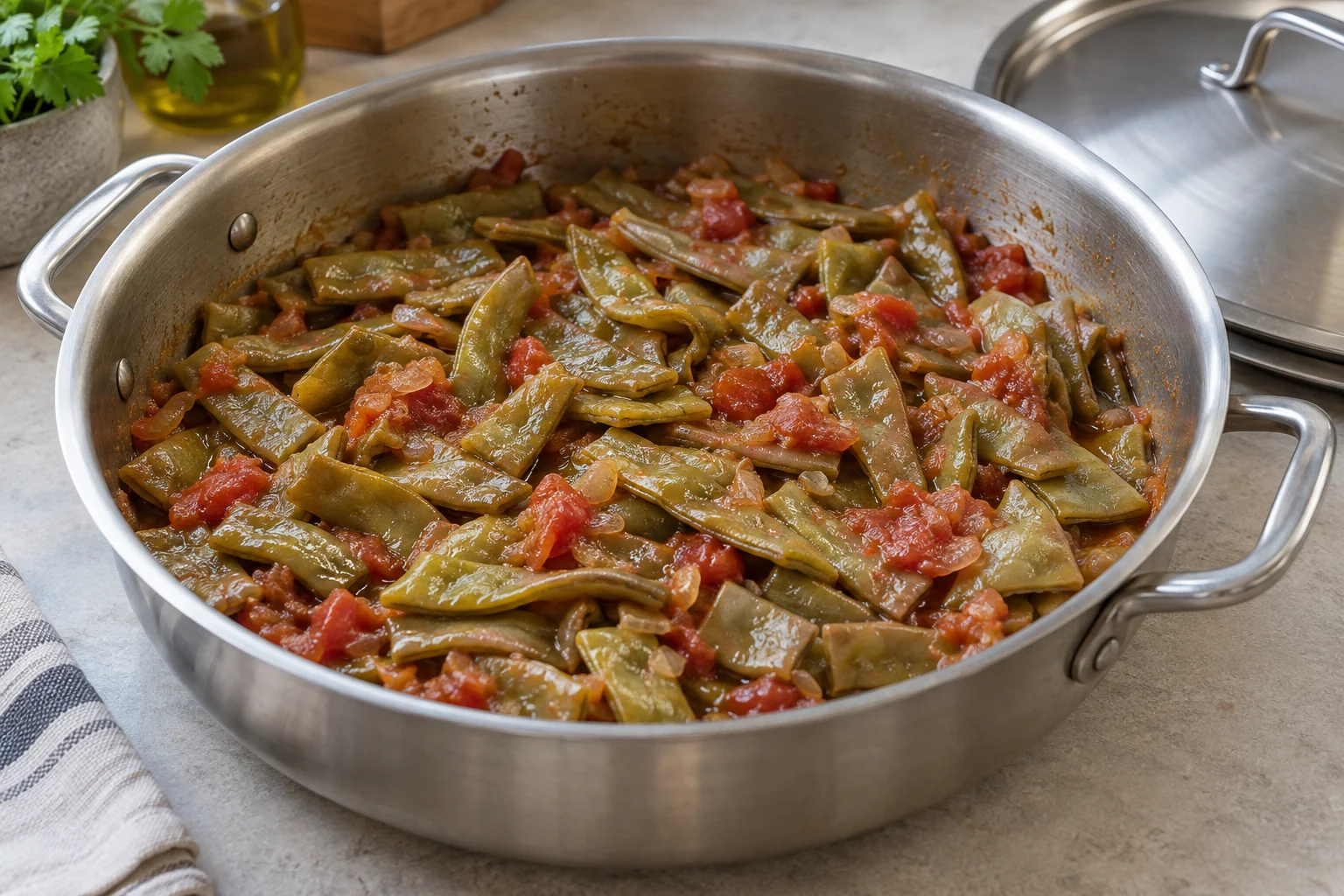
Add tomatoes and their juices, beans, water, sugar, salt and pepper. Stir gently and bring to a simmer. Cover and lower the heat. Cook for about 35 minutes, checking occasionally; if the bottom becomes dry, add water a tablespoon or two at a time.
- 4
Follow the bean and the sauce
Taste a bean. Continue gently for another 5–20 minutes as needed until fully soft. If the beans are tender but the sauce looks watery, remove the lid and simmer briefly to reduce it. The finished liquid should coat the vegetables, not leave them swimming in broth.
- 5
Rest, then serve
Adjust seasoning, take the pan off the heat and leave the beans to rest for about 20 minutes before transferring to a serving bowl. Offer lemon wedges separately. Serve with bread or alongside the rest of the meal.
Trimming and the finished texture
The cut is flexible. Removing a tough string and allowing the pod to soften do more for the final mouthful than making every segment identical.
Let the tomatoes help set the liquid
The sources do not share one fixed water ratio. Warren uses canned tomatoes and added water; Clulee notes that juicy ripe tomatoes may supply enough liquid without any addition. Vidar Bergum’s method starts covered, then removes the lid to finish softening the beans while the remaining water evaporates. These are responses to the ingredients and pan, not competing definitions of the dish.
In the home version above, the small starting measure is a checkable choice. Watch whether the beans still need moisture before they are tender, and whether the sauce still needs reduction after they are. Adding a large volume at the beginning makes those two observations harder to separate.
Leave room for the rest
Warren specifically lets the vegetables cool in their cooking pan. Bergum also rests his beans there, covered, before serving at room temperature. The practical lesson is to account for that pause when planning the meal: cook the beans before the last-minute dishes, then finish arranging the table while they settle.
Lemon at the table lets each diner choose the final brightness. Keep the bowl simple enough to taste the bean, onion and tomato together. The olive oil belongs to the sauce that surrounds them, and the soft texture is the result the cooking was working toward.
Research notes
Sources and variations
Four original sources were opened and read. Their differences inform the home version; no kitchen testing or single universal water ratio is claimed. The images are generated illustrations.
- Türkiye Ministry of Culture and Tourism — fresh beans with olive oil Official sample recipe braises whole and cut beans with tomato, cools them and identifies western Turkish service as a side dish.
- Özlem’s Turkish Table — runner beans in olive oil Original recipe uses canned tomatoes, a covered simmer, rest in the cooking pan and lemon wedges at service.
- Cooking Gorgeous — Ayla Clulee’s zeytinyağlı taze fasulye Original recipe and chef notes explain trimming side strings, fully soft doneness and adjusting water to tomato juiciness.
- A Kitchen in Istanbul — Vidar Bergum’s runner beans Original recipe uses a covered braise followed by uncovered reduction and a covered rest before room-temperature service.
Keep exploring
More stories for your table

Indonesian cuisine Vegetable sides
Plecing Kangkung: Greens First, Sambal Last
Cook the stems before the leaves, drain thoroughly, then add coarse tomato sambal. A guide to Lombok’s plecing kangkung, with a peanut-topped home adaptation.
Turkish cuisine Bulgur & regional traditions
Çiğ Köfte: What Changes Between Şanlıurfa and Adıyaman
Compare Şanlıurfa’s meat çiğ köfte with Adıyaman’s registered meatless version: fine bulgur, walnuts, kneading, and a revealing difference over lemon.
Greek cuisine Vegetable and rice dish
Spanakorizo: Let the Spinach Lead
Greek spinach rice depends on the water in its leaves, the choice of grain and a lemony finish. Compare the decisions behind its soft, vegetable-forward texture.