
Kazandibi: Let the Bottom Become the Serving Face
Kazandibi
The creamy pudding and its brown surface have different jobs. Make the interior smooth first, then give the serving face its color in the pan.
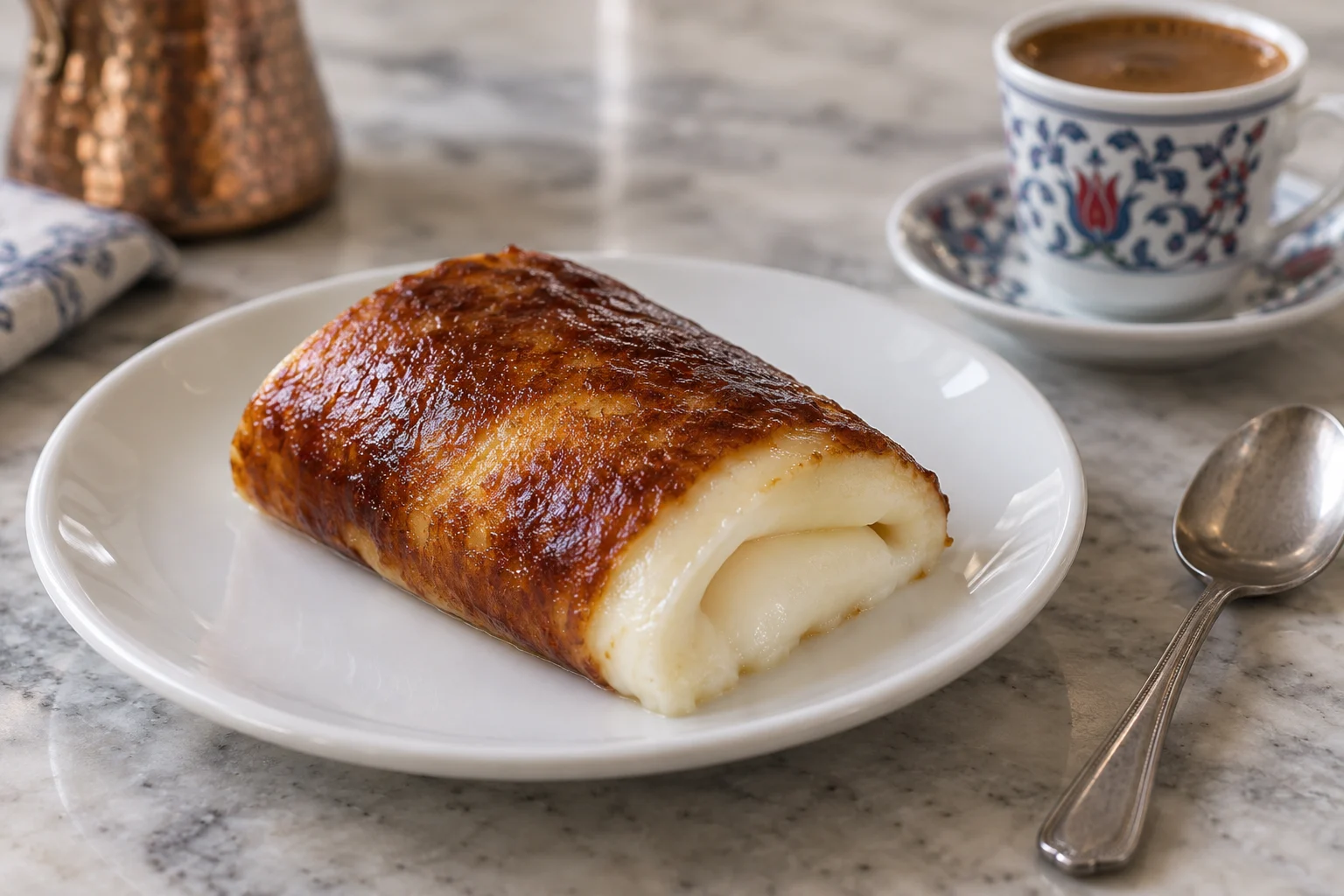
The dark face begins underneath
Kazandibi brings a browned surface and a pale, creamy interior to the same spoonful. In the pan methods discussed here, the face that eventually meets the diner begins against the hot base. Chilling, cutting and lifting turn it into view. Understanding that sequence makes the dessert easier to approach: first prepare a smooth pudding, then brown the intended surface, then allow it to set.
The Turkish Ministry of Culture and Tourism lists kazandibi as an İstanbul specialty. Its published version uses milk, rice flour and starch, followed by browning and chilling. The milk-based preparations illustrated here are one documented family of methods; Yemek.com also describes versions with finely shredded chicken. The name alone does not tell you every ingredient in a particular serving.
Two stages, two different targets
In the saucepan
The mixture should thicken evenly and remain smooth. Stirring reaches the base and corners so the interior does not acquire random scorched patches. The Yemek.com recipe removes the pudding once thickened and bubbling, before it catches on the base.
Against the tray
Browning is deliberate and localized. Depending on the selected recipe, a thin initial layer or the whole poured pudding meets the hot surface. The goal is a browned serving layer while the rest remains pale.
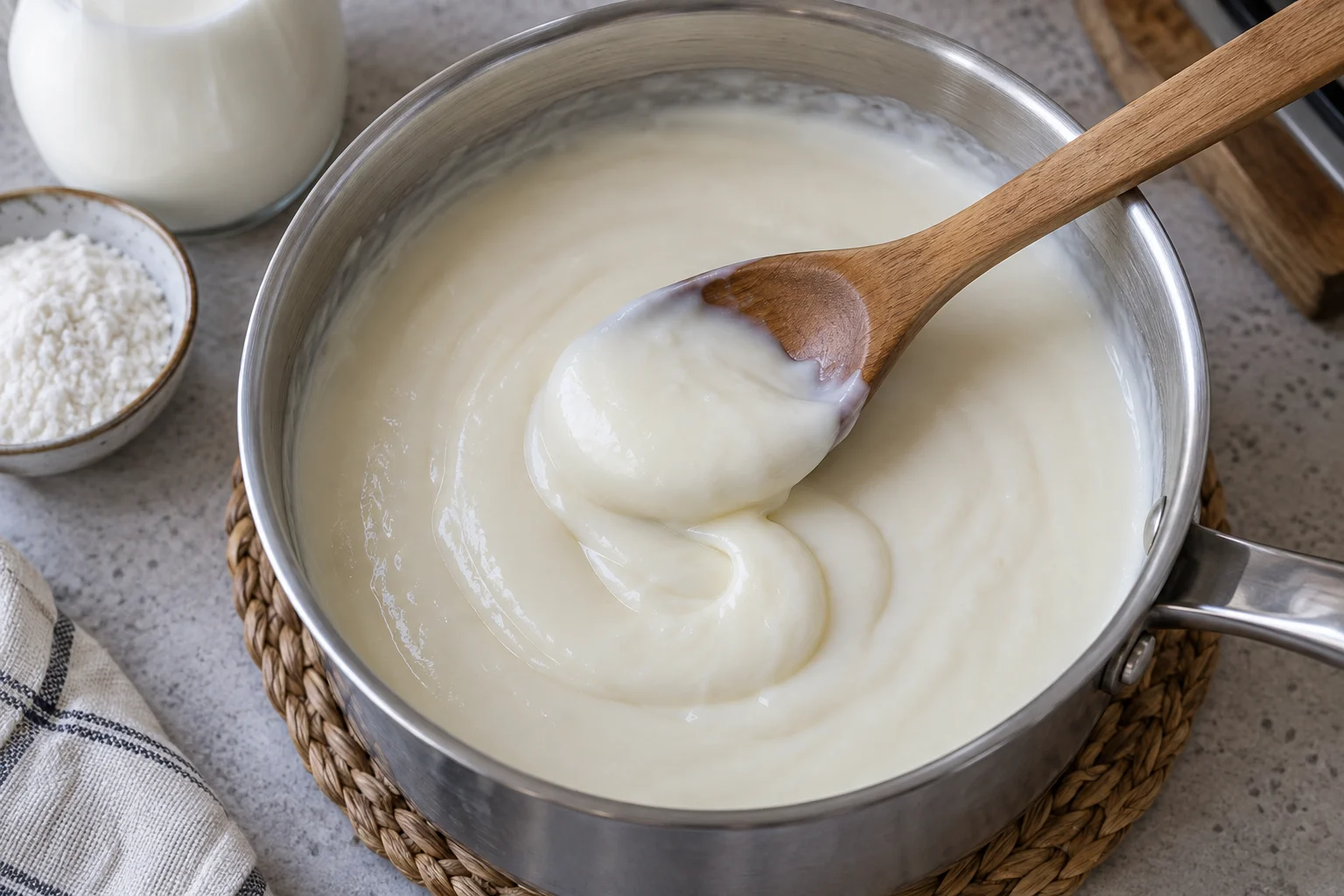
Read the pan preparation as part of the recipe
The documented methods differ. Yemek.com uses a buttered, sugared base and an initial thin pudding layer before adding the remainder. Hayfene also describes a sugared base. Gönül’s original vegan adaptation at Aegean Delight browns a thin layer of pudding in a plain metal tray instead. Each method has its own formula and sequence; the pan preparation cannot be exchanged casually halfway through.
Dr. Oetker’s instructions for its own kazandibi mix use a greased aluminum tray that is moved over the heat. That is a product-specific procedure, useful as another documented example of pan browning. Select the complete preparation first, then match its quantities, tray area and heating instructions. A deep mound and a shallow layer are different arrangements even when they begin with the same pudding.
Prepare for the surface and the release
These are handling principles to use alongside the complete recipe you choose.
- 01
Match cookware to the heat
For a method that heats the tray directly on the hob, use a metal pan rated for that heat source. Have secure oven mitts and a clear resting surface ready before moving the pan. The selected cookware must support the actual heating method.
- 02
Check more than one area
A burner heats a smaller area than a broad tray. Follow the recipe’s movement instructions and assess different parts of the underside. Repeatedly heating one spot can create uneven color while distant areas remain pale.
- 03
Give the cold stage its time
Complete the selected cooling and refrigeration instructions before cutting. Dr. Oetker specifies a two-hour refrigerator rest for its mix; Gönül’s different plant-based formula calls for at least six hours. Those times belong to their particular preparations.
Lift from below the layer you want to show
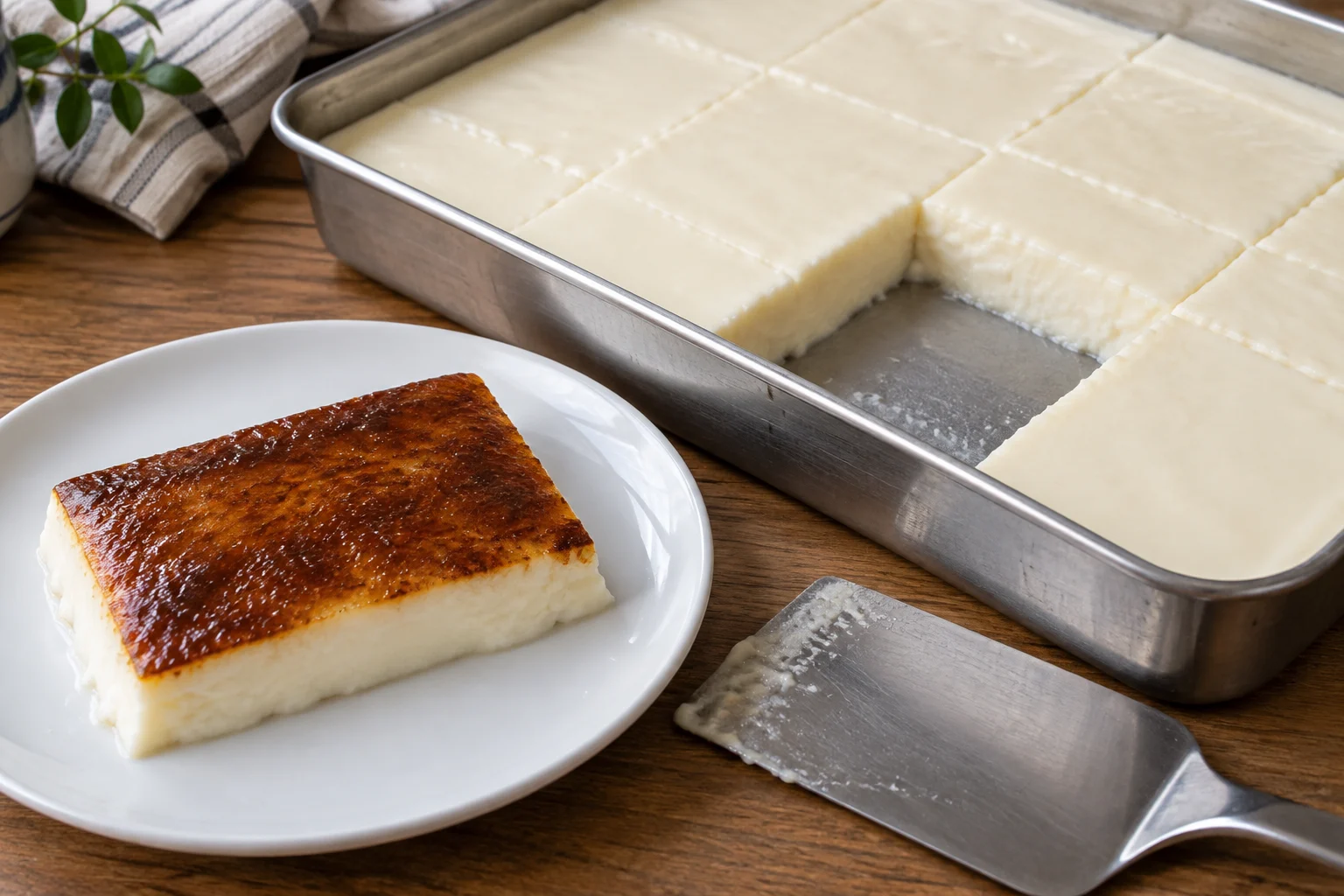
Once the pudding has chilled and set, cut the portions cleanly. Slide a broad spatula beneath the browned layer rather than cutting through it and lifting only the white pudding. Support the portion across its width as it comes away. This is where the earlier preparation becomes visible: the serving should carry its pale body and browned underside together.
A rectangle can be turned brown side upward; a longer piece can be folded or loosely rolled if its texture permits. The Ministry’s version folds portions, while Yemek.com gives both rolled and square serving options. Begin with the shape that you can lift cleanly. The contrast between the thin browned face and cool creamy interior already supplies the dessert’s visual interest.
Research notes
Documented preparations consulted
Five independent original sources establish the different formulas, surface methods and serving options. This is a method guide, without a complete recipe or a claim of kitchen testing.
- Turkish Ministry of Culture and Tourism — Kazandibi Official published preparation establishes the milk-and-starch version, İstanbul association, chilling and folded serving.
- Ayşegül Uslu / Yemek.com — Kazandibi Original editorial recipe supplies smooth pudding, an initial browned layer, chilling and rolled or inverted square serving options.
- Hayfene — Kazandibi preparation Producer’s own recipe documents a sugared base, controlled caramelized surface, suitable metal pan and chilled release.
- Dr. Oetker Türkiye — Kazandibi mix instructions Manufacturer’s primary instructions document its specific mix, aluminum tray, movement during browning and two-hour chilling period.
- Gönül — Vegan kazandibi Original explicitly plant-based adaptation documents a plain metal tray, thin-layer method, six-hour minimum chill and lifting from the base.
Keep exploring
More stories for your table
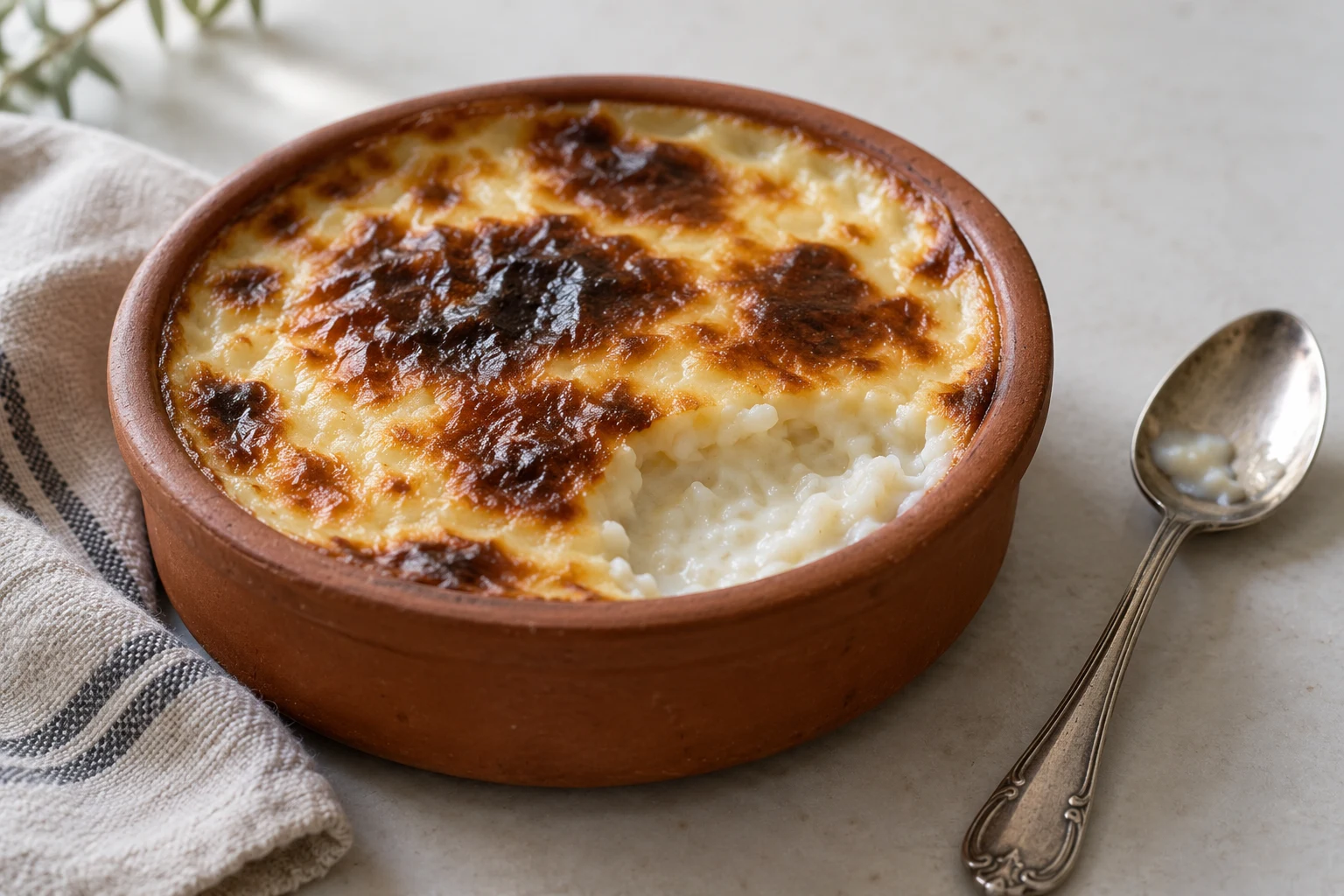
Turkish cuisine Rice pudding
Sütlaç: Soft Rice, Milk and a Browned Finish
Sütlaç can be a plain chilled rice pudding or fırın sütlaç with a browned oven finish. Understand the tender grains, different thickening methods and the pudding-shop setting.
Peruvian cuisine Fruit and purple corn pudding
Mazamorra morada: from purple corn liquid to pudding
Purple-corn liquid, cooked fruit and starch form mazamorra morada. Explore the method and its separate arroz con leche pairing, el clásico.
Spanish cuisine Caramel-topped custard
Crema catalana: the custard waits, the crust does not
Citrus-scented custard and brittle caramel run on different schedules. Learn the make-ahead and serving choices behind crema catalana.