
Ali Nazik: Bring the Meat to a Prepared Eggplant Base
Ali nazik
The eggplant needs time to collapse. The meat needs a base ready to receive it. Choose the topping first, then arrange the cooking around that meeting.
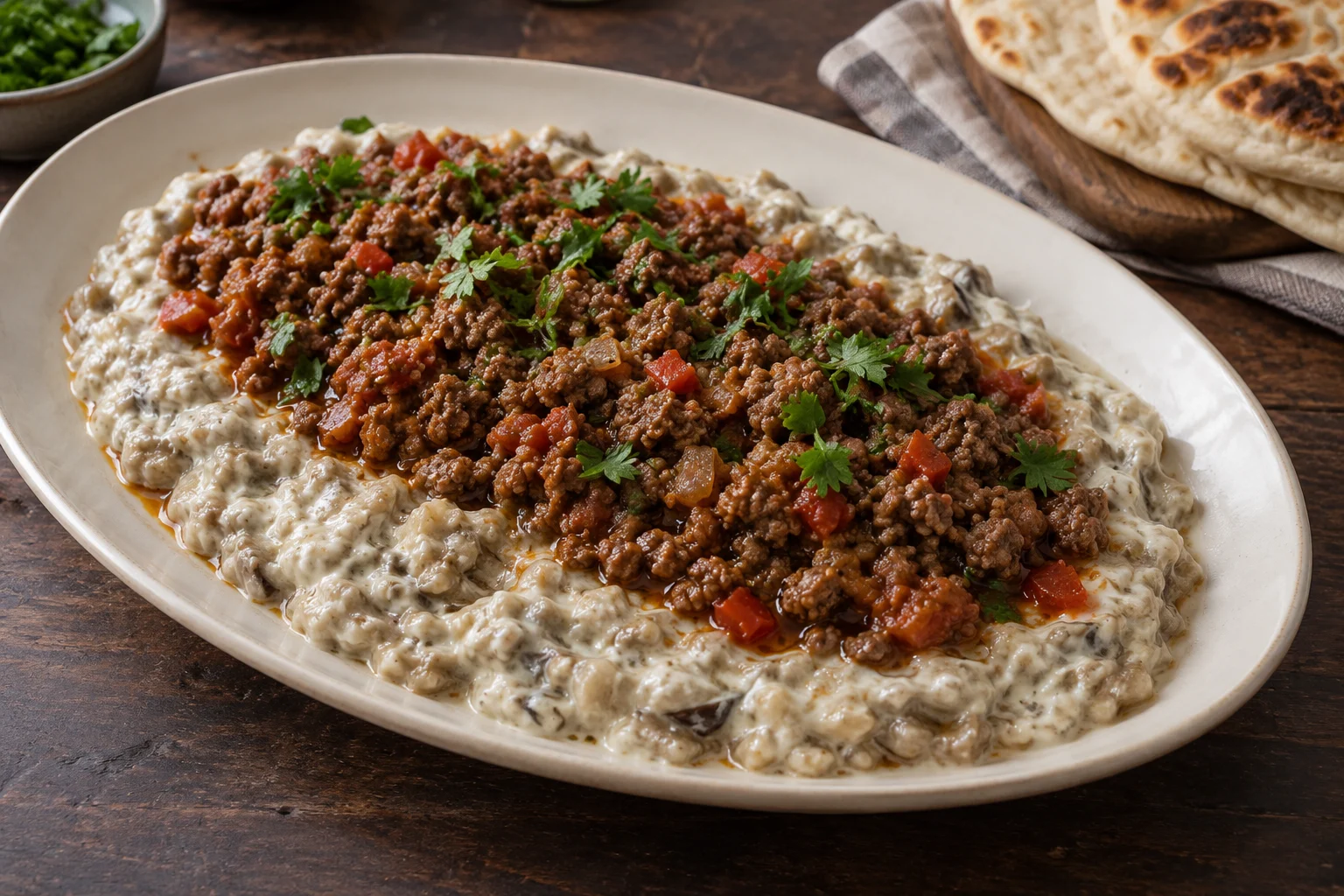
Gaziantep at the table
Read the dish from the bottom upward
Ali Nazik is strongly associated with Gaziantep in southeastern Turkey. Under the meat is the component that gives the plate its character: softened eggplant, garlic and yogurt. The browned topping supplies a different texture and a warmer, richer finish. Scoop through both layers and the reason for serving them together becomes clear.
That shared structure leaves room for different preparations. Ground lamb scattered over a blended base is a useful home version, pictured here. It does not describe every Ali Nazik. The original recipes below include skewered meat and meatballs, and even vary whether yogurt is mixed into the eggplant or spooned over it separately.
Three recipes, three plans for the meat
Choose one preparation before shopping or setting a cooking schedule. These are documented author versions rather than interchangeable instructions.
Pan-fried mince
Adam Liaw’s SBS version cooks lamb mince with capsicum and tomato and pepper pastes. Its crumbles distribute easily over the eggplant-yogurt mixture; a frying pan replaces the work of shaping and skewering.
Hand-cut kebap
Chef Somer Sivrioglu combines Adana-style lamb kebaps with a Gaziantep-style base. His method includes draining yogurt overnight, marinating the meat and resting the shaped skewers. Read those stages before treating the listed cooking time as the whole job.
Meatballs and separate layers
Vidar Bergum’s restaurant-inspired version puts garlic yogurt over warm chopped eggplant, then adds meatballs and chili butter. He delays the final coloring of the meat until the other components are ready.
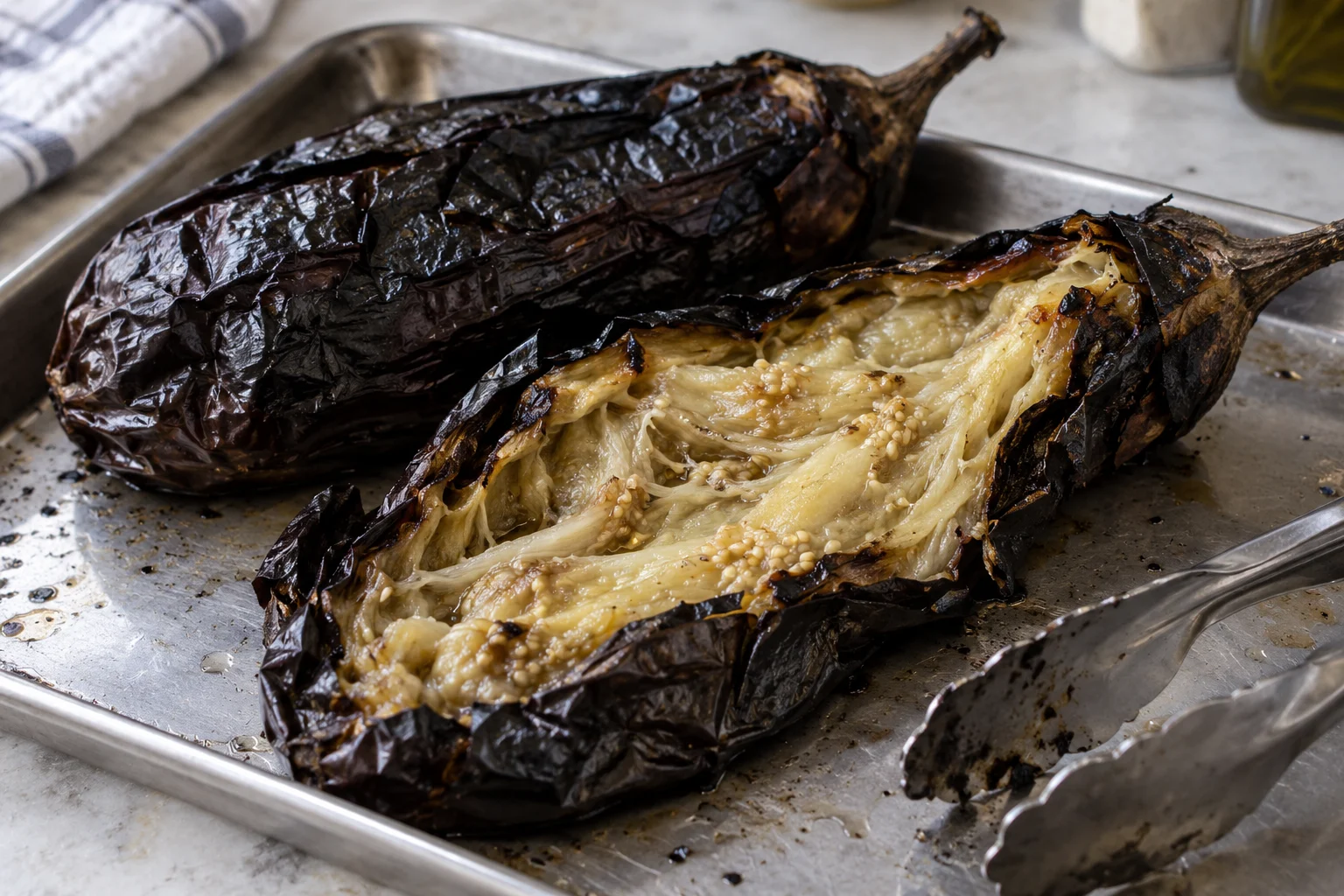
A black skin is only part of the endpoint
Charring whole eggplants over suitable direct heat gives the base a smoky character. Turn them as they cook and look for flesh that has softened throughout, with the eggplant losing its firm shape. A dark patch outside can appear while the center still needs cooking. The useful test for this dish is the collapse beneath the skin.
An oven can soften eggplant when flame or a barbecue is unavailable. Both Ayla Clulee and Bergum describe that alternative while distinguishing its flavor from direct charring. Plan for tenderness first; oven roasting does not automatically reproduce charcoal smoke. Let the cooked eggplant become manageable, remove the skin, and chop the soft flesh. Keep burnt peel out of the base.
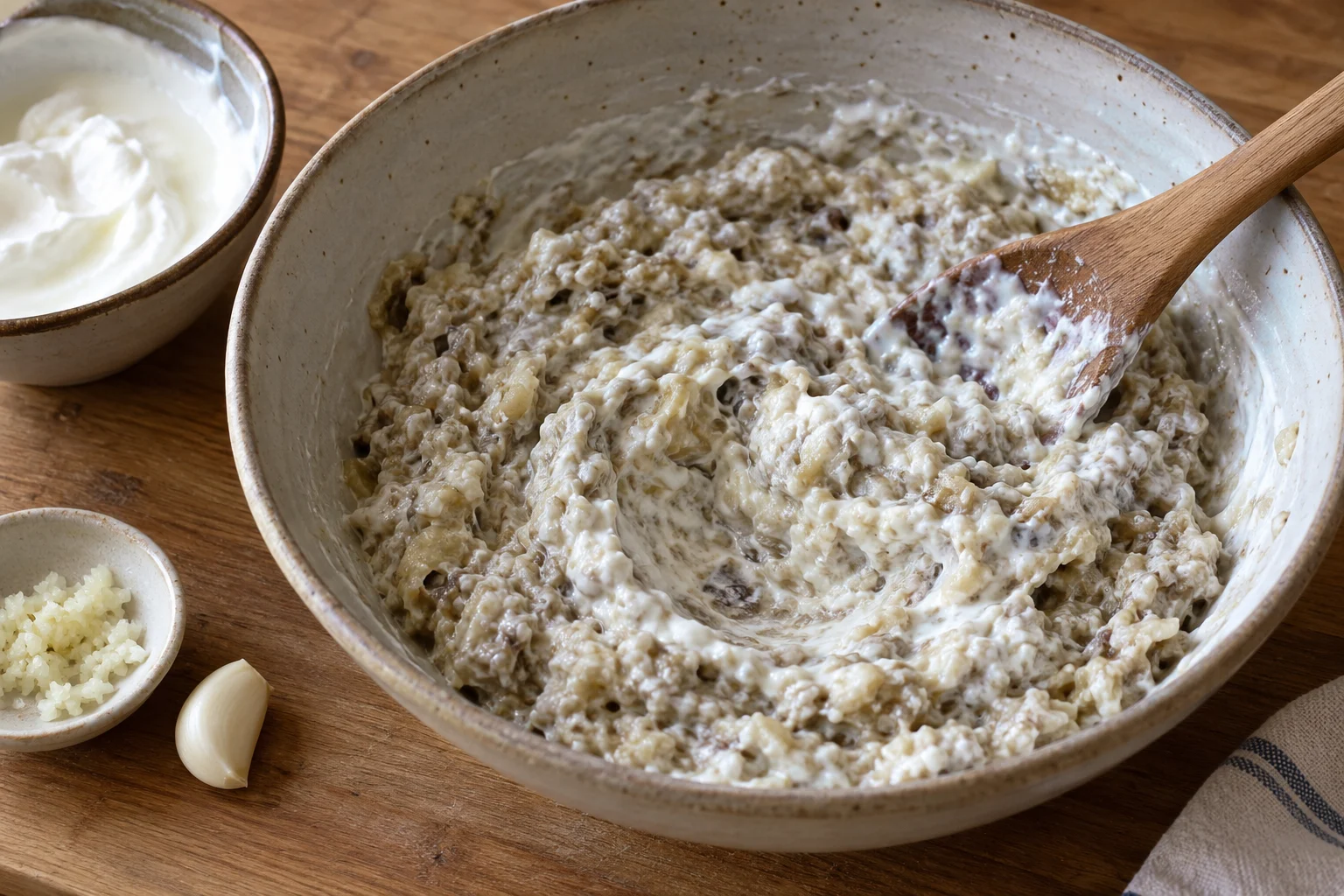
Arrange the last part of the cooking
This sequence helps coordinate a blended-base home version. Follow the quantities and meat method of the complete recipe you choose.
- 01
Prepare the base before the finish
Drain excess liquid from the chopped eggplant if needed. Fold it with thick yogurt and crushed garlic after the flesh has cooled slightly. The base should support a spoonful of meat rather than behave like a loose sauce. Yogurt-to-eggplant ratios vary among the sources; there is no single ratio to impose on every version.
- 02
Give the meat its own cooking space
Cook the topping separately. For mince, the pan allows browning and seasoning before assembly. For shaped meat, allow the resting and cooking stages required by the selected recipe. Ground lamb, beef and meatballs should reach 160°F/71°C, checked with a food thermometer, according to FoodSafety.gov.
- 03
Bring the components together at serving
Have the plate, base and bread ready as the meat finishes. Spread the eggplant mixture, add the hot topping and its appropriate finishing juices or butter, and serve. If gently warming a yogurt base, avoid bringing it to a boil; Clulee specifically warns against strong heat.
Leave space for a complete mouthful
A useful serving has enough exposed base for a spoon or fork to gather eggplant and meat together. Piling the topping into a tall mound makes that harder: the first bites become mostly meat, with the vegetable left underneath. A broad, shallow plate gives both components room and makes their relationship visible.
Warm flatbread turns the same combination into another kind of bite, gathering a little base with the topping and any finishing butter. A fresh salad alongside provides a crisp texture against the soft eggplant. Arrange those accompaniments before plating so the meal begins when the meat is ready.
Research notes
Recipes and guidance consulted
Four original author recipes establish the variations and cooking sequence; the official temperature chart supports the ground-meat endpoint. This is a technique guide, not a kitchen-tested complete recipe.
- Somer Sivrioglu — Ali nazik kebap, Gourmet Traveller Original chef method explicitly combines Adana-style meat with a Gaziantep-style base, including overnight yogurt draining and meat resting.
- Adam Liaw — Lamb mince ali nazik, SBS Food Original home version with ground lamb, capsicum and pastes; eggplant is slightly cooled before mixing with thick yogurt.
- Ayla Clulee — Ali Nazik, Cooking Gorgeous Original method explains fully softened eggplant, draining, thick yogurt and gentle warming; distinguishes diced lamb from a home mince version.
- Vidar Bergum — Ali nazik with meatballs Original restaurant-inspired version separates eggplant and garlic yogurt layers and coordinates the final meatball coloring with the other components.
- FoodSafety.gov — Safe minimum internal temperatures Official chart specifies 160°F/71°C for ground meat, verified with a food thermometer.
Keep exploring
More stories for your table
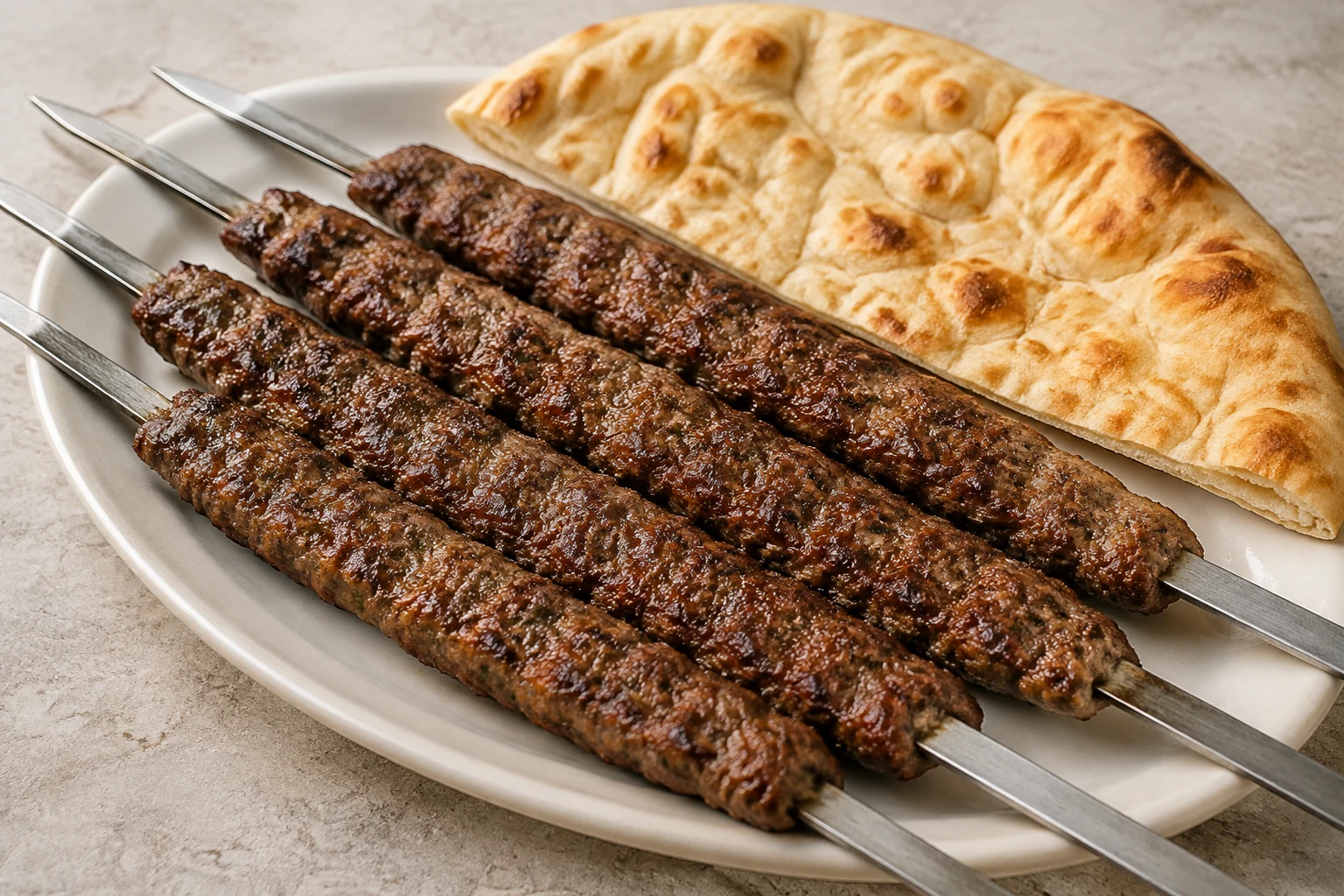
Afghan cuisine Kebab techniques
Afghan Lula Kebab: Grilled Skewers, Fried Rolls
Afghan lula and lola kebab recipes take two distinct paths. Compare grilled mince with fried meat-and-potato rolls, their ingredients, texture and cooking order.
Persian cuisine Grilled kebabs
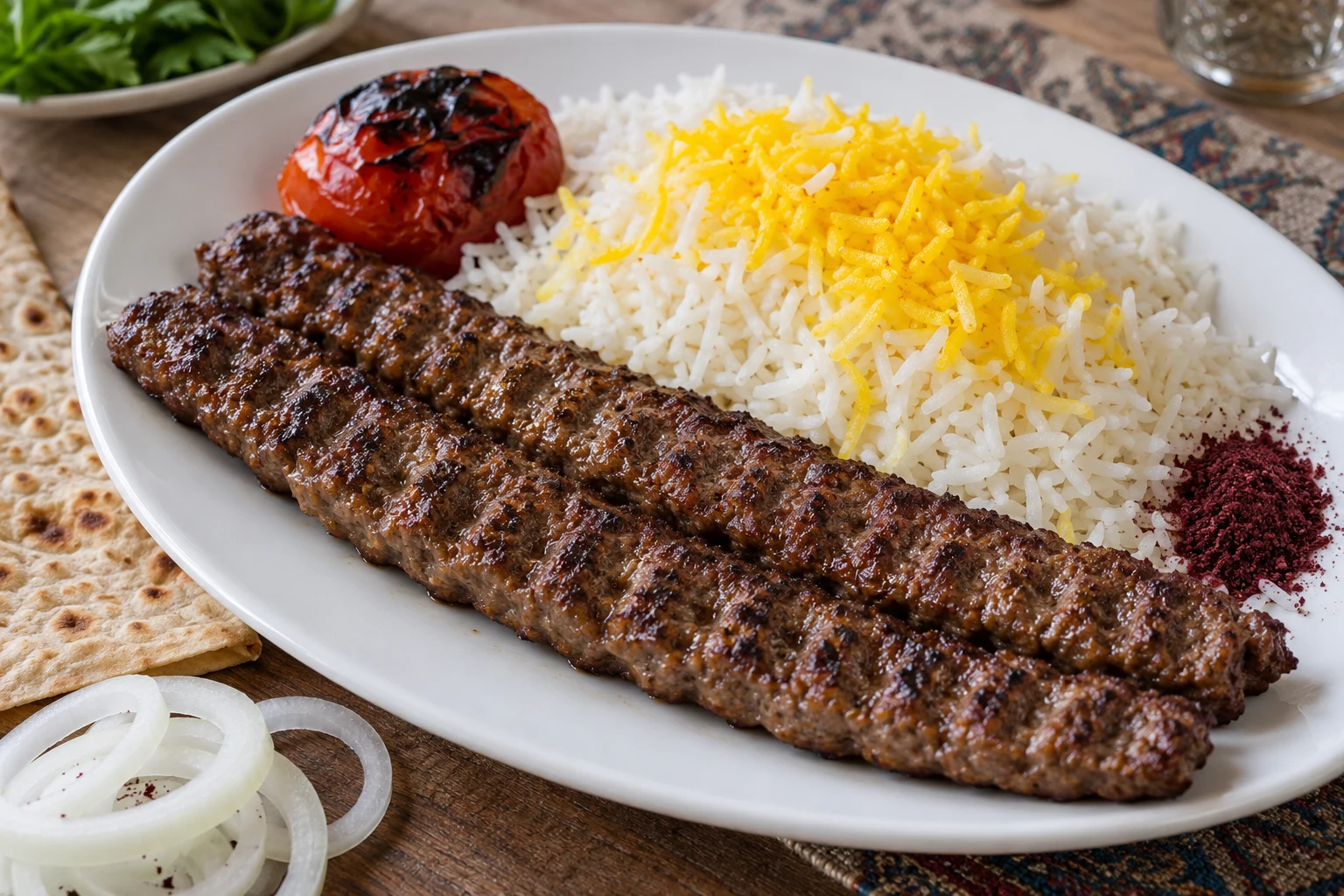
Koobideh: How the Meat Holds the Skewer
Iranian koobideh turns ground meat and onion into a long ridged kebab. Onion moisture, a cohesive mixture and broad skewers explain the preparation’s distinctive shape.
Portuguese cuisine Lamb stew
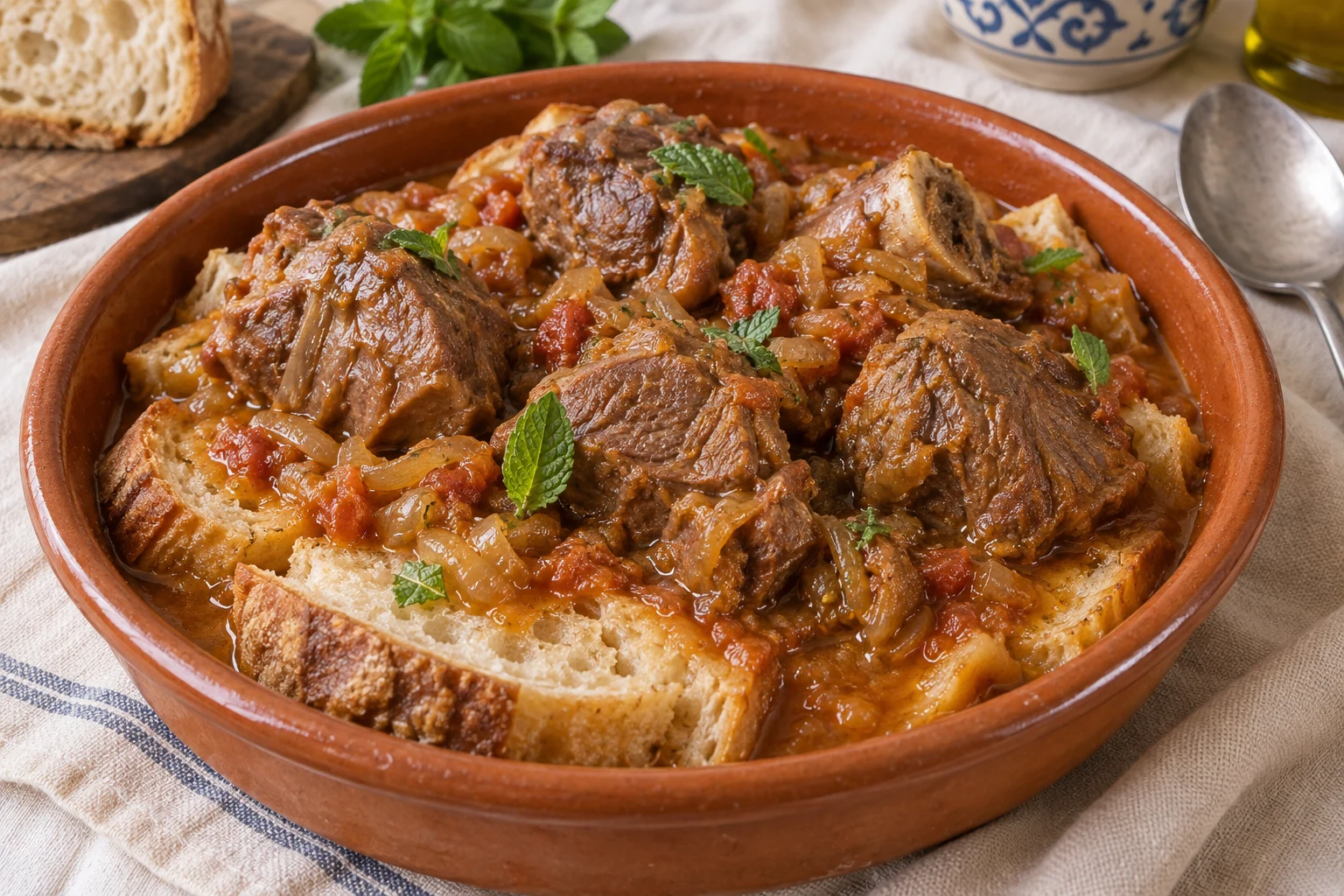
Ensopado de Borrego: Save the Broth for the Bread
Alentejo’s lamb ensopado makes the bread part of the meal. Compare wine, tomato and potato choices while keeping enough broth to soak the slices.