
Pla Sam Rot: Three Flavors, Two Ways to Serve
ปลาสามรส
The three flavors are sweet, sour and salty. Thai cooks reach them through different sauces, then decide whether to dress a whole fried fish or serve it in crisp pieces.
Read the sauce before its color
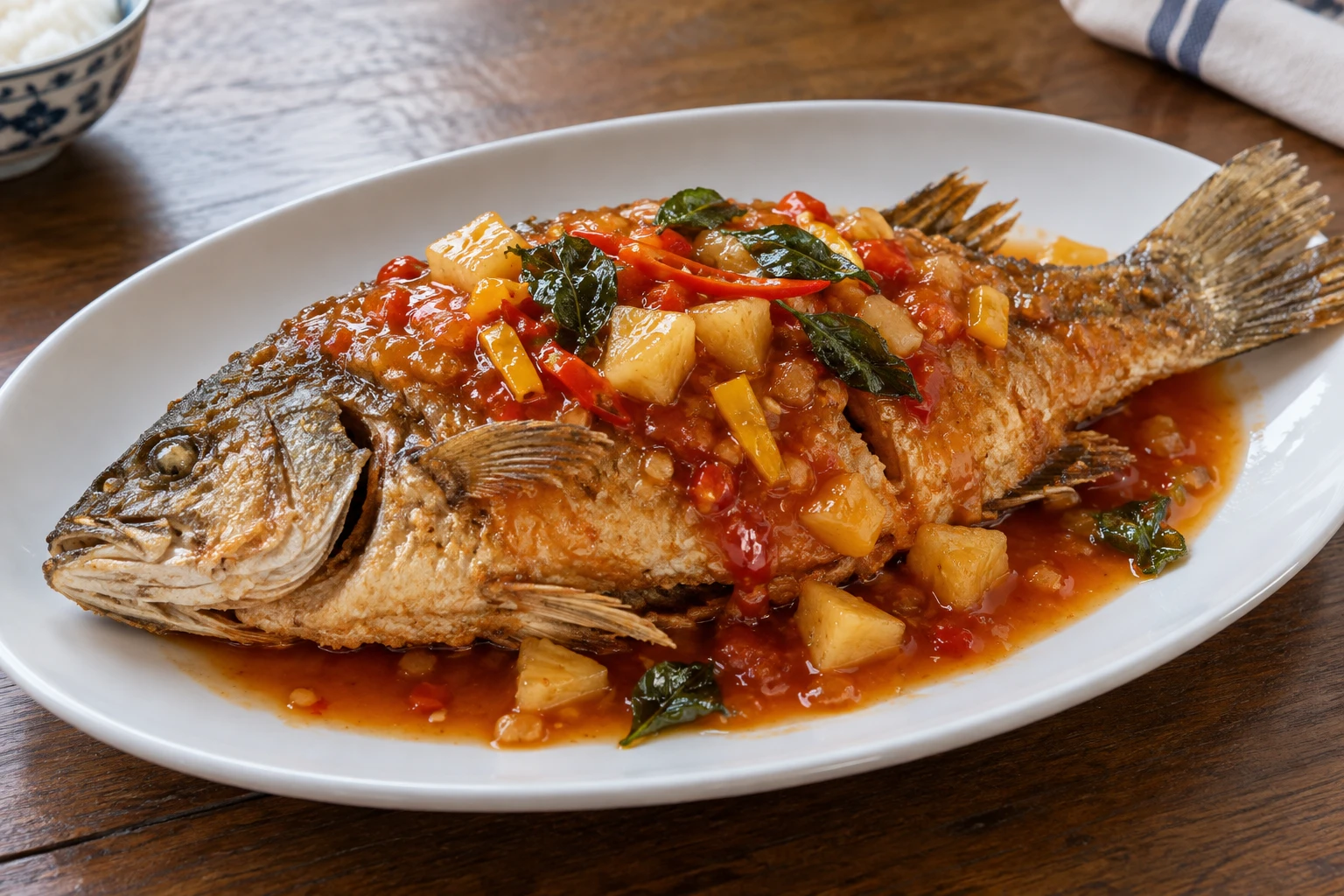
Pla sam rot puts a sauce with sweet, sour and salty tastes against fried fish. Chef Yeast Nakul’s introduction for Phol Food Mafia names that trio explicitly. Chilies may also bring heat, but a red sauce does not tell you which ingredient supplies the sourness, or how the sweetness has been built.
The finished dish can be a whole fish on a platter or pieces that are easier to portion. That choice changes the work of frying and serving while keeping the sauce central. The Thai recipes below document both forms, along with several different routes to the three tastes.
The three tastes have several routes
- Sweet
- Sugar or a prepared sauce
- Sour
- Tamarind or vinegar
- Salty
- Seasoning within the sauce
Palm sugar appears in tamarind-based versions; Yeast uses a sweet chili dipping sauce.
Tamarind appears in the fish-piece versions. KRUA’s whole-grouper sauce uses vinegar and pineapple.
Fish sauce is common in these recipes; Yeast’s particular formula uses oyster sauce.
Two documented whole-fish sauces
KRUA: pineapple and vinegar
KRUA’s editorial recipe combines chopped garlic, red and yellow chilies, pineapple, sugar, fish sauce, chili sauce and vinegar. The sauce is cooked separately, then poured over a fried grouper. Its bright pieces are part of the sauce, not merely a garnish.
Yeast Nakul: a prepared sweet chili base
Yeast’s tilapia version begins its sauce with garlic and shallots, then adds sweet chili dipping sauce, tamarind and oyster sauce. Pineapple and basil are also included. A prepared dipping sauce is therefore a documented option, rather than a requirement shared by every version.
Pieces change the serving
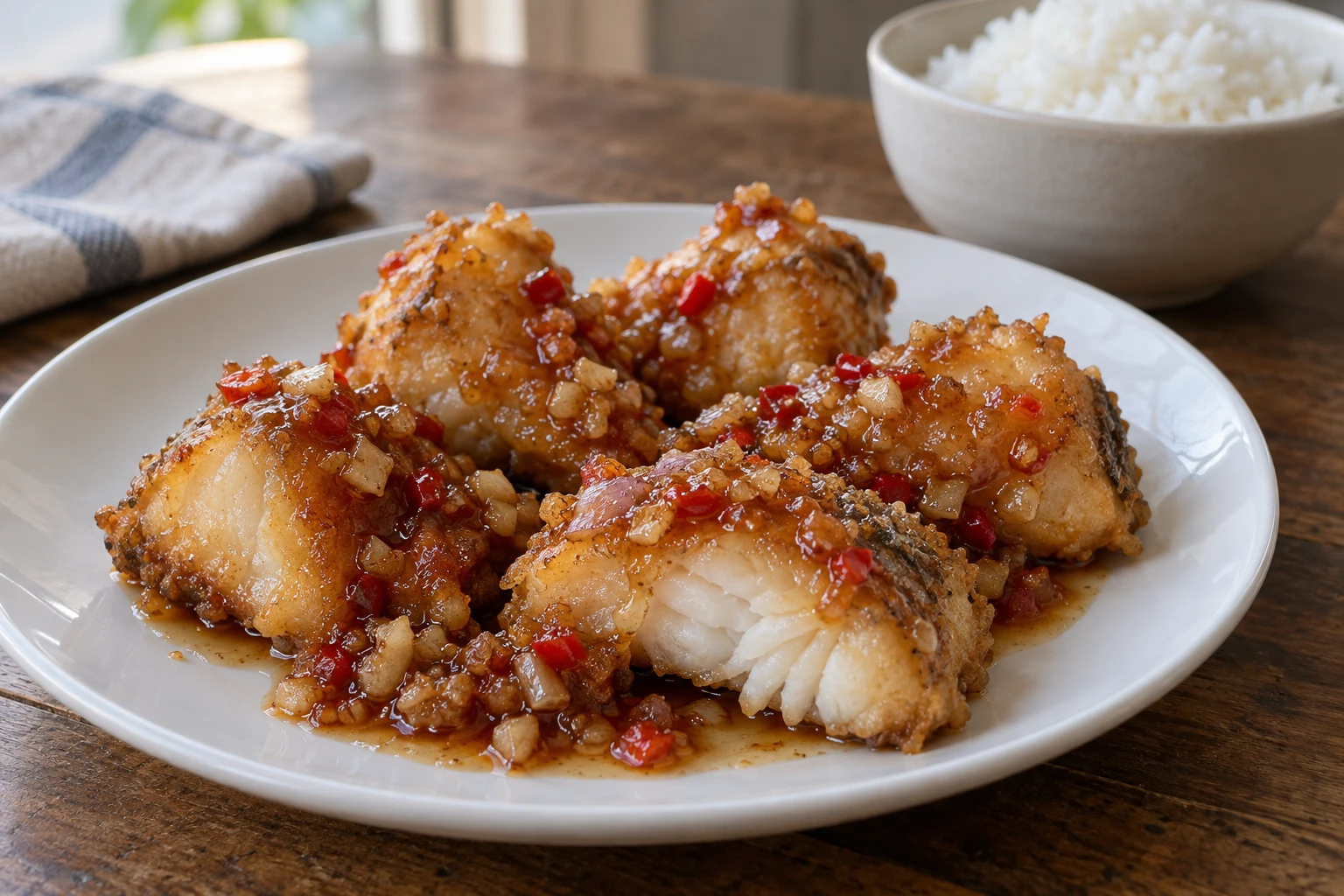
Gam.sali’s Wongnai recipe begins from a meal where a whole sea bass proved too large for the family to finish. The cook adapts it into pieces for easier portions and serving. A thin frying-flour coating covers the fish, while onion, mixed-color bell pepper, garlic and red chili accompany a sauce seasoned with fish sauce, palm sugar and tamarind.
That ingredient list explains a different plate from KRUA’s whole grouper. Bell pepper is present in gam.sali’s version; pineapple belongs to the two whole-fish sauces described above. Keep those distinctions when planning the dish, rather than using the name as a direction to combine every colorful addition.
The piece format also makes a practical difference at the table: the diner can take a portion without first separating flesh from a whole fish. It does not, by itself, specify one sauce formula or one coating. The recipe linked by each cook remains the guide to those choices. Whole-fish servings still require care with the bones.
Home-kitchen adaptation
Three-flavor fish pieces
A compact adaptation of Phol Tantasathien’s fish-piece approach, with sauce spooned over and the fried basil omitted. Timing is an estimate; serve two with rice.
Ingredients
Fish
- 300 g firm white-fish fillet, cut into large bite-sized pieces
- 2 tsp fish sauce
- 3 tbsp rice flour
- As needed neutral frying oil, plus 1 tbsp for the sauce
Sauce
- 3 garlic cloves
- 2 small shallots
- 2 red spur chilies, seeded
- 1 coriander root, scrubbed
- 4 tbsp palm sugar, finely chopped
- 2 tbsp water
- 2 tbsp strained tamarind cooking liquid
- 1 tbsp fish sauce
Method
- 1
Prepare the pieces
Pat fish dry, coat with its fish sauce, then lightly dust with rice flour. Roughly pound garlic, shallots, chilies and coriander root.
- 2
Cook the sauce
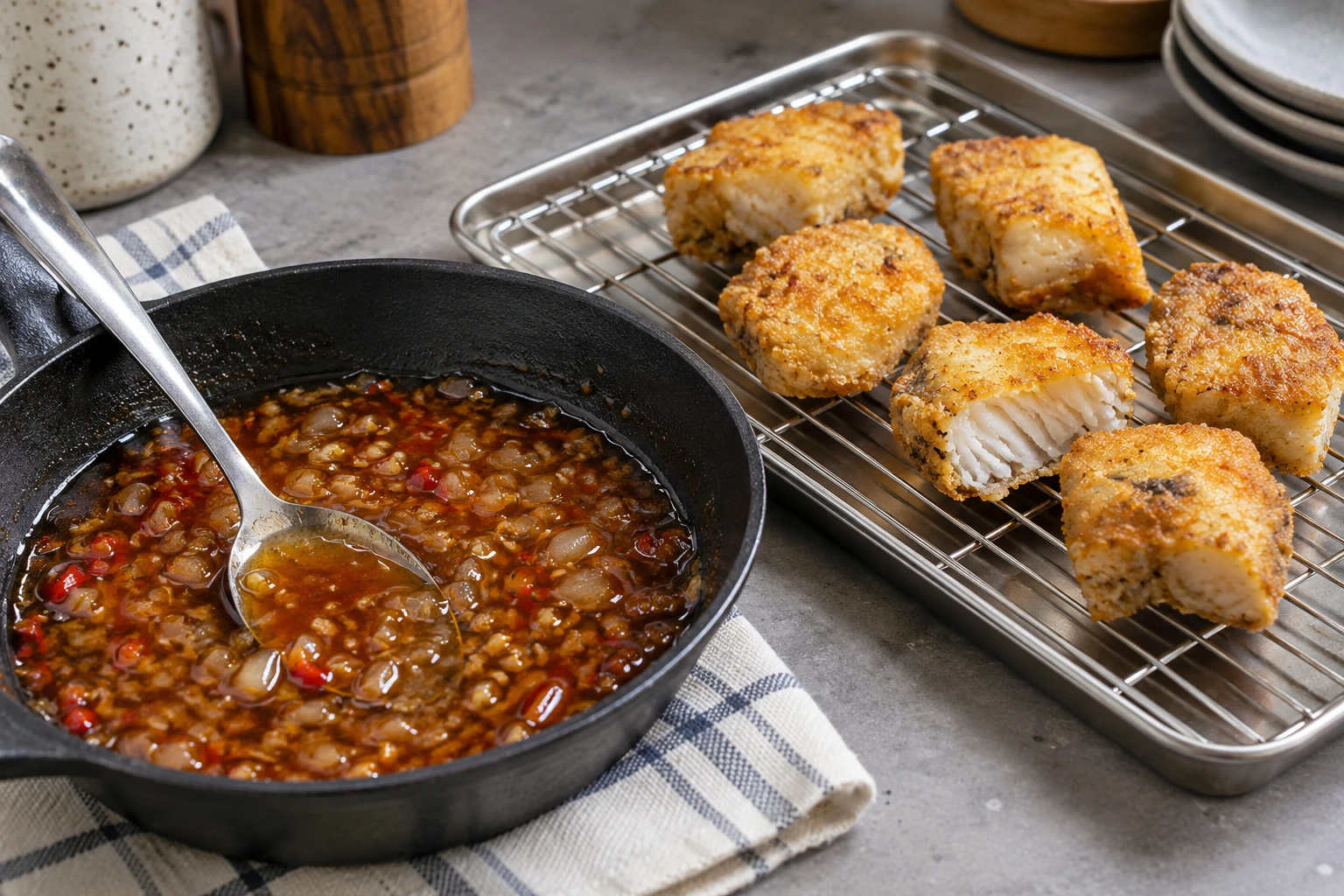
Soften the pounded aromatics in the reserved tablespoon of oil. Add sugar and water; simmer briefly, then add tamarind and sauce fish sauce. Taste and adjust.
- 3
Fry and serve
Heat frying oil to 170°C. Fry fish in batches, turning, until golden and 63°C (145°F) at the center. Drain on a rack; spoon sauce over and serve promptly.
Research notes
Sources
Four original Thai culinary preparations support the comparison; the official temperature chart supports the adaptation’s fish endpoint.
- KRUA — ปลาเก๋าสามรส Whole grouper with pineapple, vinegar, chili sauce and a separately cooked topping.
- Wongnai — gam.sali: ปลากะพงสามรส A firsthand fish-piece adaptation with bell pepper and a tamarind-based sauce.
- Phol Food Mafia — Yeast Nakul: Three Flavoured Deep-fried Fish Names sweet, sour and salty; documents a sweet-chili-sauce-based whole-fish version.
- Phol Food Mafia — Phol Tantasathien: Deep-Fried Grouper Fish pieces and tamarind, palm sugar and fish sauce inform the compact adaptation.
- FoodSafety.gov — Safe minimum internal temperatures Gives 63°C (145°F) as the fish cooking endpoint.
Keep exploring
More stories for your table
Thai cuisine Curry
Gaeng Hang Lay: A Cook’s Guide to the Long Braise
Choose a northern Thai gaeng hang lay version by its pork cut, ginger, garlic and spice mix, then understand the braise and tamarind-rich sauce.

Thai cuisine Pork braise
Moo Hong: Tender Pork Before a Rich Sauce
Phuket’s soy-braised pork rewards a patient simmer. Learn how to manage the liquid, understand its spice variations and cook a pepper-focused home adaptation.
Portuguese cuisine Fish soup
Sopa de Cação: Bread Beneath the Broth
Why Alentejo’s sopa de cação arrives over plain or toasted bread, or beside fried triangles—and how its vinegar-seasoned broth holds the dish together.