
Khanom Jeen Sao Nam: The Toppings Finish the Plate
ขนมจีนซาวน้ำ
Coconut milk, pineapple, ginger and finely prepared toppings meet on Thai rice noodles. Sao nam gives the final mixing and seasoning a role at the table.
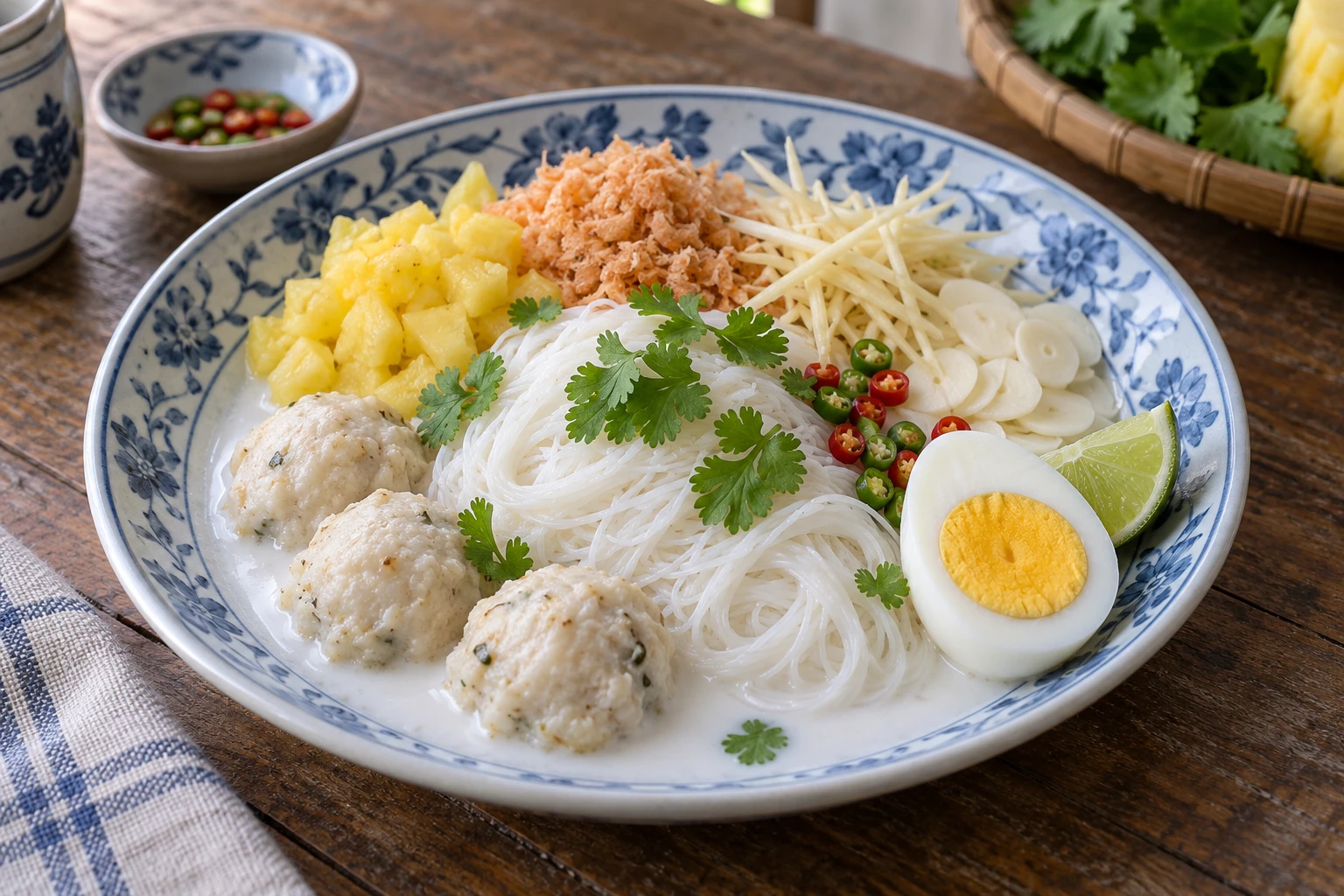
A plate completed by mixing
Khanom jeen sao nam places thin white rice noodles alongside coconut milk and a collection of carefully prepared toppings. Pineapple, young ginger, garlic and pounded dried shrimp appear across the recipes examined here. Their separate colours can make a composed plate, but the final mouthful depends on bringing them together.
The arrangement leaves an active role for the eater. KRUA's recipe keeps condiments in separate portions and adds coconut milk before everything is mixed and adjusted to taste. A photograph of untouched toppings shows the starting point of that service, not the only way the dish should be eaten.
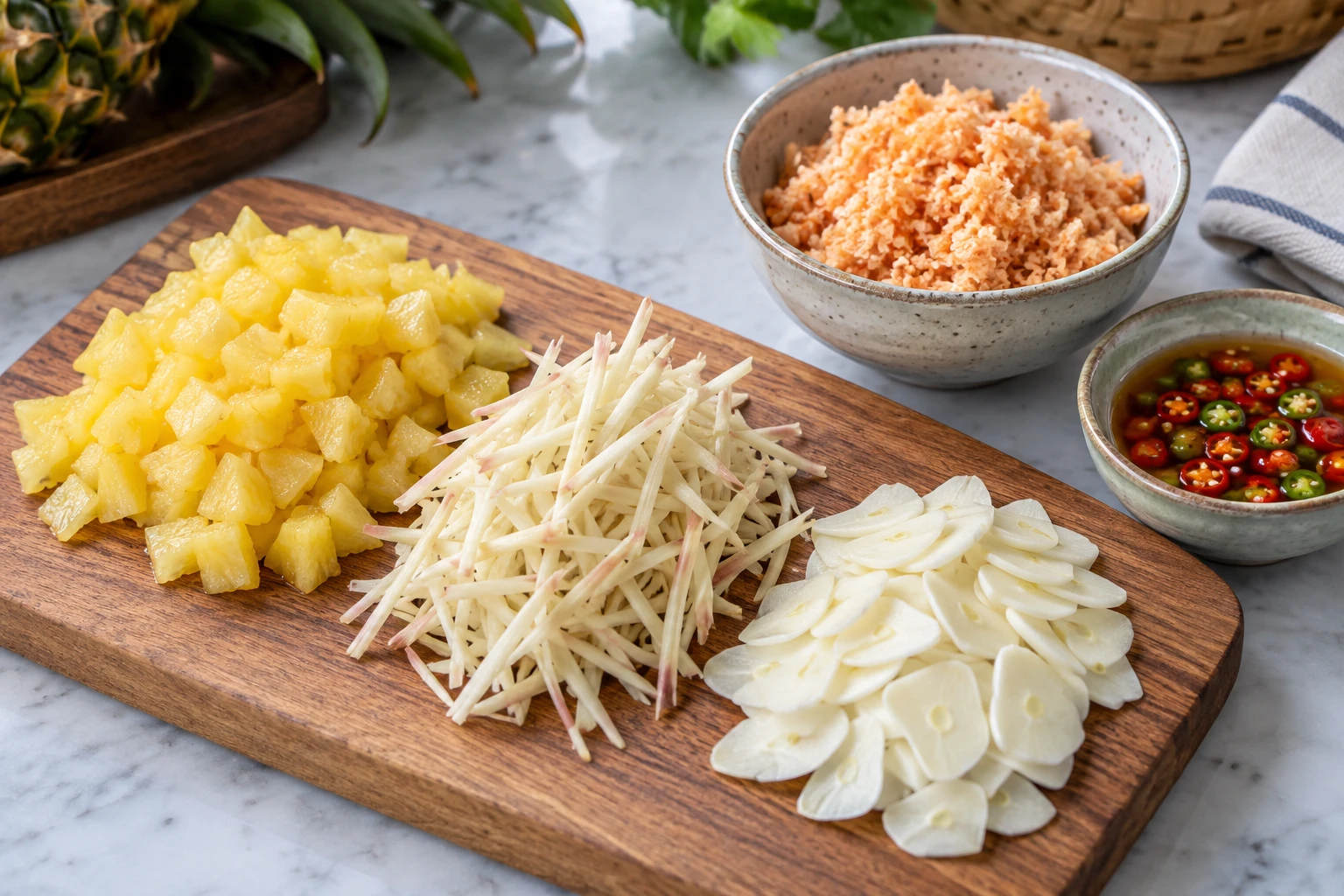
Pay attention to the small cuts
Mark Wiens's account of eating sao nam at Somsong Pochana describes very thin pineapple strips, raw garlic slices and young ginger against thick coconut sauce and salty dried shrimp. It is an observed restaurant plate, rather than a rule requiring every kitchen to cut pineapple into strips.
Wongnai's preparation by gam.sali also places pineapple, ground dried shrimp, sliced chili, garlic and ginger beside noodles and coconut milk. Its serving instructions include boiled egg and lime. Seeing those components together explains the dish more precisely than describing a generic bowl of coconut noodles: the fruit, aromatic slices and shrimp are still identifiable additions.
Coconut has a cooking stage
Chef Mae Jeed's family version, published by Kindeeyuudee, heats the coconut component gently and repeatedly warns against letting it split. She tastes before adding fish sauce and a small amount of coconut or palm sugar, recognising sweetness already present in the coconut.
Her recipe uses the thick coconut portion and adds fish balls as it begins to bubble. The accompanying fruit can be pineapple or starfruit; she personally prefers starfruit's fragrant sourness. That is a named cook's choice, rather than a reason to replace pineapple in every sao nam. Fruit and sweetening need to be read together within the version being prepared.
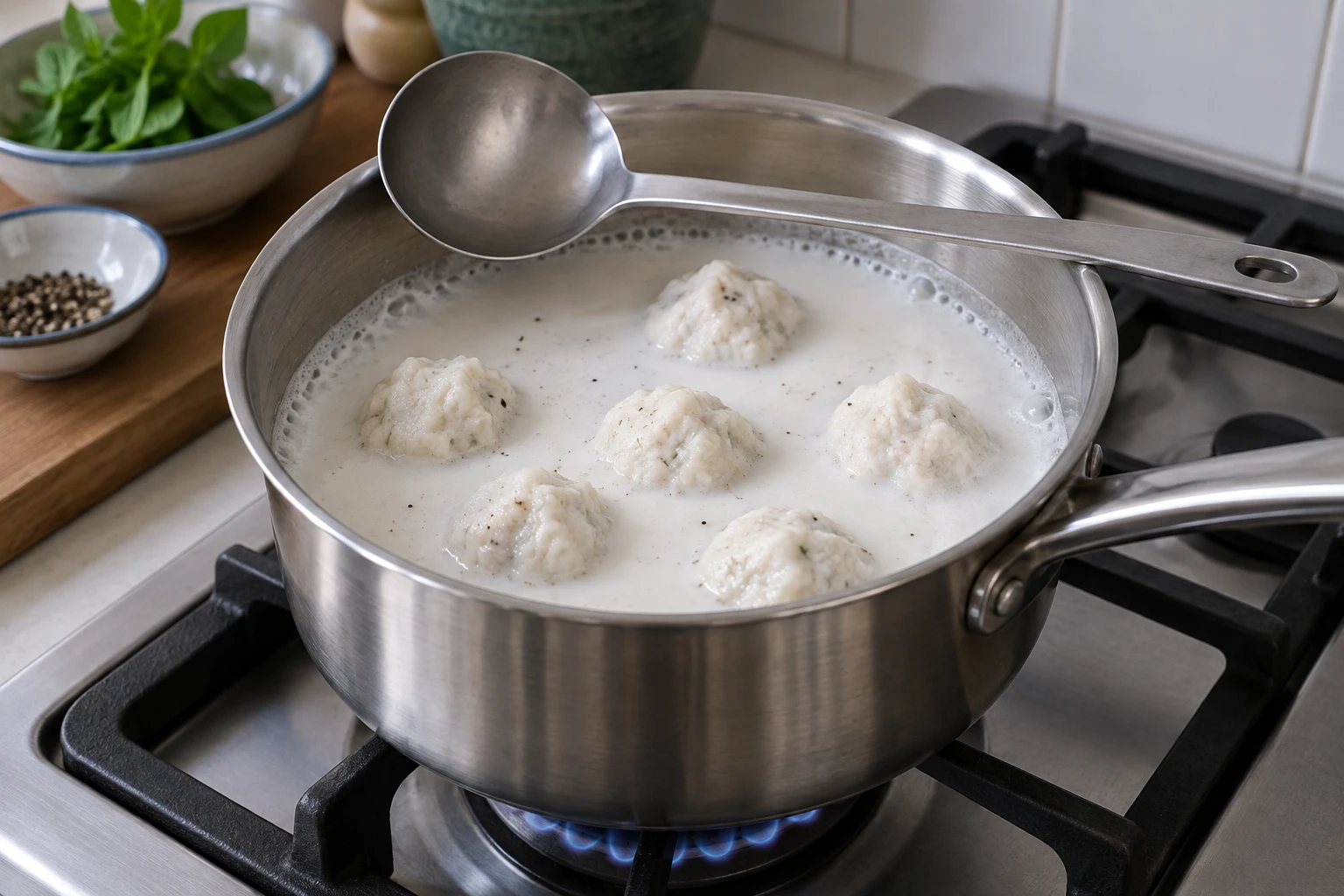
Fish dumplings follow their own recipes
Wongnai's preparation
The fish mixture is worked with its seasonings until sticky and springy, then formed and cooked in coconut milk before serving.
KRUA's preparation
Its jaeng lon contains scraped fish, curry paste, salt water and coriander. The shaped pieces cook in the thinner coconut portion before moving into the gently heated thicker portion.
Keep the dumpling and sauce methods together
Jaeng lon supplies a fish component in the Wongnai and KRUA recipes, but the mixtures are not identical. KRUA's separate thin and thick coconut stages also differ from putting the shaped fish directly into the single coconut pot described by Wongnai. Choose the complete fish-and-coconut method rather than borrowing only the convenient half of each.
That difference also helps when looking at the plate. A fish dumpling's seasoning belongs inside that component, while ginger, garlic and fruit remain toppings. The meal can be assembled from separately prepared parts without pretending that all those parts were cooked in one pot.
Sweetness is a preference with evidence
Wiens preferred the restrained sweetness of the restaurant version he tasted to a sweeter market plate he had tried. His account credits coconut and pineapple for that sweetness. It records one eater's experience and preference.
Mae Jeed nevertheless allows a little coconut or palm sugar, and KRUA places sugar among the adjustable condiments. Those sources resist a universal claim that added sugar either defines or invalidates sao nam. Taste the chosen version's coconut and fruit before deciding how its seasoning should finish.
Research notes
Sources and serving observations
Three published preparations and one firsthand restaurant account provide the details here. Family choices and individual taste preferences are attributed.
- Chef Mae Jeed, Kindeeyuudee: family sao nam Thick coconut milk, restrained palm sweetening, gentle heat and her preference for starfruit.
- gam.sali, Wongnai: noodles with coconut milk The worked fish mixture, coconut cooking stage and separate toppings at serving.
- KRUA: sao nam with jaeng lon Distinct coconut portions, seasoned fish dumplings and condiments mixed and adjusted at eating.
- Mark Wiens: sao nam at Somsong Pochana Firsthand observations of finely cut toppings, coconut texture and his sweetness preference.
Keep exploring
More stories for your table
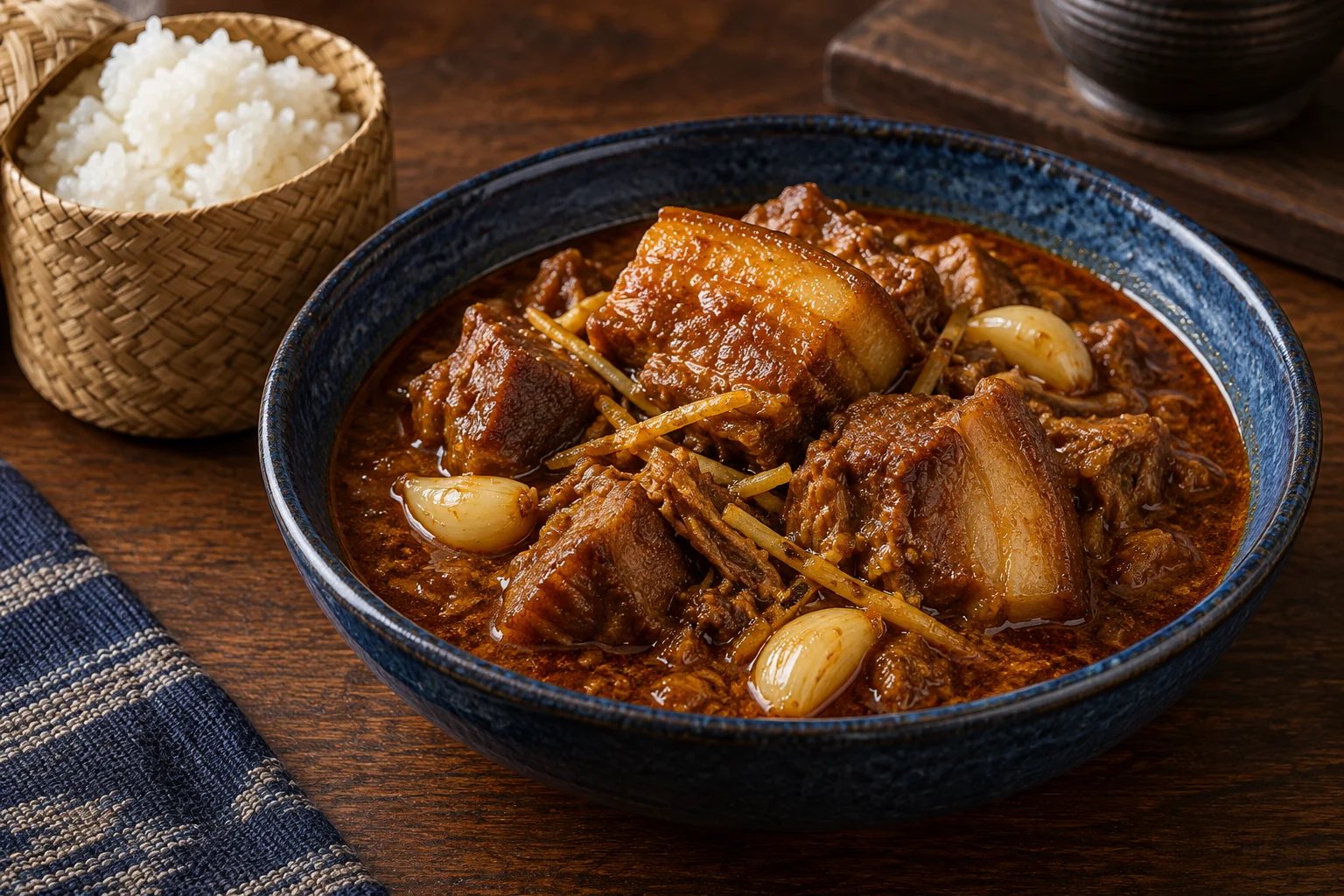
Thai cuisine Curry
Gaeng Hang Lay: A Cook’s Guide to the Long Braise
Choose a northern Thai gaeng hang lay version by its pork cut, ginger, garlic and spice mix, then understand the braise and tamarind-rich sauce.
Thai cuisine Vegetable stir-fry
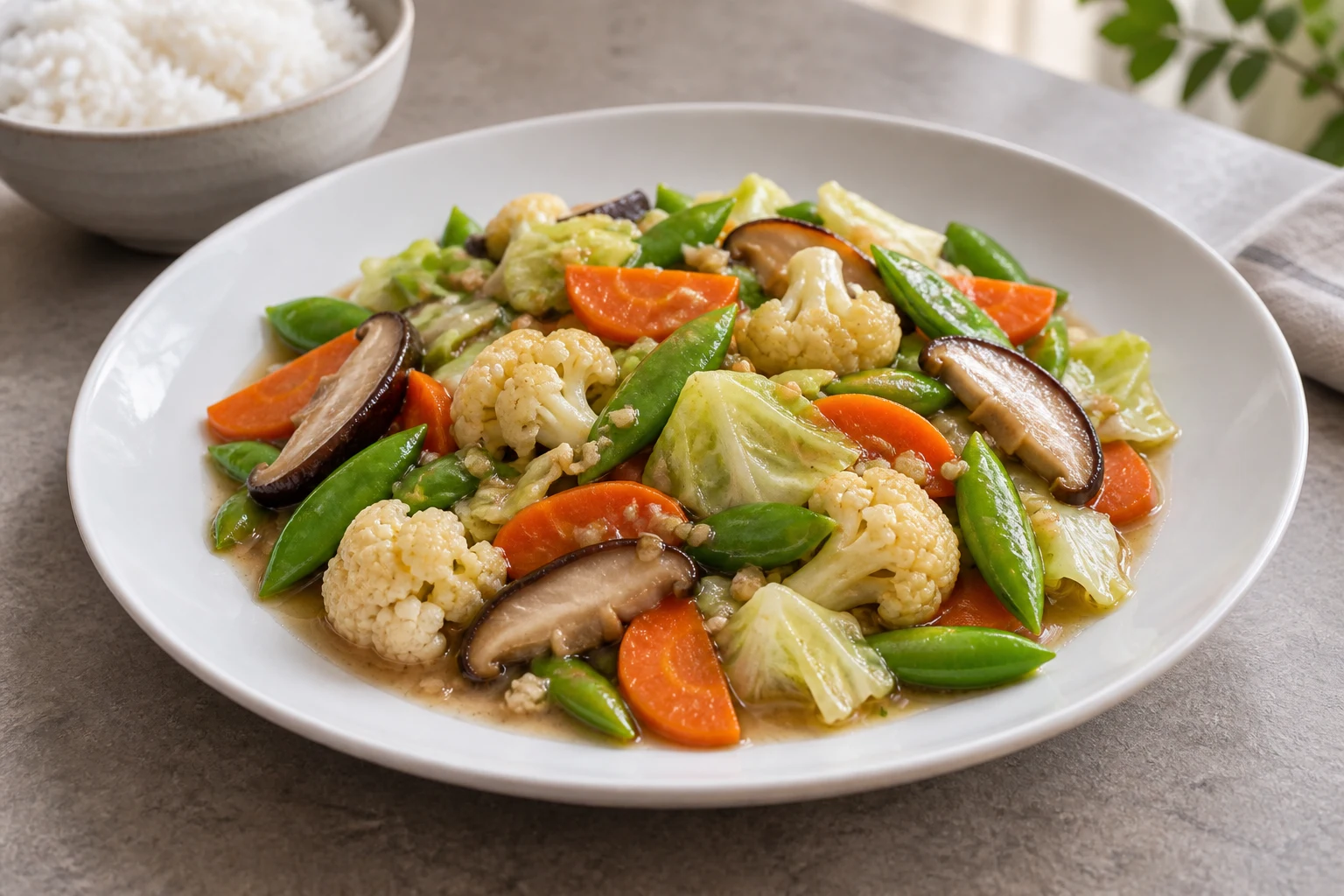
Pad Pak Ruam: Cut, Sort, Then Stir-Fry
Cook Thai mixed vegetables in stages so the carrot softens while the cabbage and snap peas keep their bite. Includes a complete five-vegetable home adaptation.
Vietnamese cuisine Noodles
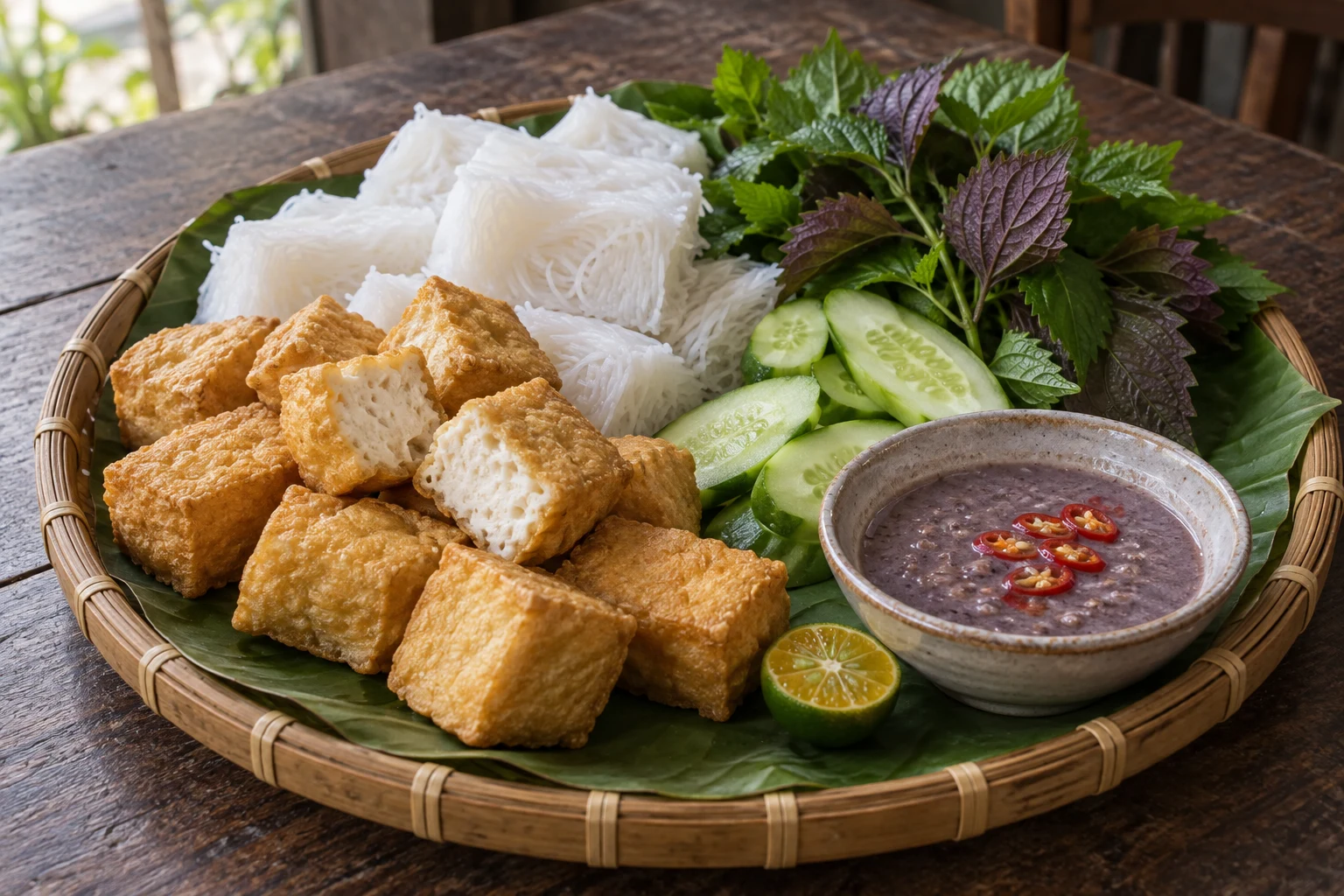
Bún Đậu Mắm Tôm: Keep the Dip at the Center
Hot fried tofu, plain rice noodles and fresh herbs make room for a powerful fermented-shrimp dip. Read the Hanoi plate before adding more to it.