
Gaeng Hang Lay: A Cook’s Guide to the Long Braise
แกงฮังเล
Ginger, tamarind and aromatic dried spices run through northern Thai gaeng hang lay. Its published versions offer different routes to tender pork and a rich sauce.
Northern Thailand
Read the pork cut before the cooking time
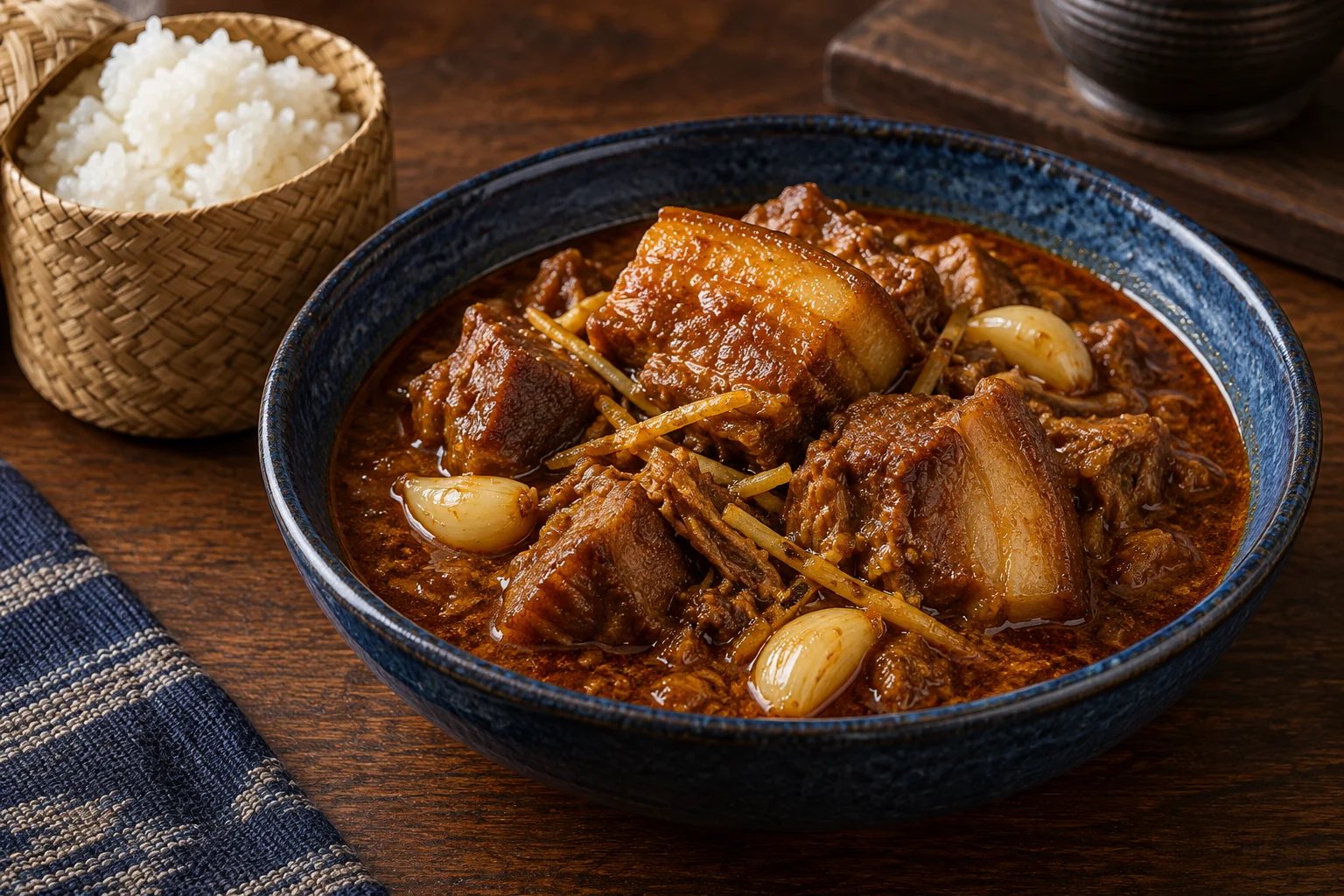
Gaeng hang lay is a northern Thai pork curry built around a patient braise. Tamarind supplies sourness, ginger runs through the sauce, and a dried spice mixture adds another layer to the chilli-and-aromatic paste. Pailin Chongchitnant connects the dish with Myanmar, while Chiang Mai Ecolodges describes the same culinary influence. Those connections help explain its flavour without fixing every cook to one formula.
Published versions differ enough that the shopping list deserves a close read. Pork belly and ribs, boneless neck, and belly mixed with shoulder all appear. Fresh garlic, pickled garlic, peanuts and green beans depend on the particular recipe. Choose a complete version that suits your pork cut, then keep its ingredient amounts and sequence together.
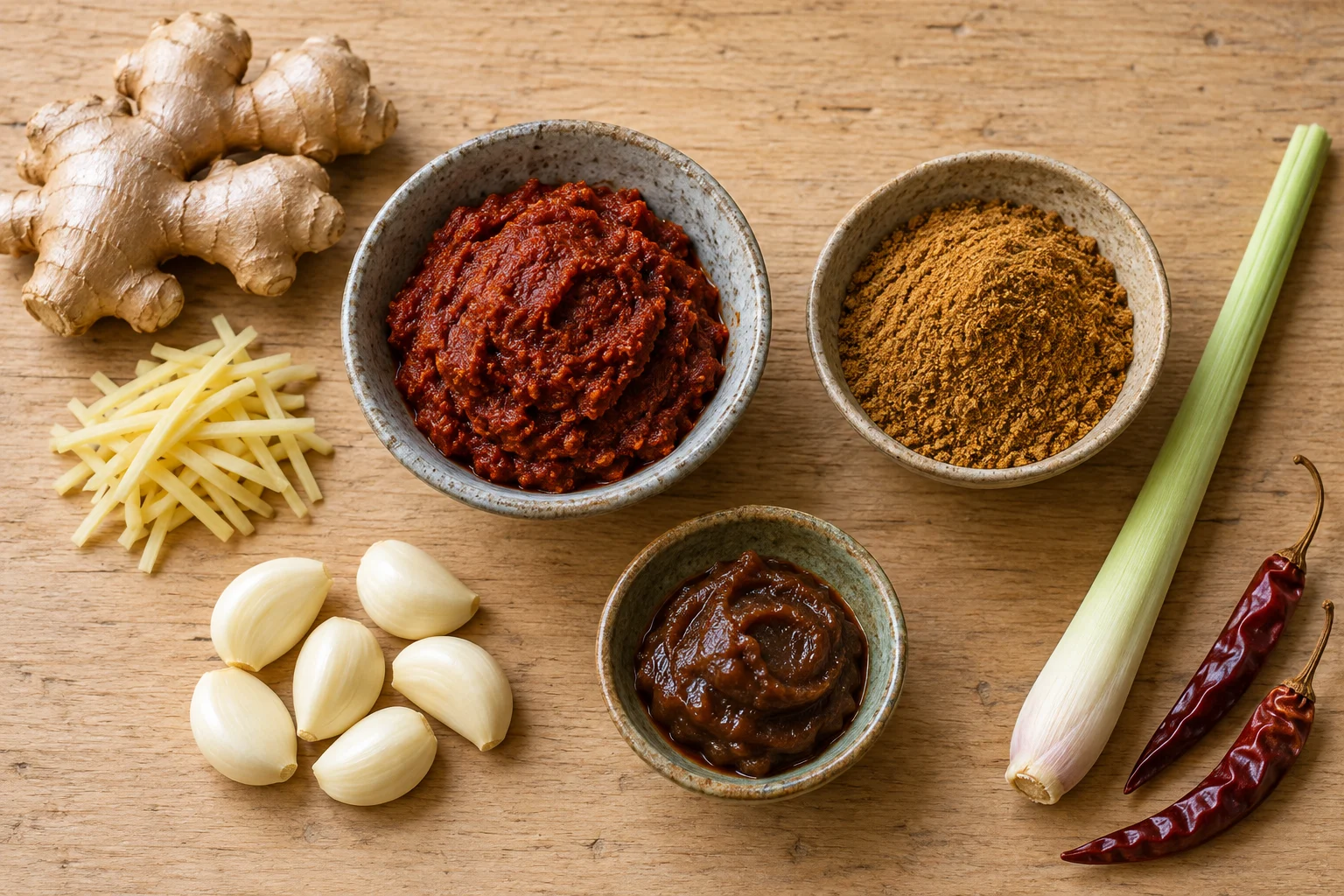
Four things to look for
- Tamarind
- A sour base
- Ginger
- Fine strips or slices
- Dried spices
- A separate mixture
- Pork
- A braising cut
Product concentration matters; a loose paste and a dense extract need different amounts.
A recognisable ingredient in all four preparations linked below.
Hung lay powder or a specified garam masala substitution accompanies the wet paste.
The recipe’s cut and piece size determine how its timing should be read.
Choose the version you want to cook
These examples show why a single ingredient checklist cannot describe every bowl.
Belly, ribs and fresh garlic
Pailin’s Hot Thai Kitchen version uses belly and small pork rib pieces. Whole fresh garlic and ginger enter near the end of the long braise. Pork shoulder is offered as an alternative when a less fatty cut is preferred.
Boneless neck and peanuts
Grandma’s Cooking School starts with pork neck, red curry paste and hung lay powder. Its finish includes ginger and roasted peanuts. The small neck preparation has its own shorter simmer; that clock does not describe a pot of large rib pieces.
Pickled garlic or pineapple
Thai Cookbook TV combines belly and shoulder with pickled garlic and green beans. Chiang Mai Ecolodges includes peanuts and a small pineapple addition. Follow the chosen version rather than collecting every optional addition into one crowded pot.
Two mixtures on the board
The wet paste carries ingredients such as dried chillies, lemongrass, galangal, shallots and garlic, with shrimp paste in some preparations. The dry mixture supplies ground spices. Keeping them distinct makes an ingredient list easier to follow: a spoon of spice powder is not a spoon of curry paste.
Grandma’s Cooking School describes a practical red-paste route with a separate hung lay powder. Use the amounts specified by the recipe you select. Chiang Mai Ecolodges allows garam masala as a substitution for its powder; the flavour depends on the blend in your jar, so treat it as a named alternative rather than an exact copy of every hung lay mixture.
Watch the braise in three stages
The details follow the chosen recipe, but these observations help you understand what the pot needs.
- 01
Coat before adding the liquid
Notice whether your recipe marinates the meat, fries the paste first, or browns the pork before coating it. These are distinct starting sequences. Keep the stated order and avoid adding all the water before a step that calls for frying.
- 02
Keep the pork gently cooking
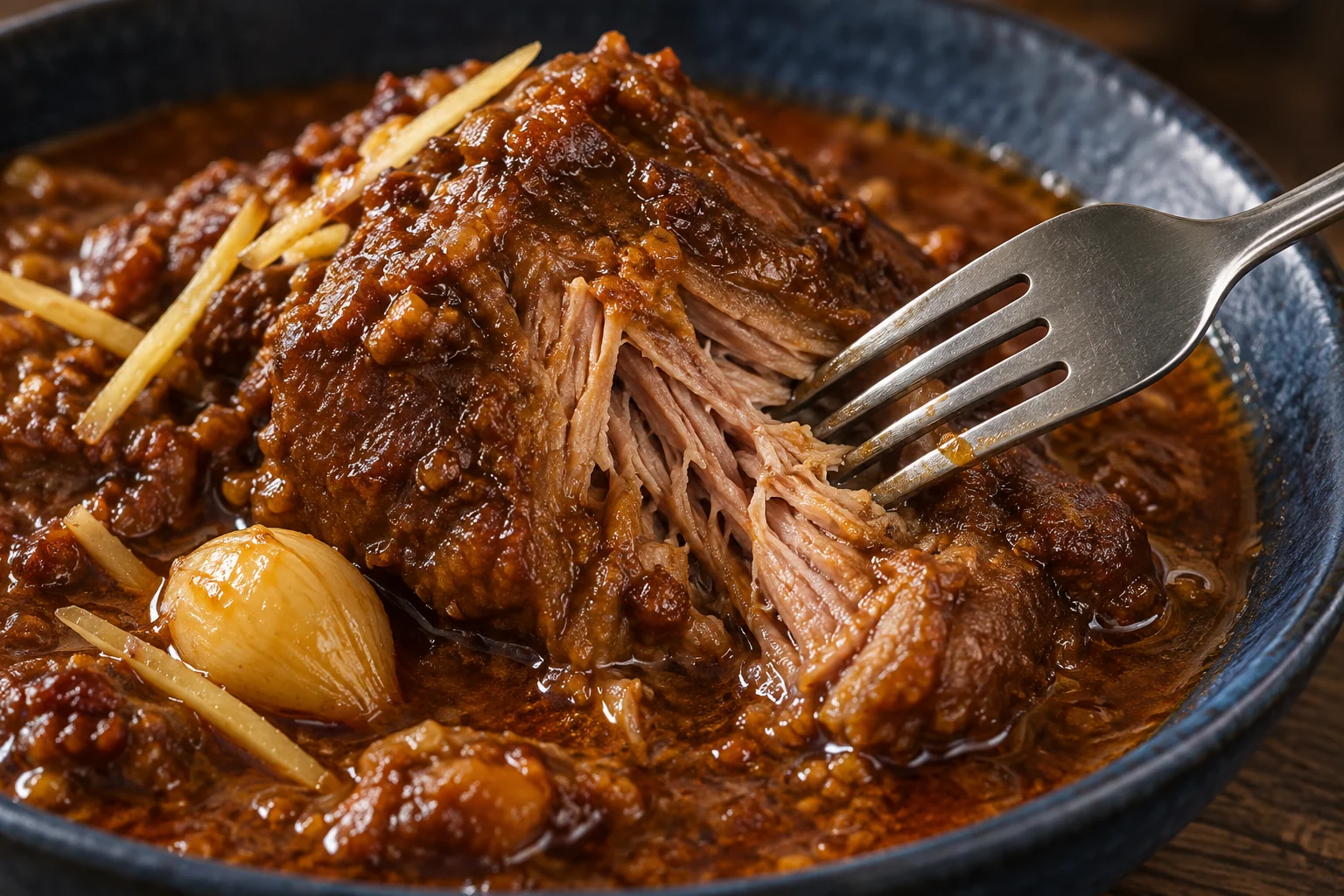
Use the recipe’s simmer as a starting point, then check the meat itself. Large belly chunks and bone-in ribs need a different window from small boneless neck pieces. Add a little water if the sauce threatens to dry while the meat still resists a fork.
- 03
Finish meat and sauce separately
Tender pork and a thick sauce are two checks. If the pork is ready while the liquid is still loose, Pailin recommends removing the meat and reducing the sauce further. This keeps the finished pork from being the timer for every remaining adjustment.
Taste after the sauce has reduced
Reduction makes the seasonings more concentrated. Taste a little sauce once it reaches the consistency you intend to serve, then judge whether its sourness, salt and sweetness are in balance. Pailin specifies a loose Thai tamarind paste; a compact concentrate should be handled according to its label and the recipe’s product guidance. Avoid judging an unfamiliar tamarind by its spoon measure alone.
Garlic also deserves its own check. A whole fresh clove should soften in the braise, while pickled garlic arrives with its own acidity. Keep the ginger cut specified by your recipe so it has time to soften without disappearing into the sauce. Serve the finished curry with rice and let the rich sauce remain the centre of the plate.
Research notes
Complete recipes and further reading
Four distinct culinary preparations show the shared ingredients and the differences between versions.
- Pailin Chongchitnant: Gaeng Hung Lay Belly and ribs, a dried spice blend, loose tamarind, fresh garlic and sauce-control advice.
- Grandma’s Cooking School: Gaeng Hung Lay PDF, page 2: pork neck, red curry paste, hung lay powder and roasted peanuts.
- Thai Cookbook TV: Northern Thai Burmese Curry Belly and shoulder with pickled garlic, ginger and green beans.
- Chiang Mai Ecolodges: Northern Thai Burmese-style Curry PDF, printed pages 38–39: marinated pork, separate spice mixture, peanuts and pineapple.
Keep exploring
More stories for your table

Thai cuisine Pork braise
Moo Hong: Tender Pork Before a Rich Sauce
Phuket’s soy-braised pork rewards a patient simmer. Learn how to manage the liquid, understand its spice variations and cook a pepper-focused home adaptation.
Thai cuisine Noodles & Soups
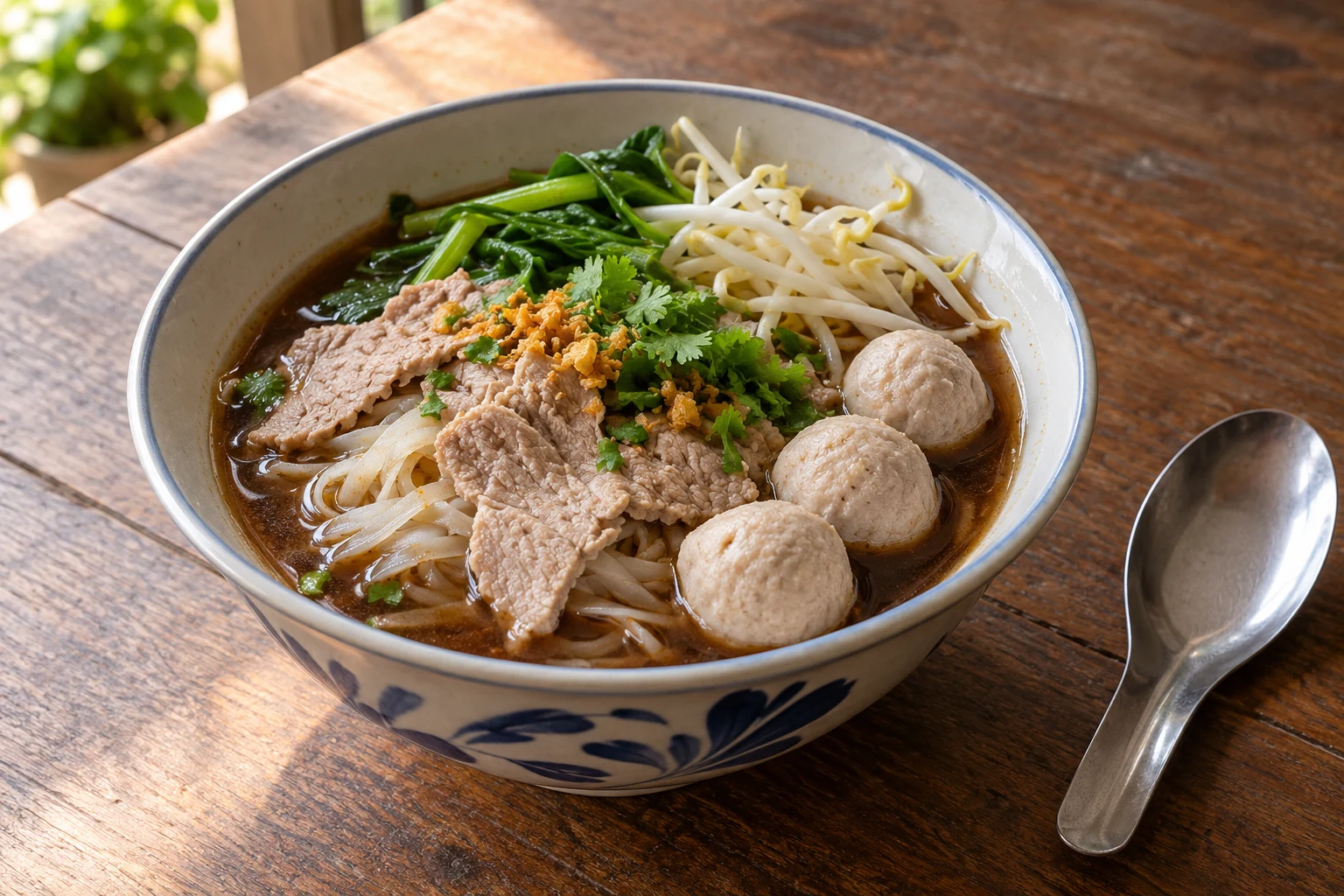
Pork Boat Noodles: Broth, Toppings, and the Final Bowl
Understand the aromatic brown broth, cooked pork, rice noodles, and finishing choices that make a Thai boat-noodle bowl feel complete.
Thai cuisine Seafood
Pla Sam Rot: Three Flavors, Two Ways to Serve
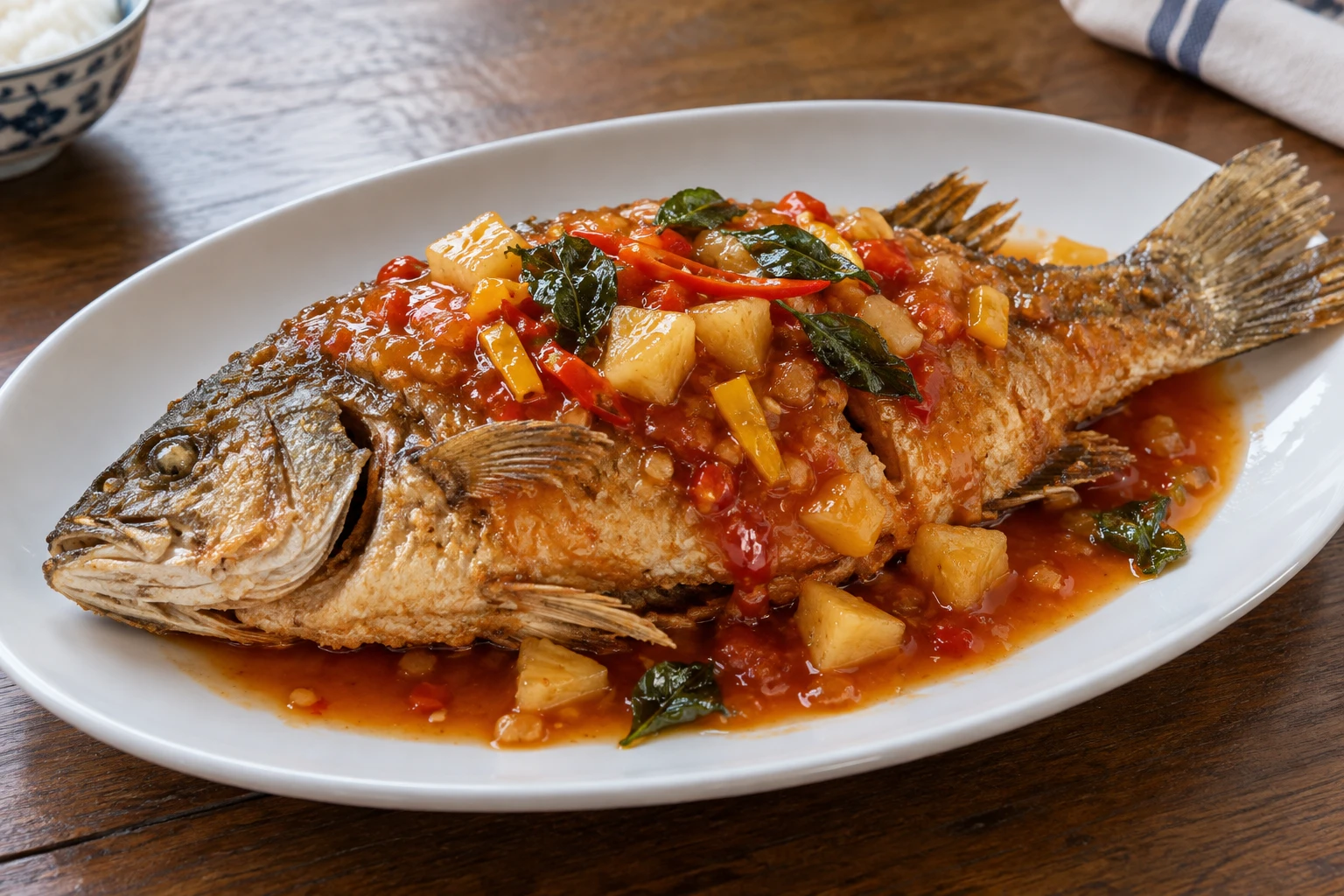
Sweet, sour and salty meet crisp fried fish in pla sam rot. Compare whole-fish and fish-piece versions, with a compact tamarind-sauce adaptation.