
Pork Boat Noodles: Broth, Toppings, and the Final Bowl
ก๋วยเตี๋ยวเรือ
The broth takes its time; the noodles need their own moment. Keeping those jobs separate makes this richly seasoned Thai soup easier to understand.
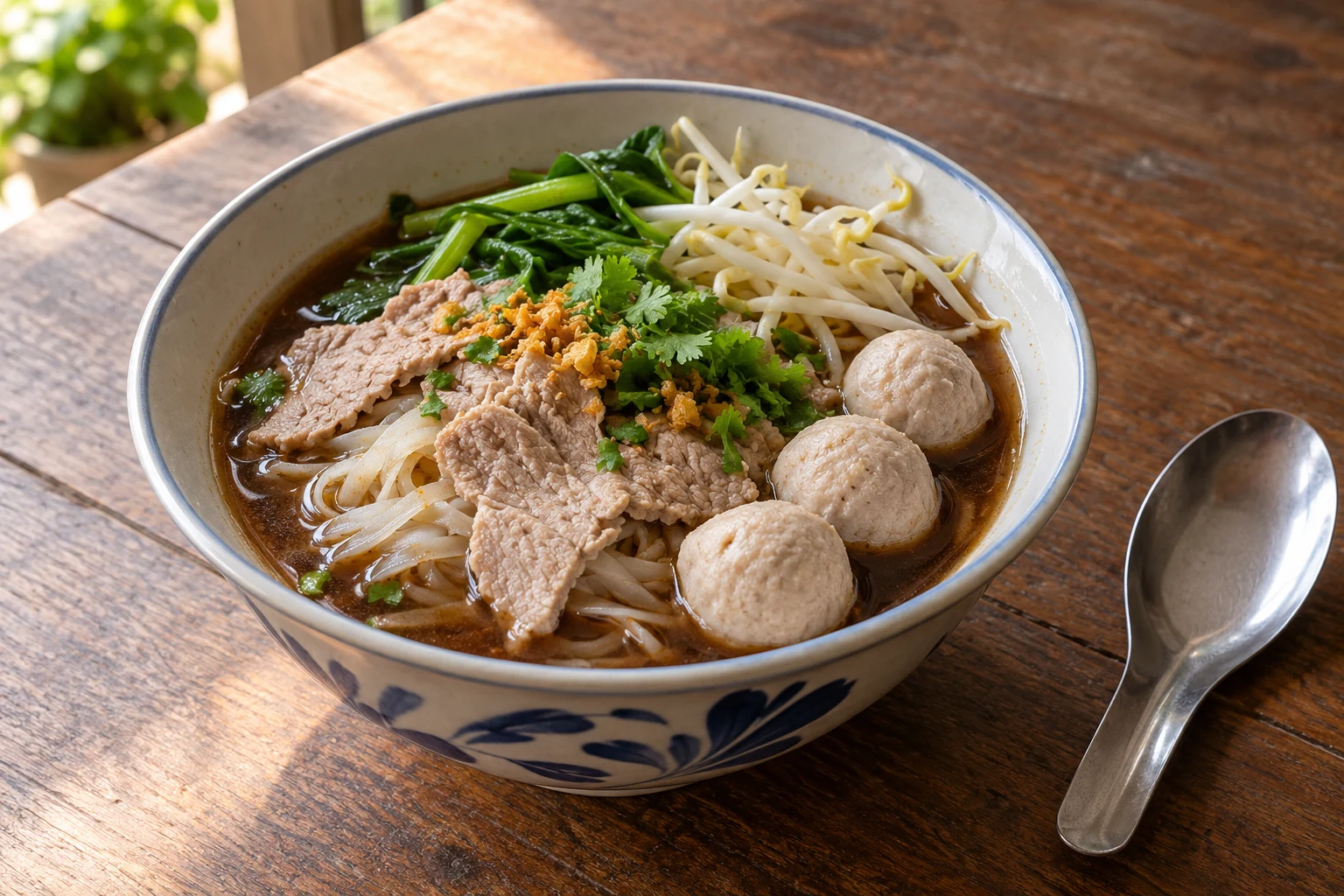
Thai noodle bowls
Rich broth, a compact bowl
Thai boat noodles, kuay teow reua, bring noodles and meat together in a deeply seasoned brown soup. Pork slices and pork balls make one familiar combination, with leafy greens, bean sprouts, and a little fried garlic supplying contrasts. The broth is the center of the dish, but a bowl works best when each component keeps its own texture.
That balance makes the preparation easier to approach. The stock can simmer separately while noodles, vegetables, and meat receive the cooking they need closer to serving. Praew of Hungry in Thailand uses this arrangement in her own restaurant-style recipe. It gives the cook a way to serve successive bowls without leaving all the noodles swelling in the main pot.
Read the broth in layers
The cited recipes differ, so treat these as a map of useful flavors rather than a single fixed formula.
Aromatic base
Pork bones give the stock its foundation. Wongnai’s cook bundles cinnamon, star anise, coriander seed, and cumin in cloth; Praew also uses fresh aromatics and daikon. A removable spice bag helps flavor the liquid without putting hard spice fragments in the finished bowl.
Savory seasoning
Soy sauces, fermented bean products, and pickled garlic appear in different combinations. Fermented bean curd and fermented soybean paste are distinct ingredients, so follow the chosen recipe rather than swapping them spoon for spoon. Their saltiness makes tasting the finished stock essential.
Body and color
Some versions use pork blood for richness and a thicker texture; coconut milk appears in the cited recipes too. Praew provides a blood-free option. Ajinomoto’s commercial recipe starts with a packaged soup base, showing another approach rather than a requirement for every bowl.
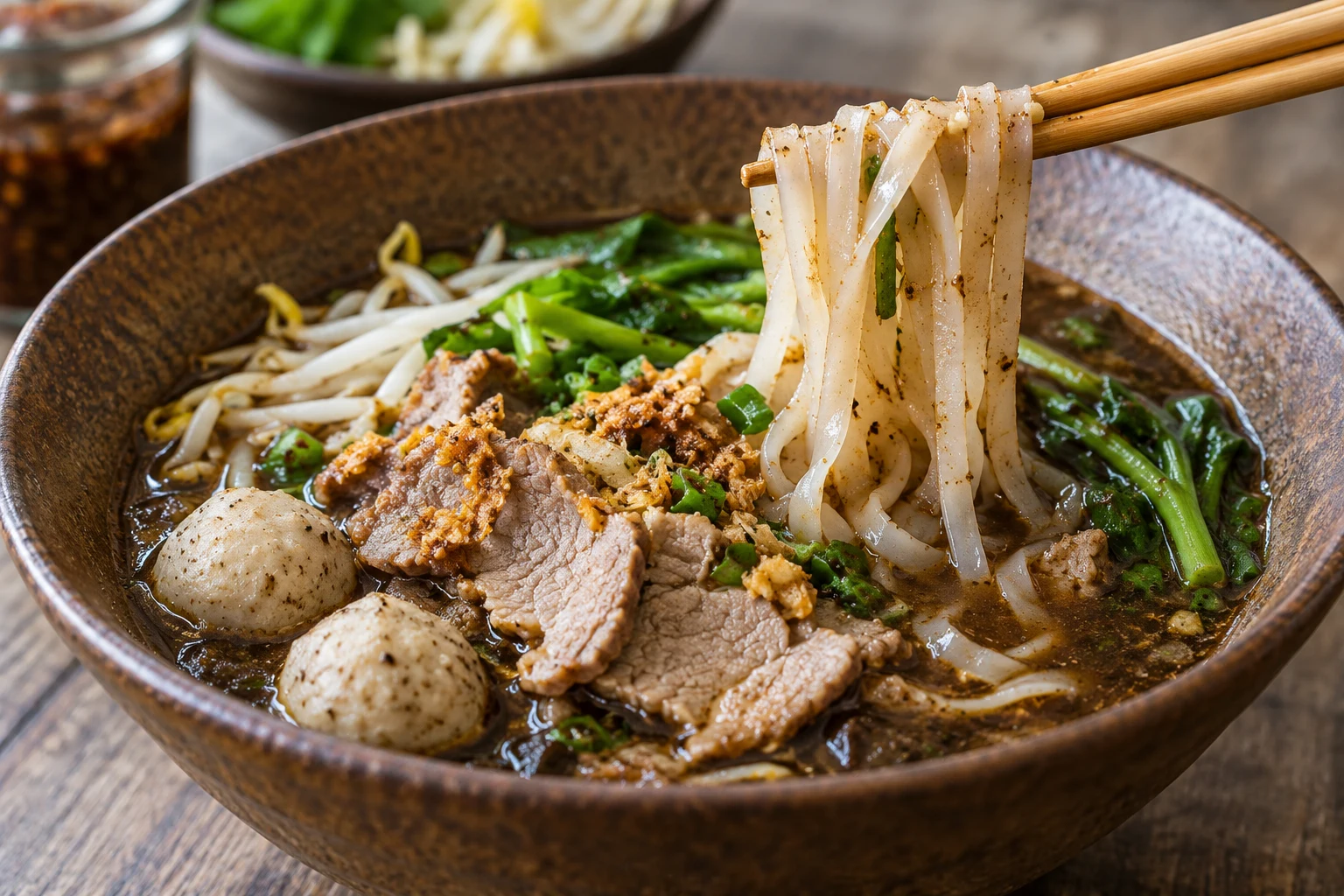
Finish a bowl in a deliberate order
Choose a complete recipe for stock proportions and cooking times. These decisions explain how to preserve the assembled soup’s texture.
- 01
Keep the noodles separate
Use the rice noodles specified by the recipe and follow their packet’s soaking and cooking directions. Different widths soften at different rates. Cook near serving, drain, and portion them into bowls so they retain some spring instead of turning soft during the stock’s long simmer.
- 02
Cook the greens and pork
Blanch the vegetables separately, and fully cook the pork slices and meatballs before assembly. Tender slices, resilient pork balls, and softened but recognizable greens give each spoonful variation. If adding liver, it needs thorough cooking too; a brief final pour of soup is not a doneness test.
- 03
Adjust one serving
Praew seasons a portion of broth before pouring it over the noodles. Ajinomoto’s version uses a separate finishing sauce. Both approaches allow the sour, spicy, sweet, and salty balance to be adjusted by the bowl. Taste a little cooled broth, then make small changes rather than adding every condiment automatically.
- 04
Finish with texture
Add fried garlic and chopped herbs after the broth reaches the bowl. The garlic supplies a toasted contrast that quickly softens in soup. Set out chili vinegar or chili flakes for further adjustment, remembering that the stock may already be strongly seasoned.
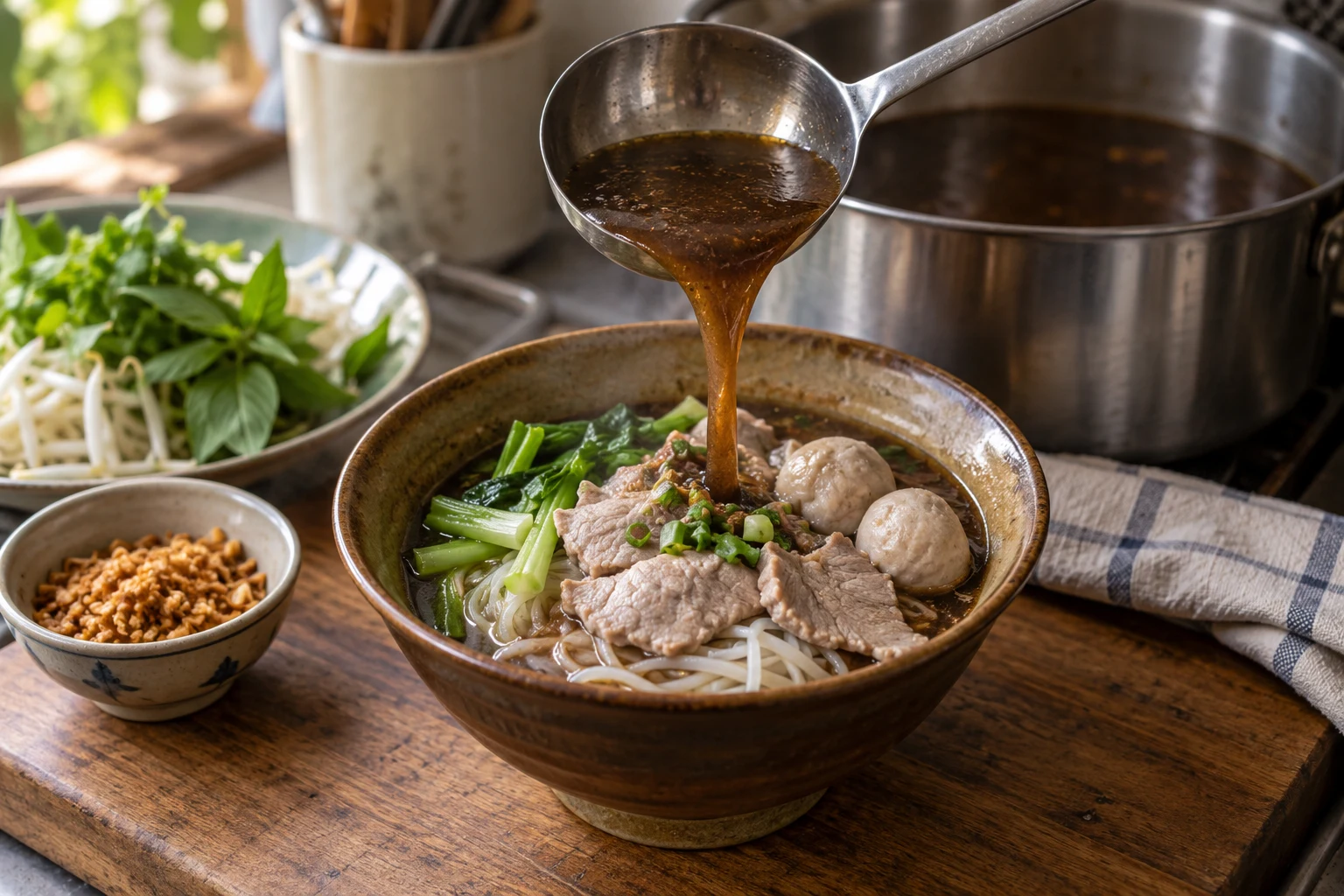
Choose the bowl that suits you
Blood, liver, and extra toppings can be decisions rather than surprises. Ask what a shop’s broth contains, or choose an explicitly blood-free home recipe when preferred. Check fermented bean products and sauces for soy and wheat; fish sauce, meatballs, and other seasonings may add fish or further allergens.
For leftovers, keep broth and noodles apart. Promptly refrigerate perishable components at 4°C or below, rather than leaving a large stockpot on the counter to cool completely. Reheat thoroughly and assemble a fresh serving. The reward for that separation is simple: hot aromatic soup around noodles that still have something to bite.
Research notes
Sources and cooking references
Three independent Thai culinary preparations inform the component guide. Official cooking guidance supports the conservative temperature and storage advice.
- Praew — Thai Boat Noodles Complete restaurant-style pork preparation, optional blood, broth components, and individual-bowl seasoning.
- จิ๋วหิวโซ — ก๋วยเตี๋ยวเรือ Original Thai aromatic-stock recipe and noodle, vegetable, and pork assembly; its ladle-only blood step is not recommended here.
- Ajinomoto Thailand — เส้นเล็กก๋วยเตี๋ยวเรือ Original commercial variation using a packaged soup base, separate component cooking, and a finishing sauce.
- Centre for Food Safety — Cooking Official core-temperature, thermometer, and cold-storage guidance.
Keep exploring
More stories for your table
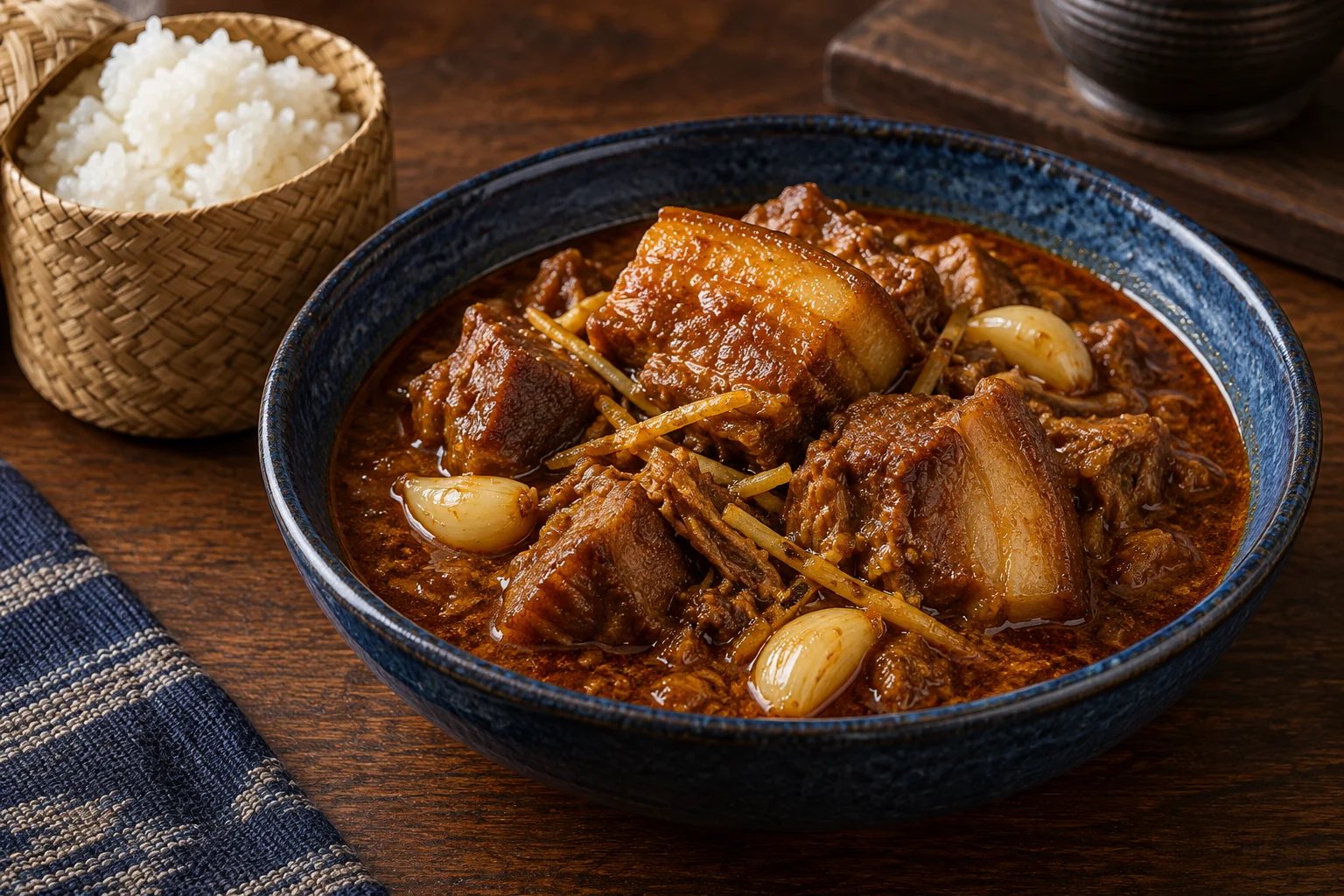
Thai cuisine Curry
Gaeng Hang Lay: A Cook’s Guide to the Long Braise
Choose a northern Thai gaeng hang lay version by its pork cut, ginger, garlic and spice mix, then understand the braise and tamarind-rich sauce.

Thai cuisine Pork braise
Moo Hong: Tender Pork Before a Rich Sauce
Phuket’s soy-braised pork rewards a patient simmer. Learn how to manage the liquid, understand its spice variations and cook a pepper-focused home adaptation.
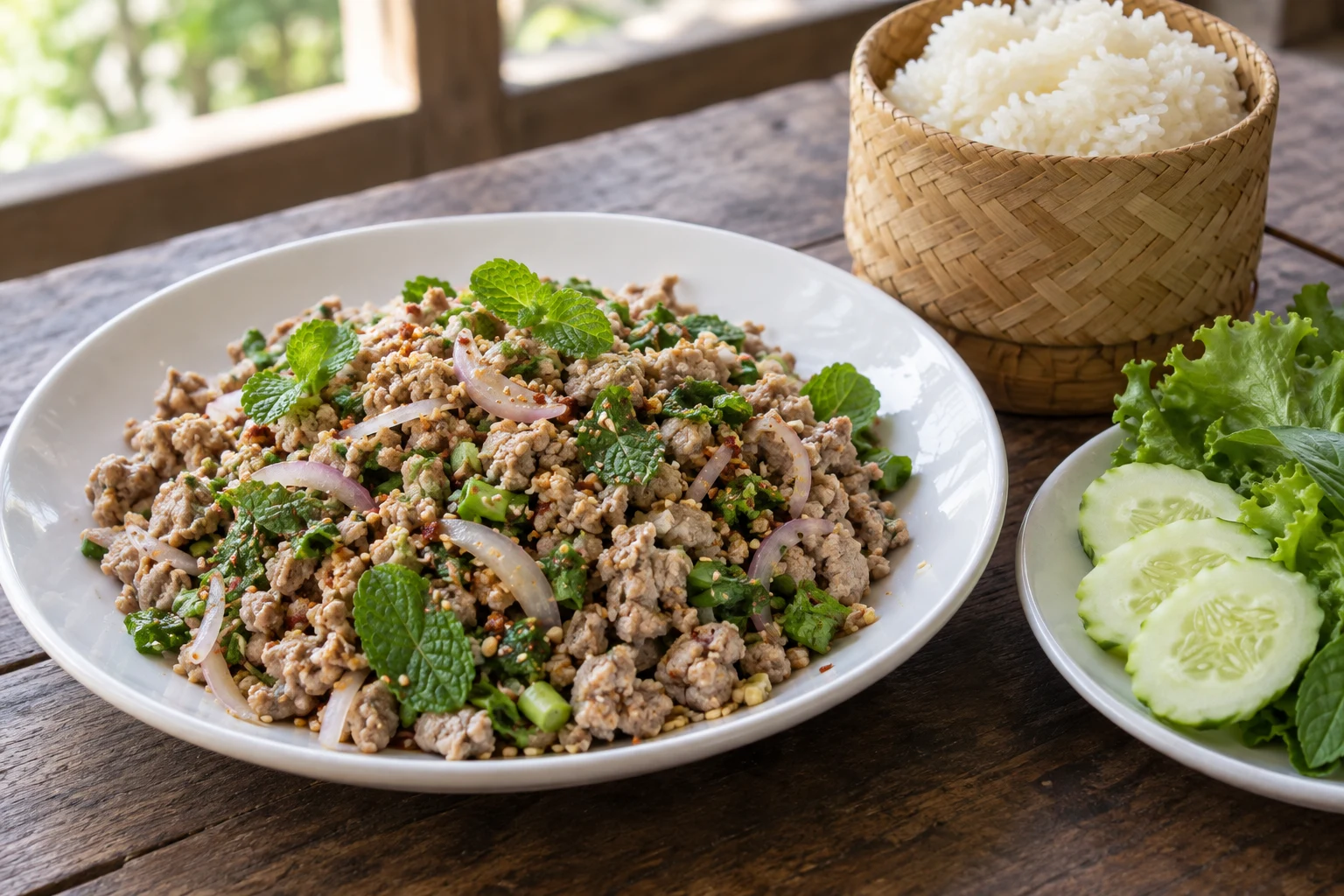
Laotian cuisine Pork salad
Laab moo: choose the pork texture before finishing
A guide to Lao pork laap that compares minced and cooked-then-chopped pork, explains toasted rice powder, and keeps herbs and seasoning tied to each method.