
Emmentaler Fondue: From Grated Cheese to a Shared Pot
Käsefondue
Emmentaler and Gruyère make one documented Swiss fondue blend. The useful skill is managing its journey from grated cheese to a smooth, gently heated pot.
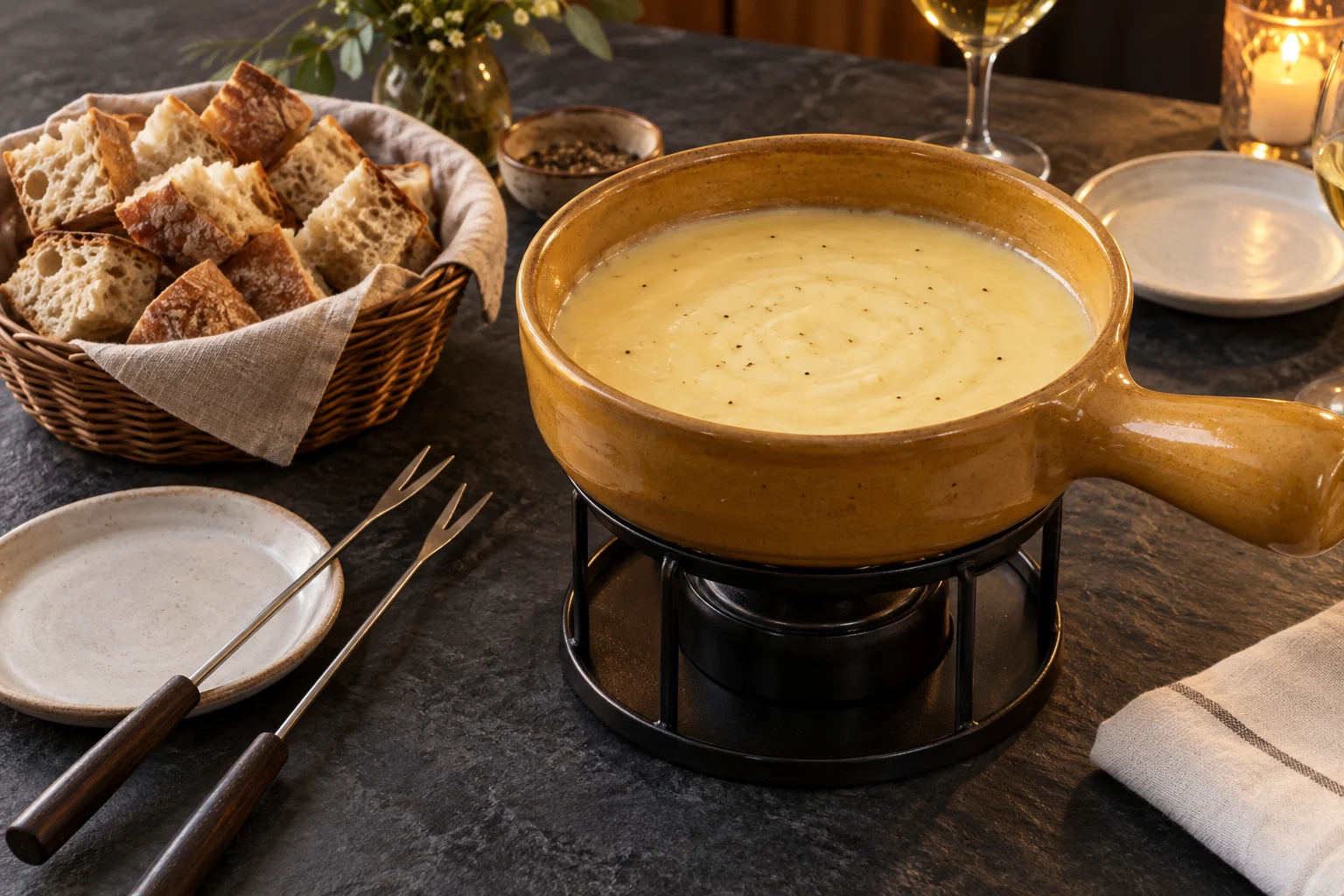
At the stove, then at the table
Three temperatures, one supper
A cheese fondue begins well before the burner reaches the table. First there is a board covered with grated cheese. Then there is a saucepan in which those shreds lose their edges and become a smooth mixture. Finally there is the shared pot, kept warm enough for dipping while everyone takes their time. Treat those as separate jobs and the meal becomes easier to organise.
For this Swiss blend, use Emmentaler alongside Gruyère. Switzerland Cheese Marketing publishes a fondue with those two cheeses; it is a sound starting point without suggesting that every Swiss fondue contains Emmentaler. Buy pieces you can grate yourself, remove the hard rind, and have the bread and table ready before the cheese reaches the stove.
Name the cheese mixture accurately
Two equal-cheese blends can share a method without being the same fondue.
Emmentaler and Gruyère
This article uses equal weights of these two cheeses. The combination appears in the Swiss cheese association recipe and in Küchengötter’s separate preparation. Keep both names on your shopping list rather than buying an unspecified bag of “Swiss cheese”.
Gruyère and Vacherin
Betty Bossi’s moitié-moitié uses Gruyère, or L’Etivaz, with Vacherin Fribourgeois. That is a different choice. Changing to Vacherin changes the mixture; it does not make an Emmentaler fondue more complete.
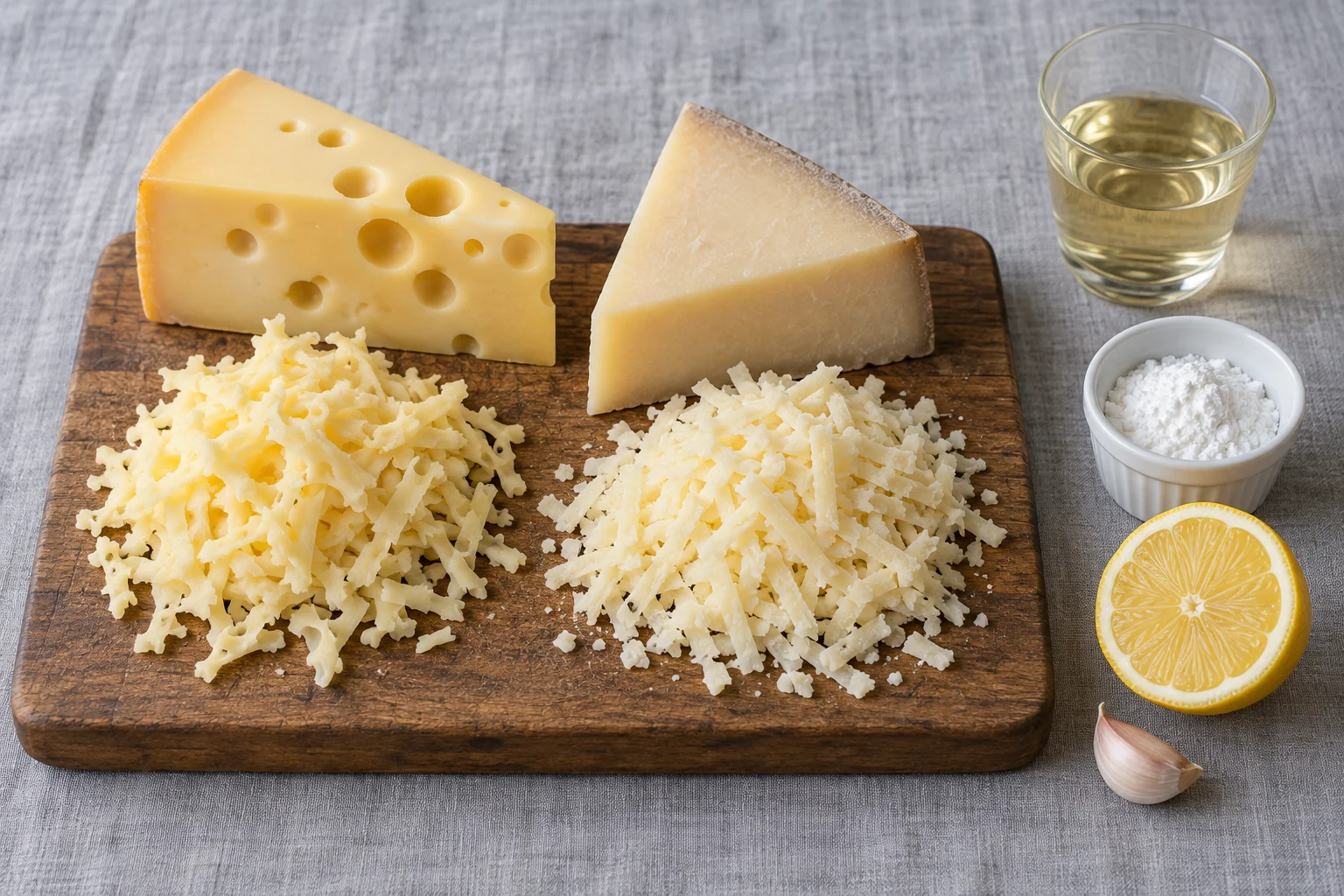
Give the starch a place to go
Mix corn starch through the grated cheese while the shreds are still dry. This spreads it more evenly than dropping a spoonful onto a finished pot. Swissmilk and Betty Bossi combine coated cheese with the liquid before heating; Küchengötter instead warms the wine and adds the cheese in portions. Both approaches keep the cook stirring as the cheese melts. The recipe below follows the second order, which makes the melting stages easy to watch.
The goal is a mixture that coats bread, with no unmelted lumps at the bottom. Keep your spoon travelling across the base and into the corners. A bubbling pot needs less heat once the shreds have melted; a smooth surface and an occasional small bubble are enough for serving.
Our adaptation for two
Emmentaler–Gruyère fondue
Have a stove-compatible fondue pot and a stable table warmer ready. If your serving pot cannot go on the hob, melt the cheese in a heavy saucepan and transfer it carefully.
Ingredients
For the pot
- 200 g Emmentaler, hard rind removed and coarsely grated
- 200 g Gruyère, hard rind removed and coarsely grated
- 8 g corn starch
- 180 ml dry white wine
- 1 tsp lemon juice
- 1 garlic clove, halved
- To taste black pepper and a small pinch of freshly grated nutmeg
For dipping
- 300 g crusty bread, cut into bite-size cubes, with some crust on each
Method
- 1
Prepare the table
Cut the bread and set out plates and fondue forks. Position the table warmer on a stable heat-safe surface. Rub the inside of your cooking pot with the cut garlic, then discard the clove.
- 2
Coat the shreds
Toss both grated cheeses with the corn starch in a bowl until the starch is distributed throughout.
- 3
Melt in stages
Warm the wine and lemon juice in the pot over medium-low heat until steaming. Add the cheese in four portions, stirring across the base after each addition. Let each portion mostly melt before adding the next; allow about 8–12 minutes altogether.
- 4
Finish the texture
Continue stirring until the mixture is smooth and just begins to bubble gently. Add pepper and nutmeg. Lower the heat as soon as the cheese is fully melted; do not keep it at a rolling boil.
- 5
Keep it gently warm
Move the compatible pot to its table warmer, or transfer into your serving pot. Use the lowest heat that keeps the fondue fluid. Dip a bread cube, sweep it through the cheese, and let the excess drip back before moving it to your plate.
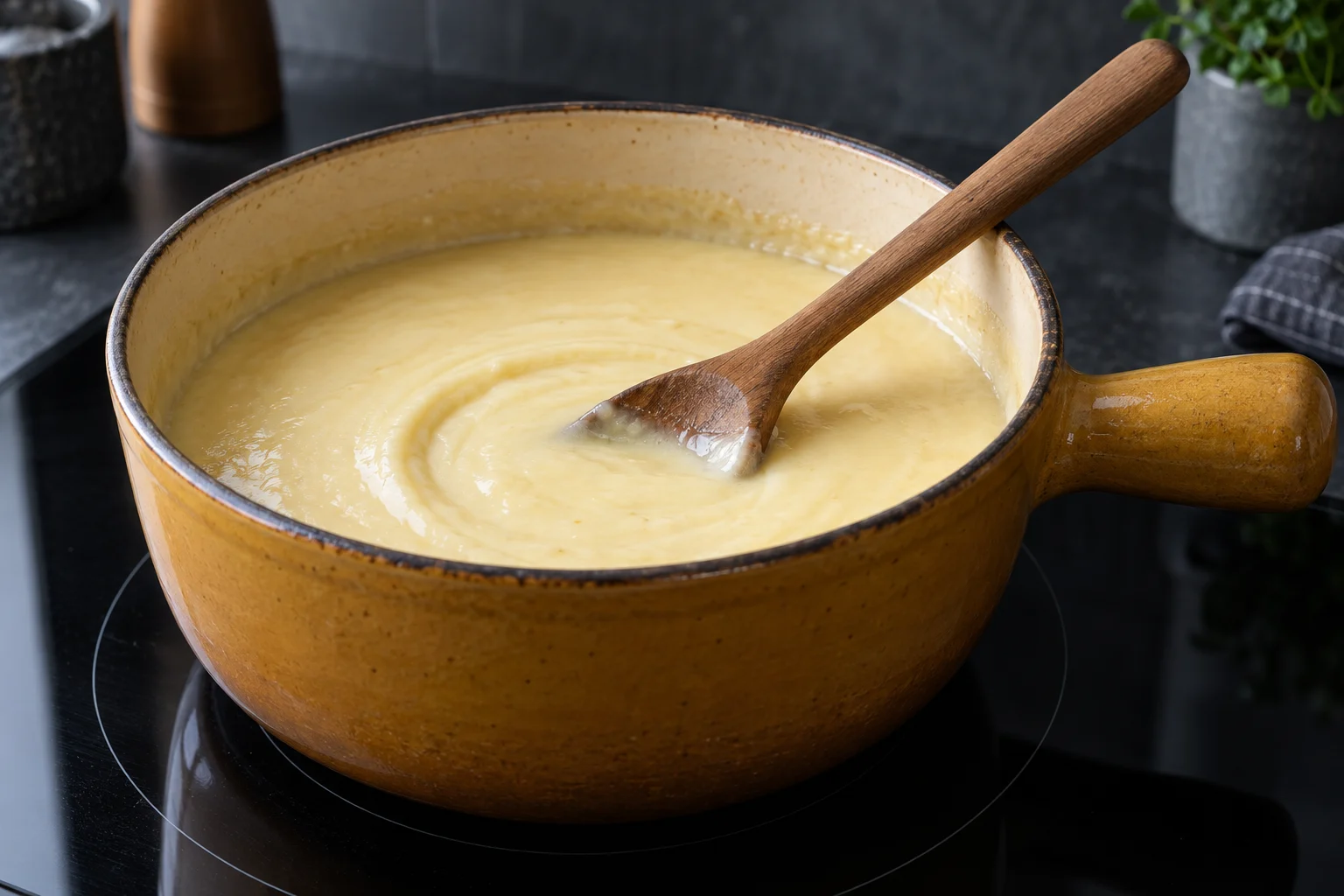
The burner maintains what the stove has made
The table burner is for holding a smooth fondue, so bring the cheese to the table already melted. A cold centre and a scorching base are poor substitutes for finishing the work on the hob. If the pot starts bubbling hard during supper, turn the warmer down and give the mixture a gentle stir.
Bread cubes with some crust hold together more comfortably on a fork than soft, crumbly pieces. Put a cube onto your plate after dipping so you can eat it without bringing a hot fondue fork to your mouth. Cooked potatoes are another option suggested by Betty Bossi. Serve a small green salad alongside if you want a fresh contrast, and keep the pot itself focused on cheese, wine and the gentle pace of dipping.
Research notes
Sources
Swiss and German culinary sources on the cheese blend, melting sequence and table service.
- Switzerland Cheese Marketing: Classic Swiss Fondue Documents a Gruyère–Emmentaler blend and very low heat at the table.
- Swissmilk: Fondue klassisch Grated cheese with corn starch, wine and lemon, plus guidance for an alcohol-free variant.
- Betty Bossi: Käsefondue Gruyère–Vacherin moitié-moitié, stirring until creamy, bread or cooked potatoes.
- Küchengötter: Käsefondue mit Emmentaler und Gruyere An independent Emmentaler–Gruyère preparation that adds coated cheese to warm wine.
Keep exploring
More stories for your table
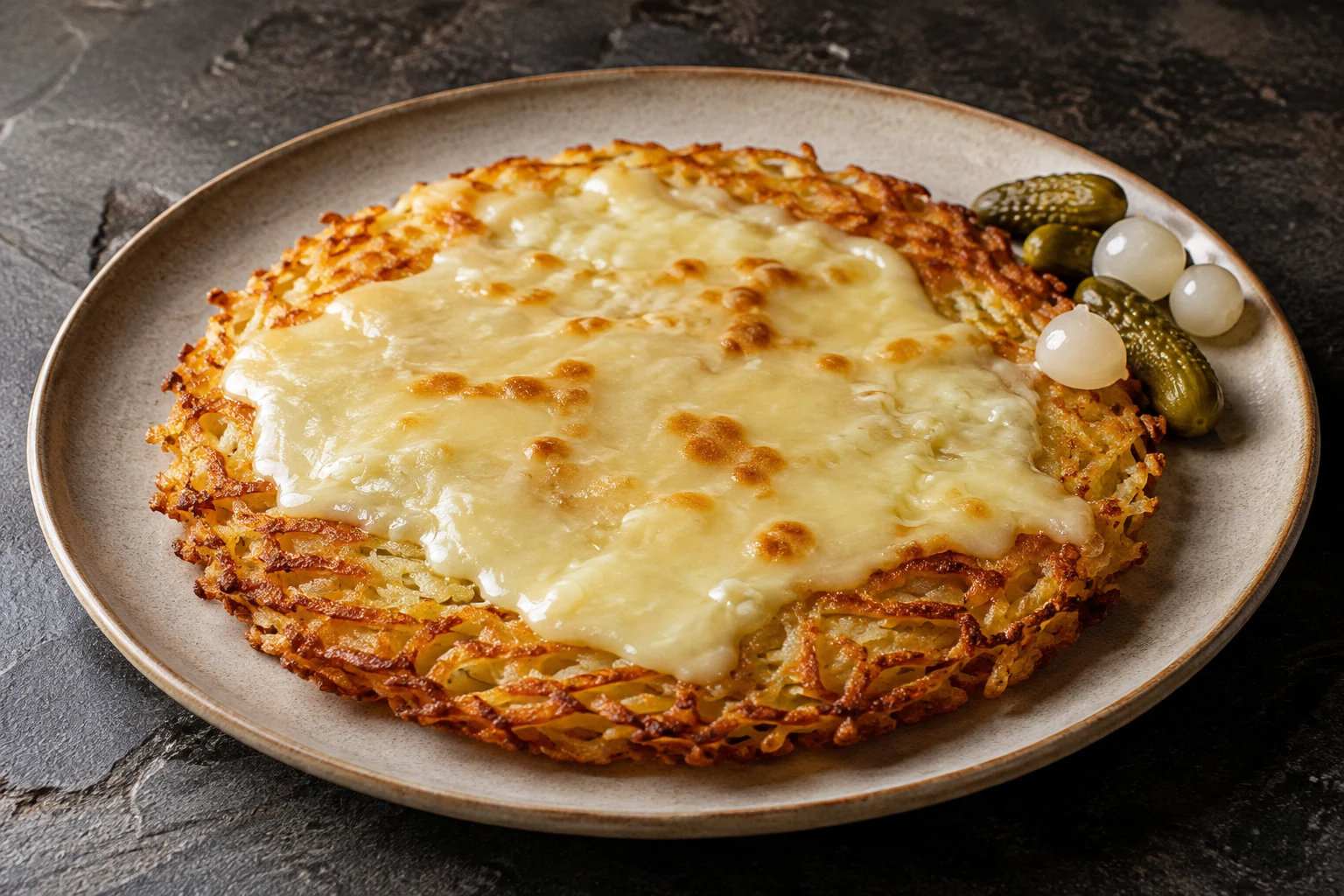
Swiss cuisine Potato dish
Rösti with Raclette Cheese
A crisp Swiss potato cake meets molten raclette in a cross-regional pairing that separates documented tradition from a practical home adaptation.
Swiss cuisine Grated potato cake
Bacon Rösti: Choose the Potato Before the Crust
Bacon adds savor to Swiss rösti, but the potato and the pan build its shape. Compare raw and cooked potatoes, regional additions and the technique behind a crisp connected cake.
British cuisine Roast poultry
Roast Duck: Three Checks Before Carving
A British-style roast duck dinner asks for rendered fat, crisp skin and properly cooked meat. Choose a complete roasting method before building the sides.