
Brasato al Merlot: The Sauce After the Roast
Brasato al Merlot
In Ticino’s Merlot braises, tender sliced beef shares the plate with a sauce that can be blended, textured, buttery or filled with mushrooms.
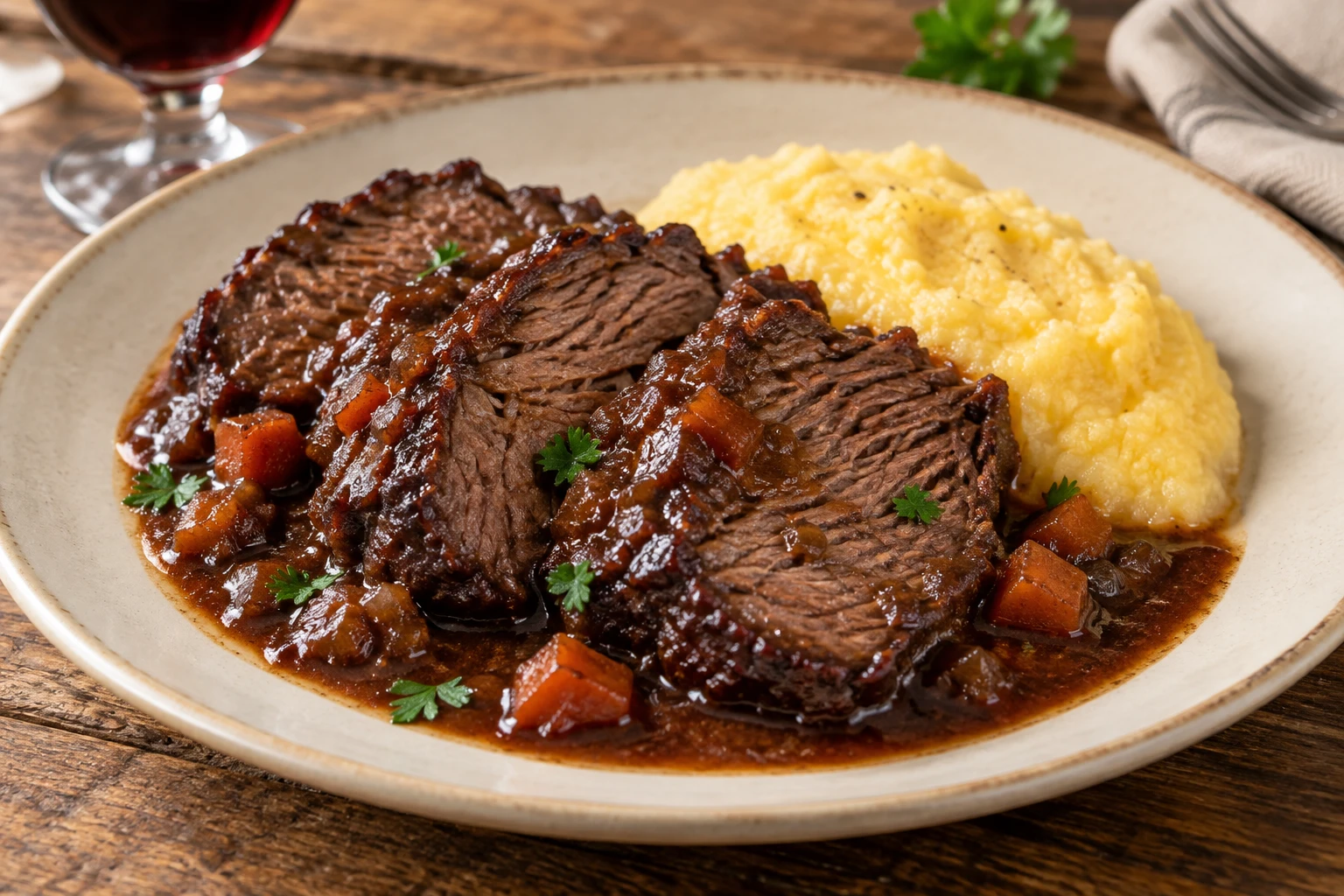
The roast is only half the plate
Brasato al Merlot puts red wine into a covered beef braise, then brings the meat to the table in slices with its sauce. Ticino Turismo’s regional preparation specifically calls for Merlot from Ticino. The name makes wine sound like the deciding ingredient, but the finished sauce tells a more detailed story.
Look around the meat. Does the gravy contain visible softened vegetables, or has the cook blended them into its body? Are mushrooms and dried tomatoes part of the last stage? Has butter given it a glossy finish? Four Swiss preparations offer different answers. Their distinctions are useful when choosing a recipe or understanding a plate of braised beef.
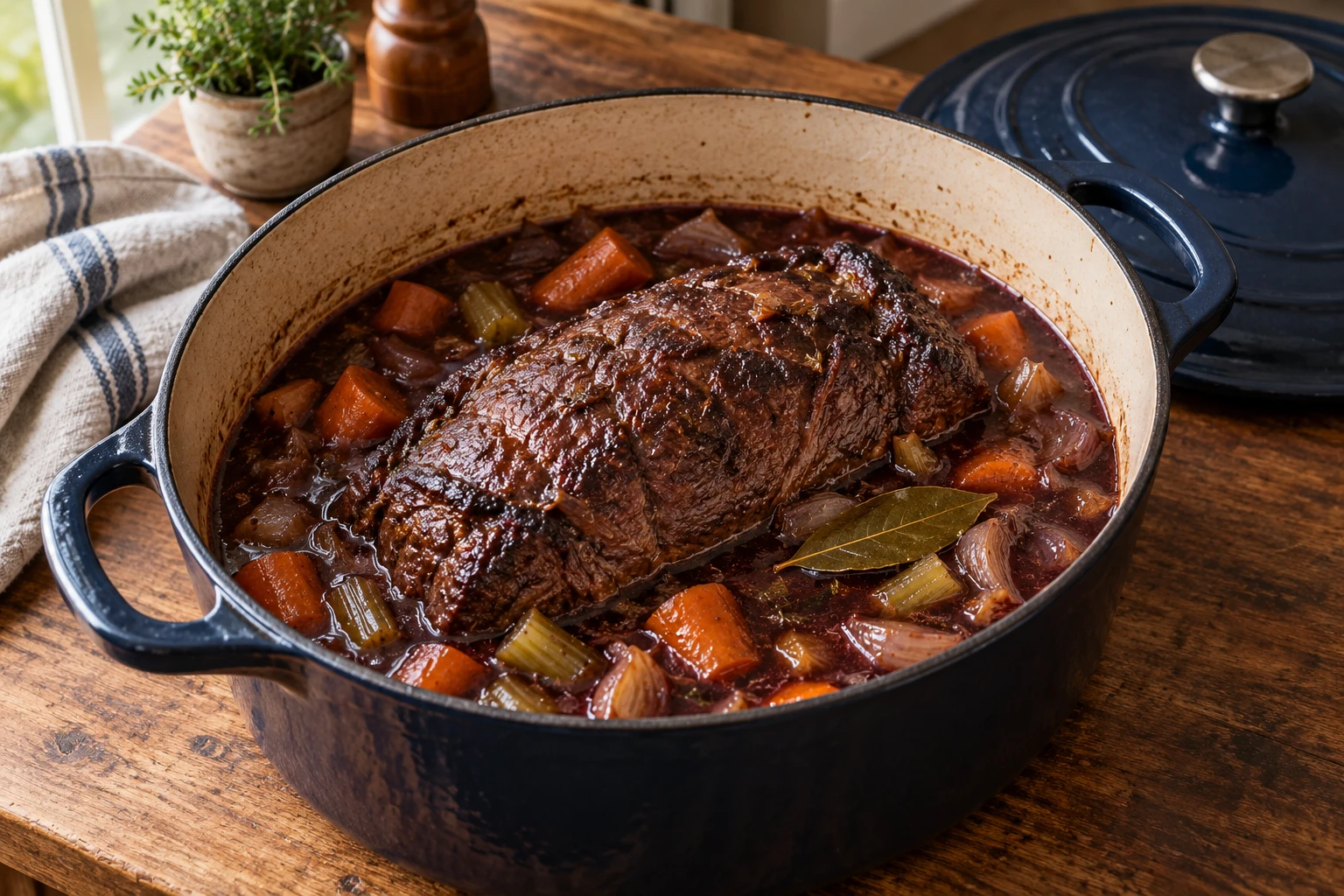
First let the cooking liquid do its work
Ticino Turismo’s version begins with an aletta cut and a wine-and-vegetable marinade kept in the refrigerator. The dried-off meat is browned, then the marinade joins it in the casserole. Covered cooking stays at a gentle simmer, with attention to the liquid level. Only once the beef is tender does the recipe remove it and the herb bundle, then roughly blend the vegetables into the sauce.
The sequence explains the vegetables’ two jobs. They share the braising pot while the meat cooks, then become part of what coats the slices. Removing the roast creates space to handle the sauce separately. A rough blend leaves a different impression from a perfectly smooth glaze, and both differ from simply serving all the vegetables intact.
Two cooks change the final texture
Additions remain distinct
In Margaretha Junker’s Migusto preparation, the shoulder roast leaves the sauce partway through cooking so the vegetables can be blended. Soaked porcini and dried tomatoes then enter the sauce, and the beef returns to finish cooking. The smooth vegetable base and the later additions have different roles.
Some vegetables stay visible
Foodwerk’s cooks remove part of the vegetables before blending, then return them afterward. They finish the sauce with cold butter and slice the cooked roast before warming it in the sauce. The result preserves pieces alongside a more unified gravy.
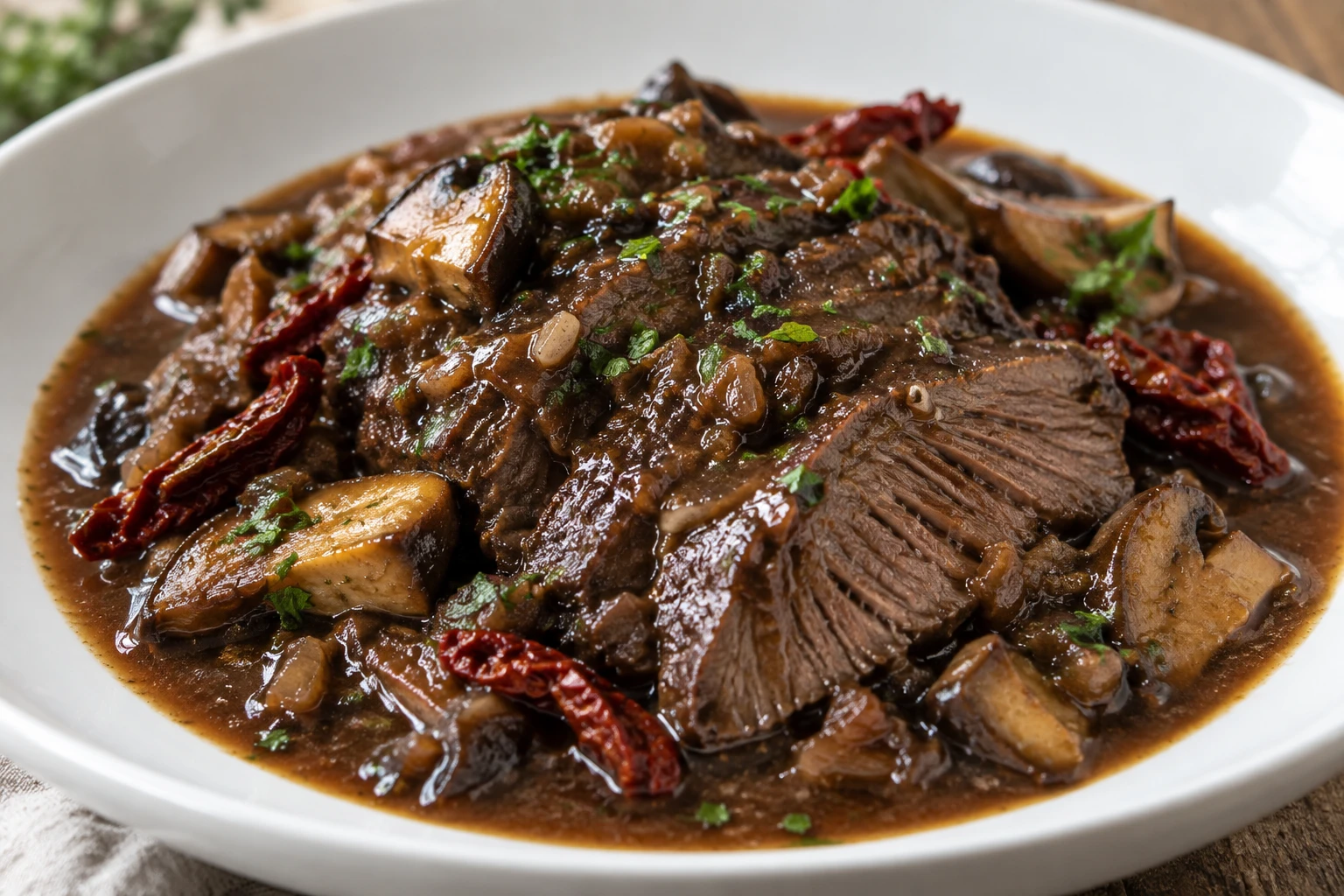
A tomato route does not need the same finish
The le menu preparation browns a whole beef roast, then builds its braising mixture from vegetables, wine, stock, chopped canned tomatoes and sage. It specifies low heat under a lid and turns the meat during cooking. At the end the roast rests briefly before carving and serving with the sauce; the published method does not call for blending or adding a final piece of butter.
This makes a useful comparison with the other versions. Wine is present, yet tomatoes and vegetables remain part of the dish’s structure. Merlot does not require every sauce to end as an uninterrupted dark glaze. Read the finishing method as carefully as the wine choice, especially if the visible texture is what attracts you to a particular recipe.
Give the sauce somewhere to go
Ticino Turismo pairs the dish with polenta, and Foodwerk also suggests it, alongside mashed potatoes or noodles as alternatives. A soft side lets the gravy mingle with another texture. On a plate with polenta, try a bite of the beef alone, then gather a little sauce and polenta together; the relationship between them becomes easier to notice.
When ordering or selecting a recipe, ask about the sauce as well as the roast. Celery appears in the aromatic vegetables, while some preparations use butter and prepared stock or roast sauce. Those details matter for ingredient preferences and allergies. Mushrooms, dried tomatoes and a buttery finish are documented choices here, each attached to a particular preparation rather than required in every Brasato al Merlot.
Research notes
Sources behind this article
- Ticino Turismo — Brasato di manzo al vino rosso Regional recipe uses Ticino Merlot, a refrigerated marinade, gentle covered cooking and a sauce made from the cooking vegetables.
- Migusto — Margaretha Junker’s Merlot braise Shoulder braise with vegetables blended into the sauce, followed by porcini and dried tomatoes added toward the end.
- le menu — Tessiner Brasato al Merlot A distinct covered roast preparation using Merlot, stock, chopped tomatoes, vegetables and sage, with the meat turned during cooking.
- Foodwerk — Brasato al Merlot The Swiss cooks’ original recipe separates some vegetables before blending and finishes the sauce with cold butter; the accompanying travel feature discloses a tourism press trip.
Keep exploring
More stories for your table
Swiss cuisine Fruit fritters
Apfelküchlein: The Apple Inside the Batter
Swiss apple-ring fritters depend on the fruit, a light coating and a warm finish. Compare the preparations before choosing a sweet or savoury plate.
Swiss cuisine Grated potato cake
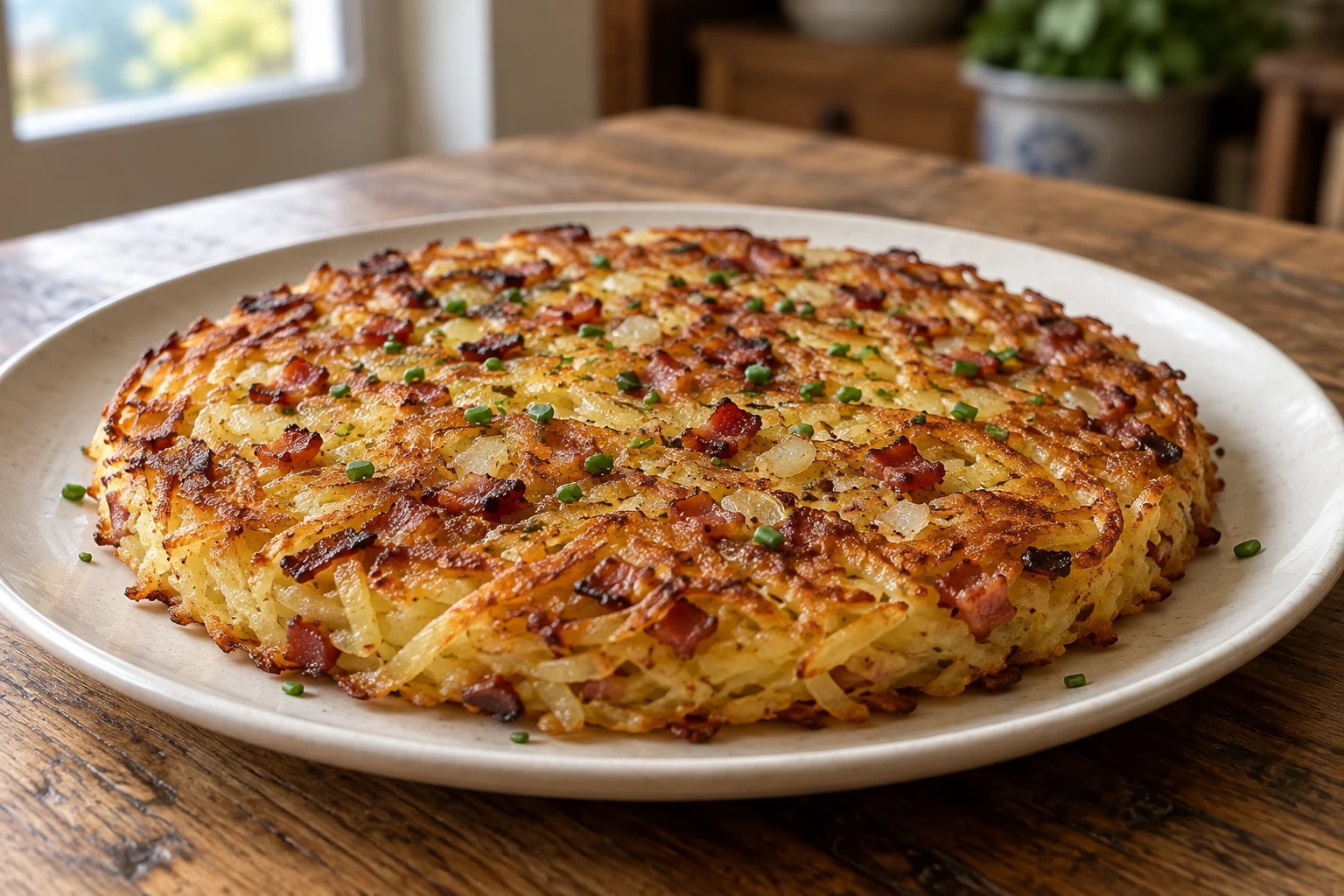
Bacon Rösti: Choose the Potato Before the Crust
Bacon adds savor to Swiss rösti, but the potato and the pan build its shape. Compare raw and cooked potatoes, regional additions and the technique behind a crisp connected cake.
Afghan cuisine Meat stews
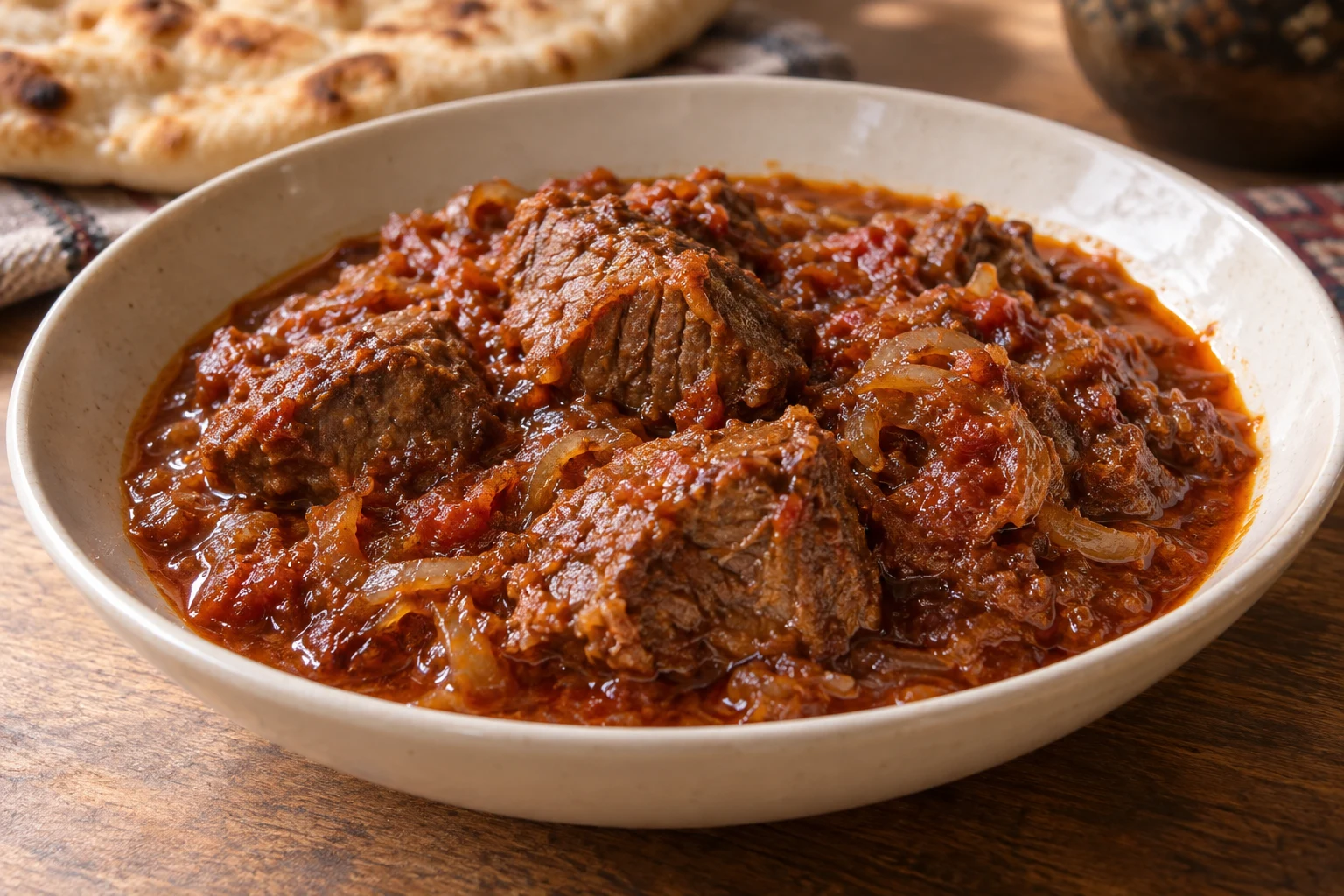
Afghan Meat Qorma: An Onion Base, Many Home Versions
Afghan meat qorma has several home forms, from tomato-and-onion braises to potato or chickpea versions. Choose a method around the cut and the cooking vessel.