
Apfelküchlein: The Apple Inside the Batter
Öpfelchüechli
Swiss apple-ring fritters depend on the fruit, a light coating and a warm finish. Compare the preparations before choosing a sweet or savoury plate.
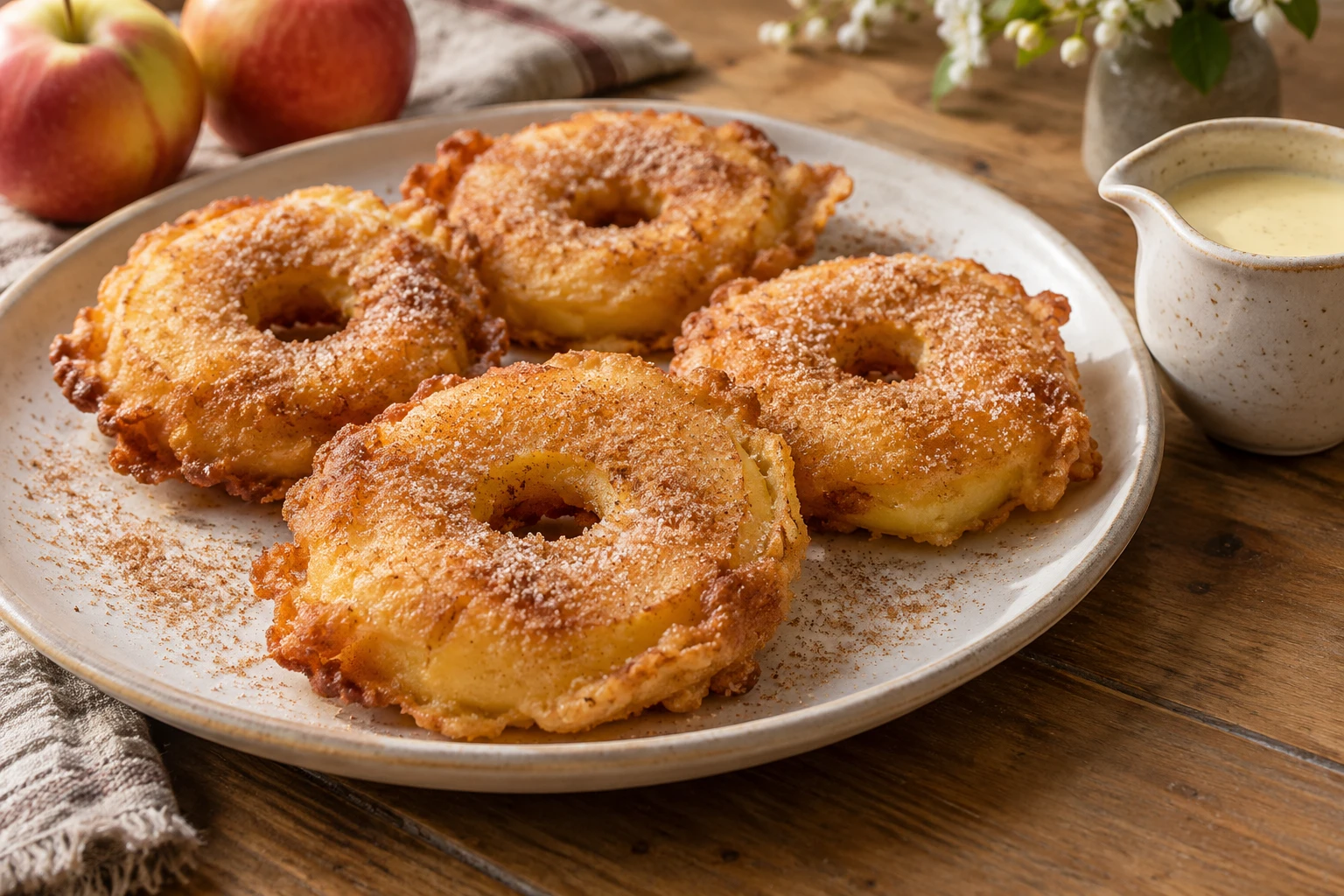
A ring of fruit, a coat of batter
Slice into an Apfelküchlein and the apple should be immediately apparent: a substantial ring of cooked fruit inside a golden coating. Cinnamon sugar clings to the outside; vanilla sauce can wait beside it. Migusto also calls these Swiss fritters Öpfelchüechli, and its recipe starts with tart apples rather than a dough filled with chopped fruit.
The ring is a useful way to understand the dish. Coring creates the opening; cutting sets the thickness of the fruit; batter follows that shape. Comparing Swiss recipes reveals several choices at each stage. Their shared outline is clearer than any claim that one apple, one liquid or one finishing sauce is compulsory.
Two ways to prepare the surface
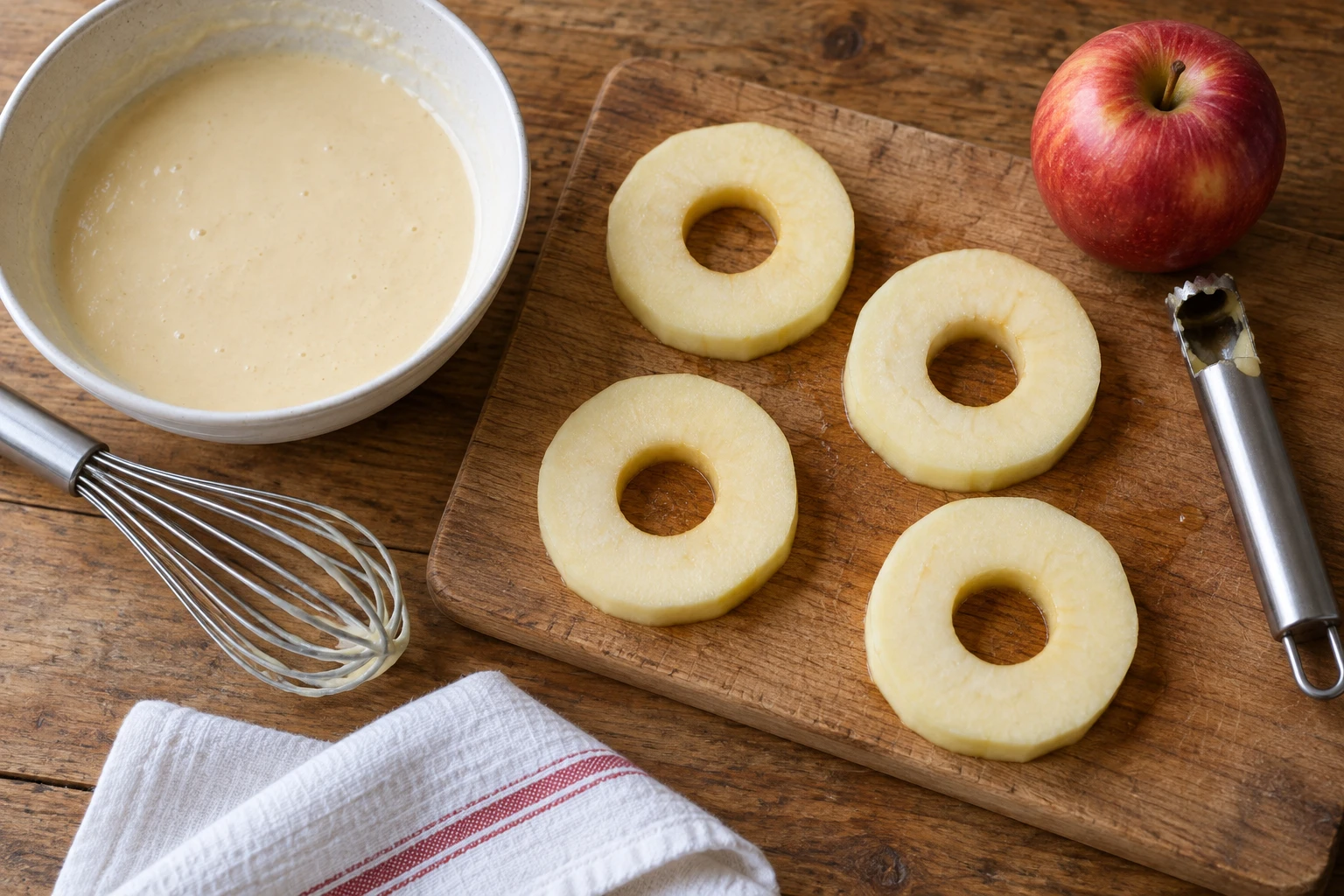
Lemon juice appears in both preparations, but the last step before batter differs.
Dry, then dip
Swissmilk cuts peeled apples into rings about 1 cm thick, adds lemon juice and sugar, then pats each batch dry before dipping. Betty Bossi also dries its marinated rings. Read that instruction as part of coating the fruit, not an optional pause after preparation.
Flour, then batter
Sonja Leissing’s Migusto version uses peeled slices about 1.5 cm thick, sprinkled with lemon juice. It dusts them with flour before coating. That extra dry layer belongs to this method; it does not mean every apple-fritter recipe requires a flour dredge.
Let the base rest; add the whites later
Swissmilk, Migusto and Betty Bossi all separate their eggs. The yolks go into the batter base, which rests before the beaten whites are folded in. That sequence makes the preparation easier to organise: the resting batter can wait while the apples are cut, but the final folding happens nearer to frying.
Apple juice is one liquid in these recipes. Swissmilk also offers water, while Betty Bossi uses Süssmost and includes vanilla sugar in its batter. Its apples additionally sit in a lemon, sugar and Calvados mixture. These are recipe choices with distinct flavours. Keep the selected formula together instead of casually combining its liquid, egg and flour amounts with another version.
Organise the frying in batches
These are preparation cues for the cited methods; the slice thickness and batter still determine the recipe’s timing.
- 01
Prepare the finish
Mix cinnamon and sugar and have a draining plate ready before the rings enter the oil. Betty Bossi prepares both while completing its batter.
- 02
Let excess batter fall
Dip each ring and let it drain briefly. Swissmilk explicitly includes this step after drying the apples; a heavy pool of batter need not travel into the pan with the fruit.
- 03
Use the chosen recipe’s heat
Swissmilk and Migusto specify 170°C; Betty Bossi specifies about 175°C. Fry in portions, turning as directed, rather than treating a crowded pan and a single ring as equivalent.
- 04
Finish while warm
Drain the cooked rings, then add the cinnamon sugar. Migusto calls for immediate service; Swissmilk pairs its warm fritters with lukewarm vanilla sauce.
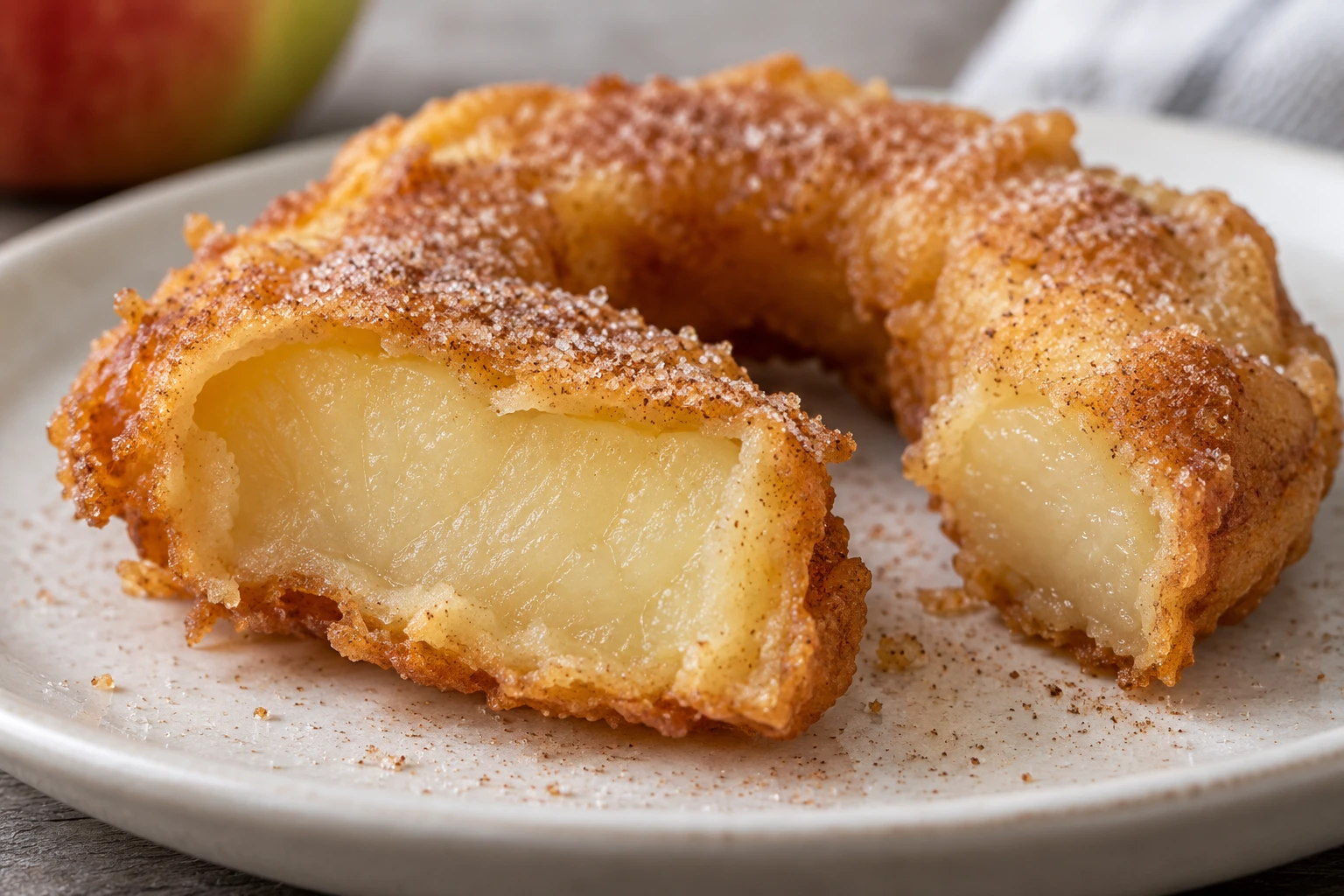
The finish can change the dish
A cinnamon-sugar plate is only one setting for the apple ring. Schweizer Fleisch publishes a savoury preparation alongside lamb roulade: unpeeled, cored apple slices go through flour and a rested beer batter with folded egg whites. After frying, they carry horseradish cream instead of a sweet coating.
This is a specific restaurant-style variation, not evidence that every Swiss household serves the fritters with meat. It shows how much the accompaniment matters. When reading a menu or choosing a recipe, look beyond the word Apfelküchlein to the sauce, seasoning and plate around it. The fruit-and-batter structure can remain recognisable while its role at the table changes.
Research notes
Sources and recipe variations
These four independently published preparations support the comparison. Temperatures and slice sizes are attributed to their individual methods.
- Swissmilk: Apfelküchlein mit Vanillesauce Apple rings, rested batter, whites added near frying, drying, frying and warm sauce.
- Migusto: Sonja Leissing’s Apfelküchlein Swiss name, tart apples, flour before batter, thicker slices and immediate service.
- Betty Bossi: Apfelküchlein Apple-juice batter, lemon and Calvados variation, drying and cinnamon-sugar finish.
- Schweizer Fleisch: Lammroulade mit Apfelküchlein A savoury example with unpeeled rings, beer batter and horseradish cream.
Keep exploring
More stories for your table
Swiss cuisine Grated potato cake
Bacon Rösti: Choose the Potato Before the Crust
Bacon adds savor to Swiss rösti, but the potato and the pan build its shape. Compare raw and cooked potatoes, regional additions and the technique behind a crisp connected cake.
Spanish cuisine Sweet fritters
Buñuelos de Viento: How Spain’s Airy Fritters Rise
Why buñuelos de viento puff, when to serve them plain or filled, and how to make a small batch of Spain’s airy lemon fritters at home.
Russian cuisine Apple sponge cake
Sharlotka: apples held in a light egg sponge
Sharlotka brings apples and whipped-egg sponge together. Compare fruit placement, batter cues and a sour-cream variation before choosing a recipe.