
Seeni Sambol: Give the Onions Room to Soften
Seeni sambol
Thin onion strands soften into a concentrated relish. Sweetness, tamarind and chili find their balance after the pan has done its work.
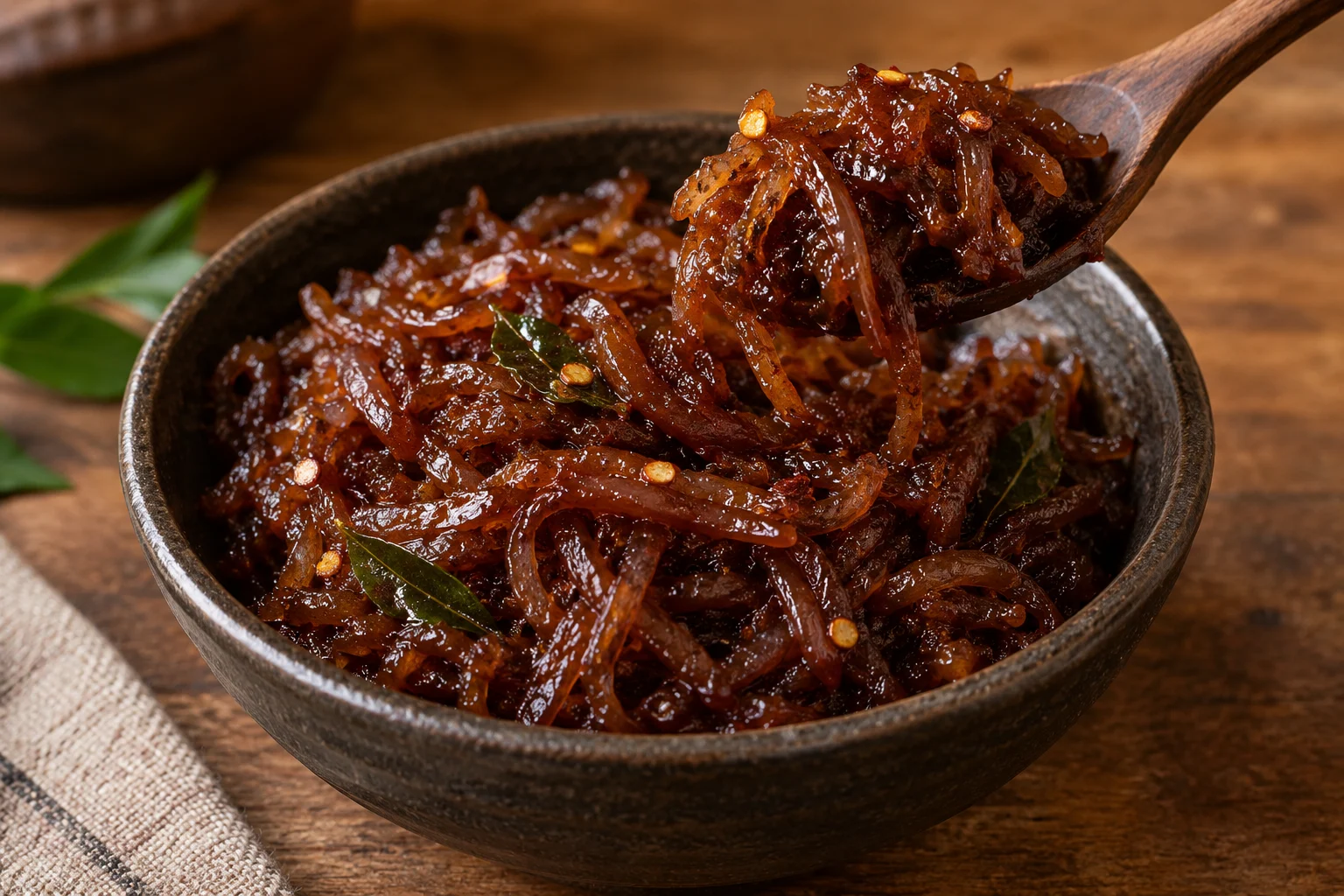
A spoonful of soft onion strands
Seeni sambol is a Sri Lankan cooked onion relish with sweetness, tang and chili heat. Its texture remains visibly onion: soft strands gathered into a glossy spoonful. Roshani Wickramasinghe of Hungry Lankan calls attention to that jammy consistency, and Daniel Edwards’s bun recipe for SBS also asks for a thick filling.
That gives the cooking a useful target. The finished sambol should hold together without a pool of loose liquid around it. A pan of onions that has softened but still sits in watery juices needs more attention before the final sweet-and-sour adjustment.
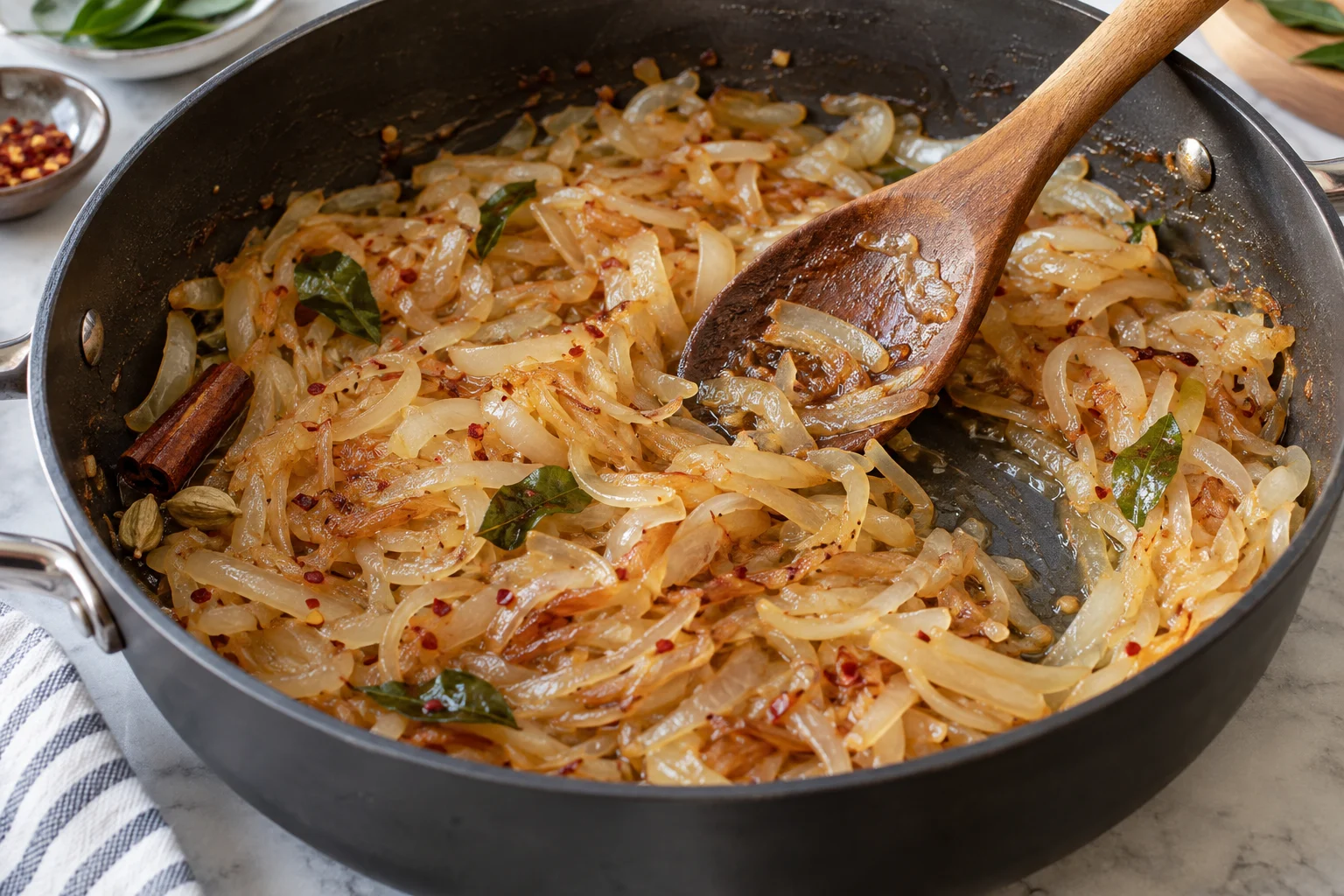
Give the moisture somewhere to go
Wickramasinghe recommends a wide sauté pan or wok when cooking a large quantity of onions. The slices release moisture as they cook, and a crowded, deep pile makes the changing texture harder to judge. For the smaller batch below, use a broad heavy pan that lets you turn the onions and reach its bottom easily.
Watch the whole pan while stirring. A dark patch catching underneath pale, wet onions is a signal to adjust the heat and redistribute them. The goal is an evenly softened mixture with controlled browning, rather than a few scorched strands supplying all the color.
Editorial home version
Small-batch seeni sambol
Makes four to six condiment portions. This home synthesis uses tamarind and a late sugar adjustment, with a restrained whole-spice mixture. Allow 15 minutes to prepare and about 50 minutes to cook, using the texture as the final guide. It has not been kitchen-tested.
Ingredients
Onions and aromatics
- 500 g brown or yellow onions, peeled and thinly sliced lengthwise
- 30 ml coconut oil or neutral cooking oil
- 1 small piece, about 3 cm cinnamon stick
- 2 cardamom pods, lightly cracked
- 6 curry leaves, washed and thoroughly dried
- 1 teaspoon chili flakes, or less for a milder relish
- 1/2 teaspoon chili powder, optional
- 1/2 teaspoon salt, then adjust to taste
Balance and optional fish
- 10 g seedless tamarind pulp
- 30 ml warm water for soaking the tamarind
- 10–20 g sugar, added gradually to taste
- 1 tablespoon finely crushed Maldive fish, optional
Method
- 1
Prepare the tamarind
Soak the tamarind in the warm water while slicing the onions. Squeeze or mash it into a thick extract, then strain out any seeds or tough fibers. Set the extract aside; this version uses pulp rather than a concentrated bottled paste.
- 2
Start the aromatics and onions
Warm the oil in a broad heavy pan over medium-low heat. Add cinnamon and cardamom briefly, then the dried curry leaves, keeping clear of any spluttering. Add the onions, chili flakes and optional chili powder. Turn thoroughly to coat, then cook gently, stirring along the bottom until the slices wilt.
- 3
Reduce to soft strands
Add the salt and optional crushed fish. Continue cooking, stirring regularly, until the onions have softened and loose liquid has largely evaporated, about 25–35 minutes from the start. Lower the heat if they catch. Stir in the tamarind extract and cook uncovered until the mixture becomes thick and glossy.
- 4
Balance and finish
Add 10 g sugar and taste a cooled spoonful. Add more of the measured sugar if the tamarind needs balancing, and adjust salt or chili to your preference. Cook a few minutes more until a spoonful holds together without watery liquid pooling around it. Remove the cinnamon and cardamom before serving. The full pan may take about 45–60 minutes, depending on onions and heat.
Other cooks choose another sequence
Rocy at Top Sri Lankan Recipe first cooks salted onion under a lid, then adds oil and later the tamarind, sugar and chili. Edwards’s SBS method combines its initial onion seasonings from the start, cooks gently under a lid and finishes with lemon and coconut milk. Sharmini Jayawardena’s family method also uses tamarind, whole or ground spices, and a final sugar adjustment. These are specific complete approaches, rather than one mandatory order.
The recipe here chooses a tamarind finish and adds sugar late so you can judge the cooked onions’ balance. Keep that route coherent. Maldive fish is another choice: the sources describe it as optional, while Wickramasinghe leaves it out of her version. Make the fish decision before serving someone who expects a plant-based relish.
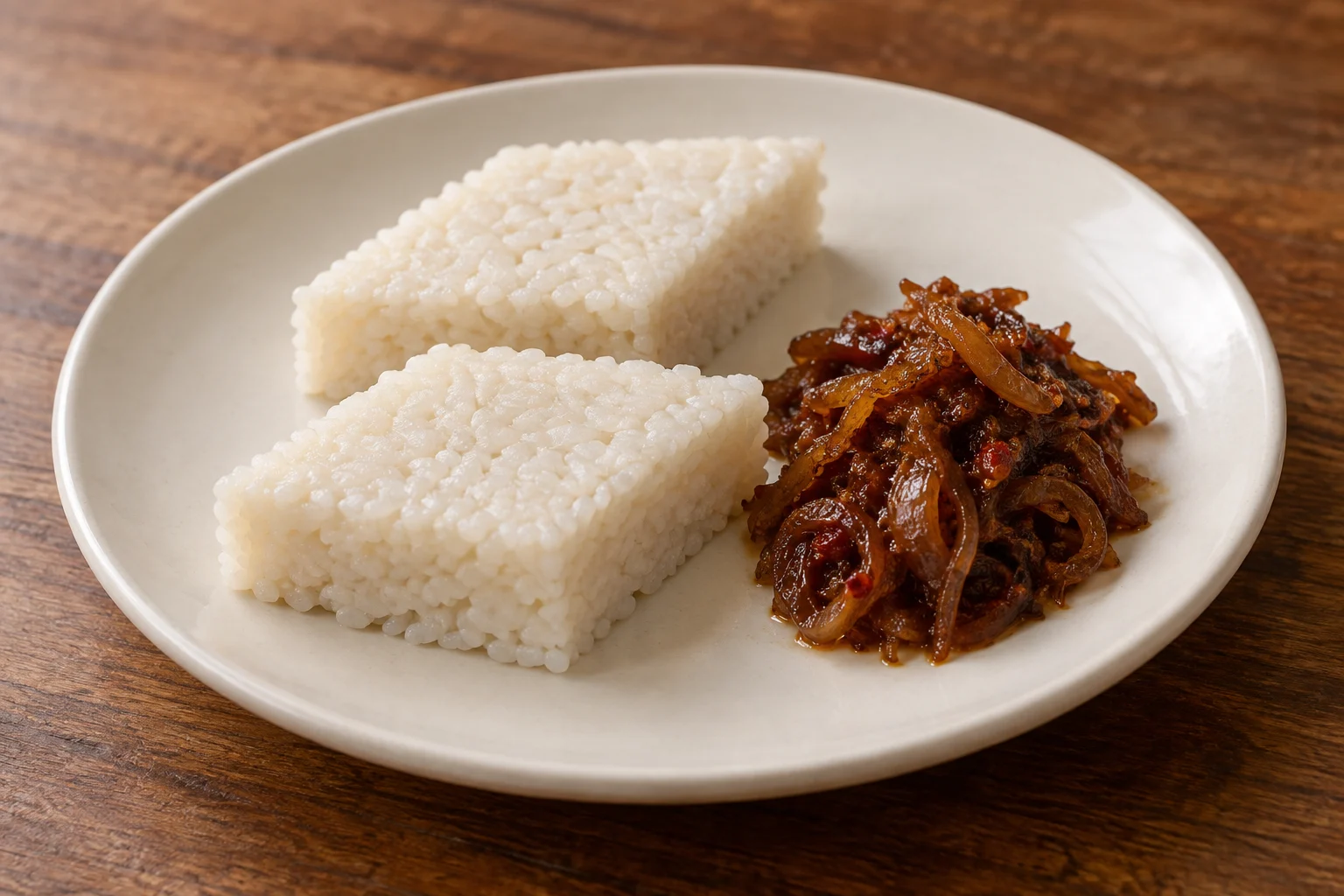
Begin beside the rice or bread
Pavithra Wickramage’s contribution to Flinders University’s Our Food, Our Story cookbook pairs seeni sambol with kiribath, coconut-milk rice, and recalls sharing that home food at an Australian gathering. Rocy also offers bread, kiribath and string hoppers as serving combinations.
Begin with a small spoonful beside the starch, then taste them together. The soft rice or bread gives the concentrated onion relish a partner. For a filling, let the sambol cool before using it in dough, as Edwards’s bun method specifies; its thick consistency should remain part of the preparation.
Research notes
Sources and household choices
Five independent original contributions were opened and read. The home recipe is an editorial synthesis, not a universal Sri Lankan formula. All images are generated illustrations.
- Hungry Lankan — Roshani Wickramasinghe’s seeni sambol Cook’s own recipe supports broad-pan cooking, a jammy onion endpoint, tamarind balance, later sugar adjustment and a fish-free version.
- SBS Food — Daniel Edwards’s seeni sambol buns Original contributor recipe uses a different covered cooking sequence and asks for a thick filling cooled before entering the dough.
- Top Sri Lankan Recipe — Rocy’s seeni sambol Cook’s own photographed recipe starts with salted onion before oil and finishes with tamarind, sugar and chili; fish is optional.
- Leaf Blogazine — Sharmini Jayawardena’s family seeni sambol Home cook’s photographed family method uses fine onion strips, tamarind, whole or ground aromatics and sugar adjusted after cooking.
- Flinders University — Our Food, Our Story, page 44 Pavithra Wickramage’s firsthand contribution pairs seeni sambol with kiribath and describes sharing the meal at an Australian gathering.
Keep exploring
More stories for your table
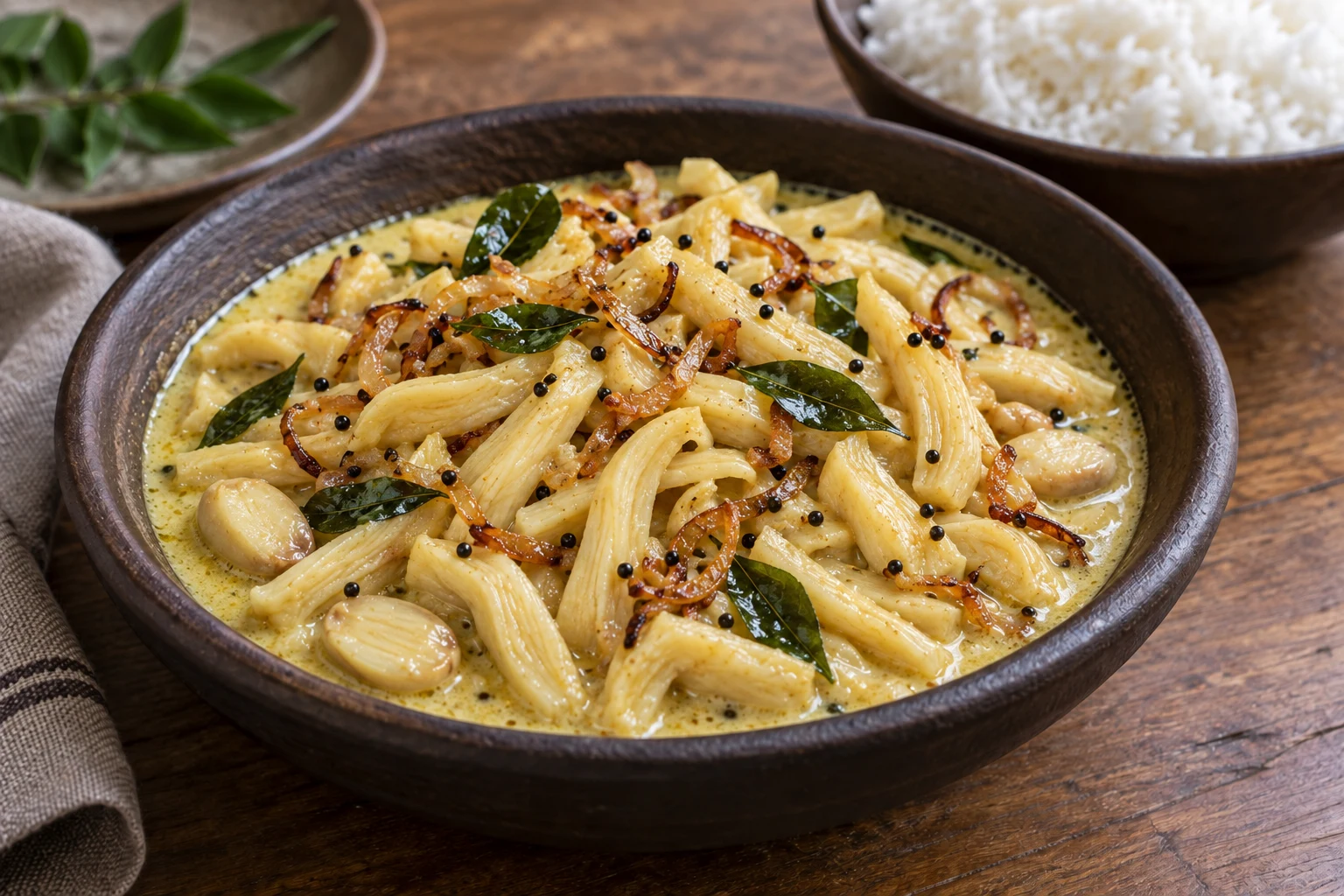
Sri Lankan cuisine Coconut curries
Kiri Kos: Choose the Jackfruit Before the Spice
Sri Lankan kiri kos uses mature, unripe jackfruit bulbs and seeds in coconut milk. Compare it with young polos, then follow the milk and tempering stages.
Indonesian cuisine Balinese sliced sambal
Sambal Matah: Let the Knife Do the Work
Balinese sambal matah keeps its shallots, lemongrass and citrus leaves distinct. A complete home recipe explains fine slicing, hot oil and serving portions.
Bangladeshi cuisine Dried-fish side
Shutki Bhaji: Let the Fish Season the Vegetables
Bangladeshi shutki bhaji can bring dried fish together with potatoes, flat beans or greens. Choose the fish and control the water before finishing the pan.