
Kiri Kos: Choose the Jackfruit Before the Spice
කිරි කොස්
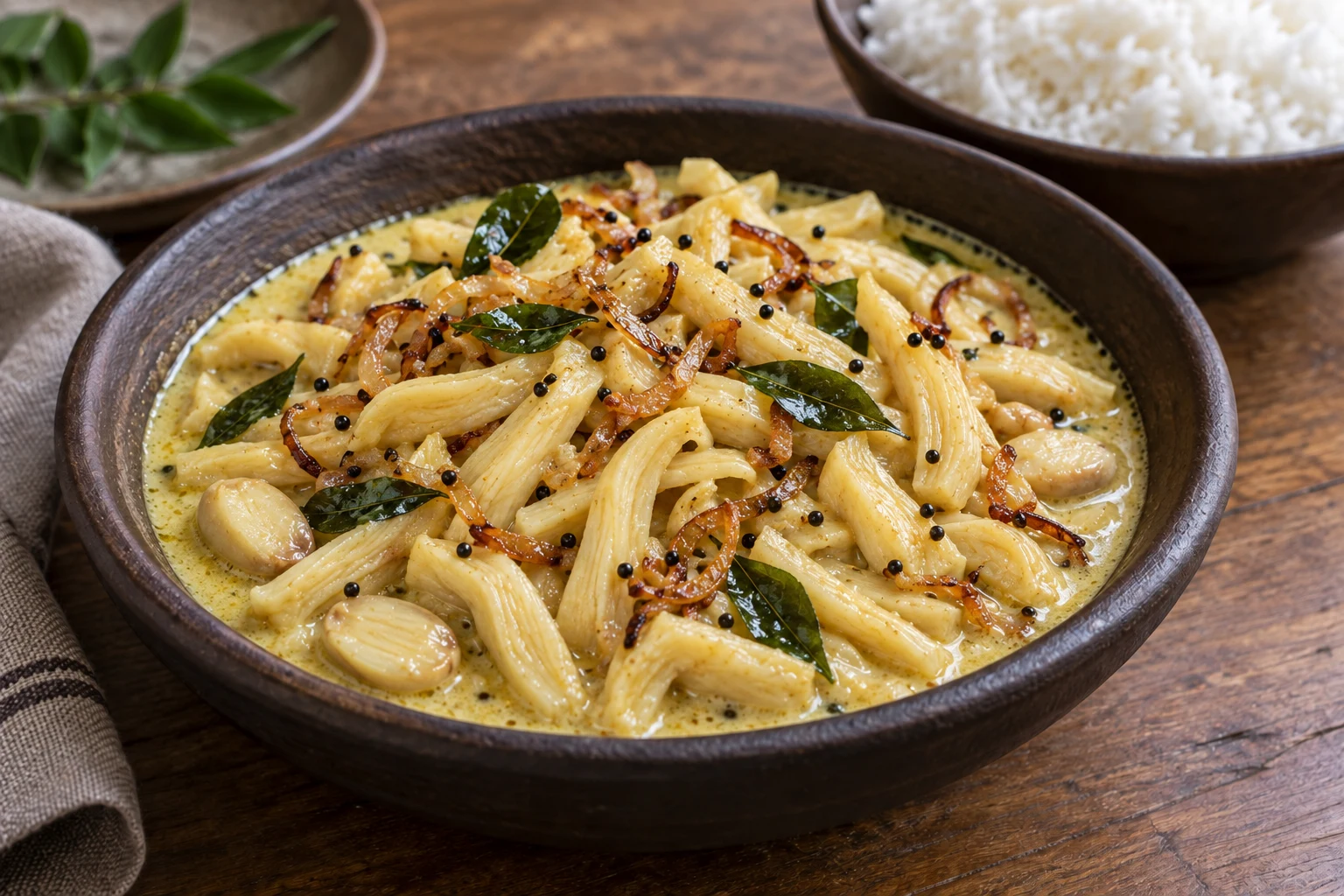
Sri Lankan kiri kos uses mature, unripe jackfruit bulbs and seeds in coconut milk. Compare it with young polos, then follow the milk and tempering stages.
The shopping decision comes first
Jackfruit can become several very different meals before it reaches the table. For Sri Lankan kiri kos, the useful starting point is a mature fruit that is still unripe: its pale fleshy bulbs and formed seeds are cooked in coconut milk. A can marked young jackfruit and a box of sweet ripe bulbs describe other stages, even though all three carry the same fruit name.
Roshani Wickramasinghe of Hungry Lankan makes the distinction explicit. She uses very young fruit for polos curry, then describes kiri kos as a preparation for fully developed fruit before it ripens. Her own linked recipe is a long-cooked polos curry; it provides a helpful comparison rather than the instructions for this creamy bulb-based dish.
Three stages, three kitchen choices
Young polos
Very young jackfruit is used for a different curry, often with pieces cut from the young fruit. Hungry Lankan’s slow-cooked version produces tender pieces and a concentrated gravy.
Mature but unripe kos
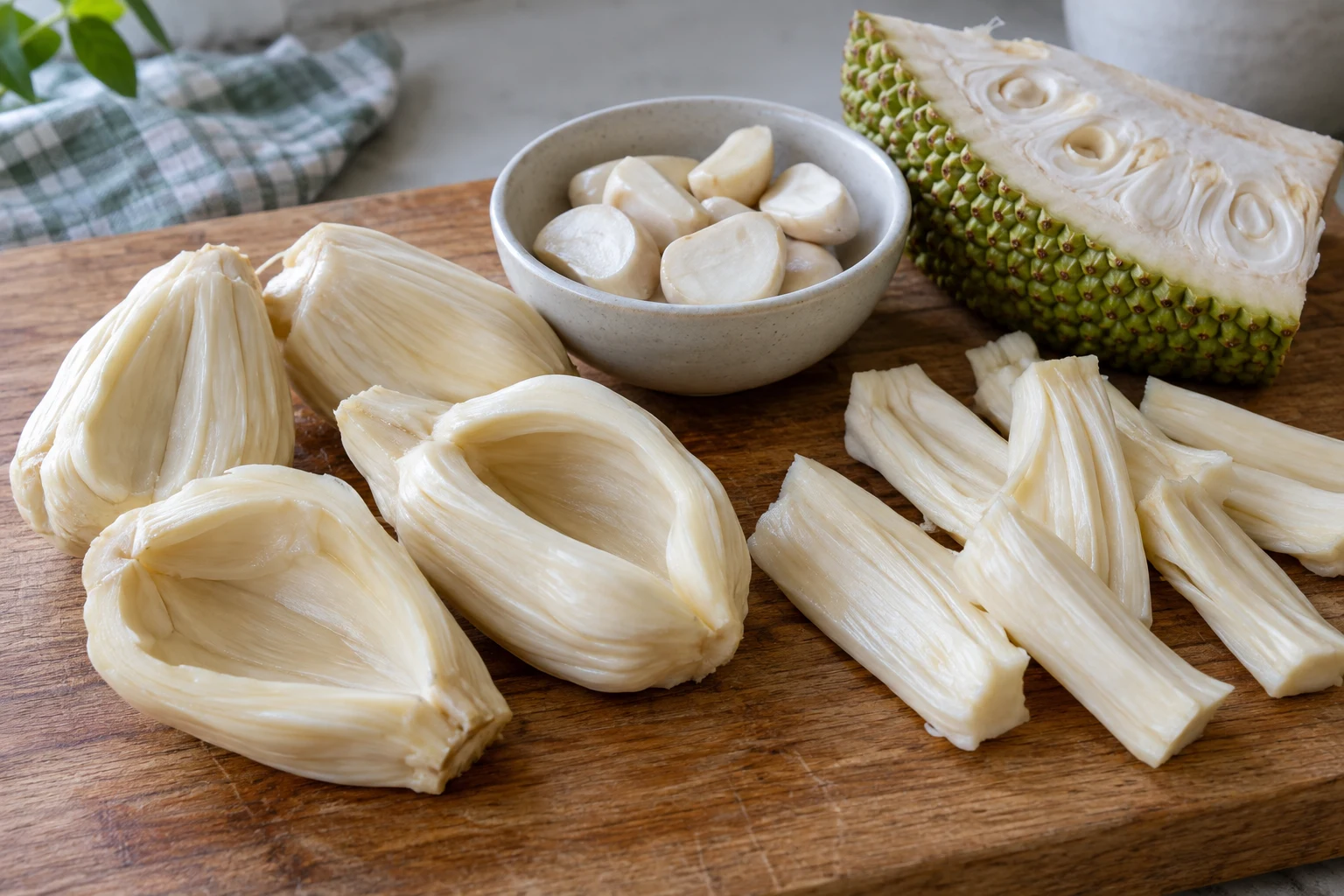
Developed bulbs are separated, the seeds prepared, and the flesh sliced for kiri kos. This is the stage to specify when buying fresh fruit for the linked recipes.
Ripe fruit
The bulbs become fragrant and sweet as they ripen. They are eaten as fruit; they are a different ingredient from the raw bulbs in this curry.
Make the bulbs and seeds ready
Island Smile’s preparation guide pulls the bulbs from the fruit, removes the surrounding stringy material and separates their seeds. Its seed instructions crack and remove the hard outer covering before including prepared seeds with the sliced flesh. The work matters: a whole unprepared seed and a cleaned piece of bulb do not begin cooking in the same condition.
Fresh jackfruit also releases sticky sap. The guide addresses the blade first and cautions against oiling the hands at the initial cutting stage. For a first attempt, buying already separated mature, unripe bulbs reduces this preparation work. Ask which stage is being sold, and check whether any included seeds still need their outer covering removed.
Cook the fruit before enriching the gravy
Amila Gamage Wickramarachchi’s Food Corner recipe begins the curry in thin coconut milk, with aromatics and spices. Once the fruit has cooked, she adds thick coconut milk, lowers the heat and incorporates ground mustard paste. The staged liquid additions give the fruit a cooking phase before the richer finish.
Island Smile also cooks in thin coconut milk before adding thick milk and reducing the heat. Its account checks how the fruit has softened and how the gravy has reduced. Keep the quantities and cut size of a complete recipe together: the desired texture is a better explanation of the sequence than treating every jackfruit product as needing one fixed cooking time.
The last pan has its own purpose
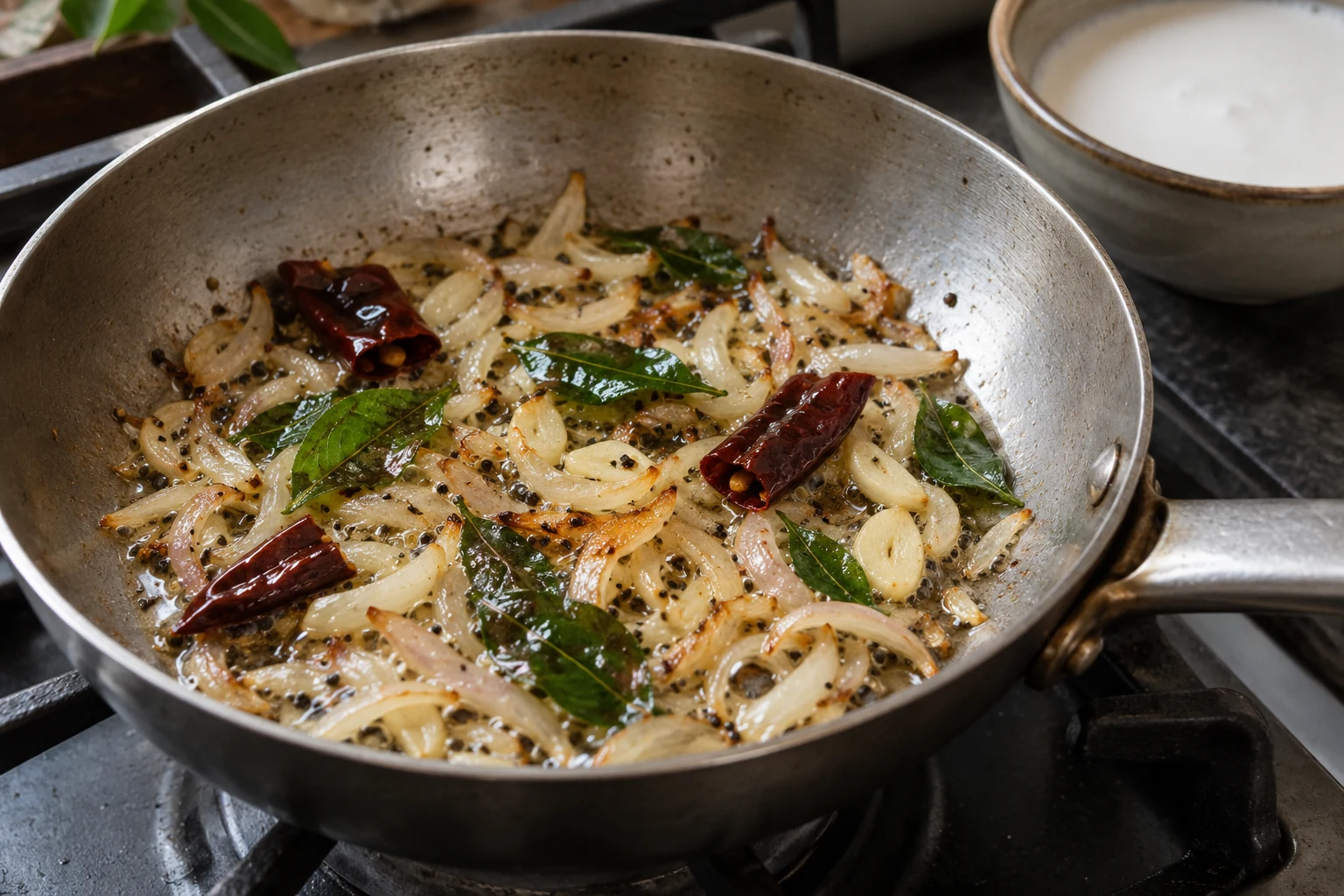
Pulse’s Cooking with Aunty D finishes its kiri kos with a separate mixture of fried onion, garlic, mustard, curry leaves and chilli. That pan supplies a different set of textures and aromas from ingredients that have simmered in the coconut gravy.
Food Corner’s finish uses a separately fried onion, curry-leaf and dried-chilli seasoning, alongside mustard paste in the gravy. These are related approaches with distinct ingredient lists. Choose one linked recipe and follow its finish; combining every mustard addition and chilli allowance from several versions would change the balance.
Island Smile prepares its tempering first and holds it aside for the end. That is a useful way to organize the cooking even though the tempering appears last in the bowl. The creamy curry and the fried mixture have separate stages before being gently combined.
Give the curry a place beside rice
Both Food Corner and Island Smile serve kiri kos with rice and other curries. The pale coconut preparation can sit alongside stronger flavors without requiring it to imitate meat. Its soft bulb strips, cooked seeds and fried finish already give the dish several textures.
Food Corner’s recipe is also a specific family account: Wickramarachchi recalls the curry her mother made and her effort to find suitable mature fruit after moving abroad. That detail brings the shopping question back into focus. The right ingredient stage is part of preserving the dish’s character, wherever it is cooked.
Research notes
Sources for fruit stage and cooking sequence
Three original Sri Lankan kiri kos recipes and a young-polos comparison keep each cook’s method intact. Lakpura corroborates the Sinhala name and ingredient stage.
- Amila Gamage Wickramarachchi: Kiri Kos Maluwa Original 2012 family recipe; mature raw fruit, thin and thick coconut milk, mustard paste and fried finish.
- Island Smile: Sri Lankan Kiri Kos Detailed original bulb and seed preparation, sap handling, coconut-milk stages and reserved tempering.
- Pulse: Kiri Kos, Cooking with Aunty D Original local cooking series; separate fried chilli, onion, garlic and mustard finish.
- Roshani Wickramasinghe: Slow-Cooked Young Jackfruit Curry Original polos recipe and explicit comparison of jackfruit growth stages; not a kiri kos recipe.
- Lakpura: Kiri Kos Sinhala name and identification of the mature but unripe kos stage.
Keep exploring
More stories for your table
Sri Lankan cuisine Sweet onion relish
Seeni Sambol: Give the Onions Room to Soften
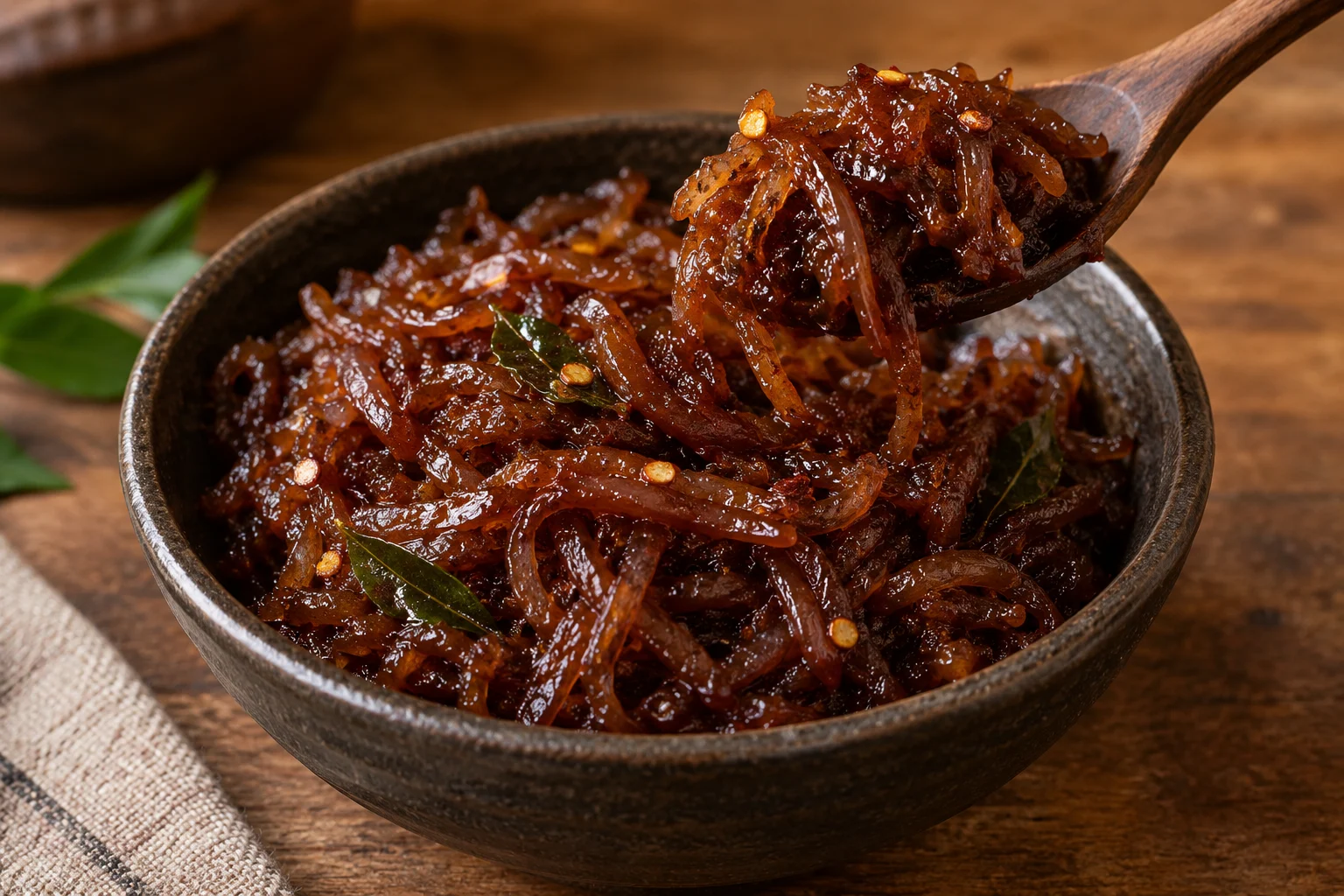
Sri Lankan seeni sambol turns sliced onions into a sweet, tangy relish. A small-batch recipe explains the pan, moisture endpoint and optional Maldive fish.
Indonesian cuisine Chicken
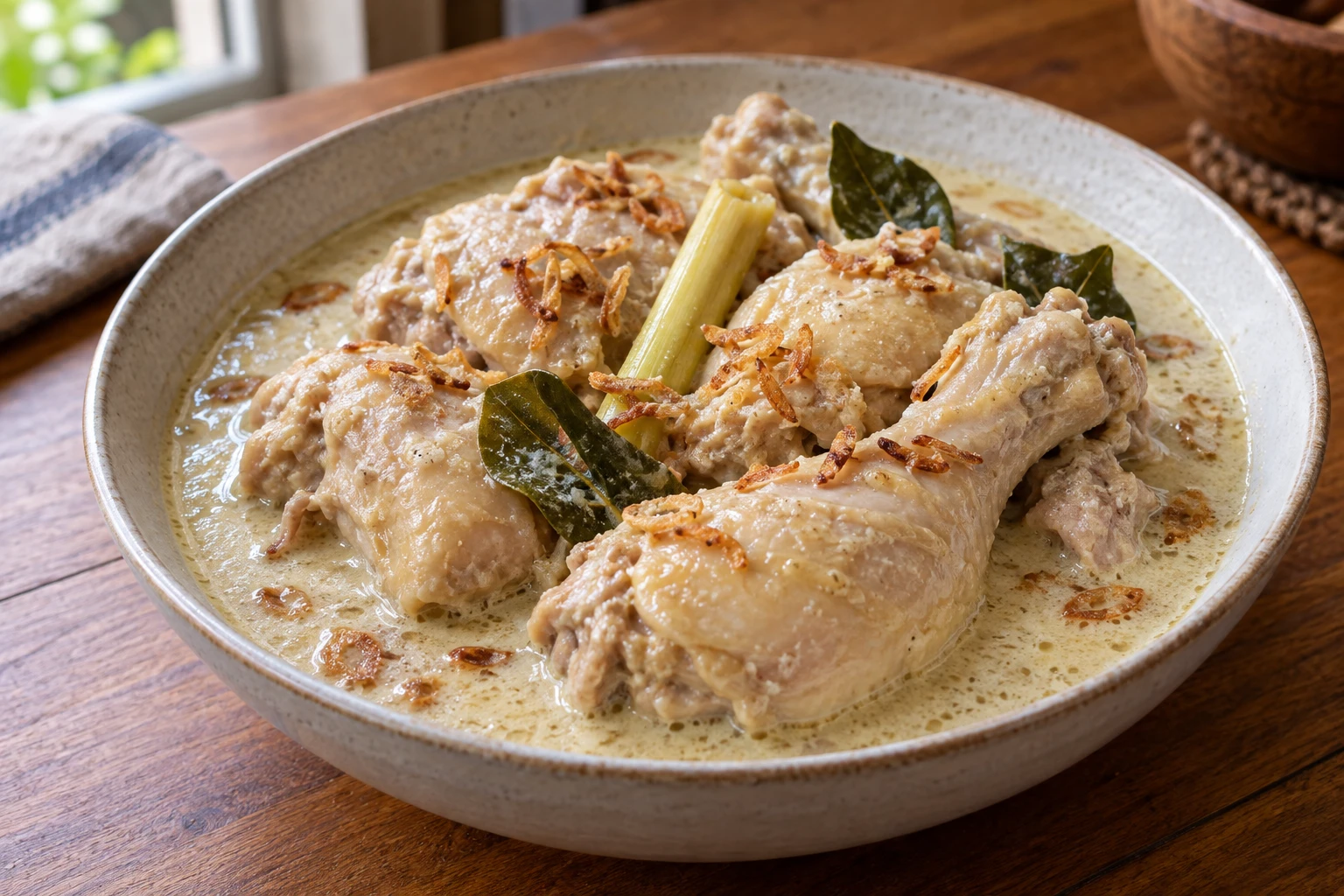
Opor Ayam: The Paste Before the Coconut
A pale coconut gravy can hold a deeply aromatic chicken dish. Reading opor ayam through its spice paste, coconut timing and rice-cake companions.

Indian cuisine Tea
Masala Chai: Choose the Tea, Then the Simmer
Black tea, spice preparation and the timing of milk shape masala chai. Three published methods show why a reliable cup begins with one coherent sequence.