
Sri Lankan Hoppers: Crisp Edges and a Tender Center
ආප්ප
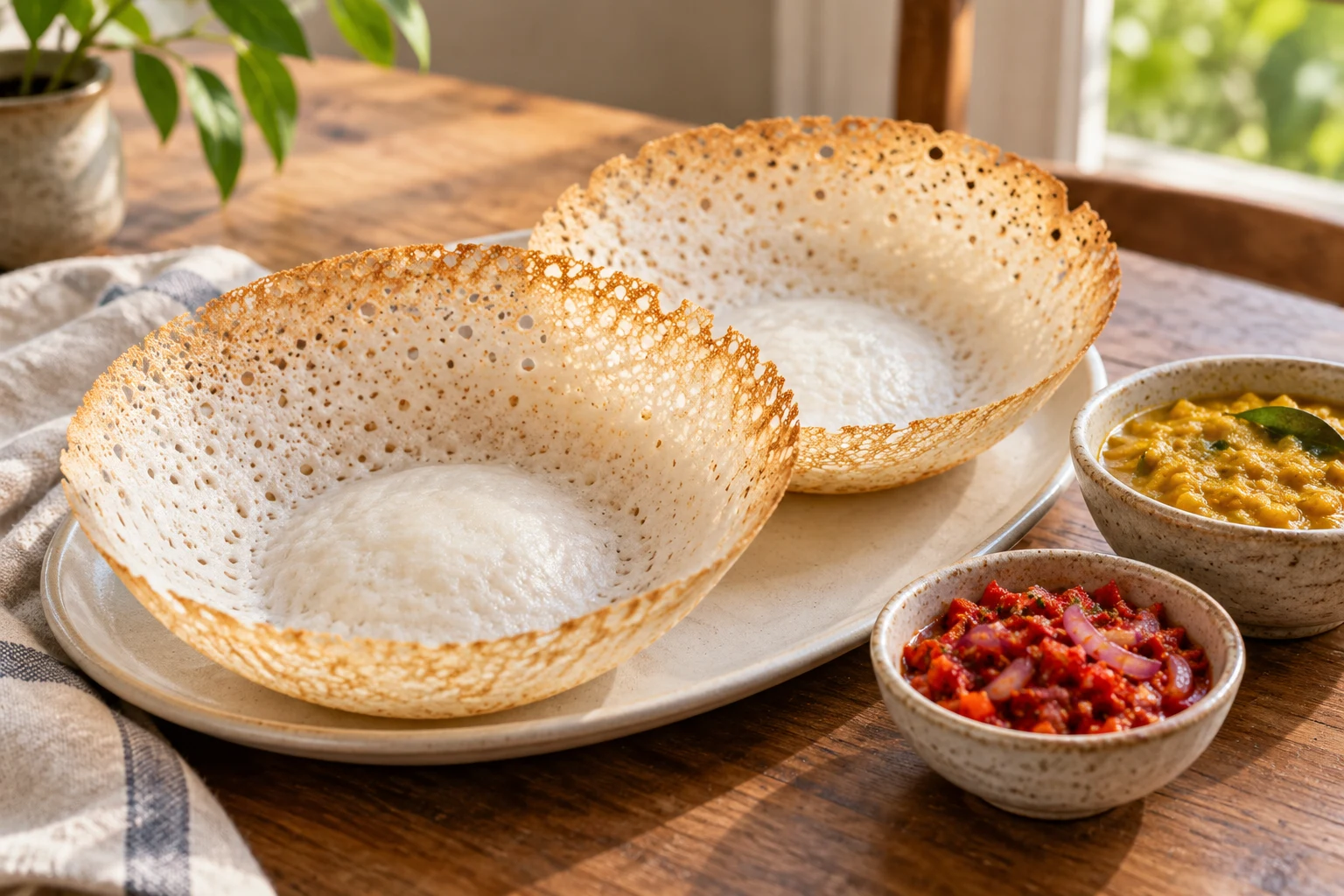
The thin rim snaps; the soft center catches curry or holds an egg. A hopper's curved shape makes those two textures possible in the same pancake.
Sri Lankan table
One pancake, two textures
Hoppers, called appa in Sinhala, are rice-and-coconut pancakes cooked in a small rounded pan. A thin coating climbs the sides while more batter stays at the base. The result is a bowl with a fragile, crisp rim and a thicker, tender center. Tear a little edge, then use a softer piece to take up curry or sambol.
This article concerns those bowl-shaped hoppers, not string hoppers made of fine steamed strands. Plain and egg hoppers share the curved form, but the egg version needs extra attention at the center. Prepare the accompaniments first so the pancake can move directly from the pan to the table.
Plain or egg?
Plain hopper
The soft base and thin sides show the batter's texture clearly. Serve curry beside it, adding a little at a time so the rim keeps its crispness.
- Dhal or another curry can provide the main accompaniment.
- A little pol sambol or lunu miris adds contrast.
Egg hopper
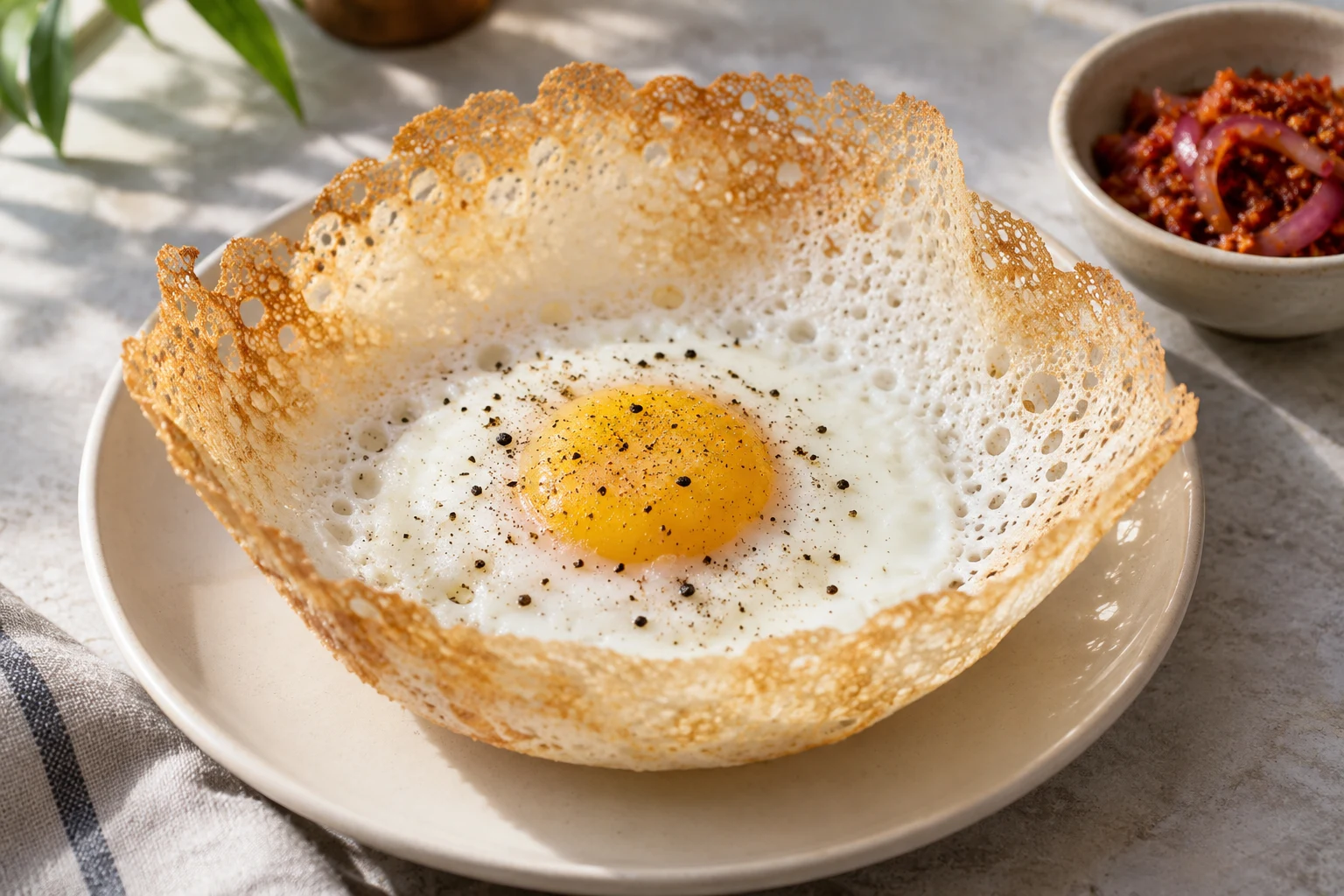
An egg goes into the center after the batter is swirled. Keep cooking until both white and yolk are firm; a brown rim does not prove that the egg has cooked through.
- The center becomes a more substantial part of the meal.
- Keep strong chili accompaniments separate so diners choose the amount.
Choose one batter method
The original preparations consulted take different routes. Roshani Wickramasinghe uses rice flour with yeast and adds coconut milk later. Madhavi's Kitchen Days version, credited to her friend Manjula, includes a small amount of wheat flour or an alternative blend. Mrs Amarasakara's preparation, presented by Peter Kuruvita, uses sourdough bread. Pot Chimes offers another wheat-and-yeast method.
Those formulas should be followed as complete methods. Their yeast amounts, flour combinations and timing do not combine into one reliable average. Check the exact flour requested, including whether it is ordinary rice flour or a product prepared for string hoppers. The word hopper also does not guarantee a gluten-free pancake: wheat flour or bread can be part of the batter.
Use the first hopper as a check
- 01
Watch the batter spread
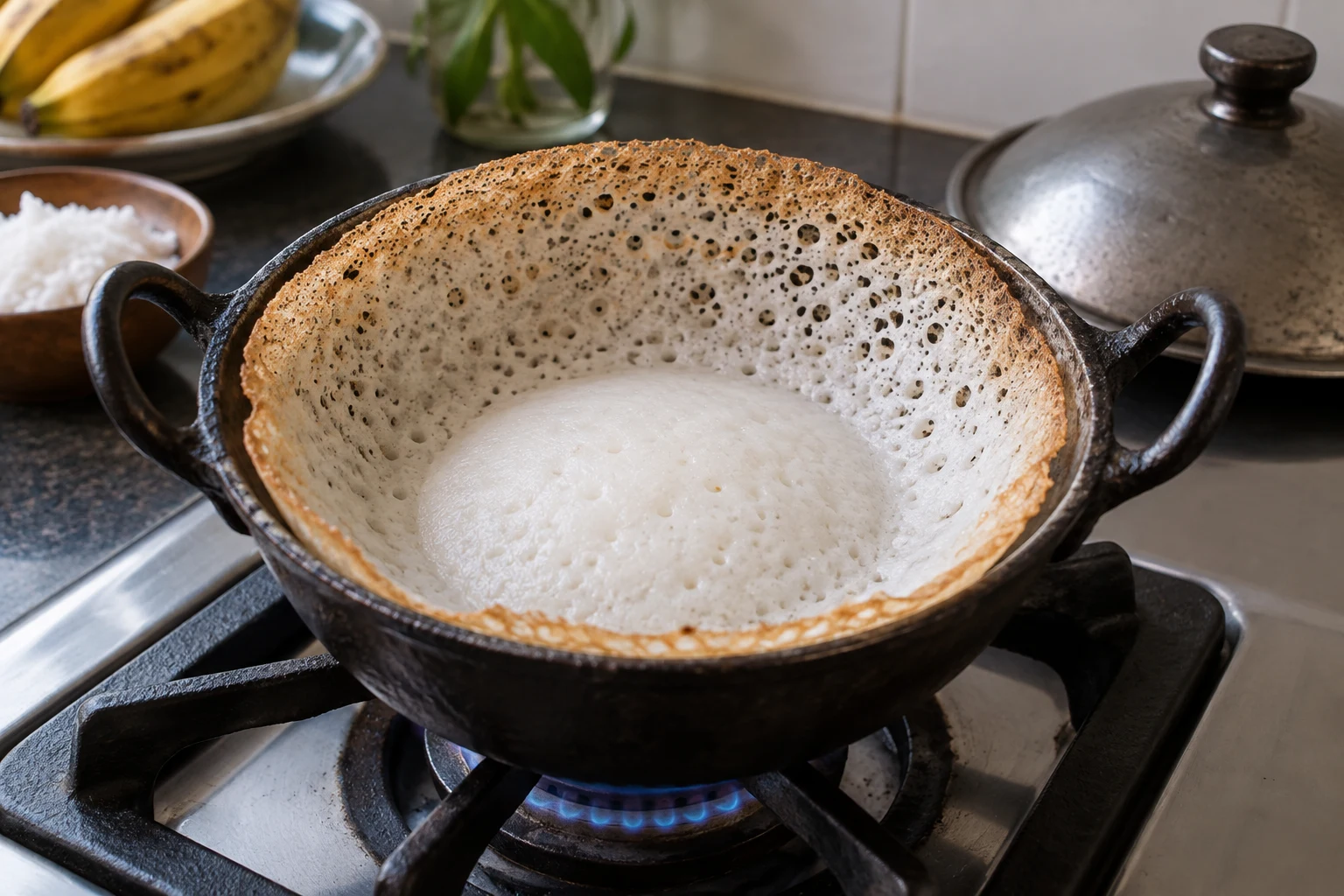
With your chosen batter and a suitable heated pan, pour a small ladleful and swirl promptly. It should coat the sides while leaving a pool below. If it cannot travel up the pan, check consistency against that recipe before changing several ingredients.
- 02
Compare rim and center
Cook covered as the method directs. Look for a set, cooked center and thin sides that become crisp. A thick chewy rim suggests the batter did not spread thinly; a rapidly scorched edge calls for attention to pan heat.
- 03
Change one thing at a time
After the first fully cooked hopper, decide whether the next needs a smaller ladleful, a modest consistency adjustment or different heat. Keep notes so a successful correction can be repeated instead of guessed again.
Make the table ready before the pan
Set out the curry, sambols, plates and serving spoons before cooking. A hopper is at its best when its rim is newly crisp. Serve small rounds of freshly cooked hoppers instead of building a large stack that traps steam and softens the edges.
Keep curry beside the pancake until eating, then add enough to moisten a chosen piece. A plain hopper can carry several different bites, while an egg hopper works well with a smaller amount of curry and a sharp condiment. Coconut is central here; check for wheat and egg in the particular recipe, and for fish or other allergens in its accompaniments.
Research notes
Sources and complete batter methods
Four independent household or author preparations inform this guide. Their formulas remain separate; official food-safety guidance supplies egg and cold-storage advice.
- Roshani Wickramasinghe — Sri Lankan hoppers Original rice-flour method with coconut milk added later, plus author explanations of consistency and flour differences.
- Kitchen Days — Hoppers Sri Lankan Style / ආප්ප Madhavi's household preparation credited to Manjula, with practical batter and serving observations. Improvised heat shields and oven-preheating advice are not reproduced.
- SBS Food — Mrs Amarasakara's hoppers Original household method presented by Peter Kuruvita, showing the curved pan, thicker center and crisp sides.
- Pot Chimes — Sri Lankan hoppers / ආප්ප Original bilingual Sinhala and English preparation with a different flour-and-yeast formula. The guide does not use its black-cloth or hot-oven proofing claims.
- FoodSafety.gov — Safe internal temperatures Official advice to cook whole eggs until both yolk and white are firm.
- FoodSafety.gov — Four steps to food safety Clean handling and refrigerator temperature for perishable ingredients and finished batter.
Keep exploring
More stories for your table
Sri Lankan cuisine Coconut curries
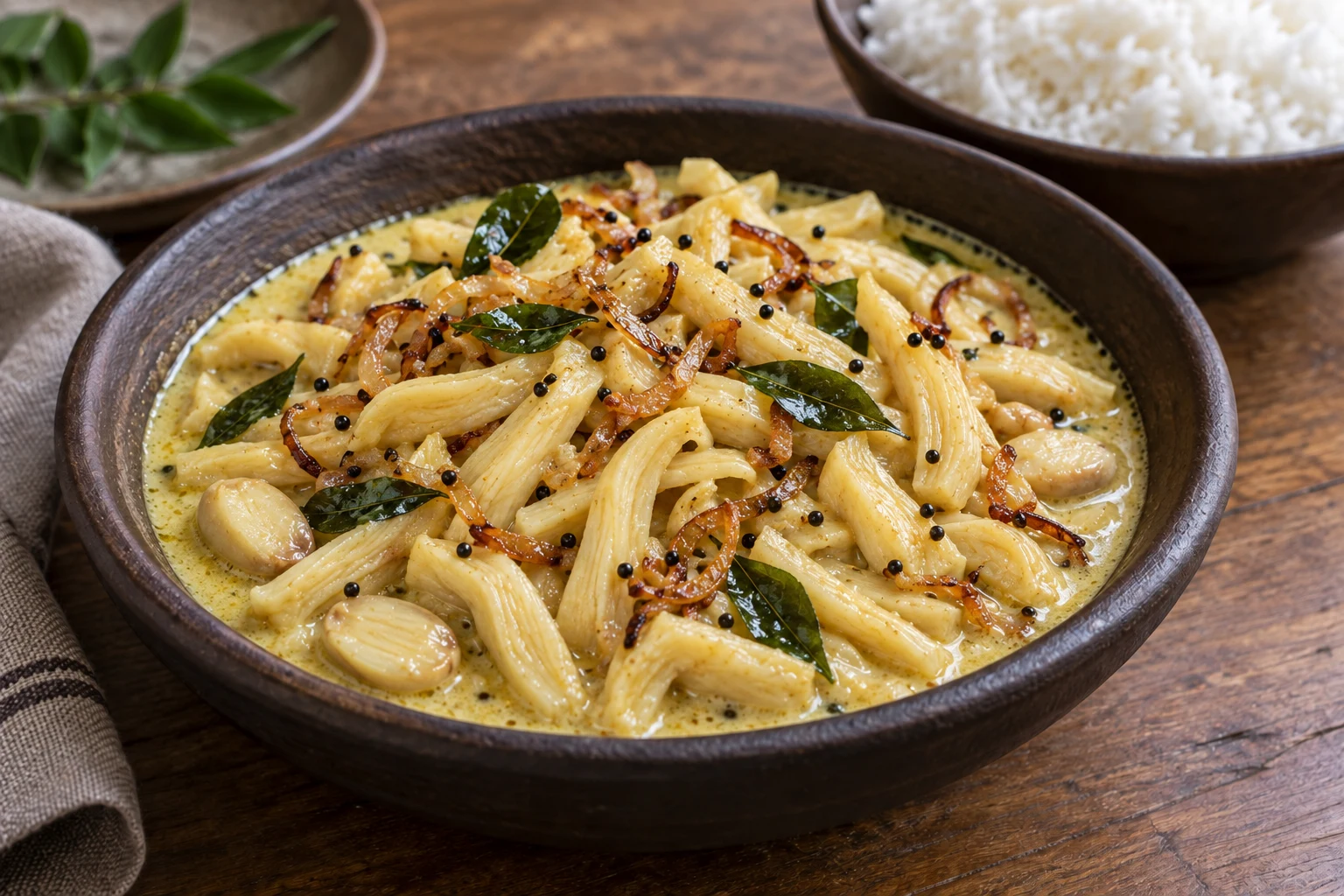
Kiri Kos: Choose the Jackfruit Before the Spice
Sri Lankan kiri kos uses mature, unripe jackfruit bulbs and seeds in coconut milk. Compare it with young polos, then follow the milk and tempering stages.
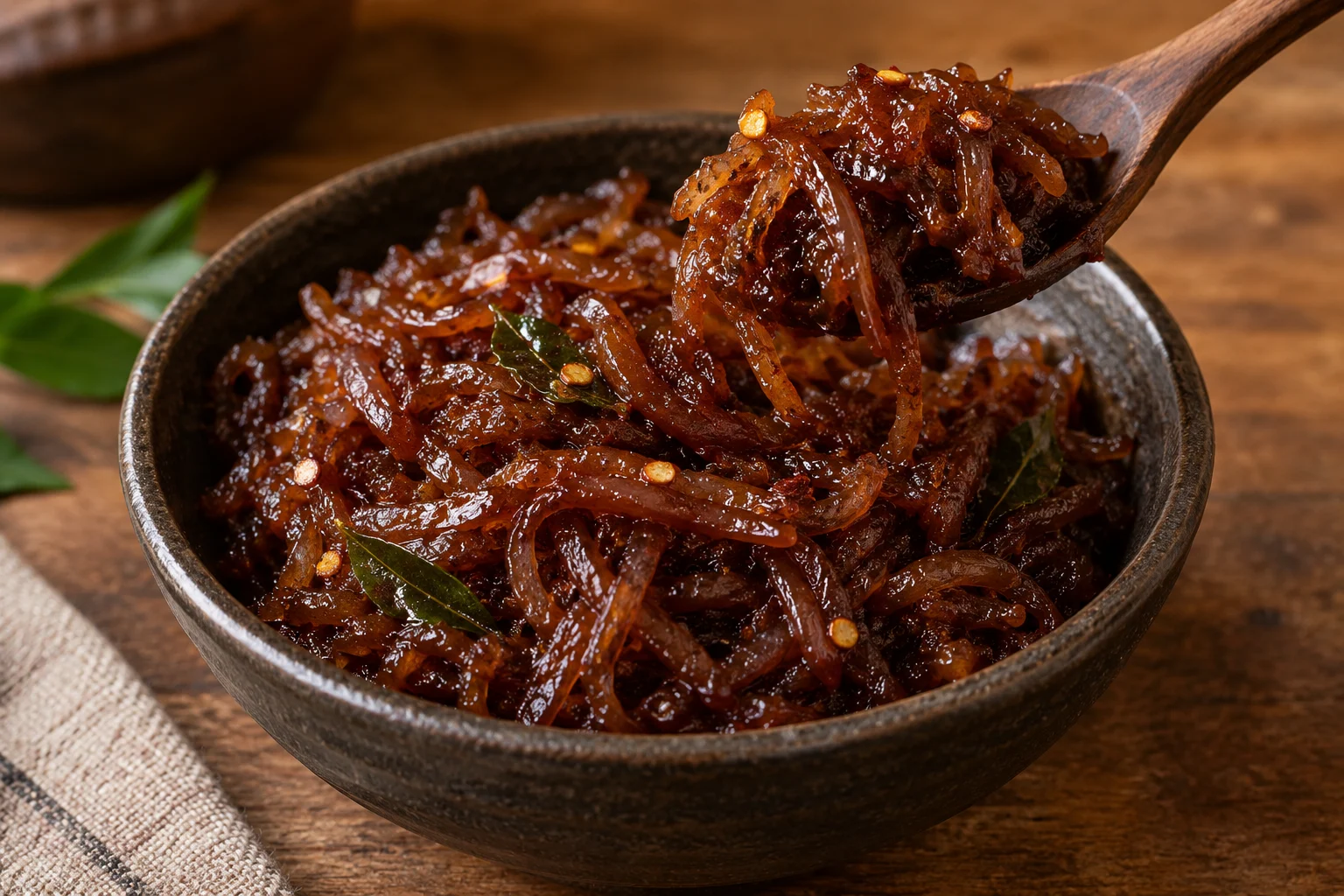
Sri Lankan cuisine Sweet onion relish
Seeni Sambol: Give the Onions Room to Soften
Sri Lankan seeni sambol turns sliced onions into a sweet, tangy relish. A small-batch recipe explains the pan, moisture endpoint and optional Maldive fish.
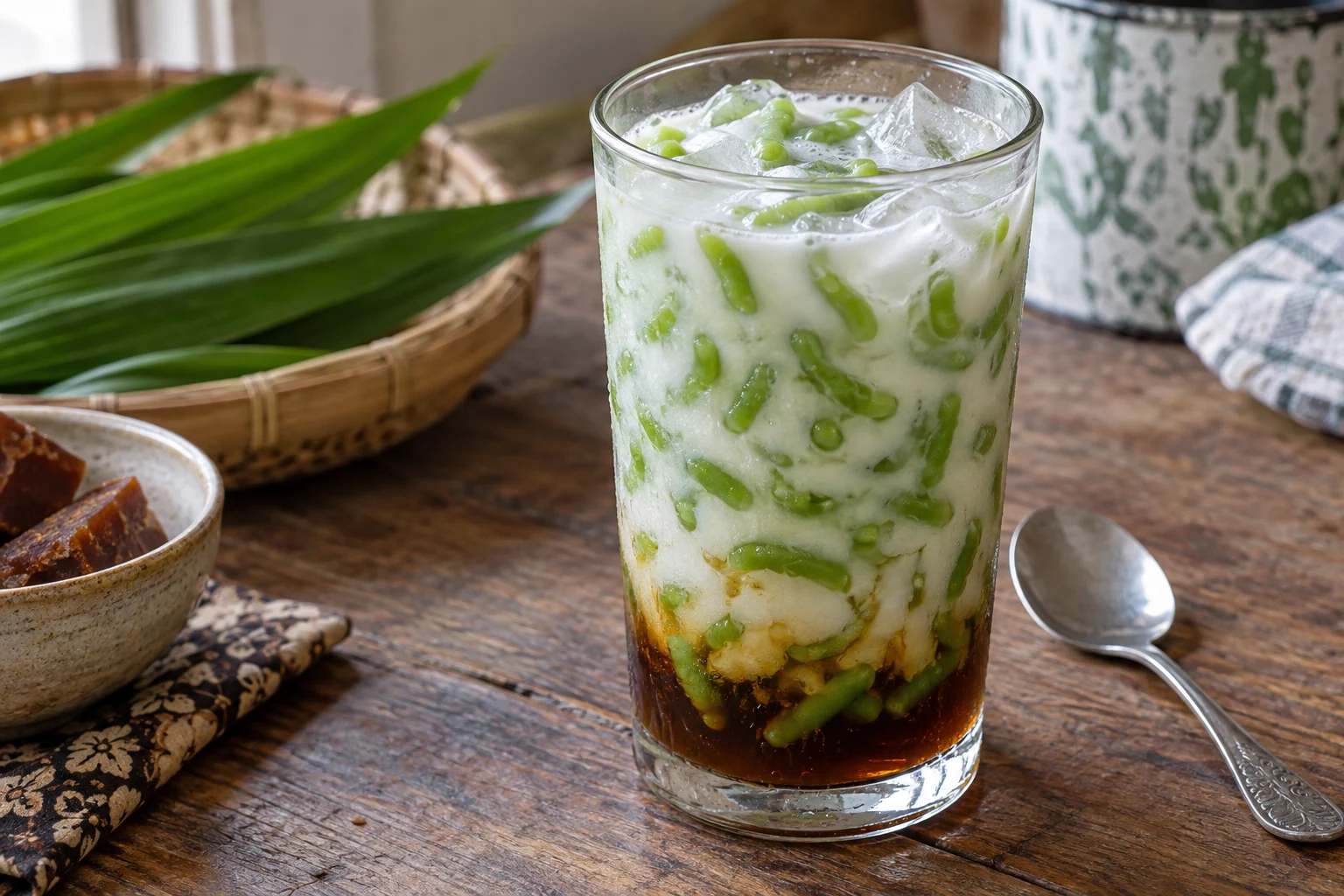
Indonesian cuisine Iced dessert drink
Es cendol: choose the jelly texture, then build the glass
A guide to the soft or chewy green jellies in Indonesian es cendol, their starch mixtures, and the balance of coconut milk, palm sugar syrup and ice.