
Papas Arrugadas: The Dry Finish After the Boil
Papas arrugadas
Canarian wrinkled potatoes depend on two stages: cooking the whole potatoes, then drying their salted skins. Learn how potato choice, the dry finish and red or green mojo shape the dish.
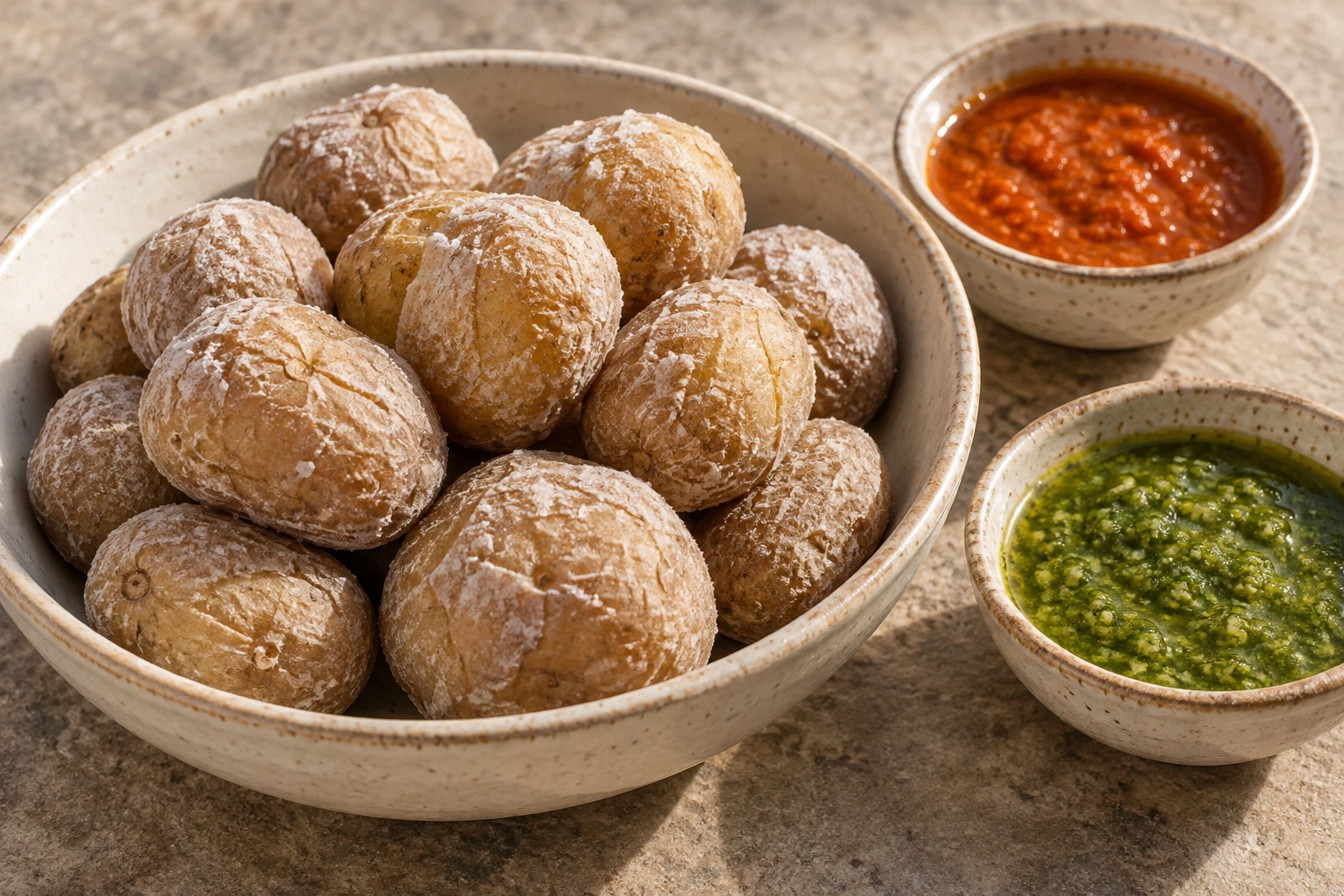
The important moment comes after tenderness
A bowl of papas arrugadas shows what its Spanish name promises: whole potatoes with wrinkled skins. A pale salt coating catches on the creases, while red or green mojo supplies a second flavour. The potatoes have been boiled, yet the final surface is dry. Understanding that last change is the key to understanding the dish.
Tenerife’s official tourism recipe separates cooking from drying. Mike Hultquist’s home version does the same. Great British Chefs reaches a similar finish by allowing the cooking water to evaporate. These methods differ in water management, but each asks the cook to pay attention to more than whether a knife can enter the potato.
Tender first, dry second
Read this as a comparison of published methods. Their salt and water quantities belong to their individual recipes.
- 01
Cook the potatoes with their skins
The Tenerife method uses unpeeled potatoes covered with salted water and cooks them until tender. The skins stay on throughout; peeling changes the surface that will carry the salt. Hultquist likewise starts with small whole potatoes, washing them before they go into the pot.
- 02
Choose how the water leaves
Tenerife drains the cooking water, adds more salt and briefly dries the potatoes in the same vessel while moving them around. Hultquist drains, returns the potatoes to the pot and lets residual water evaporate over medium-low heat. Great British Chefs instead simmers uncovered until the water has evaporated, then reduces the heat for the final drying.
- 03
Look for the finished surface
The common result is a wrinkled skin carrying visible salt, with the inside already cooked. This is a drying finish rather than a frying step. Keep the potato’s tenderness and its surface condition as separate observations: a wet boiled potato has completed only part of the process described by these recipes.
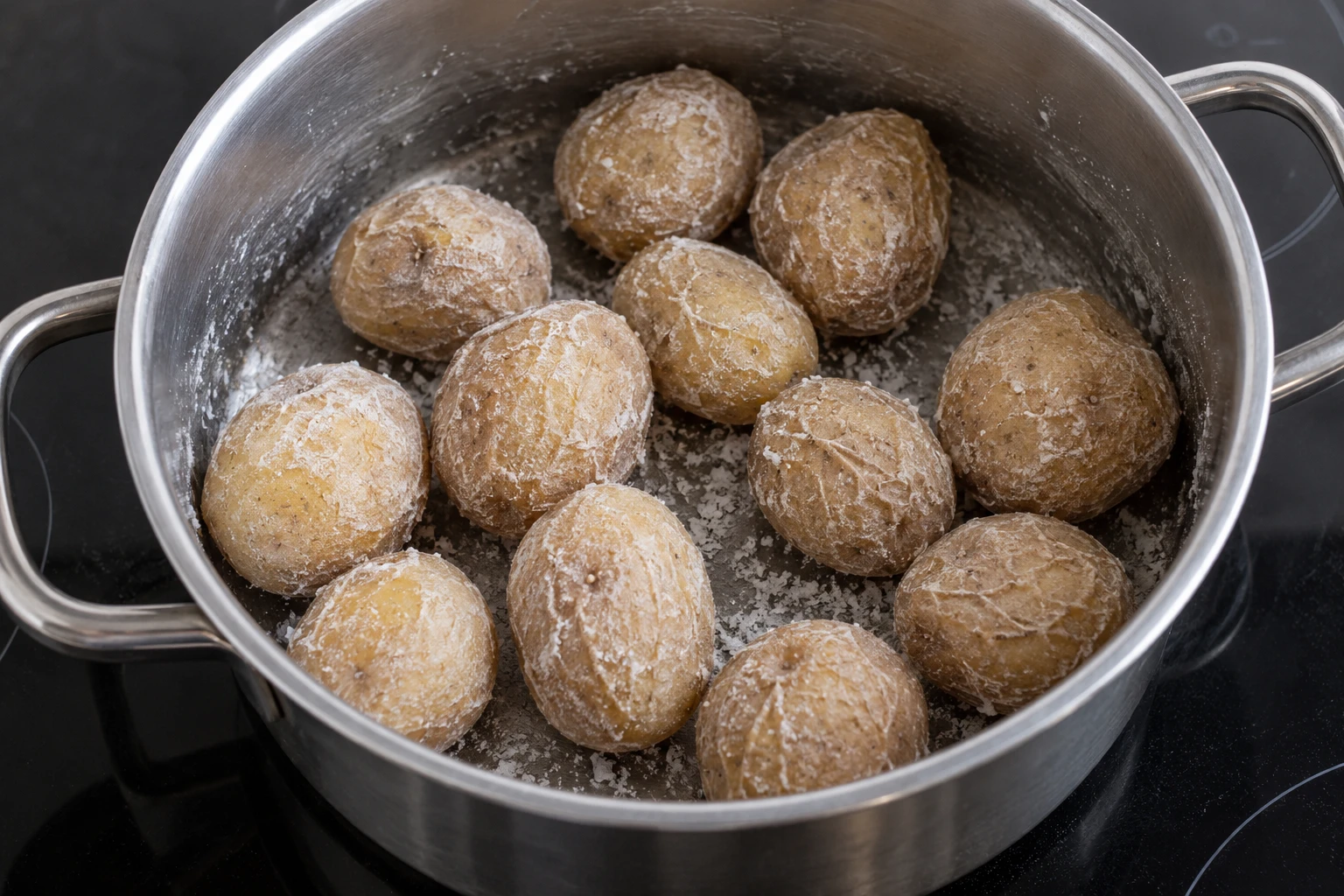
Small potatoes, with an island context
Canarian potato choice is richer than the generic label baby potato suggests. Tenerife tourism names papa bonita, papa negra and azucena among older local varieties, and notes the protected designation Papas Antiguas de Canarias recognised in 2013. It particularly singles out yellow-fleshed papa negra as a favoured choice for papas arrugadas. That is ingredient context, not a claim that every potato sold for this dish has a protected origin.
For an accessible home version, Hultquist suggests small new potatoes or other small potatoes with thin skins. Great British Chefs asks for potatoes of similar size. These are useful adaptation choices: the cook is choosing a practical batch for the method, without pretending that an ordinary supermarket potato is the same product as a documented Canarian variety.
Red and green describe different directions
Mojo is a family of sauces. The colour is a useful starting point, but the actual ingredients determine the flavour and heat.
Red mojo
Guía Repsol describes the pepper-and-paprika direction of mojo picón. The Great British Chefs home recipe combines red pepper, chilli, garlic, paprika, cumin, vinegar and oil. Pepper character and acidity accompany the salt-coated potato; a red sauce should not be assumed to have a fixed heat level.
Green mojo
Repsol associates the green version with coriander. Great British Chefs uses coriander with some parsley, garlic, vinegar, green chilli and oil. In that recipe it offers a herb-led contrast to the red sauce, while still containing chilli. Green colour alone does not guarantee a mild sauce.
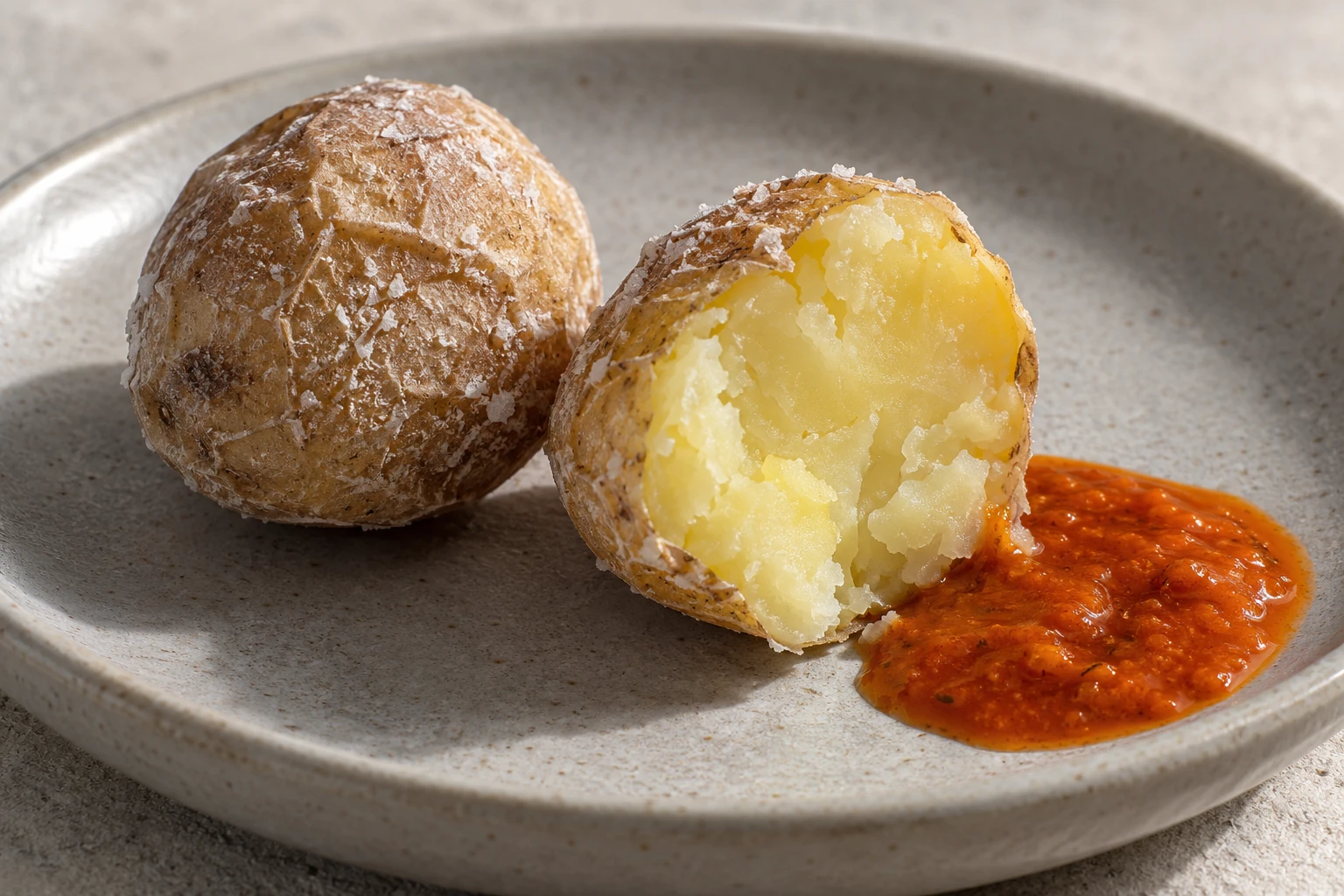
A plate in its own right, or an accompaniment
Repsol’s reporting across Tenerife, Gran Canaria, La Palma and Lanzarote shows papas arrugadas served as a portion as well as beside other food. That range matters: the potatoes need not disappear into the role of an anonymous garnish. Their skin and mojo are enough to give a small plate a clear identity.
Hultquist offers sauce beside the potatoes or coating them. The Great British Chefs recipe also allows dipping sauces or sauce spooned over. Keeping the mojos separate preserves a view of the salted skins and lets each diner choose the balance. For home cooking, select one complete potato recipe, prepare the sauce you want, and judge the cooked centre before beginning its final dry finish.
Research notes
Sources and methods
The Tenerife pages provide local ingredient and preparation context. Repsol documents service across the islands; the two named home recipes clarify different routes to a dry salt-coated finish.
- Turismo de Tenerife — Papas Local potato varieties, papa negra’s yellow flesh and the Papas Antiguas de Canarias designation.
- Turismo de Tenerife — Papas arrugadas Official local recipe separating cooking, draining and a brief drying stage.
- Guía Repsol — Papas arrugadas across the islands Spanish food-guide reporting on whole small potatoes, red and green mojo, and portion or side-dish service.
- Great British Chefs — Canarian salted baby potatoes A home adaptation using evaporation followed by drying, with distinct red and green sauce formulas.
- Mike Hultquist — Papas arrugadas A drain-and-dry home method and practical suggestions for small thin-skinned potatoes.
Keep exploring
More stories for your table
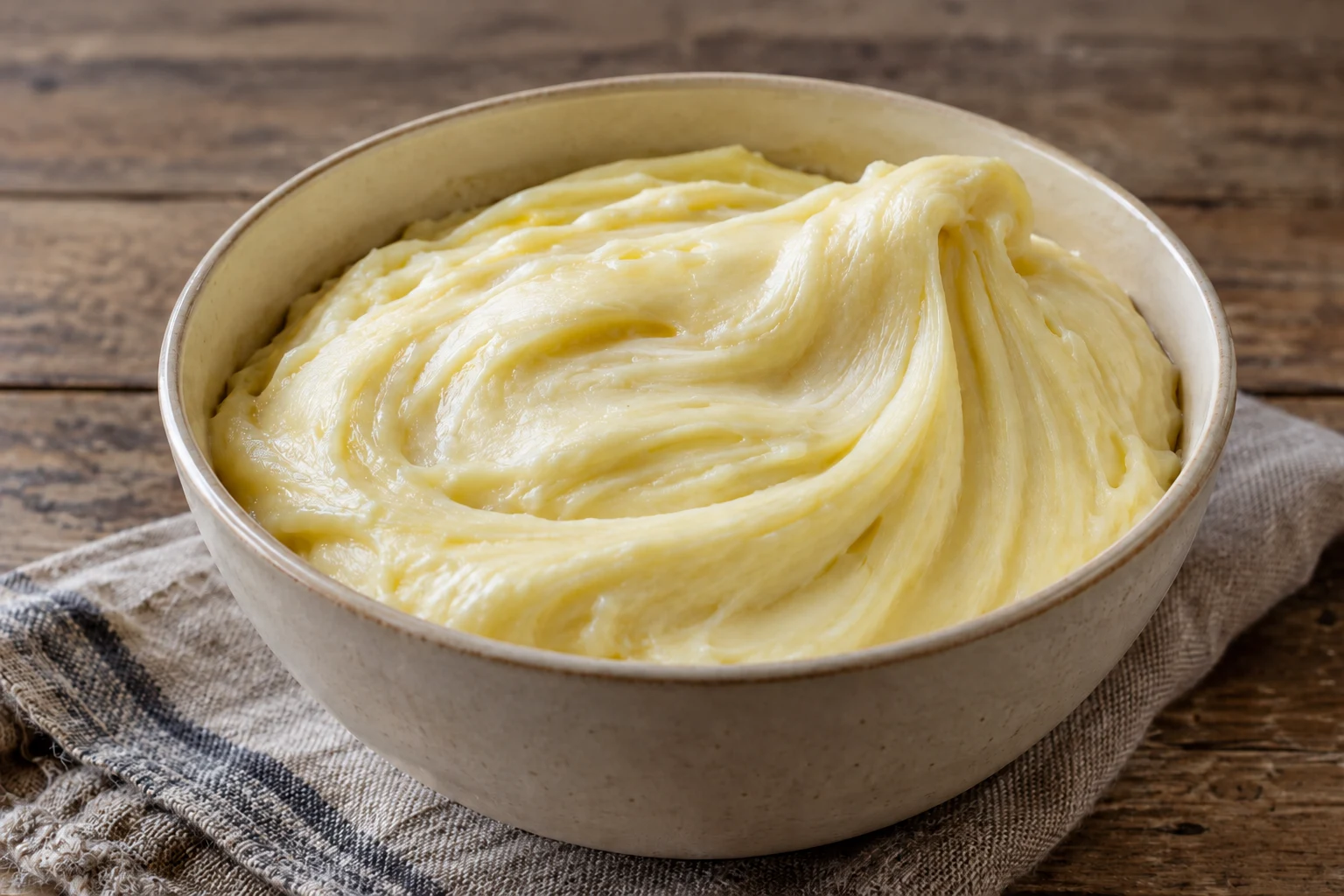
FrancePotato and cheese dish
Aligot: The Fresh Cheese Behind the Famous Stretch
Aligot turns potato purée and fresh Aubrac tome into a flowing ribbon. Understand the cheese, compare regional proportions, and follow a home adaptation built around gentle heat and decisive folding.
NepalPotato salad
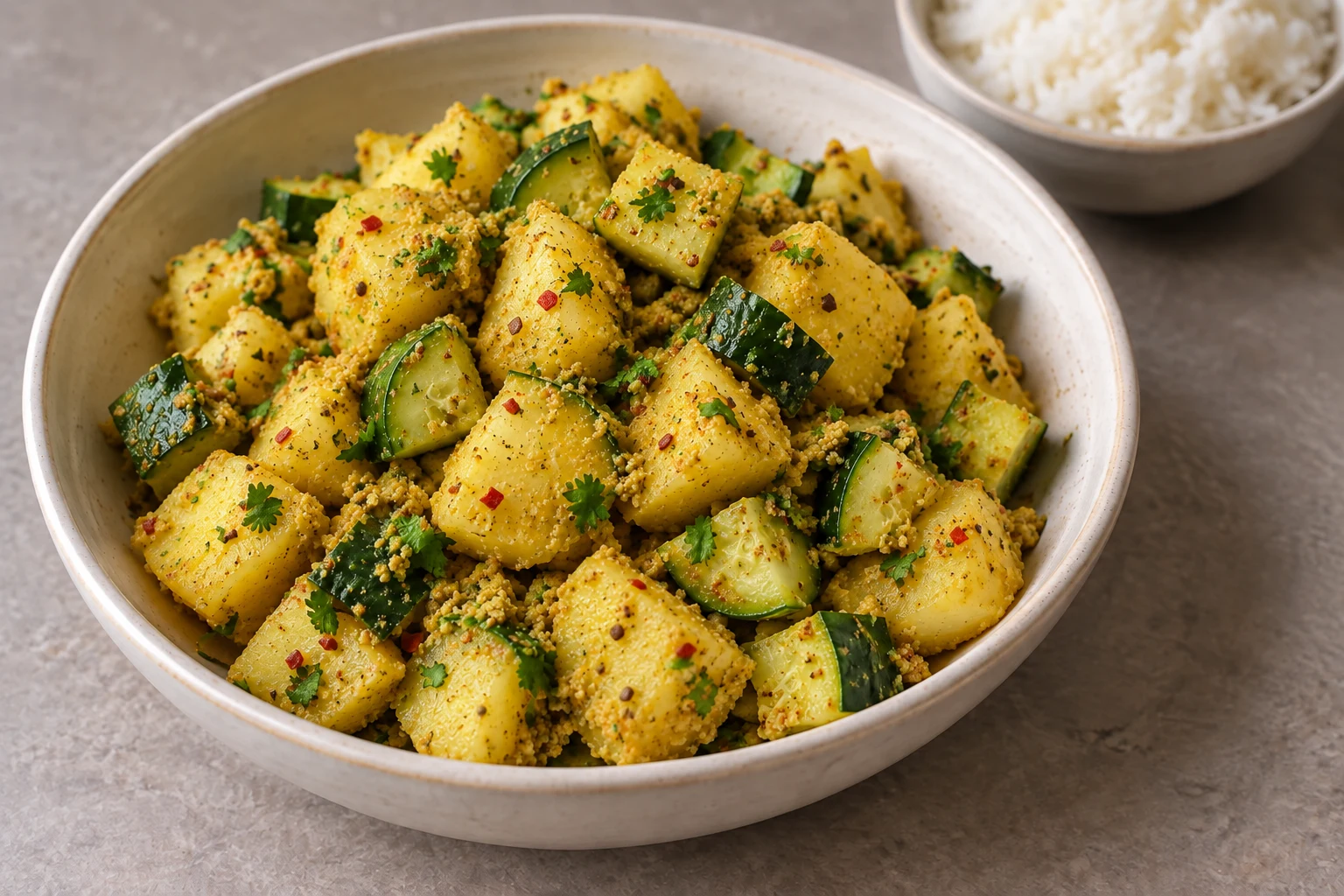
Aloo ko Achar: Dress the Potatoes in Two Stages
Make Nepali potato achar with toasted, ground sesame and a final spice-oil dressing. Learn the sequence, then try a complete potato-and-cucumber adaptation.
SpainBraised game bird
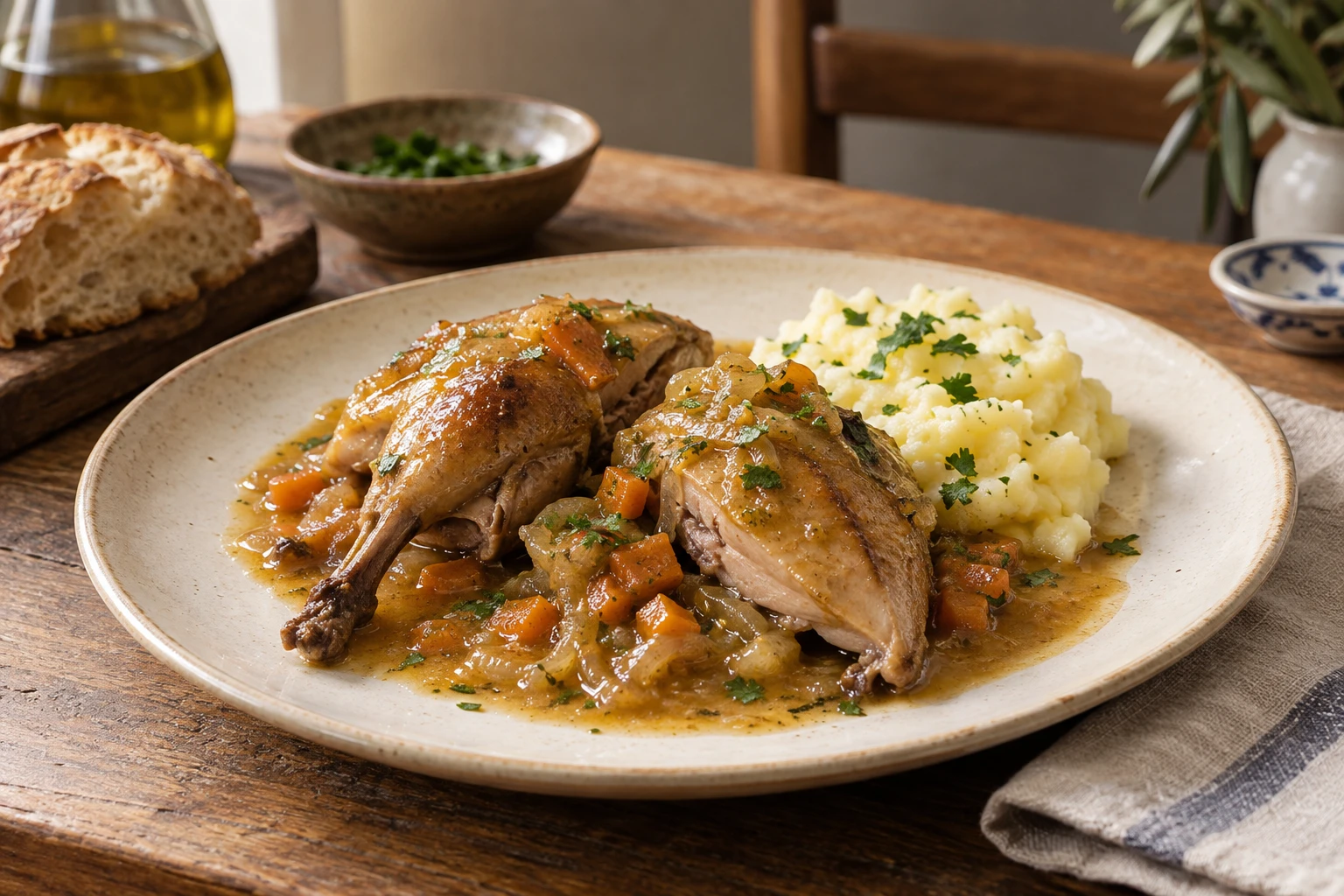
Perdiz Estofada: Finish the Bird, Then the Sauce
Toledo-style partridge stew gives the bird and its vegetable sauce separate stages. Compare the wine, vinegar and finishing choices before cooking.