
Paella Valenciana: Meat, Beans, and a Thin Layer of Rice
Paella valenciana
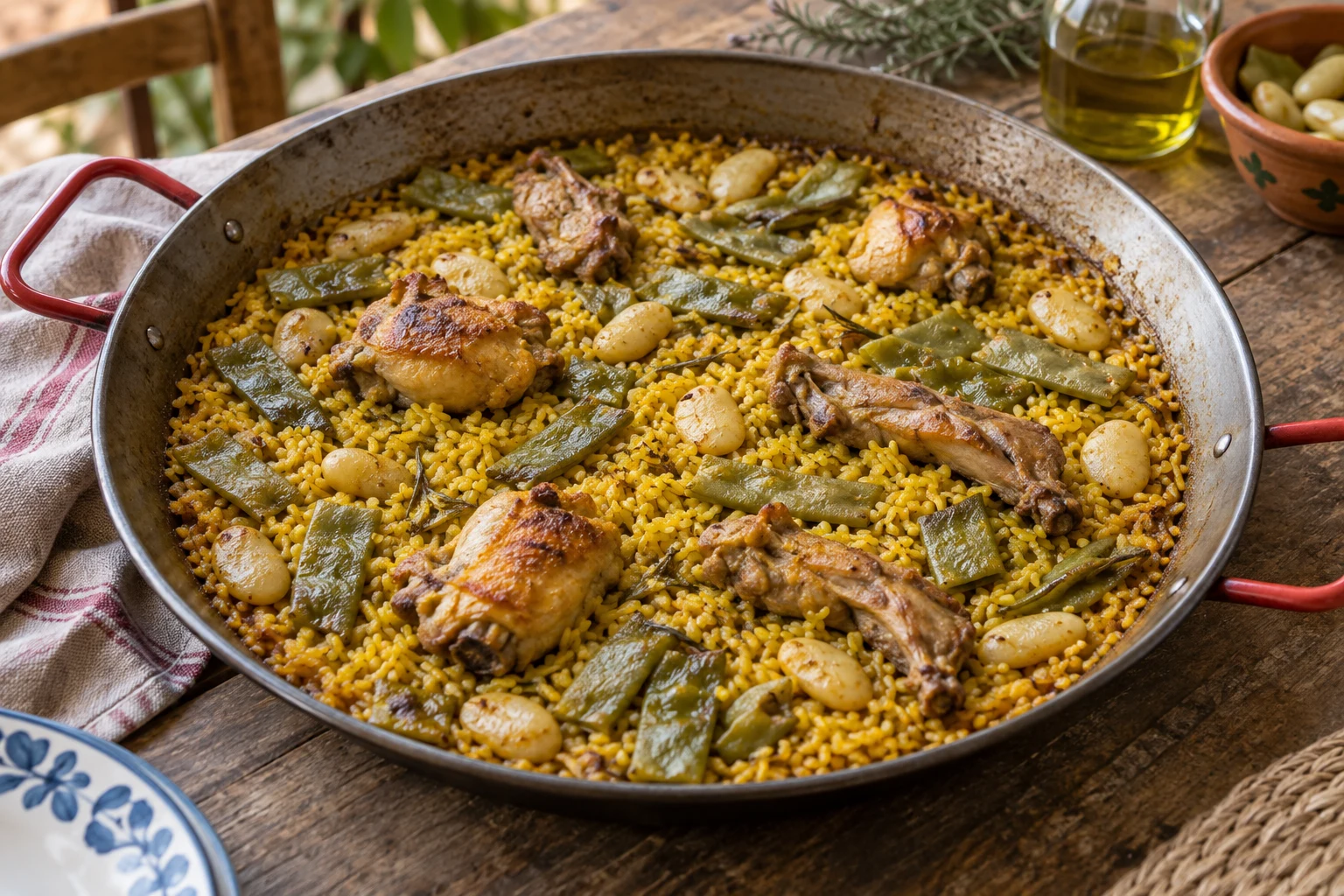
The wide pan brings meat, garden vegetables and rice into one meal. Its shallow layer needs attention to heat and liquid, not constant stirring.
Valencian rice
Begin with the right dish in mind
Paella valenciana centers on rice cooked with chicken, rabbit and vegetables from the local garden. Garrofó, a large, flat white bean, and broad green beans are characteristic components. Tomato and saffron help shape the broth; the shallow pan gives the rice space to cook in an even layer.
Official Comunitat Valenciana guidance recognizes seasonal and household variation around that core. Dani García's version, Karlos Arguiñano's preparation and the Real Academia de Gastronomía's recipe show different quantities and simmering times. Their differences are useful: this is a cooking sequence to understand, then execute with one complete recipe suited to your equipment.
What the components contribute
- Meat
- Chicken and rabbit
- Vegetables
- Two bean textures
- Rice
- An even, shallow layer
Browning begins the flavor of the broth; the pieces also need enough cooking time to become safe and tender.
Flat green beans give a vegetable bite, while garrofó brings a broader, softer bean to the finished rice.
Round-grain rice belongs to the preparations consulted; their liquid quantities depend on the cooking sequence.
Check the beans before the pan heats
Fresh or frozen garrofó and dried beans are different starting ingredients. If a recipe specifies tender beans, a bag of dried beans cannot simply be added at the same moment and expected to soften during the short rice stage. Use the specified form, or cook dried beans thoroughly according to their instructions before adapting a preparation.
The same care applies to rice. Bomba appears in the academy and Dani García recipes, while Arguiñano specifies round-grain rice. Read your chosen recipe and rice instructions together. Changing the variety, pan diameter or burner can change evaporation and timing; a number taken from a different setup is not a universal rule.
Understand the sequence
- 01
Brown, then build flavor
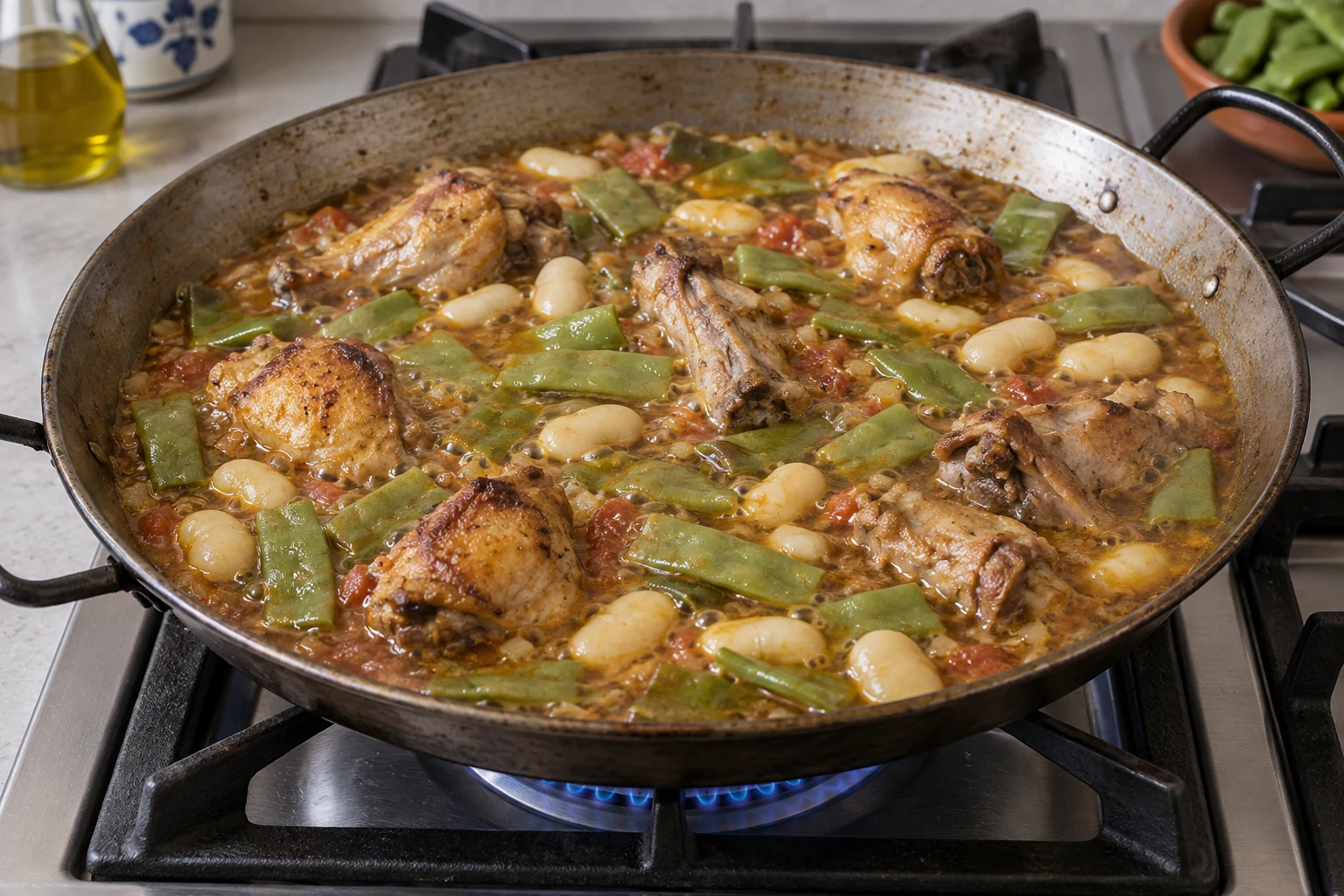
Brown the prepared meat as your recipe directs. The consulted cooks then work in tomato and beans, with saffron and sometimes paprika or rosemary. Keep paprika from scorching; a bitter spice cannot be repaired by adding more rice.
- 02
Let the meat stage finish its work
Water added early becomes cooking broth as the meat simmers. Some evaporates before the rice arrives, so an initial water quantity is different from the liquid remaining at that point. Follow one complete method rather than combining the shortest times from several.
- 03
Distribute the rice once
Spread the rice evenly when the recipe tells you to add it, then leave the layer undisturbed. The academy explicitly calls for no further stirring; the other preparations also move from a stronger initial boil to gentler cooking.
- 04
Check the result, then rest
Taste rice from more than one area before declaring it done. The grains should be cooked through, with the pan's liquid absorbed or evaporated. Rest off the heat as the chosen recipe directs, and avoid scorching the bottom to compensate for uneven cooking.
Serve from the pan, cool leftovers promptly
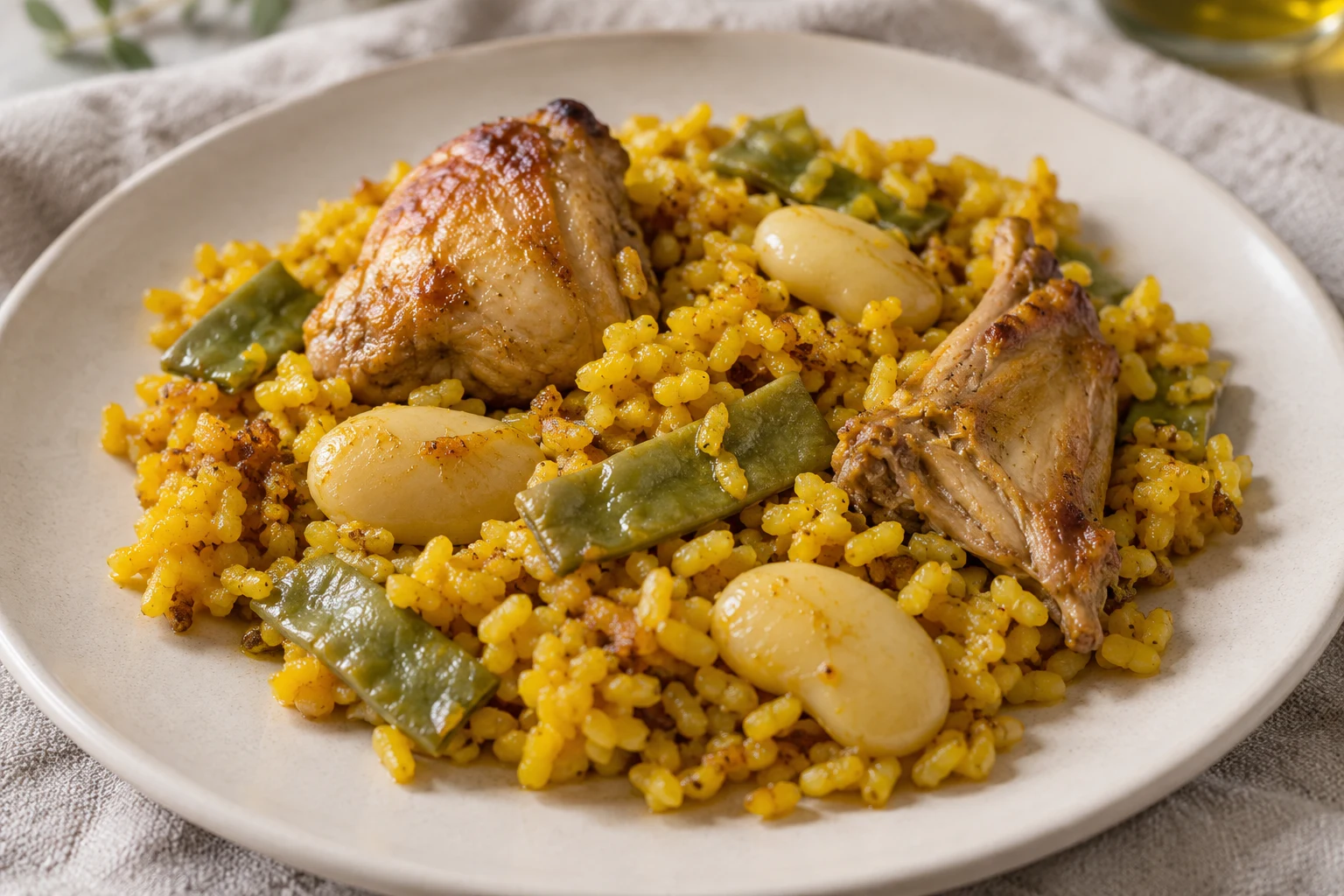
Serve the rested rice while hot, giving each portion some meat and both bean textures. The grain layer should remain the focus, rather than being hidden under a heap of garnishes. Choose side dishes that let you enjoy the rice and broth without crowding the plate.
For leftovers, divide the rice and meat into small containers and chill quickly, ideally within one hour. Do not leave the whole paella pan on the counter to cool slowly. The Food Standards Agency advises eating refrigerated rice within 24 hours and reheating it only once, until steaming hot throughout; use 74°C/165°F as the thermometer target for reheated leftovers.
Research notes
Sources and complete preparations
These sources show distinct Valencian cooking approaches. Follow one complete formulation for quantities, pan setup and timing; official guidance informs the safety advice.
- RTVE — Dani García's paella valenciana Original televised preparation using bomba rice, chicken, rabbit, garrofó and green beans, with a staged heat sequence.
- Real Academia de Gastronomía — Paella valenciana Complete culinary preparation with a longer meat simmer, undisturbed rice cooking and a final rest.
- Karlos Arguiñano — Paella valenciana Original chef preparation with flat green beans, garrofó and rosemary. Its printed water quantity appears inconsistent; it is not reproduced here.
- Comunitat Valenciana — Paella valenciana Official regional description of the meat-and-garden-vegetable core, rice and seasonal variation.
- Food Standards Agency — Rice storage and reheating Current official guidance on rapid cooling, 24-hour refrigerated storage and reheating rice only once.
- FoodSafety.gov — Safe internal temperatures Thermometer guidance for chicken, rabbit and reheated leftovers.
Keep exploring
More stories for your table
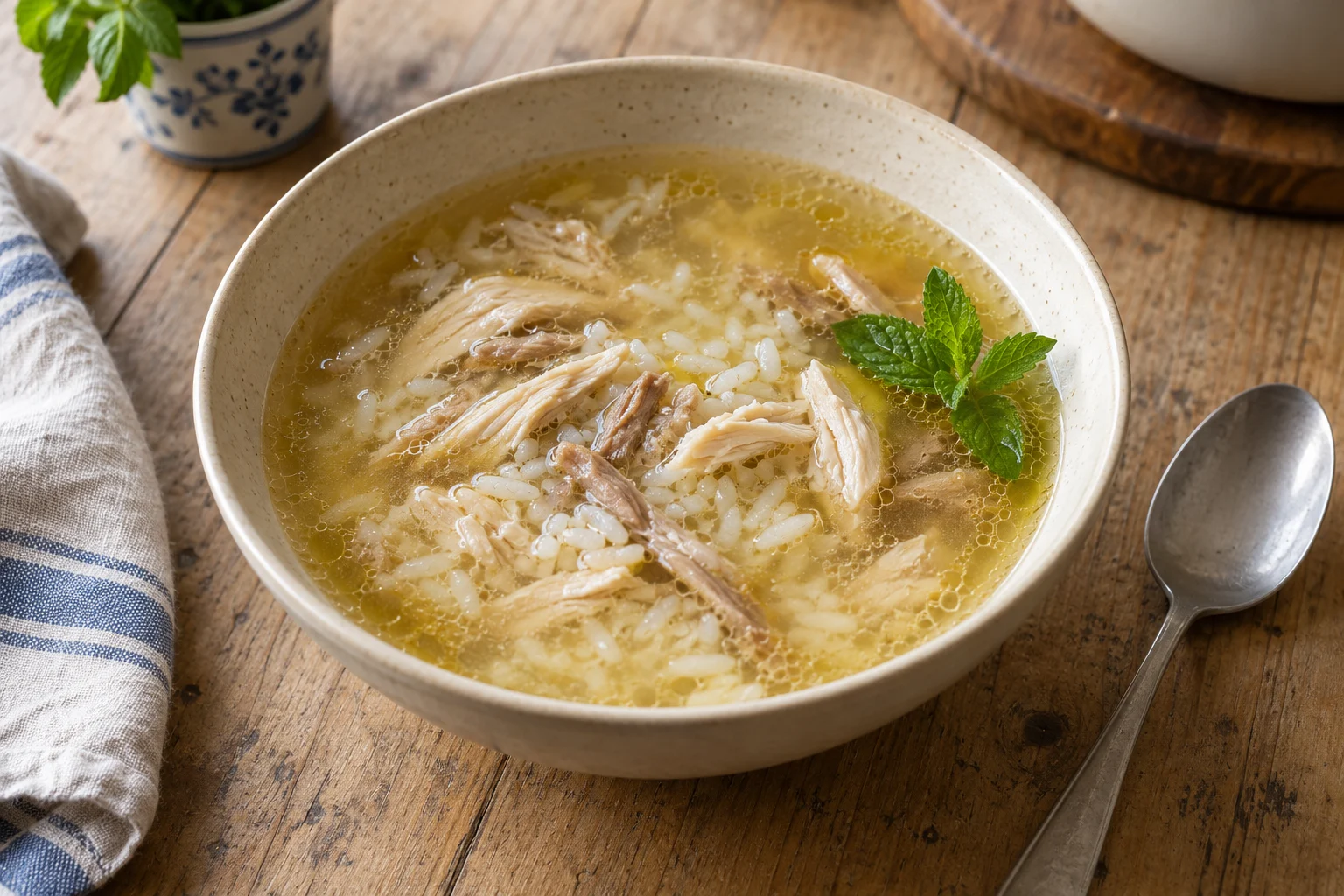
Portuguese cuisine Chicken and rice soup
Canja de Galinha: Keep the Broth in View
Portuguese canja recipes reveal how chicken broth connects rice, small pasta and different finishing choices, from mint to chopped cooked egg.

Spanish cuisine Seafood
Pulpo á Feira: The Craft Behind the Fairground Dish
Galician pulpo á feira carries the work of specialist cooks from the fair to the plate. Explore its inland stronghold, family craft and finishing details.
Belgian cuisine Pastry and poultry
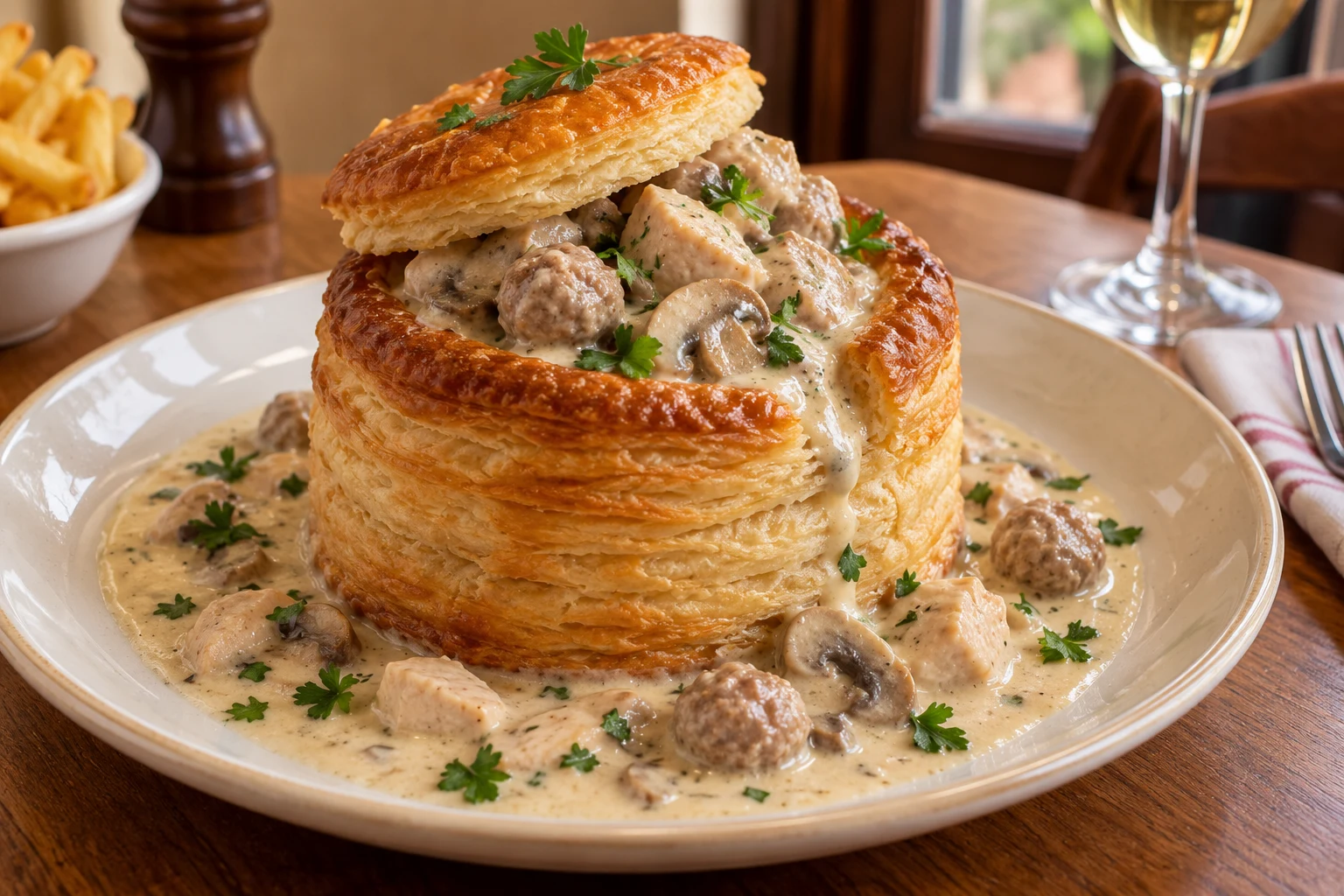
Belgian Vol-au-Vent: Creamy Filling, Crisp Pastry
Make a Belgian-style vol-au-vent with chicken, small pork meatballs and mushrooms in a creamy sauce, filling the pastry just before serving.