
Ensaïmada: The Layers Inside Mallorca’s Spiral
Ensaïmada
The spiral catches the eye. The more revealing detail is inside: thin dough rolled with lard, allowed to rise, then baked into a pastry with a delicate crust and a soft, layered heart.
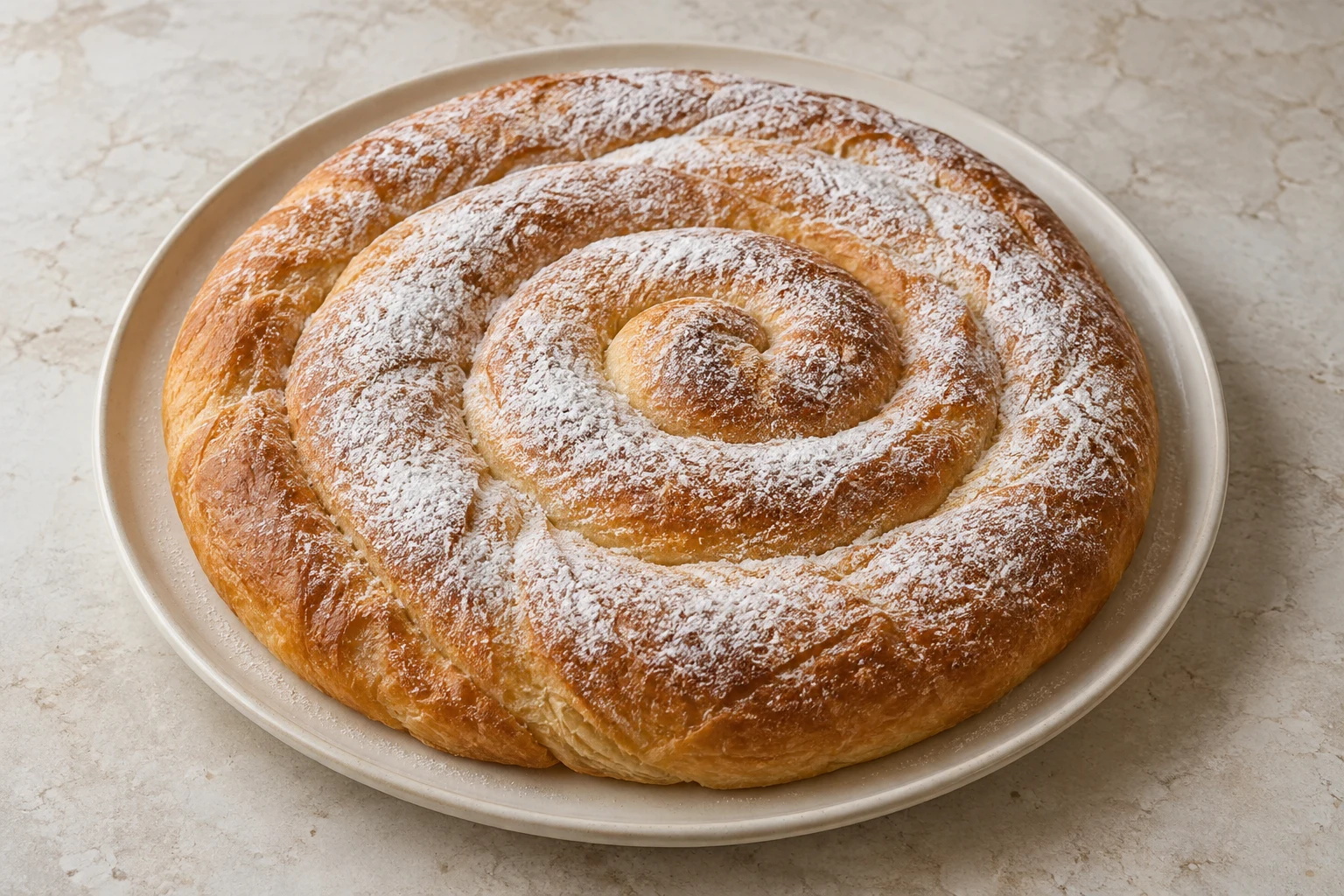
Mallorca, Spain
What makes a coil into an ensaïmada?
A spiral alone does not explain this Mallorcan pastry. Ensaïmada takes its name from saïm, the local word for pork lard. That fat is central to the way the dough is worked, as well as to its richness. Even the plain version is not vegetarian; the traditional dough also contains wheat and eggs.
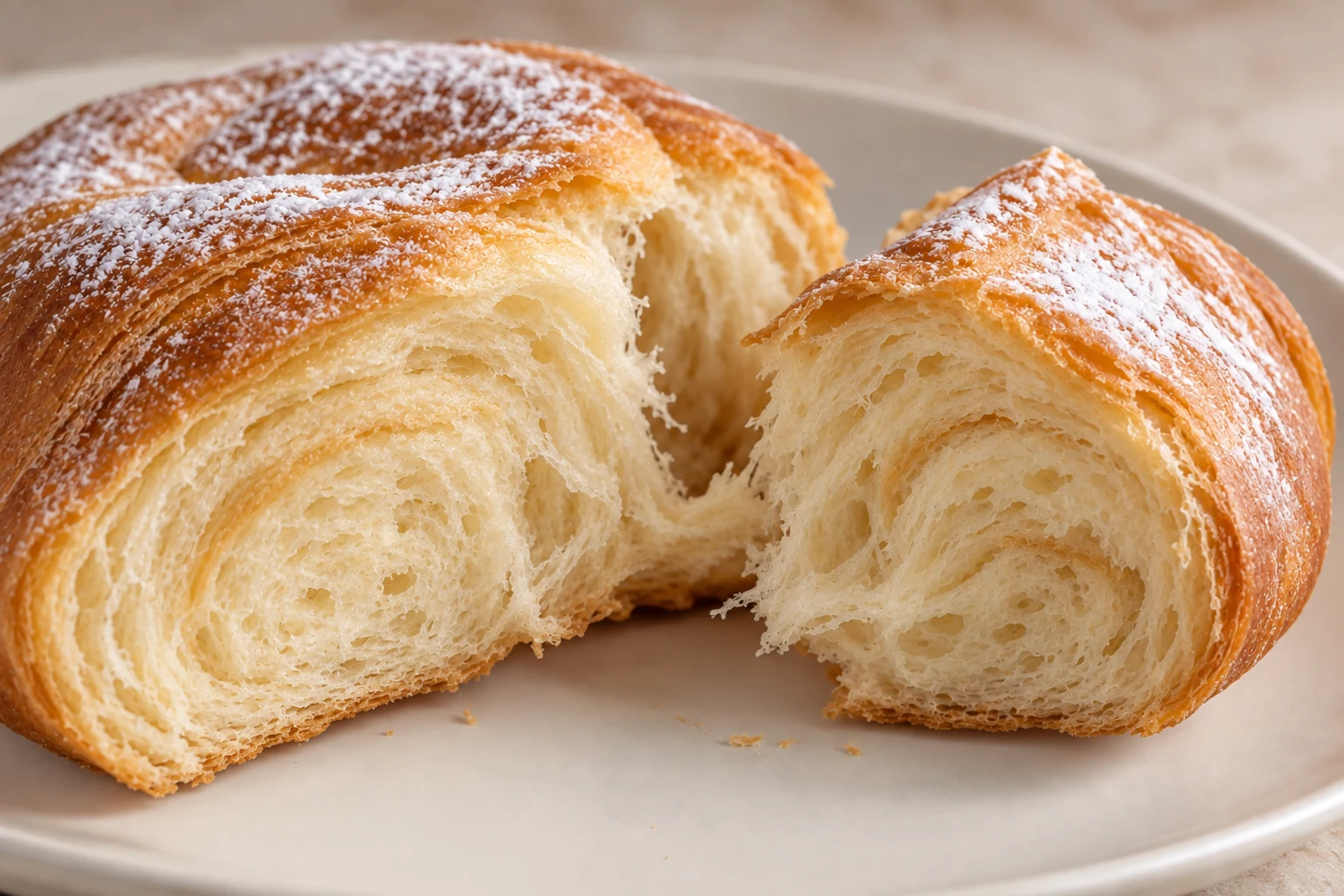
To understand the pastry, separate two actions: rolling a thin sheet into a long rope, then winding that rope into the familiar round spiral. The first builds the internal layers. The second gives the pastry its outline. Cutting or tearing a piece reveals the difference.
The baker’s sequence
Sheet, rope, spiral
The Mallorca specification puts laminating and shaping before the long fermentation. A documented visit to Ca’n Pomar by local food writer Manu CatMan makes the handwork easier to picture.
- 01
Stretch a membrane
The dough is rolled out, covered with lard and stretched thin. At Ca’n Pomar, the baker worked it into a broad, nearly transparent sheet resembling a sail. That thinness makes the internal layering possible.
- 02
Roll the sheet
Rolling the larded sheet over itself brings dough and fat into successive layers. In the Ca’n Pomar account, a strip of dough placed at the starting edge helped the baker begin this roll.
- 03
Coil with room to grow
The roll is lengthened and wound into a spiral on the baking surface. At Ca’n Pomar, gaps between the turns allowed for expansion. The pastry now has its outer shape as well as its internal layers.
Time is part of the work
Shaping is not the finish line
For the protected Ensaimada de Mallorca, the specification requires at least 12 hours of fermentation after shaping. It describes a crisp, fragile surface over a soft, cohesive interior with perceptible layers. The aim is a pastry that holds together beneath its delicate crust.
The working day can be longer still. In El País’s 2025 reporting, Joan Seguí of Forn de Sant Francesc in Inca described roughly 20 hours from starting an ensaïmada to selling it. The same report observed dough at Palma’s Fornet de la Soca being baked after a 24-hour fermentation. These are accounts of particular bakeries, not a single timetable for every kitchen.
Read the filling
Three versions, two ways of filling
The protected specification covers plain and cabello de ángel ensaïmadas. Bakery counters offer a wider repertoire: Forn Fondo in Palma lists cream, chocolate, apricot, marzipan and other variations alongside those two classics.
Lisa: plain
Lisa means the unfilled version. With no filling competing for attention, this is a useful choice for concentrating on the dough, its thin crust and the layers beneath.
- No filling inside the roll
- Lard remains part of the pastry
Cabello de ángel: baked in
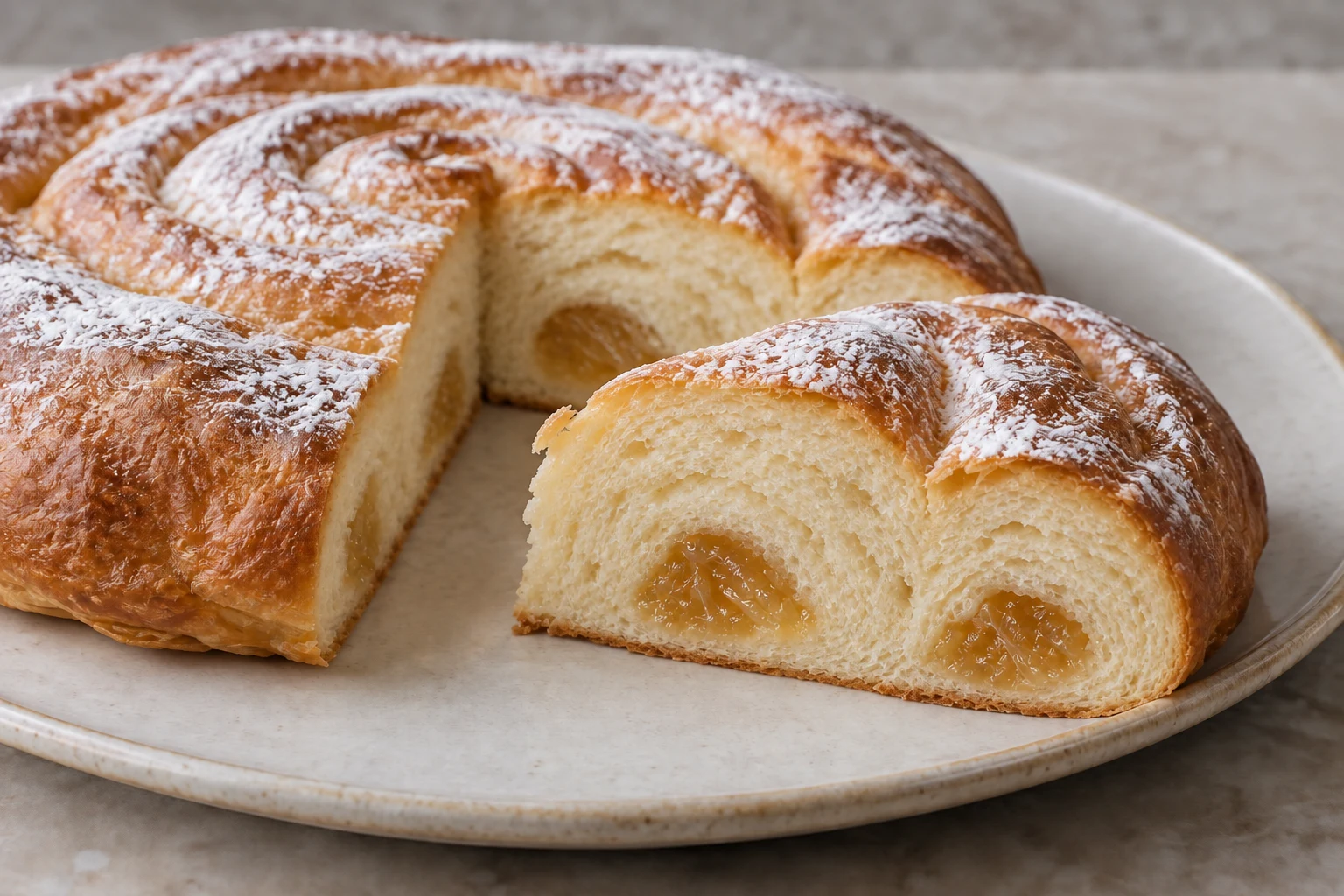
This sweet preserve is made from squash pulp and sugar. Under the Mallorca specification it goes onto the thin sheet before shaping, so the dough is rolled around it and baked with it enclosed.
- Added before rolling
- Preserve within the pastry
Nata or crema quemada: filled later
The Ca’n Pomar account describes another construction for whipped cream or burnt-cream fillings: bake a plain ensaïmada, then split it horizontally and fill it. Here the filling sits between the opened halves.
- Plain pastry baked first
- A separate layer added afterward
At the counter
Choose for the pastry or for the filling
For a first comparison, try a plain piece beside one with cabello de ángel: the difference is how the preserve joins the rolled dough. A cream-filled version changes the construction again. These are useful distinctions to ask about, even when the tops look similar under powdered sugar.
Visit Palma describes bakery displays that change with the season, including fig, apricot and sobrasada versions. The island’s tourism guide places individual ensaïmadas at breakfast or merienda, the afternoon snack, with café con leche or hot chocolate; larger ones are shared at celebrations. The choice of size and filling belongs to the occasion as much as to the recipe.
Research notes
Sources behind this story
The official specification establishes the protected pastry’s ingredients and process. Bakery accounts and local guides supply the working practices, variations and serving context.
- Government of the Balearic Islands — Ensaimada de Mallorca specification Ingredients, plain and squash-filled types, order of operations, shaped fermentation and texture; checked against the ministry-linked specification.
- Manu CatMan — A visit to the Ca’n Pomar bakery Firsthand account of a tourism-hosted bakery visit, including stretching, rolling and the different ways fillings are incorporated.
- El País — Ensaïmada makers in Mallorca, June 2025 Reported production schedules at Forn de Sant Francesc and Fornet de la Soca.
- Forn Fondo — Ensaïmadas The Palma bakery’s own account of its plain, filled and seasonal varieties.
- Visit Palma — Ensaïmadas in the city’s bakeries Local context for seasonal variations; origin theories on the page are not used here.
- Illes Balears — Ensaïmada de Mallorca The word saïm, small and large formats, and breakfast, snack and celebration service.
Keep exploring
More stories for your table
SpainSweet fritters
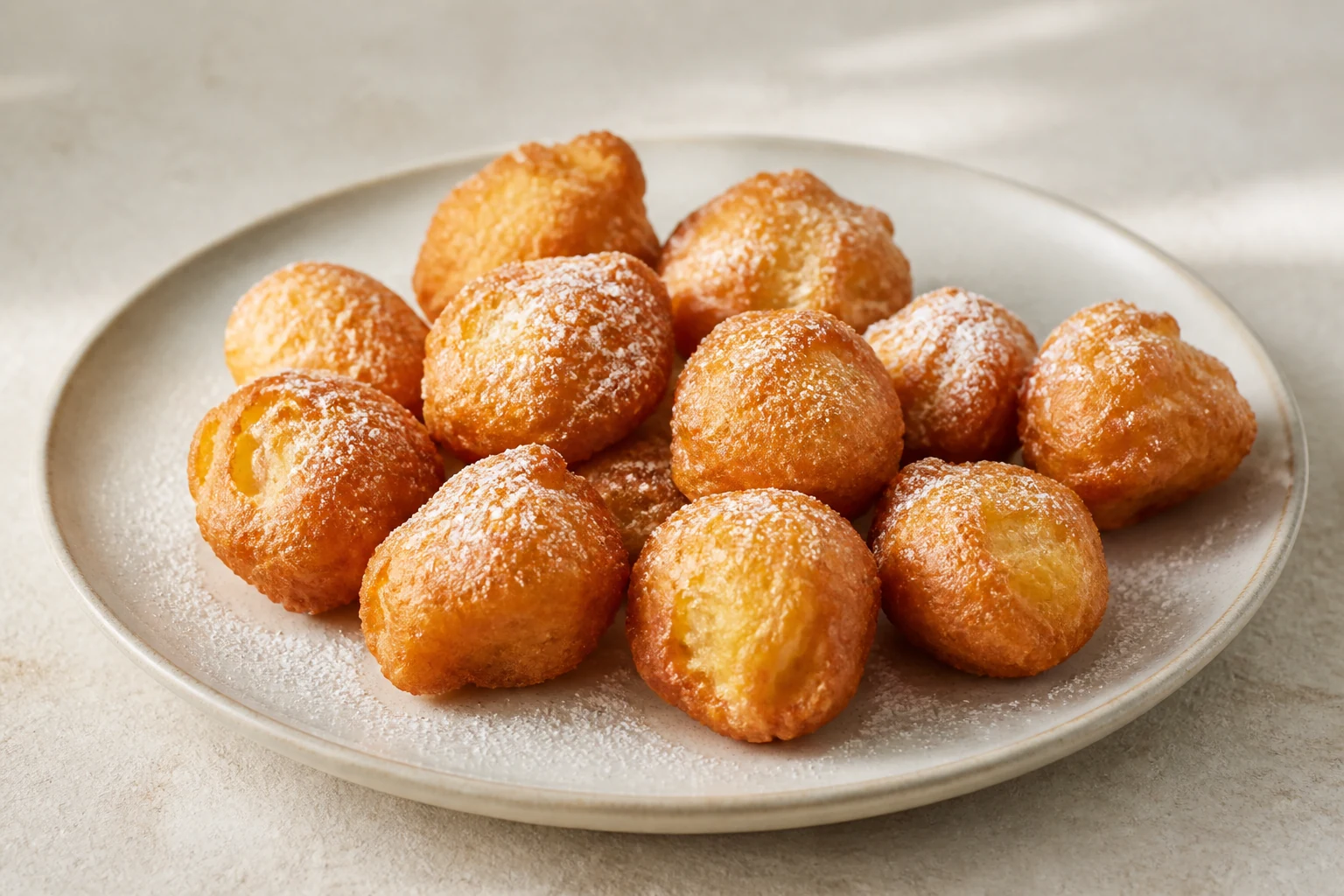
Buñuelos de Viento: How Spain’s Airy Fritters Rise
Why buñuelos de viento puff, when to serve them plain or filled, and how to make a small batch of Spain’s airy lemon fritters at home.

SpainSeafood
Pulpo á Feira: The Craft Behind the Fairground Dish
Galician pulpo á feira carries the work of specialist cooks from the fair to the plate. Explore its inland stronghold, family craft and finishing details.
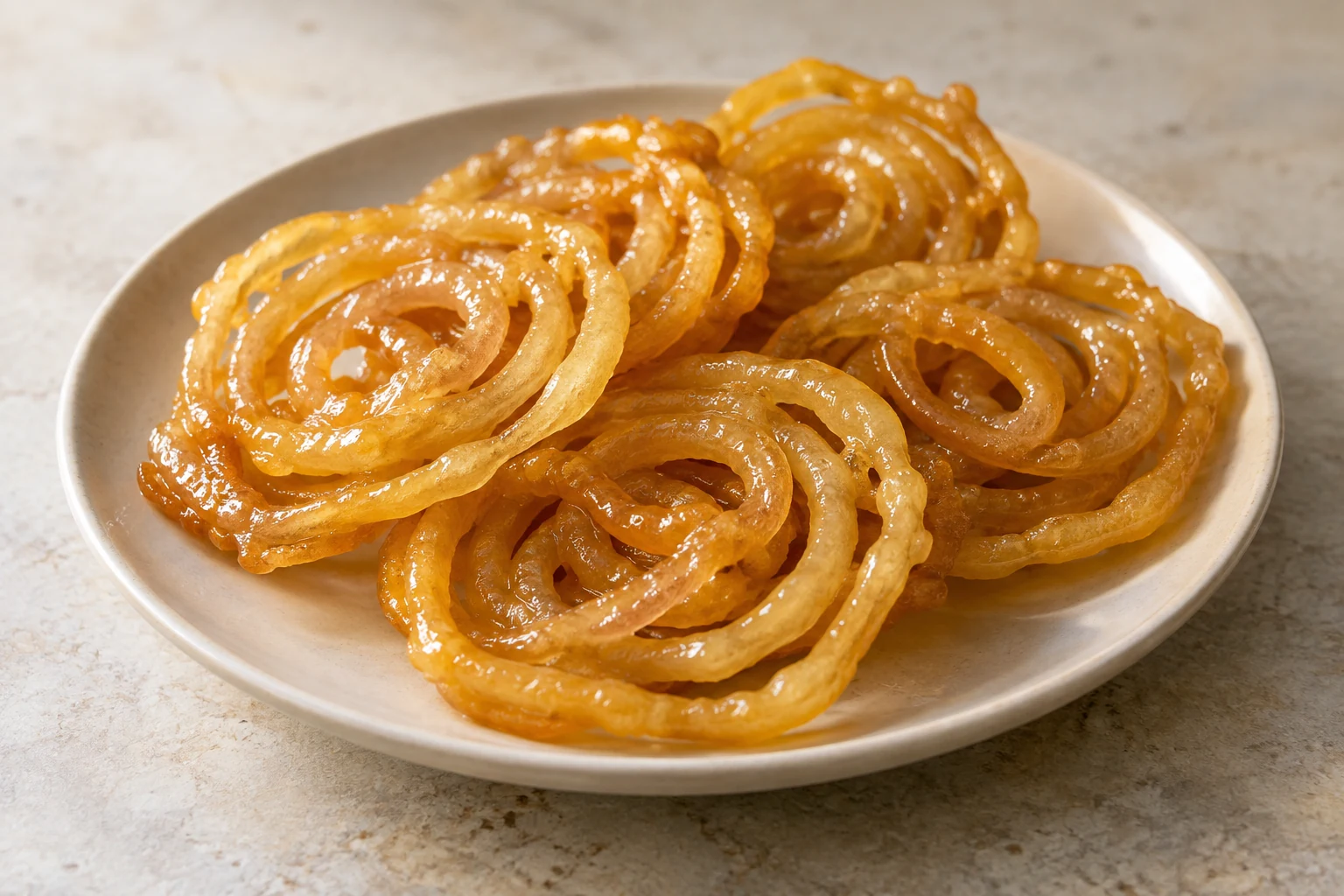
AfghanistanSweets
Afghan Jelabi: The Sweet Served with Fish
Follow Afghan jelabi from the Nowruz fish pairing to gifts between families, Ramadan gatherings and green tea, through cookbook accounts and local reporting.