
Crema catalana: the custard waits, the crust does not
Crema catalana
Citrus-scented custard and brittle caramel run on different schedules. Learn the make-ahead and serving choices behind crema catalana.
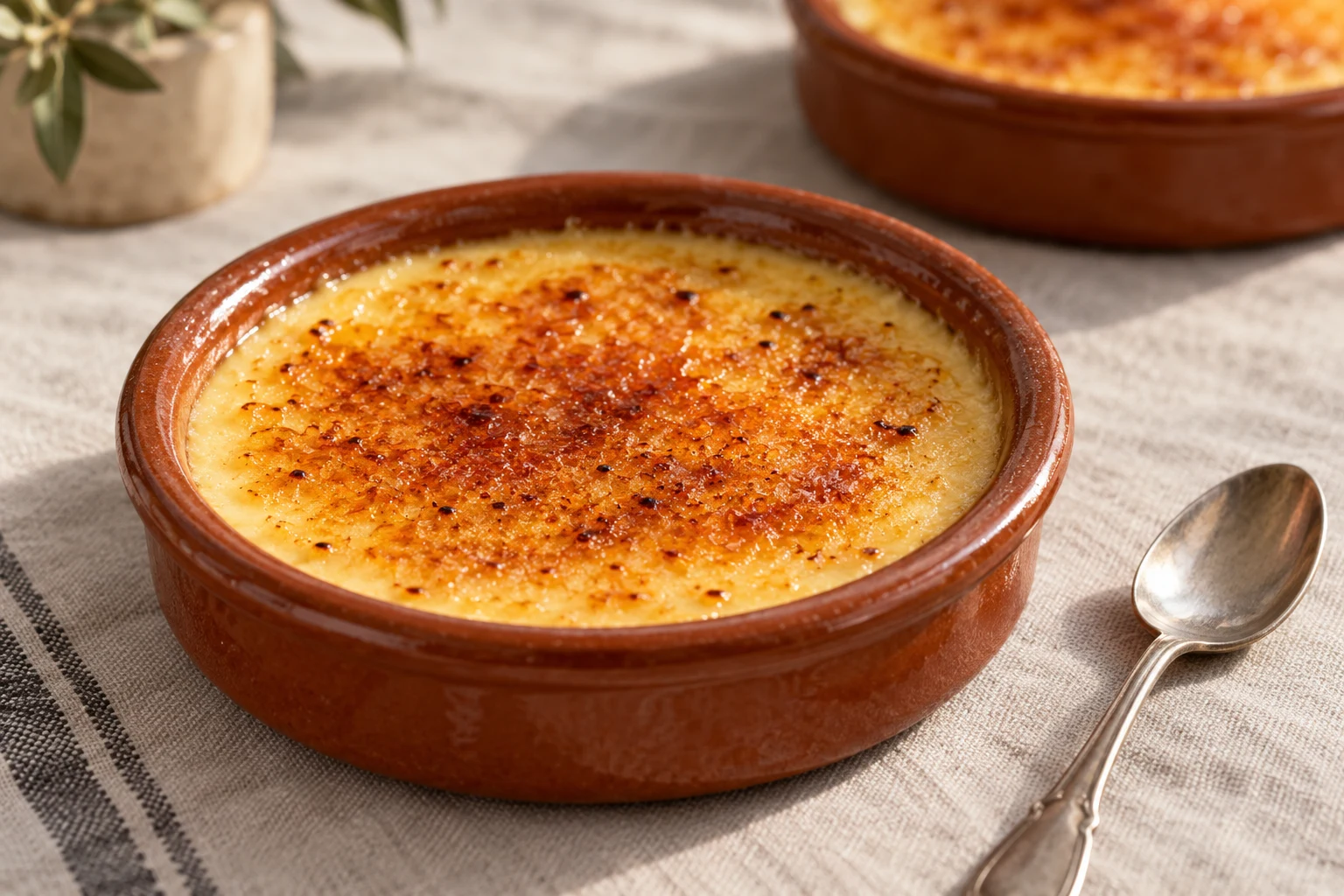
Listen for the first crack
The spoon reaches caramel before it reaches cream. A thin amber surface fractures, then gives way to a pale custard carrying citrus and cinnamon. Crema catalana's pleasure depends on that meeting of textures: a firm lid is only half the dessert, and the soft layer underneath deserves equal attention.
Spain's official tourism recipe places the dish in Catalonia and presents it in individual clay dishes, with sugar caramelised using a heated iron. Today's home recipes also use torches or grills. Across those tools, the most useful idea is timing. The custard and its surface are prepared in separate stages; the final caramel belongs close to the moment of eating.
Two stages, one spoonful
Choose a full recipe for quantities and timings. This is the order of work shared by the opened contemporary recipes.
- First
Build the scented custard
Milk meets citrus peel and cinnamon before the egg-yolk and starch mixture thickens on the hob. The aromatics establish the flavour beneath the caramel.
- Ahead
Let the base chill
The finished custard goes into its serving dishes and chills according to the recipe. Omar Allibhoy's version includes an overnight stage, making preparation and service separate jobs.
- At service
Make the sugar crust
Sugar is spread on the cold custard and caramelised. Allow it to harden, then bring the dishes to the table, keeping the contrast between crust and custard in view.
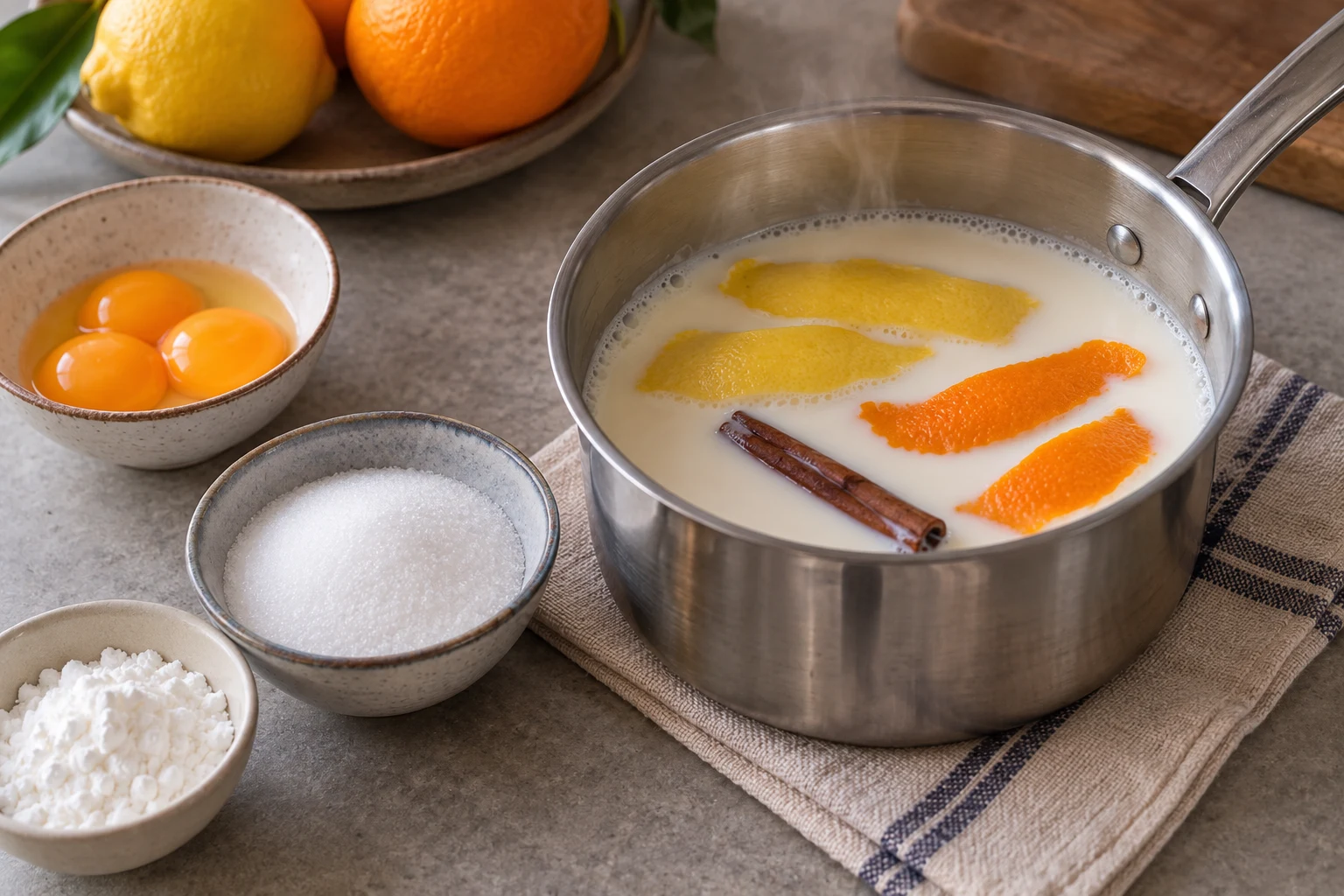
The custard has its own identity
Cinnamon and citrus are clear markers in Javier De La Hormaza's Basco recipe. He infuses whole milk with orange peel, lemon peel and a cinnamon stick, then removes those aromatics before thickening. That is a useful reading cue: the finished cream should suggest the peel's fragrance, while pieces of peel are a preparation ingredient rather than a required mouthful.
Milk is central to the official recipe and to Harriott's version, but it is too rigid to say that every published crema catalana contains no cream. Allibhoy's Good Food recipe uses both whole milk and double cream, while retaining citrus, cinnamon, yolks and cornflour. Treat this as a named variation. The title alone does not tell you every ingredient in a restaurant's or home cook's version.
Check the two textures separately
Below: smooth and spoonable
Ainsley Harriott describes the thickening custard coating the back of a wooden spoon before it is poured into shallow dishes or ramekins. His cornflour note also acknowledges a preference for a runnier consistency.
- Follow the chosen recipe's thickening cue.
- A firm-looking top does not prove the base was cooked correctly.
Above: a thin brittle layer
Basco calls for a thin sugar layer spread across the custard before caramelising. Harriott waits for the caramel to harden and serves immediately. The crust should add a clear texture change without eclipsing the cream beneath.
- Even coverage is a useful visual cue.
- Finish near service instead of treating the crust as an early preparation step.
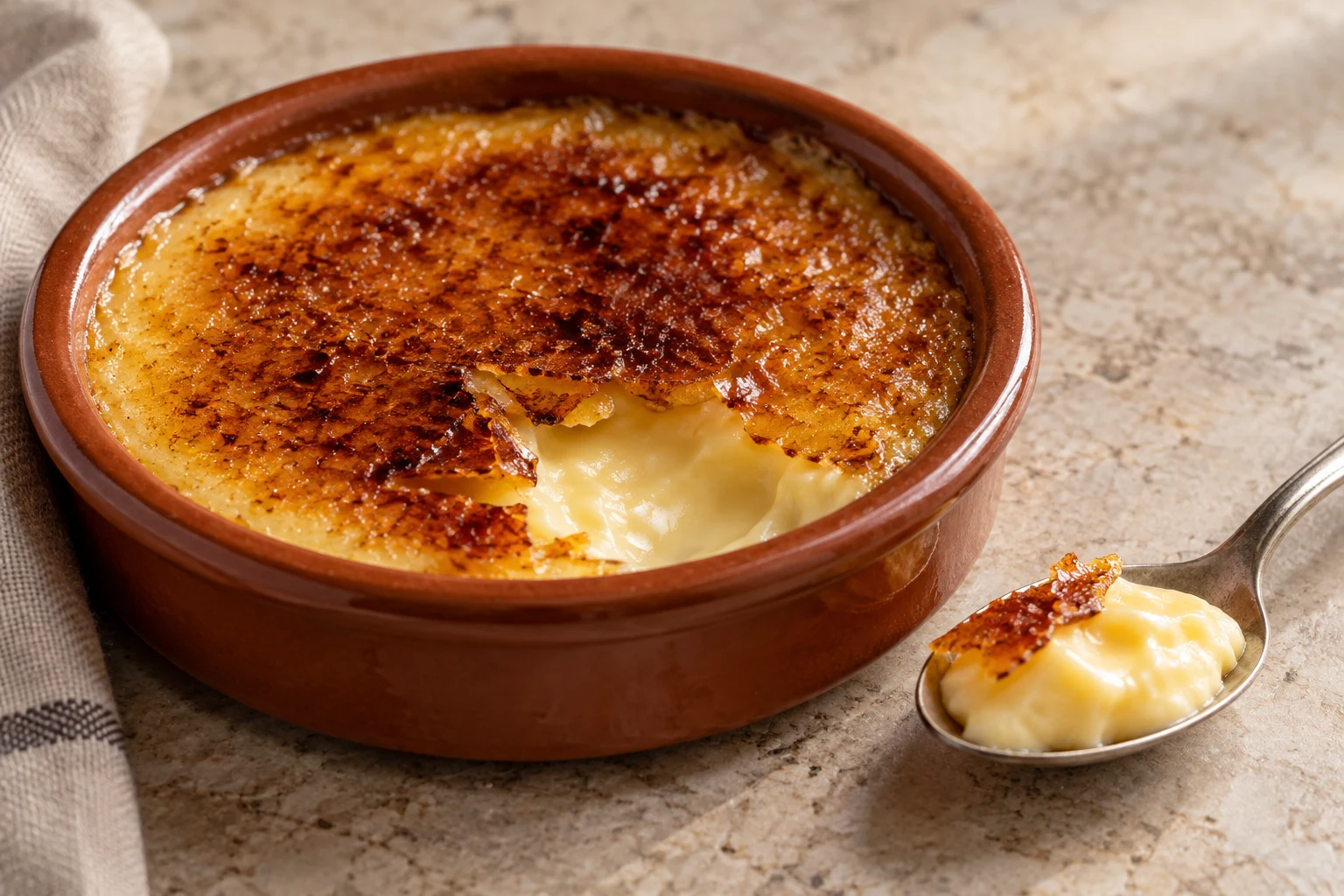
Choose the dish for the dessert
A shallow clay dish gives the crust a broad surface and makes the custard easy to reach. Spain.info's presentation links those dishes with the heated-iron finish; modern recipes allow ramekins too. The vessel is a practical choice as well as a visual one, especially if you are choosing portions before making the base.
The recipes consulted offer different caramelising tools, so follow the instructions for the tool and dish you actually have. A grill heats the whole setting differently from a torch aimed at the surface. Switching tools is a decision to read through, not a reason to assume that all finishing times transfer unchanged.
Prepare ahead, then bring it together
For a home menu, this dessert offers a useful division of attention. Finish the custard in advance using one complete source recipe; reserve the caramelising step for service. This guide does not provide a tested formula, interchangeable yolk counts or a universal chilling time.
At the table, break a small patch of crust and take caramel with the cream below it. Notice the citrus before adding another accompaniment. That simple first spoonful shows why the two stages are worth keeping distinct: one gives you the base, the other gives you its final crack.
Research notes
Sources behind the custard and crust
An official regional recipe and three independently published cooks' methods support the presentation, ingredient variations and order of preparation.
- Spain.info: crema catalana Official Catalonia recipe and clay-dish, heated-iron presentation.
- Javier De La Hormaza: crema catalana Citrus infusion, smooth custard and a thin sugar layer.
- Ainsley Harriott: crema catalana Consistency cues, hardening the crust and explicitly optional fruit.
- Omar Allibhoy: crema catalana A milk-and-cream variation with overnight chilling and finishing at service.
Keep exploring
More stories for your table
Spanish cuisine Pastry
Ensaïmada: The Layers Inside Mallorca’s Spiral
How thin dough, pork lard and a long rest shape Mallorca’s ensaïmada—and why squash preserve and cream become part of the pastry in different ways.
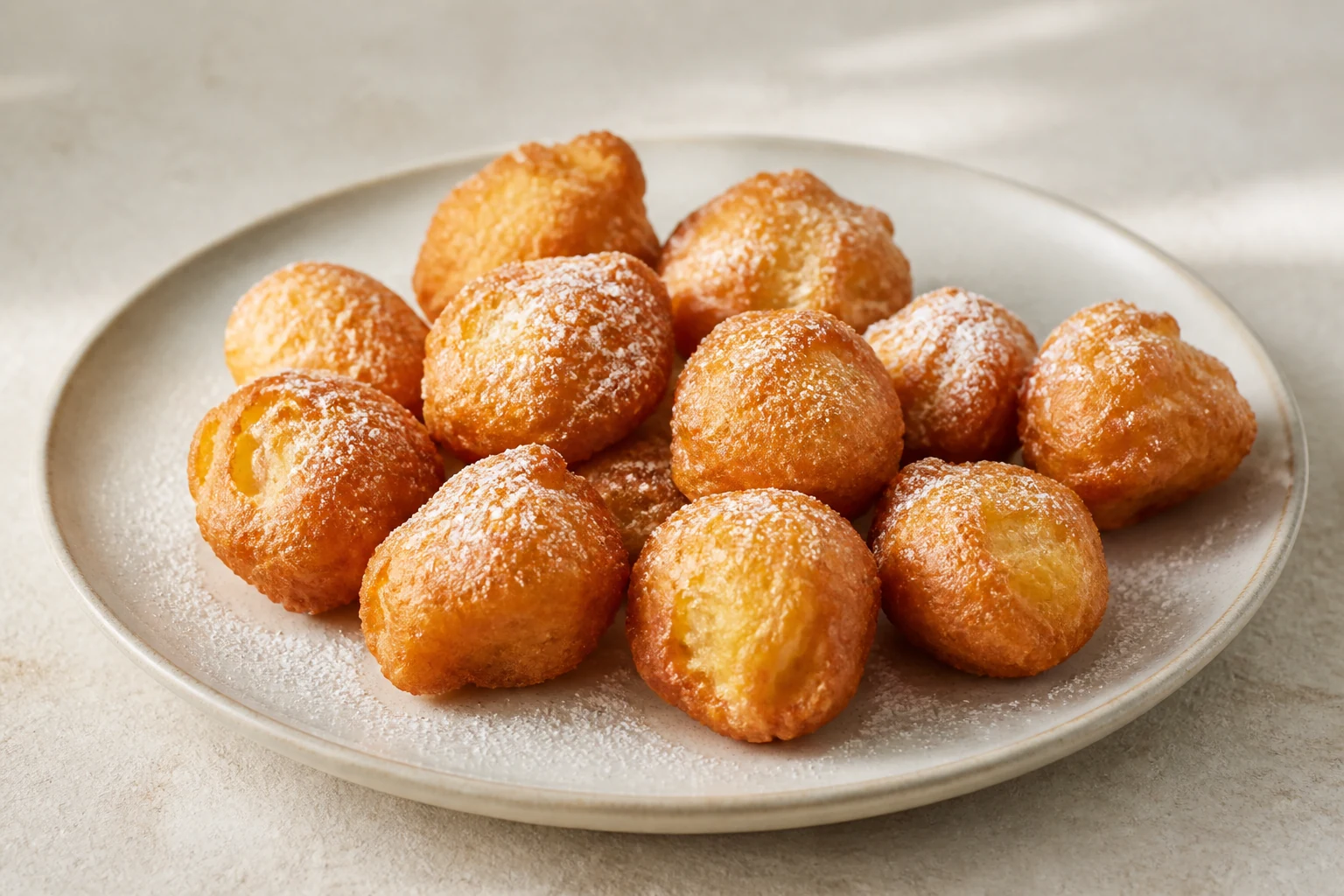
Spanish cuisine Sweet fritters
Buñuelos de Viento: How Spain’s Airy Fritters Rise
Why buñuelos de viento puff, when to serve them plain or filled, and how to make a small batch of Spain’s airy lemon fritters at home.
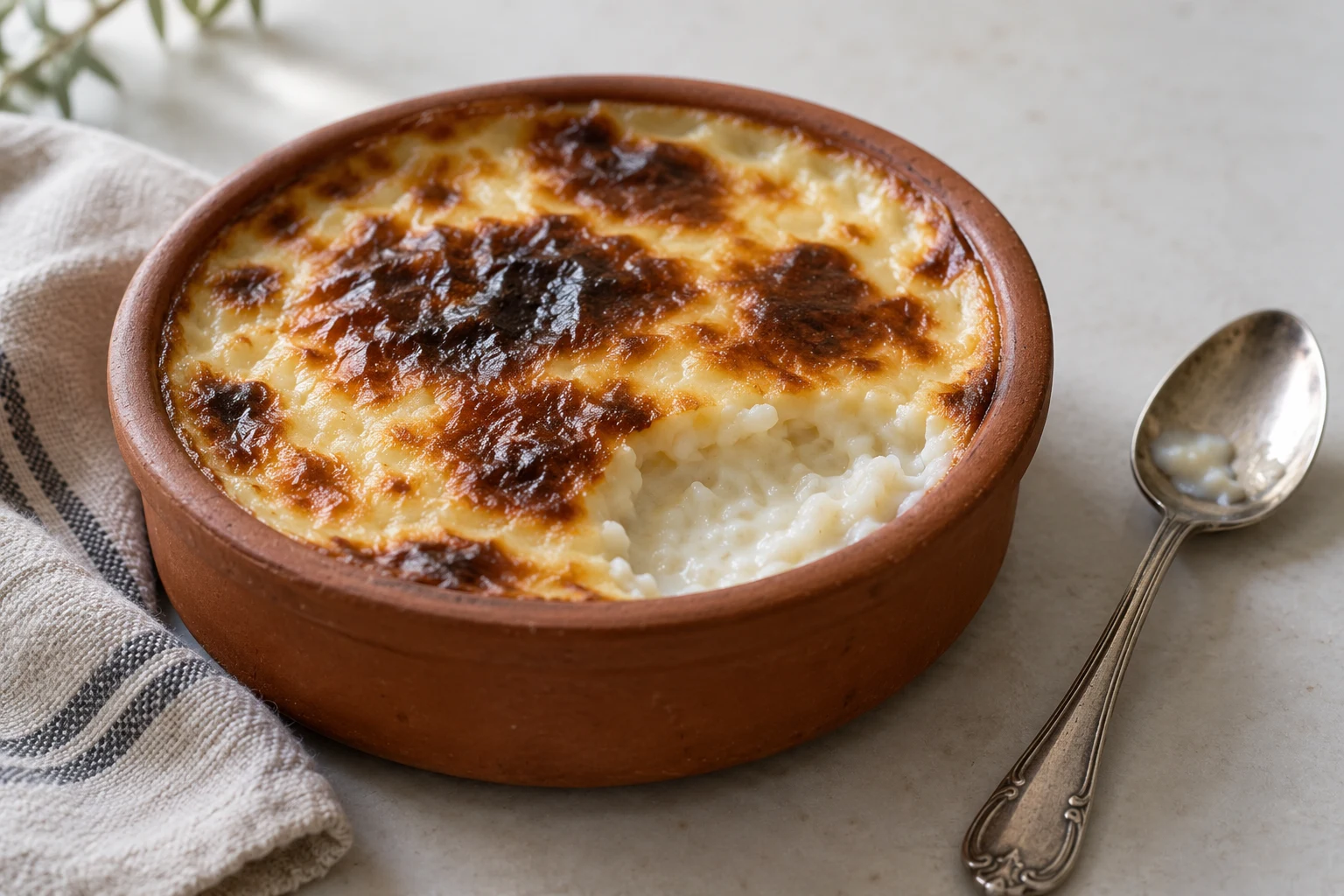
Turkish cuisine Rice pudding
Sütlaç: Soft Rice, Milk and a Browned Finish
Sütlaç can be a plain chilled rice pudding or fırın sütlaç with a browned oven finish. Understand the tender grains, different thickening methods and the pudding-shop setting.