
Morcilla de Burgos: what the rice tells you
Morcilla de Burgos
Rice and onion give Burgos morcilla its distinctive filling. Read the product, then compare crisp slices, peppers and an apple-compote serving.
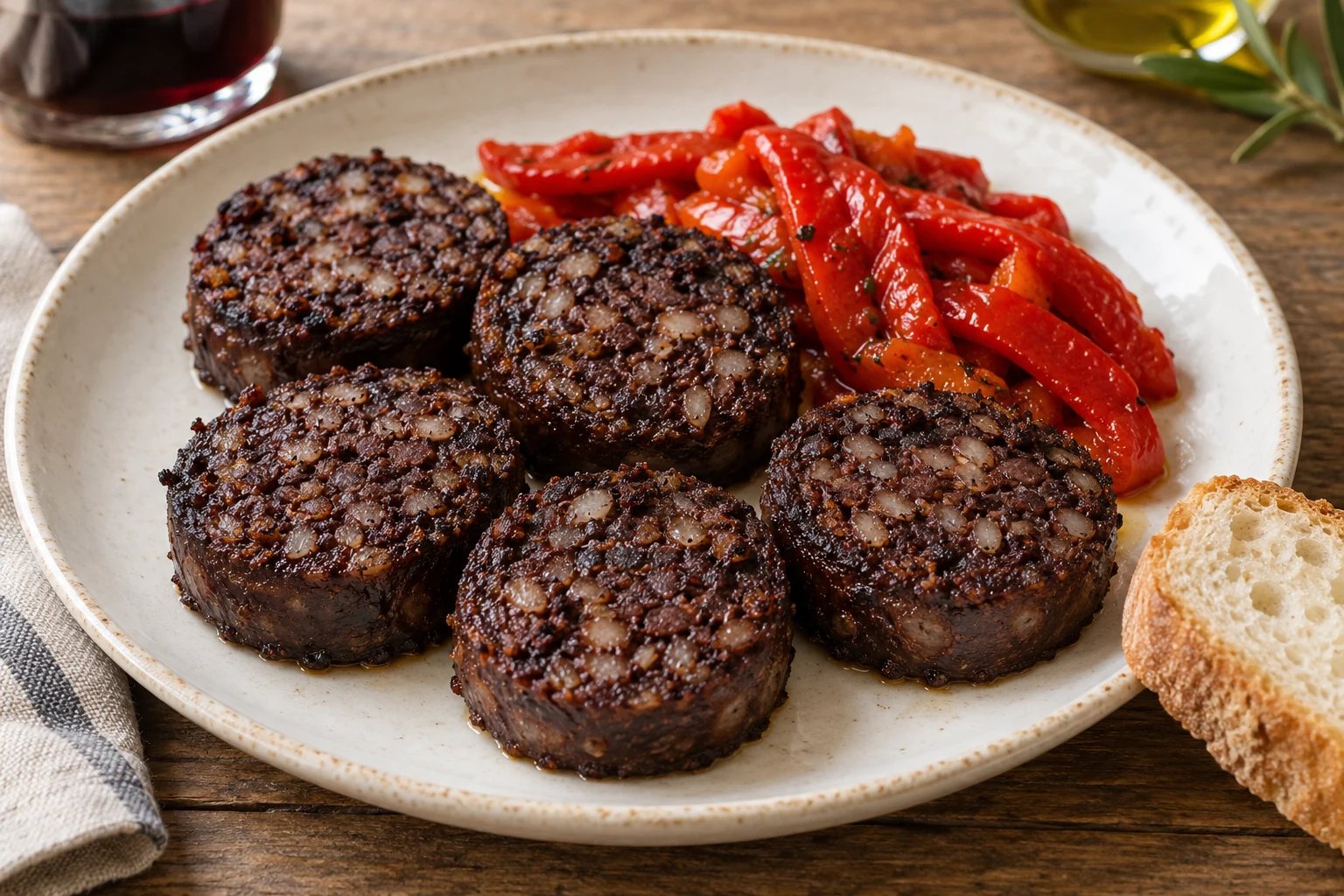
Look at the cut face
The dark colour is the first thing you see, but it is not the most informative detail. In Morcilla de Burgos, pale rice grains interrupt a brown filling, giving each slice a visible pattern. Once fried, the outside can be crisp while the centre remains a softer, grain-filled bite. That contrast makes a small tapa feel more layered than its few ingredients suggest.
Rice and onion deserve attention alongside the blood and fat. Burgos Gastronomy City's recipe names all four in the sausage and pairs fried slices with peppers. It is a practical introduction: taste a piece of the filling before covering it with its accompaniment, then notice how the second bite changes.
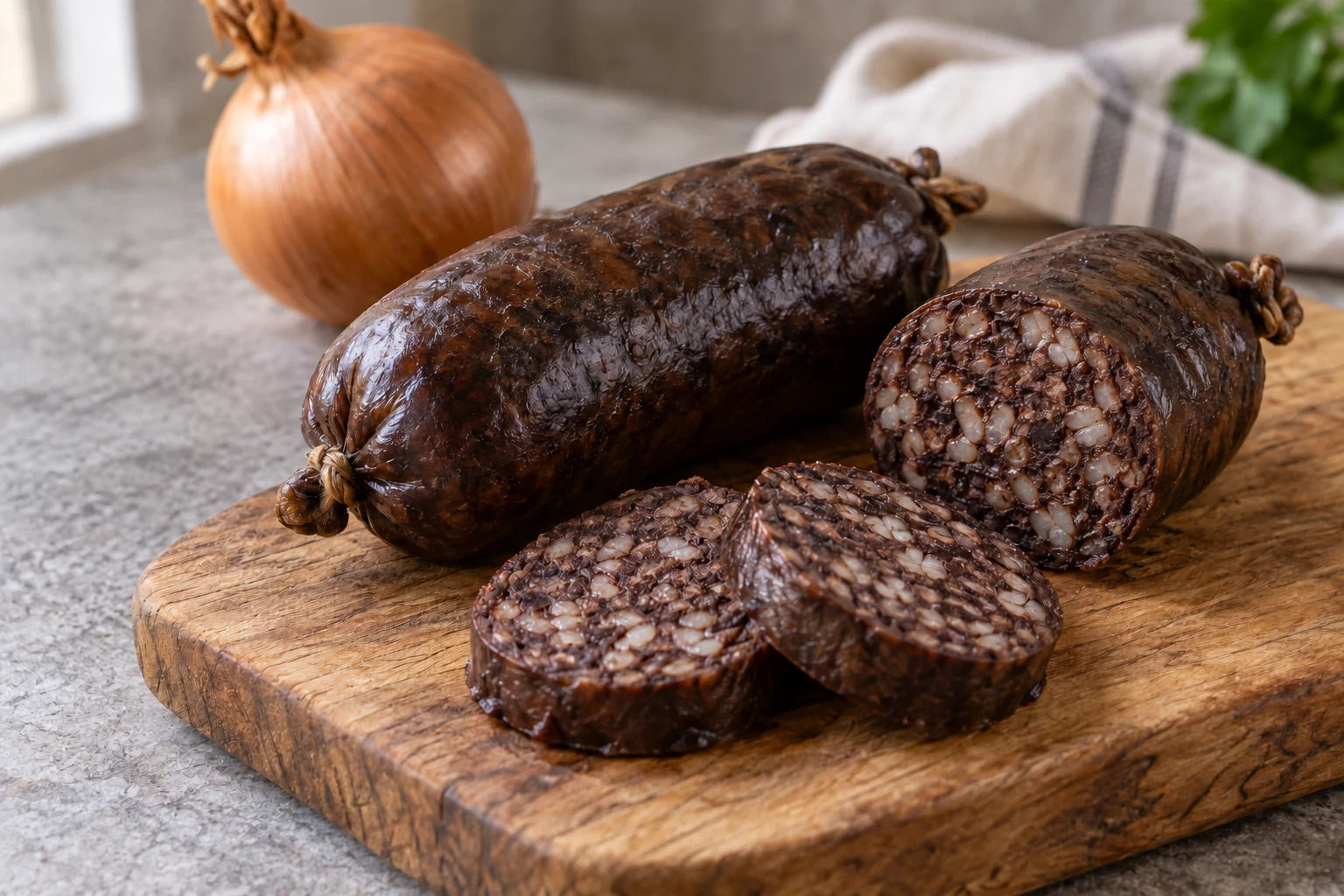
The protected product gives a precise reference
The published PGI specification describes a stuffed, cooked product made with horcal onion, rice, blood, fat, spices and salt. It expects visible rice grains, onion aroma and a crumbly texture. Its production area is the province of Burgos. Those details give you a reference for the named product without reducing every Spanish morcilla to the same formula.
One detail is easy to overlook: the specification permits sheep, cow or pig blood. A particular recipe's description may emphasize pork, but that is not a universal ingredient guarantee. If the animal source matters to your choice, read the actual product information. The specification also describes a numbered label bearing the protected name and PGI logo.
Three choices behind a crisp slice
Marta Montero's fried morcilla method makes the handling decisions explicit. Read its complete instructions for the product you choose.
- 01
Cut without tearing
Her sharp-knife advice is about keeping the casing and round intact. A ragged cut gives the filling more opportunity to break away before the slice reaches the pan.
- 02
Think in batches
Montero adds small batches to hot oil and explains the aim of avoiding a temperature drop. Overcrowding is a different cooking setup from the one the recipe describes.
- 03
Let the oil drain
She transfers the fried slices to absorbent paper. This finishing step is easy to plan ahead with the plate and accompaniments, so the slices are ready to serve without delay.
Two ways to build the tapa
These independently published serving choices keep the morcilla central while changing what surrounds it.
Slices with peppers
Burgos Gastronomy City serves crisp rounds with red or green peppers, roasted or fried and sautéed with garlic. The pepper sits beside the sausage as another texture, rather than becoming part of its rice filling.
- Taste the slice and pepper separately first.
- A simple plate makes the filling easy to recognize.
Apple underneath, piquillos above
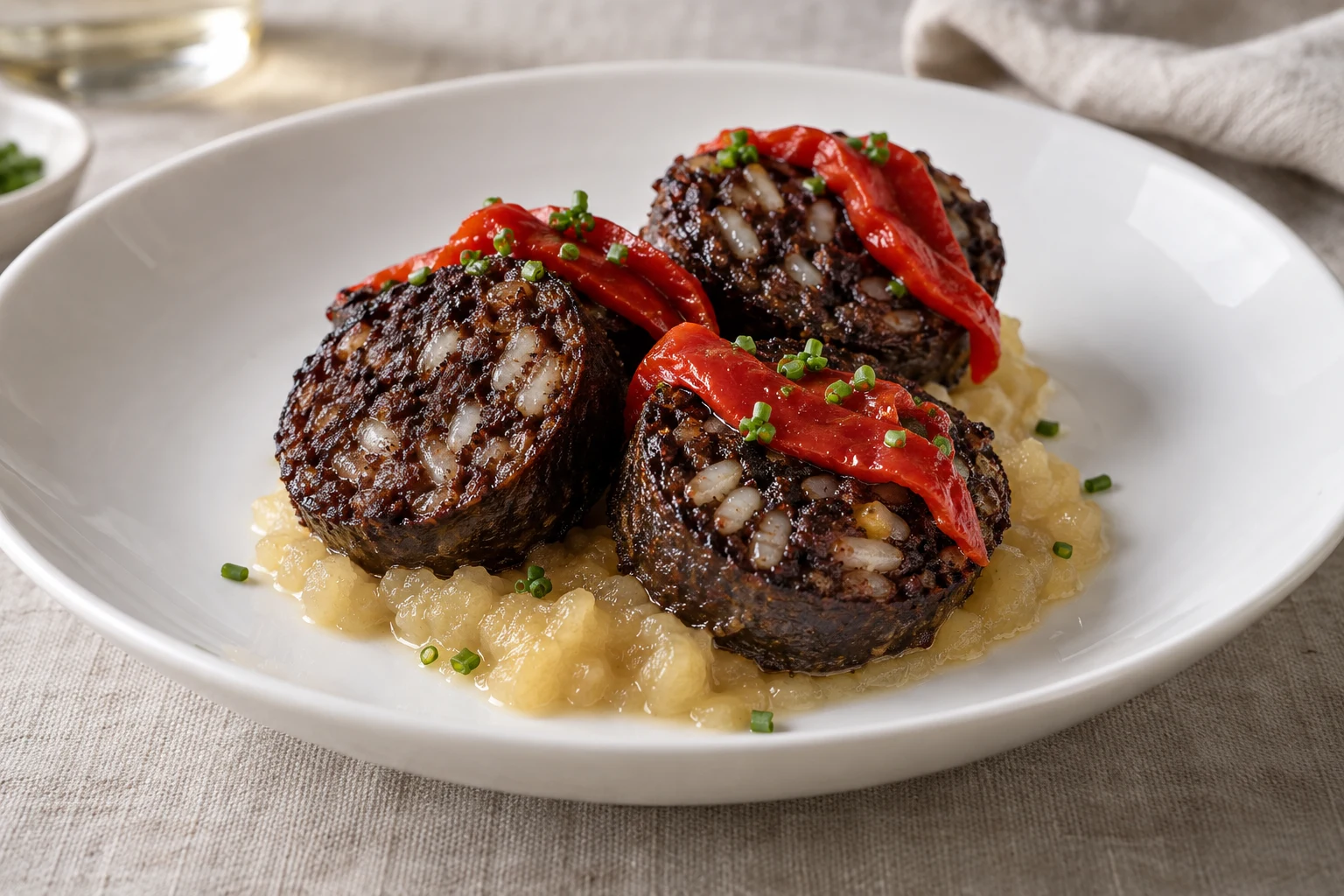
Omar Allibhoy's version places fried slices over apple compote, adds piquillo peppers and finishes with chives. His peppers include garlic, sherry vinegar and sugar, so the accompaniment brings its own seasoning.
- The apple base is a named chef's serving choice.
- Piquillos are an accompaniment, not an ingredient required by the sausage's identity.
A whole slice is only one form
The Burgos city recipe also offers a more elaborate crisp bread bite using a cream of skinless morcilla and meat broth, with pepper marmalade and other finishing elements. That preparation tells a different story from the intact round: the filling is deliberately broken down and spread, so recognizing the product depends on the description as much as its appearance.
This is useful when reading a menu. 'Morcilla' can appear as the main slice, a filling, or a component of a more constructed bite. Ask how it is served if you want to try the rice texture directly. If you already know the ingredient, a blended preparation can be an interesting next comparison.
Begin with the grain-filled centre
For a first serving, a simple slice with peppers makes the ingredient easy to read. Take a small bite from the centre, then one that includes the crisp edge; finish with a little pepper. The order separates the filling, frying and accompaniment into choices you can actually taste.
For home cooking, these sources start from prepared morcilla. They are finishing and serving methods, not instructions for making blood sausage from raw ingredients. Choose the product first, then a complete recipe that presents it the way you want to eat it.
Research notes
Product identity and serving evidence
A published protected specification and three original recipe sources support the ingredient distinctions, slice handling and contrasting accompaniments.
- Morcilla de Burgos PGI specification Published product definition, texture, permitted blood sources and identifying label.
- Burgos Gastronomy City: morcilla with peppers Fried rounds with peppers and a separate blended morcilla bread preparation.
- Omar Allibhoy: morcilla with piquillos Apple compote, seasoned piquillo strips and chives in a named chef's serving.
- Marta Montero: fried Morcilla de Burgos Sharp-knife handling, small frying batches and draining the slices.
Keep exploring
More stories for your table
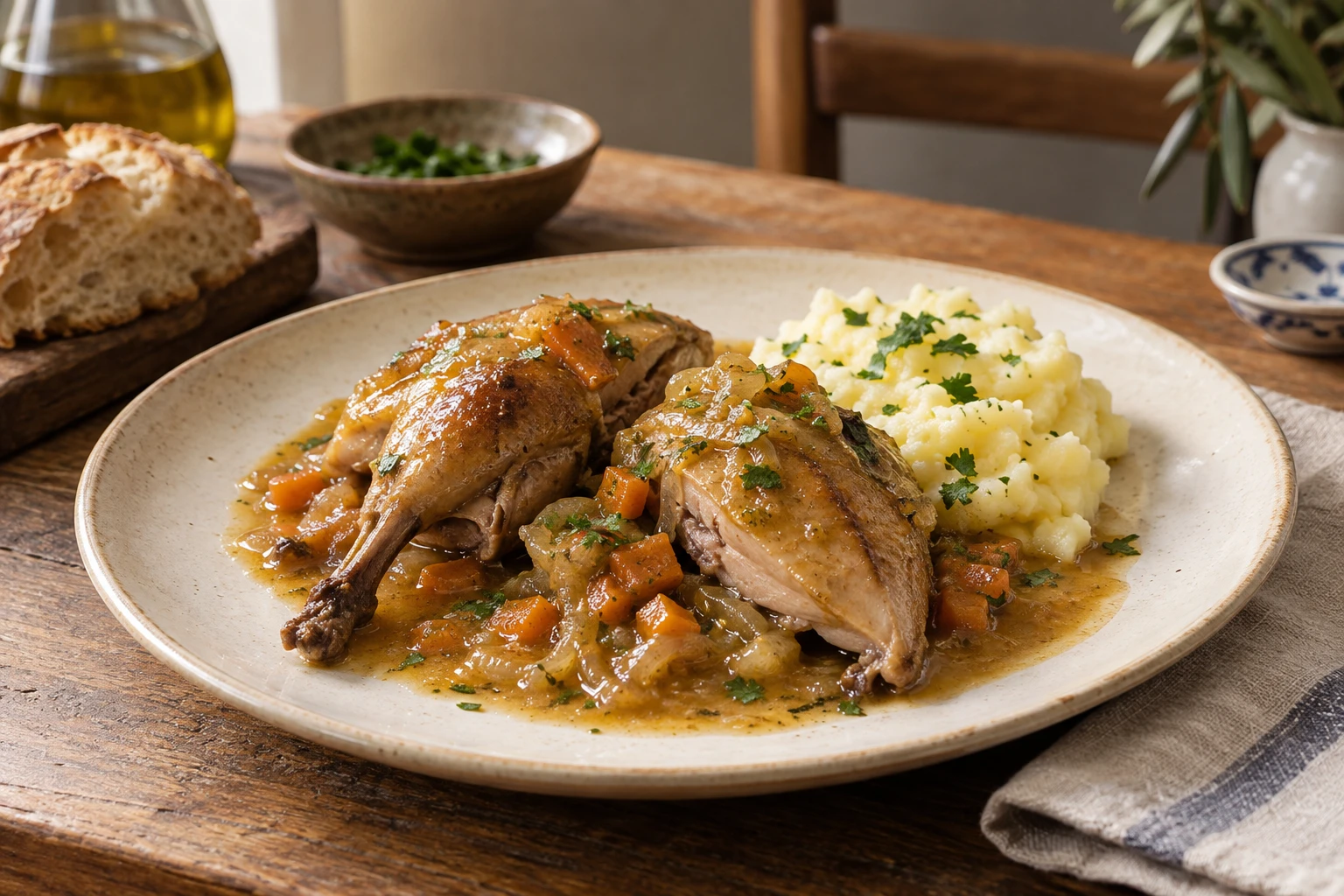
Spanish cuisine Braised game bird
Perdiz Estofada: Finish the Bird, Then the Sauce
Toledo-style partridge stew gives the bird and its vegetable sauce separate stages. Compare the wine, vinegar and finishing choices before cooking.

Spanish cuisine Seafood
Pulpo á Feira: The Craft Behind the Fairground Dish
Galician pulpo á feira carries the work of specialist cooks from the fair to the plate. Explore its inland stronghold, family craft and finishing details.
Russian cuisine Savory pie
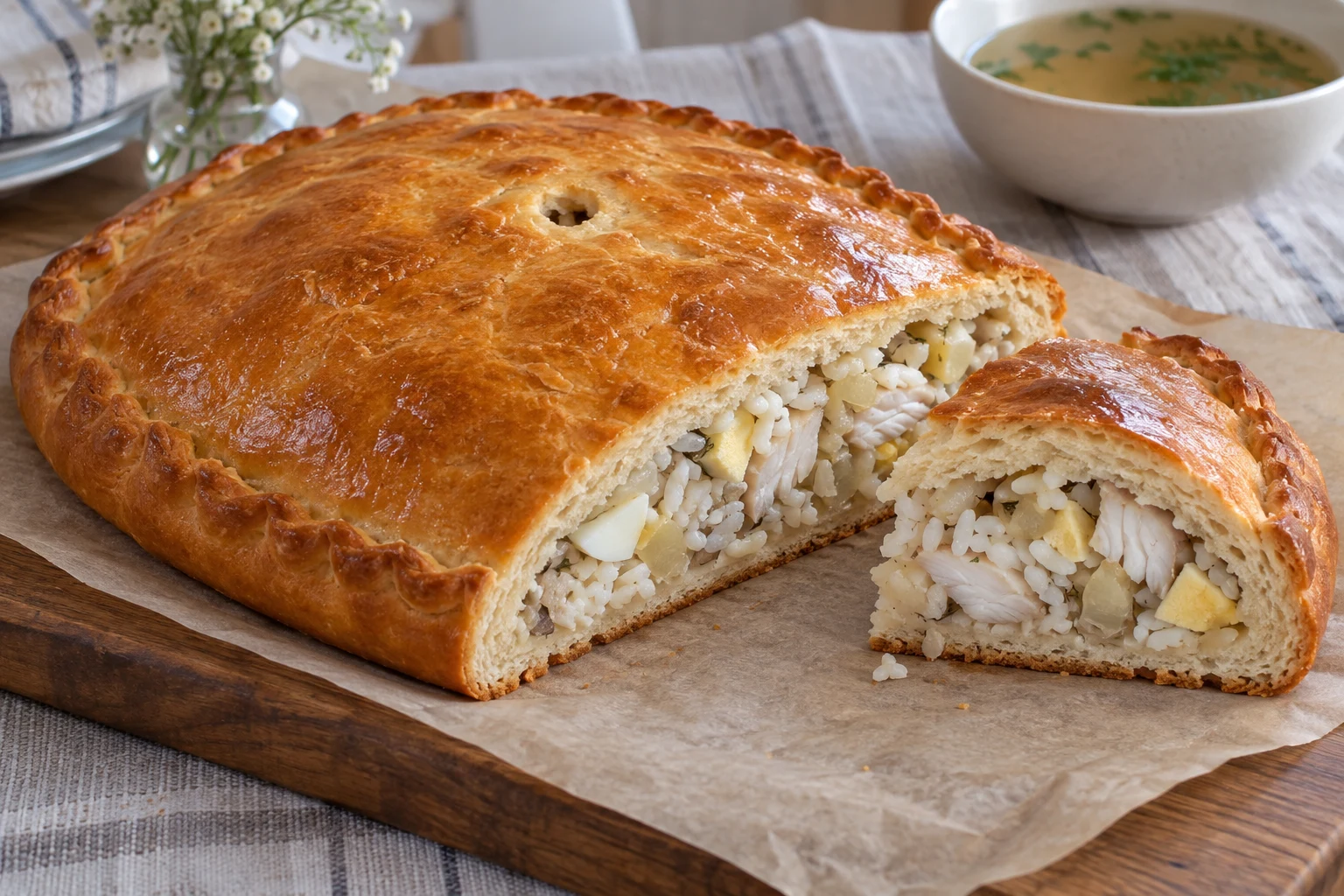
Fish Pirog: Decide What Goes Under the Lid
A closed yeast-dough fish pirog can begin with fillet, poached fish or a tin. Compare its filling, rice and steam vent before choosing a recipe.