
Pryaniki: Shape Before the Glaze
Пряники
A rounded honey cookie under a white sugar shell is one way to meet pryaniki. Filled rounds and printed gingerbread show why the name does not promise one shape, spice blend or glaze.
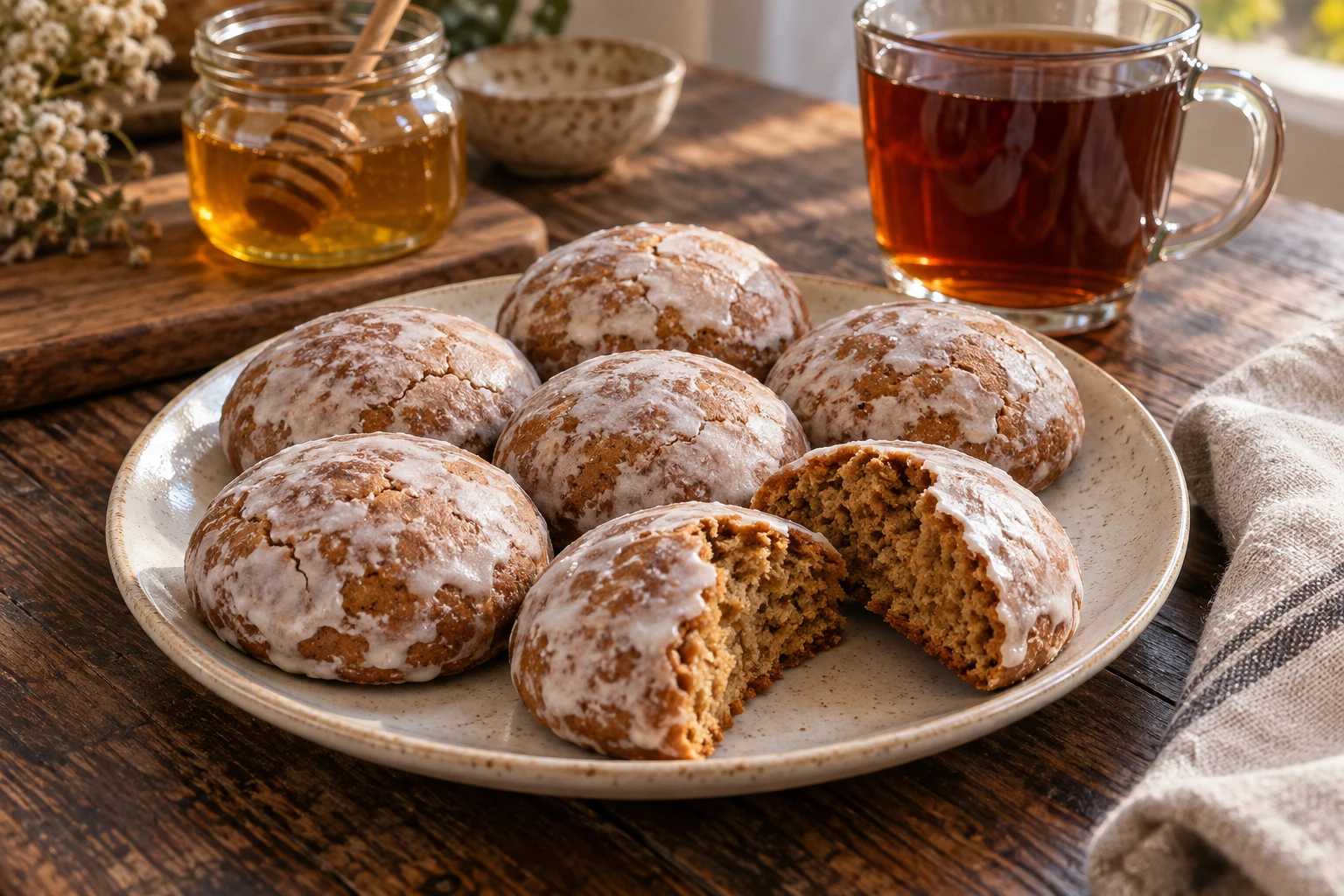
Choose the cookie you mean
Pryaniki are often introduced as Russian honey spice cookies, but that description does not specify the method. A small, domed cookie with a white glaze is a different baking project from a rolled round sealed around jam. A patterned Tula pryanik adds the work of a carved board.
Begin with the shape you want to serve. Then read the corresponding dough and finishing instructions together. The useful question is whether the dough will be scooped, rolled and sealed, or pressed into a pattern—not how to make every version conform to the same photograph.
Three ways to build a honey cookie
Scooped and rounded
Olga's Flavor Factory makes a soft honey-and-coffee dough flavored with allspice, nutmeg and anise. Resting and chilling make it easier to portion into balls. The cookies spread as they bake, so their smooth domes begin as separated, evenly sized pieces.
Rolled and filled
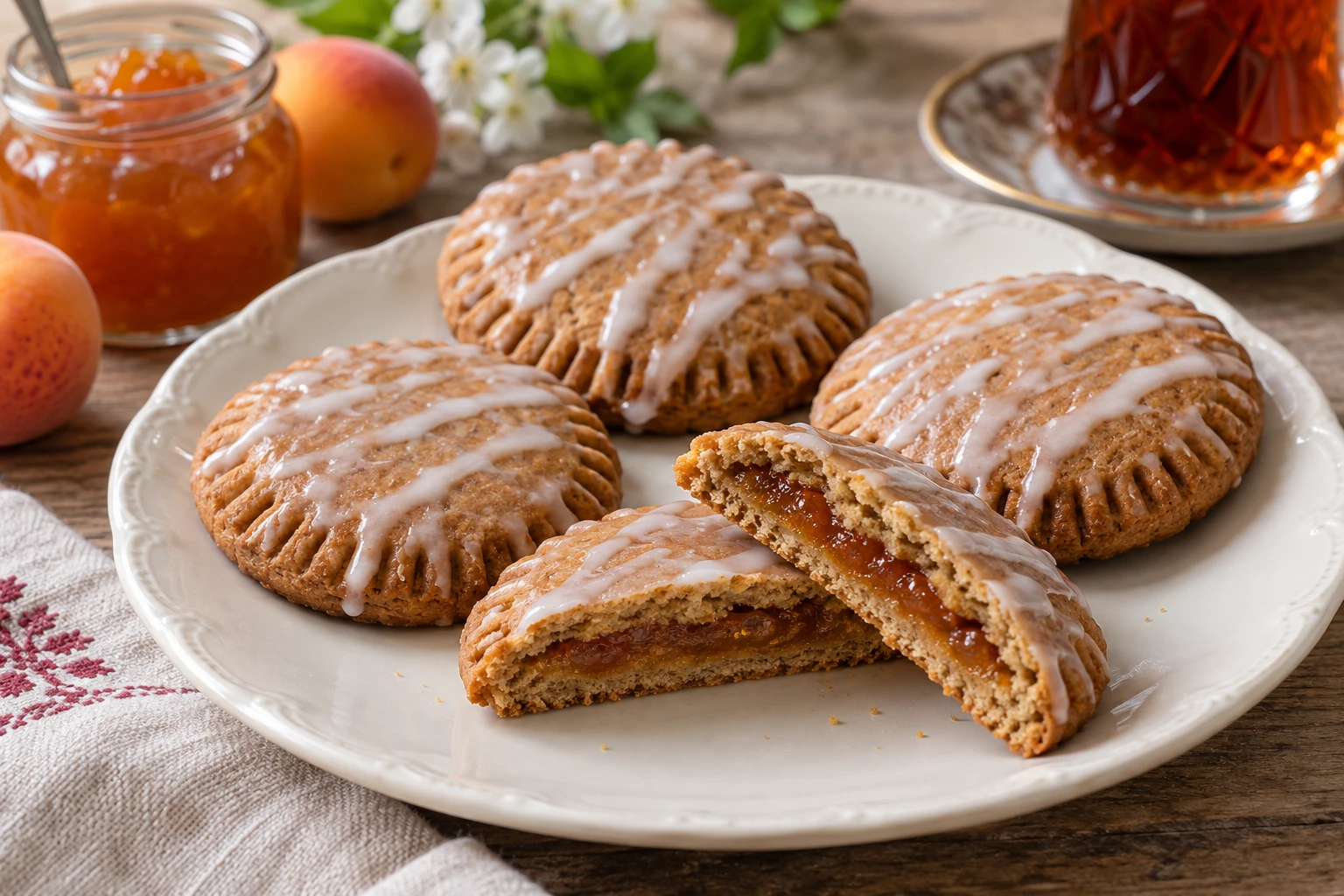
Denise Farrell's King Arthur recipe uses honey, cardamom, ginger, mace and cinnamon, with a little almond flour. Two thin rounds enclose plum or apricot jam; the edges are sealed and crimped. A light lemon-sugar drizzle finishes the cooled cookies.
Another family flavor
Natalya Drozhzhin's Momsdish recipe comes from her Ukrainian family and uses honey, sour cream and mayonnaise. She deliberately leaves out the spices for a more neutral cookie. It is a useful reminder that this wider Slavic cookie family includes household preferences as well as strongly spiced versions.
A printed pryanik belongs to its own craft
The Staraia Tula factory's museum centers the printed honey pryanik. Its collection includes worn wooden boards, old photographs and documents about Tula's confectioners. Here the board is part of the method: it makes the surface into a pattern rather than merely a place for icing.
A scooped home cookie does not need a mold to be worth making. Equally, pressing a spreading dough into a decorative mold does not automatically reproduce the Tula craft. Treat the printed form as a distinct tradition and choose a recipe intended for its shaping process.
Match the handling to the dough
- 01
Let a soft dough firm up
Olga recommends refrigerating her honey dough before shaping and explains that immediate handling is difficult because it is sticky. Use her chilled-dough approach rather than trying to make the mixture manageable by adding a large, unmeasured amount of flour.
- 02
Portion consistently
Momsdish uses equal portions and wet hands to shape its sticky dough. Comparable pieces make the tray easier to judge: you can follow one recipe's bake without having tiny cookies beside much larger ones.
- 03
Protect a filled edge
King Arthur's jam rounds need a closed border. Keep filling away from the seam and seal the dough as directed. Their flat, crimped construction is a separate job from rolling a spoonful of soft dough into a ball.
The white finish is a method, too
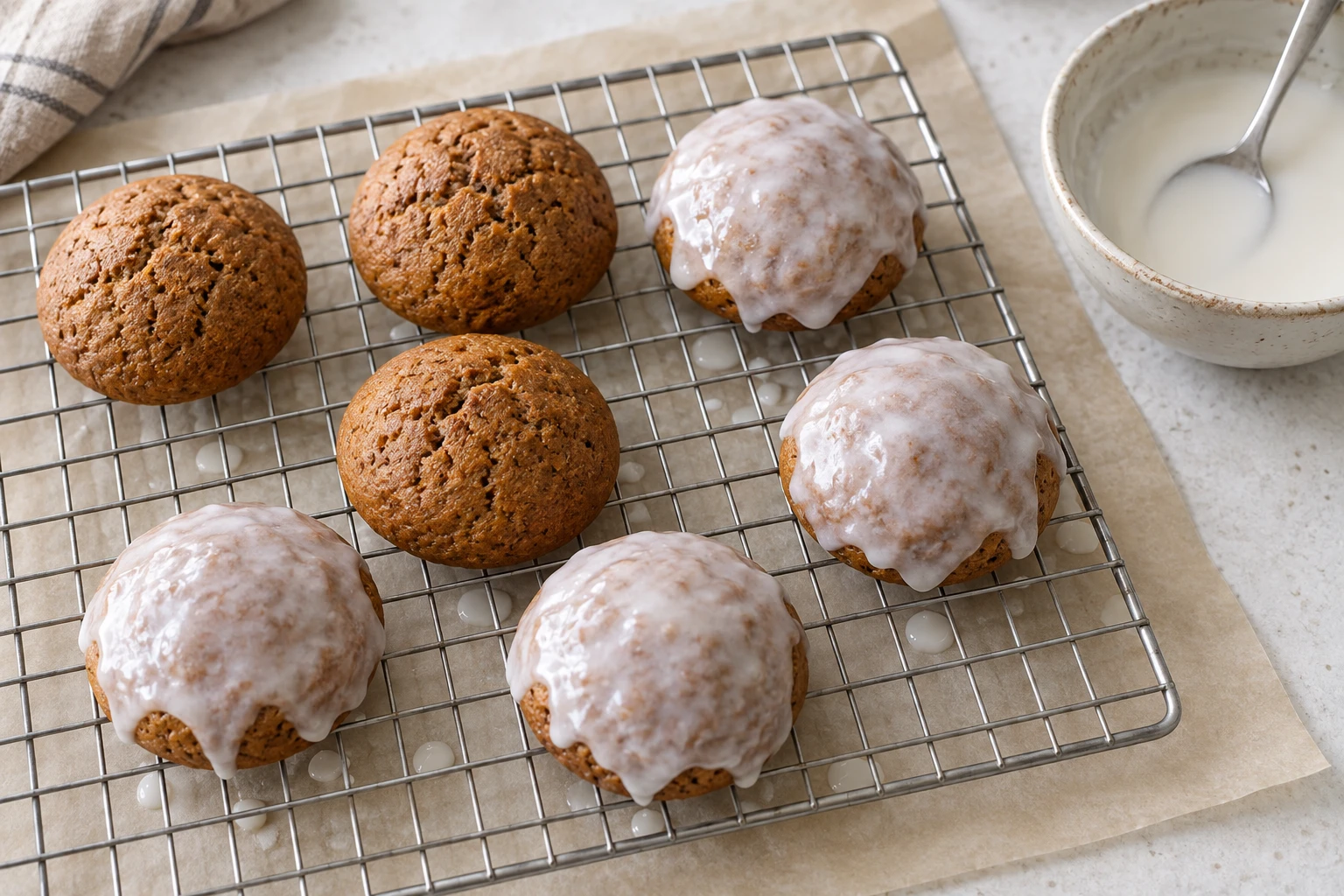
Helen S. Fletcher's Pastries Like a Pro version offers white and cocoa glazes. She sifts the dry ingredients and stirs the glaze with a spoon to avoid introducing bubbles. The cookies can be dipped or coated on a rack, then left until the glaze is completely dry.
That full coating creates a different surface from King Arthur's lemon drizzle. Decide which finish belongs to the cookie before preparing it; a few decorative lines and an enclosing sugar shell do different visual work.
Fletcher's honey-and-coffee dough also uses a broad spice blend including black pepper and anise. These are choices in her recipe, not a requirement that every pryanik taste of the same spice cabinet.
A tea plate gives the texture room
King Arthur suggests serving its filled cookies with hot tea, and the Tula museum ends its visitor program with tea and pryaniki. It is a simple setting in which the cookie can be the focus: honey, spices or fruit filling alongside a warm drink.
Let the finish set before piling cookies onto a plate. For an unfilled dome, the first broken piece shows the crumb under the glaze; for a filled round, it reveals the jam seam. Those two cross-sections explain why selecting the shape was the first decision.
Research notes
Sources
Distinct home-baking methods and the Tula museum's account of printed honey gingerbread.
- Denise Farrell: Filled pryaniki King Arthur's rolled jam-filled rounds and lemon-sugar finish.
- Olga's Flavor Factory: Honey spice pryaniki Chilled honey-and-coffee dough, domed shape and milk glaze.
- Helen S. Fletcher: Pryaniki Specific spice blend, sifted glaze and drying technique.
- Natalya Drozhzhin: Family pryaniki A Ukrainian family variation and pasteurized egg-white glaze.
- Staraia Tula: Pryanik museum Printed honey pryanik and the historical wooden-board collection.
Keep exploring
More stories for your table
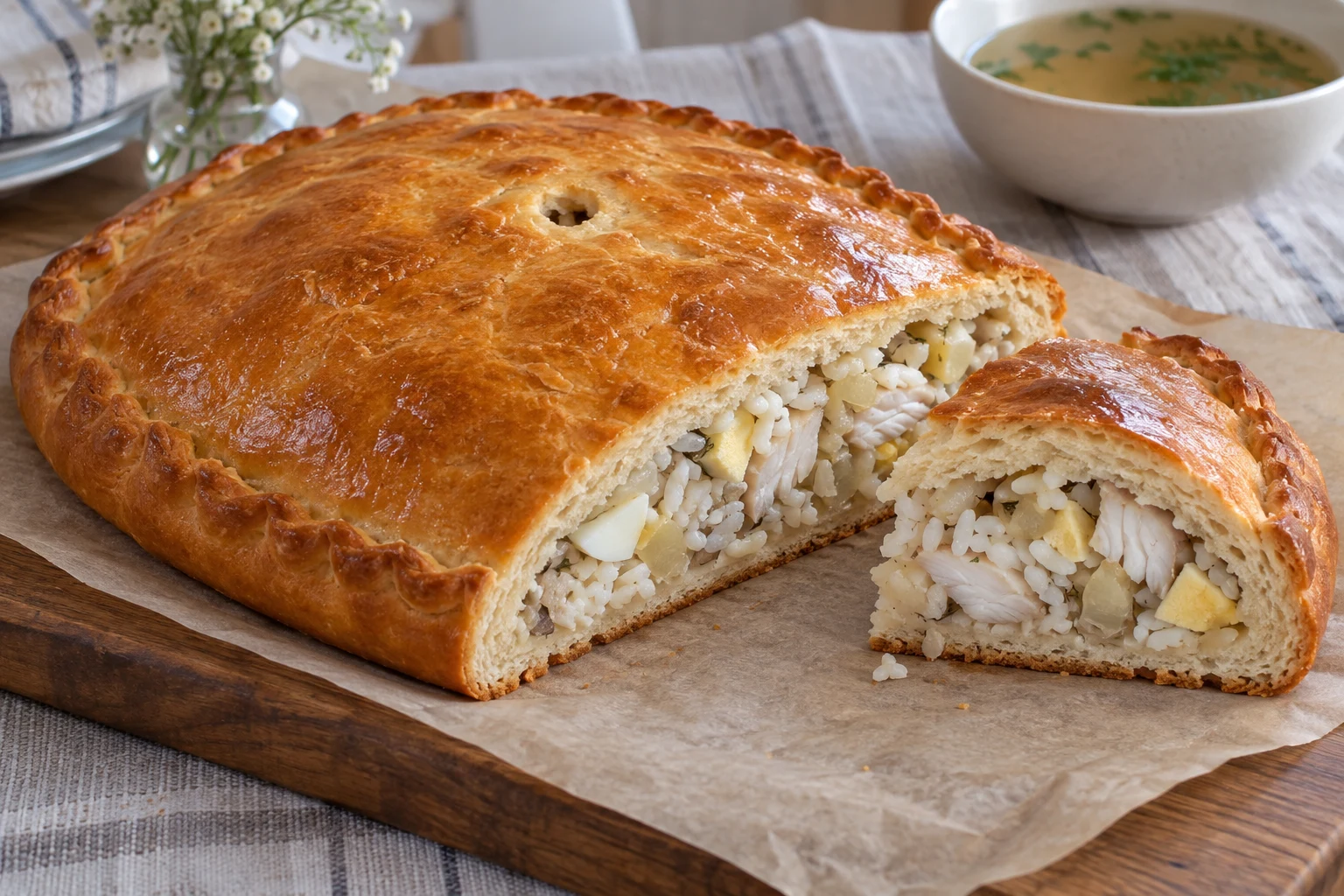
Russian cuisine Savory pie
Fish Pirog: Decide What Goes Under the Lid
A closed yeast-dough fish pirog can begin with fillet, poached fish or a tin. Compare its filling, rice and steam vent before choosing a recipe.
Russian cuisine Apple sponge cake
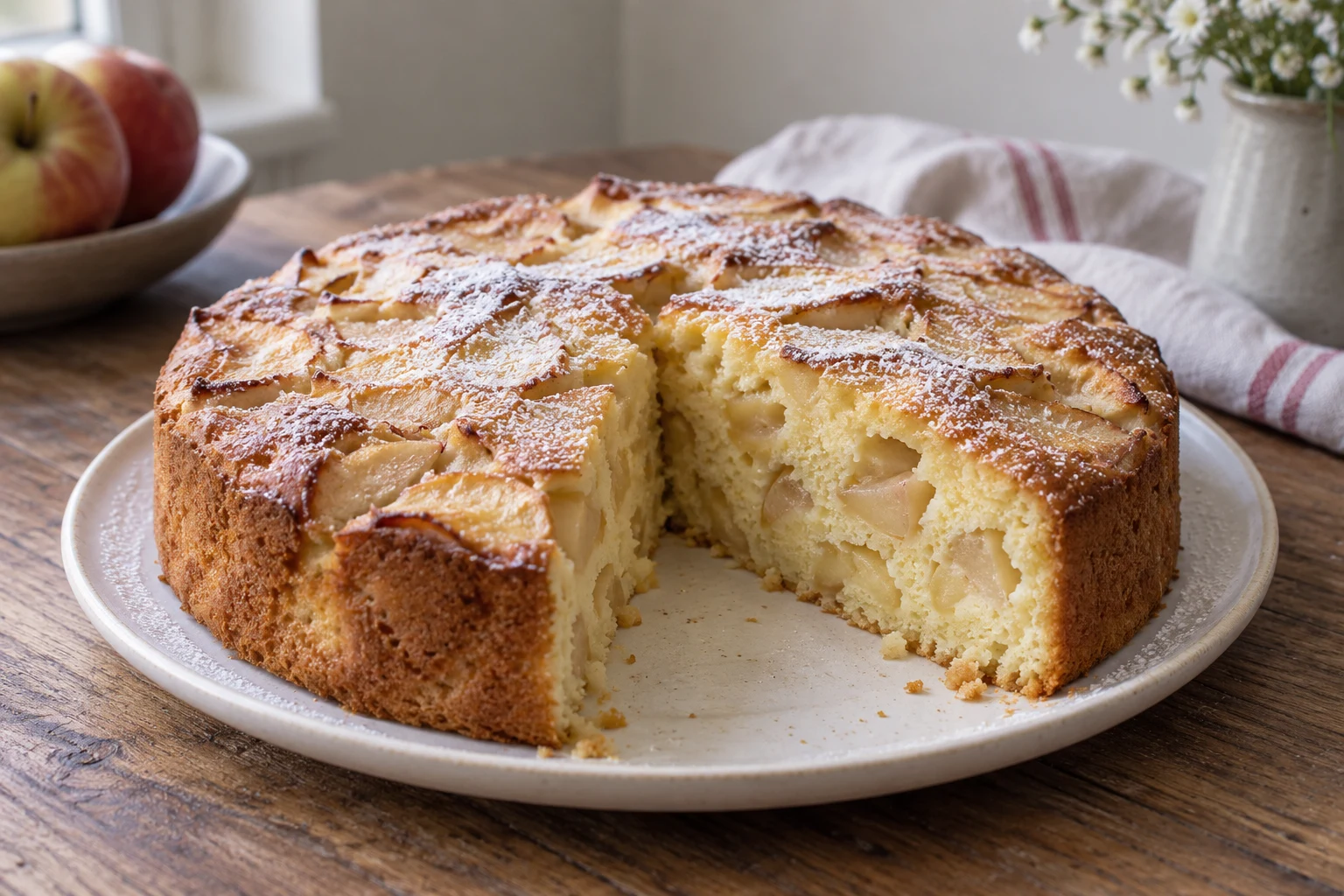
Sharlotka: apples held in a light egg sponge
Sharlotka brings apples and whipped-egg sponge together. Compare fruit placement, batter cues and a sour-cream variation before choosing a recipe.
Russian cuisine Buckwheat porridge
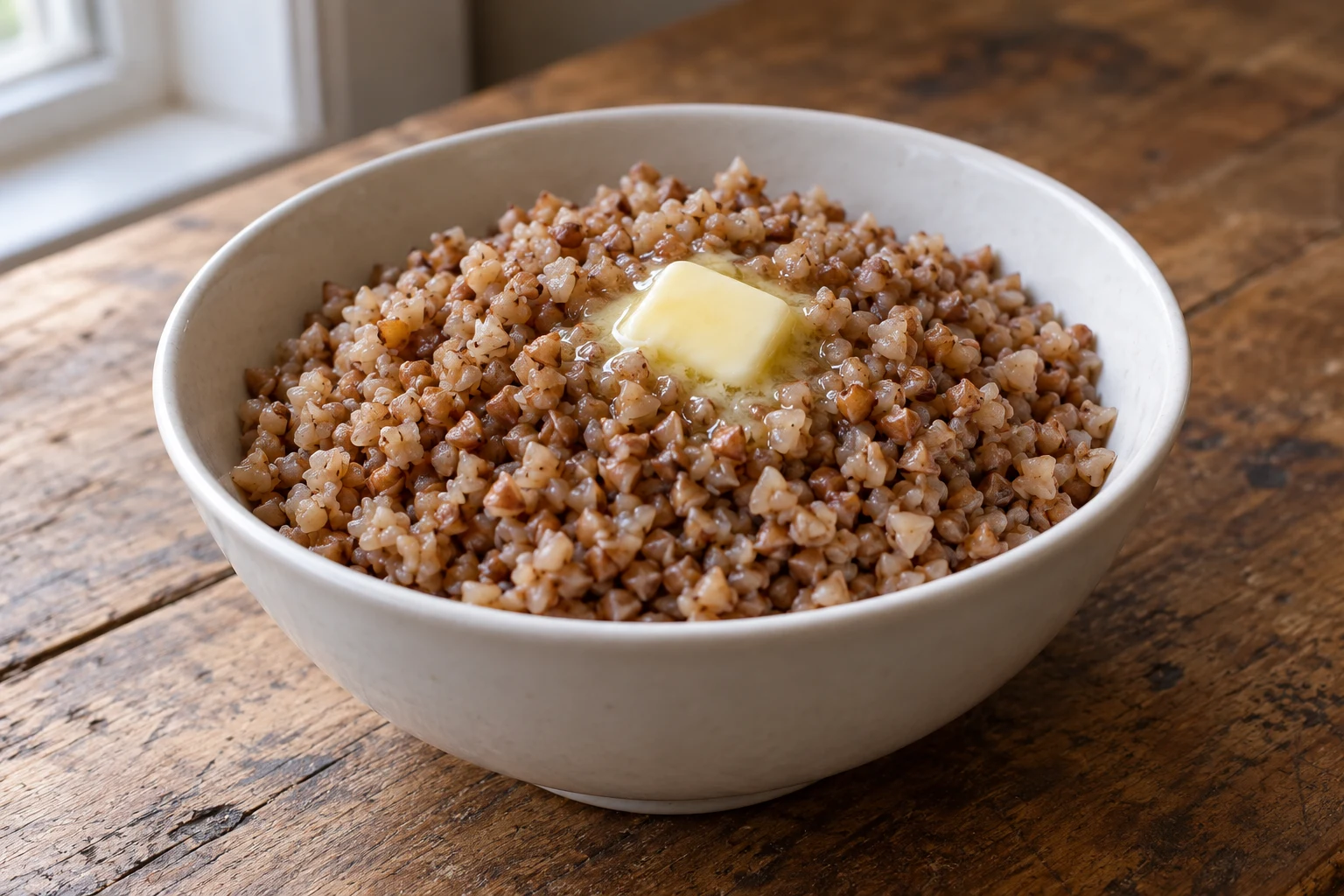
Buckwheat Kasha: A Pantry Word and a Bowl of Home
The word kasha can name a broad family of porridges or toasted buckwheat on an English label. Learn which groats to buy, how cooking methods differ and why a plain bowl carries family meaning.