
Russian Kotleti: Soft Bread, Even Patties, a Browned Crust
Котлеты
Milk-softened bread and finely grated onion go into these everyday minced-meat cutlets. Shape them evenly, brown them gently and check the centre before serving.
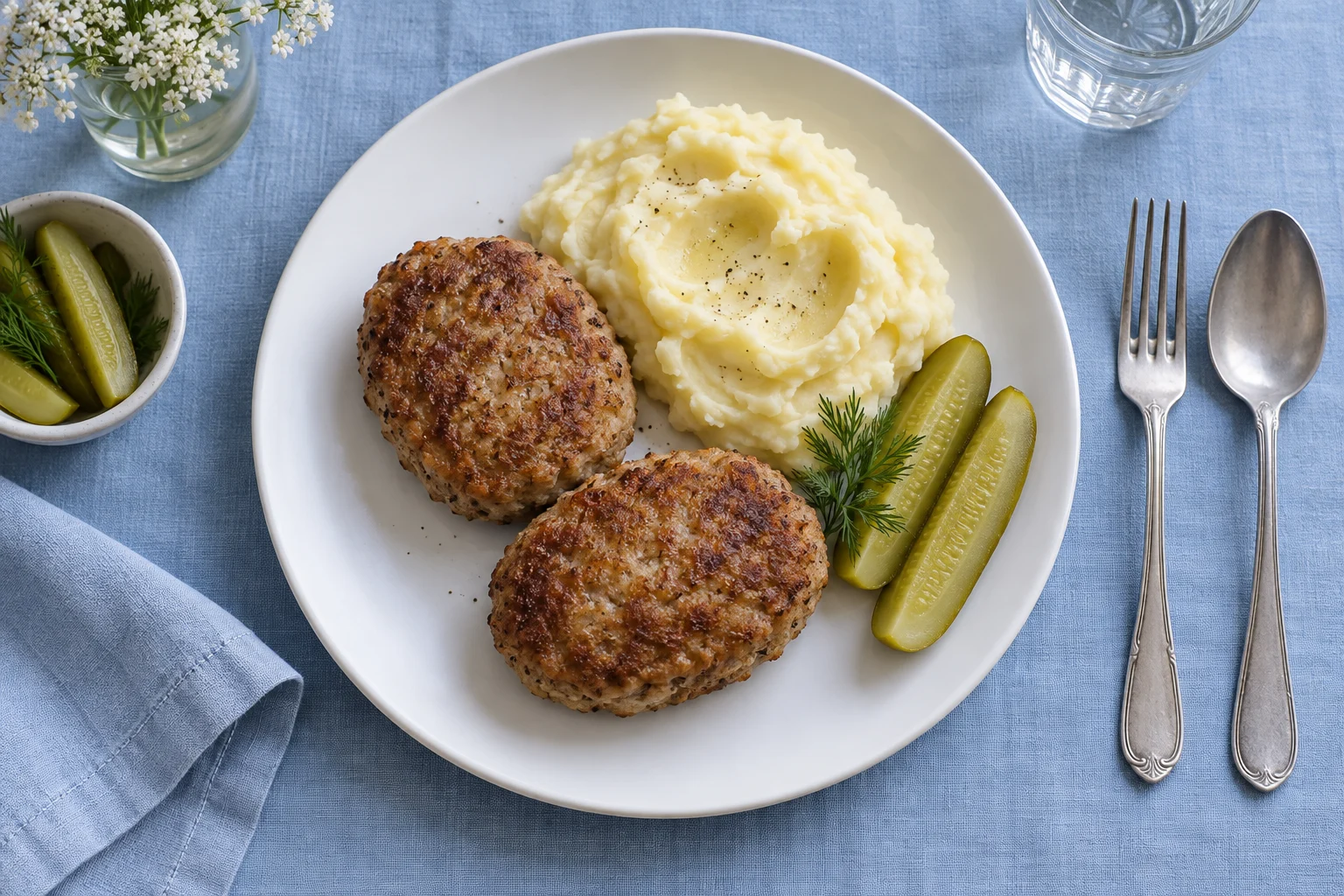
Котлеты
A cutlet made from minced meat
These Russian-style kotleti are oval patties of ground meat, onion and softened bread, cooked in a skillet and served as the main part of a meal. Peter’s Food Adventures describes the familiar beef version and several meat variations. The same family of patties also appears in Ukrainian home cooking; Lena Gladstone identifies her mother’s beef-and-pork recipe that way.
The useful details sit inside the mixture and around its edges. Bread should soften before it meets the meat. Onion should be fine enough to spread through every patty. Each oval should have roughly the same thickness, so browning one side does not leave an unusually thick centre waiting to cook. These small choices give the frying step a more predictable starting point.
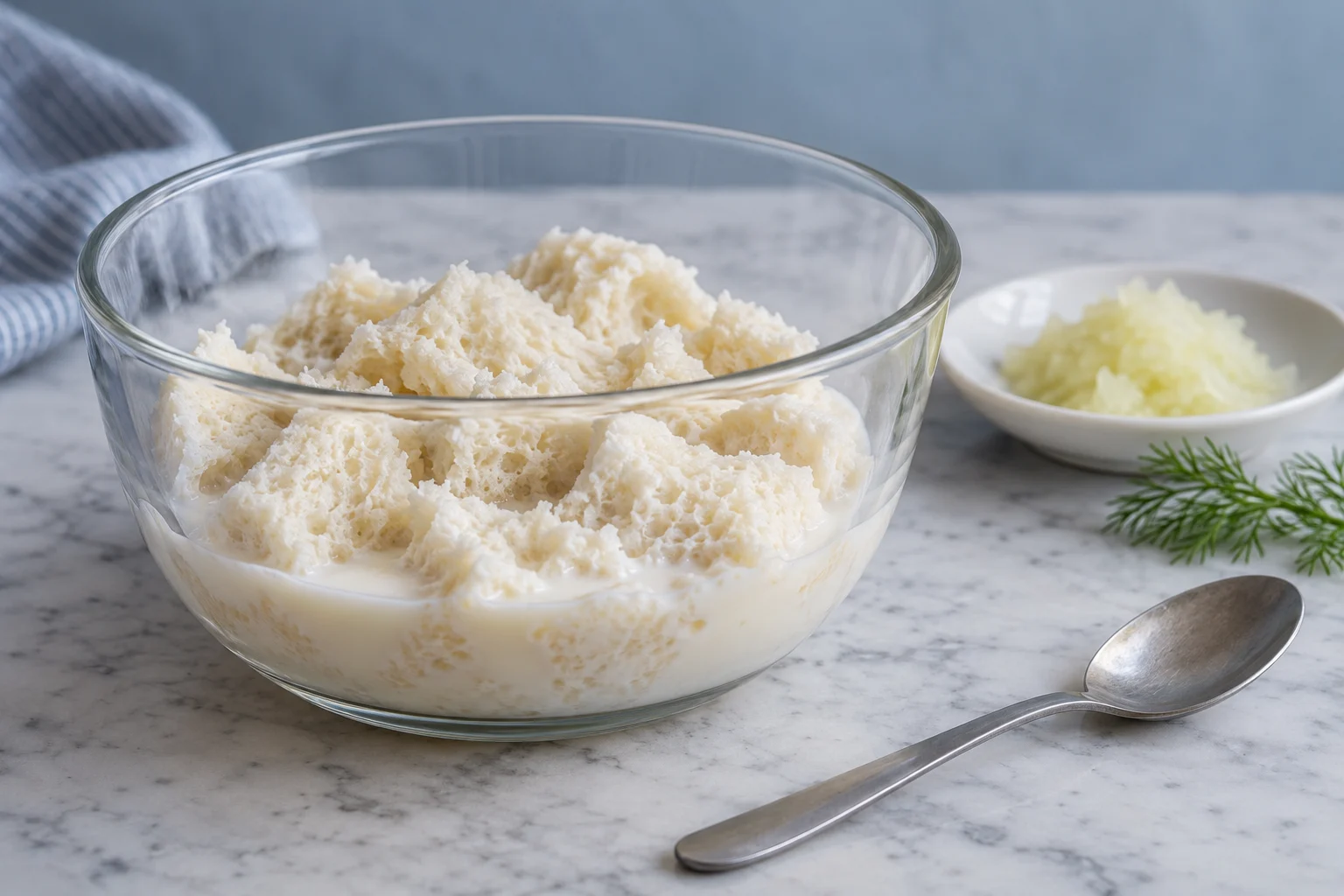
Soften the bread, then choose the binder
For the adaptation below, tear crustless white bread into small pieces and soak it in a measured amount of milk. Mash it once the pieces have softened. This mixture, often called a panade, should blend through the meat without leaving dry bread lumps. Grate the onion finely into the bowl and include its juices.
An egg is one way to hold the mixture together, but family recipes differ. Peter uses an egg; Lena’s mixture relies on the soaked bread; Anya von Bremzen describes mayonnaise in her mother’s version. The recipe here uses one egg and a beef-and-pork mixture. Keep that formula together for your first batch, then explore the linked versions as complete alternatives.
Our adaptation
Beef-and-pork kotleti
Makes eight cutlets, enough for four people with a side dish. A large skillet, a lid and a food thermometer make the finish straightforward.
Ingredients
For the mixture
- 300 g ground beef
- 200 g ground pork
- 60 g crustless white bread, torn into small pieces
- 80 ml milk
- 80 g peeled onion, finely grated with its juices
- 1 egg
- 1 clove garlic, finely grated
- 1 tbsp finely chopped dill or parsley
- 1 tsp fine salt
- ¼ tsp ground black pepper
For the pan
- 20 g plain flour for a light coating
- 2 tbsp, plus a little more if needed neutral frying oil
- 4 tbsp water, divided between two batches
Method
- 1
Soften and mash
Soak the bread in the milk for 5 minutes, then mash it. Add both meats, onion, egg, garlic, herbs, salt and pepper. Mix until evenly combined.
- 2
Make eight even ovals
Divide into eight portions. With damp hands, shape smooth oval patties about 2 cm thick. Dust lightly with flour and shake away loose flour.
- 3
Brown in two batches
Heat the oil over medium heat in a large skillet. Add four patties with space between them. Cook about 4 minutes per side, adjusting heat if the coating darkens quickly.
- 4
Finish the centres
Lower the heat, add 2 tablespoons water around the patties and cover for 3–5 minutes. Check each centre with a thermometer inserted from the side: ground beef and pork must reach 71°C/160°F. Continue gently if needed.
- 5
Repeat and serve
Transfer cooked cutlets to a warm plate. Cook the second batch the same way with the remaining 2 tablespoons water and a little extra oil if needed. Serve with potatoes, buckwheat or a salad.
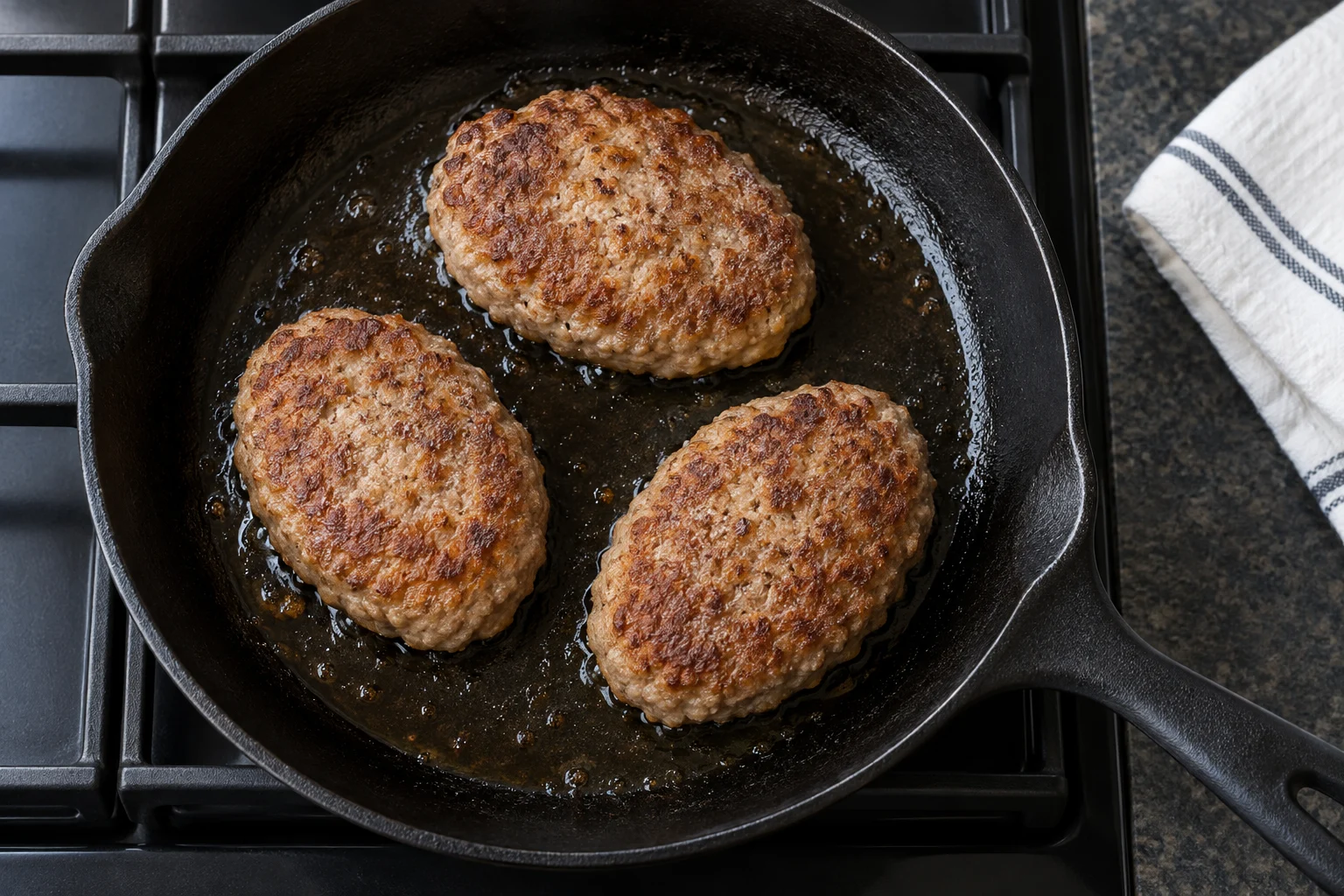
Give the crust time to form
Lay the patties into the hot skillet with space between them, then let the first side brown before turning. A thin coating of flour belongs on the surface; loose clumps left in the pan will darken faster than the meat. Turn with a broad spatula so the soft mixture keeps its shape.
Lower heat helps finish the centres once the exterior has browned. The covered stage uses a little water and the pan’s heat to continue cooking; its minutes are an estimate. If one patty is thicker than the others, check it separately. The thermometer reading is the finish line for the beef-and-pork recipe.
Build the plate around the patty
Mashed potatoes make a soft partner for the browned cutlet, while buckwheat offers a nuttier texture. A pickle or cucumber salad gives the plate a sharp, fresh edge. Gravy is optional: these cutlets can sit beside it so the crust stays visible, or receive a small spoonful at the table.
Prepare the side dish before frying and have serving plates ready. Cook the patties in batches instead of squeezing them all into one pan; the space that helps them brown also makes them easier to turn and check. Two cutlets with a starch and something crisp make a clear, comfortable supper.
Research notes
Sources
Three independently documented family versions and the official temperatures for ground meat.
- Peter’s Food Adventures: Beef Kotleti Russian and Slavic minced-meat cutlets, an egg binder, thin flour coating and serving suggestions.
- Lena Gladstone: Kotleti Recipe Her Ukrainian family version uses beef, pork, milk-softened bread and a covered finish.
- Anya von Bremzen: Kotleti A memoir-linked family version illustrating an alternative mayonnaise binder.
- FoodSafety.gov: Cook to a Safe Minimum Internal Temperature Ground beef and pork at 160°F/71°C; ground poultry at 165°F/74°C.
Keep exploring
More stories for your table
Russian cuisine Stuffed patties
Zrazy: closing a mushroom centre inside a meat patty
Russian home-style mushroom-filled zrazy, with an original beef-and-pork recipe and practical guidance for a dry filling, a closed seam and a fully cooked centre.
Russian cuisine Dumplings
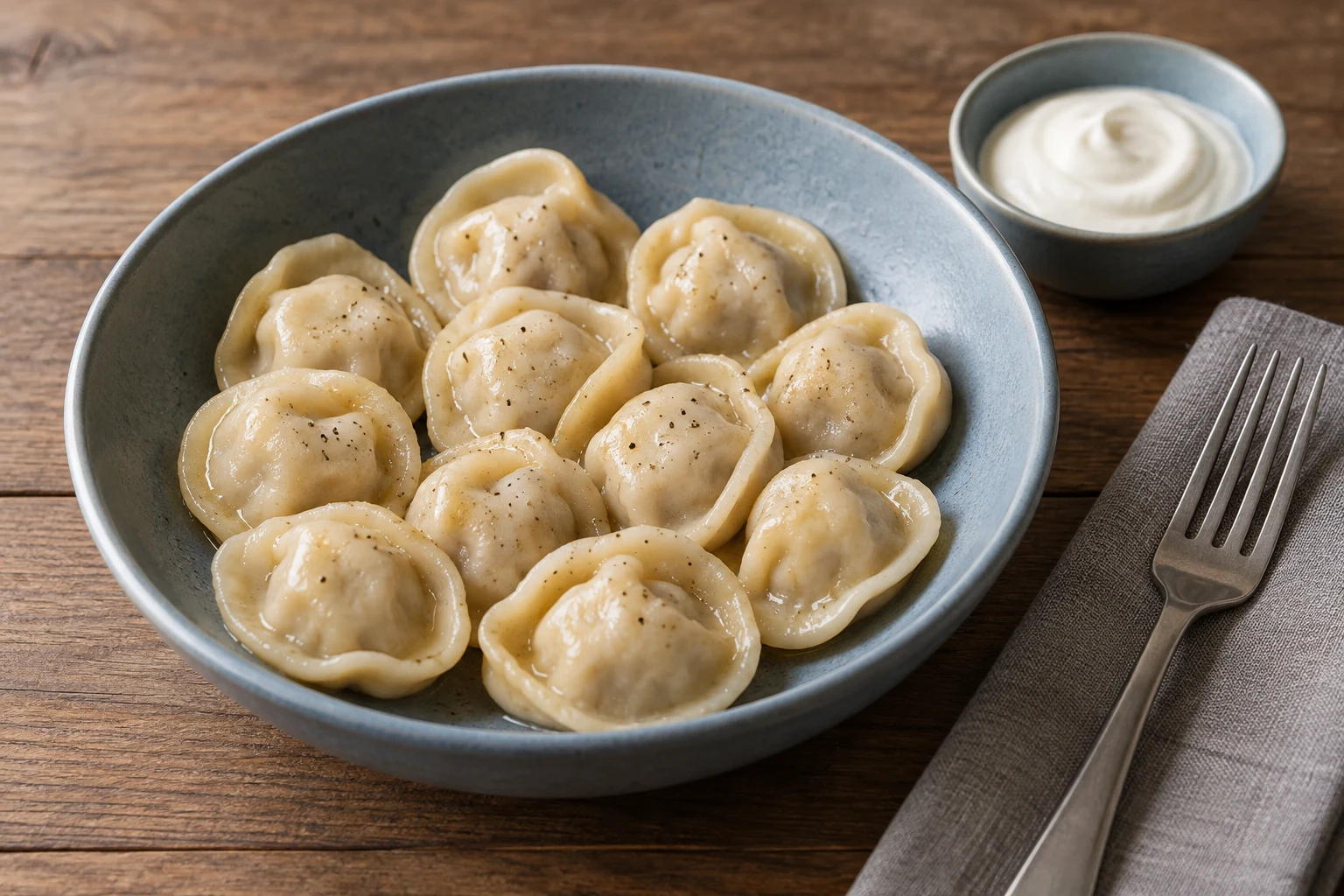
Pelmeni: The Shared Work Behind a Quick Meal
Pelmeni turn a session of rolling, filling and folding into meals for later. Explore their regional context, how to freeze a batch, and two ways to serve it.
Swedish cuisine Beef and potatoes
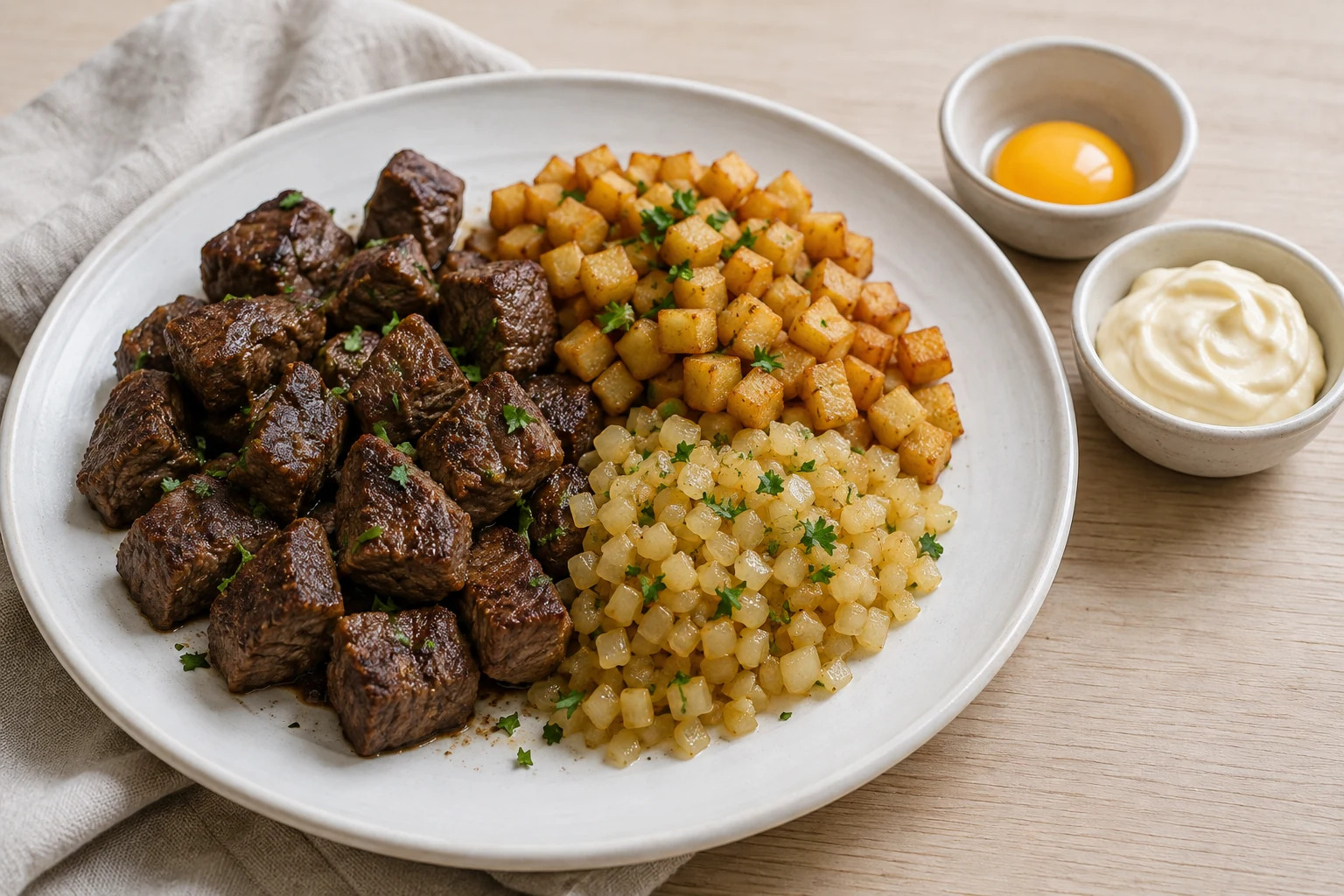
Biff Rydberg: A Swedish Lesson in Timing
Crisp potatoes, soft onions and browned beef need different treatment. Learn the timing behind Sweden’s Biff Rydberg, compare two mustard creams and cook a home adaptation.