
Pelmeni: The Shared Work Behind a Quick Meal
Пельмени
A bag of pelmeni holds an earlier session of rolling, filling and folding. The freezer lets that work feed several later meals, while the table decides whether the dumplings arrive with butter, sour cream or broth.
Dinner happens in two sessions
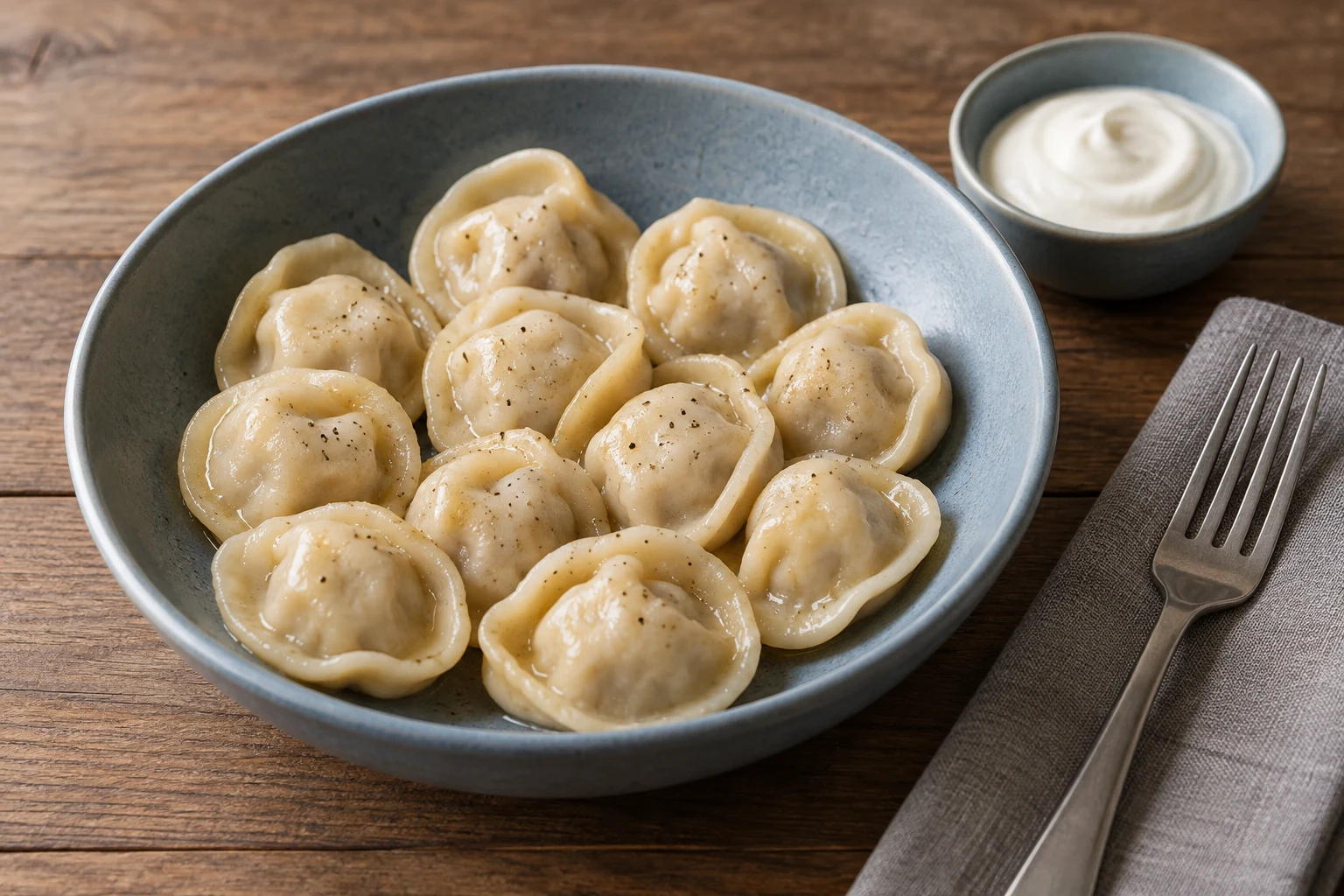
How does a dumpling made one piece at a time become a quick dinner? With pelmeni, much of the cooking work happens well before the water boils. Minced meat and onion are enclosed in thin, unleavened dough; in a familiar hand-shaped version, the wrapper is folded into a half moon and its tips joined. Repeat that small action and the tray becomes a store of future portions.
Writing for The Kitchn, Alissa Timoshkina describes family gatherings with people taking on different jobs: preparing meat, making dough and shaping dumplings. The Folkways account by Josh Wilson and Andrei Nesterov likewise describes long sessions of rolling, cutting, filling and pinching, followed by a family meal and a supply for later. The division of labour is part of the dish’s social life.
That helps explain the difference between the time needed to make a batch and the time needed to serve one. A household can cook some immediately and freeze the rest raw. Ready-made frozen pelmeni put the same separation of preparation and dinner within reach of someone who has no afternoon available for folding.
A regional word becomes everyday food
The Russian name carries a regional history. Visit Udmurtia explains the Udmurt word pelnyan through pel, meaning ear, and nyan, meaning bread. The curved form makes that association easy to see. It is a useful connection to Udmurt food culture, without settling a single birthplace for every dumpling called pelmeni.
Food historians Pavel and Olga Syutkin point to an 1837 text by Yekaterina Avdeyeva that included pelmeni among Siberian regional words. In their account, the dish’s wider Russian familiarity developed during the nineteenth century. They connect its spread with travel, migration, publishing and the growth of urban eating places, where a food easily divided into portions had obvious appeal.
At a family table, many people could share the making. In an eating place, a cook could serve portions as diners arrived. In a home freezer, a batch could wait for another evening. Seen together, these settings show why the individual dumpling is such a useful unit of food.
Keep the batch easy to portion
For a full dough-and-filling method, follow one of the linked culinary sources. These planning steps explain how to keep finished raw pelmeni ready for later meals.
- 01
Freeze with space between pieces
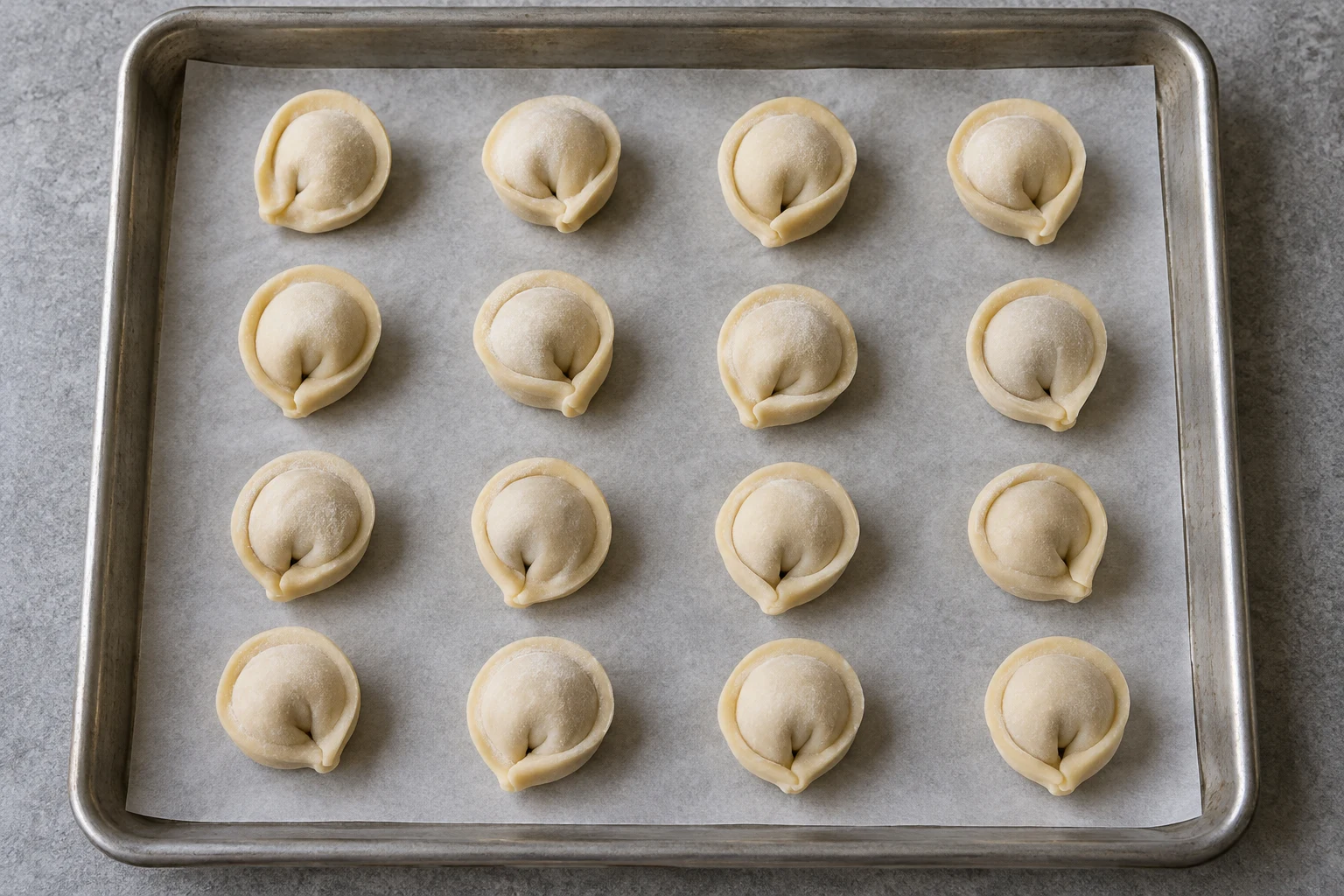
Prepare a lined, lightly floured tray that fits the freezer before shaping. Arrange the raw pelmeni in one layer without touching, then freeze promptly. In Gastronom, chef Alyona Solodovichenko stresses both separation and speed: a wet filling left against the dough can weaken it. Keep unused raw filling refrigerated and work in small lots.
- 02
Pack only after they are firm
Once frozen solid, transfer the dumplings to freezer bags or airtight containers. Timoshkina’s tray-first method makes it possible to take out a portion without pulling apart a clump. Use a freezer at 0°F (−18°C). FDA guidance limits perishable food’s total time at room temperature to two hours, or one hour above 90°F (32°C); a long shaping session needs refrigerated batches.
- 03
Cook the portion through
Homemade pelmeni can go straight from frozen into boiling water or broth; allow room for them to move. Follow the chosen recipe’s instructions, or the package directions for a purchased product. Floating alone cannot verify the filling: check the centre with a food thermometer. Raw ground beef or pork filling needs 160°F (71°C); a poultry filling needs 165°F (74°C). Continue cooking if it has not reached that temperature.
One batch, two ways to bring it to the table
Lift the dumplings out with a slotted spoon, or ladle them into the bowl with their cooking liquid. Both approaches appear in the household accounts; the choice belongs to the cook and the people eating.
Drained, with butter and sour cream
Lift the cooked dumplings from the pot and dress them with butter. Sour cream alongside lets each diner add it as they eat. This puts the small folded shapes together on a plate or in a shallow bowl.
In broth, with black pepper
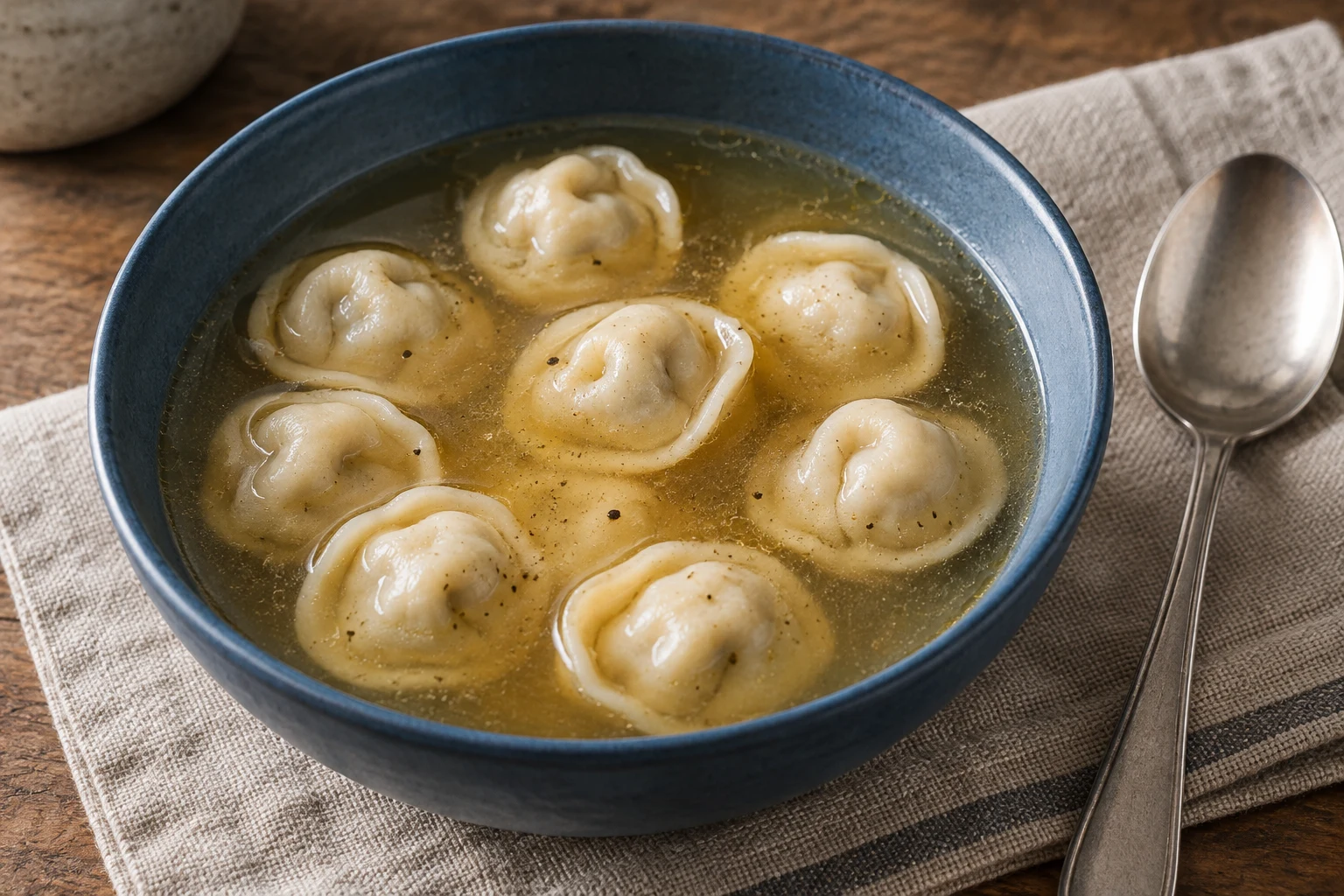
Ladle the cooked pelmeni into a deeper bowl with seasoned cooking broth. Timoshkina identifies this as her family’s preferred service. A spoon now carries liquid and dumpling together; the meal has the rhythm of a soup.
Research notes
Sources and further cooking
Household accounts and local reporting support the story’s cultural context. Complete recipes are linked below; current official guidance supports the freezing and meat-temperature advice.
- Alissa Timoshkina, The Kitchn — How to Make Russian Pelmeni Family task-sharing, complete recipe, tray freezing and drained or broth service.
- Josh Wilson and Andrei Nesterov, Folkways — Pelmeni: A Tasty History Batch preparation, the shared family meal and frozen pelmeni in everyday food culture.
- Visit Udmurtia — Understanding Udmurt cuisine The Udmurt pelnyan name and its ear-and-bread components.
- Pavel and Olga Syutkin — The Paradox of Pelmeni The authors’ reading of nineteenth-century regional references and wider urban adoption.
- Alyona Solodovichenko, Gastronom — Preparing pelmeni Shaping guidance and prompt freezing of separate pieces before packing.
- FDA — Are You Storing Food Safely? Freezer temperature, refrigeration and time limits for perishable food.
- FoodSafety.gov — Safe Minimum Internal Temperatures Thermometer checks for raw ground beef, pork and poultry fillings.
Keep exploring
More stories for your table
PolandDumplings
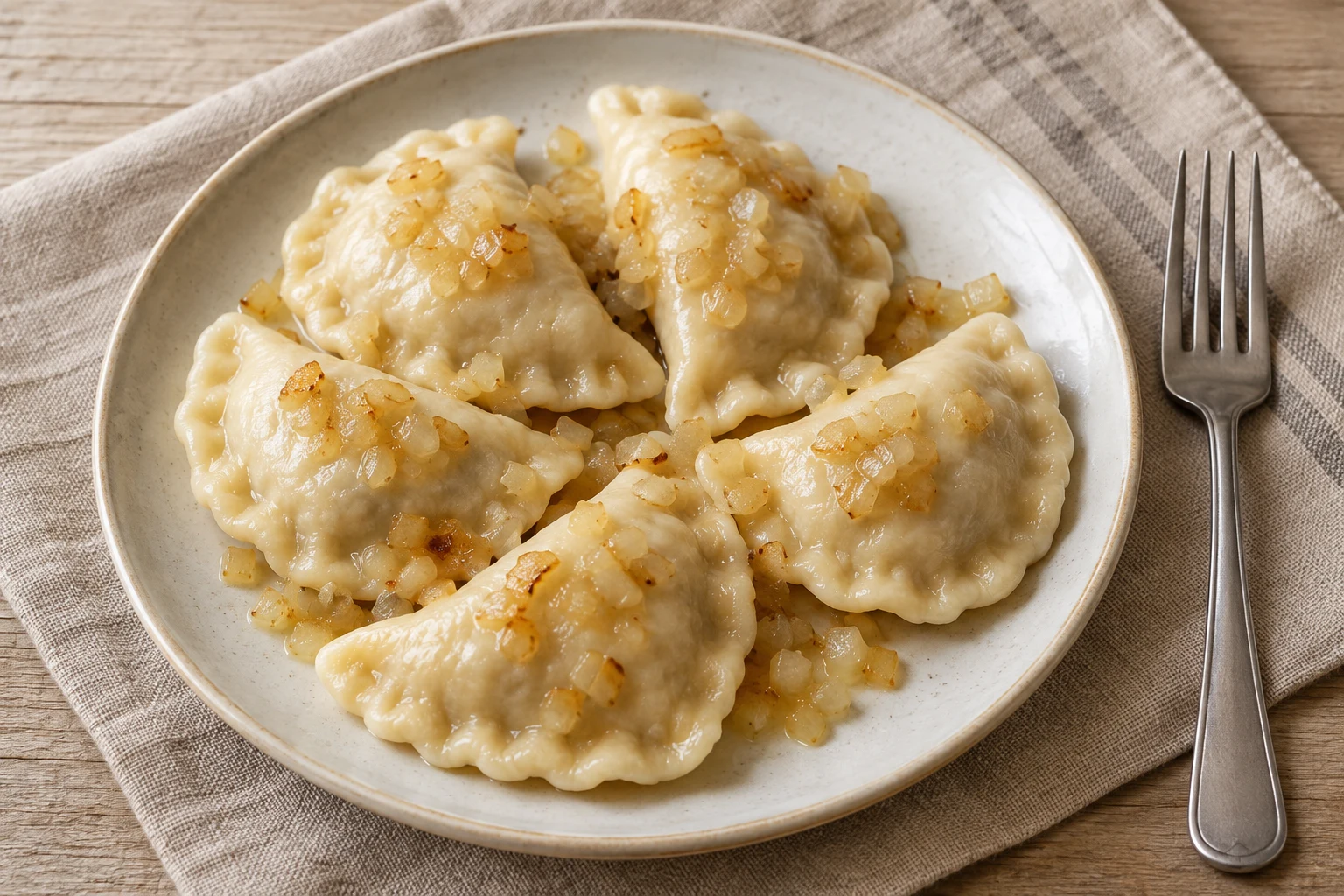
Meat Pierogi: Make the Filling Moist Before You Fold
Turn cooked soup beef into Polish meat pierogi. Learn how onion, carrot and a little broth soften the filling, then make a complete home adaptation.
SwedenBeef and potatoes
Biff Rydberg: A Swedish Lesson in Timing
Crisp potatoes, soft onions and browned beef need different treatment. Learn the timing behind Sweden’s Biff Rydberg, compare two mustard creams and cook a home adaptation.
EthiopiaBeef stew
Sega Wot: Build the Sauce Before the Beef
Learn how cooked onions, gently heated berbere and a patient simmer build sega wot, with a home adaptation of Ethiopia’s spicy beef stew.