
Mimosa salad: delicate layers under a yellow finish
Салат «Мимоза»
Mimosa pairs fish, eggs, and mayonnaise in soft layers crowned with crumbled yolk. Comparing vegetable and cheese versions makes its assembly easier to understand.
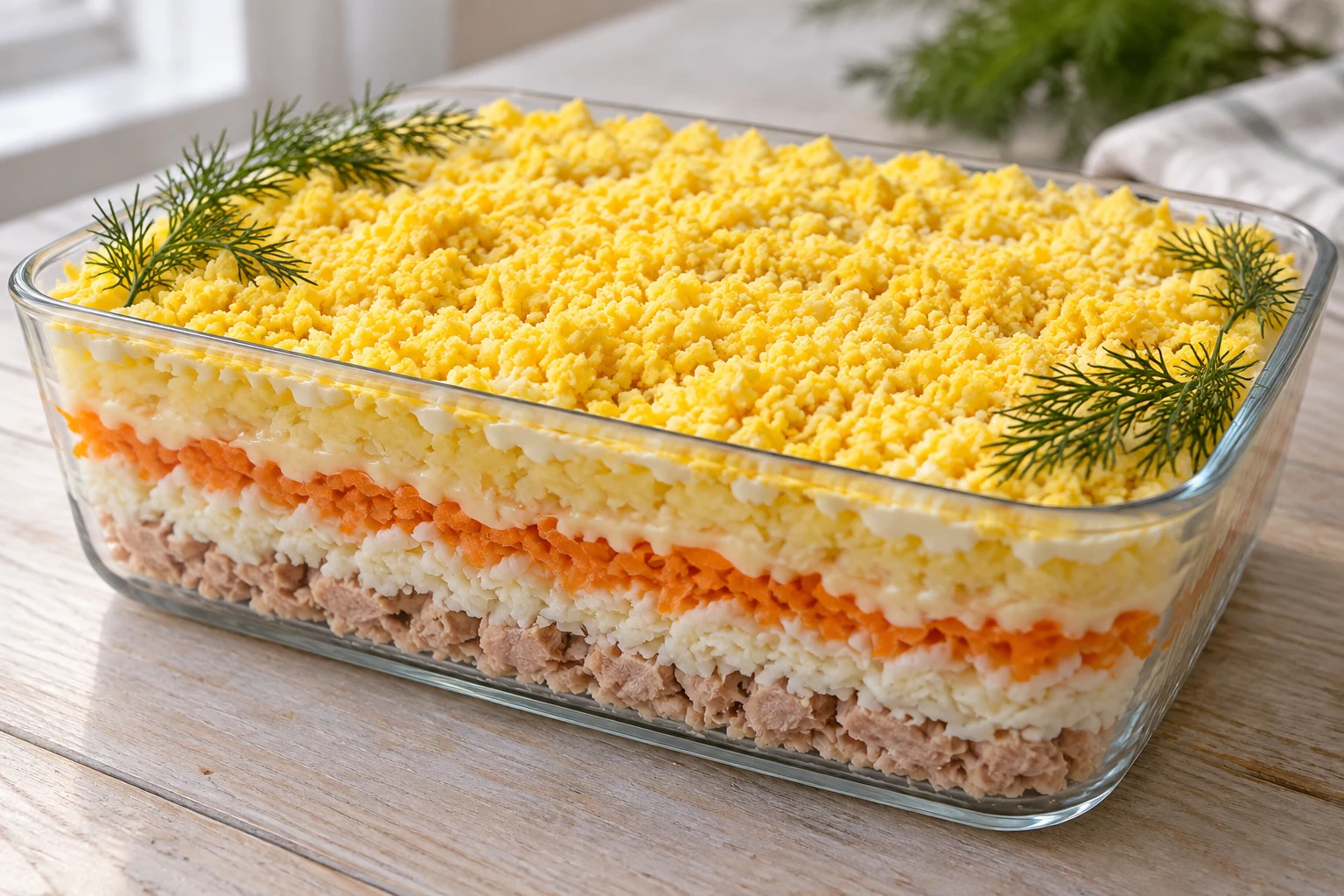
The top tells you what lies underneath
Mimosa salad announces itself with a soft yellow surface of crumbled or grated cooked egg yolk. Beneath it are layers of fish, egg, and mayonnaise, with other ingredients changing from recipe to recipe. Food writer Jennifer Eremeeva explains the floral resemblance behind the mimosa finish in her discussion of Russian salads. The decoration is more than a garnish: it gives the dish a clear visual identity before the first serving is lifted.
The best way to understand this salad is through its construction. Finely prepared ingredients, restrained dressing between them, and a deliberate serving format matter as much as the shopping list. A bowl of the same ingredients stirred together would offer a different experience. Here, you can see the boundaries and meet several textures in one spoonful.
Two published routes to the same yellow finish
Fish, potato, and carrot
Natasha Kravchuk's version uses tuna with cooked potato, carrot, separate egg whites and yolks, and mayonnaise. The vegetables provide pale and orange layers. Her method grates them finely and builds them separately.
Fish, cheese, and butter
Gastronom's Russian-language recipe uses canned fish, eggs, onion, grated cheese, and frozen grated butter, with no potato or carrot. Its richness comes from a different set of ingredients, while yolks still provide the final surface.
Pick a structure before choosing substitutions
Yelena's firsthand recipe on Transparent Language uses canned salmon, potato, carrot, and optional cheese. She also discusses disagreements about ingredients and layer order. That comparison makes a practical point: there is more than one published version, so a single ingredient list should not be treated as the only possible definition.
Choose one complete formula before shopping. A cheese-and-butter version is not simply a vegetable recipe with two additions; its layers have been arranged around those ingredients. Likewise, adding every variation you find can make it harder to judge which ingredient is doing what. Decide whether your first salad will be led by root vegetables or by cheese, then follow the method designed for it.
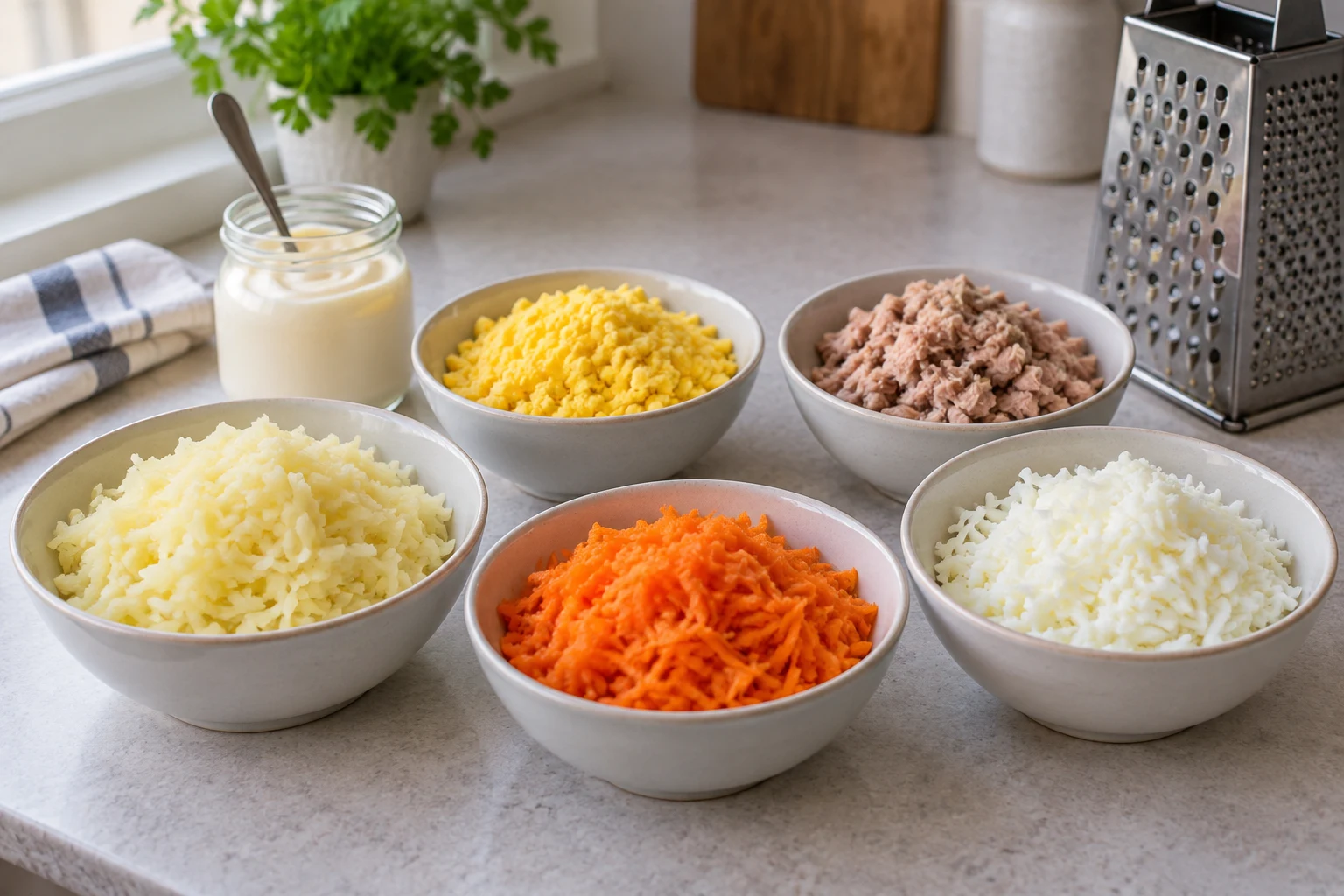
Prepare for delicate assembly
These are method comparisons, not a complete recipe. Use the linked formula for amounts and cooking instructions.
- 01
Cook and cool before grating
Kravchuk advises chilling the cooked vegetables because cold vegetables grate well. Keep cooking and assembly as separate stages, rather than trying to layer everything straight from its pot.
- 02
Drain and flake the fish
Yelena drains and mashes canned salmon; Kravchuk drains her tuna. A prepared fish layer is easier to distribute evenly than a whole tin's contents, liquid included.
- 03
Separate the eggs
Gastronom divides whites from yolks, preparing the whites for a layer and reserving yolks for the finish. Keeping those bowls apart protects the visible contrast.
- 04
Dress the layers without mixing them
Yelena applies thin mayonnaise layers and explicitly keeps the salad layered. Spread or pipe gently enough to preserve the arrangement you have just built.
Onion is a small layer with a strong effect
The sources handle onion differently. Kravchuk briefly boils her chopped onion before draining and cooling it. Gastronom offers a hot-water treatment for a particularly sharp onion and specifies draining it afterward. Yelena uses finely chopped onion and permits scallions instead. These choices affect the onion's presence without changing the yolk finish.
Follow the treatment in your chosen recipe for the first attempt. Then decide whether you want a more noticeable onion layer next time. A small quantity distributed evenly gives a different mouthful from a few large pieces clustered in one place. That is an assembly decision you can control without inventing an entirely new salad.
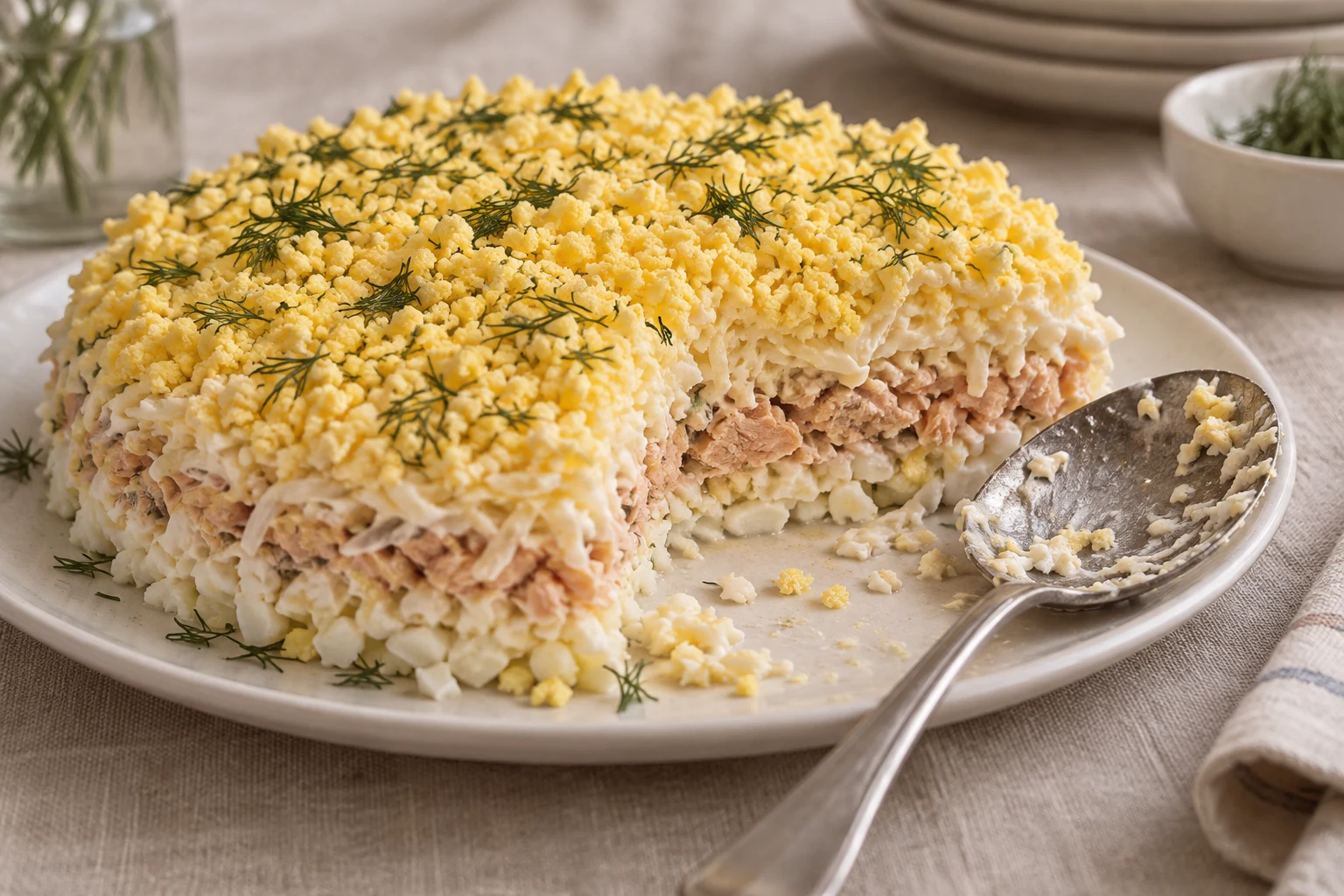
Let the vessel support the layers
Kravchuk suggests a glass baking dish or trifle dish. A transparent side makes the vegetable layers easy to see before serving. A shallow platter, as in Yelena's recipe, puts the finished yellow surface on display and lets you lift portions while trying to preserve the layers. Choose the dish before assembly so you know the area each ingredient needs to cover.
Allow for the chilling stage specified by your recipe. Yelena refrigerates the assembled salad before serving; Gastronom also accounts for additional time beyond its active preparation. Treat that waiting period as part of the meal plan. Finish with the yolk surface and a modest herb garnish, then serve with a tool broad enough to lift a portion. The point is to keep the salad's soft contrasts legible all the way from the dish to the plate.
Research notes
Sources and variation notes
Four independently useful sources cover a vegetable version, a cheese version, firsthand Russian assembly advice, and a clearly identified modern reinterpretation.
- Natasha Kravchuk: layered tuna mimosa salad Fine vegetable grating, cooling before assembly, onion treatment, and glass-dish options.
- Gastronom: classic mimosa salad Russian-language fish, egg, cheese, and grated-butter recipe without potato or carrot; separated eggs and onion preparation.
- Yelena, Transparent Language: Russian mimosa salad Firsthand salmon version, optional cheese, thin dressing, shallow platter, and keeping layers distinct.
- Jennifer Eremeeva, The Moscow Times: asparagus mimosa Explanation of the yolk finish and an explicitly reinterpreted asparagus-and-couscous version.
Keep exploring
More stories for your table
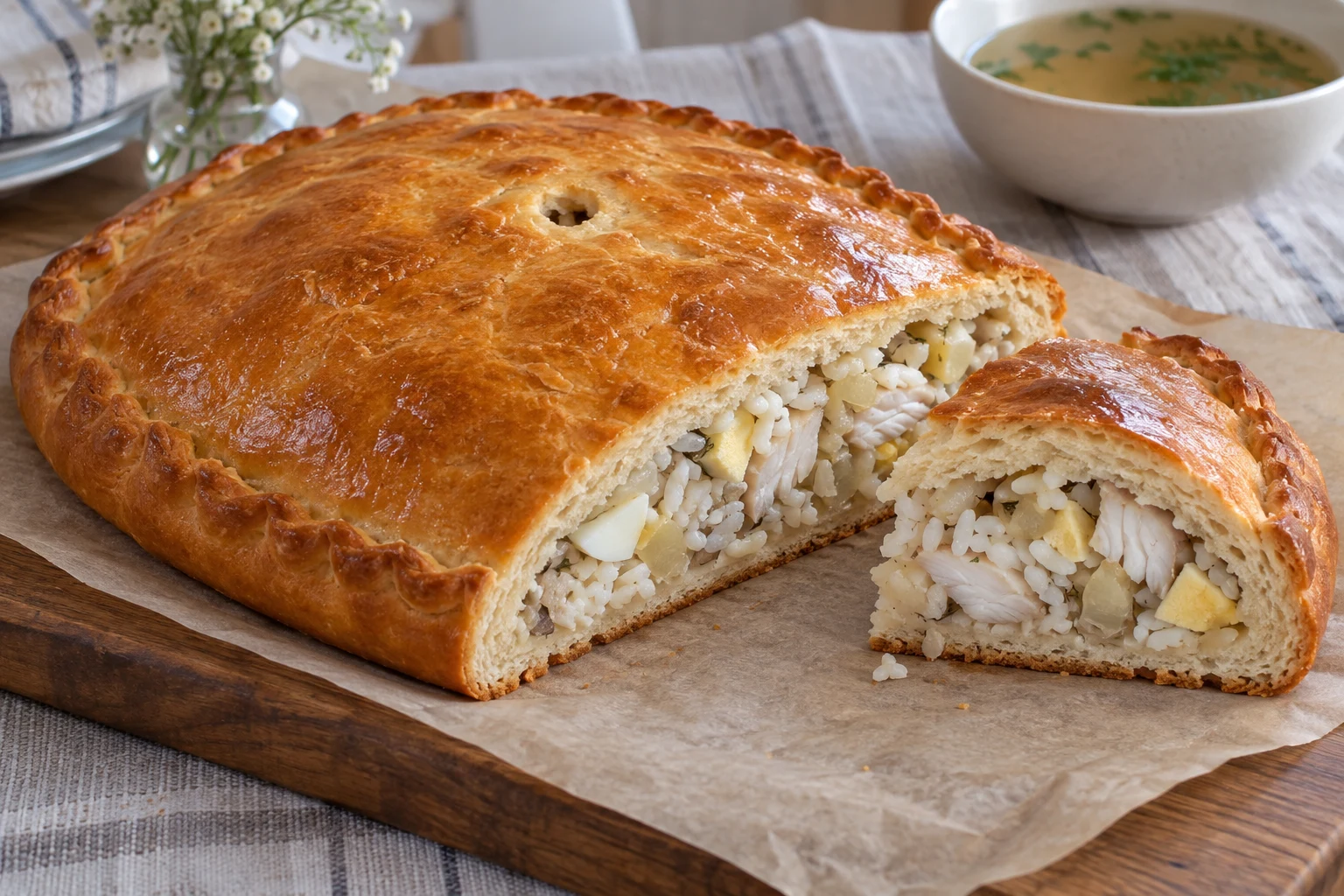
Russian cuisine Savory pie
Fish Pirog: Decide What Goes Under the Lid
A closed yeast-dough fish pirog can begin with fillet, poached fish or a tin. Compare its filling, rice and steam vent before choosing a recipe.
Polish cuisine Sour rye soup
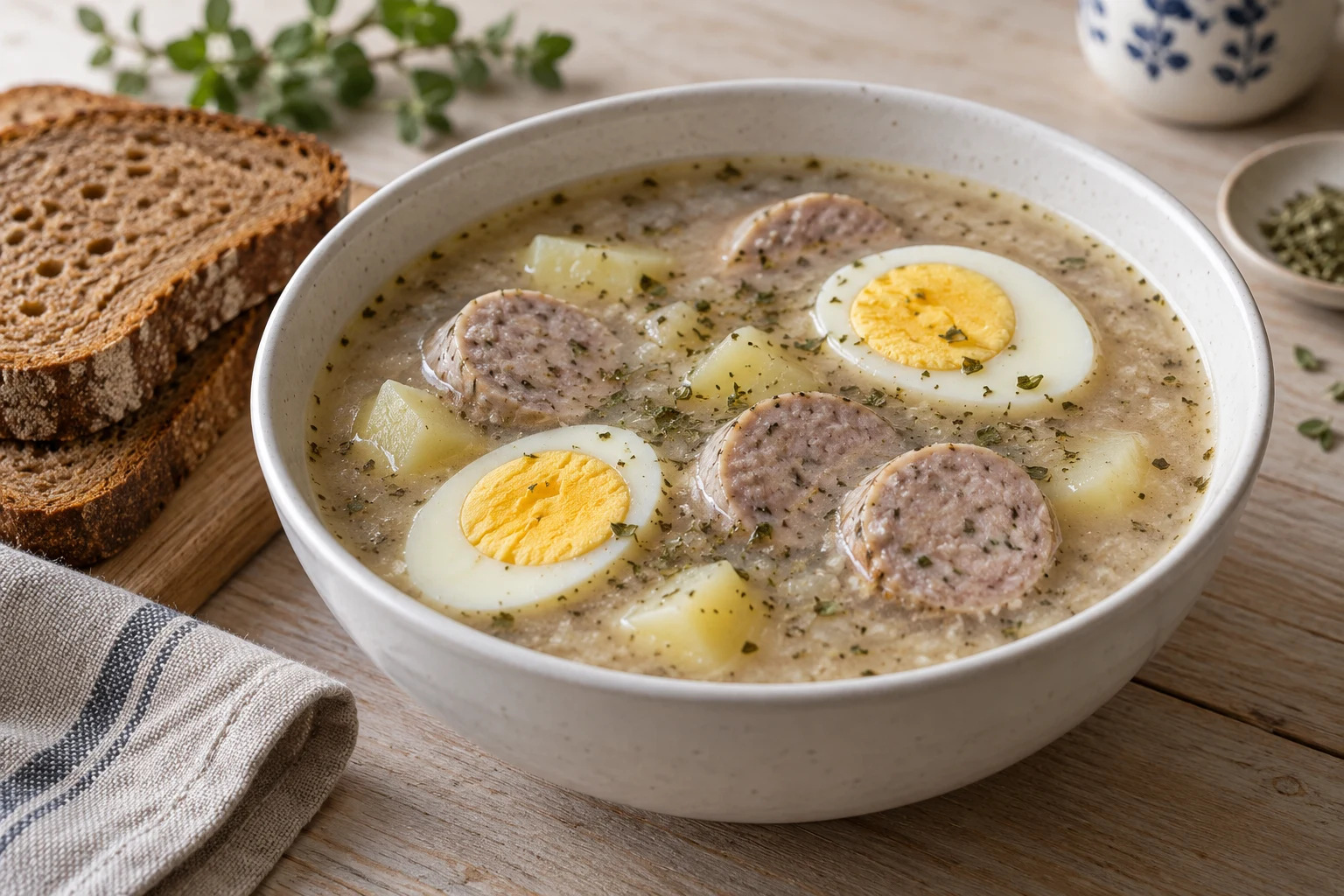
Żurek: The Sour Rye Starter Behind a Polish Soup
Żurek gets its tang from fermented rye flour. Follow the starter into an everyday regional bowl or an Easter soup with white sausage and eggs, and learn what to look for when buying zakwas.
Argentinian cuisine Cold vegetable salad
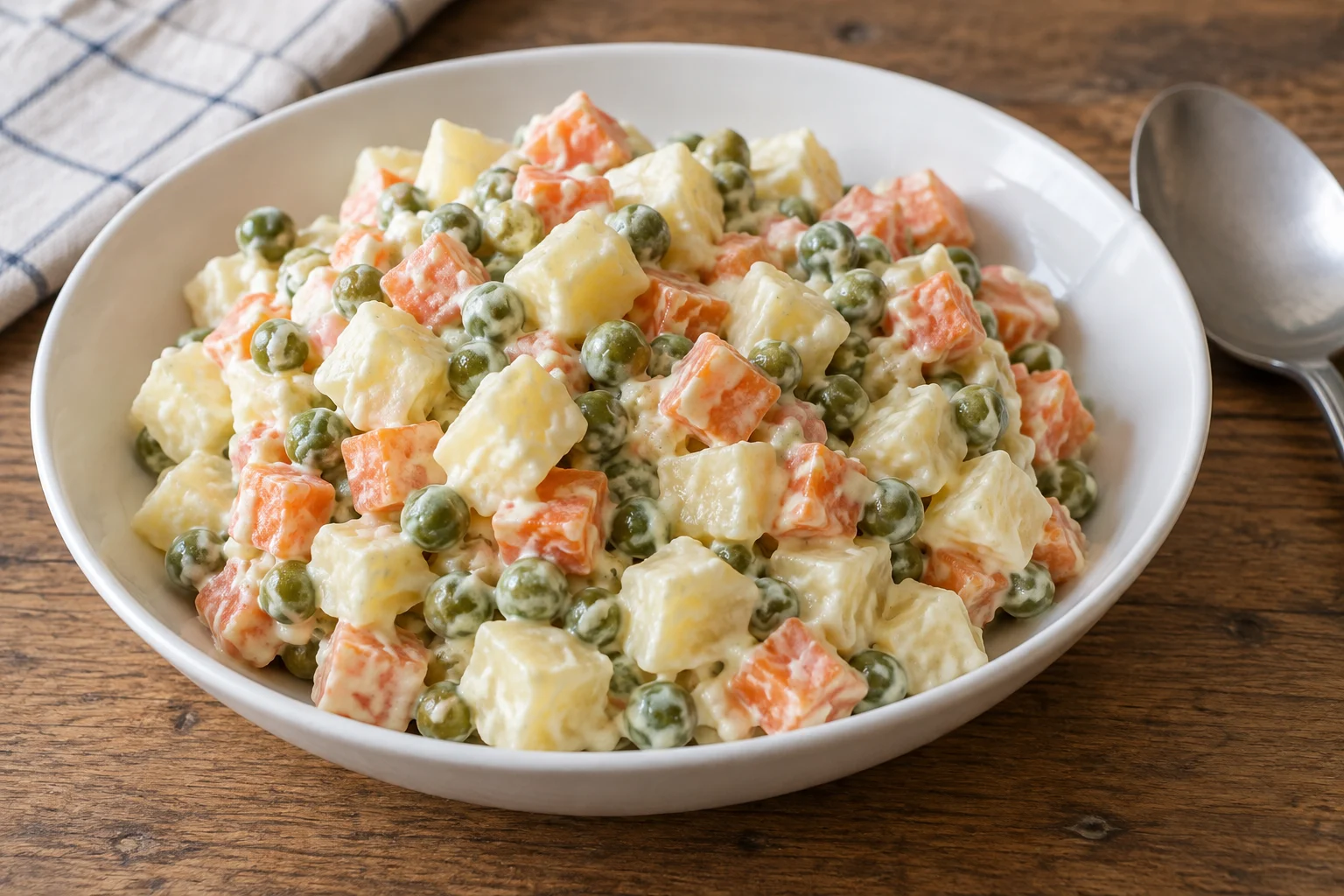
Argentine Ensalada Rusa: Keep the Vegetable Cubes Intact
Potato, carrot and peas make a familiar Argentine cold side. Cook and drain the vegetables separately, then coat gently in this four-serving ensalada rusa.