
Kvass: A Glass, a Flavor and a Soup Base
Квас
Kvass can be a drink on its own and a liquid that gives cold soup its character. Its bread aroma, sweetness and sour edge deserve separate attention; color alone cannot describe all three.

Bread is a starting point
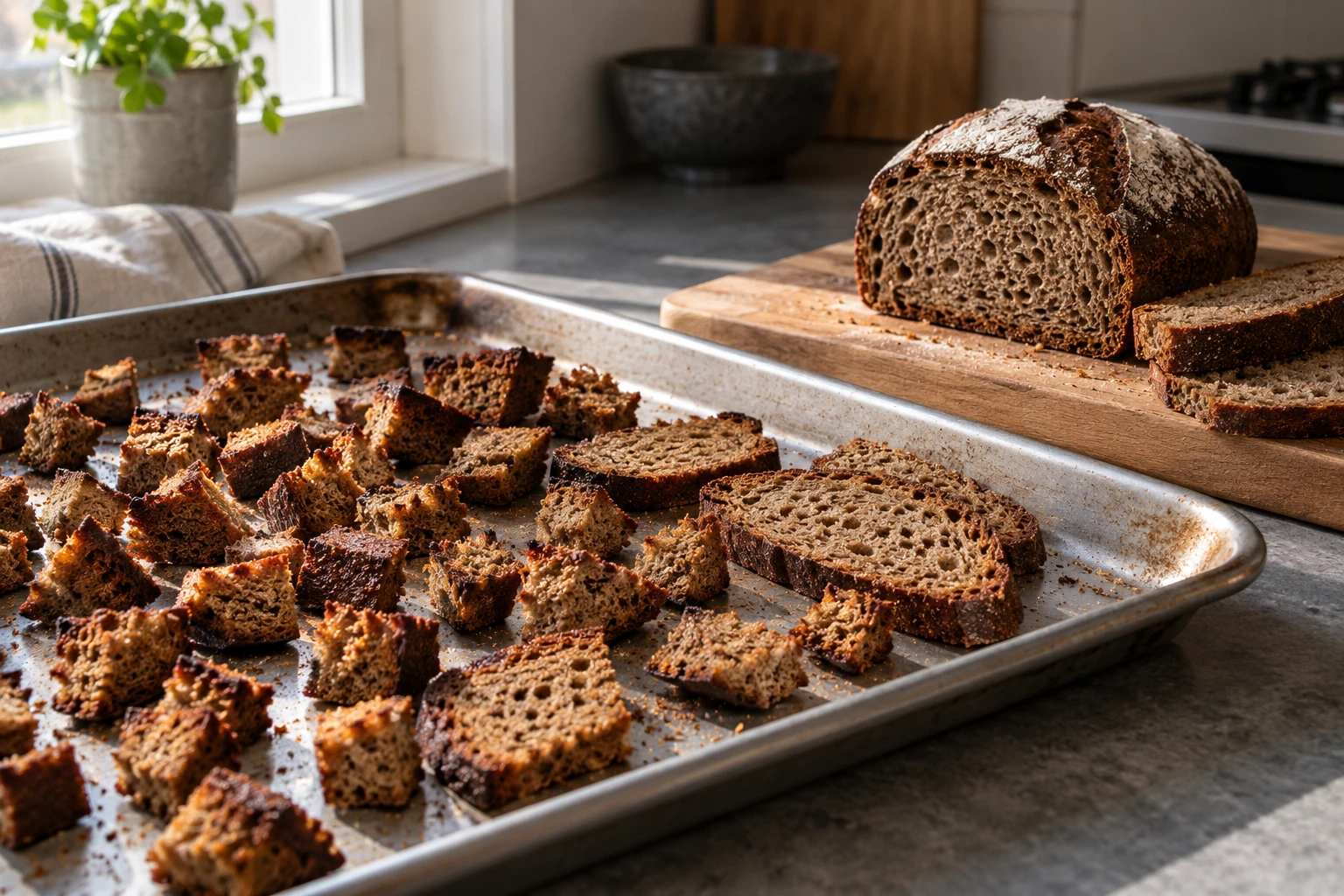
Bread kvass begins with a useful flavor idea: grain becomes bread, and bread supplies an extract for a fermented drink. Rye flour, dried rye bread and rye malt appear across the literature, so a loaf is one route rather than the only definition.
Toasting contributes another distinction. Gastronom's bread-based preparation warns that excessive browning turns the finished flavor bitter. A toasted aroma can be desirable without treating blackened bread as a shortcut to a better drink.
Read the flavors separately
- Aroma
- Bread and fermentation
- Sweetness
- One part of the balance
- Appearance
- A clue, not a conclusion
Notice whether toasted grain, a yeasty note or an added plant flavor comes forward.
Sweetness can sit alongside a sour edge. Compare their strength rather than describing the whole drink only as sweet.
Color and clarity are separate qualities from taste. An amber glass does not tell you every ingredient or its alcohol content.
The name covers varied ingredients
L.V. Trifonova's Kizhi Museum study draws on fieldwork among Ludic Karelians in the Kondopoga and Pryazha districts during the 1980s. It records turnip kvass as well as bread kvass. For the latter, a special bread was made from flour milled from sprouted, dried rye; steamed turnip could also be added.
That is a regional record with named communities and evidence, not a formula for every Russian household. It makes the wider point concrete: an everyday drink can have local ingredients that disappear when its name is reduced to one familiar bottled flavor.
Two places at the table
Pour it as a drink
The State M.A. Sholokhov Museum's account of Don Cossack life describes bread kvass offered to guests and enjoyed on its own. Its kvassnik exhibit places the drink among household vessels and hospitality, rather than treating it solely as a modern packaged refreshment.
Use it in cold soup
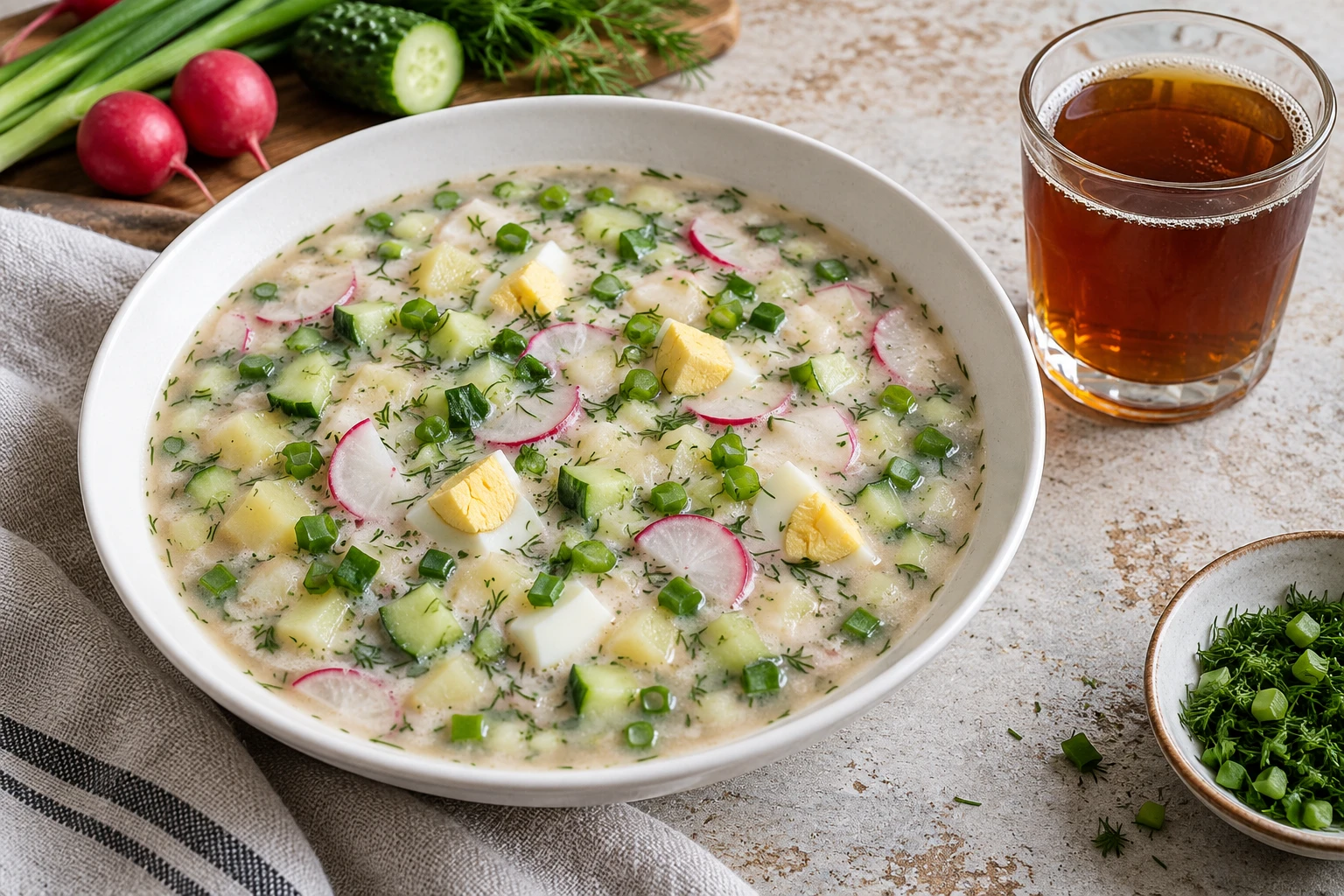
Gastronom's okroshka combines kvass with mustard, sour cream and hard-cooked egg yolks. Those additions change the broth's texture and pungency. The same liquid now has to work with chopped vegetables and other soup ingredients.
Taste the liquid before dressing it
For a bought kvass intended for a soup, try a little on its own first. Then consider what the chosen dressing will add. Mustard supplies pungency; sour cream makes the liquid rounder and creamier. A strongly sweet drink may lead the finished bowl in a different direction from one whose sour edge is more prominent.
There is also room for regional soup variation. The Belgorod Center of Folk Art records an account from Novaya Tavolzhanka in which kvass was one possible base alongside whey and other liquids. The entry is evidence of a local practice; it does not make one broth compulsory across all okroshka.
A modern Polish food study offers another useful distinction. Joanna Kaszuba and colleagues examined mountain-rye-bread kvass with chokeberry, sea buckthorn and peppermint additions. Their sensory assessment treated smell, color and taste as separate qualities. These experimental drinks help illustrate how a recognizable grain base can carry different plant flavors; they are not a record of one historical Russian recipe.
Choose the particular kvass
When buying, read the ingredient and alcohol information for the actual product. Fermented drinks should not be assumed to contain zero alcohol simply because their flavor is gentle. Rye-based versions also matter to anyone avoiding gluten; bread and malt ingredients need checking.
Serve a finished commercial drink according to its label, including refrigeration after opening. This guide concerns tasting and table use rather than an improvised fermentation timetable. The most useful comparison is between actual glasses: which smells more of bread, which tastes sweeter, which has the sharper finish, and which suits the food beside it?
Research notes
Sources behind this article
- Gastronom — Okroshka with kvass and mustard Bread toasting and an egg-yolk, mustard and sour-cream broth dressing.
- State M.A. Sholokhov Museum — Kvassnik Don Cossack household vessel and cultural account of kvass service.
- L.V. Trifonova — Kizhi Museum foodways study 1980s fieldwork on Ludic Karelian bread and turnip kvass in specified districts.
- Belgorod Center of Folk Art — Novaya Tavolzhanka okroshka A local account naming kvass among several possible cold-soup bases.
- Joanna Kaszuba and colleagues — Foods, 2024 Original study of mountain-rye-bread kvass with plant additions and separate sensory criteria.
Keep exploring
More stories for your table

Russian cuisine Dumplings
Pelmeni: The Shared Work Behind a Quick Meal
Pelmeni turn a session of rolling, filling and folding into meals for later. Explore their regional context, how to freeze a batch, and two ways to serve it.
Russian cuisine Apple sponge cake
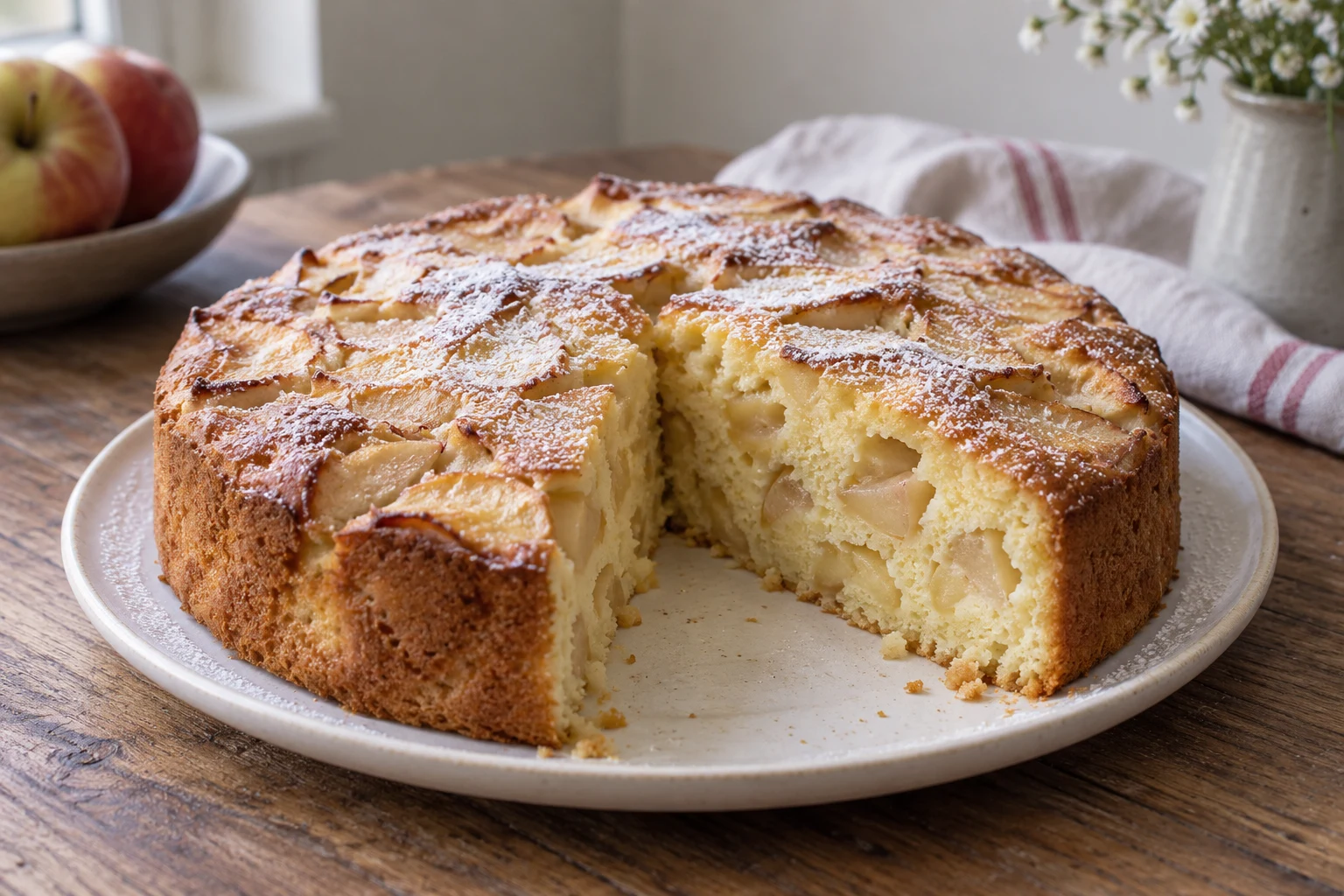
Sharlotka: apples held in a light egg sponge
Sharlotka brings apples and whipped-egg sponge together. Compare fruit placement, batter cues and a sour-cream variation before choosing a recipe.

Russian cuisine Meat
Russian Kotleti: Soft Bread, Even Patties, a Browned Crust
A Russian-style beef-and-pork kotleti adaptation with milk-softened bread, evenly shaped patties, a light flour coating and a thermometer check.