
Fish Pirog: Decide What Goes Under the Lid
Рыбный пирог
A closed yeast-dough fish pirog can begin with fillet, poached fish or a tin. Compare its filling, rice and steam vent before choosing a recipe.
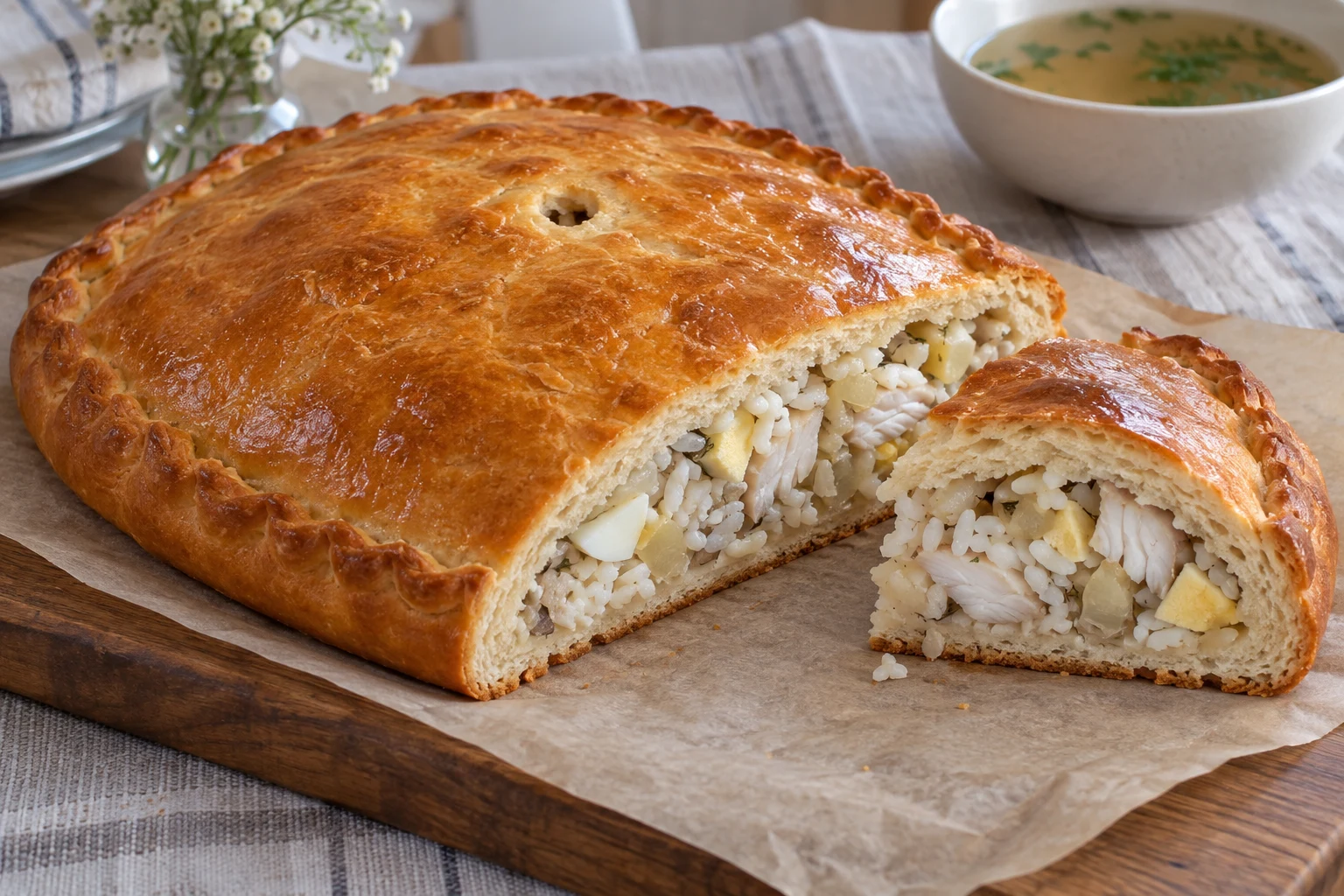
A pie is a plan for its filling
A closed fish pirog looks simple from above: a browned lid with a little opening for steam. The cut slice tells more. Fish, rice and softened onion sit inside a bread-like dough, but published Russian recipes reach that slice from different starting points. Fresh fillet, fish cooked before assembly and canned fish do not enter the pie in the same condition.
The three recipes here all use yeast dough. That gives this comparison a clear boundary without making every fish pie a yeast pie. Decide which filling you want first, then follow the matching dough, preparation and baking instructions.
Three starting points for the fish
Fillet cooked briefly with onion
Elena Nekrasova's Gastronom recipe uses salmon strips softened briefly with sautéed onion before mixing with partly cooked rice. It also names white fish as an alternative, and closes the filling between two dough layers.
Fish poached before assembly
RussianFood contributor KomuDobavki poaches pollock, then combines it with rice, cooked onion, spring onion and chopped boiled eggs. Her decorative pie uses overlapping strips of dough to form a fish shape.
Fish from a tin
Sofya Glukhova's Food.ru recipe mixes canned fish in oil with cooked rice and sautéed onion. The filling is placed between two sheets of yeast dough, with a small vent in the upper sheet.
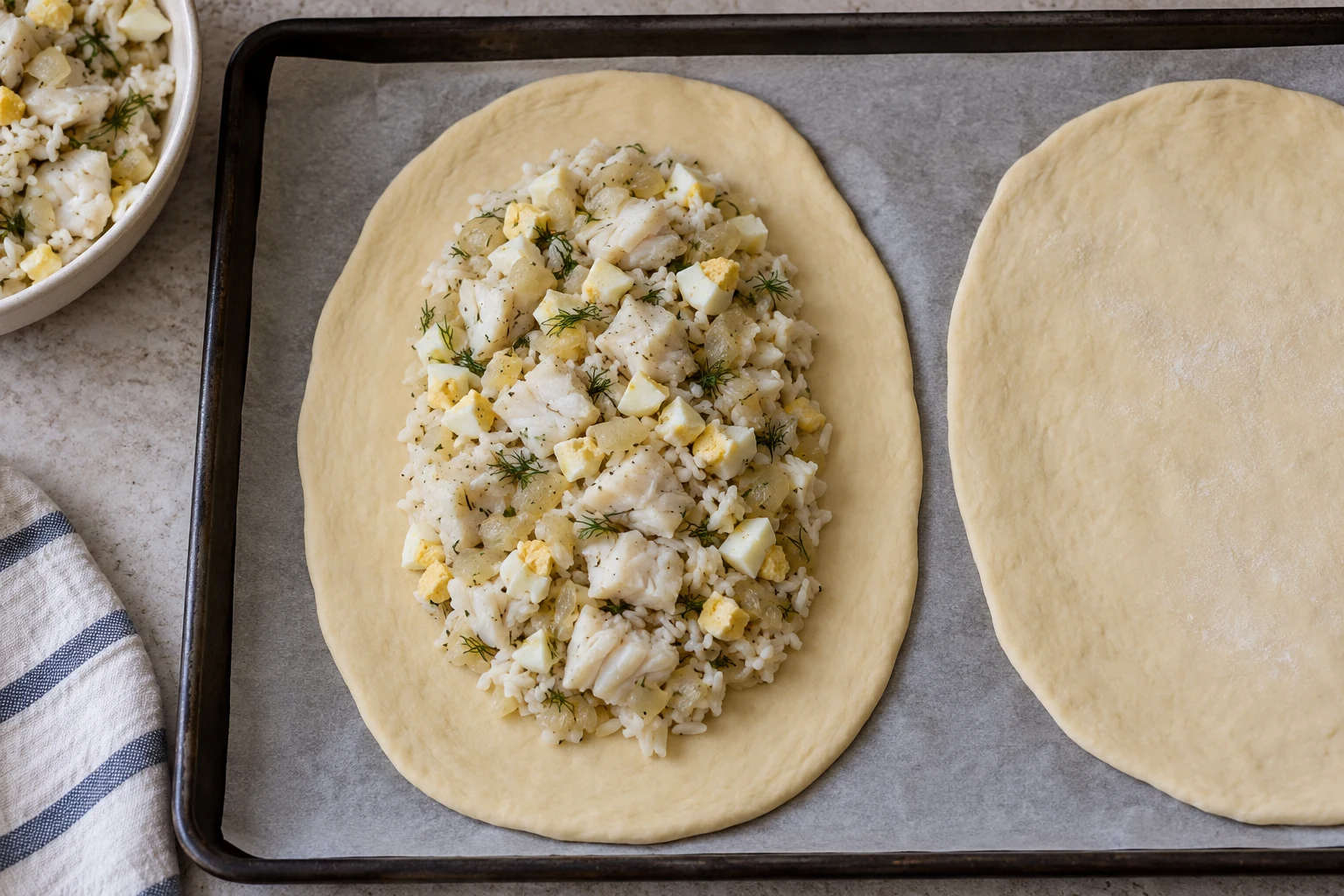
Rice should have a defined job
Rice is common to these examples, but its cooking stage differs. Gastronom's rice is partly cooked before baking; Food.ru cooks its rice before mixing the canned-fish filling. Use the stage specified by your recipe. Changing partly cooked rice to an equal weight of cooked rice also changes how much rice and moisture goes into the pie.
Food.ru explicitly cautions against letting rice overwhelm the fish. Look at a cut piece as a practical guide to the result you want: visible fish among grains, not an anonymous mound of rice. The poached-pollock version adds chopped eggs, whereas the other two fillings do not require them. Egg belongs to that variation rather than every fish pirog.
The shape comes after the filling
An ordinary closed pie needs enough clean dough around the filling to bring the edges together. Gastronom uses a round baking dish and a separate lid; the RussianFood example folds cut strips over a central mound. Its fish-shaped head and tail are that author's decoration, not proof of a special fish species inside.
Gastronom and Food.ru both include an opening for steam in their closed lids. Keep that functional detail separate from ornamental dough leaves or a glossy finish. The opening, the seam and the thickness of the filling deserve attention before adding decoration.
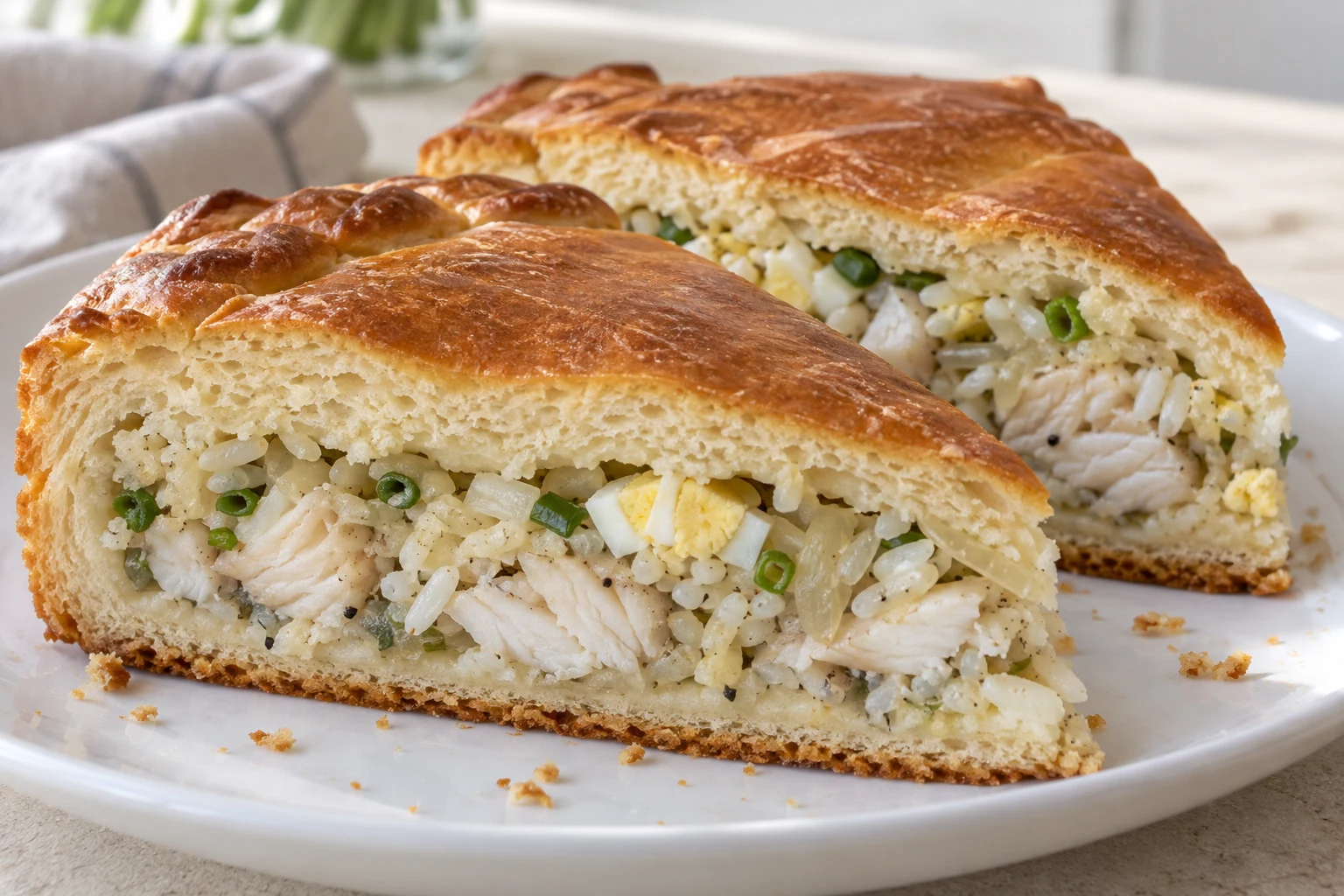
Serve a slice with its surroundings
Gastronom suggests serving its fish-and-rice pie with fish soup or broth. That pairing leaves the slice intact while giving the meal a fluid companion. The RussianFood example rests briefly before cutting, which is a more practical finish than trying to portion a fragile hot pie the instant it leaves the tray.
Before choosing another garnish, check the slice itself: dough cooked through, a filling that holds together enough to serve, and recognizable fish. Those observations give the lid something useful to conceal.
Research notes
Recipe methods and cooking guidance
Three complete Russian-language recipes establish the filling comparison. Two federal food-safety pages supply temperature and refrigeration guidance. This article provides a guide to choosing a method, not a claimed tested formula.
- Gastronom — Elena Nekrasova's yeast pie with fish and rice Salmon with onion, partly cooked rice, round covered pie and broth serving.
- RussianFood — Fish pie with rice and eggs KomuDobavki's poached pollock filling and decorative folded yeast dough.
- Food.ru — Sofya Glukhova's pie with rice and canned fish Canned fish in oil, cooked rice, onion and a vented two-sheet lid.
- FoodSafety.gov — Safe minimum internal temperatures Fish cooking and leftover reheating are different checks.
- FoodSafety.gov — Four steps to food safety Prompt cold storage, shallow containers and the shorter hot-weather limit.
Keep exploring
More stories for your table
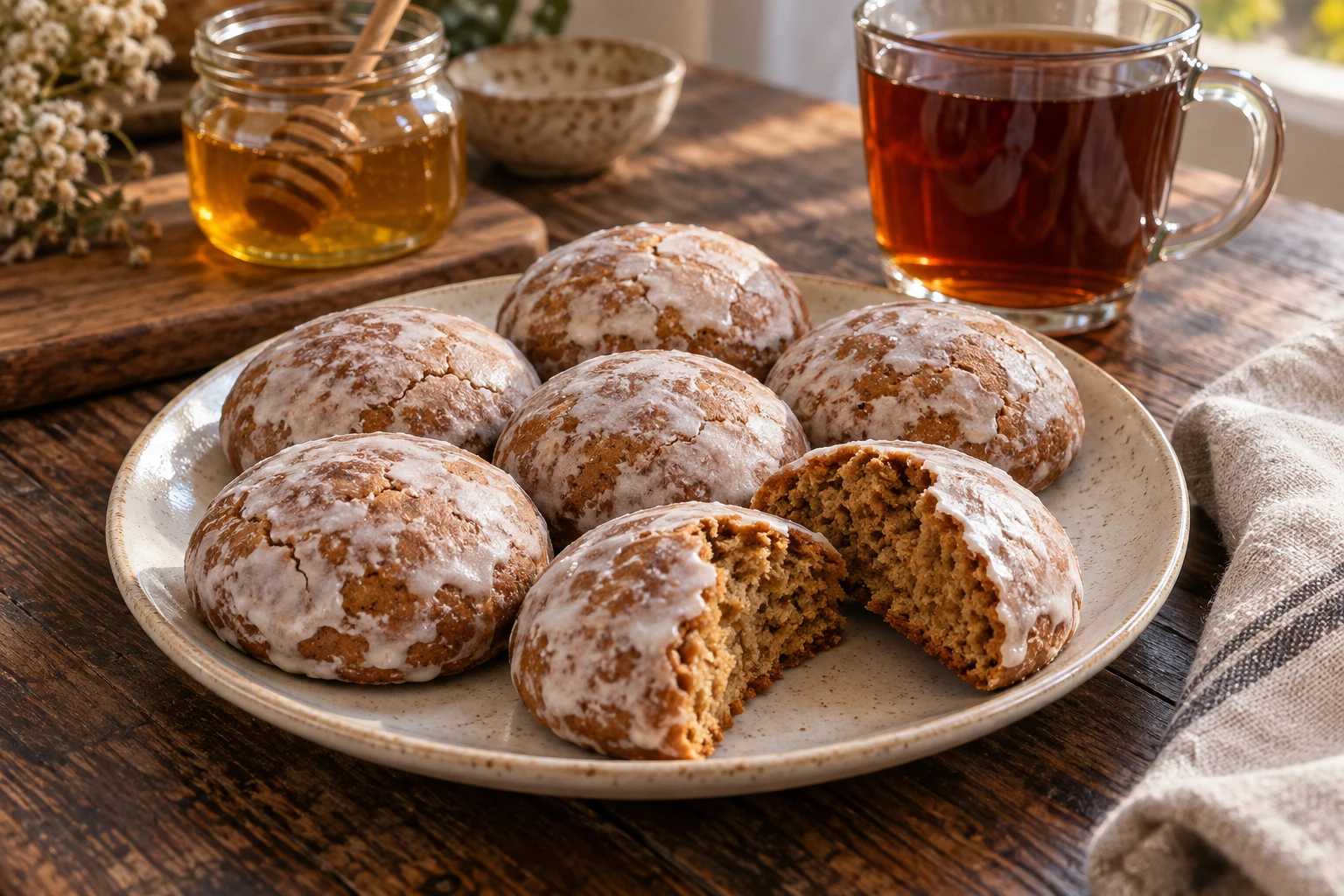
Russian cuisine Cookie
Pryaniki: Shape Before the Glaze
Domed honey spice cookies, jam-filled rounds and Tula's printed pryanik belong to a varied family. Their shapes ask for different doughs and finishes.
Russian cuisine Dumplings
Pelmeni: The Shared Work Behind a Quick Meal
Pelmeni turn a session of rolling, filling and folding into meals for later. Explore their regional context, how to freeze a batch, and two ways to serve it.
Chilean cuisine Baked savory pastries
Empanadas de Pino: The Filling Comes Before the Fold
A Chilean oven empanada begins with cooked beef-and-onion pino. Compare filling methods, chilled assembly, folded edges and the separate egg-and-olive pieces.