
Choco frito: a thin coating and a meal around it
Choco frito à setubalense
Setúbal's fried cuttlefish comes into focus through its strips, flour coating and accompaniments—from lemon and chips to tomato rice.
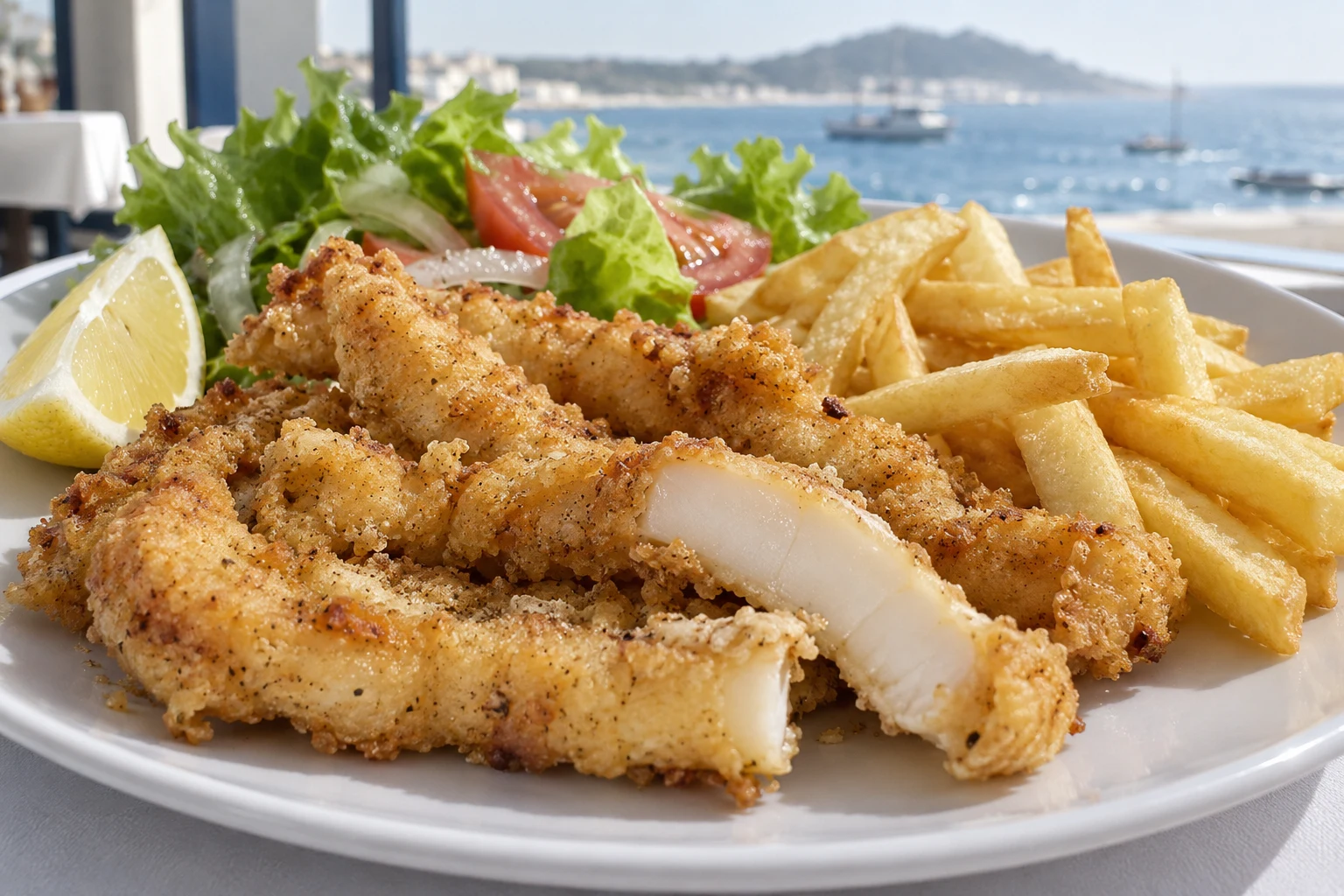
A strip of cuttlefish, a squeeze of lemon
Choco frito puts cuttlefish at the center of a plate: cut into strips, coated and fried, then served while the outside still offers a crisp bite. The familiar arrangement described by Turismo de Lisboa adds chips, salad and lemon. It is a useful introduction to Setúbal's specialty because the contrasts are easy to see—golden coating, pale seafood, fresh leaves and a sharp citrus finish.
The name tells you what to expect without prescribing every detail of the cook's method. Published Portuguese versions differ in seasoning, flour and accompaniments. Understanding those choices makes the dish easier to order or cook than searching for one secret ingredient that supposedly explains every restaurant's plate.
Begin with cleaned strips
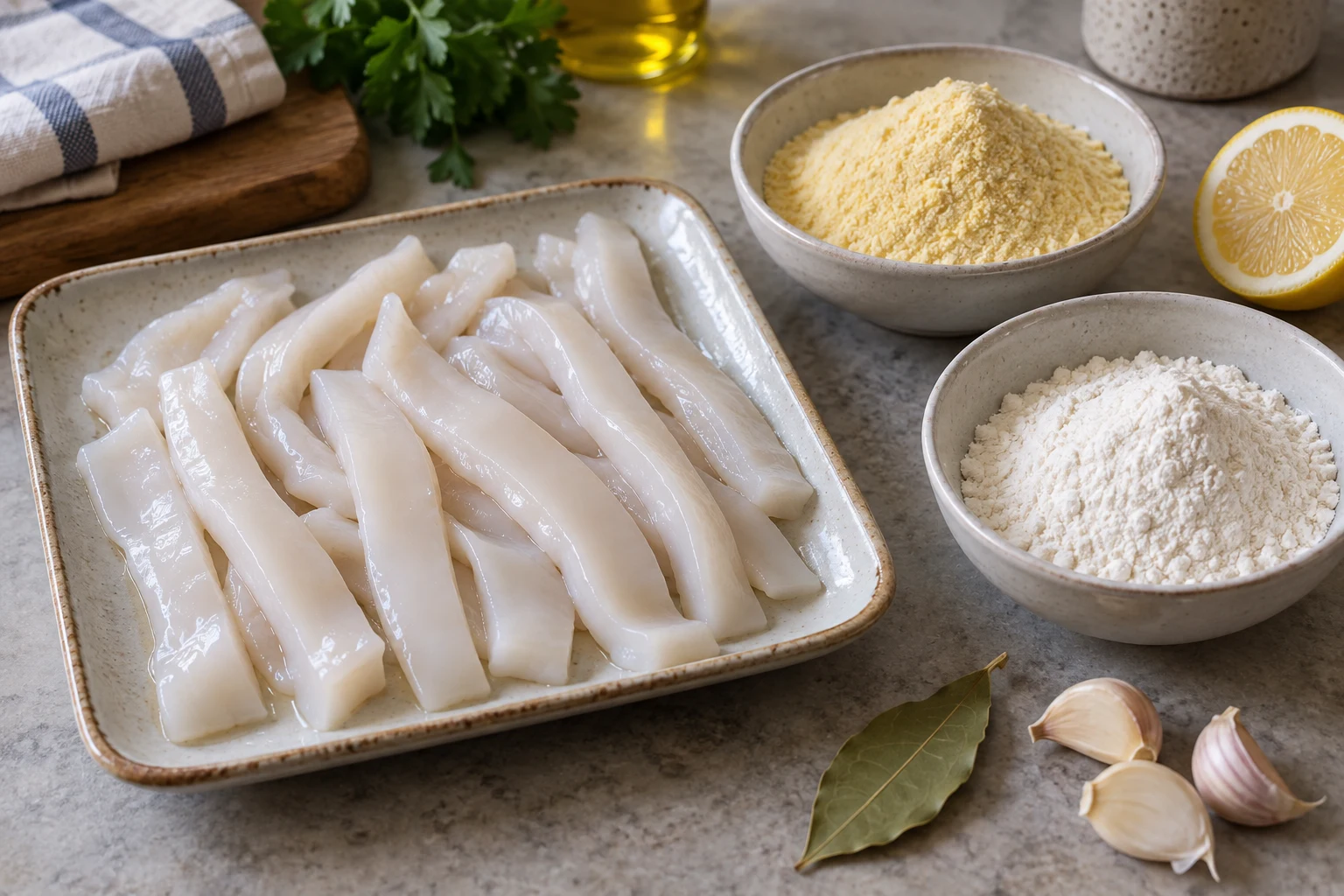
Choco is cuttlefish. For this dish, the visible form is a strip rather than a neat ring. Teleculinária's recipe starts with strips and cuts them finer before seasoning with garlic, lemon, salt and pepper. Chef Daniela Polido, interviewed by New in Setúbal, also works with strips, but adds bay and a little chili sauce to her seasoning.
Polido draws attention to a less glamorous preparation step: removing the transparent membrane when cleaning the cuttlefish. That detail belongs before the flour and oil. If you are buying prepared seafood, ask what cleaning has already been done and compare its cut with the recipe you intend to follow. A bag of rings or a whole unprepared animal does not describe the same starting point as ready-to-use strips.
The coating is a choice worth making explicitly
Two published methods show how a flour-coated surface can vary without changing the main ingredient.
Corn flour on its own
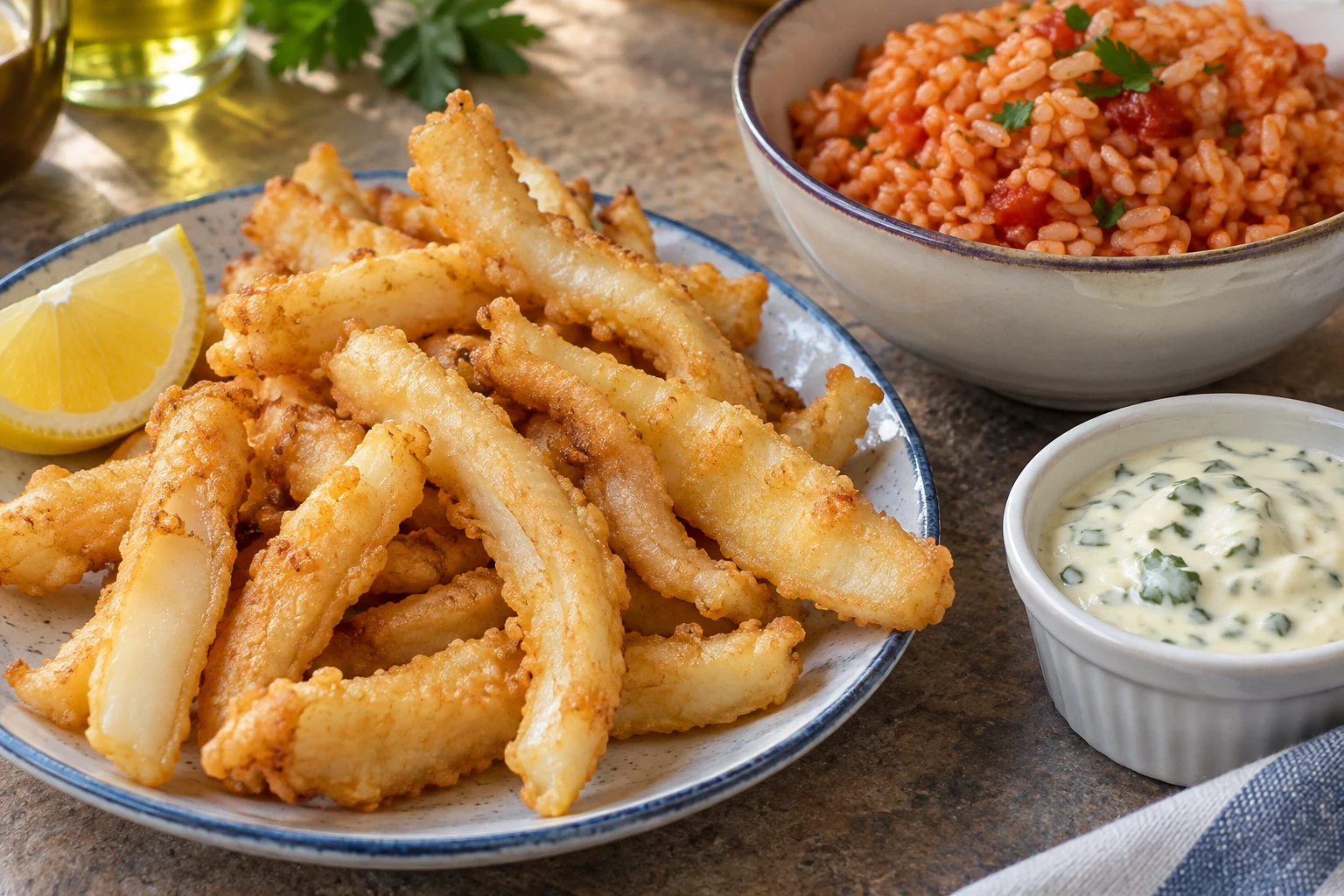
Cascais Food Lab coats its prepared cuttlefish in corn flour with a little salt. The accompanying recipe builds a complete plate around tomato rice and a seasoned mayonnaise.
- Read the flour named in the recipe.
- Keep the coating separate from the rice preparation.
A corn-and-wheat mixture
Polido combines corn flour and wheat flour after seasoning the strips. Her method specifies heated oil before the coated pieces go in; the flour mixture is a deliberate part of that sequence.
- Follow that recipe's proportions rather than guessing a substitution.
- Treat preparation and frying as successive stages.
Read the method as a sequence
- 01
Prepare the seafood first
Check that the strips are cleaned and sized for the selected method. Polido's membrane-removal advice and Teleculinária's finer cut address preparation before any coating is applied.
- 02
Drain before flour
Teleculinária drains its seasoned cuttlefish before passing it through flour. Keep that instruction attached to its method: pouring the seasoning liquid into the flour bowl would create a different coating.
- 03
Heat the oil deliberately
Both Cascais Food Lab and Polido specify 180°C oil. Use the guidance in the recipe you have chosen; their published procedures should not become a single invented cooking time for strips of any thickness.
- 04
Plan the finish before frying
Teleculinária drains the fried strips on absorbent paper and serves them with lemon. Cascais Food Lab also drains and serves promptly. Arrange the accompaniments so that the seafood can reach the table after its own final stage.
Chips are familiar; tomato rice is useful too
Lemon can stay beside the plate until each diner wants it. The chips-and-salad arrangement in Turismo de Lisboa's description gives the meal a mix of fried and fresh elements without covering the seafood in another sauce.
Cascais Food Lab offers a different balance: arroz de tomate made with carolino rice, accompanied by mayonnaise seasoned with garlic, lemon, chili and coriander. Serve the rice in its own bowl if you want to keep its moisture apart from the freshly fried coating. The two arrangements are practical options, rather than evidence that one accompaniment makes the other incorrect.
The local ingredient has more than one expression
The city's own account of Semana do Choco 2025 places the familiar fried dish alongside other ways of cooking cuttlefish. Its examples include cuttlefish with broad beans, black risotto, nigiri and fried strips over creamy ink rice. That historical programme documents a regional interest in the ingredient; it does not make every listed preparation choco frito.
For this plate, keep the distinctions simple. Ask for cuttlefish, pay attention to the strips and their coating, and choose the meal around them. A lemon wedge, some fresh salad or a separate bowl of tomato rice can each give the fried seafood room to remain the main event.
Research notes
Recipes and regional context
These sources document flour and serving variations, plus a past municipal food programme. The guide is not a new tested recipe. Generated images illustrate the described preparations.
- Cascais Food Lab: Choco frito à moda de Setúbal Corn-flour coating, 180°C frying, tomato rice and seasoned mayonnaise.
- Teleculinária: Choco frito à setubalense Finer strips, garlic-lemon seasoning, draining before flour and a lemon finish.
- Carolina Bico interviews chef Daniela Polido The chef's membrane-removal advice and corn-and-wheat flour method, published in 2019.
- Turismo de Lisboa: Choco Frito de Setúbal Regional context and the chips, salad and lemon serving arrangement.
- Visit Setúbal: Semana do Choco 2025 A municipal programme documenting several cuttlefish preparations beyond the familiar fried dish.
Keep exploring
More stories for your table
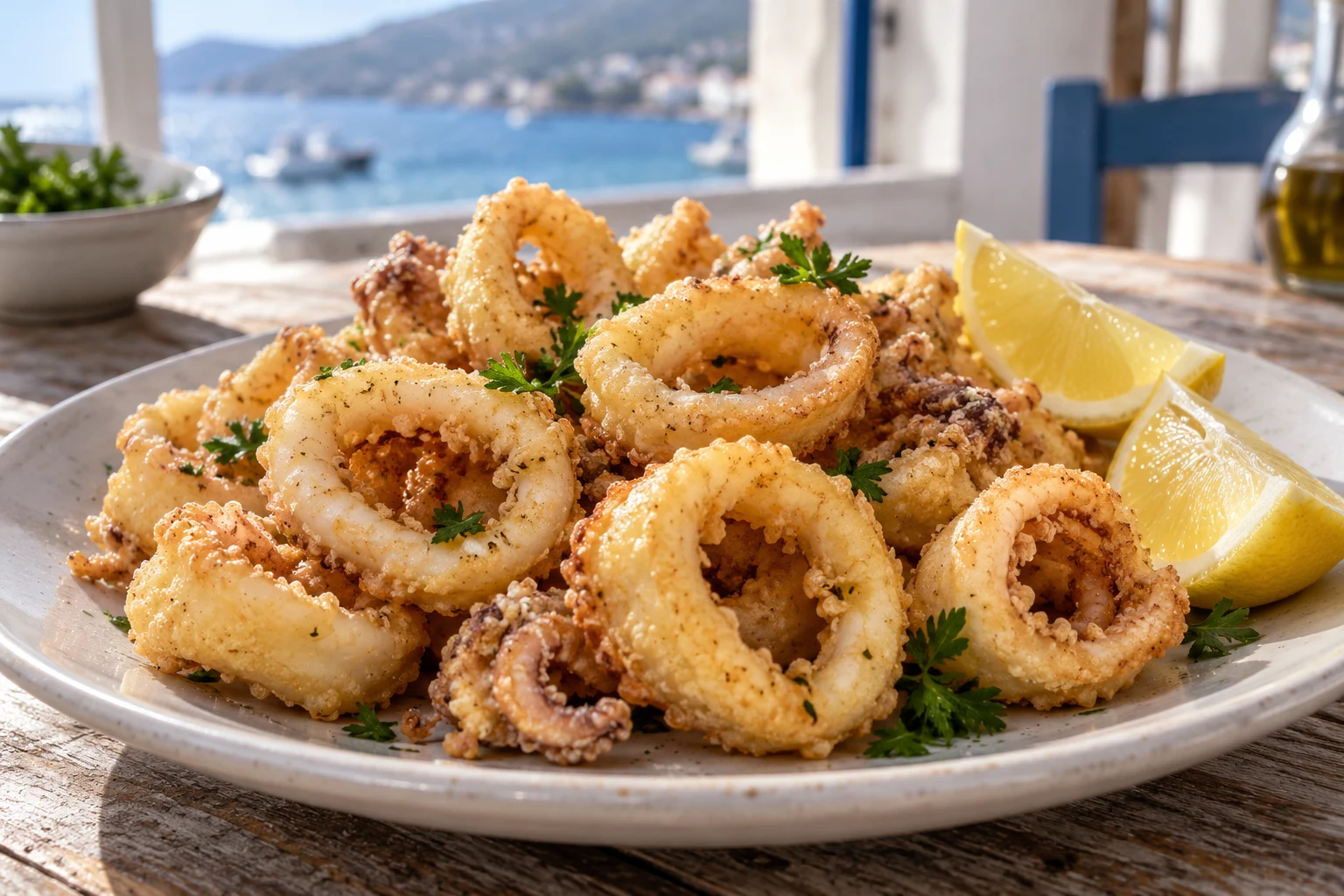
Greek cuisine Fried squid
Kalamarakia tiganita: fry last, add lemon at the table
A practical guide to Greek fried calamari: match the rings to a coating method, keep the pan manageable, and prepare the table before frying.
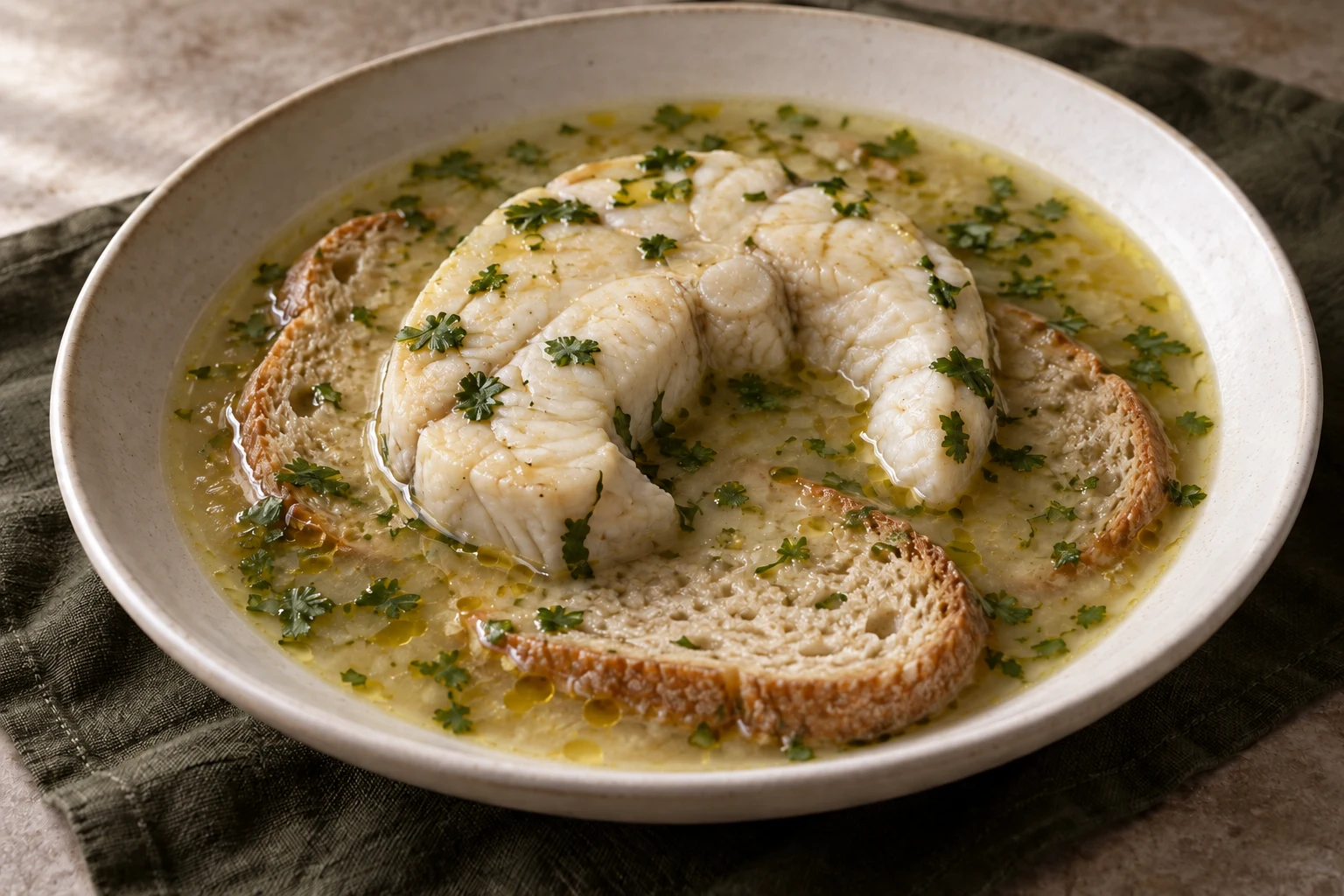
Portuguese cuisine Fish soup
Sopa de Cação: Bread Beneath the Broth
Why Alentejo’s sopa de cação arrives over plain or toasted bread, or beside fried triangles—and how its vinegar-seasoned broth holds the dish together.
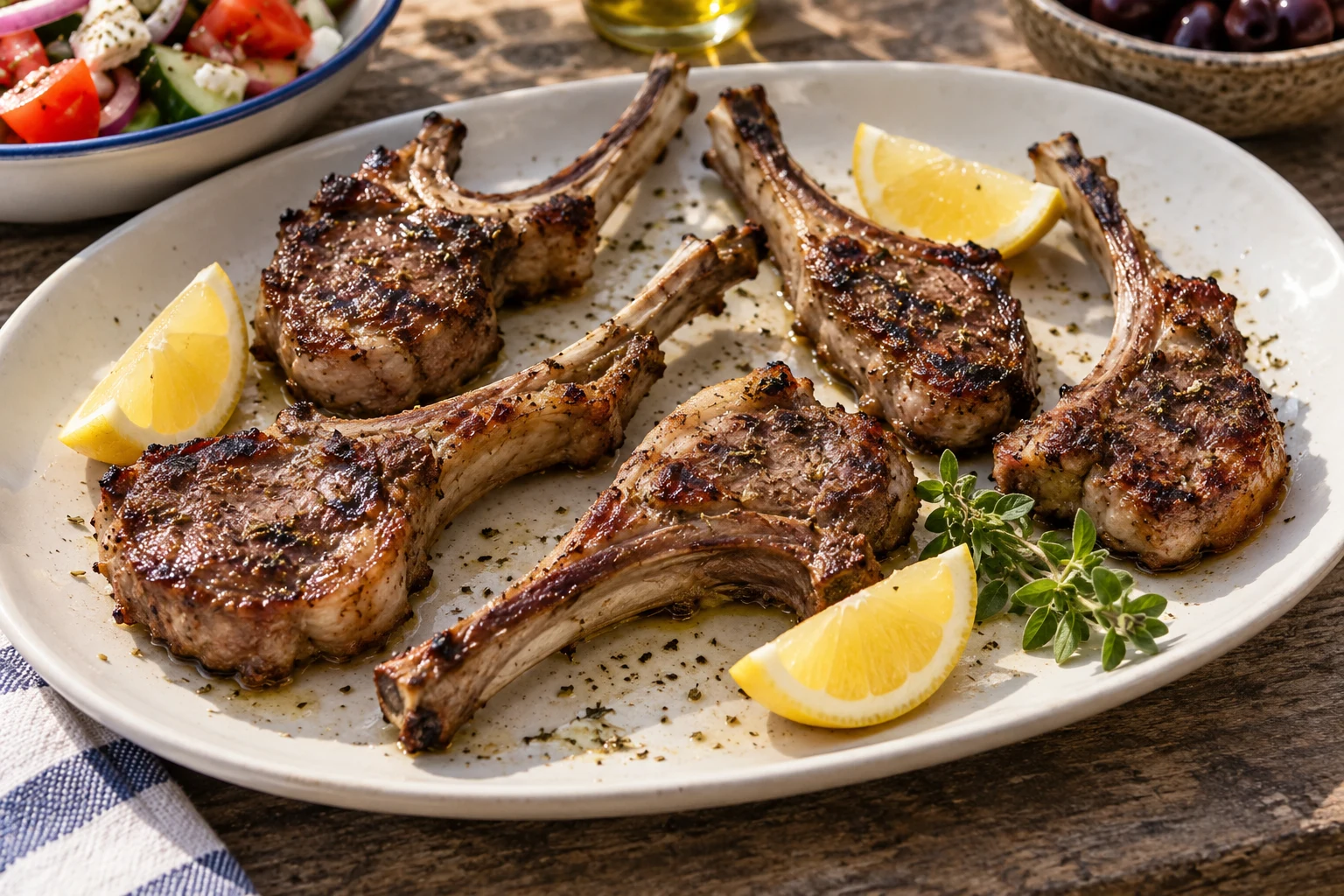
Greek cuisine Lamb chops
Paidakia: Choose the Chop Before the Marinade
Greek-style lamb chops start with the cut and thickness. Compare rib and loin chops, keep marinade separate from finishing sauce, and judge the center as well as the crust.