
Açorda de Marisco: Bread Becomes the Sauce
Açorda de marisco
The prawns and clams catch the eye. Underneath them, bread has absorbed the seafood broth and become the body of the dish. That transformation is where açorda de marisco gets its texture.
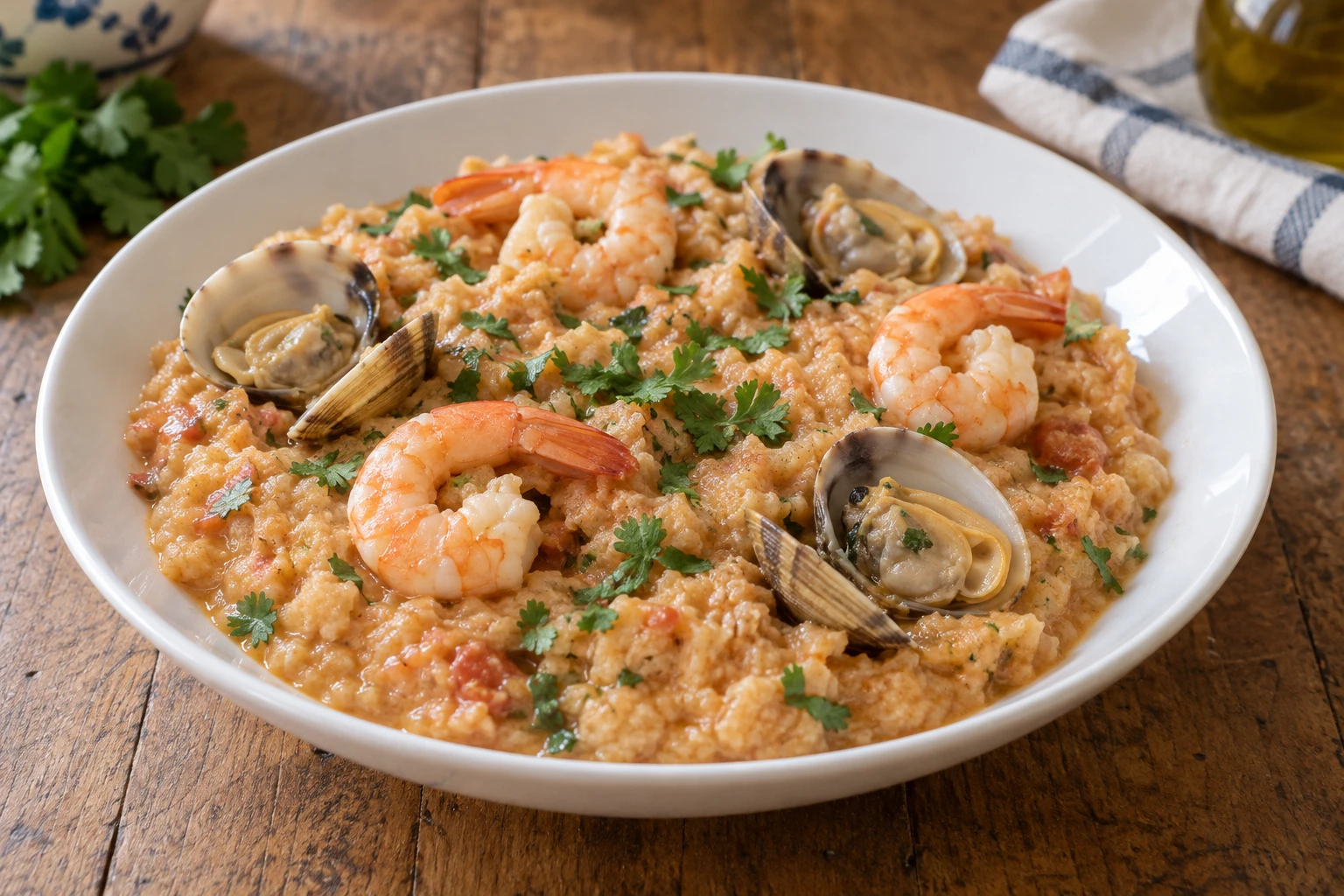
Look beneath the seafood
A prawn on top of açorda de marisco is easy to recognize. The mixture beneath it deserves a closer look: bread has softened, taken up liquid and been worked through the pan until it carries the seafood flavor. The spoon meets a moist, yielding body, with the seafood remaining distinct within it.
Portuguese recipes give that transformation several routes. Teleculinária’s mixed-seafood version brings together clams, razor clams and peeled shrimp. Chef Justa Nobre’s preparation, published by Continente, uses shrimp stock to soften the bread before it enters a tomato-and-onion base. Hugo Lopes’s version for RTP’s MasterChef adds stock gradually to bread in the pan. The common point is bread becoming the dish’s body; the sequence affects how the cook reaches it.
Three parts of the texture
- Bread
- The body
- Broth
- The flavor carried through it
- Seafood
- Distinct pieces
The crumb softens and breaks down, binding the liquid into the mixture.
Seafood cooking liquid or a prepared shrimp stock reaches beyond the visible toppings.
The cooked shellfish returns to the softened bread rather than disappearing into it.
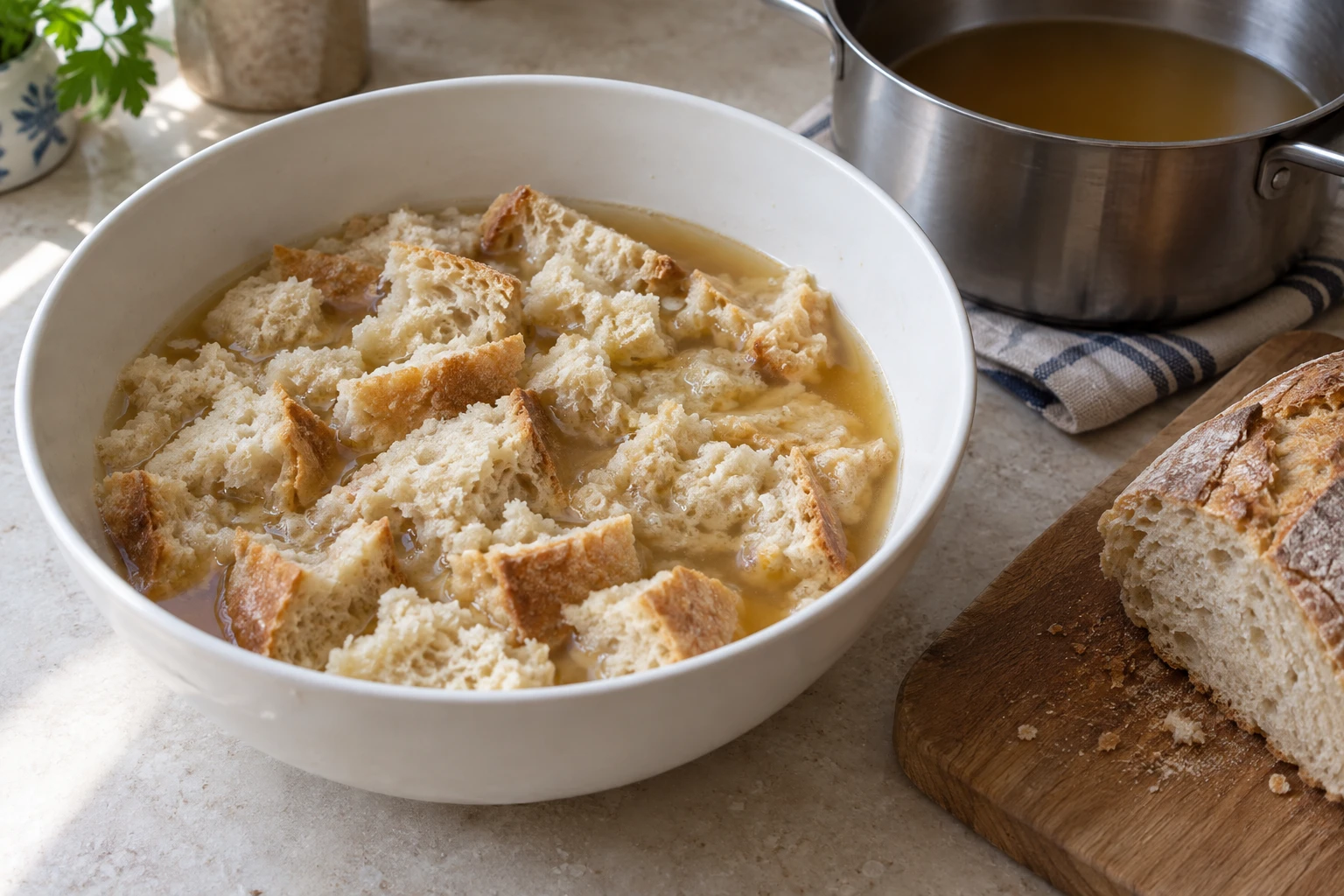
Read the bread stage before choosing a recipe
- 01
Notice what soaks the bread
Teleculinária begins with bread soaked in water, then introduces strained shellfish liquid during cooking. Nobre softens her bread directly in shrimp stock. Those are different routes to hydration, so the soaking liquid in one recipe should not automatically be replaced by the quantity listed in another.
- 02
Look for the point where pieces become a mixture
Hugo’s preparation adds broth a little at a time until the bread becomes homogeneous. Teleculinária also calls for a uniform mixture after the bread enters the pan. These cues explain the aim better than a photograph of the seafood garnish: the softened crumb should form the base.
- 03
Keep the seafood sequence in view
Nobre cooks the seafood separately and combines it with the bread at serving. Hugo likewise reserves cooked shrimp before returning it to the mixture. When following either recipe, that separate stage matters; the bread’s time in the pan is not a direction to keep cooking the shrimp throughout it.
The finishing choices belong to the version
Tomato can be part of the base, as in Teleculinária and Nobre, while coriander supplies a final fresh accent. Teleculinária offers parsley as an alternative. Its mixed-seafood recipe does not list eggs, whereas Nobre’s includes yolks at the finish. Vaqueiro labels eggs optional in its bread-bowl preparation.
That variation is useful when deciding which recipe to cook or which serving to order. A glossy appearance alone does not tell you whether egg is present. Read the ingredient list alongside the method, and ask about the actual version when an ingredient matters to you. The bread supplies the structure even when the finishing choices differ.
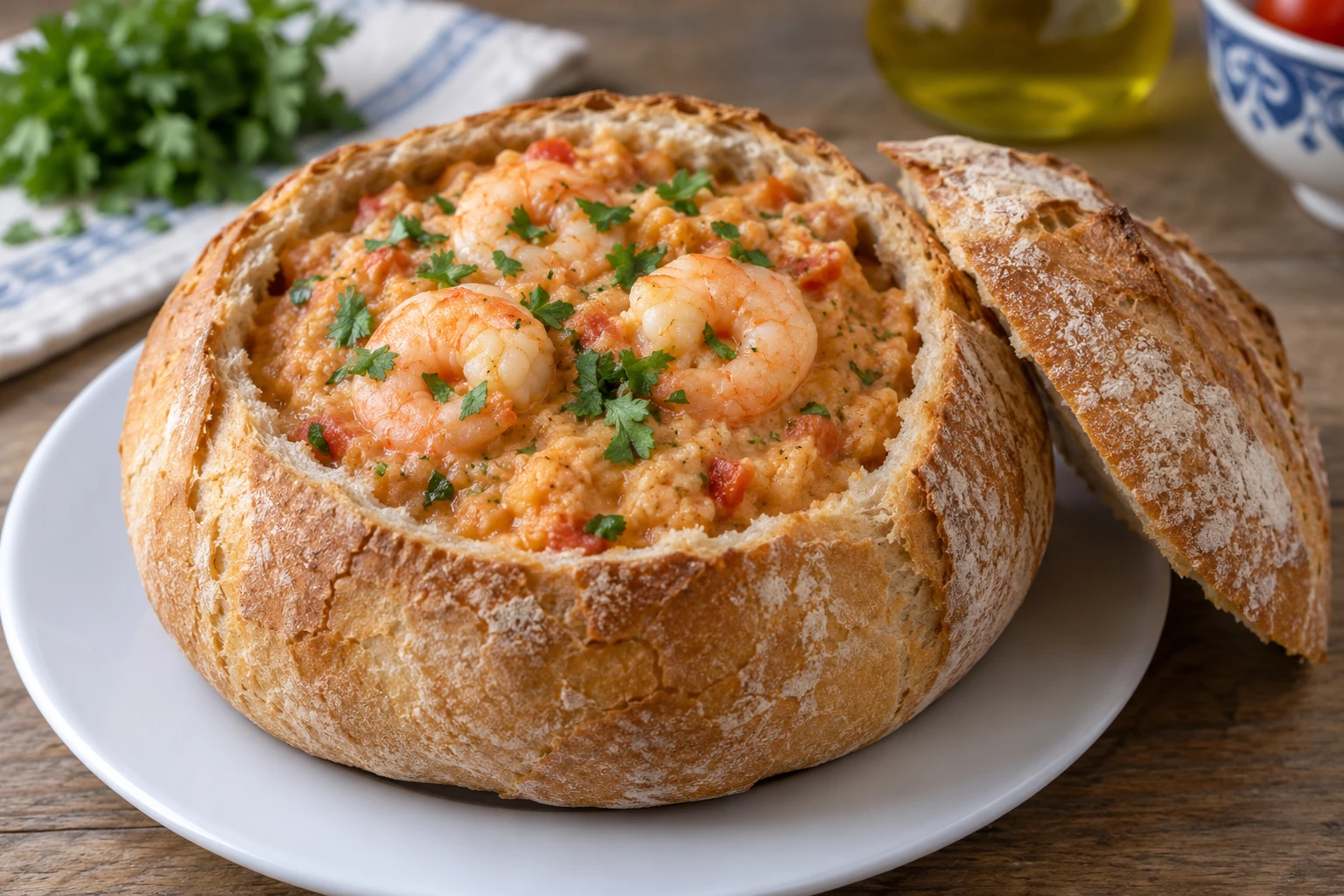
Bread in the pan, bread around the meal
Served in a dish
The bread is part of the food itself. Teleculinária’s version presents a homogeneous mixture with seafood folded through it, keeping some shellfish in their shells for the finished arrangement. The serving dish lets that soft mixture spread and remain visible.
Served inside a loaf
Vaqueiro hollows a country loaf and uses its removed crumb in the seafood mixture. The shell of the loaf becomes the serving vessel, with its lid cut away. The crust surrounding the filling and the softened crumb inside therefore have separate roles in the same meal.
One name, more than one bread texture
A useful comparison comes from Maria Jerónima Soares of Évora, whose açorda à alentejana is published by RTP. In that preparation, hot cooking liquid is poured over crushed garlic and herbs in a terrine, then the bread is introduced; cod and poached eggs are served separately. It documents another way bread and broth meet under the name açorda.
For seafood açorda, start with the particular recipe’s destination. Is the bread being worked into a uniform base? Is the liquid arriving gradually, or has the bread already absorbed stock? Will the cooked seafood return at the end, and will the mixture go into a dish or a hollowed loaf? Those questions make the texture easier to understand before the first spoonful.
Research notes
Sources
Original Portuguese preparations document the bread, broth and serving choices discussed here.
- Teleculinária — Açorda de marisco Mixed shellfish, water-soaked bread, strained cooking liquid and a homogeneous finish.
- Justa Nobre, published by Continente — Açorda de marisco The chef’s festival recipe softens bread in shrimp stock and adds separately cooked seafood at serving.
- Vaqueiro — Açorda do Mar no Pão Uses a hollowed country loaf, its soaked crumb, tomato, shrimp and optional eggs.
- RTP MasterChef — Hugo Lopes: Açorda de Camarão Adds stock gradually to bread and returns separately cooked shrimp to the mixture.
- RTP Praça — Maria Jerónima Soares: Açorda à Alentejana An Évora contributor’s preparation provides the separate broth-and-bread comparison.
Keep exploring
More stories for your table
Portuguese cuisine Fish soup
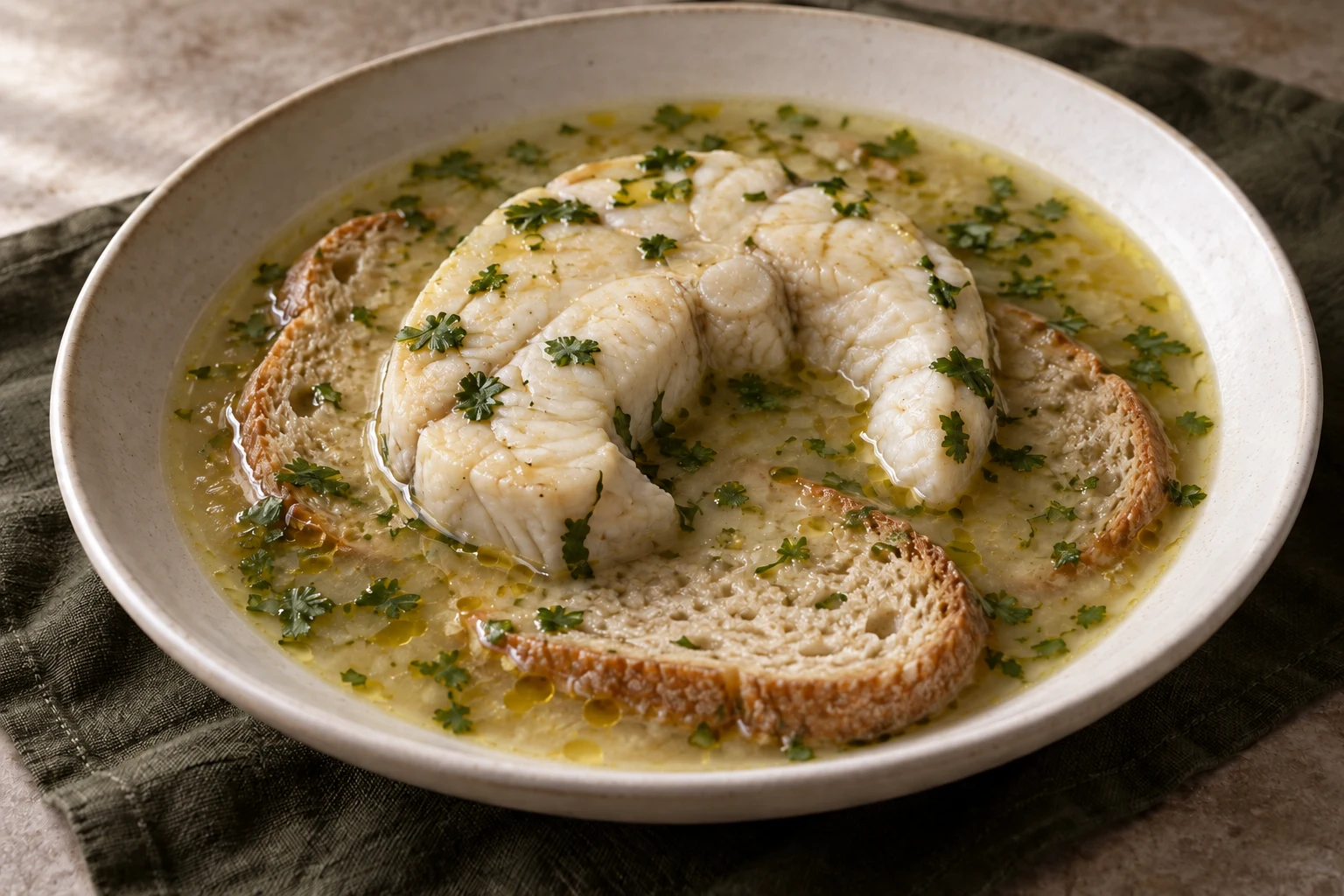
Sopa de Cação: Bread Beneath the Broth
Why Alentejo’s sopa de cação arrives over plain or toasted bread, or beside fried triangles—and how its vinegar-seasoned broth holds the dish together.
Portuguese cuisine Fish and pasta
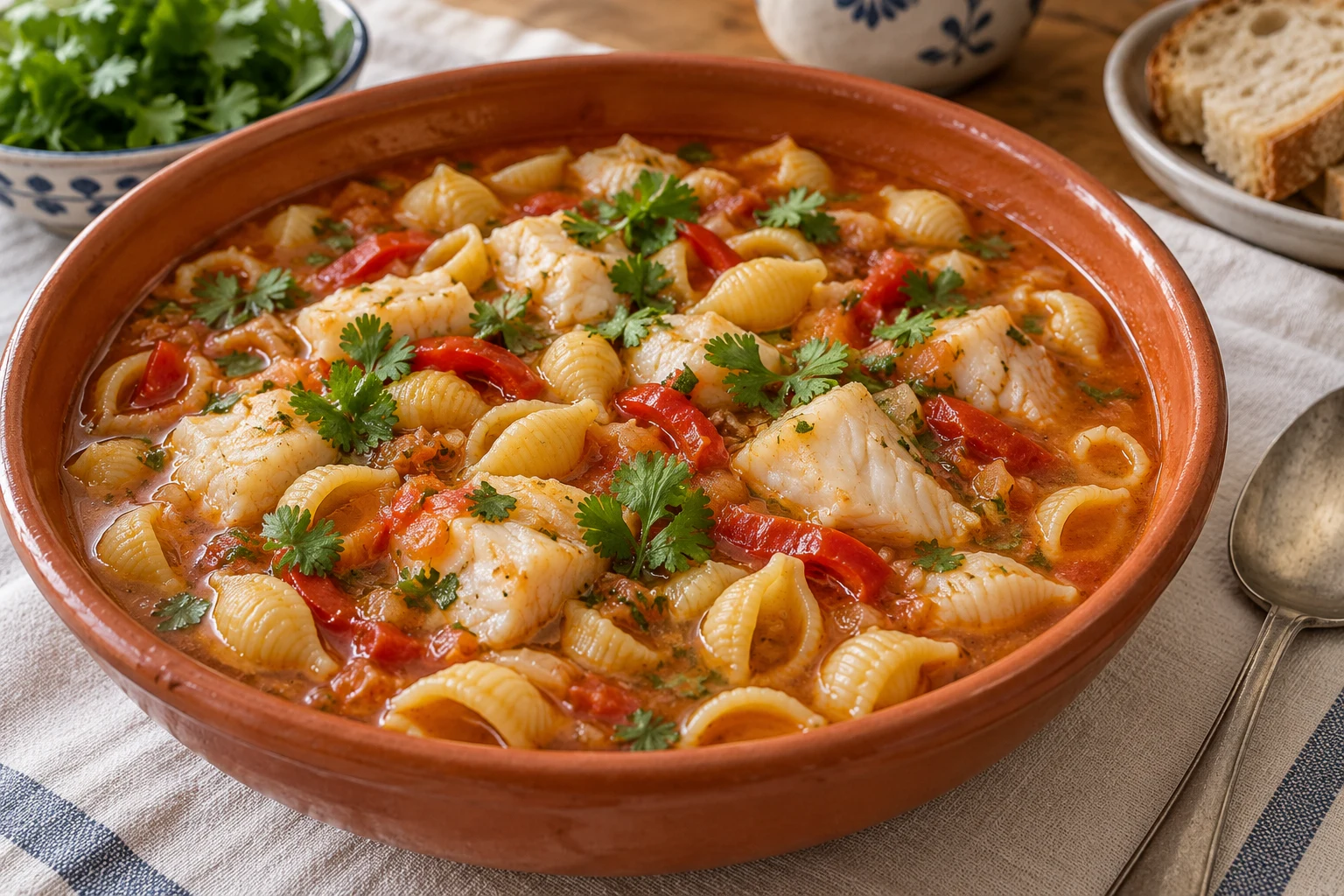
Massada de Peixe: Give the Pasta the Broth
In Portuguese massada de peixe, short pasta cooks in a tomato-rich broth. Separate the fish stages to keep both the pasta and the flakes distinct.
Portuguese cuisine Grilled sardines
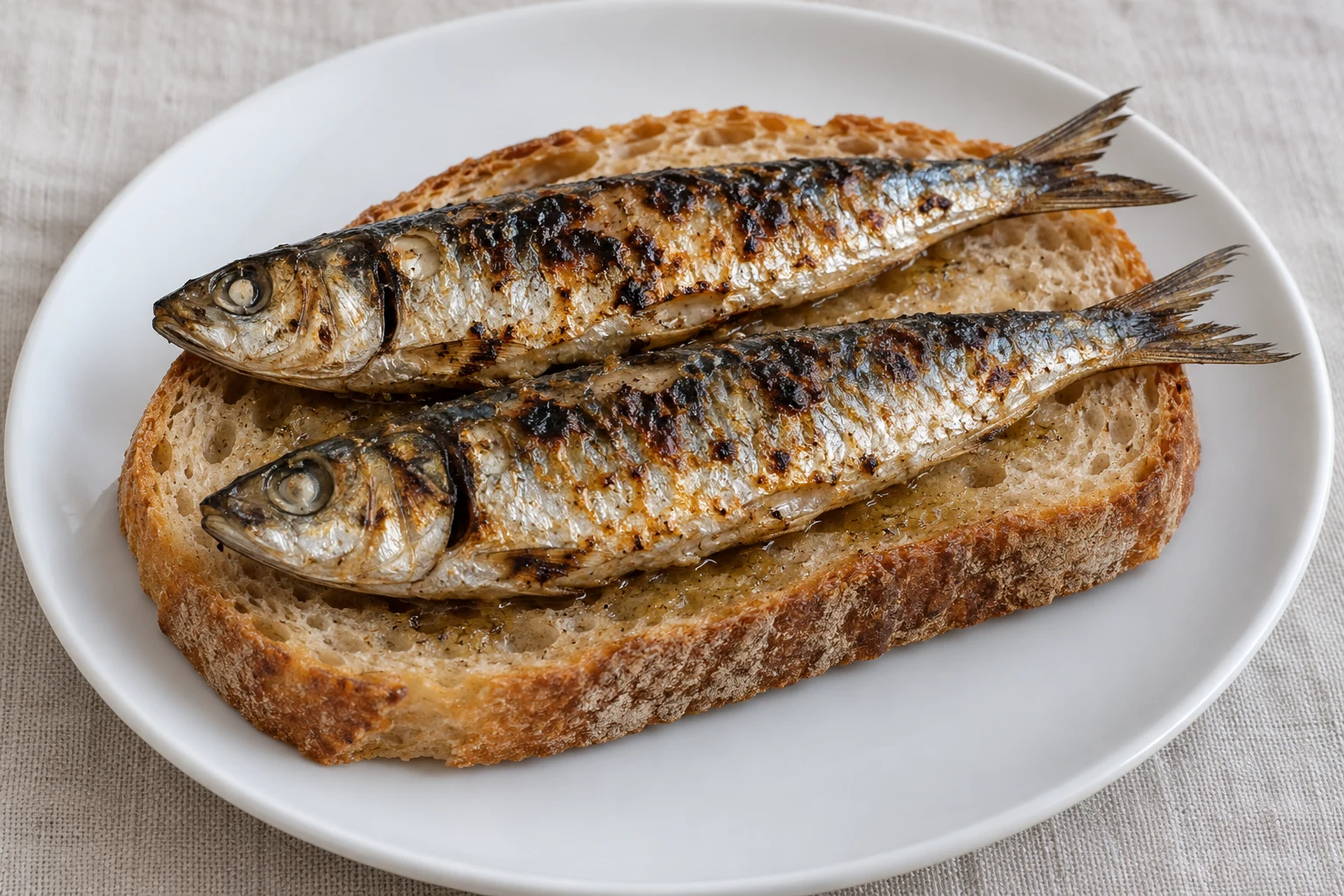
Sardinhas assadas: the fish, the bread and the summer table
Explore Portuguese grilled sardines through their bread serving, summer festival setting, seasonal fat cycle and a potato-and-pepper accompaniment.