
Massada de Peixe: Give the Pasta the Broth
Massada de peixe
In Portuguese massada de peixe, short pasta cooks in a tomato-rich broth. Separate the fish stages to keep both the pasta and the flakes distinct.
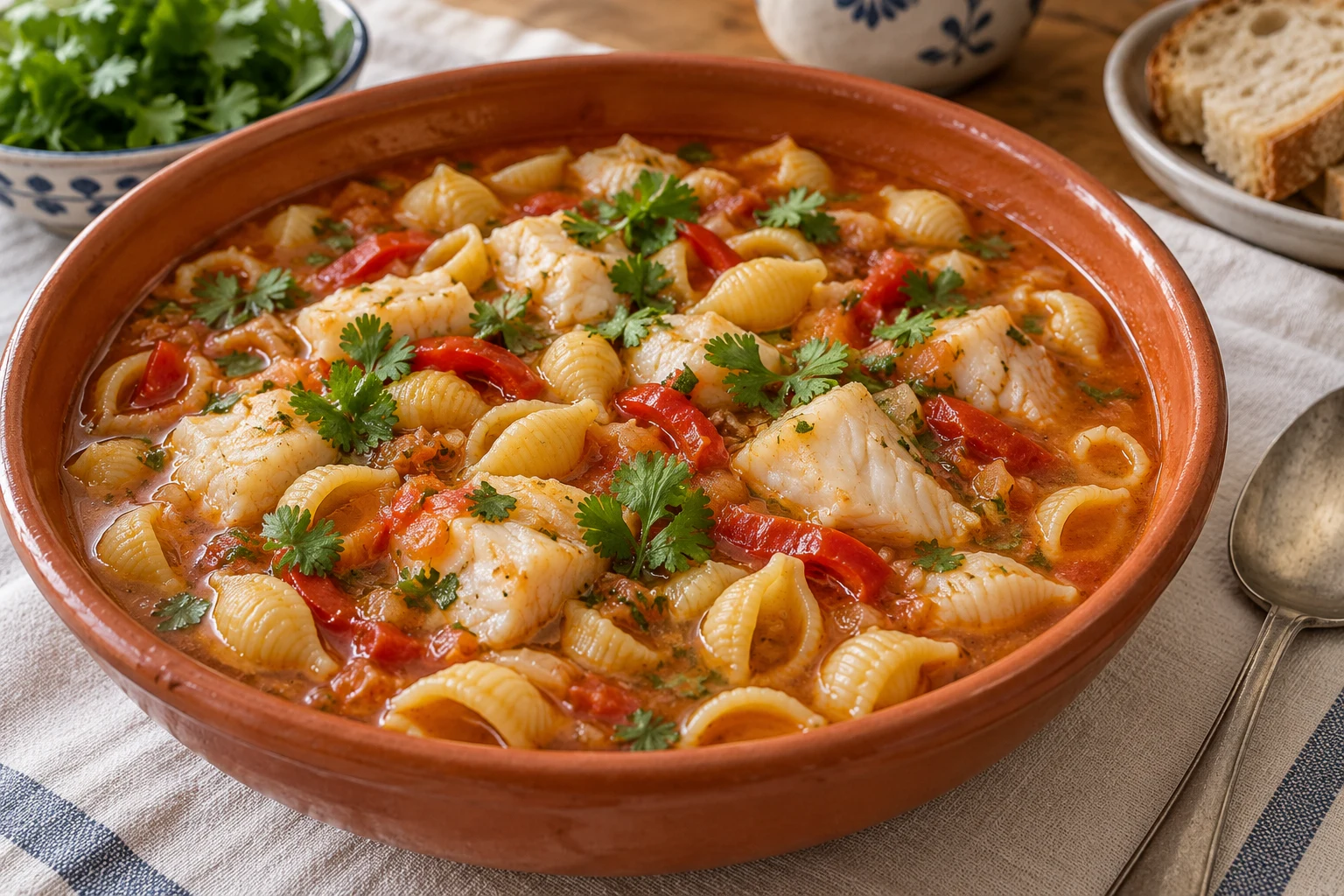
A pasta dish with room for a spoon
The liquid is part of massada de peixe. Short pasta cooks in a broth flavored with fish and a tomato base, so a serving includes pasta, fish and the cooking liquid together. In TeleCulinária’s version, the reserved fish broth goes into the pan with tomato and pasta before the cooked fish returns.
That sequence gives the cook two separate jobs. The pasta needs time in the broth; the fish needs enough heat to cook without disappearing into tiny fragments. A few named Portuguese recipes show how changing the fish stage changes the bowl.
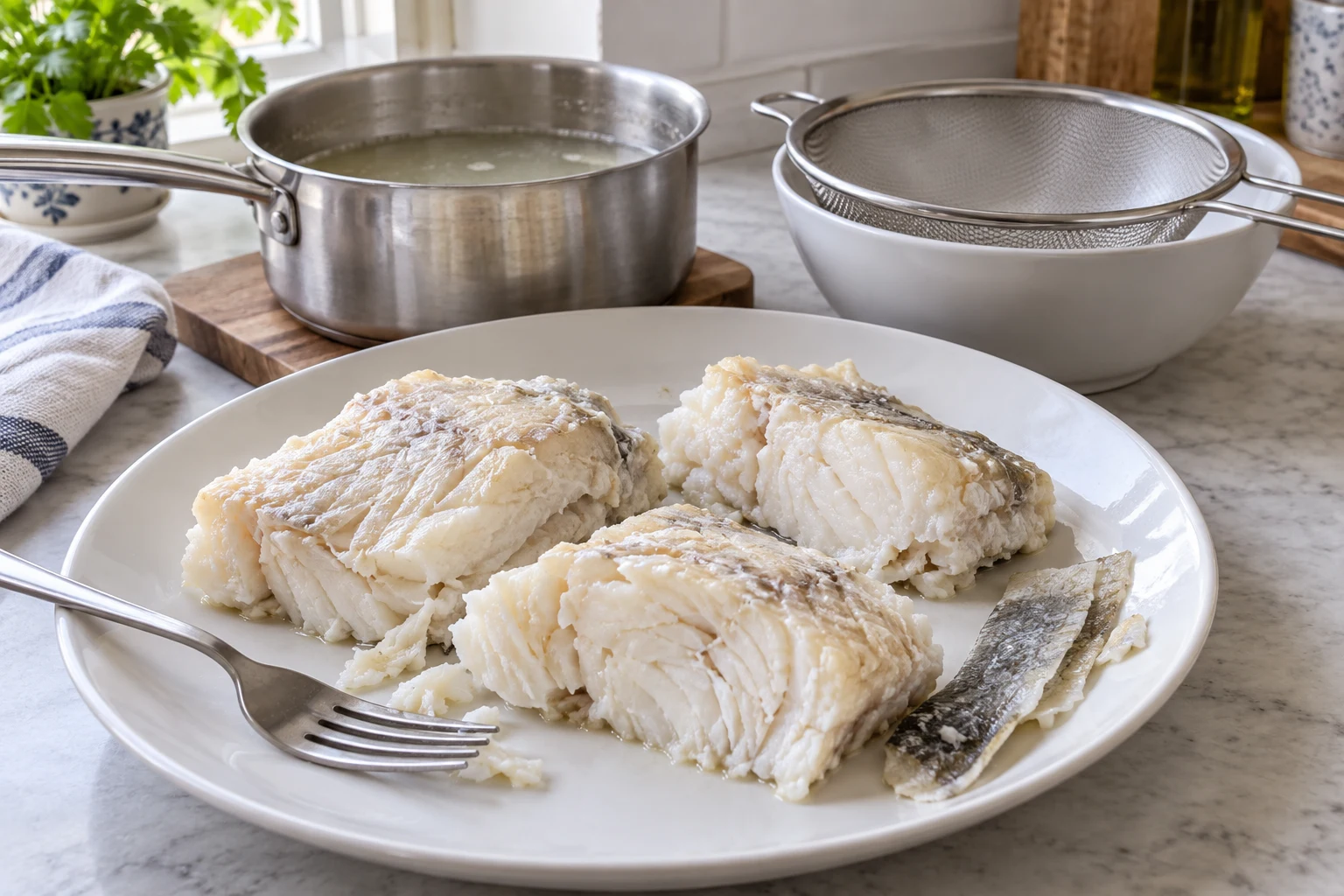
Make the broth; decide when the fish returns
TeleCulinária poaches a mixture of monkfish, conger and hake first, then uses the cooking liquid for small pasta shells. The cooked fish returns near the end with cherry tomatoes. Its onion, garlic and red pepper base stays visible in the finished meal.
Pingo Doce also begins with separately cooked fish, then adds shrimp shells and heads to the liquid, blends and strains it before the pasta goes in. That broth brings shellfish into a recipe even when the main pieces in the bowl are fish. Its large fish flakes are added at the finish.
Other methods aim for a different distribution. Sónia and Diogo of The Healthy Sins, writing for Continente, put shredded cooked hake into the pot before their small elbow pasta. Unilever Food Solutions starts pasta in a blended tomato-and-seafood-cream base and adds fish partway through cooking. The latter is a commercial recipe using a prepared product, rather than the same broth as the poached-fish versions.
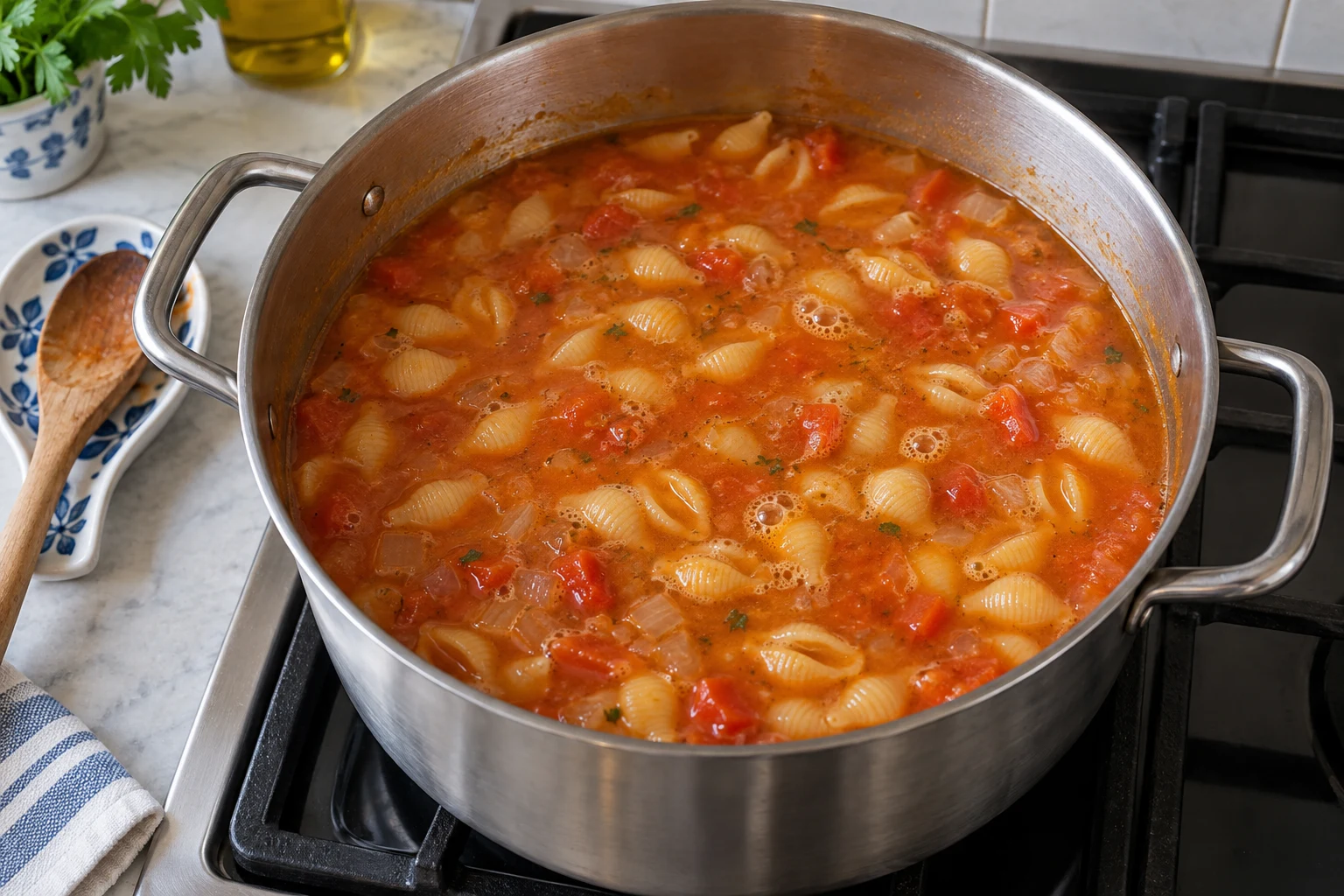
A manageable home pot
The adaptation below takes the separately cooked fish route, uses small shells and keeps a loose tomato-and-pepper broth. It is an editorial adaptation informed by the linked methods, not a claim of kitchen testing or a single prescribed Portuguese formula.
Keep the reserved broth nearby when the pasta cooks. The amount needed changes with the pot, heat and pasta shape. Taste the pasta itself and serve promptly while there is still liquid around it, rather than waiting for the bowl to become dry.
Home adaptation
White-fish massada with small shells
Four servings of brothy pasta with separately poached white fish. Timing is approximate; the fish’s doneness and the pasta’s texture decide the finish.
Ingredients
For the fish and broth
- 600 g boneless white fish, such as hake or cod, in large pieces
- 1.4 L water
- ½ tsp fine salt initially, with more to taste
For the pasta pot
- 2 tbsp olive oil
- 1 medium onion, finely chopped
- 2 cloves garlic, finely chopped
- 1 small red bell pepper, seeded and diced
- 350 g chopped tomatoes, fresh or canned, with their juices
- 240 g small shell pasta
- 1 small handful coriander leaves, roughly chopped
- black pepper, to taste
Method
- 1
Poach the fish
Bring the water and initial salt to a gentle simmer. Add the fish and cook gently until its center reaches 145°F (63°C), or the flesh is opaque and separates easily with a fork. This may take around 6–10 minutes, depending on thickness. Lift onto a plate; reserve the liquid.
- 2
Prepare the tomato base
Heat the olive oil in a separate wide pot. Soften onion and red pepper for about 8 minutes, stirring. Add garlic, then tomatoes and their juices. Simmer for another 5 minutes until the tomatoes soften. Keep the heat moderate so the garlic does not burn.
- 3
Cook the pasta in broth
Strain the reserved fish liquid. Add about 1 litre to the tomato pot and bring to a simmer. Stir in the small shells. Cook for the package’s suggested time as a starting point, stirring gently and tasting near the end. Add more reserved liquid as needed to keep the pot brothy.
- 4
Check and return the fish
Check the cooked fish for stray bones or skin and separate it into substantial flakes. When the pasta is almost ready, fold in the fish gently and allow it to heat through. Avoid vigorous stirring that breaks all the flakes.
- 5
Finish and serve
Taste a spoonful of broth before adjusting salt and black pepper. Add coriander and serve immediately in deep bowls, with visible broth around the pasta. The dish continues to thicken as the pasta stands.
A herb finish, with differences worth tasting
Coriander finishes all four named versions. Unilever also offers mint, while the other linked methods emphasize coriander. Begin with the herb in the version you chose before turning every possible addition into one pot.
Fish species, the presence of shellfish, the shape of the pasta and the point when fish enters the broth all change the result. Those choices are useful to ask about when ordering massada: a name on a menu can describe several recognizable bowls.
Research notes
Sources for the pasta pot
Four independent Portuguese recipe publishers show different fish stages and broth choices. Government guidance supplies the fish-doneness check.
- TeleCulinária: Massada de Peixe Poached mixed fish, reserved broth, small shells, pepper and a late fish addition.
- Pingo Doce: Massada de Peixe Full recipe: fish broth enriched with shrimp shells, strained before pasta; large fish flakes at the finish.
- Continente / The Healthy Sins: Massada de Pescada Sónia and Diogo’s method adds shredded cooked hake before elbow pasta.
- Unilever Food Solutions Portugal: Massada de Peixe Commercial blended tomato/seafood base, fish added midway, coriander and optional mint.
- FoodSafety.gov: Safe Minimum Internal Temperatures Fish temperature and opaque, easily separating flesh cues.
Keep exploring
More stories for your table
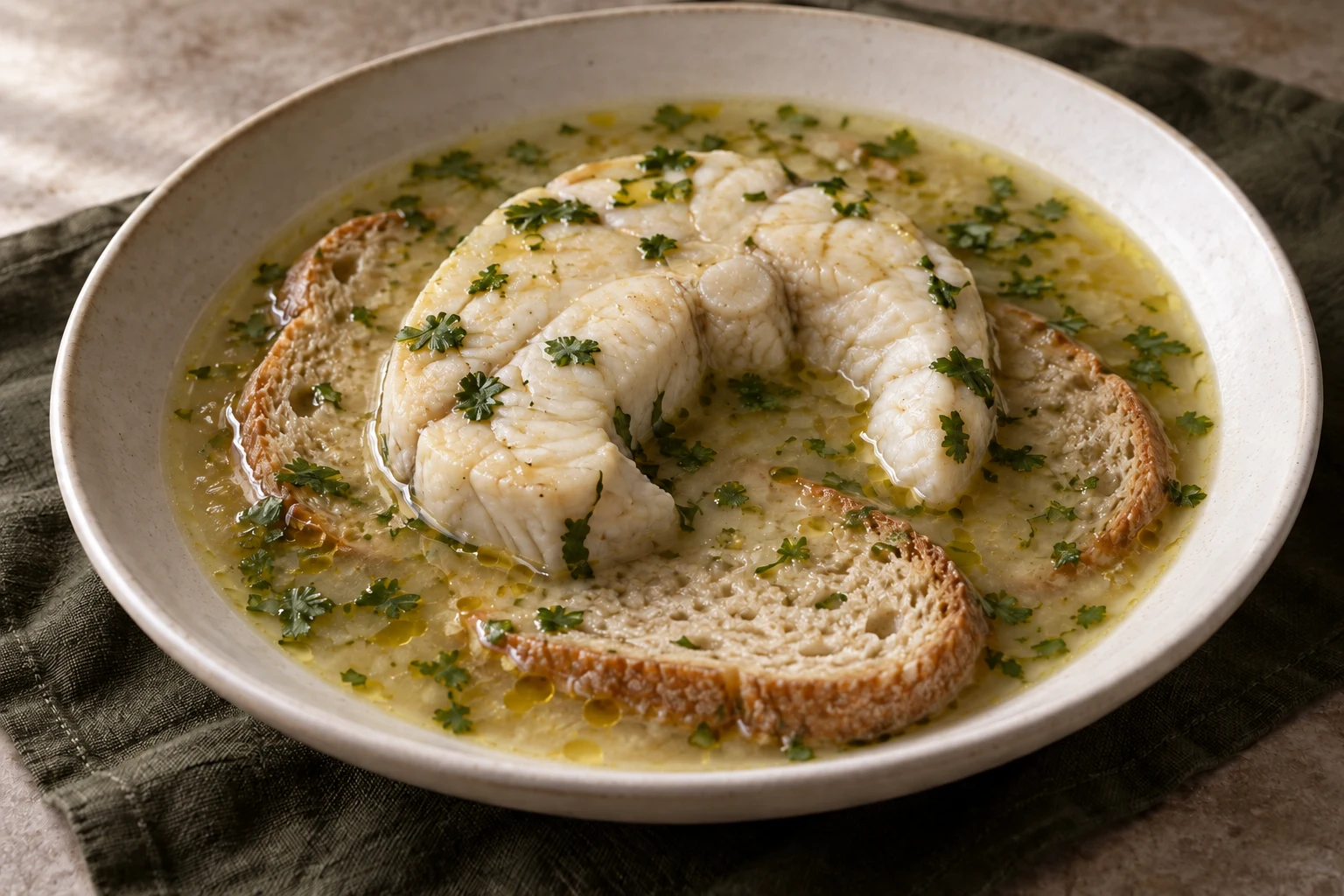
Portuguese cuisine Fish soup
Sopa de Cação: Bread Beneath the Broth
Why Alentejo’s sopa de cação arrives over plain or toasted bread, or beside fried triangles—and how its vinegar-seasoned broth holds the dish together.
Portuguese cuisine Seafood stew
Cuttlefish Feijoada: Tender Seafood, Intact Beans
A Portuguese cuttlefish-and-bean stew explained through its cooking sequence: tenderize the seafood, add cooked beans, and use a little bean mash to bring the sauce together.
Portuguese cuisine Rice dish
Arroz de Perdiz: A Golden Crust or a Brothy Finish
Follow Portuguese partridge rice from Fialho de Almeida’s oven finish to a broth-rich pot, and learn what the cooking sequence reveals.