
Canja de Galinha: Keep the Broth in View
Canja de galinha com arroz
Chicken makes the broth. Rice gives the spoon something to carry. Portuguese cooks show several ways to finish that simple relationship.
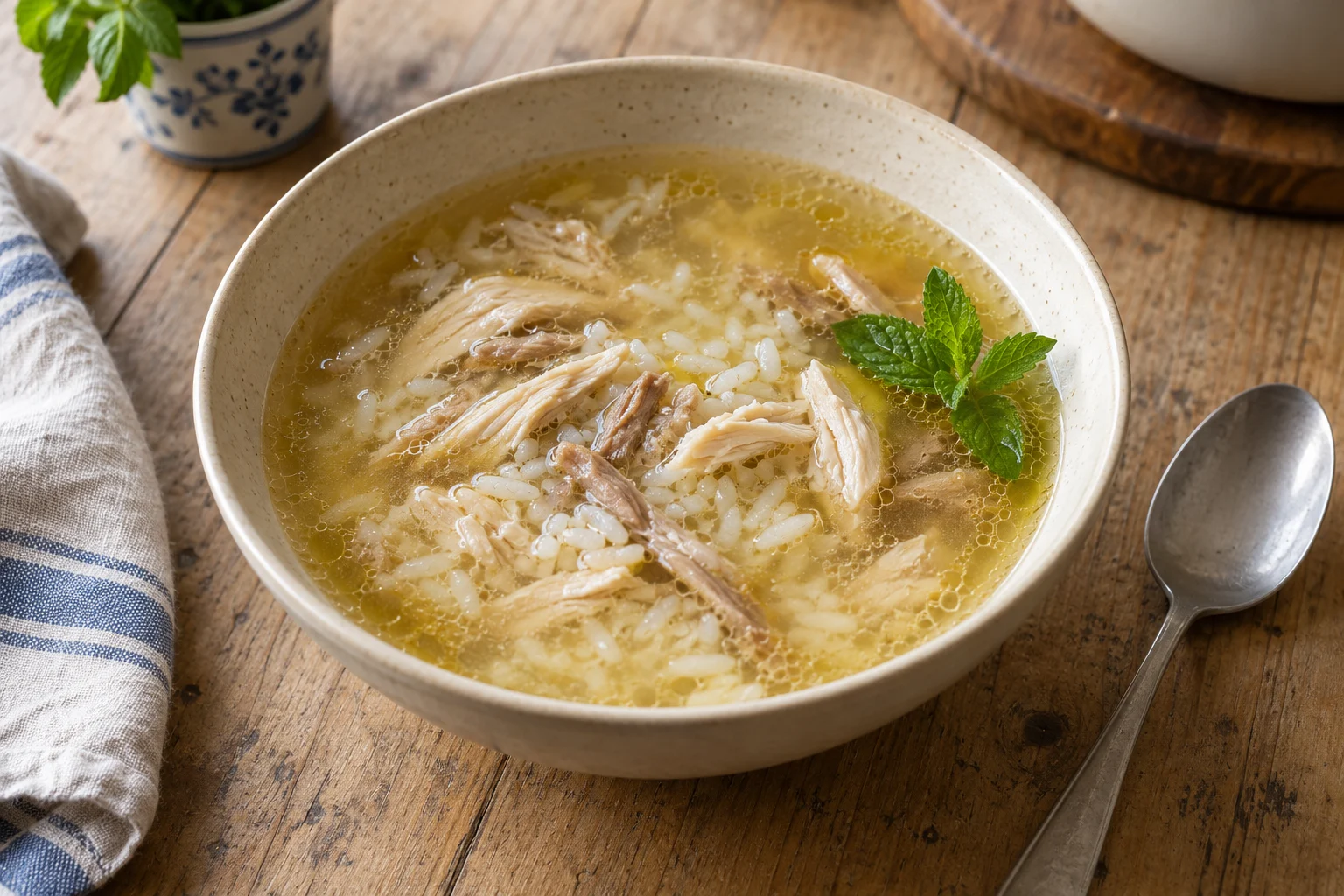
A bowl with room for broth
One family’s canja is a starting point
The name canja de galinha can lead a reader toward a familiar bowl before it supplies a precise ingredient list. In the rice version pictured here, chicken strands and cooked grains sit in pale broth. The liquid remains an ingredient worth tasting on its own, rather than a small amount of moisture trapped around a dense mound of rice.
Pedro Barbosa, the cook behind Food From Portugal, introduces his rice canja through a memory of his grandmother’s kitchen. His published version is spare: chicken or hen, water, onion, coriander, rice and salt. The chicken cooks before the rice joins. He also suggests optional changes such as carrot, thyme or lemon. That is a useful family account, with room for variation, rather than proof of a single mandatory Portuguese formula.
Read the bowl in three parts
- Broth
- The common ground
- Rice or pasta
- A later decision
- Finishing pieces
- Return or add
Chicken cooks in water with the aromatics chosen by the recipe.
The reviewed methods give these small starches their own cooking stage.
Shredded chicken, herbs and cooked egg vary across the published versions.
Take the chicken out for a reason
Teleculinária’s rice canja removes the cooked hen, discards skin and bones, and strains the broth before adding rice. The shredded chicken returns when the rice is nearly cooked. This makes the broth stage an opportunity to separate useful meat from pieces the diner should not have to negotiate with a soup spoon.
Nestlé Portugal’s own method also strains the chicken broth, but its next ingredient is small massa cuscuz pasta. Cooked carrot and shredded chicken return afterward. The recipe uses giblets and a stock cube as well. Those details belong to that version; they need not be copied into every bowl simply because it carries the same name.
For a cook choosing among recipes, the practical point is to notice whether the chicken remains in pieces or is removed and shredded. Set out a clean plate and a suitable strainer before reaching that stage. The pause becomes easier when the tools are ready, and the finished soup becomes easier to eat when the meat has been checked carefully for bones.
The work between broth and bowl
These two stages belong to methods that remove the cooked chicken and strain the broth.
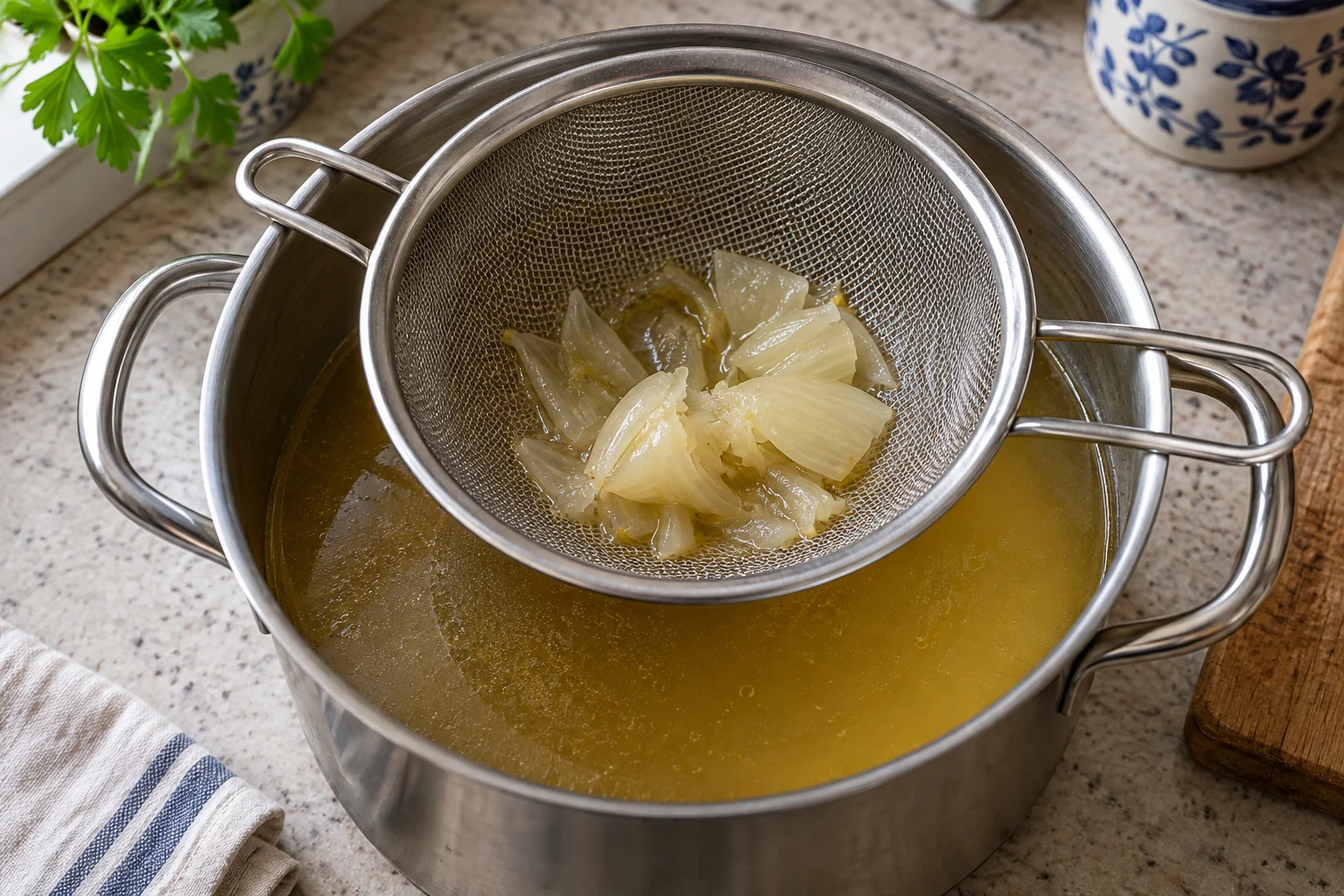
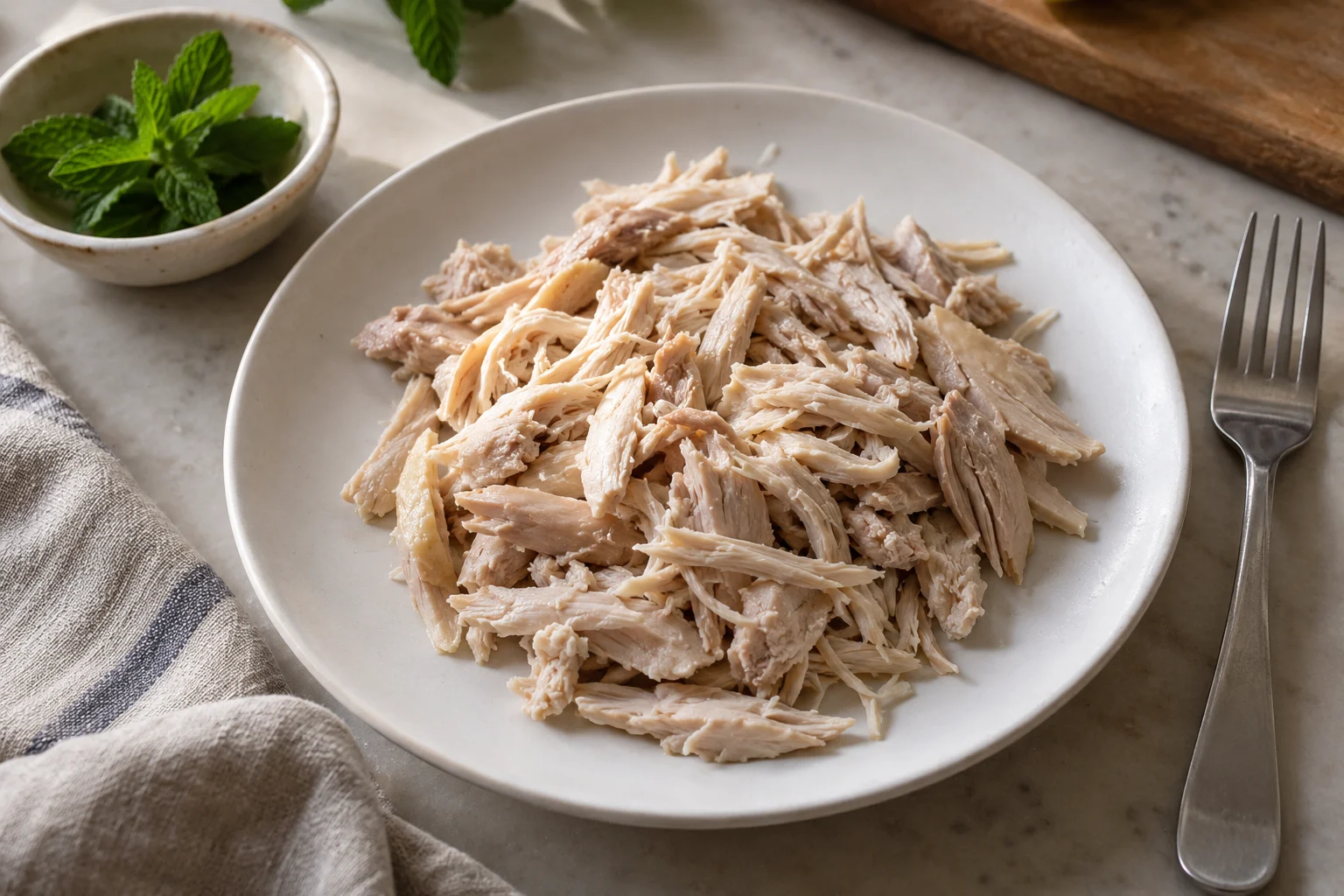
Rice and small pasta lead to different spoonfuls
Rice, with a texture choice
Barbosa offers parboiled rice or Portuguese carolino. He describes the former as keeping grains more separate and the latter as producing a creamier result. His rice guidance gives different cooking intervals for the two. Choose the rice before following the timing, and judge its tenderness directly.
Tiny pasta, with a different method
For Continente, Sónia and Diogo of The Healthy Sins use little star-shaped pasta. They cook it in the chicken broth, then return shredded meat and giblets before finishing with mint. Nestlé’s couscous-shaped pasta is another choice. Neither example turns rice into an essential requirement for all canja.
A final herb is a choice with a clear source
Mint appears at the finish in both the Continente and Nestlé preparations. Barbosa uses coriander and explicitly allows other herbs. Teleculinária takes another route: separately boiled eggs are peeled, chopped and added with the shredded hen near the end. This is cooked egg in the soup, not a raw egg thickening technique.
The distinction helps when reading a menu or cooking someone else’s version. A mint sprig, a few coriander leaves and chopped egg are different finishes, each supported by a recipe here. A photograph of one cannot establish the identity of every family’s bowl. Decide which preparation you want, then follow its sequence rather than collecting every garnish at once.
Taste the liquid as well as the grain
A rice canja gives two useful checks before serving: whether the grain is tender and whether the broth still tastes balanced. Rice, chicken and herbs should make sense together in the spoon. If the liquid has become scarce during cooking, a small addition of hot water can loosen the soup; taste again afterward because dilution changes the seasoning too.
The published versions offer a good way to learn this dish without making it needlessly elaborate. Start with one cook’s ingredients, keep its broth stage readable, and choose its finish deliberately. The appeal can stay with the chicken and the liquid that carried it.
Research notes
Sources read
Four Portuguese recipes and two official FDA resources were opened and read. This article compares those methods; the photographs are generated illustrations and no kitchen testing is claimed.
- Pedro Barbosa — Canja de galinha com arroz The author’s family account, rice choices, ingredient list and chicken-before-rice method.
- Teleculinária — Canja de galinha com arroz Strained broth, shredded hen and separately cooked chopped egg near the finish.
- Continente / The Healthy Sins — Canja de galinha Sónia and Diogo’s star-pasta preparation, returned meat and giblets, and mint finish.
- Nestlé Portugal — Canja de galinha Full HTML read after browser fetch failed: strained broth, small pasta, carrot and mint.
- FDA — Food safety tips Prompt refrigeration, refrigerator temperature, leftover duration and boiling reheated soup.
- FDA — Safe minimum internal temperatures Official one-page chart specifying 165°F for poultry parts and whole birds.
Keep exploring
More stories for your table
Portuguese cuisine Rice dish
Arroz de Perdiz: A Golden Crust or a Brothy Finish
Follow Portuguese partridge rice from Fialho de Almeida’s oven finish to a broth-rich pot, and learn what the cooking sequence reveals.
Portuguese cuisine Steak
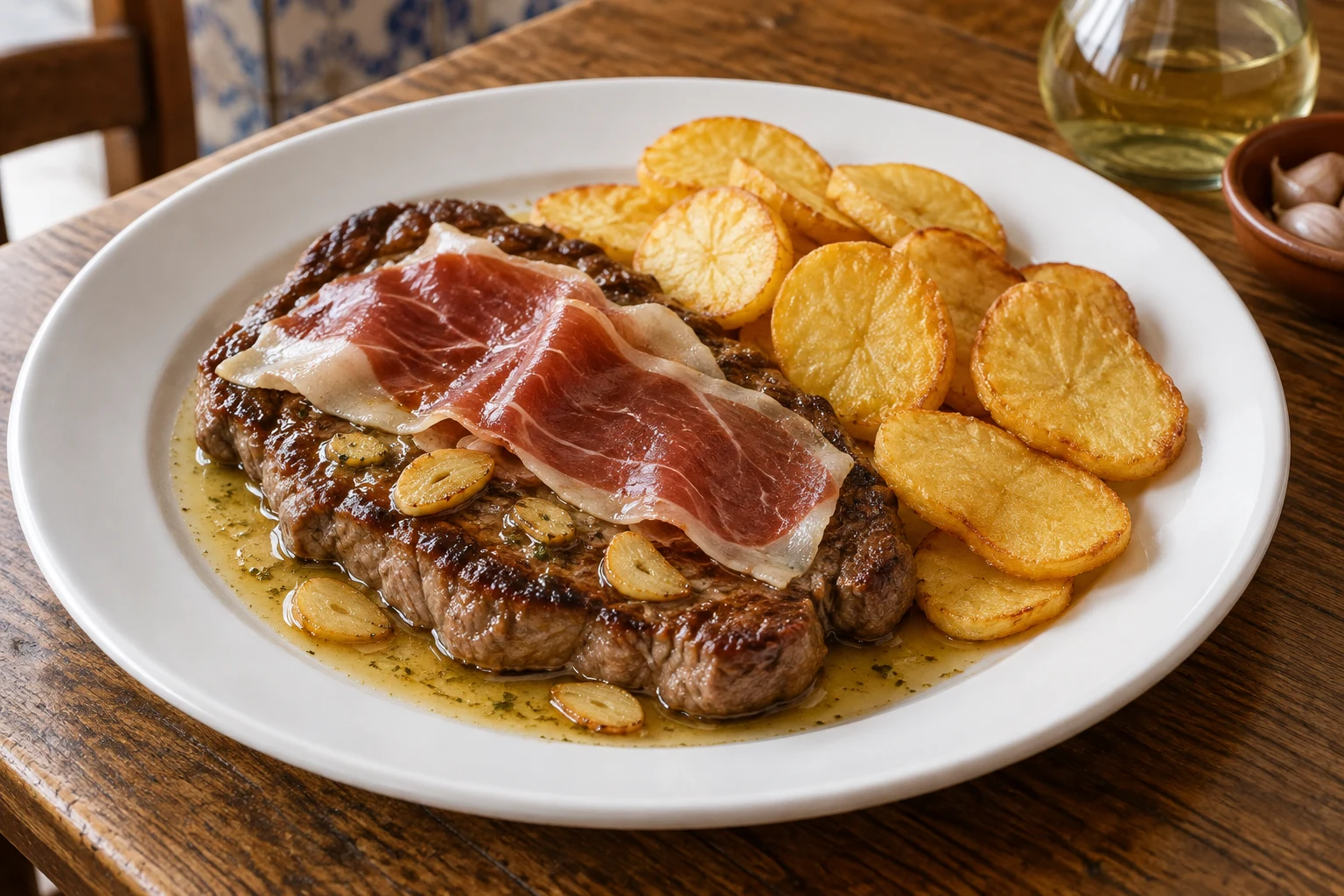
Bife à Portuguesa: Follow the Sauce, Then Choose the Extras
Garlic-wine sauce, presunto, egg or mustard: Portuguese-style steak has several forms. Read the plate before treating one version as a rule.
Afghan cuisine Soup
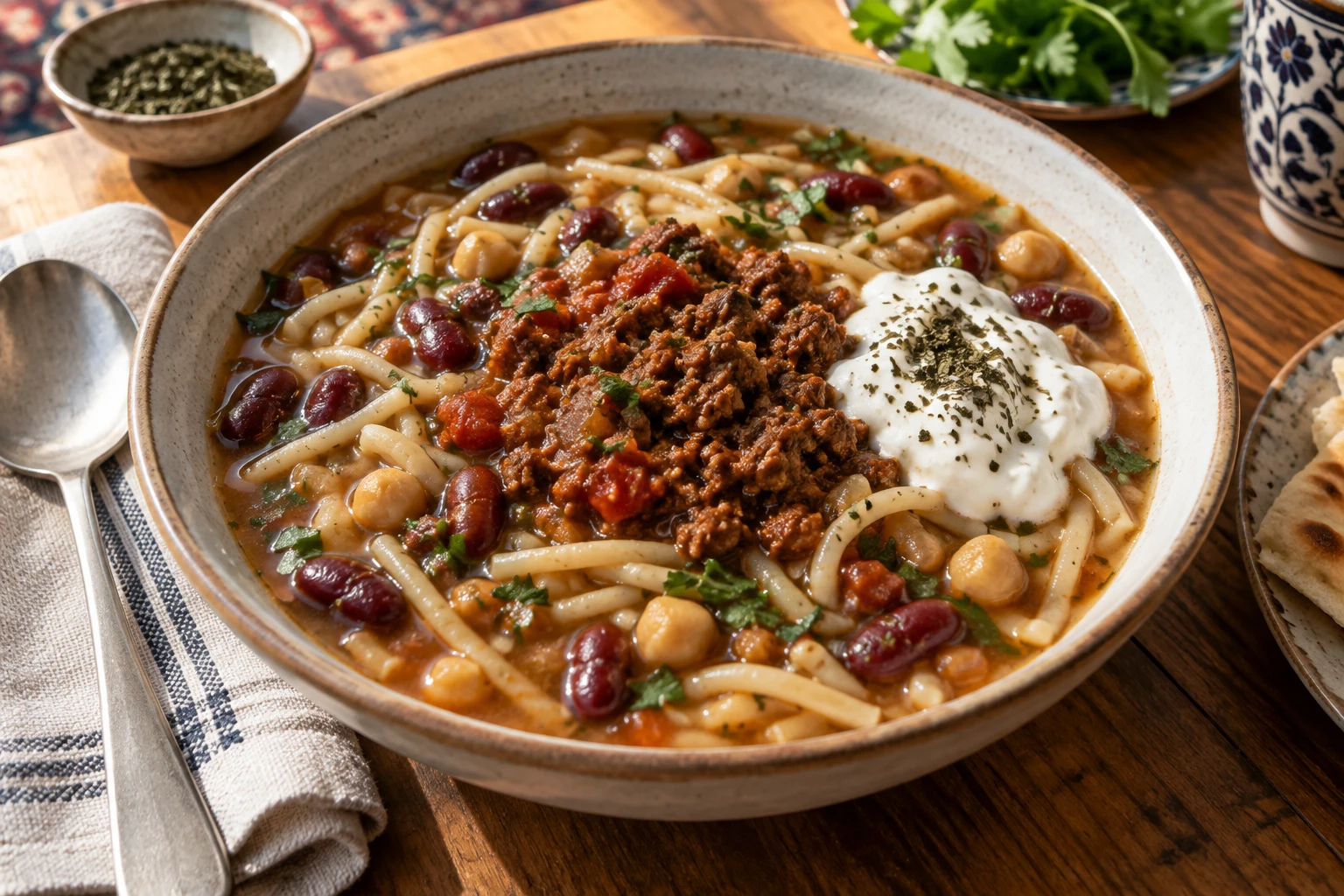
Aush: Keep the Layers in View
Afghan aush brings noodles, legumes, savory meat and tangy dairy together. Different family methods make the final assembly as important as the pot.