
Salada de polvo: a small plate, or a fuller bowl?
Salada de polvo
Portuguese octopus salad can be a simple chilled petisco or a fuller salad with beans. Explore the vegetables, dressing and preparation behind each.
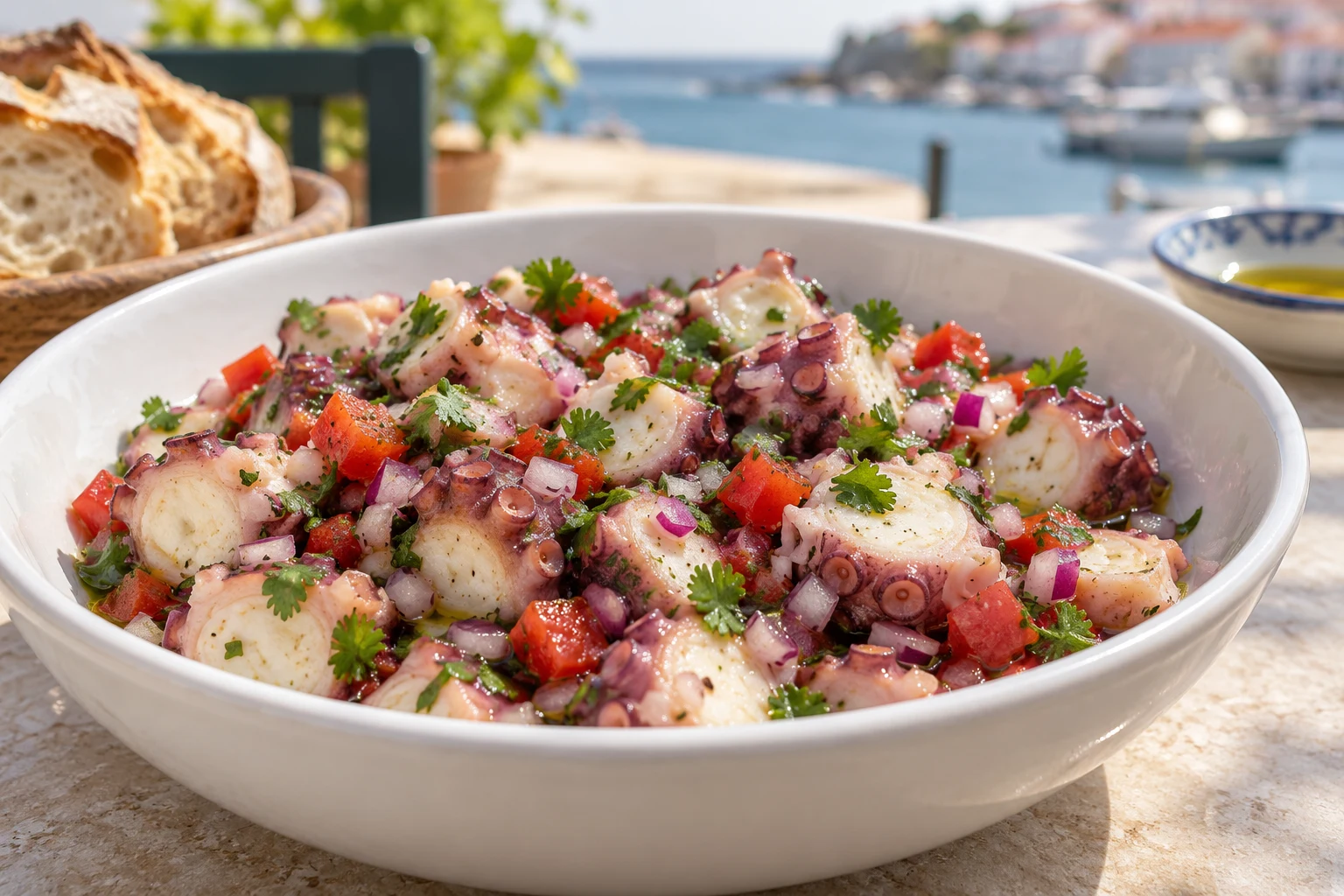
An octopus salad can arrive as a modest bowl to share, with diced onion and pepper tucked between the seafood, or as a larger salad built around beans. Both are useful ways to understand salada de polvo. Before choosing a recipe or ordering a portion, decide which role you want it to play at the table.
Portugal’s official tourism site includes salada de polvo among petiscos, the small dishes shared in summer. That establishes a familiar setting for it without making the salad’s portion size or ingredient list fixed. Continente’s recipe introduction explicitly allows it as either a starter or a main dish. The surrounding meal, as much as the name, helps determine what to expect.
Two bowls with different proportions
Keep the octopus in the foreground
Sónia and Diogo of The Healthy Sins, writing for Continente, combine octopus with red onion, red pepper and coriander. Olive oil and white-wine vinegar dress the mixture. There are no beans or potatoes in that particular list.
Build a fuller salad around beans
Teleculinária pairs octopus with feijão-frade, or black-eyed peas, and adds green pepper, onion and garlic. It serves the mixture over lettuce with tomato wedges. This brings more components to each spoonful than a seafood-and-aromatics bowl.
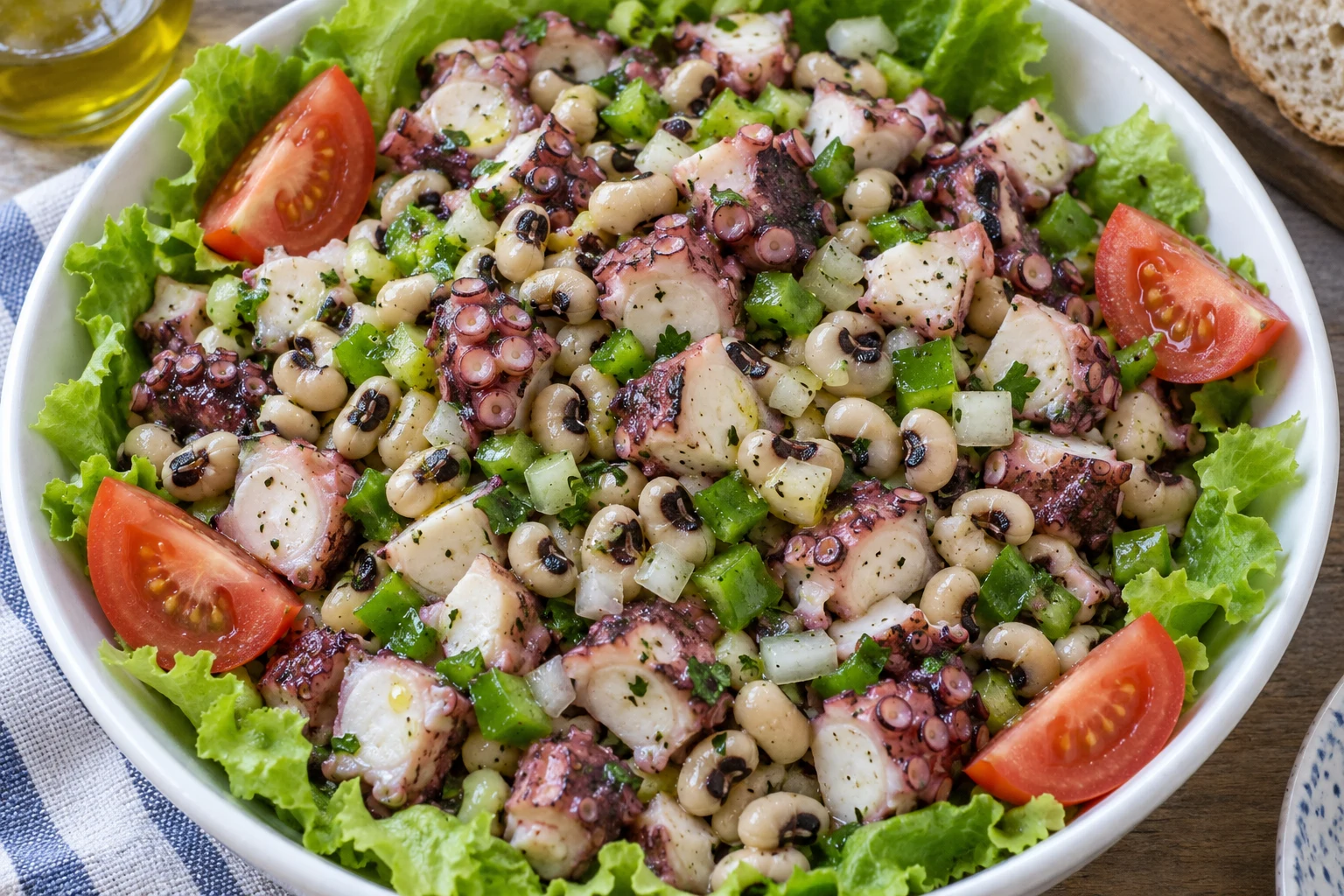
The beans change the way you plan the plate
In the Teleculinária method, canned black-eyed peas are drained, rinsed and drained again before joining the octopus. They are a prepared ingredient at the assembly stage, rather than something cooked alongside the seafood. Its lettuce and tomato presentation also keeps some of the vegetables distinct from the dressed mixture.
If the salad is one of several shared dishes, the simpler version leaves more space for the rest of the table. If you want a more substantial bowl, the bean version offers a clear direction. Check which recipe you have chosen before buying ingredients: “octopus salad” alone does not imply a particular legume, a potato component or a bed of leaves.
The acidic finish is a choice too
The Great British Chefs kitchen takes another route: its salad includes sun-dried tomatoes, red pepper, red onion and coriander, and uses lemon juice with extra-virgin olive oil. That differs from Continente’s white-wine vinegar finish and Teleculinária’s vinegar dressing.
Lemon and vinegar are therefore alternatives found in the references, rather than ingredients that must both be poured into every bowl. Choose a version first and taste it as directed. If you remember a salad with pieces of sun-dried tomato, that detail may help you locate a closer starting recipe than the colour of the pepper does.
A cold salad still has a cooking stage
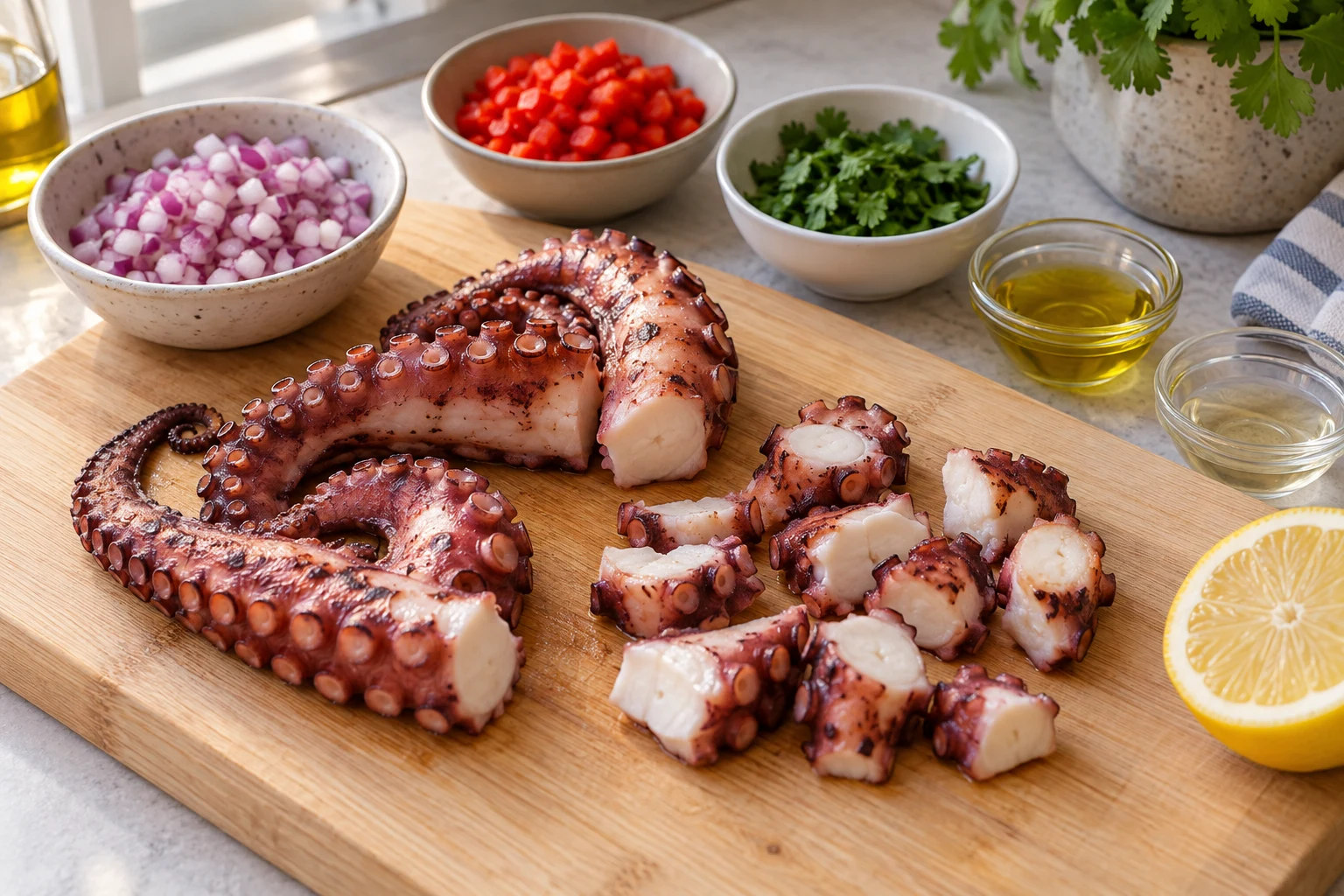
Great British Chefs begins with a whole octopus cooked in water with onion, garlic, bay leaves, coriander stalks, lemon peel and peppercorns. Its method checks tenderness with a knife before cutting the octopus and assembling the salad. The flavouring ingredients in that cooking liquid are not the same as the diced vegetables added later.
Teleculinária instead uses a kitchen robot’s steaming arrangement, then checks that the octopus is tender before cooling and cutting it. These are different equipment choices. A steam setting written for that appliance should not be read as a universal stovetop instruction, and a cooking time should be read together with the recipe’s tenderness check.
Three details to settle before shopping
- Starting point
- Raw or already cooked?
- Supporting ingredients
- Aromatics or beans?
- Dressing
- Follow one version
A raw whole octopus adds a cooking stage. Prepared cooked pieces make salad assembly a separate, shorter task.
Decide whether you want a small seafood-focused bowl or the black-eyed-pea version before writing the list.
The references use vinegar or lemon juice with olive oil. Read the chosen method before combining them.
Read past the advertised preparation time
Continente’s displayed preparation steps begin with drained octopus tentacles and move directly to chopping, mixing, seasoning and chilling the salad. Those steps are an assembly sequence. If your octopus is raw, it still needs an appropriate cooking method before you reach that point.
For a home meal, work backwards from service: choose how the octopus will be prepared, then choose the salad mixture. Keep cooked-seafood handling and refrigeration in the plan; the word “salad” describes the finished dish, not a way to bypass cooking. Continente’s method specifically reserves the assembled salad in the cold and serves it fresh.
Research notes
Sources for the table and the methods
Official Portuguese tourism provides the petiscos context; three independently published recipes supply the ingredient and preparation comparisons.
- Visit Portugal — Time to taste Portugal Places octopus salad among the petiscos shared in summer.
- Continente — The Healthy Sins’ salada de polvo Simple onion, red pepper and coriander salad with oil and white-wine vinegar; cold service.
- Teleculinária — Salada de polvo Black-eyed peas, green pepper, lettuce and tomato; appliance-specific steaming method.
- Great British Chefs — Portuguese octopus salad Aromatic cooking liquid, knife tenderness check and a lemon-and-sun-dried-tomato salad finish.
Keep exploring
More stories for your table

Portuguese cuisine Seafood
Polvo à Lagareiro: The Olive Oil Is the Sauce
Tender octopus, lightly cracked potatoes and a garlic-and-olive-oil finish: understand the separate cooking jobs behind Portuguese polvo à lagareiro.
Portuguese cuisine Salt cod and potatoes
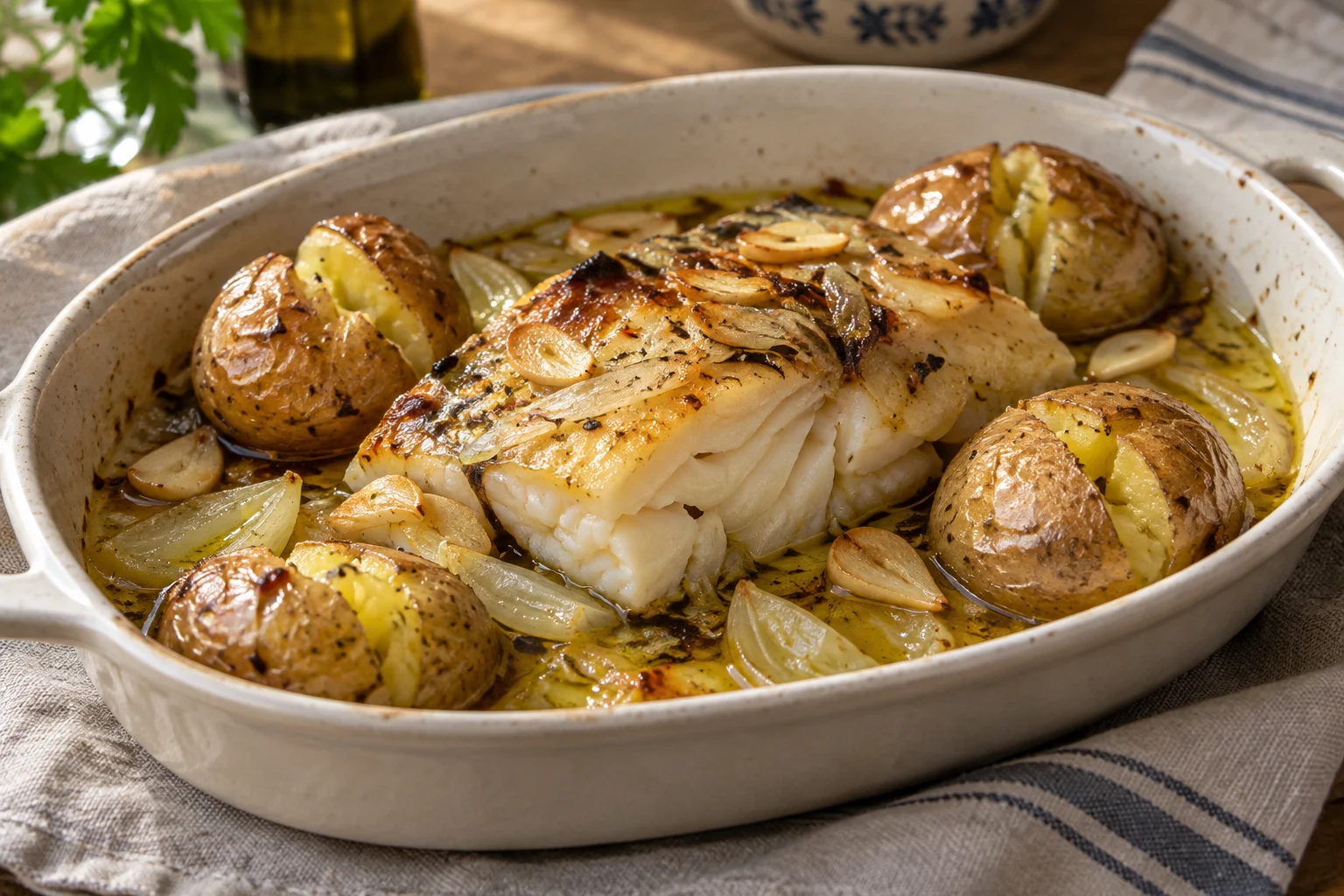
Bacalhau à Lagareiro: Open the Potato for the Oil
Read Portuguese bacalhau à lagareiro through its cracked potatoes and garlic oil. Compare documented roasting and grilling methods and plan the salt-cod preparation.

Spanish cuisine Seafood
Pulpo á Feira: The Craft Behind the Fairground Dish
Galician pulpo á feira carries the work of specialist cooks from the fair to the plate. Explore its inland stronghold, family craft and finishing details.