
Sardinhas assadas: the fish, the bread and the summer table
Sardinhas assadas
Explore Portuguese grilled sardines through their bread serving, summer festival setting, seasonal fat cycle and a potato-and-pepper accompaniment.
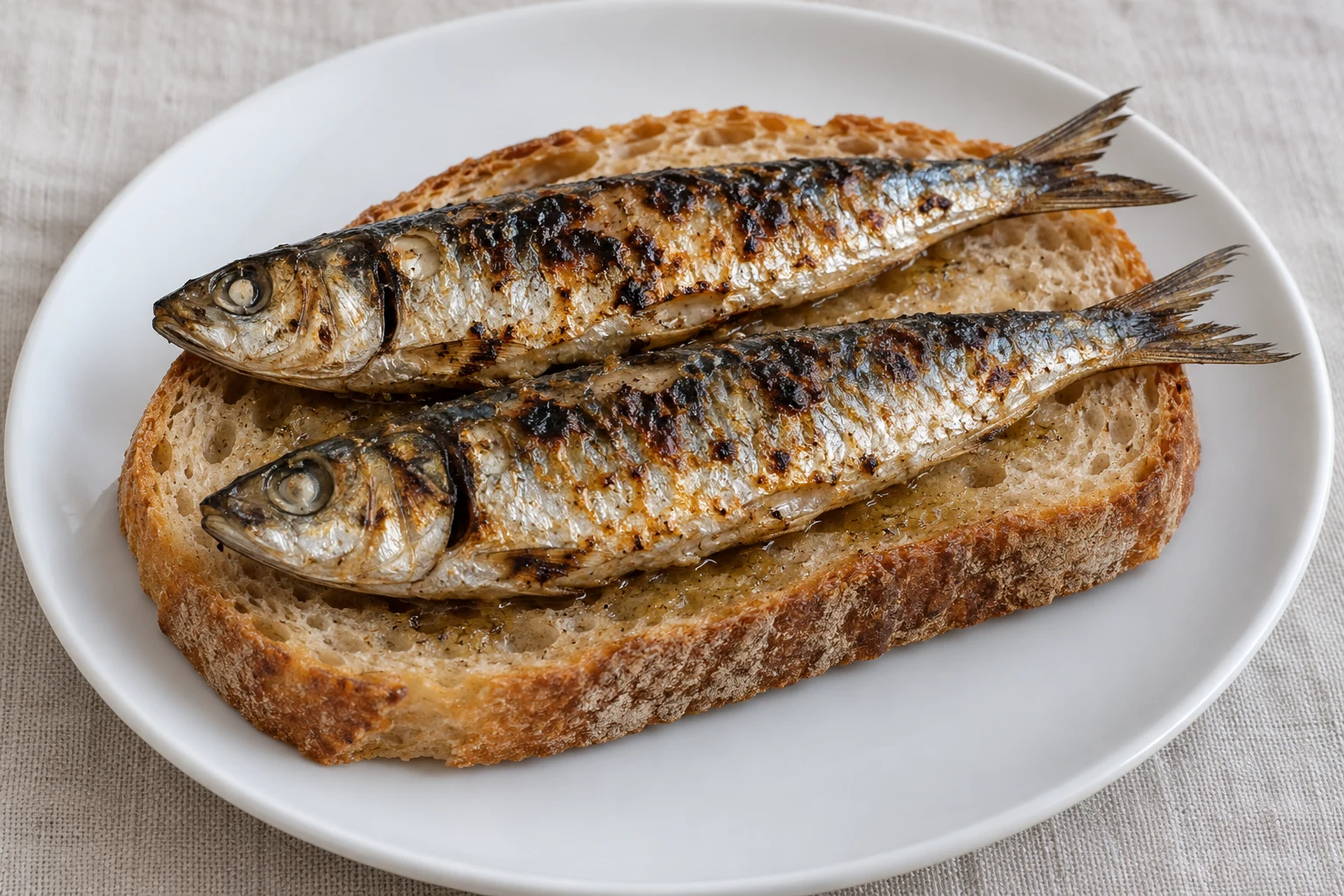
Bread belongs in the view
Sardinhas assadas are Portuguese grilled sardines, and bread is one of the most revealing ways to encounter them. Visit Lisboa describes the fish served on a slice of bread as well as on a plate with grilled peppers and boiled potatoes. The choice changes how the meal sits in front of you: a compact bread serving or a plate with several separate elements.
Start by looking at the fish and the bread together. Notice the browned skin, the pale flesh beneath it and the part of the slice directly under the fish. Those are useful observations whether your serving arrives from a neighbourhood grill or a restaurant kitchen. The modest bread base gives the meal a clear shape without concealing the fish.
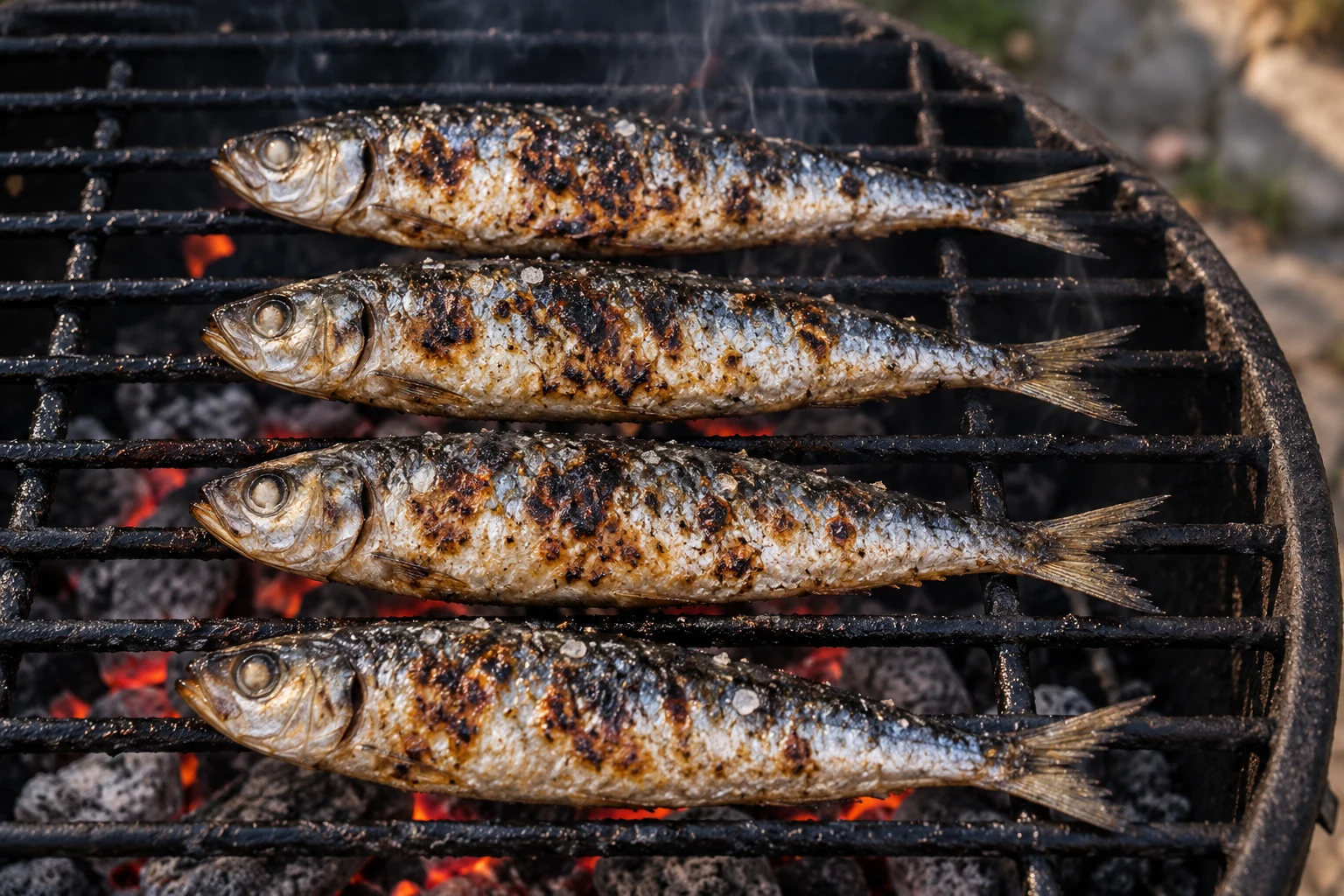
The summer setting is part of the dish's story
Visit Lisboa places grilled sardines in the Santos Populares festivities and describes neighbourhood street barbecues alongside music and people gathering to eat. Its account concerns the atmosphere around the food, not a complicated garnish or a restaurant tasting menu. The smell of grilling belongs to that public setting as much as the plated appearance.
Visit Portugal broadens the view beyond Lisbon. Its food guide associates sardines on bread with Popular Saints' celebrations in the older neighbourhoods of Lisbon and Porto, and mentions caldo verde alongside them. That gives the fish a place within a meal and a gathering. It does not mean every serving must include soup or reproduce one festival scene.
A fisheries account explains the summer association
Portugal's sea and atmosphere institute, IPMA, identifies sardinha as Sardina pilchardus, the European sardine. Its species profile describes an elongated body, a blue or green-silver back and a silver belly. This is a useful name to recognise when reading a fish label; an illustrative cooked photograph cannot establish a catch location.
IPMA also describes fat accumulation from the end of spring into the middle of autumn, followed by the use of those reserves for reproduction. The institute links that fat with the fish's characteristic flavour. This supplies a biological context for the summer food story, while leaving room for differences between individual fish and particular servings.
The seasonal account is not a calendar guarantee for a menu. Ask what is being served and how it is prepared, then judge the portion in front of you. Fresh availability, a supplier's origin statement and a cultural association with summer are separate pieces of information.
Two useful ways to meet the same fish
On bread
Visit Lisboa records a simple slice beneath the sardines. Try the fish with a little of the bread, then taste the section that sat underneath it. The contrast is a practical tasting exercise.
With potatoes and peppers
The same city guide records grilled bell peppers and boiled potatoes as accompaniments. Keeping them beside the fish makes it easier to compare each component before combining bites.
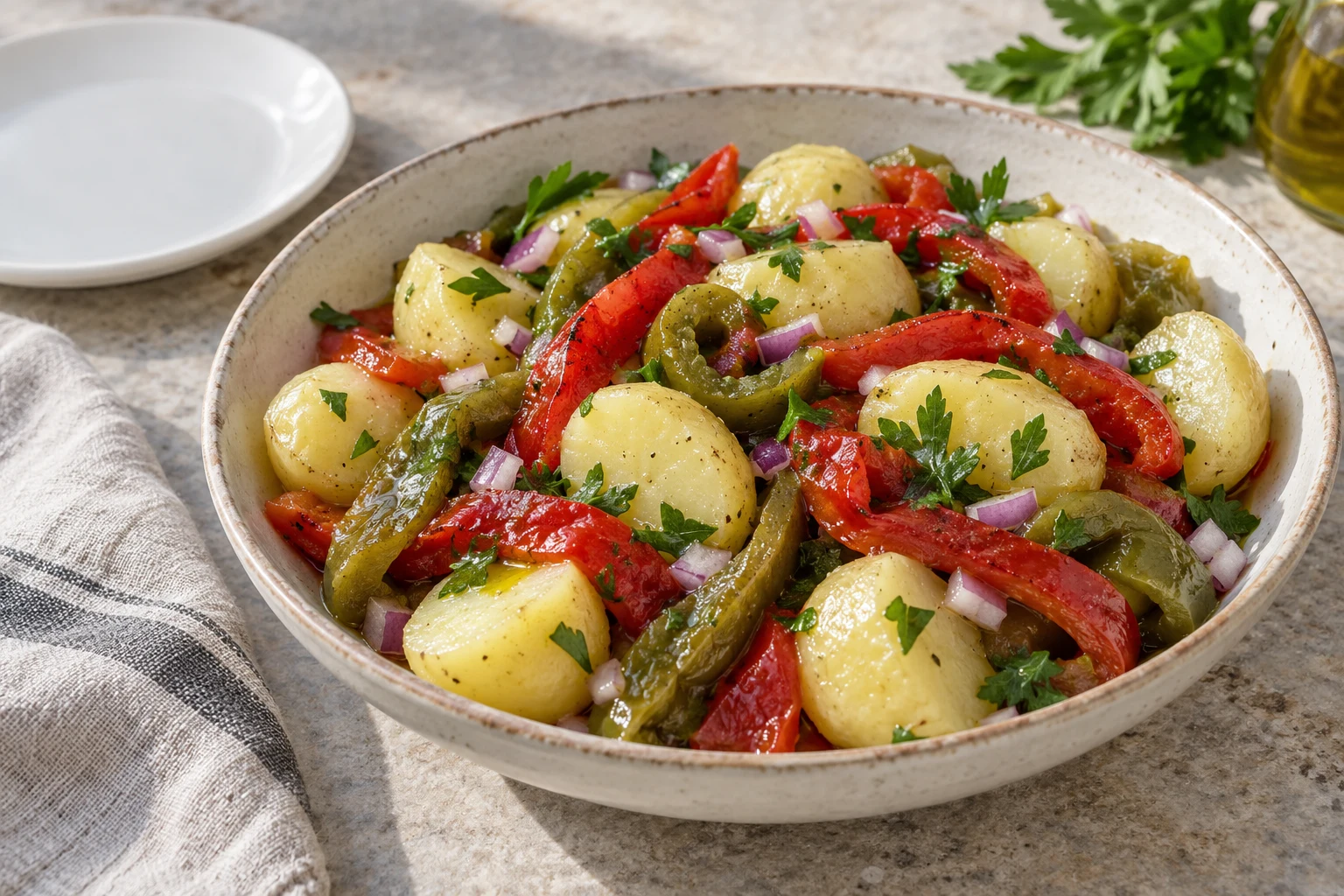
A side salad has a preparation of its own
Teleculinária's published version brushes the sardines with olive oil, seasons them with coarse salt and grills them. Its accompaniment begins separately: small potatoes are boiled, and peppers are grilled before their skins and seeds are removed. Red onion, chopped parsley and olive oil join those vegetables.
That separation matters when reading the plate. The peppers' grilled preparation and the potatoes' boiled preparation produce different surfaces and textures. A small taste of each alongside the fish will tell you more than treating the accompaniment as an interchangeable pile of vegetables. For home cooking, use the complete cited recipe for its quantities and method.
Choose the setting, then notice the serving
A bread serving, a potato-and-pepper plate and sardines alongside caldo verde offer different ways into the same food story. The published guides document those options; none makes one arrangement compulsory. Choose according to the meal you want, and ask about the accompaniments before ordering.
The most useful details remain close to the food: how the skin has browned, how the flesh separates, what the bread contributes and whether the pepper or potato changes the next bite. Those observations let a simple grilled fish meal remain specific rather than dissolving into a generic picture of Portuguese summer.
Research notes
Sources for serving, season and accompaniment
Four opened sources connect the dish's social setting with a fisheries profile and an independently published Portuguese recipe. All photographs are generated illustrations.
- Visit Lisboa — Grilled Sardines City tourism body's bread and plate servings, pepper-and-potato accompaniments and neighbourhood festival setting.
- Visit Portugal — Time to taste Portugal National tourism guide's Lisbon and Porto festival setting and documented caldo verde accompaniment.
- IPMA — Sardinha Portuguese fisheries institute's European sardine identification and seasonal fat/reproduction account; nutrition and current stock claims are not repeated.
- Teleculinária — Sardines with potato and pepper salad Portuguese publication's independently prepared fish and vegetable accompaniment.
Keep exploring
More stories for your table
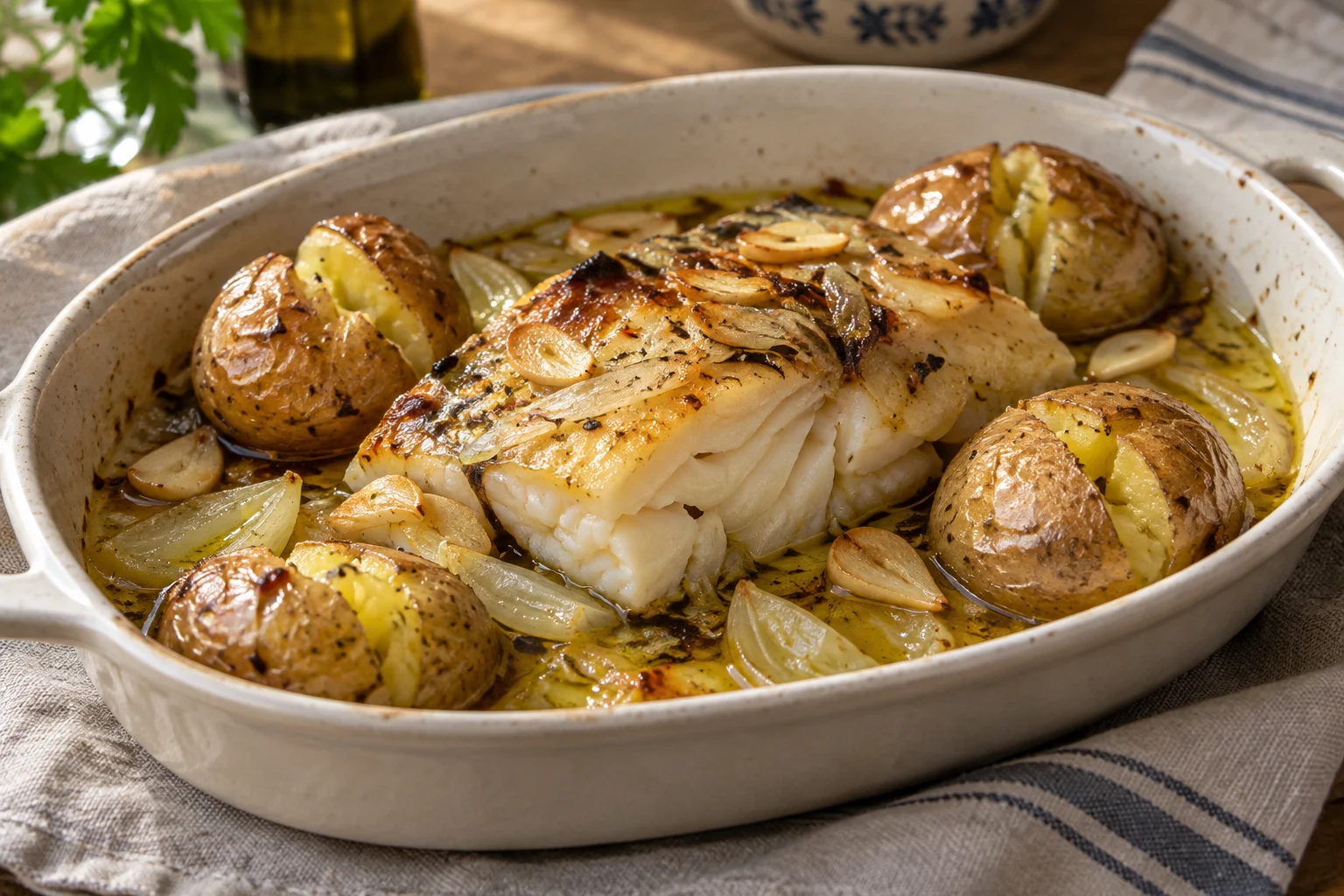
Portuguese cuisine Salt cod and potatoes
Bacalhau à Lagareiro: Open the Potato for the Oil
Read Portuguese bacalhau à lagareiro through its cracked potatoes and garlic oil. Compare documented roasting and grilling methods and plan the salt-cod preparation.
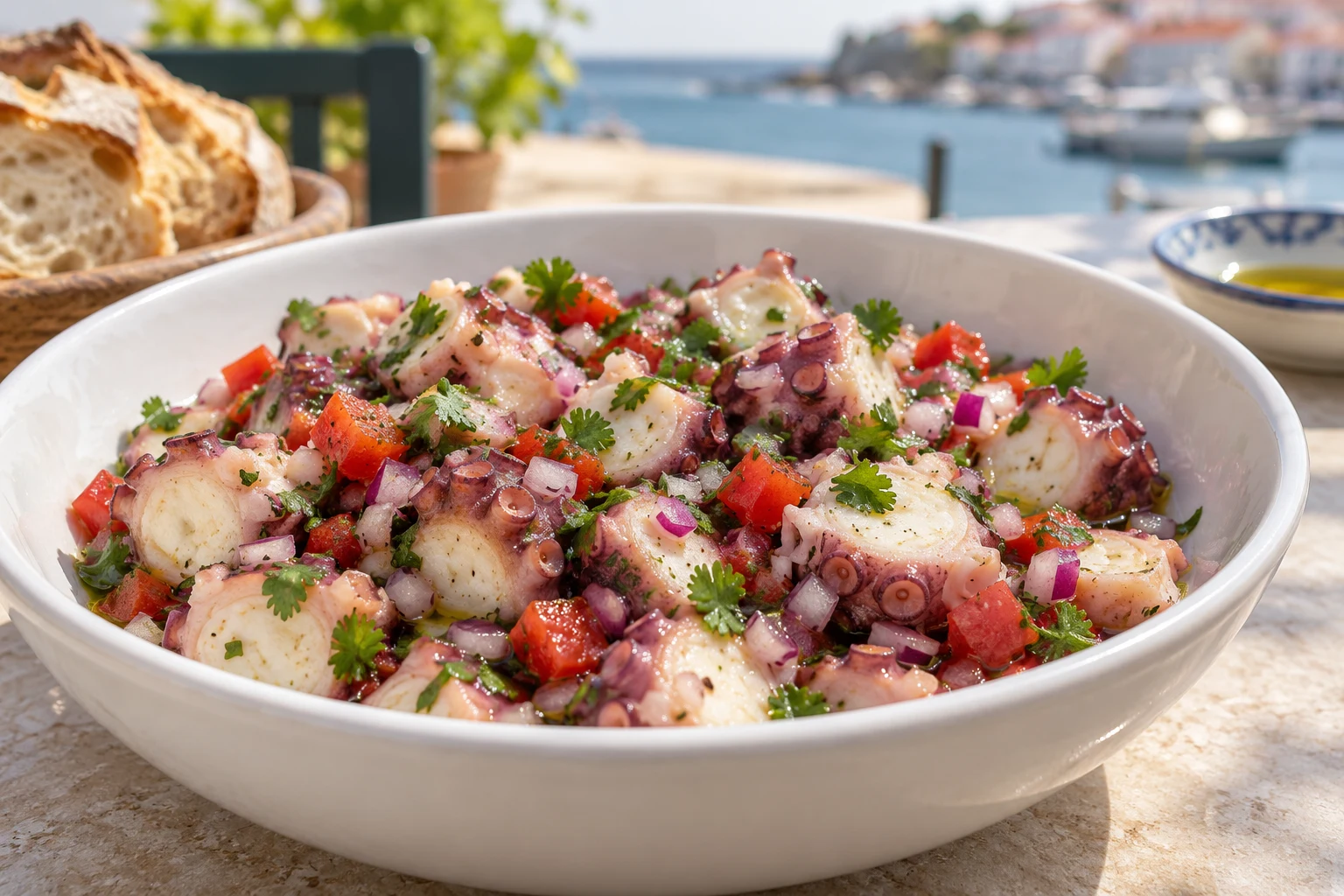
Portuguese cuisine Seafood salads
Salada de polvo: a small plate, or a fuller bowl?
Portuguese octopus salad can be a simple chilled petisco or a fuller salad with beans. Explore the vegetables, dressing and preparation behind each.
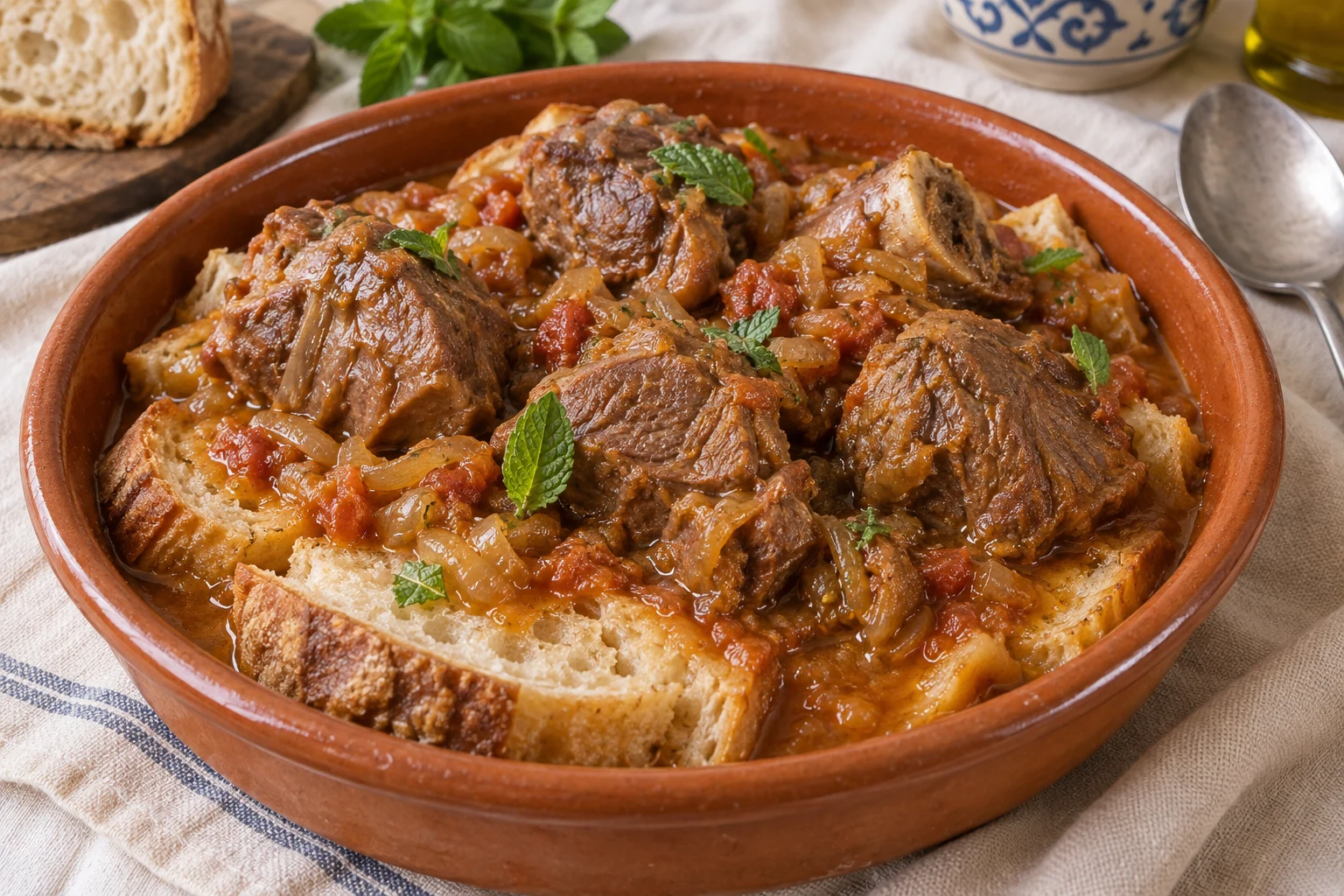
Portuguese cuisine Lamb stew
Ensopado de Borrego: Save the Broth for the Bread
Alentejo’s lamb ensopado makes the bread part of the meal. Compare wine, tomato and potato choices while keeping enough broth to soak the slices.