
Sopa de Cação: Bread Beneath the Broth
Sopa de cação
In this Alentejo fish soup, bread may soften beneath the broth or keep a crisp edge beside it. Three documented serving methods reveal how much the final assembly matters.
Alentejo, Portugal
The bread belongs in the bowl
Sopa de cação brings fish, garlic, coriander and vinegar-seasoned broth to the table. The bread can be less conspicuous: a slice beneath a steak, a toasted edge breaking the surface, or a fried triangle alongside. Why do these versions arrange it differently?
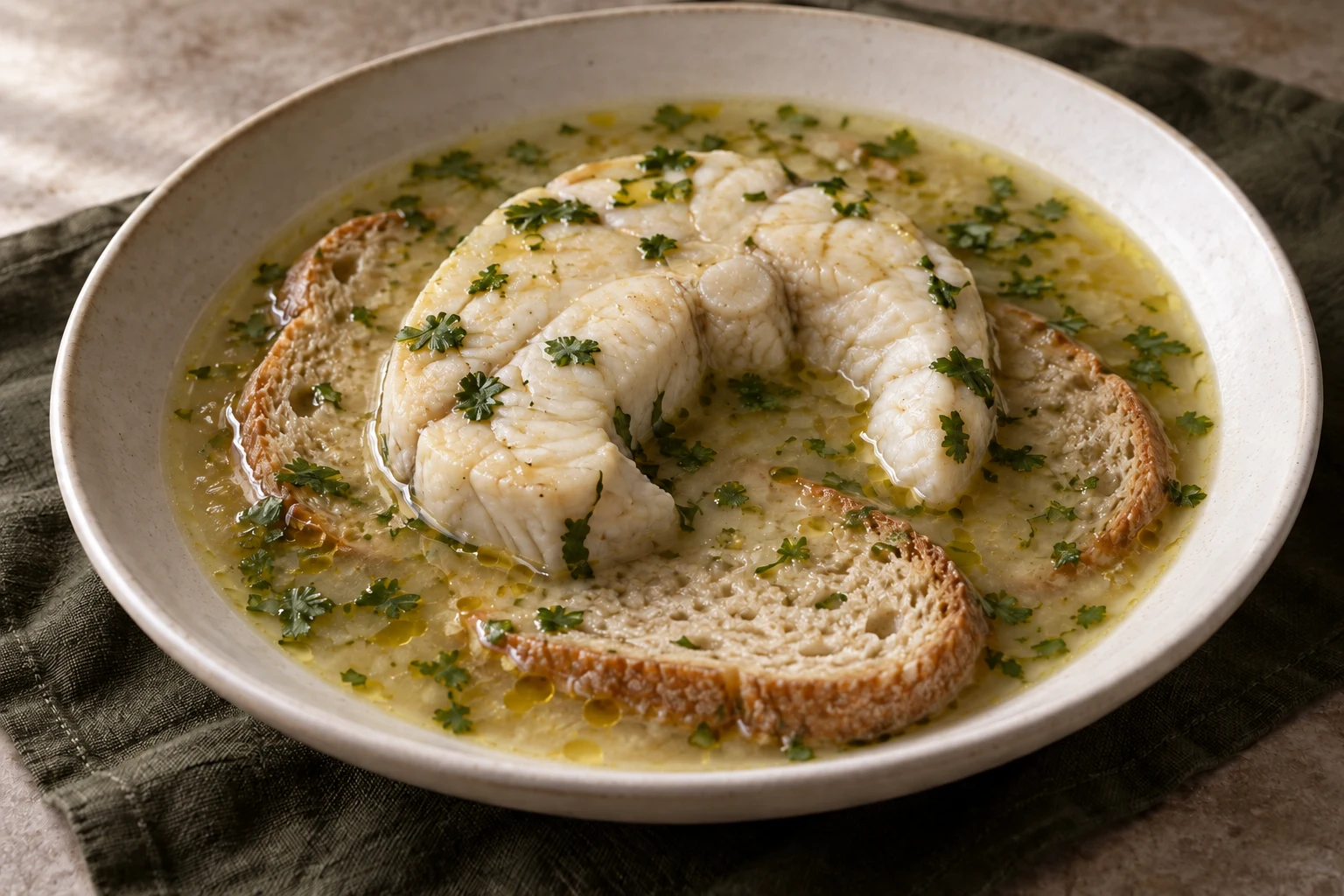
In Alentejo, bread gives a soup substance enough for a meal. Visit Portugal includes sopa de cação among the region’s soups that can serve as a main course. The regional guide AlentejoTurismo explains another useful detail: sopas can mean the slices of stale bread soaked with a dish’s cooking broth. That usage puts the bread inside the idea of the soup.
The traditional-products entry maintained by Portugal’s agriculture and rural-development directorate, DGADR, makes the assembly explicit. Thin slices are laid in a terrine, broth is poured over them, and the fish goes on top. The slices become something to eat by the spoonful, carrying the liquid through their crumb.
Serving choices
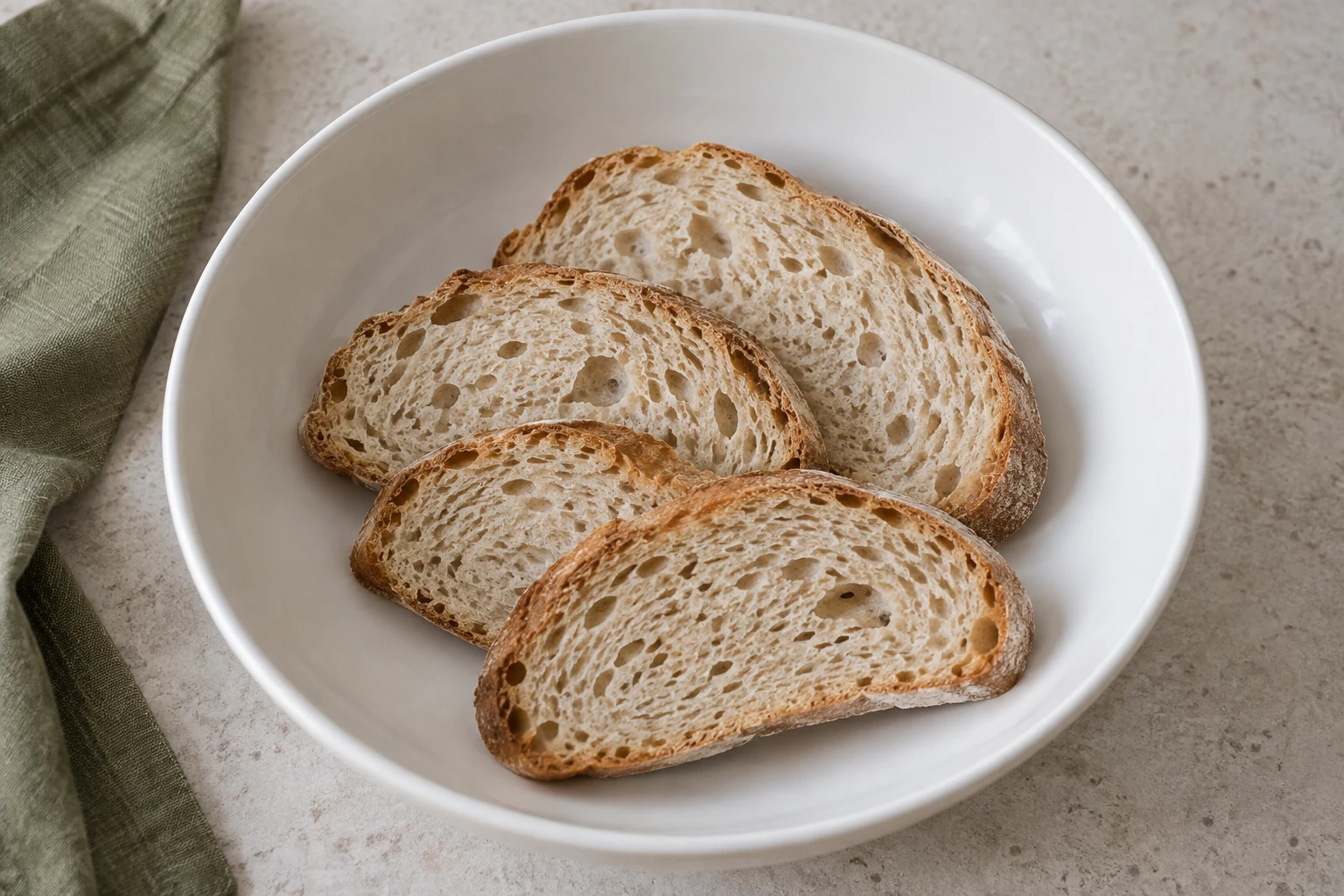
Plain, toasted, or fried
Each of these treatments appears in a published Portuguese preparation. The texture observations below are a reading of those methods; the bread’s contact with liquid is the decisive difference.
Plain bread beneath
Chef Dinis Parreira’s recipe, published by A Próxima Viagem, uses day-old Alentejo bread with hot soup poured over it. The bread begins absorbing broth as the plate is assembled, making softened crumb part of the first spoonful.
Toast beneath
RTP’s Mesa dos Portugueses preparation calls for previously toasted bread, then serves the soup and fish over it. Toasting adds browned flavor and an initially firmer surface, but the liquid still soaks into the slice. It is toast becoming soup-soaked bread.
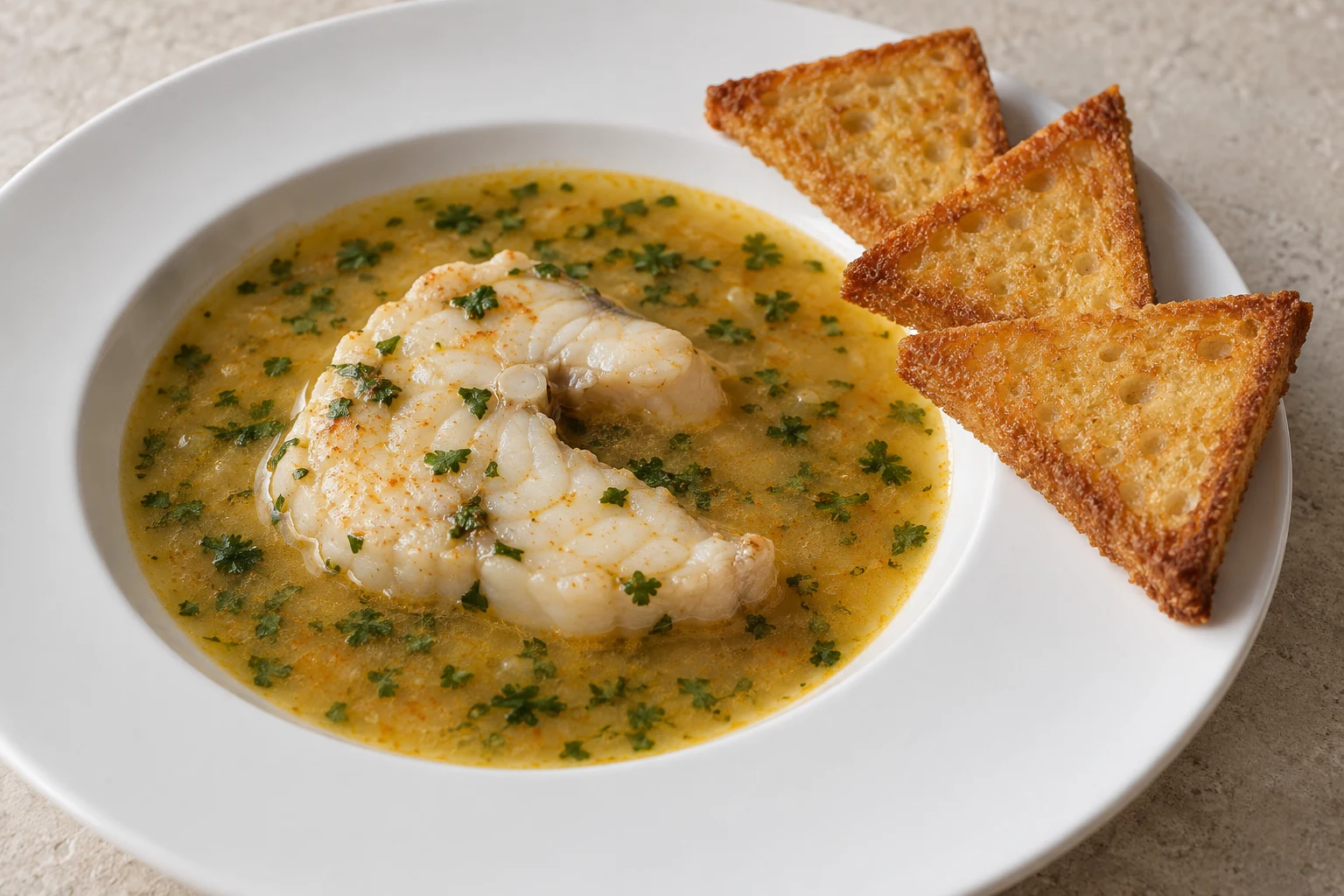
Fried triangles alongside
Turismo de Portugal’s 50-recipe collection adapts a recipe from Modesto’s Cozinha Tradicional Portuguesa. It fries bread triangles in olive oil and places them alongside the plated fish and broth. Keeping part of the bread clear of the liquid preserves a crisp edge to alternate with the soup.
Inside the broth
Flour and bread do different jobs
The soup can already have body before it reaches a bread slice. In Parreira’s method, the aromatic base is a piso: garlic and coriander pounded in a mortar, then gently cooked in olive oil with bay. Vinegar follows, then flour and hot water. The fish enters a broth that has already been lightly thickened.
DGADR records a different order: the fish cooks first, and flour dispersed in vinegar is added afterward and cooked through. RTP uses Maizena cornstarch with water and cider vinegar. These differences matter when reading a recipe: the thickener and the point at which it enters the pot vary between named preparations.
Flour or starch thickens the liquid in the pot; the sliced bread absorbs that liquid at the table. Vinegar supplies the sour seasoning shared by these versions. A bowl with fried bread alongside can therefore still have a lightly thickened broth, even though its bread has absorbed little of it.
Fried bread is also offered as an option in DGADR’s traditional account. Its appearance in the school collection does not make frying a new invention. The useful distinction is how the bread is treated and served, rather than a ranking of the plates by authenticity.
What cação names
Cação is a Portuguese commercial name covering several sharks. The European Commission’s Portuguese list includes Mustelus species and Galeorhinus galeus under that name. The dish’s name alone therefore does not identify one exact species; the scientific name is the more precise information to seek when buying the fish.
Research notes
Sources and preparations
Portuguese regional accounts and named preparations underpin this comparison. The school collection identifies its recipe as an adaptation; fish naming and mercury guidance come from the official references below.
- DGADR — Sopa de Cação ou Cação Alimado Portugal’s traditional-products register: Alentejo identity, the bread layer, flour-and-vinegar finish and optional fried bread.
- Visit Portugal — Gastronomia do Alentejo Regional context for bread soups, including sopa de cação, as substantial main dishes.
- AlentejoTurismo — Sopas de pão A regional food guide’s explanation of sopas as bread slices soaked with cooking broth.
- Dinis Parreira’s sopa de cação — A Próxima Viagem The chef’s mortar-pounded garlic and coriander base, broth thickened before the fish, and day-old bread beneath the soup.
- RTP Praça — Mesa dos Portugueses: Sopa de Cação A televised preparation using toasted bread, Maizena starch and cider vinegar.
- Turismo de Portugal — 25 Abril: 50 anos, 50 receitas Page 10: an explicitly identified adaptation of the recipe in Modesto’s Cozinha Tradicional Portuguesa, served with fried bread triangles.
- European Commission — Portuguese commercial fish names The cação entries cover multiple sharks, including Mustelus species and Galeorhinus galeus.
- FDA and EPA — Advice about Eating Fish Current mercury advice for pregnancy, breastfeeding and children ages 1–11; shark appears in the highest-mercury category to avoid.
Keep exploring
More stories for your table

PortugalSeafood
Polvo à Lagareiro: The Olive Oil Is the Sauce
Tender octopus, lightly cracked potatoes and a garlic-and-olive-oil finish: understand the separate cooking jobs behind Portuguese polvo à lagareiro.
PortugalSeafood stew
Cuttlefish Feijoada: Tender Seafood, Intact Beans
A Portuguese cuttlefish-and-bean stew explained through its cooking sequence: tenderize the seafood, add cooked beans, and use a little bean mash to bring the sauce together.

ThailandPork braise
Moo Hong: Tender Pork Before a Rich Sauce
Phuket’s soy-braised pork rewards a patient simmer. Learn how to manage the liquid, understand its spice variations and cook a pepper-focused home adaptation.