
Cuttlefish Feijoada: Tender Seafood, Intact Beans
Feijoada de choco
The cuttlefish needs time in the pot; the cooked beans need a gentler finish. Portuguese recipes offer a useful way to manage both, with a small portion of mashed beans to give the sauce body.
The order matters
How do the cuttlefish and beans finish together?
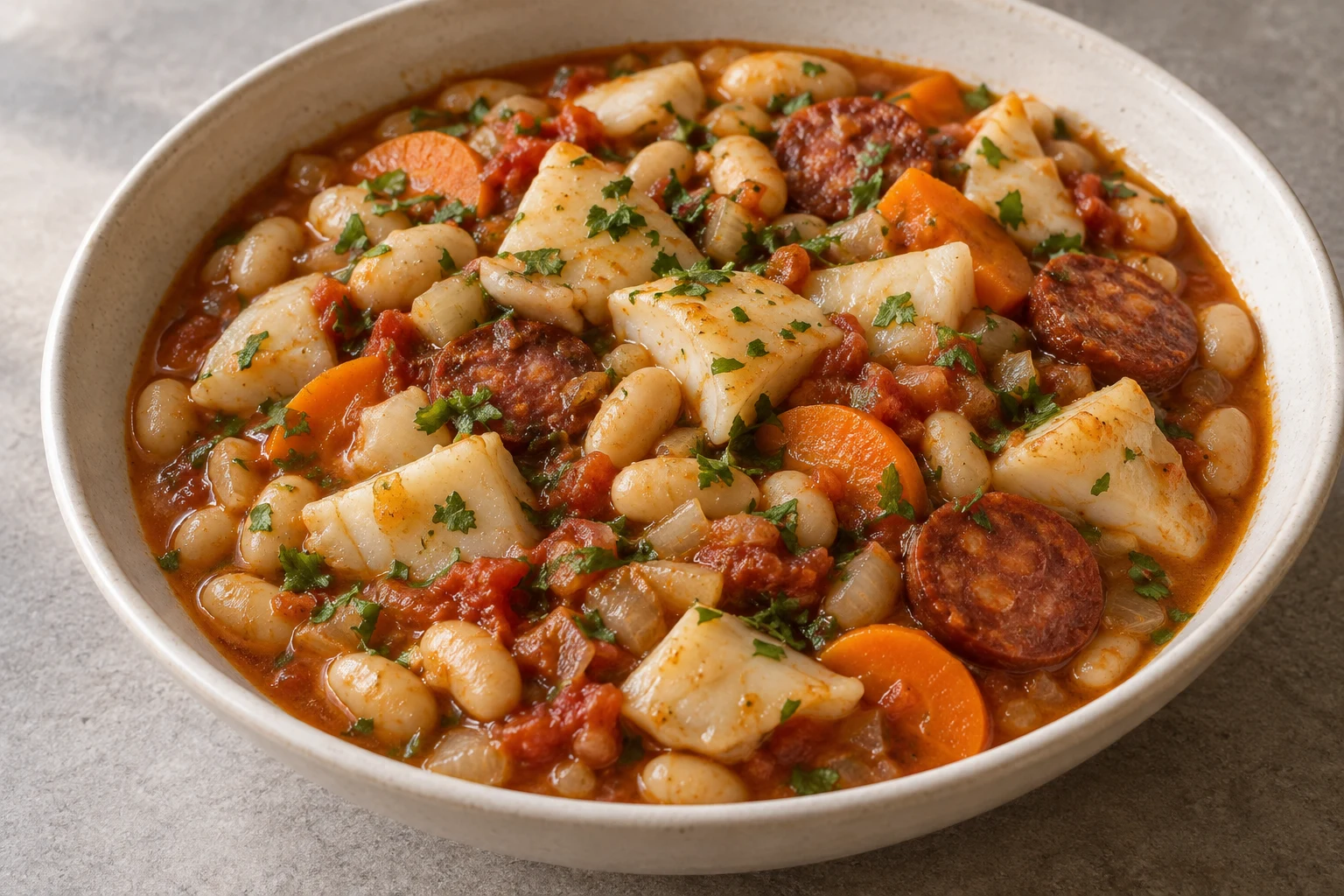
Feijoada de choco is a Portuguese stew of cuttlefish and beans. In the Algarve section of CCDR Algarve’s seafood recipe collection, cuttlefish cooks with olive oil, onion, tomato and bay before previously cooked white beans join it. Chouriço and parsley finish that version, with white rice alongside. The practical question is how to bring those substantial ingredients together without losing their different textures.
For the adaptation here, the answer is to give the cuttlefish a head start. Cátia Goarmon’s recipe in EPAL’s Tia Cátia collection waits until the cuttlefish is tender before adding cooked white beans for a final gentle simmer. Her finished presentation uses cabbage parcels; we take the staged cooking approach and serve the stew in bowls. The beans can wait while you check the seafood.
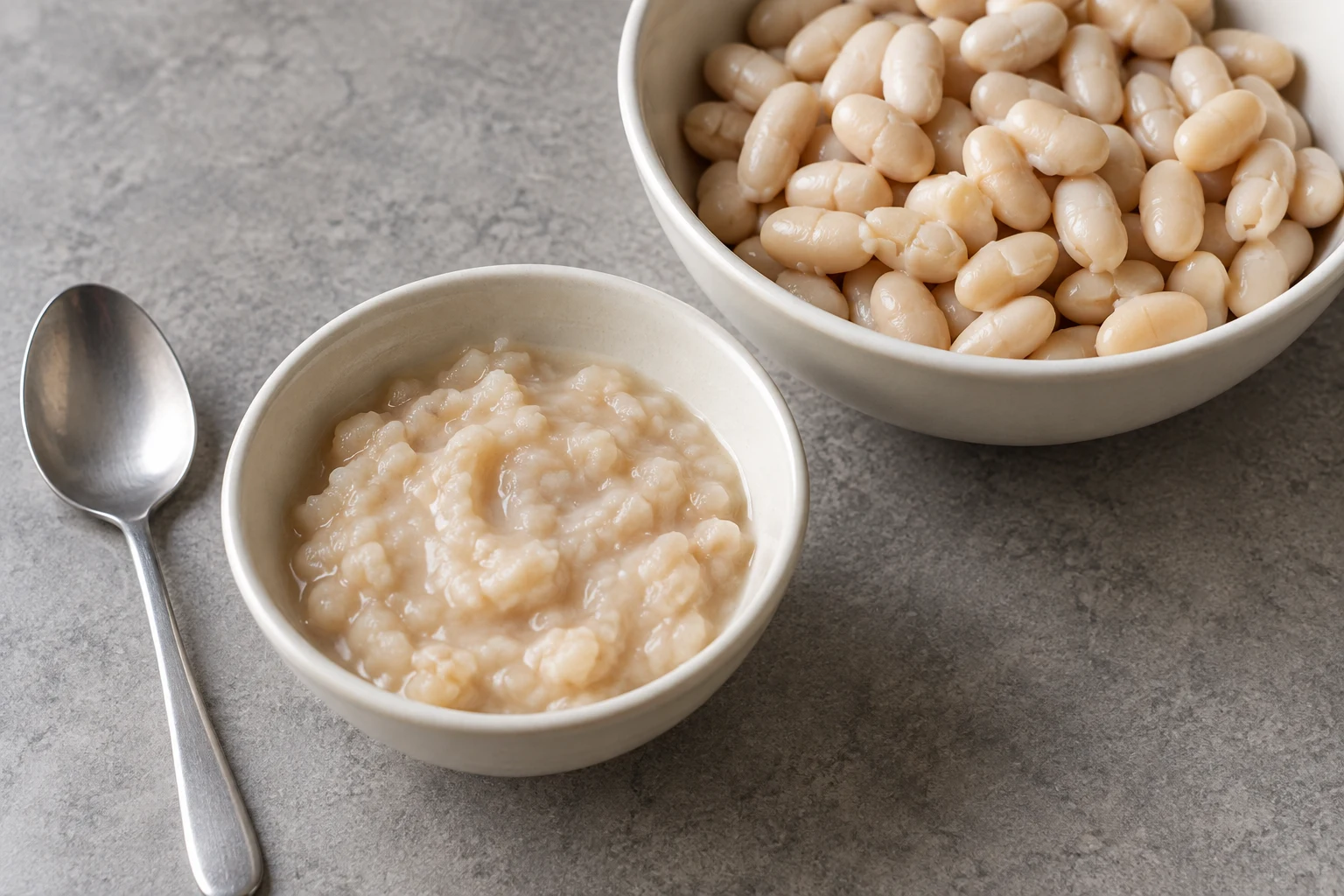
Start with the bean weight the method actually needs. Our 600 g means cooked beans weighed after draining. On a can, use the drained weight, not the total weight of beans and liquid. Dried and soaked weights are different measurements and cannot be exchanged gram for gram. Setting aside a small portion for mashing gives you a second way to adjust the sauce without breaking up the whole pot.
Choices in the sources
Three cooks, three useful approaches
The recipes differ in their beans, seasoning and assembly. These are specific cooks’ versions; the recipe below combines selected techniques in a home adaptation.
Pedro Barbosa: white beans and coriander
Food From Portugal pairs white beans with cuttlefish, tomato, sweet paprika and coriander, without chouriço in its ingredient list. The cuttlefish has a long, gentle cook before the beans and some of their cooking water are added. It offers a seafood-focused seasoning option.
Júlia: cook the components separately
Júlia’s home recipe uses red beans and Alentejo chouriço. She cooks the beans and cuttlefish separately, then combines them with a tomato-and-onion base. This method gives each component its own cooking stage before the final simmer.
Rui Tomás: thicken with the beans
At Bora Fazer, Rui Tomás simmers cuttlefish until soft, adds the beans, then purées a small portion of them and returns it to thicken the sauce. Our version borrows that idea, using a fork to mash a reserved portion of cooked white beans.
An adaptation for four
White-bean feijoada de choco
This untested home adaptation draws on the Portuguese recipes below; its quantities and use of cleaned mantle pieces are editorial choices. It serves four generously. Allow about 1 hour 50 minutes: 20 minutes preparation and 90 minutes cooking, with extra time if the cuttlefish needs it. Refrigerator thawing, if needed, is additional. Use a wide, heavy pot of at least 4 litres with a lid.
Ingredients
Seafood and beans
- 1 kg cleaned, skinless cuttlefish mantle, cut into roughly 3 cm pieces; thaw fully in the refrigerator if frozen
- 600 g cooked white beans, rinsed and drained; reserve 100 g for mashing and keep the other 500 g whole
- 100 g smoked pork chouriço labeled ready to eat, cut into thin rounds
The tomato base
- 30 ml / 2 tbsp olive oil
- 1 large (about 200 g) onion, finely chopped
- 1 large (about 150 g) carrot, peeled and cut into thin half-moons
- 3 cloves garlic, finely chopped
- 1 tsp sweet paprika
- 400 g canned chopped tomatoes, including their juice
- 100 ml dry white wine
- 1 bay leaf
- 400 ml, plus extra as needed water, divided: 300 ml for the braise and 100 ml for the bean mash
- ½ tsp, then to taste fine salt
- ¼ tsp ground black pepper
- 10 g fresh coriander leaves, washed and chopped, to finish
Method
- 1
Set aside the bean portion.
Weigh the beans after rinsing and draining. Put 100 g in a small bowl for the mash and reserve 500 g separately. Keep the prepared cuttlefish refrigerated while you chop the vegetables, and use separate clean equipment for the seafood and the finishing herbs.
- 2
Build the base.
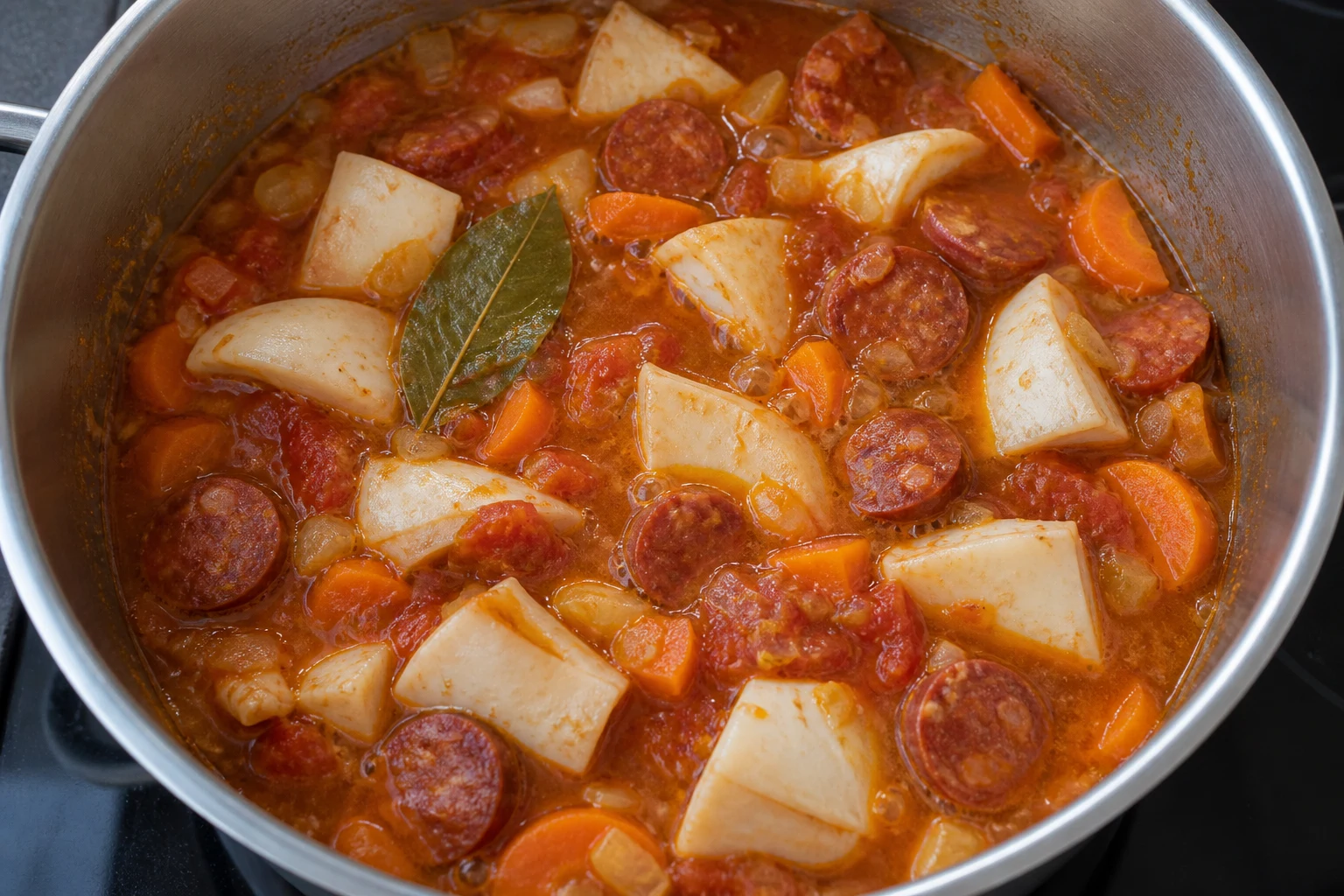
Heat the olive oil in the pot over medium heat. Cook the chouriço for about 3 minutes, turning the slices. Add the onion and carrot and cook for 8 minutes, stirring, until the onion softens. Stir in the garlic and paprika for 30 seconds, then add the tomatoes and cook for 4 minutes. Pour in the wine and let it bubble for 2 minutes.
- 3
Give the cuttlefish time.
Add the cuttlefish, bay leaf, 300 ml water, salt and pepper. Bring to a simmer, then reduce the heat and cover. Cook gently for about 45–60 minutes, stirring occasionally; add a little extra water if the bottom starts to catch. Check a thick piece: a thin skewer should pass through with little resistance. If it is still rubbery, continue in 10-minute intervals before adding any beans. Check that the seafood also reaches at least 63°C / 145°F internally, the FDA minimum for most seafood; temperature and tenderness are separate checks.
- 4
Thicken a little, then combine.
Mash the reserved 100 g beans with a fork, gradually adding the remaining 100 ml water to make a loose purée. Remove the bay leaf from the pot and stir in the mash. Fold in the 500 g whole beans. Simmer gently, uncovered, for about 10 minutes, until the beans are hot throughout and the sauce coats them. Stir carefully to keep the beans whole. If the sauce becomes too thick, loosen it with a splash of water; if it is still thin, simmer a few minutes longer.
- 5
Finish and serve.
Taste the sauce and adjust the salt. Turn off the heat, scatter over all the chopped coriander and divide between four bowls. Serve hot, with enough sauce in each bowl to carry the beans and cuttlefish together.
Research notes
Sources and recipe notes
Portuguese institutional collections and individual cooks establish the dish and the choices compared here. The recipe is our untested adaptation; the safety temperatures come from current FDA guidance.
- CCDR Algarve — Caderno de Receitas do Mar Feijoada de Choco in the Algarve section, printed pages 34–35: white beans cooked separately, cuttlefish in a tomato base, chouriço, parsley and rice.
- Cátia Goarmon / EPAL — À Mesa com… Tia Cátia Printed page 28: cuttlefish pieces cooked until tender before cooked white beans join them. Her recipe serves the feijoada in cabbage parcels.
- Pedro Barbosa — Feijoada de Chocos A white-bean version with paprika and coriander; cuttlefish cooks first and bean cooking water helps form the sauce.
- Júlia — A minha receita de Feijoada de Choco An attributed home version with red beans, Alentejo chouriço and separately cooked cuttlefish and beans.
- Rui Tomás / Bora Fazer — Feijoada de Choco Cuttlefish simmered until soft, followed by beans; a small puréed bean portion thickens the sauce. This informs our mashing step.
- FDA — Selecting and Serving Seafood Safely Refrigerator thawing, separation of raw seafood from ready-to-eat foods, and the 145°F minimum for most seafood.
- FDA — Safe Food Handling Prompt refrigeration, shallow containers for leftovers, refrigerator temperature and reheating leftovers to 165°F.
Keep exploring
More stories for your table

PortugalSeafood
Polvo à Lagareiro: The Olive Oil Is the Sauce
Tender octopus, lightly cracked potatoes and a garlic-and-olive-oil finish: understand the separate cooking jobs behind Portuguese polvo à lagareiro.

ThailandPork braise
Moo Hong: Tender Pork Before a Rich Sauce
Phuket’s soy-braised pork rewards a patient simmer. Learn how to manage the liquid, understand its spice variations and cook a pepper-focused home adaptation.
EthiopiaBeef stew
Sega Wot: Build the Sauce Before the Beef
Learn how cooked onions, gently heated berbere and a patient simmer build sega wot, with a home adaptation of Ethiopia’s spicy beef stew.