
White Borscht: Read the Starter First
Barszcz biały
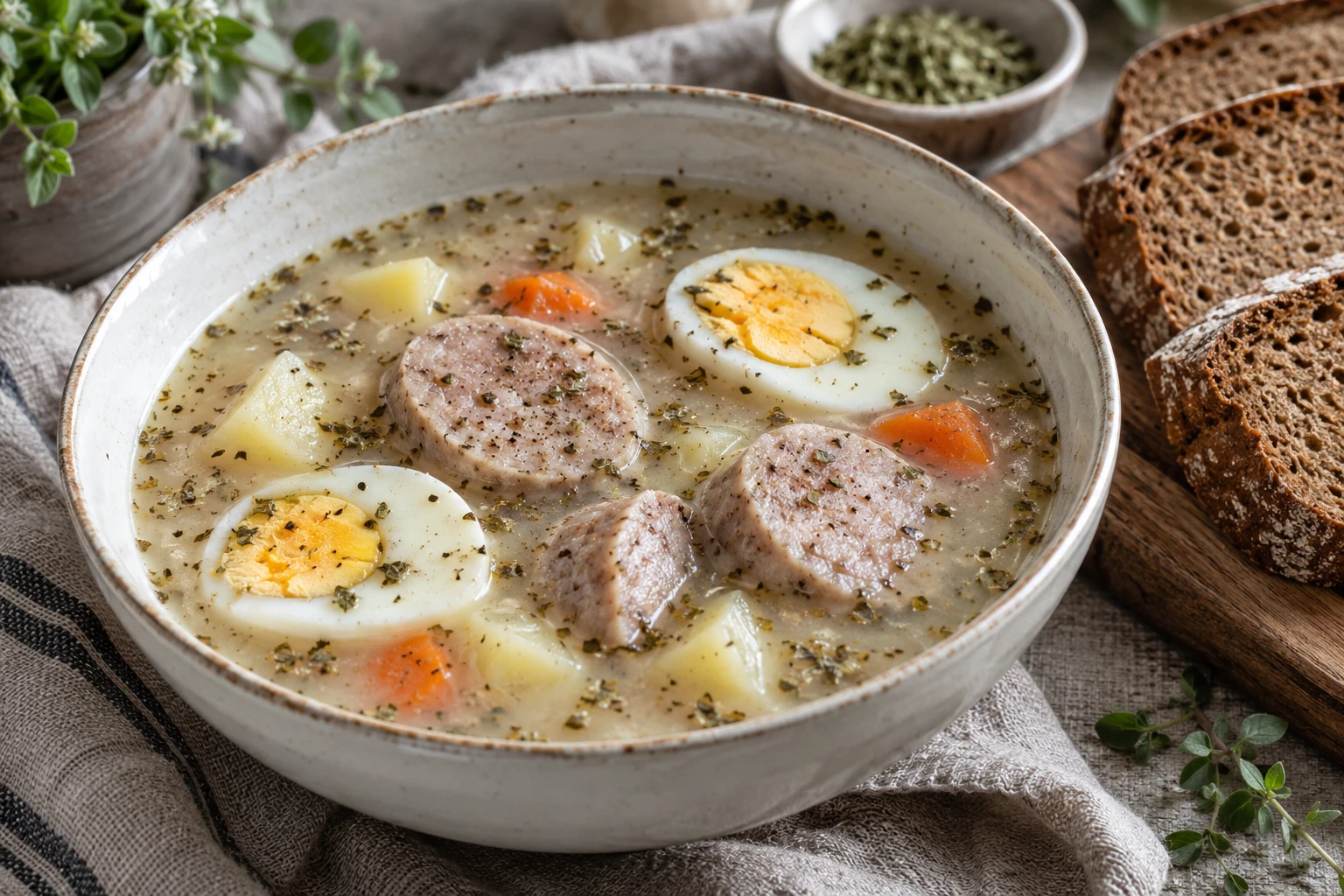
An ivory bowl with sausage and egg reveals little about what soured it. For barszcz biały, the starter and the finishing sequence tell a more useful story.
A name with room for disagreement
A common practical distinction gives barszcz biały a fermented wheat starter and żurek a rye starter. It helps when choosing a bottle for a specific recipe, but it is not a law for every Polish household. Natalia Mętrak-Ruda's Culture.pl account describes the overlapping names and regional variations, including a rye-based white barszcz reported in a regional cookbook.
The better kitchen question is what the recipe actually uses. Wheat starter, sour dairy and fermented vegetable juices can produce different bowls under related names. An ivory color alone cannot identify the souring method. Read the ingredient list, then the order in which that ingredient joins the broth.
Liquid and sediment are two decisions
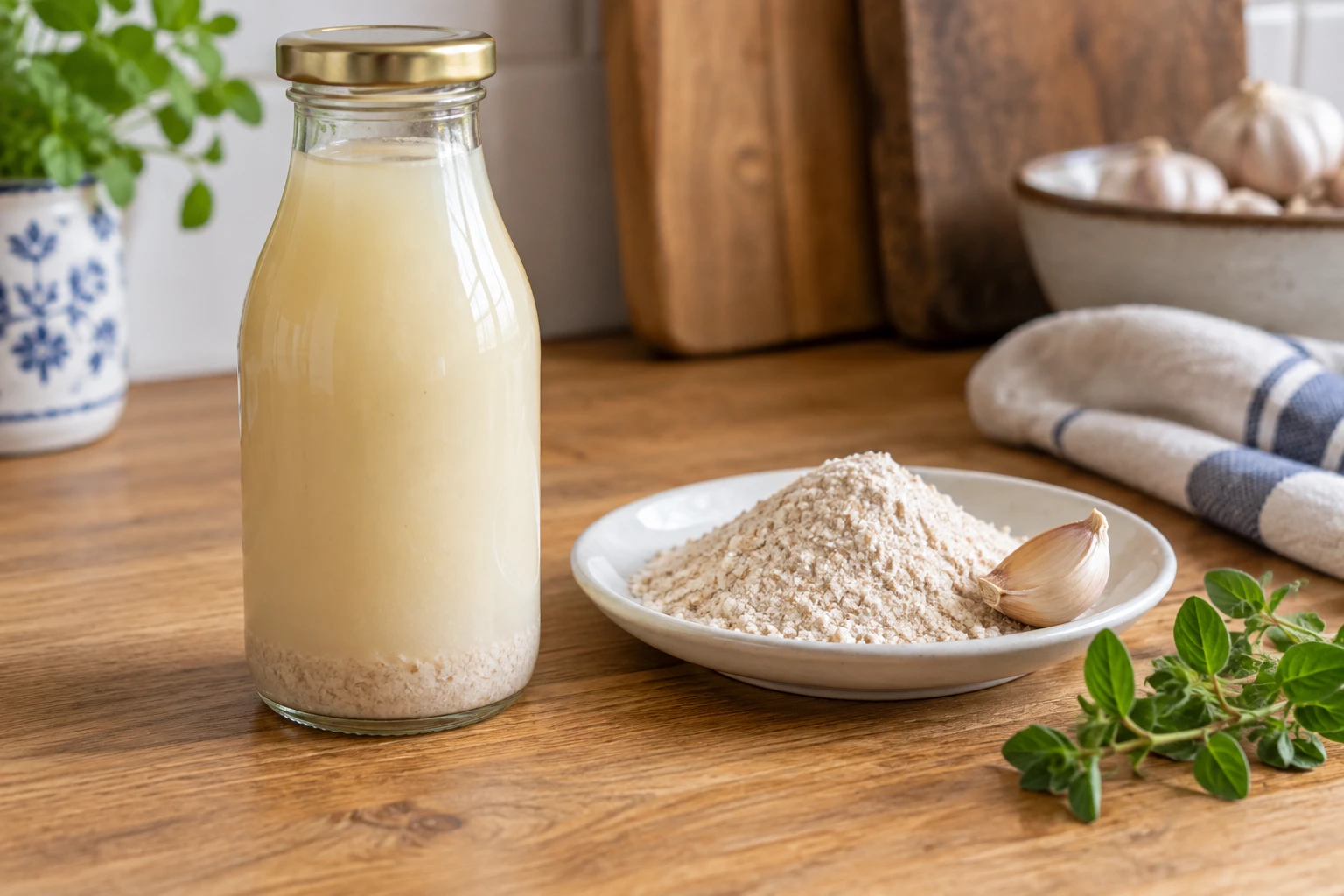
Mix the bottle first
AniaGotuje's wheat-starter version tells the cook to mix the bottle or jar thoroughly and add its liquid and flour together. Her method also brings separately cooked potatoes and their cooking water into the main pot.
Adjust them in stages
Polonist offers another approach: add the sour liquid first, then introduce the settled flour portion gradually to control thickness. Its alternative is to mix the bottle completely. Either choice should be read with the recipe's broth volume and final simmer.
Make the broth before judging the sourness
Ania Starmach builds her version with smoked bacon, root vegetables, white sausage and a few dried mushrooms. She strains the stock, sets the sausage aside, then adds wheat starter and finishes with cream. Her serving bowl gets egg and sausage slices, rather than every vegetable that flavored the broth.
RóżaGotuje keeps potatoes and carrot in the finished soup. Its method cooks those vegetables before adding the wheat starter and leaves cream optional. These differences change both the mouthful and the impression of richness. A potato-filled bowl and a strained, creamy broth need not share one ideal consistency.
Notice where the recipe asks you to taste. Sourness is easier to assess in the developed broth than in an isolated spoonful of starter. Follow the specified addition and cooking sequence, then make small seasoning decisions. Pouring extra starter to fix every weak flavor can change the thickness as well as the acidity.
Keep the finish orderly
- 01
Identify the sausage
White kiełbasa may be sold raw or already cooked. Read the label. FoodSafety.gov gives raw pork sausage a minimum internal temperature of 160°F/71°C, checked with a thermometer; the soup's color or a generic simmer time cannot confirm that endpoint.
- 02
Handle sour cream separately
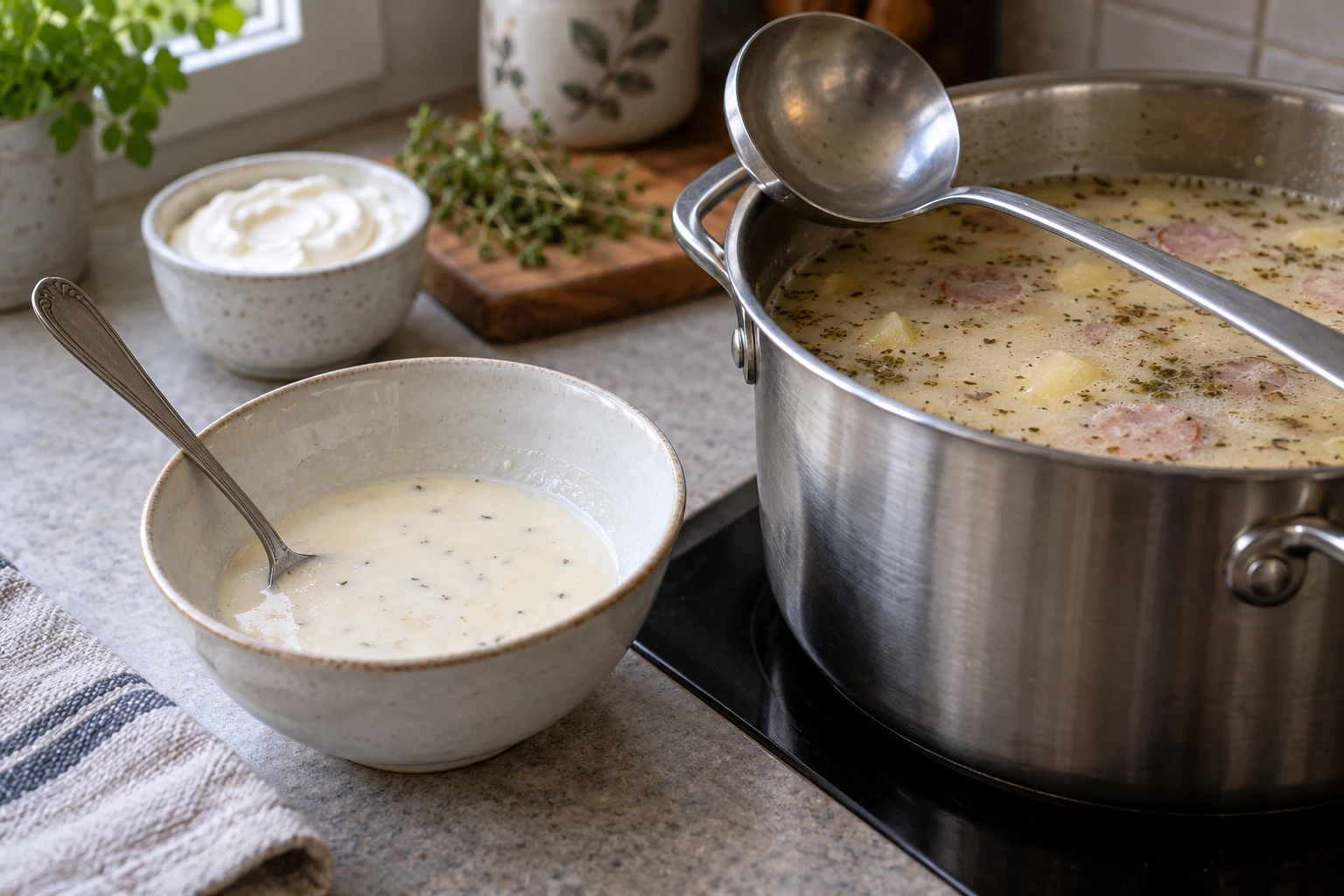
Starmach mixes a ladleful of soup with cream before returning it. AniaGotuje likewise tempers sour cream with hot broth, while offering sweet heavy cream as a different finish. These are choices with different flavor, not merely alternative names.
- 03
Keep a cream-free method intact
RóżaGotuje prefers the soup's sour character without cream. If following that version, judge it as a deliberately different finish rather than add dairy simply because another bowl looks whiter.
- 04
Assemble recognizable bowls
Polonist serves halved boiled egg with sausage, root vegetables and some rib meat. Starmach's strained version has a different balance. Distribute the substantial pieces deliberately so each bowl receives more than broth.
The useful question at the table
White borscht is strongly associated with Easter in these published recipes, yet AniaGotuje also presents it as an everyday soup. The festive garnishes are familiar, but there is no need to turn one cook's potato policy or cream preference into a national rule.
For a wheat-based version, start with a prepared food-grade soup starter intended for the dish and follow its storage directions. A starter is an ingredient in a complete soup method, not a finished broth. Ask what soured the pot, how much of the flour went in, and how the dairy was handled. Those answers explain more than the color of the bowl.
Research notes
Sources
Polish cooks' methods, cultural reporting and the official sausage temperature chart support the distinctions.
- Natalia Mętrak-Ruda: Polish Food 101—Żur Regional naming overlaps and the limits of a simple flour distinction.
- AniaGotuje: Wheat-starter white borscht Mixed starter sediment, separate potato cooking and two cream choices.
- Polonist: White borscht on wheat starter Liquid-versus-flour adjustment and a substantial serving arrangement.
- Ania Starmach: Barszcz biały Strained bacon-and-vegetable broth with a mixed cream finish.
- RóżaGotuje: Barszcz biały Potatoes and carrot retained; cream is optional.
- FoodSafety.gov: Minimum internal temperatures Raw pork sausage requires 160°F/71°C measured internally.
Keep exploring
More stories for your table
Polish cuisine Sour rye soup
Żurek: The Sour Rye Starter Behind a Polish Soup
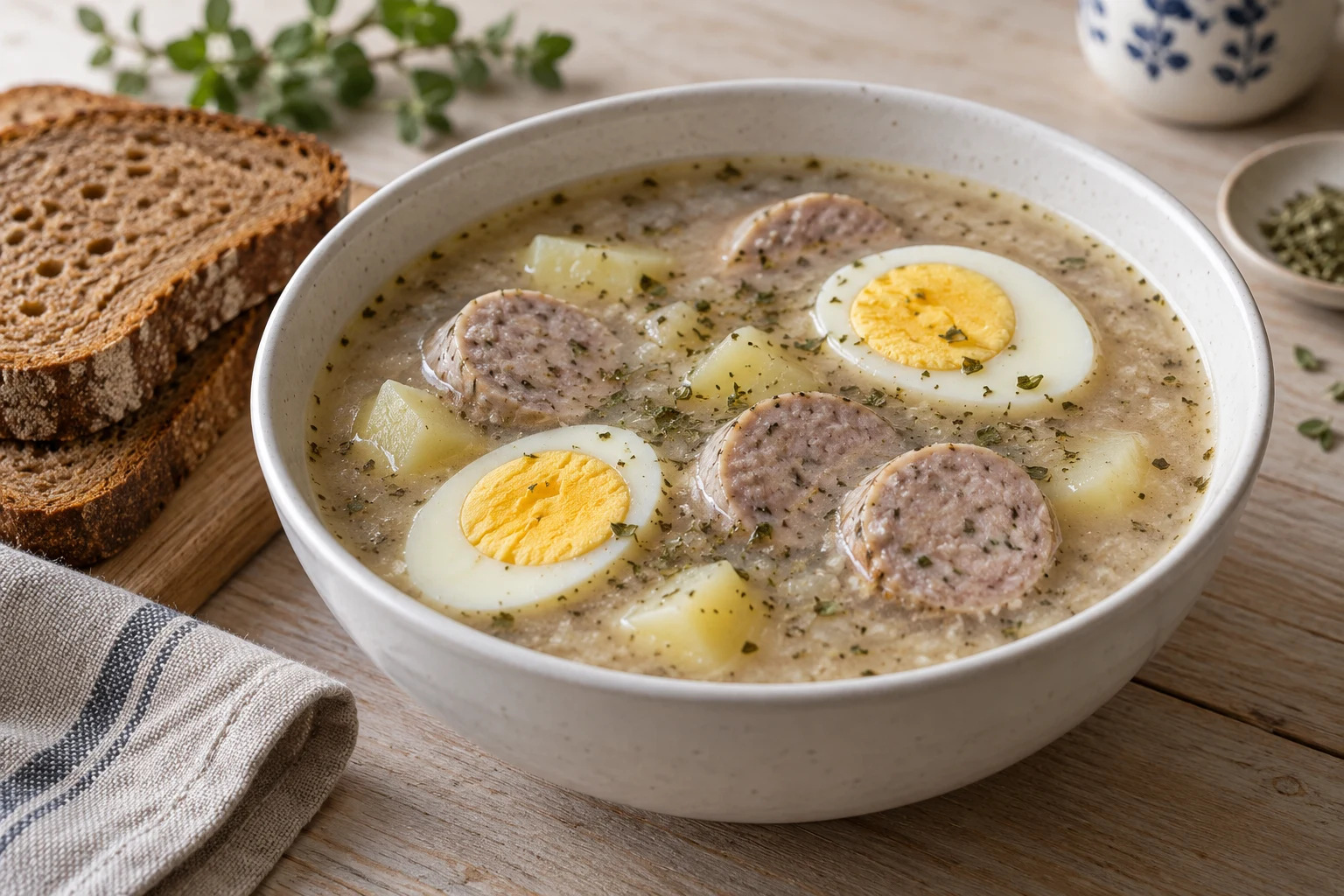
Żurek gets its tang from fermented rye flour. Follow the starter into an everyday regional bowl or an Easter soup with white sausage and eggs, and learn what to look for when buying zakwas.

Polish cuisine Dumplings
Meat Pierogi: Make the Filling Moist Before You Fold
Turn cooked soup beef into Polish meat pierogi. Learn how onion, carrot and a little broth soften the filling, then make a complete home adaptation.
Hungarian cuisine Soup
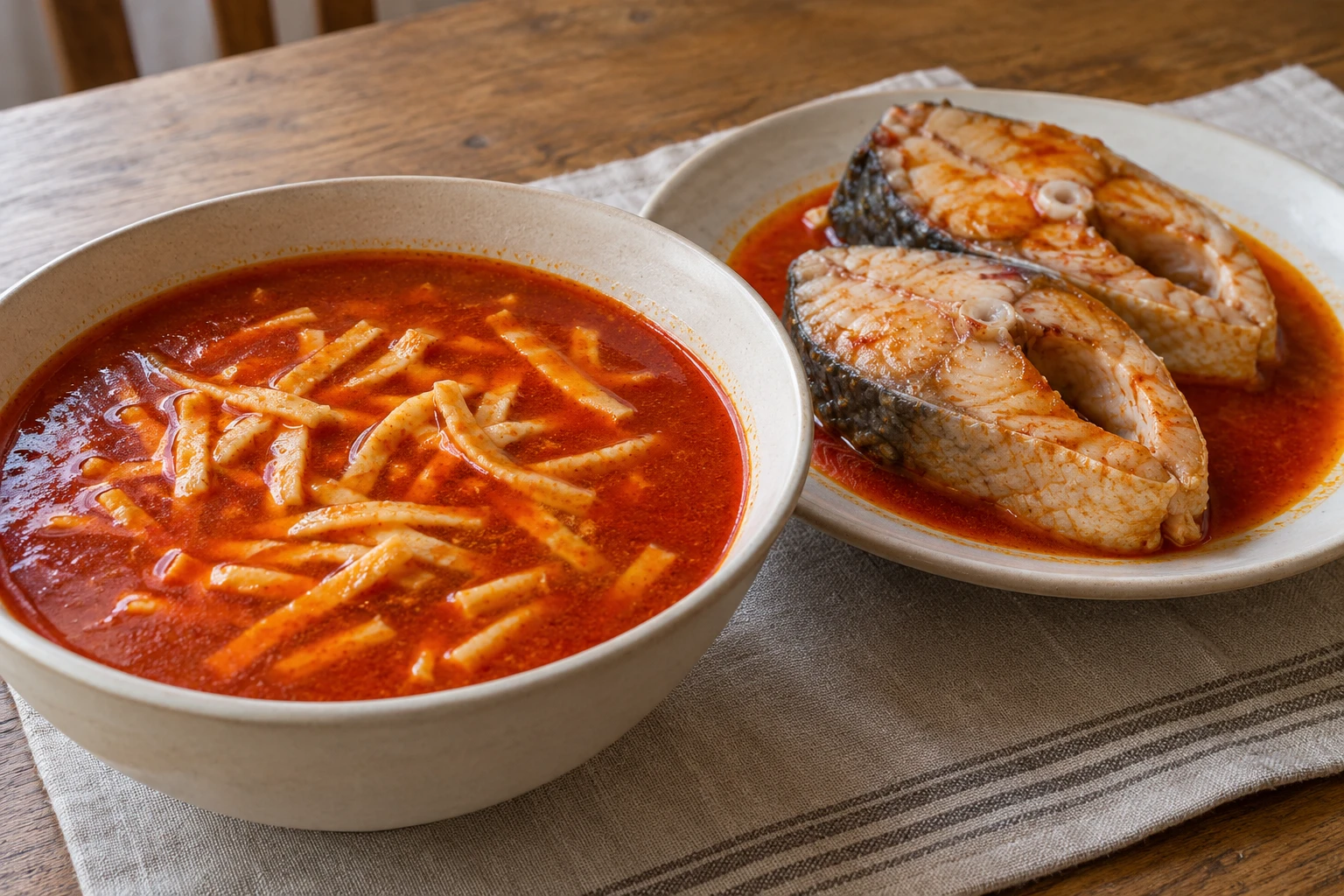
Baja Fish Soup: Move the Pot, Keep the Fish
Baja fisherman’s soup pairs paprika-red carp broth with matchstick noodles. Its vigorous boil and careful handling explain why stirring is the wrong habit to borrow.