
Kapusta Kiszona: From Jar to Polish Side Dish
Kapusta kiszona
One jar, two very different textures: keep fermented cabbage crisp for a slaw, or soften it with onions for a warm side.
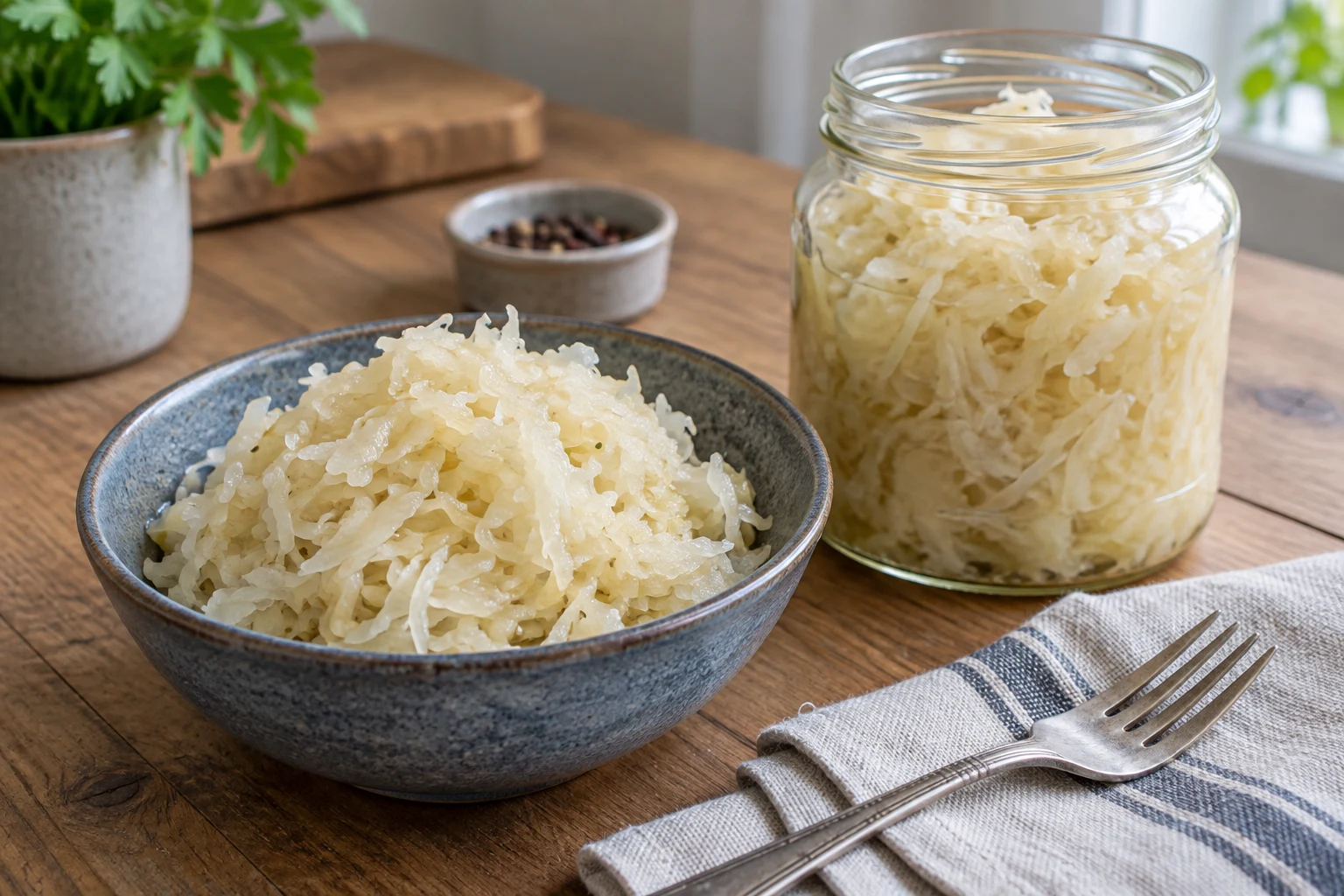
Start with the ingredient
Fermented cabbage, rather than one fixed recipe
Kapusta kiszona is the Polish name for sauerkraut. It describes the sour, shredded cabbage you start with, rather than a single finished plate. A cold slaw preserves its lively crunch; a warm preparation turns those same strands soft and savory. Choosing between them is as much about texture as temperature.
Keep the names distinct. Surówka z kiszonej kapusty is a slaw made with sauerkraut. Kapusta zasmażana is a cooked cabbage preparation that can use either fresh cabbage or sauerkraut, often finished with onions and a flour-thickened mixture. Fresh cabbage does not become fermented simply because it is cooked that way.
Read the jar, then taste
- Starting point
- Prepared sauerkraut
- First adjustment
- Drain thoughtfully
- Last adjustment
- Salt after tasting
Use a ready-made product and follow its label for refrigeration and use after opening.
Remove free liquid so it does not flood a slaw or dilute the warm finish.
The cabbage already brings brine; carrots, onions and other additions change the final balance.
Keep enough sourness to recognize it
Rinsing is a choice about flavor, rather than a compulsory step. AniaGotuje keeps the cabbage’s sourness in its warm version; other preparations rinse before cooking. Taste a little of the ready-made kraut first. If its acidity suits the meal, drain it without washing away the character you want.
If it tastes too forceful, try a small portion with the planned carrot or apple before treating the whole batch. Sweet vegetables can round out acidity without turning the dish sugary. Briefly rinsing particularly sharp cabbage is another option, but drain it thoroughly afterward and expect a milder result.
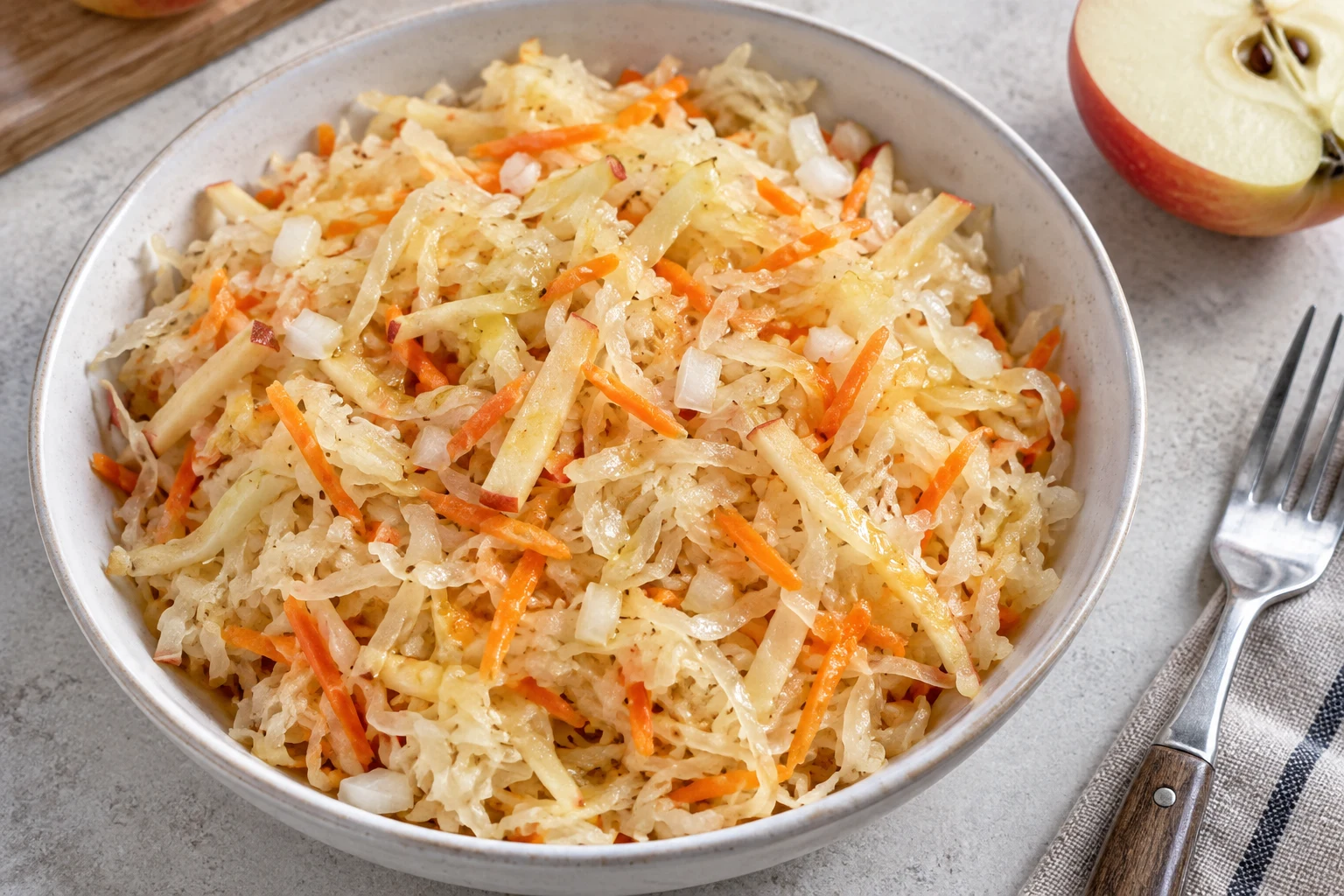
Cold route
A loose slaw with apple and carrot
Anna Hurning’s slaw combines sauerkraut with grated carrot, apple, minced onion and a small amount of oil. That gives three different kinds of bite: tangy cabbage, sweet grated vegetables and a little sharper onion. There is no need for mayonnaise or a creamy dressing.
Cut long cabbage strands into manageable lengths if they tangle on the fork. Fold in the grated vegetables and finely chopped onion, then add just enough oil to lightly coat them. Let the mixture stand briefly and taste again before deciding whether it needs a little sugar or salt. Keep it refrigerated until serving. Pair the crisp slaw with potatoes and a fried or roasted main when the plate needs freshness.
Warm route
Tender first, lightly bound last
- 01
Soften the cabbage
Simmer drained sauerkraut with a little water, carrot if wanted, and restrained bay leaf or allspice until the strands are tender. The starting cabbage determines the time; check its texture rather than relying on a rigid minute count.
- 02
Make the onion finish separately
Cook chopped onions gently in vegetable oil until soft and golden. For a roux-style finish, stir in a little wheat flour and cook it briefly, then gradually stir in some hot cabbage cooking liquid until smooth.
- 03
Bring the parts together
Combine the tender cabbage and onion mixture and heat while stirring. Aim for a coating that holds the shreds together, not a puddle of gravy. Taste at the end. Karolina Klesta also describes bacon or lard versions; choosing oil keeps this preparation meat-free.
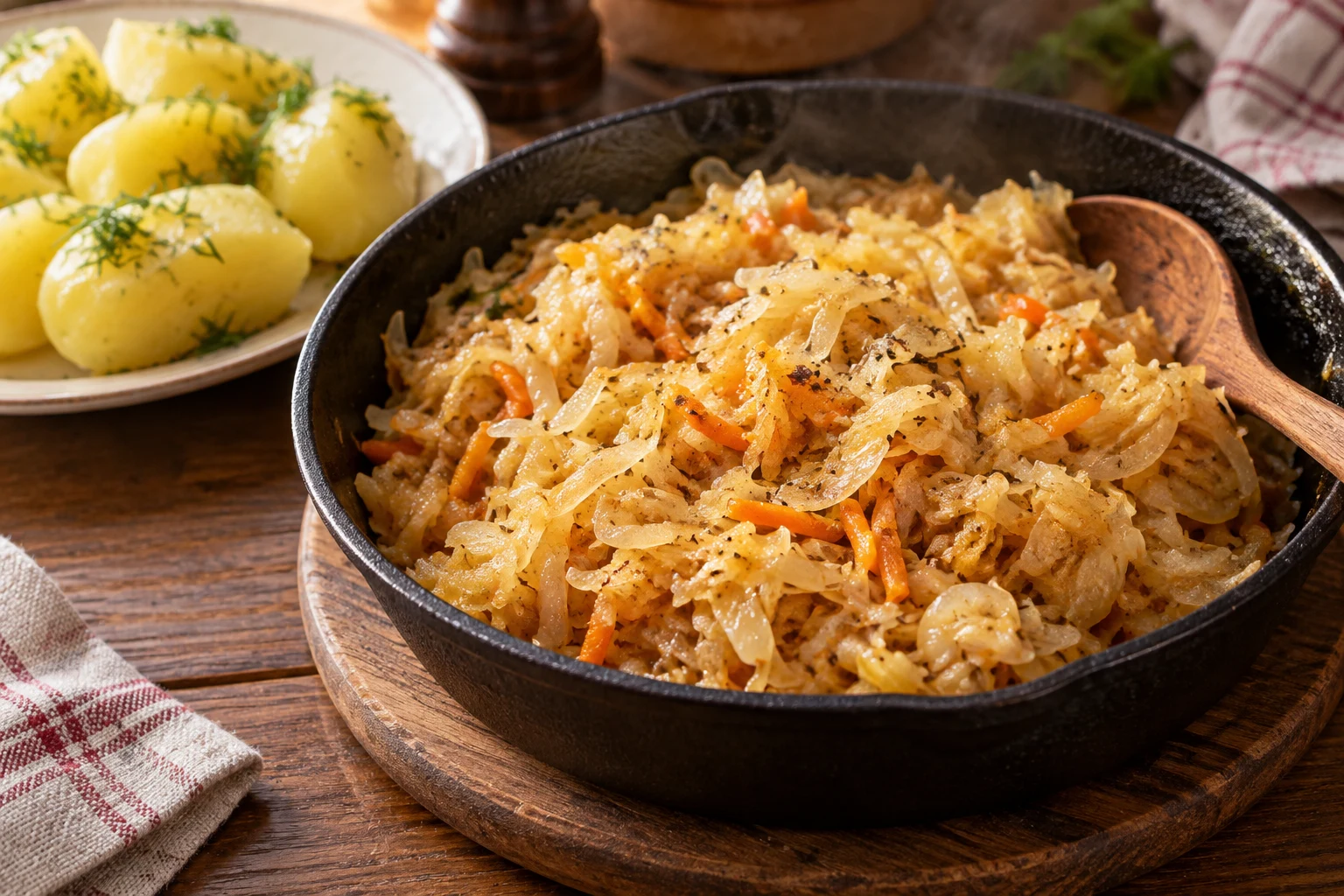
Give the cabbage a place on the plate
The warm side works well alongside boiled or mashed potatoes. Wheat flour matters for diners avoiding gluten, and butter, bacon or lard change the suitability of a recipe even when the main ingredient is a vegetable. Check the preparation rather than assuming every bowl of sauerkraut has the same ingredients.
For another direction, Lois Britton adds optional drained sauerkraut to a pan of cooked fresh cabbage and onions before tossing in prepared noodles. It is a useful reminder that fermented cabbage can provide a sour accent inside a larger dish. Start with the texture you want, then let the rest of the meal guide the seasoning.
Research notes
Sources and further cooking
These cooks show distinct ways of using sauerkraut, including a Polish-language warm preparation, a crisp slaw and a noodle dish.
- AniaGotuje: Kapusta kiszona zasmażana Polish preparation with tender sauerkraut, gently cooked onions and a flour-thickened finish.
- Polish Foodies: Kapusta zasmażana Karolina Klesta explains fresh-cabbage and sauerkraut versions, including meat-based variations.
- Polish Your Kitchen: Sauerkraut slaw Anna Hurning’s apple, carrot and onion slaw, with seasoning adjusted after mixing.
- Polish Housewife: Noodles and cabbage Lois Britton’s family preparation uses optional sauerkraut with fresh cabbage and cooked noodles.
Keep exploring
More stories for your table
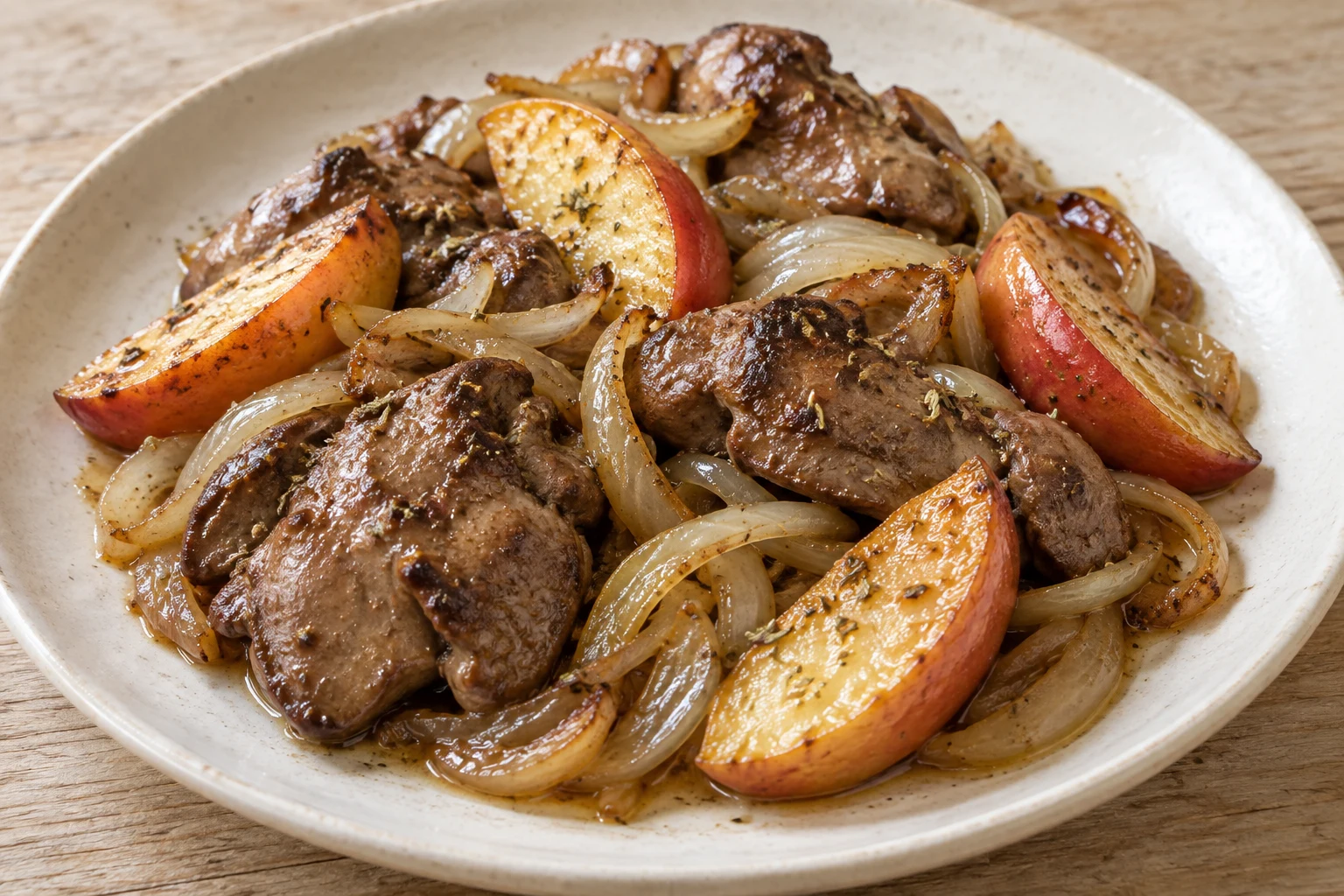
Polish cuisine Poultry
Polish Chicken Liver: Let the Apples Keep Their Shape
Cook Polish chicken liver with soft onions and distinct apple wedges. A comparison of local methods leads to a complete recipe with a measured safe finish.

Polish cuisine Dumplings
Meat Pierogi: Make the Filling Moist Before You Fold
Turn cooked soup beef into Polish meat pierogi. Learn how onion, carrot and a little broth soften the filling, then make a complete home adaptation.

Russian cuisine Meat
Russian Kotleti: Soft Bread, Even Patties, a Browned Crust
A Russian-style beef-and-pork kotleti adaptation with milk-softened bread, evenly shaped patties, a light flour coating and a thermometer check.